
Global External Unbonded Post-tensioning System Market Size, Growth & Revenue 2025-2034
Global External Unbonded Post-tensioning System Market is segmented by Product Type (External Unbonded Tendons, External Bonded Tendons, Internal Post-tensioning Systems, External Post-tensioning Systems, Hybrid Post-tensioning Systems), Application (Bridges, Commercial Buildings, Residential Buildings, Infrastructure Projects, Industrial Structures), End-Use Industry (Construction, Infrastructure Development, Industrial, Transportation), Distribution Channel (Direct Sales, Engineering Consultancies, Authorized Dealers), and Geography (North America, LATAM, West Europe, Central & Eastern Europe, Northern Europe, Southern Europe, East Asia, Southeast Asia, South Asia, Central Asia, Oceania, MEA)
Pricing
Report Overview
Executive Summary
- •The global External Unbonded Post-tensioning System market is a specialized sector within the construction industry focused on advanced reinforcement techniques that enhance the durability and load-bearing capacity of concrete structures. This market includes the production and application of external unbonded tendons, which are high-strength steel cables positioned outside the concrete element and anchored securely to provide prestress. The scope covers a wide range of infrastructure projects including bridges, commercial and residential buildings, and industrial facilities, where structural integrity and longevity are paramount. The value chain spans material suppliers, component manufacturers, engineering consultants, construction contractors, and maintenance service providers. The market is characterized by continuous technological innovation aimed at improving corrosion resistance, tendon anchorage, and ease of installation. Growing urbanization, infrastructure modernization efforts, and regulatory emphasis on safety and sustainability drive adoption globally. Key applications benefit from the system’s ability to facilitate inspection and repairs, reducing maintenance costs and extending service life. This report provides a detailed analysis of market size, growth drivers, challenges, regional dynamics, competitive landscape, and future opportunities, offering valuable insights for stakeholders to make informed strategic decisions.
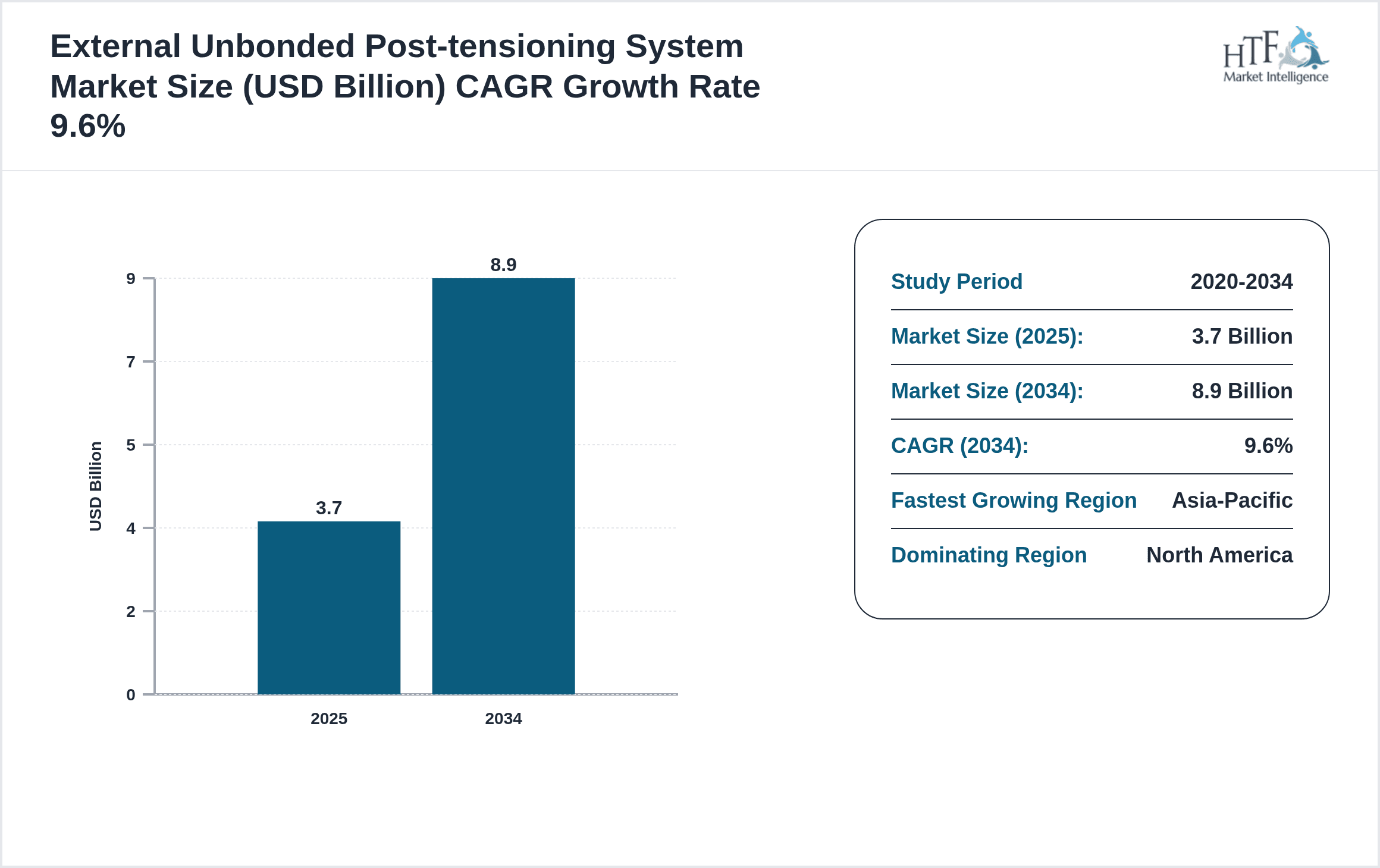
- •The market witnessed a base size of USD 3.7 billion in 2025, up from USD 2.1 billion in 2020, reflecting robust growth driven by infrastructure investments worldwide. Forecasts indicate an expansion to USD 8.9 billion by 2034, with a compound annual growth rate of 9.6%, supported by increasing adoption in Asia-Pacific and North America. The external unbonded segment leads product types, valued for its maintenance advantages and flexibility, while hybrid systems exhibit the fastest growth due to their combined bonded and unbonded tendon benefits. Technological advancements and growing demand for sustainable construction methods remain pivotal market highlights.
- •This market holds strategic importance for civil engineering, infrastructure development, and commercial construction sectors, offering enhanced structural solutions that align with evolving regulatory frameworks and sustainability goals. It enables stakeholders to achieve cost efficiencies, improved safety, and extended asset lifecycles. The market's growth trajectory underscores its relevance in global urban development and infrastructure resilience agendas, making it a critical area for investment and innovation.
Competitive Landscape
The competitive environment in the global External Unbonded Post-tensioning System market is marked by a diverse array of multinational corporations, regional manufacturers, and specialized engineering firms competing through innovation, strategic partnerships, and geographic expansion. Market players focus on developing advanced tendon materials with enhanced corrosion resistance and anchorage systems that improve installation efficiency and structural performance. Competitive strategies include mergers and acquisitions to expand product portfolios and regional presence, as well as collaborations with construction and infrastructure companies to integrate post-tensioning solutions into large-scale projects. Price competitiveness is balanced with quality and durability considerations, as end users prioritize long-term value and compliance with stringent safety standards. Distribution channels are evolving with direct sales complemented by engineering consultancies and authorized dealers to ensure technical support and service excellence. Regional competition is influenced by infrastructure development priorities, with Asia-Pacific witnessing rapid entry of new players due to high growth potential. Future trends indicate a focus on digitalization, such as structural health monitoring integrated with post-tensioning systems, further intensifying competition based on technological leadership and value-added services.
Leading Companies in External Unbonded Post-tensioning System Market
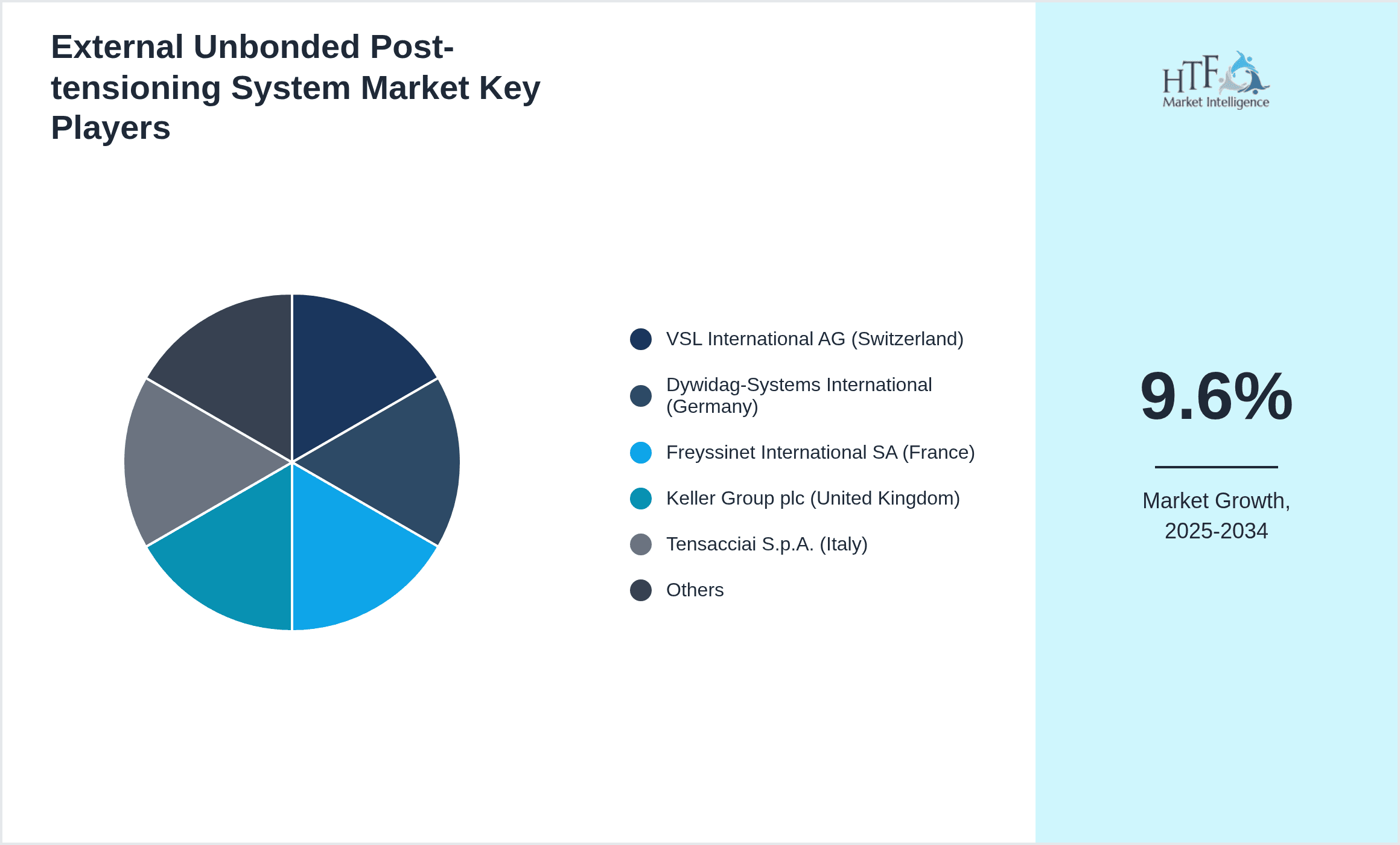
- •VSL International AG (Switzerland)
- •Dywidag-Systems International (Germany)
- •Freyssinet International SA (France)
- •Keller Group plc (United Kingdom)
- •Tensacciai S.p.A. (Italy)
- •Sumitomo Mitsui Construction Co., Ltd. (Japan)
- •Strand7 Pty Ltd. (Australia)
- •Maccaferri Infrastructure Solutions (Italy)
- •Cobra Group (Spain)
- •Hyundai Engineering & Construction Co., Ltd. (South Korea)
- •Larsen & Toubro Limited (India)
- •Bekaert SA (Belgium)
- •Nucor Corporation (United States)
- •Steel Dynamics, Inc. (United States)
- •AK Steel Holding Corporation (United States)
- •Sika AG (Switzerland)
- •Gifford & Partners Ltd. (United Kingdom)
- •TenCate Advanced Composites (Netherlands)
- •Sumisho Construction Solutions (Japan)
- •China State Construction Engineering Corporation (China)
- •Shanghai Construction Group (China)
- •Terra Innovation AB (Sweden)
- •HILTI AG (Liechtenstein)
- •Tensile Systems International (United States)
- •Cinte Techno Solutions Pvt Ltd (India)
Market Breakdown
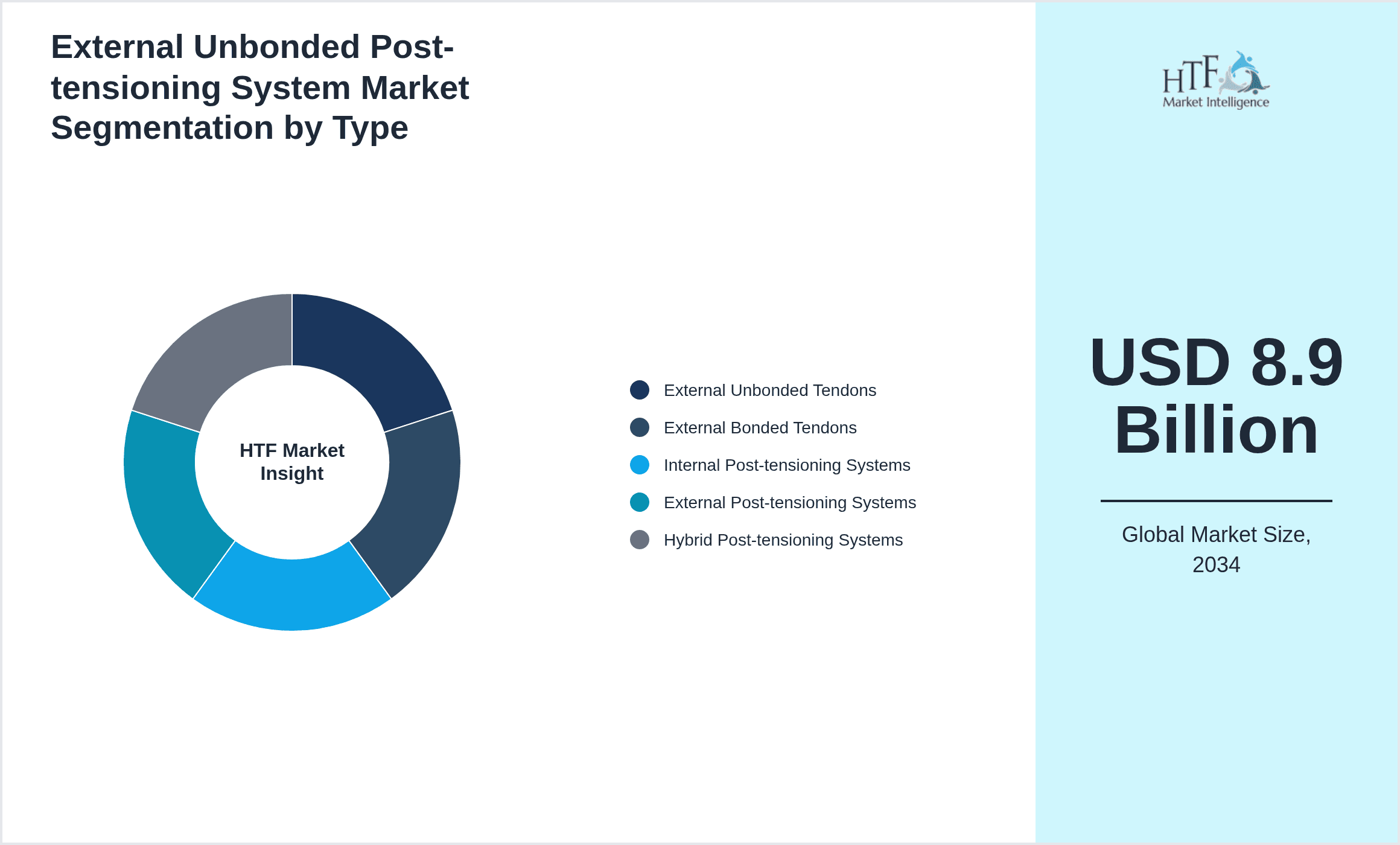
- •By Product Type
- ◦External Unbonded Tendons
- ◦External Bonded Tendons
- ◦Internal Post-tensioning Systems
- ◦External Post-tensioning Systems
- ◦Hybrid Post-tensioning Systems
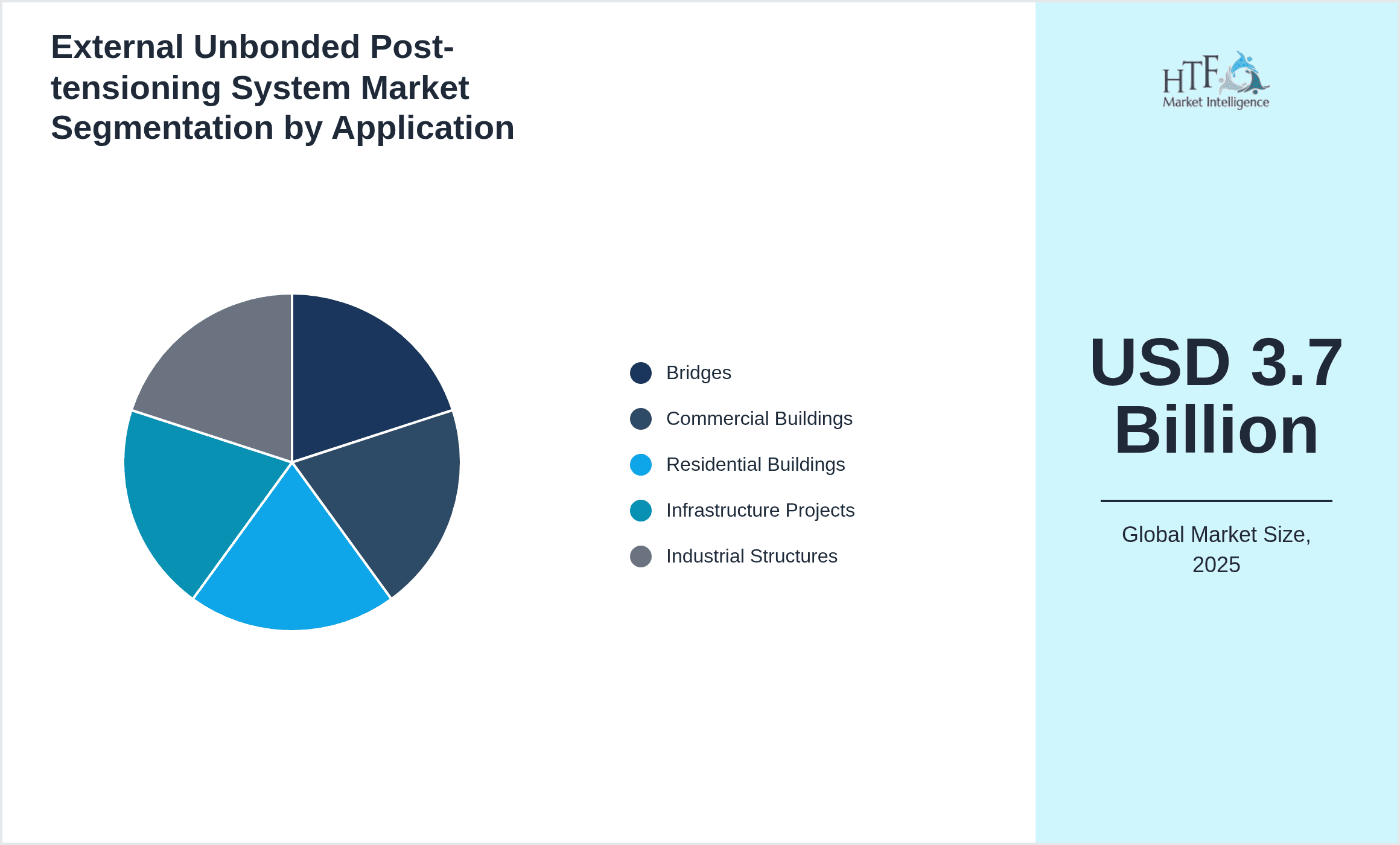
- •By Application
- ◦Bridges
- ◦Commercial Buildings
- ◦Residential Buildings
- ◦Infrastructure Projects
- ◦Industrial Structures
- •By End-Use Industry
- ◦Construction
- ◦Infrastructure Development
- ◦Industrial
- ◦Transportation
- •By Distribution Channel
- ◦Direct Sales
- ◦Engineering Consultancies
- ◦Authorized Dealers
Growth Dynamics
- •Rising global infrastructure investments, notably in bridge construction and urban development projects, are primary drivers enhancing demand for external unbonded post-tensioning systems due to their superior durability and maintenance benefits.
- •Technological progress in corrosion-resistant materials and improved anchorage designs significantly contribute to market expansion by increasing the lifespan and reliability of post-tensioned structures.
- •Stringent regulatory frameworks emphasizing structural safety and sustainability promote adoption of advanced post-tensioning solutions in residential and commercial construction sectors worldwide.
- •Growing preference for hybrid post-tensioning systems, which combine bonded and unbonded techniques, is enabling more versatile applications, driving market growth in complex infrastructure projects.
- •Increasing urbanization and need for rapid construction methods encourage the use of external systems that allow easier inspection and repairs, thereby reducing lifecycle costs and downtime.
- •Government initiatives and public-private partnerships aimed at modernizing aging infrastructure create substantial opportunities for market players involved in external unbonded post-tensioning technologies.
- •Competitive industry dynamics and entry of regional manufacturers in emerging markets foster innovation and cost competitiveness, further stimulating market demand globally.
Market Trends
- •Increasing integration of digital monitoring technologies with post-tensioning systems is revolutionizing structural health management, allowing real-time data analysis and predictive maintenance.
- •Adoption of environmentally sustainable materials and green construction practices is shaping product development and contributing to a shift toward eco-friendly post-tensioning solutions.
- •Emergence of modular and prefabricated construction techniques is driving demand for standardized external unbonded systems that facilitate faster on-site installation and quality control.
- •Collaborative partnerships between technology providers, construction firms, and regulatory bodies are enhancing innovation and accelerating market penetration in new geographic regions.
- •Shift towards hybrid systems combining the benefits of bonded and unbonded post-tensioning is gaining traction for complex engineering applications requiring tailored performance characteristics.
- •Public sector infrastructure projects remain key trend drivers, with increasing allocation of funds to bridge repairs and new construction supporting market expansion.
- •Enhanced focus on lifecycle cost reduction and durability is influencing buyer preferences, favoring external unbonded systems for their ease of maintenance and inspection.
Market Opportunities
- •Expansion into emerging markets with significant infrastructure development needs, such as Asia-Pacific and Latin America, offers substantial growth potential for external unbonded post-tensioning system manufacturers.
- •Development of innovative hybrid systems that combine bonded and unbonded tendon advantages presents opportunities to serve complex construction requirements and niche segments.
- •Increased investments in smart infrastructure incorporating sensor-enabled post-tensioning systems open avenues for technology integration and value-added services.
- •Collaborations with government agencies and private developers to retrofit aging infrastructure can drive demand for maintenance-friendly external systems.
- •Advancements in corrosion-resistant materials and anchorage technologies provide opportunities for product differentiation and premium pricing strategies.
- •Rising interest in sustainable construction practices encourages innovation in eco-friendly post-tensioning solutions, appealing to environmentally conscious stakeholders.
- •Expanding distribution networks and engineering consultancy partnerships enable deeper market penetration and customer reach across diverse geographies.
Market Challenges
- •High initial capital investment and installation complexity of external unbonded post-tensioning systems can hinder adoption, especially in cost-sensitive markets.
- •Limited awareness and technical expertise among contractors and engineers in emerging regions restrict market growth potential and delay project implementation.
- •Stringent regulatory requirements and varying regional standards pose compliance challenges for manufacturers aiming for global market entry.
- •Competition from traditional bonded post-tensioning and alternative reinforcement technologies may limit market share expansion.
- •Supply chain disruptions and raw material price volatility impact production costs and project timelines, affecting market stability.
- •Maintenance and inspection complexities in certain applications require specialized skills, increasing operational costs for end users.
- •Environmental factors such as exposure to aggressive climates can accelerate tendon degradation, demanding continuous innovation in corrosion protection.
Regulatory Framework
- •The ACI 423 Code of American Concrete Institute (2020) mandates specific design and installation guidelines for post-tensioning systems, emphasizing safety and durability in construction projects, significantly impacting market practices in North America.
- •European Standard EN 1992-1-1 (Eurocode 2) introduced in 2019 governs the structural design of concrete buildings, including prestressing requirements, influencing manufacturers and contractors across Europe to ensure compliance with stringent safety norms.
- •The ISO 15835 series, updated between 2018 and 2024, provides international standards for prestressing steel and systems, facilitating harmonization of technical requirements and quality assurance globally.
- •China’s GB/T 50367-2020 standard specifies technical requirements for external post-tensioning tendons, reflecting the government’s focus on infrastructure safety and modernization in the Asia-Pacific region.
- •Regulatory frameworks in Middle East & Africa, such as the Qatar Construction Specifications (QCS 2018), include provisions for post-tensioning systems, promoting adoption in large-scale infrastructure projects under regional safety and quality standards.
Market Intelligence
- •15th January 2025, VSL International AG announced the launch of an advanced corrosion-resistant external unbonded tendon system designed for long-span bridges targeting the Asia-Pacific market. The new system incorporates innovative anchorage technology that enhances durability and simplifies installation, aiming to reduce lifecycle costs and maintenance frequency. This development aligns with increasing infrastructure modernization efforts in the region and represents a strategic move to capture growing demand in emerging economies. The product rollout includes comprehensive technical support and training programs to facilitate adoption by local contractors. Source: VSL International Official Press Release.
- •10th March 2025, Dywidag-Systems International unveiled a hybrid post-tensioning system combining bonded and unbonded tendon technologies, intended for complex commercial building applications in Europe. This innovation targets improved structural flexibility and enhanced safety margins, addressing market needs for adaptable reinforcement solutions. The company highlighted the system's compatibility with digital monitoring sensors, enabling real-time structural health assessment. The launch is part of Dywidag's strategy to strengthen its product portfolio and leadership in smart construction technologies. Source: Dywidag-Systems International Annual Report 2025.
- •22nd June 2025, Freyssinet International SA announced a strategic partnership with a leading engineering consultancy to jointly develop post-tensioning solutions tailored for retrofitting aging infrastructure in North America. The collaboration aims to leverage Freyssinet’s technological expertise and the partner’s local market knowledge to accelerate adoption of external unbonded systems in bridge rehabilitation projects. This initiative is expected to improve project delivery timelines and cost efficiencies while meeting evolving regulatory standards. Additionally, the partnership will focus on workforce training and certification programs to build local technical capabilities. Source: Freyssinet Corporate Communications.
- •Recent market developments and strategic initiatives are continuously tracked through industry publications, company announcements, and regulatory filings. For the most current information, stakeholders are advised to monitor official corporate communications and recognized market intelligence platforms.
Regional Outlook
The North America currently holds a significant share of the market, primarily due to several key factors: increasing consumption rates, a burgeoning population, and robust economic momentum. These elements collectively drive demand, positioning this region as a leader in the market. On the other hand, Asia-Pacific is rapidly emerging as the fastest-growing area within the industry. This remarkable growth can be attributed to swift infrastructure development, the expansion of various industrial sectors, and a marked increase in consumer demand. These dynamics make this region a crucial player in shaping future market growth.
In our report, we cover a comprehensive analysis of the following regions and countries:
- North America
- LATAM
- West Europe
- Central & Eastern Europe
- Northern Europe
- Southern Europe
- East Asia
- Southeast Asia
- South Asia
- Central Asia
- Oceania
- MEA
| Feature | Details |
|---|---|
| Base Year Market Size | USD 3.7 Billion |
| Forecast Year Market Size | USD 8.9 Billion |
| CAGR | 9.6% |
| Forecast Period | 2026 to 2033 |
| YoY Growth | 9.2% |
| Scope of Report | Market is segmented by Product Type (External Unbonded Tendons, External Bonded Tendons, Internal Post-tensioning Systems, External Post-tensioning Systems, Hybrid Post-tensioning Systems), Application (Bridges, Commercial Buildings, Residential Buildings, Infrastructure Projects, Industrial Structures), End-Use Industry (Construction, Infrastructure Development, Industrial, Transportation), Distribution Channel (Direct Sales, Engineering Consultancies, Authorized Dealers) |
| Regions Covered | North America, LATAM, West Europe, Central & Eastern Europe, Northern Europe, Southern Europe, East Asia, Southeast Asia, South Asia, Central Asia, Oceania, MEA |
| Key Companies | VSL International AG (Switzerland), Dywidag-Systems International (Germany), Freyssinet International SA (France), Keller Group plc (United Kingdom), Tensacciai S.p.A. (Italy), Sumitomo Mitsui Construction Co., Ltd. (Japan), Strand7 Pty Ltd. (Australia), Maccaferri Infrastructure Solutions (Italy), Cobra Group (Spain), Hyundai Engineering & Construction Co., Ltd. (South Korea), Larsen & Toubro Limited (India), Bekaert SA (Belgium), Nucor Corporation (United States), Steel Dynamics, Inc. (United States), AK Steel Holding Corporation (United States), Sika AG (Switzerland), Gifford & Partners Ltd. (United Kingdom), TenCate Advanced Composites (Netherlands), Sumisho Construction Solutions (Japan), China State Construction Engineering Corporation (China), Shanghai Construction Group (China), Terra Innovation AB (Sweden), HILTI AG (Liechtenstein), Tensile Systems International (United States), Cinte Techno Solutions Pvt Ltd (India) |
Global External Unbonded Post-tensioning System Market Size, Growth & Revenue 2025-2034 - Table of Contents
Frequently Asked Questions (FAQ):
The Compact Track Loaders market is expected to see value worth 5.3 Billion in 2025.
North America currently leads the market with approximately 45% market share, followed by Europe at 28% and Asia-Pacific at 22%. The remaining regions account for 5% of the global market.
Key growth drivers include increasing construction activities, rising demand for versatile equipment in agriculture, technological advancements in track loader design, and growing preference for compact equipment in urban construction projects.