
Global Hotel Room Appliance Market Size, Growth & Revenue 2024-2034
Global Hotel Room Appliance Market is segmented by Product Type (Smart Appliances, Energy Efficient Appliances, Traditional Appliances, IoT-enabled Appliances, Automated Appliances), Application (Room Heating, Room Cooling, Entertainment Systems, Safety & Security, Others), End-Use Industry (Luxury Hotels, Budget Hotels, Resorts, Serviced Apartments), Distribution Channel (Direct Sales, Online Retail, Distributors and Dealers), and Geography (North America, LATAM, West Europe, Central & Eastern Europe, Northern Europe, Southern Europe, East Asia, Southeast Asia, South Asia, Central Asia, Oceania, MEA)
Pricing
Report Overview
Executive Summary
- •The global hotel room appliance market is a dynamic industry segment focusing on the design, manufacture, and distribution of appliances tailored to enhance guest experiences in hotels worldwide. It includes a broad spectrum of products such as smart thermostats, energy-efficient HVAC systems, advanced entertainment units, and security devices that contribute to operational efficiency and sustainability. The market addresses the needs of diverse applications including room heating, cooling, entertainment, and safety, supporting hoteliers in delivering superior comfort and customized services. Increasing global travel, rising hotel construction and renovation, and the shift towards automated and energy-saving technologies are driving market expansion. Additionally, integration of IoT and AI technologies is revolutionizing appliance functionalities, enabling remote control and predictive maintenance. This market is shaped by evolving customer expectations, stringent environmental regulations, and competitive innovations, making it a vital component of the hospitality sector's growth trajectory.
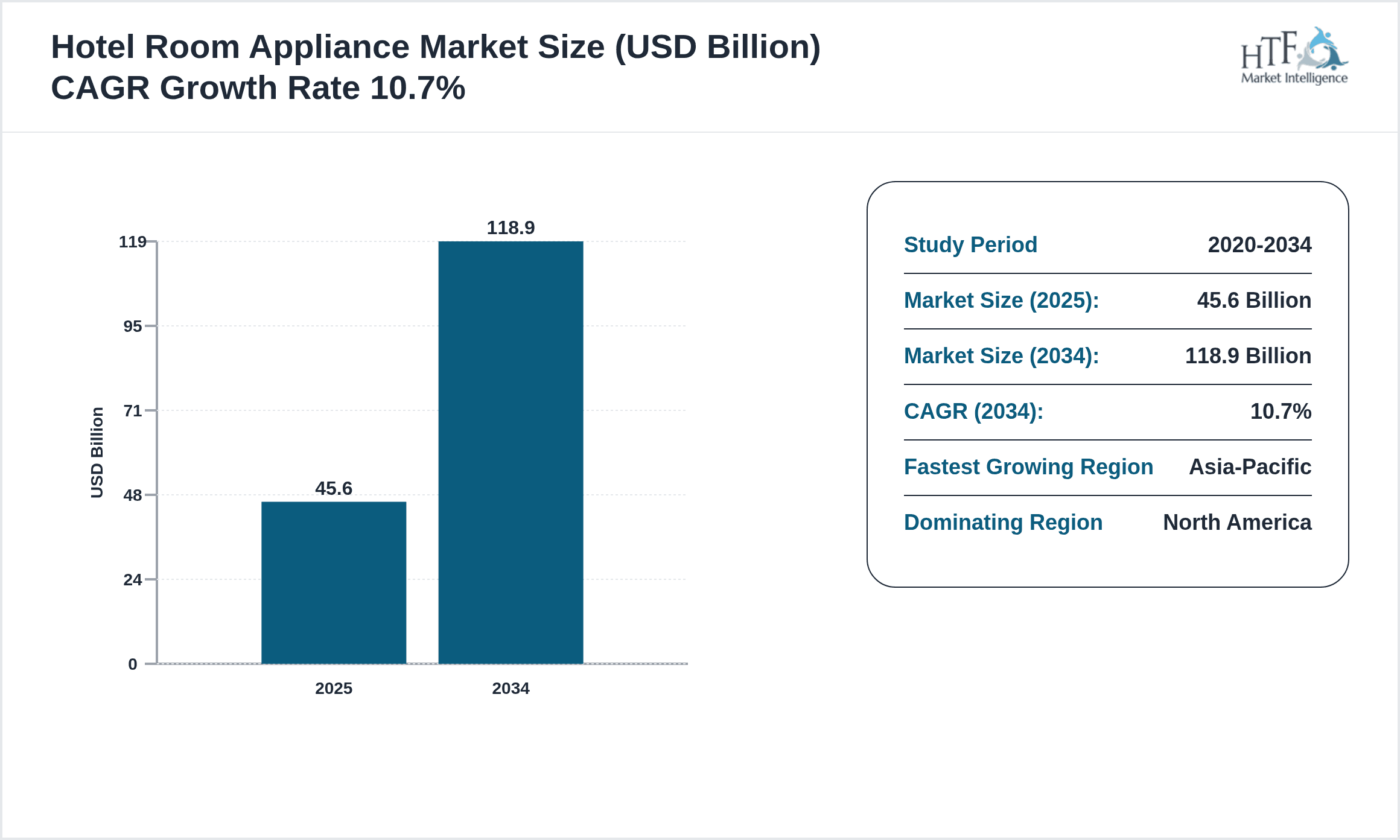
- •Market highlights indicate that the global hotel room appliance market was valued at USD 45.6 Billion in 2024 and is projected to reach USD 118.9 Billion by 2034, exhibiting a robust CAGR of 10.7%. North America currently dominates the market due to advanced infrastructure and high adoption of smart technologies, while Asia-Pacific is expected to register the fastest growth driven by rapid urbanization and increasing hotel developments. Smart appliances lead product segments with growing penetration of IoT-enabled devices accelerating market demand. The room cooling application holds significant market share reflecting climate control priorities in hospitality. These growth indicators underscore the market's promising outlook fueled by technology adoption and increasing focus on guest satisfaction.
- •The value proposition of the hotel room appliance market lies in its strategic importance to the hospitality industry's efforts to optimize energy consumption, enhance guest comfort, and implement smart management solutions. Stakeholders including manufacturers, hoteliers, and technology providers benefit from innovations that reduce operational costs and improve service delivery. The market’s evolution aligns with broader trends in sustainability, digital transformation, and personalized experiences, making it a critical enabler for competitive differentiation. Investments in R&D, partnerships, and regulatory compliance further solidify its role as a growth driver across global regions, supporting the hospitality sector's resilience and adaptation to changing consumer preferences.
Competitive Landscape
The competitive landscape of the global hotel room appliance market is characterized by intense rivalry among multinational corporations, regional manufacturers, and emerging startups. Market leaders focus heavily on innovation, integrating cutting-edge technologies such as IoT, AI, and energy-efficient components to differentiate their offerings. Strategic partnerships, mergers, and acquisitions are prevalent as companies strive to expand product portfolios and geographic reach. Pricing strategies are balanced with product quality and after-sales services to maintain customer loyalty. Distribution channels range from direct sales to collaborations with hospitality chains and online platforms, ensuring extensive market penetration. Regional competition varies, with North America and Europe emphasizing technological sophistication, while Asia-Pacific sees rapid adoption driven by infrastructural expansion. Future trends point to increased customization, sustainability initiatives, and smart automation as key competitive factors shaping market dynamics.
Prominent Players in Hotel Room Appliance Market
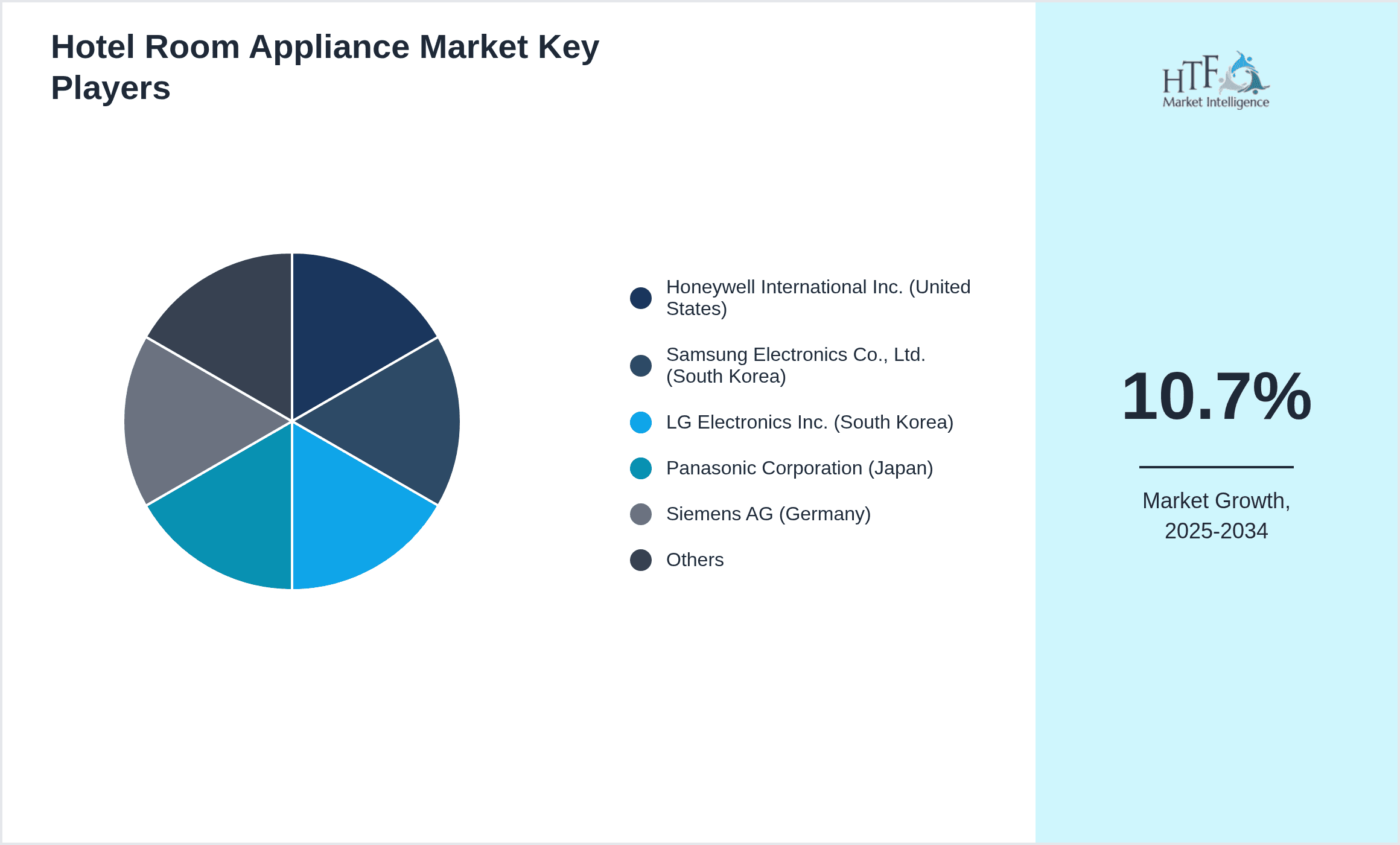
- •Honeywell International Inc. (United States)
- •Samsung Electronics Co., Ltd. (South Korea)
- •LG Electronics Inc. (South Korea)
- •Panasonic Corporation (Japan)
- •Siemens AG (Germany)
- •Electrolux AB (Sweden)
- •Whirlpool Corporation (United States)
- •Bosch Thermotechnology GmbH (Germany)
- •Mitsubishi Electric Corporation (Japan)
- •Daikin Industries, Ltd. (Japan)
- •Hitachi Ltd. (Japan)
- •Sharp Corporation (Japan)
- •GE Appliances, a Haier company (United States)
- •Haier Smart Home Co., Ltd. (China)
- •Toshiba Corporation (Japan)
- •Arçelik A.Ş. (Turkey)
- •V-ZUG AG (Switzerland)
- •Fujitsu General Limited (Japan)
- •Beko (Turkey)
- •Electra Consumer Products Ltd. (Israel)
- •Midea Group Co., Ltd. (China)
- •GEA Group AG (Germany)
- •Ingersoll Rand Inc. (United States)
- •Carrier Global Corporation (United States)
- •Johnson Controls International plc (Ireland)

Market Breakdown
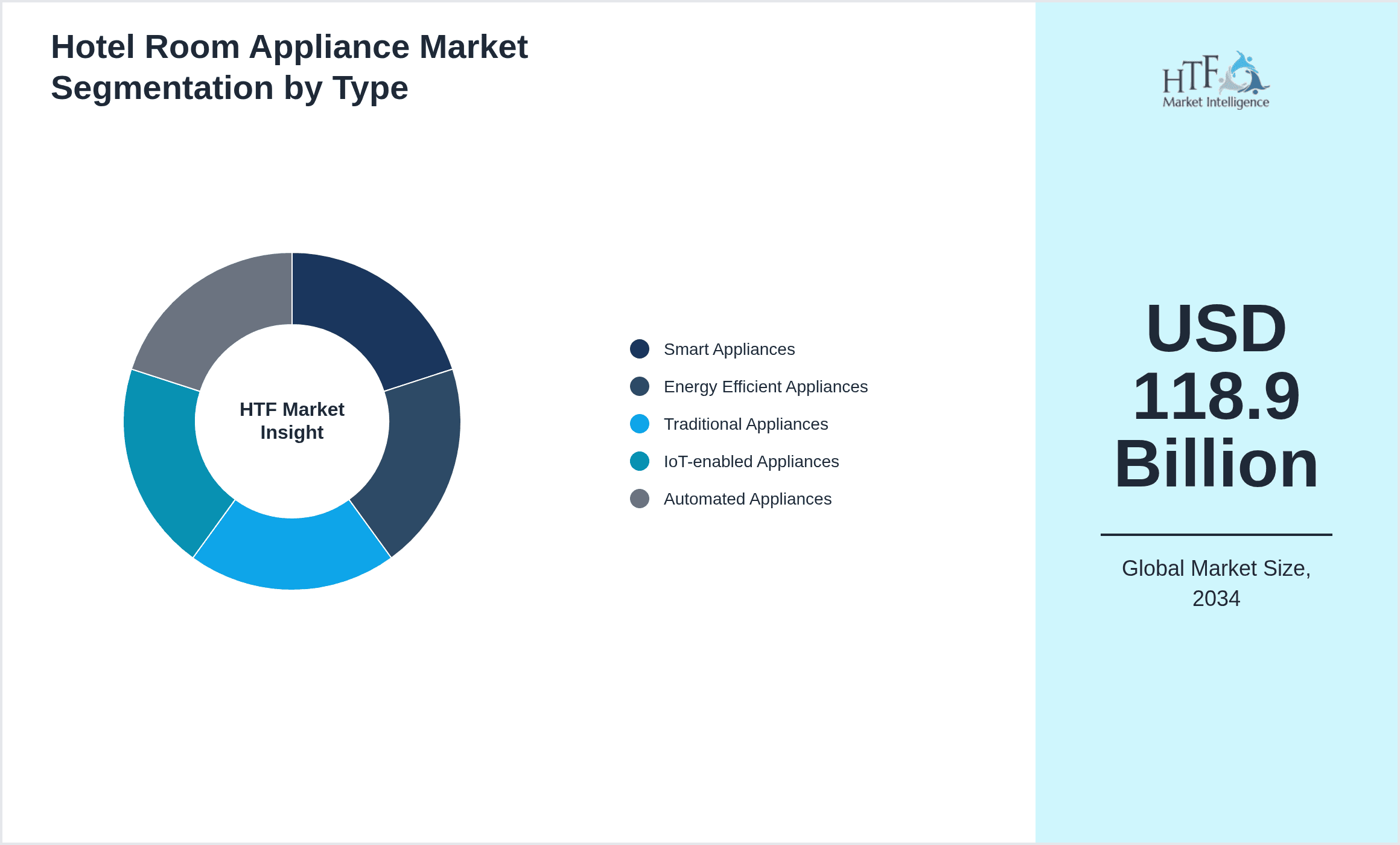
- •By Product Type
- ◦Smart Appliances
- ◦Energy Efficient Appliances
- ◦Traditional Appliances
- ◦IoT-enabled Appliances
- ◦Automated Appliances
- •By Application
- ◦Room Heating
- ◦Room Cooling
- ◦Entertainment Systems
- ◦Safety & Security
- ◦Others
- •By End-Use Industry
- ◦Luxury Hotels
- ◦Budget Hotels
- ◦Resorts
- ◦Serviced Apartments
- •By Distribution Channel
- ◦Direct Sales
- ◦Online Retail
- ◦Distributors and Dealers
Growth Dynamics
- •Rising global tourism and hospitality sector expansion are primary growth drivers, fueling demand for modern hotel room appliances that enhance guest experiences and operational efficiency. Increasing disposable incomes and travel frequency contribute significantly to market expansion.
- •Technological advancements like IoT integration and AI-powered automation are transforming hotel room appliances, enabling smart energy management and personalized guest controls that drive adoption among hoteliers seeking competitive advantages.
- •Stringent environmental regulations and growing emphasis on energy-efficient and sustainable appliances motivate manufacturers to innovate, thus expanding market opportunities and aligning with global carbon reduction initiatives.
- •The proliferation of smart hotels and demand for seamless digital experiences among consumers propel investments in connected appliances, enhancing market growth through improved functionality and guest satisfaction.
- •Rising renovation and refurbishment of existing hotel infrastructures worldwide create substantial demand for upgraded, technologically advanced room appliances, presenting lucrative growth avenues for manufacturers and suppliers.
Market Trends
- •Adoption of smart thermostats and energy management systems is increasing rapidly, driven by the need to reduce energy consumption and operational costs in hospitality establishments globally.
- •Integration of voice-activated controls and AI assistants in hotel room appliances is becoming prevalent, enhancing guest convenience and personalized service delivery.
- •Sustainability-focused innovations such as eco-friendly refrigerants and solar-powered appliances are gaining traction, reflecting the industry's commitment to environmental responsibility.
- •Increasing use of modular and customizable appliance designs allows hoteliers to tailor room functionalities according to specific guest preferences and hotel themes.
- •Collaborations between technology firms and appliance manufacturers are fostering development of integrated IoT ecosystems, facilitating centralized control and predictive maintenance.
Market Opportunities
- •Emerging markets in Asia-Pacific and Latin America offer substantial growth potential due to increasing hotel construction and rising consumer awareness about smart appliances.
- •Development of AI-enabled predictive maintenance solutions can reduce downtime and operational costs, presenting a lucrative market opportunity for technology providers and hoteliers.
- •Expansion into eco-friendly and energy-efficient appliance segments can help manufacturers capture growing demand from environmentally conscious hospitality operators.
- •Integration of multi-functional appliances combining entertainment, safety, and climate control features can enhance guest experiences and differentiate hotel offerings.
- •Strategic partnerships with hotel chains and tech companies enable co-creation of customized solutions, facilitating market penetration and long-term client relationships.
Market Challenges
- •High initial investment costs for advanced smart appliances may deter small and mid-sized hotels from adoption, limiting market penetration in certain regions.
- •Complex integration and interoperability issues among diverse appliance systems challenge seamless operation and require significant technical support.
- •Rapid technological obsolescence demands continuous innovation and increases pressure on manufacturers to maintain competitive product portfolios.
- •Regulatory compliance across multiple jurisdictions poses challenges for global manufacturers in standardizing product features and certifications.
- •Supply chain disruptions and raw material price volatility impact production costs and delivery timelines, affecting market stability.
Regulatory Framework
- •Between 2019 and 2024, multiple regions implemented energy efficiency standards mandating reduced power consumption for hotel appliances, compelling manufacturers to innovate eco-friendly solutions.
- •Data privacy regulations affecting IoT-enabled appliances require strict compliance with user data protection laws, influencing appliance design and software integration.
- •Environmental regulations have enforced the phase-out of harmful refrigerants in cooling appliances, accelerating the adoption of sustainable alternatives.
- •Safety standards for electrical appliances in hospitality settings have been updated, emphasizing fire prevention and user safety features, impacting product development cycles.
- •Government incentives and subsidies in various countries promote the adoption of energy-efficient hotel appliances, supporting market expansion and innovation.
Market Intelligence
- •15th February 2025, Honeywell International Inc. launched an advanced smart thermostat designed specifically for hotel environments, featuring AI-driven predictive climate control and remote management capabilities aimed at reducing energy consumption by 20%. This product targets luxury and mid-tier hotels seeking to enhance guest comfort and operational efficiency. The initiative reflects Honeywell's commitment to sustainable hospitality solutions and technological leadership in the hotel appliance sector. Source: Official Honeywell press release
- •30th January 2025, Samsung Electronics Co., Ltd. introduced a new line of IoT-enabled entertainment systems for hotel rooms, integrating voice control, personalized content delivery, and seamless device connectivity. The innovation aims to transform guest experiences by offering intuitive, customized entertainment options while enabling hoteliers to manage devices centrally. Samsung's market positioning strengthens with this launch, targeting high-traffic hospitality chains globally. Source: Samsung Corporate News
- •10th March 2024, LG Electronics Inc. announced a strategic partnership with leading hotel chains in Asia-Pacific to deploy energy-efficient HVAC systems with smart sensors and AI analytics. This collaboration focuses on reducing operational costs and enhancing indoor air quality, aligning with regional sustainability goals. The partnership is expected to accelerate smart appliance adoption in emerging markets. Source: LG Official Newsroom
- •5th April 2024, Panasonic Corporation completed the acquisition of a smart home technology startup specializing in IoT-enabled safety appliances for hospitality applications. This move enhances Panasonic's product portfolio and innovation capabilities, enabling accelerated development of integrated hotel room solutions. The acquisition supports Panasonic’s growth strategy in high-potential markets. Source: Panasonic Press Release
Regional Outlook
The North America currently holds a significant share of the market, primarily due to several key factors: increasing consumption rates, a burgeoning population, and robust economic momentum. These elements collectively drive demand, positioning this region as a leader in the market. On the other hand, Asia-Pacific is rapidly emerging as the fastest-growing area within the industry. This remarkable growth can be attributed to swift infrastructure development, the expansion of various industrial sectors, and a marked increase in consumer demand. These dynamics make this region a crucial player in shaping future market growth.
In our report, we cover a comprehensive analysis of the following regions and countries:
- North America
- LATAM
- West Europe
- Central & Eastern Europe
- Northern Europe
- Southern Europe
- East Asia
- Southeast Asia
- South Asia
- Central Asia
- Oceania
- MEA
| Feature | Details |
|---|---|
| Base Year Market Size | USD 45.6 Billion |
| Forecast Year Market Size | USD 118.9 Billion |
| CAGR | 10.7% |
| Forecast Period | 2026 to 2033 |
| YoY Growth | 10.2% |
| Scope of Report | Market is segmented by Product Type (Smart Appliances, Energy Efficient Appliances, Traditional Appliances, IoT-enabled Appliances, Automated Appliances), Application (Room Heating, Room Cooling, Entertainment Systems, Safety & Security, Others), End-Use Industry (Luxury Hotels, Budget Hotels, Resorts, Serviced Apartments), Distribution Channel (Direct Sales, Online Retail, Distributors and Dealers) |
| Regions Covered | North America, LATAM, West Europe, Central & Eastern Europe, Northern Europe, Southern Europe, East Asia, Southeast Asia, South Asia, Central Asia, Oceania, MEA |
| Key Companies | Honeywell International Inc. (United States), Samsung Electronics Co., Ltd. (South Korea), LG Electronics Inc. (South Korea), Panasonic Corporation (Japan), Siemens AG (Germany), Electrolux AB (Sweden), Whirlpool Corporation (United States), Bosch Thermotechnology GmbH (Germany), Mitsubishi Electric Corporation (Japan), Daikin Industries, Ltd. (Japan), Hitachi Ltd. (Japan), Sharp Corporation (Japan), GE Appliances, a Haier company (United States), Haier Smart Home Co., Ltd. (China), Toshiba Corporation (Japan), Arçelik A.Ş. (Turkey), V-ZUG AG (Switzerland), Fujitsu General Limited (Japan), Beko (Turkey), Electra Consumer Products Ltd. (Israel), Midea Group Co., Ltd. (China), GEA Group AG (Germany), Ingersoll Rand Inc. (United States), Carrier Global Corporation (United States), Johnson Controls International plc (Ireland) |
Global Hotel Room Appliance Market Size, Growth & Revenue 2024-2034 - Table of Contents
Research enthusiast focused on transforming data uncovering into actionable insights through data-driven decision-making.
Frequently Asked Questions (FAQ):
The Compact Track Loaders market is expected to see value worth 5.3 Billion in 2025.
North America currently leads the market with approximately 45% market share, followed by Europe at 28% and Asia-Pacific at 22%. The remaining regions account for 5% of the global market.
Key growth drivers include increasing construction activities, rising demand for versatile equipment in agriculture, technological advancements in track loader design, and growing preference for compact equipment in urban construction projects.