
Global Smart Desktop Robot Market Size, Growth & Revenue 2024-2034
Global Smart Desktop Robot Market is segmented by Product Type (AI-Enabled Robots, Programmable Robots, Voice-Controlled Robots, Gesture-Controlled Robots, Autonomous Robots), Application (Office Automation, Education & Training, Healthcare Assistance, Personal Use, Research & Development), End-Use Industry (Corporate Sector, Educational Institutions, Healthcare Facilities, Consumer Electronics), Distribution Channel (Direct Sales, Online Retail, Third-Party Distributors), and Geography (North America, LATAM, West Europe, Central & Eastern Europe, Northern Europe, Southern Europe, East Asia, Southeast Asia, South Asia, Central Asia, Oceania, MEA)
Pricing
Report Overview
Executive Summary
- •The global Smart Desktop Robot market is defined by the deployment of compact, intelligent robotic systems designed to enhance productivity and operational efficiency across diverse applications such as office automation, education, healthcare, personal use, and research. These robots leverage cutting-edge technologies including artificial intelligence, machine learning algorithms, voice and gesture recognition, and autonomous navigation to perform complex tasks with minimal human intervention. The market's scope extends beyond hardware to include integrated software platforms and connectivity modules that facilitate seamless communication and control. Key characteristics include adaptability, user-friendly interfaces, and multifunctionality, enabling applications from administrative automation to personalized assistance and advanced educational tools. The primary use cases focus on augmenting human capabilities, reducing manual workload, and enabling smarter, faster decision-making processes in corporate, academic, and healthcare environments, thereby driving the transition towards intelligent workplaces and learning spaces globally.
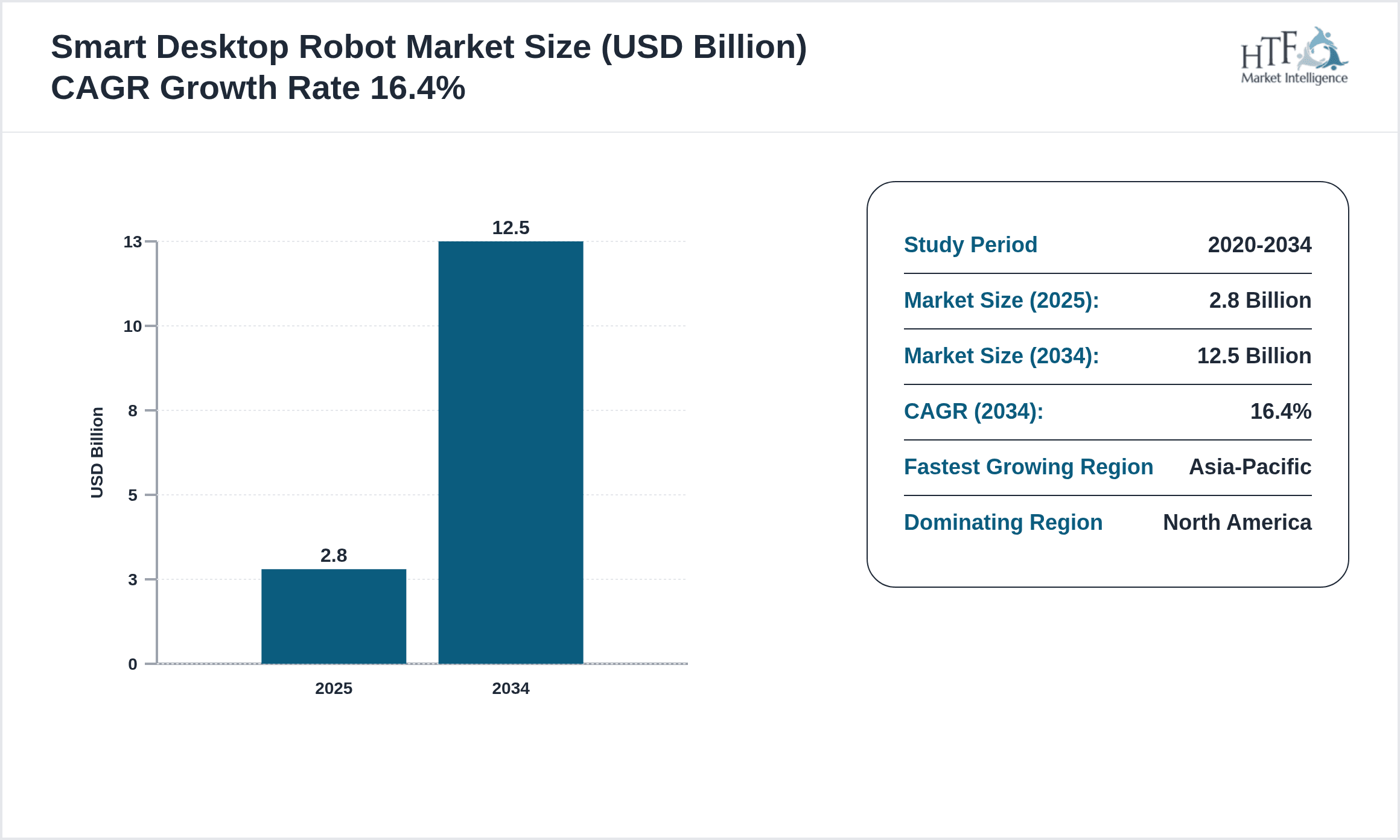
- •Market highlights reveal a robust growth trajectory with the base market size estimated at USD 2.8 Billion in 2024, projected to reach USD 12.5 Billion by 2034, exhibiting a CAGR of 16.4%. This growth is fueled by rapid technological advancements, increasing adoption in North America and Asia-Pacific, and expanding use cases in emerging sectors such as healthcare and personal robotics. The rise in demand for automation and smart devices in workplace and educational settings further underpins market expansion, supported by ongoing innovations in AI and autonomous functionalities.
- •The strategic importance of the Smart Desktop Robot market lies in its ability to revolutionize traditional workflows and learning methodologies by integrating smart automation at a micro level. Stakeholders ranging from corporate enterprises to educational institutions and healthcare providers benefit from enhanced operational efficiency, cost savings, and improved user engagement. The market presents substantial value propositions for technology developers, system integrators, and end-users seeking to leverage smart robotics to foster innovation, drive productivity gains, and create competitive advantage in a digitally transforming global landscape.
Competitive Landscape
The competitive environment of the global Smart Desktop Robot market is characterized by intense rivalry among established technology giants and emerging innovators focused on product differentiation through technological innovation and customization. Companies compete on the basis of advanced AI integration, user interface design, reliability, and multifunctionality to capture diverse application segments. Strategic partnerships, mergers, and acquisitions are frequent as players seek to consolidate market position and expand their technological capabilities. Pricing strategies vary, with premium AI-enabled robots commanding higher margins, while programmable and voice-controlled robots target cost-sensitive segments. Regional competition is influenced by innovation hubs in North America and Asia-Pacific, where rapid adoption and government support foster competitive advantages. Future trends indicate increased emphasis on ecosystem development, open platforms, and collaborative robotics, enhancing market entry barriers and driving sustained innovation cycles.
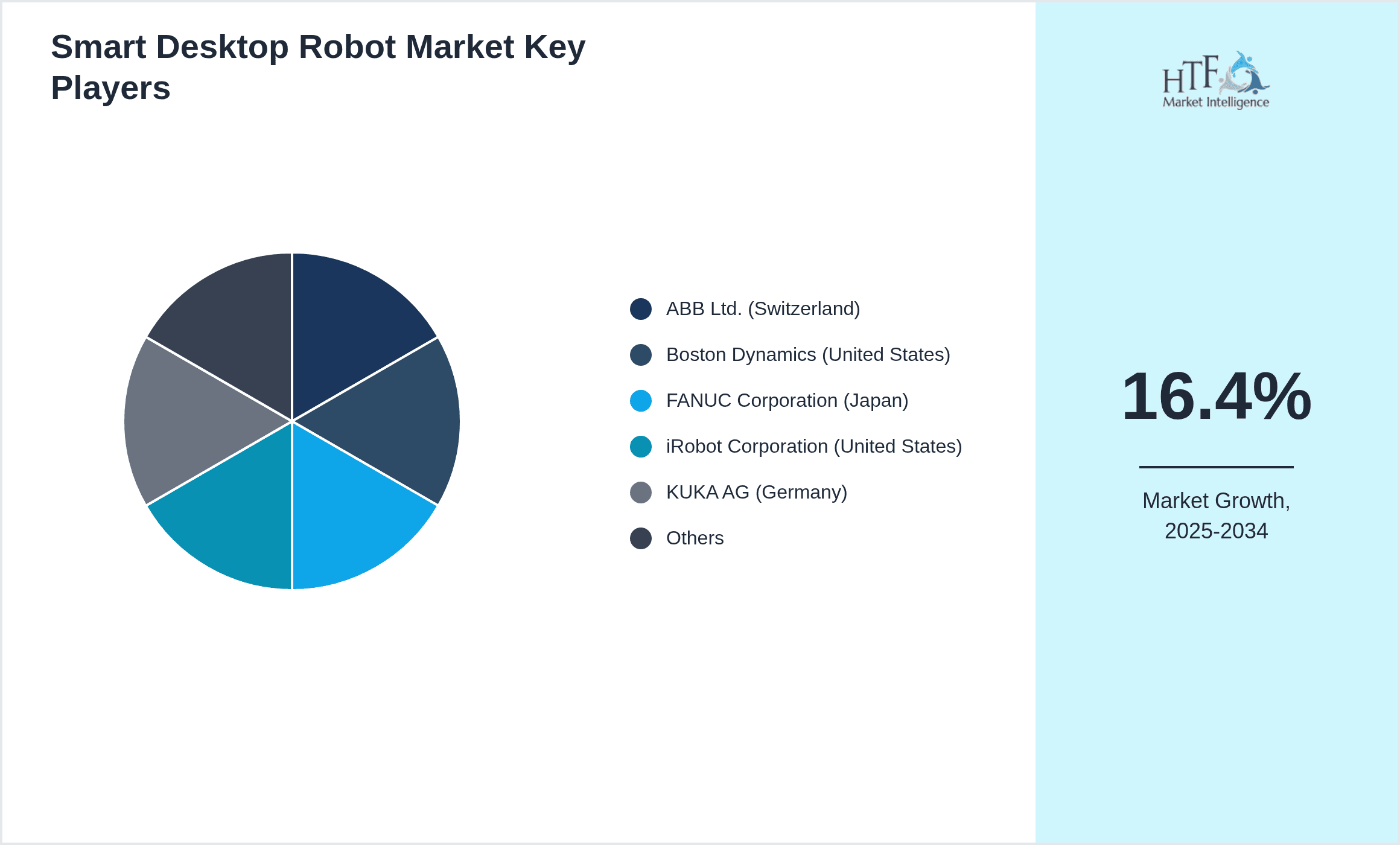
Leading Companies in Smart Desktop Robot Market
- •ABB Ltd. (Switzerland)
- •Boston Dynamics (United States)
- •FANUC Corporation (Japan)
- •iRobot Corporation (United States)
- •KUKA AG (Germany)
- •SoftBank Robotics (Japan)
- •Universal Robots A/S (Denmark)
- •Yaskawa Electric Corporation (Japan)
- •Siasun Robot & Automation Co., Ltd. (China)
- •Mitsubishi Electric Corporation (Japan)
- •Ecovacs Robotics (China)
- •GreyOrange (Singapore)
- •Omron Corporation (Japan)
- •DJI Innovations (China)
- •Rethink Robotics (United States)
- •Neato Robotics (United States)
- •Aethon Inc. (United States)
- •Harmonic Drive AG (Germany)
- •Staubli International AG (Switzerland)
- •Pudu Robotics (China)
- •Cyberdyne Inc. (Japan)
- •Robotiq Inc. (Canada)
- •Yuneec International (China)
- •PAL Robotics (Spain)
- •Vecna Robotics (United States)
Market Breakdown
- •By Product Type
- ◦AI-Enabled Robots
- ◦Programmable Robots
- ◦Voice-Controlled Robots
- ◦Gesture-Controlled Robots
- ◦Autonomous Robots
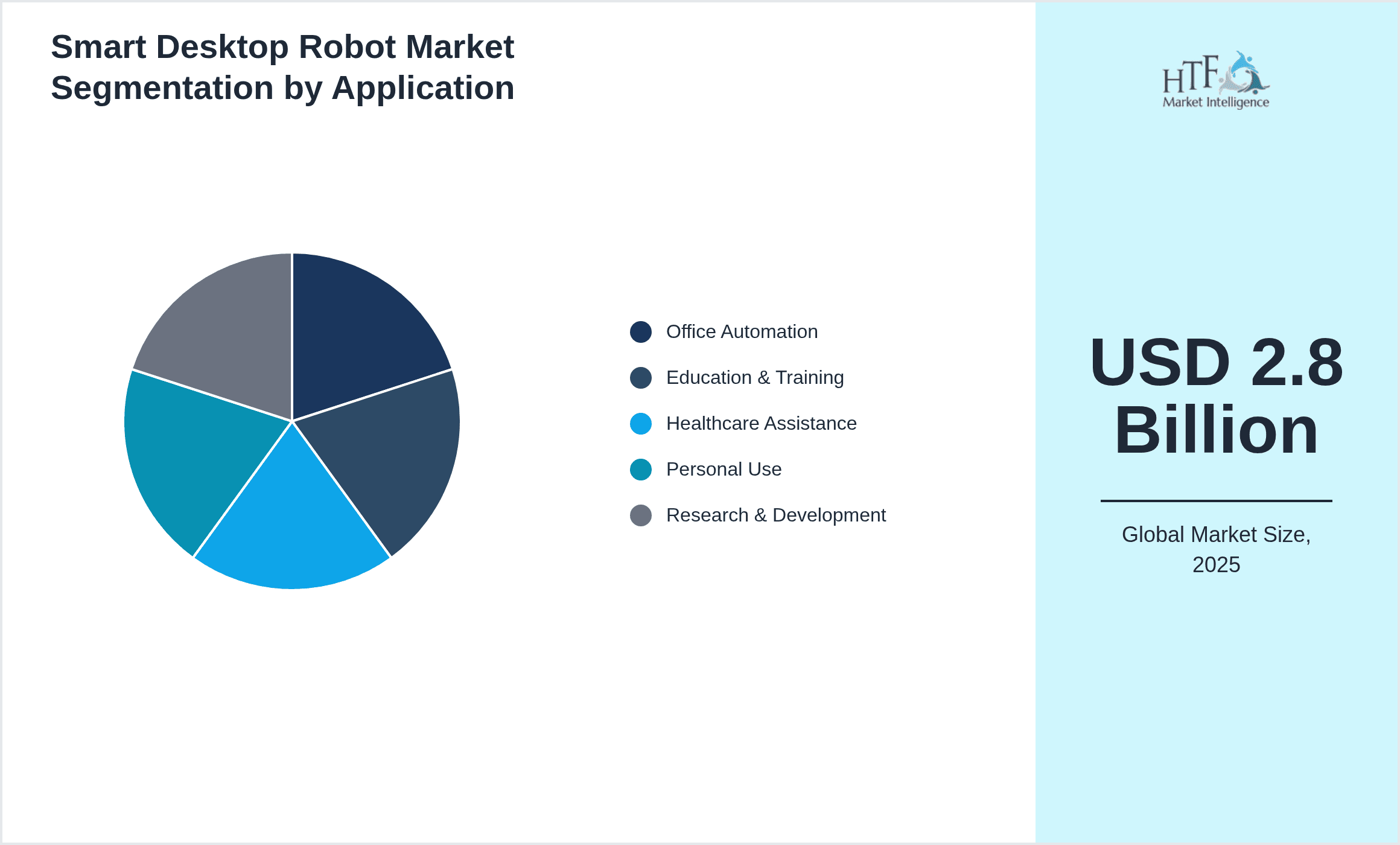
- •By Application
- ◦Office Automation
- ◦Education & Training
- ◦Healthcare Assistance
- ◦Personal Use
- ◦Research & Development
- •By End-Use Industry
- ◦Corporate Sector
- ◦Educational Institutions
- ◦Healthcare Facilities
- ◦Consumer Electronics
- •By Distribution Channel
- ◦Direct Sales
- ◦Online Retail
- ◦Third-Party Distributors
Growth Dynamics
- •The accelerating adoption of artificial intelligence and machine learning technologies is a primary growth driver, enabling smart desktop robots to perform complex tasks with enhanced precision and adaptability, thus expanding their utility across various industries.
- •Increasing demand for automation in office environments to improve efficiency and reduce operational costs is propelling market growth, as organizations seek intelligent assistants to manage routine tasks and data processing.
- •The surge in remote learning and digital education platforms has amplified the need for interactive and programmable desktop robots that can facilitate personalized learning experiences and training modules.
- •Technological advancements in voice and gesture recognition are enhancing user experience, making smart desktop robots more accessible and intuitive, thus driving broader adoption in personal and professional settings.
- •Expanding healthcare applications, including patient monitoring and assistance, are opening new avenues for market growth, especially in regions with aging populations and increasing demand for medical automation.
- •Government initiatives and investments in robotics and AI research foster innovation and infrastructure development, supporting market expansion globally.
- •Rising consumer interest in smart home technologies is encouraging the integration of desktop robots with IoT ecosystems, creating synergies that enhance product appeal and functionality.

Market Trends
- •Integration of AI-powered natural language processing capabilities is becoming a standard trend, enabling smarter human-robot interaction and personalized user responses within desktop robotics.
- •Modular and customizable robot designs are emerging, allowing users to tailor functionalities according to specific needs, thereby increasing product versatility and market reach.
- •Collaborative robots (cobots) designed to work safely alongside humans are gaining traction in office and educational environments, reflecting a shift towards cooperative automation models.
- •Sustainability-focused innovations, including energy-efficient components and recyclable materials, are influencing product development to meet increasing environmental regulations and consumer expectations.
- •The rise of cloud-based robotics platforms facilitates remote updates, data analytics, and integration with enterprise systems, enhancing robot capabilities and service delivery models.
- •Strategic partnerships between robotics firms and software developers are fostering ecosystem growth, enabling seamless integration of hardware and AI software solutions.
- •Adoption of edge computing is enabling faster data processing locally on devices, reducing latency and improving the responsiveness of desktop robots in critical applications.
Market Opportunities
- •Expanding untapped markets in emerging economies present significant growth potential, driven by increasing digital literacy and investments in smart office infrastructure.
- •Developing healthcare-specific desktop robots tailored for patient care and remote monitoring offers opportunities to address growing medical automation needs.
- •Innovations in AI-enabled autonomous desktop robots can unlock new application areas including complex research assistance and advanced learning tools.
- •Collaborations with educational technology providers to integrate robots into e-learning platforms can enhance user engagement and education quality.
- •Investments in sustainable and energy-efficient robotics solutions can differentiate products and appeal to environmentally conscious consumers and enterprises.
- •Expansion of direct-to-consumer online sales channels can increase market penetration and enable personalized customer experiences.
- •Leveraging IoT and smart home ecosystems to develop multifunctional desktop robots that seamlessly interact with other devices creates cross-selling opportunities.
Market Challenges
- •High initial costs and complex integration requirements pose significant barriers to adoption, especially for small and medium-sized enterprises with limited budgets.
- •Technical challenges related to ensuring reliable, intuitive human-robot interaction and error-free performance remain critical issues impacting user acceptance.
- •Concerns over data privacy and cybersecurity risks associated with connected robotic systems might hinder market growth due to regulatory scrutiny and consumer apprehension.
- •Lack of standardized protocols and interoperability among different robotic platforms complicates deployment and limits scalability across industries.
- •Supply chain disruptions and component shortages, especially in semiconductor availability, create volatility in production and delivery timelines.
- •Competition from low-cost alternatives and counterfeit products in certain regions undermines pricing power and brand credibility of established players.
- •Talent shortages in robotics engineering and AI development constrain the pace of innovation and product development cycles.
Regulatory Framework
- •Between 2019 and 2024, multiple regions implemented safety and operational standards specific to autonomous robotic devices, mandating compliance with functional safety requirements to protect users and data integrity.
- •The European Union introduced the Artificial Intelligence Act, focusing on transparency, risk management, and accountability for AI-enabled systems, significantly influencing design and deployment strategies in the robotics market.
- •In North America, updated privacy regulations such as the California Consumer Privacy Act (CCPA) impose strict data handling and user consent protocols for connected devices including smart robots.
- •China enforced the Cybersecurity Law with specific provisions for industrial and consumer robotics, emphasizing data localization and security audits, impacting manufacturers targeting the Chinese market.
- •Government incentives promoting research and development in AI and robotics technologies, including grants and tax rebates, have been established across Asia-Pacific and Europe to accelerate innovation and commercialization.
Market Intelligence
- •15th January 2025, ABB Ltd. unveiled its latest AI-enabled smart desktop robot designed for office automation featuring enhanced natural language processing and adaptive learning capabilities to streamline administrative workflows. The device integrates seamlessly with enterprise software suites, facilitating real-time data analytics and task automation to improve productivity and reduce manual errors. ABB’s strategic objective is to capitalize on the growing demand for intelligent assistants in corporate environments globally, positioning the product as a key enabler of digital transformation initiatives.
- •22nd March 2025, SoftBank Robotics launched an innovative gesture-controlled desktop robot aimed at educational institutions, equipped with advanced sensors and interactive learning modules tailored for remote and hybrid learning models. This product leverages AI to personalize educational content delivery and foster engagement among students, addressing the evolving needs of modern classrooms. The launch represents SoftBank’s commitment to expanding its footprint in the educational robotics segment and enhancing user experience through intuitive control mechanisms.
- •3rd June 2024, Ecovacs Robotics announced a strategic partnership with a leading cloud services provider to develop a cloud-based robotics platform that enables remote management, software updates, and data analytics for smart desktop robots. This initiative aims to enhance device capabilities and uptime while providing comprehensive support services to end-users. The collaboration underscores a trend towards integrating robotics with cloud computing to drive scalability and operational efficiency in the market.
- •10th August 2024, DJI Innovations expanded its product portfolio by introducing a programmable autonomous desktop robot targeting research and development labs, featuring modular hardware and open-source software frameworks to encourage customization and innovation. This move reflects DJI’s strategy to penetrate specialized robotics segments and foster a developer ecosystem that accelerates technology adoption and application diversification.
- •Source: Official company websites and industry press releases
Regional Outlook
The North America currently holds a significant share of the market, primarily due to several key factors: increasing consumption rates, a burgeoning population, and robust economic momentum. These elements collectively drive demand, positioning this region as a leader in the market. On the other hand, Asia-Pacific is rapidly emerging as the fastest-growing area within the industry. This remarkable growth can be attributed to swift infrastructure development, the expansion of various industrial sectors, and a marked increase in consumer demand. These dynamics make this region a crucial player in shaping future market growth.
In our report, we cover a comprehensive analysis of the following regions and countries:
- North America
- LATAM
- West Europe
- Central & Eastern Europe
- Northern Europe
- Southern Europe
- East Asia
- Southeast Asia
- South Asia
- Central Asia
- Oceania
- MEA
| Feature | Details |
|---|---|
| Base Year Market Size | USD 2.8 Billion |
| Forecast Year Market Size | USD 12.5 Billion |
| CAGR | 16.4% |
| Forecast Period | 2026 to 2033 |
| YoY Growth | 15.3% |
| Scope of Report | Market is segmented by Product Type (AI-Enabled Robots, Programmable Robots, Voice-Controlled Robots, Gesture-Controlled Robots, Autonomous Robots), Application (Office Automation, Education & Training, Healthcare Assistance, Personal Use, Research & Development), End-Use Industry (Corporate Sector, Educational Institutions, Healthcare Facilities, Consumer Electronics), Distribution Channel (Direct Sales, Online Retail, Third-Party Distributors) |
| Regions Covered | North America, LATAM, West Europe, Central & Eastern Europe, Northern Europe, Southern Europe, East Asia, Southeast Asia, South Asia, Central Asia, Oceania, MEA |
| Key Companies | ABB Ltd. (Switzerland), Boston Dynamics (United States), FANUC Corporation (Japan), iRobot Corporation (United States), KUKA AG (Germany), SoftBank Robotics (Japan), Universal Robots A/S (Denmark), Yaskawa Electric Corporation (Japan), Siasun Robot & Automation Co., Ltd. (China), Mitsubishi Electric Corporation (Japan), Ecovacs Robotics (China), GreyOrange (Singapore), Omron Corporation (Japan), DJI Innovations (China), Rethink Robotics (United States), Neato Robotics (United States), Aethon Inc. (United States), Harmonic Drive AG (Germany), Staubli International AG (Switzerland), Pudu Robotics (China), Cyberdyne Inc. (Japan), Robotiq Inc. (Canada), Yuneec International (China), PAL Robotics (Spain), Vecna Robotics (United States) |
Global Smart Desktop Robot Market Size, Growth & Revenue 2024-2034 - Table of Contents
Frequently Asked Questions (FAQ):
The Compact Track Loaders market is expected to see value worth 5.3 Billion in 2025.
North America currently leads the market with approximately 45% market share, followed by Europe at 28% and Asia-Pacific at 22%. The remaining regions account for 5% of the global market.
Key growth drivers include increasing construction activities, rising demand for versatile equipment in agriculture, technological advancements in track loader design, and growing preference for compact equipment in urban construction projects.