
Global Pneumatic Single-seat Adjustment Valve Market Size, Growth & Revenue 2025-2034
Global Pneumatic Single-seat Adjustment Valve Market is segmented by Product Type (Direct-acting Valve, Pilot-operated Valve, Diaphragm Valve, Angle Valve, Globe Valve), Application (Industrial Automation, Oil & Gas, Chemical Processing, Water Treatment, HVAC), End-Use Industry (Manufacturing, Energy & Utilities, Pharmaceuticals, Automotive), Distribution Channel (Direct Sales, Distributors & Dealers, Online Sales), and Geography (North America, LATAM, West Europe, Central & Eastern Europe, Northern Europe, Southern Europe, East Asia, Southeast Asia, South Asia, Central Asia, Oceania, MEA)
Pricing
Report Overview
Executive Summary
- •The global Pneumatic Single-seat Adjustment Valve market comprises valves operated by pneumatic power designed with a single seat to regulate fluid flow efficiently across multiple industries including industrial automation, oil & gas, chemical processing, water treatment, and HVAC. These valves provide critical functions such as pressure control, flow modulation, and system safety. The market involves an extensive value chain from raw material suppliers to end-user industries and service providers. Increasing demand for automation and precision fluid control in manufacturing and processing plants drives market expansion globally. Technological innovations, such as enhanced actuator designs and smart valve integration with IoT-enabled control systems, further bolster market growth. The market's growth is characterized by regional diversity, with North America leading in technology adoption and Asia-Pacific exhibiting the fastest growth due to rapid industrialization. Key product types include direct-acting valves known for their reliability, and pilot-operated valves favored for handling higher flow rates. The market is poised for robust CAGR through 2034, supported by increasing infrastructure investments and stringent regulatory standards emphasizing operational safety and environmental compliance.
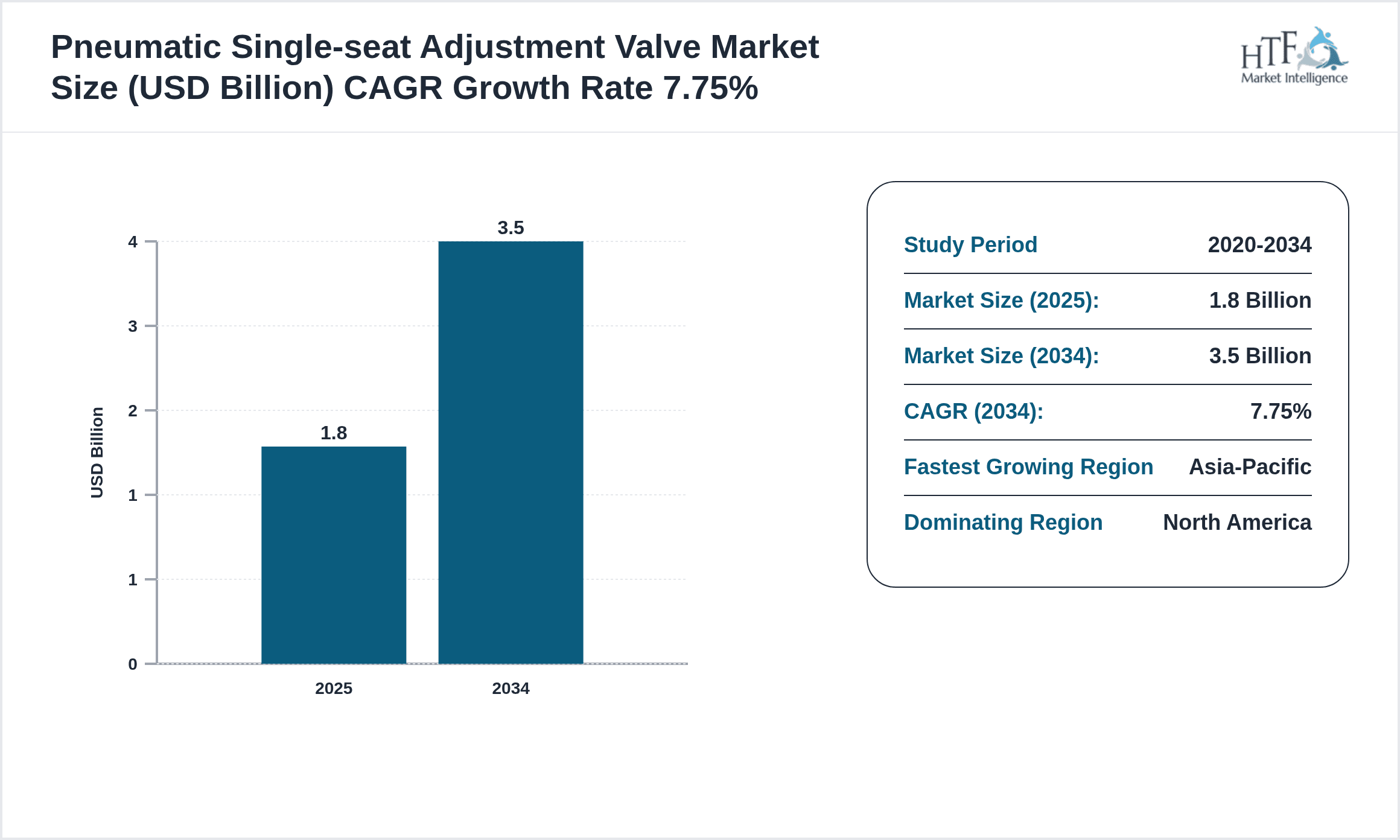
- •Key highlights include a market base size of USD 1.8 Billion in 2025, projected to reach USD 3.5 Billion by 2034, reflecting a CAGR of 7.75%. The year-on-year growth rate is approximately 7.9%, underscoring consistent demand across major regions. Technological advancements in valve materials and pneumatic actuation mechanisms enhance product lifespan and efficiency, which are pivotal growth contributors. Moreover, the integration of smart sensors and automation software in valve systems reflects increasing market sophistication. Market expansion is also driven by growing investments in oil & gas and water treatment sectors, particularly in emerging economies. Competitive dynamics are shaped by innovation-led strategies, strategic partnerships, and regional expansions by key players. The Asia-Pacific region is witnessing accelerated adoption driven by rapid industrial infrastructure development and increasing manufacturing activities.
- •The market offers significant value propositions by enabling precise flow control, enhancing process safety, and improving energy efficiency in industrial operations. Stakeholders including manufacturers, distributors, and end-users benefit from advanced valve technologies that reduce downtime and maintenance costs. Strategic importance is heightened in sectors reliant on fluid dynamics regulation, such as petrochemical and wastewater management industries. Furthermore, compliance with stringent environmental and safety regulations ensures sustained demand for high-quality pneumatic single-seat adjustment valves. Overall, this market represents a critical component within the broader industrial automation ecosystem, providing essential infrastructure for efficient and safe process management worldwide.
Competitive Landscape
The competitive landscape of the global Pneumatic Single-seat Adjustment Valve market is characterized by intense rivalry among established multinational corporations and emerging regional players. Market participants adopt diverse strategies including research and development investments, product portfolio diversification, and geographic expansion to enhance market share. Innovation is a prime competitive driver, with companies focusing on developing valves that incorporate smart technologies, enhanced durability, and compliance with evolving regulatory standards. Strategic partnerships and mergers and acquisitions serve as critical tactics for consolidating market presence and expanding technological capabilities. Pricing strategies are influenced by raw material costs, manufacturing efficiencies, and customer demand dynamics. Distribution channels are increasingly optimized through digital platforms and direct sales, enabling better customer reach and service. Barriers to market entry include high capital requirements and stringent quality certifications, which favor incumbents with established brand reputation and technical expertise. Regional competition varies, with North America and Europe exhibiting mature markets while Asia-Pacific presents opportunities for new entrants due to rapid industrial growth. Future competitive trends point toward increased integration of artificial intelligence and predictive maintenance features in valve systems, providing differentiated value propositions and fostering long-term customer loyalty.
Leading Companies in Pneumatic Single-seat Adjustment Valve Market
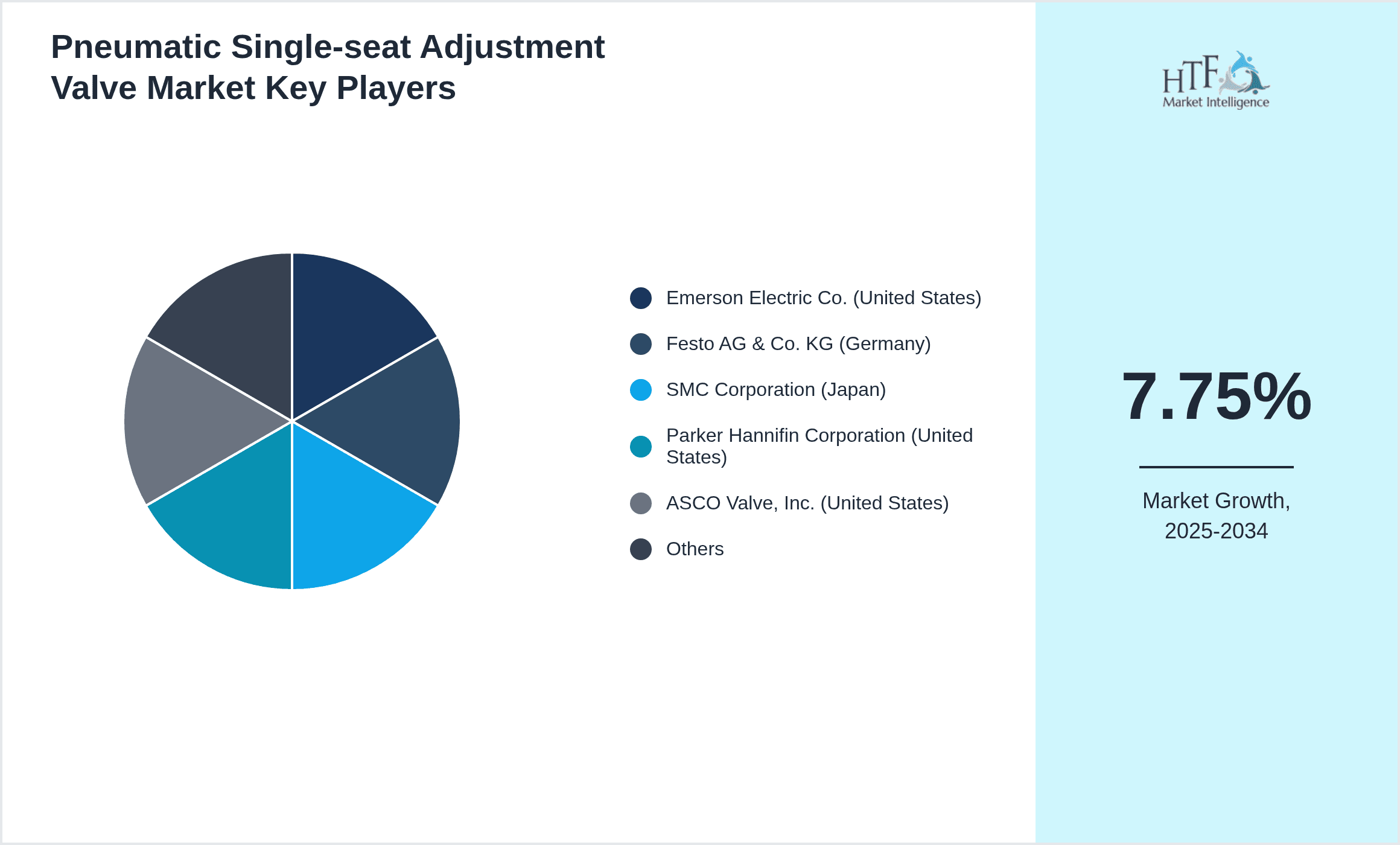
- •Emerson Electric Co. (United States)
- •Festo AG & Co. KG (Germany)
- •SMC Corporation (Japan)
- •Parker Hannifin Corporation (United States)
- •ASCO Valve, Inc. (United States)
- •Bosch Rexroth AG (Germany)
- •Norgren (United Kingdom)
- •Schneider Electric SE (France)
- •Burkert Fluid Control Systems (Germany)
- •Danfoss A/S (Denmark)
- •CKD Corporation (Japan)
- •Aventics GmbH (Germany)
- •Mindman Industrial Co., Ltd. (Taiwan)
- •Koganei Corporation (Japan)
- •Aventics GmbH (Germany)
- •SMC Pneumatics India Pvt. Ltd. (India)
- •MAC Valves, Inc. (United States)
- •Norgren Ltd. (United Kingdom)
- •Airtac International Group (Taiwan)
- •AirTAC (China)
- •Festo Didactic SE (Germany)
- •CKD Corporation (Japan)
- •Mindman Industrial Co., Ltd. (Taiwan)
- •Pneumax S.p.A. (Italy)
- •SMC Corporation of America (United States)
Market Breakdown
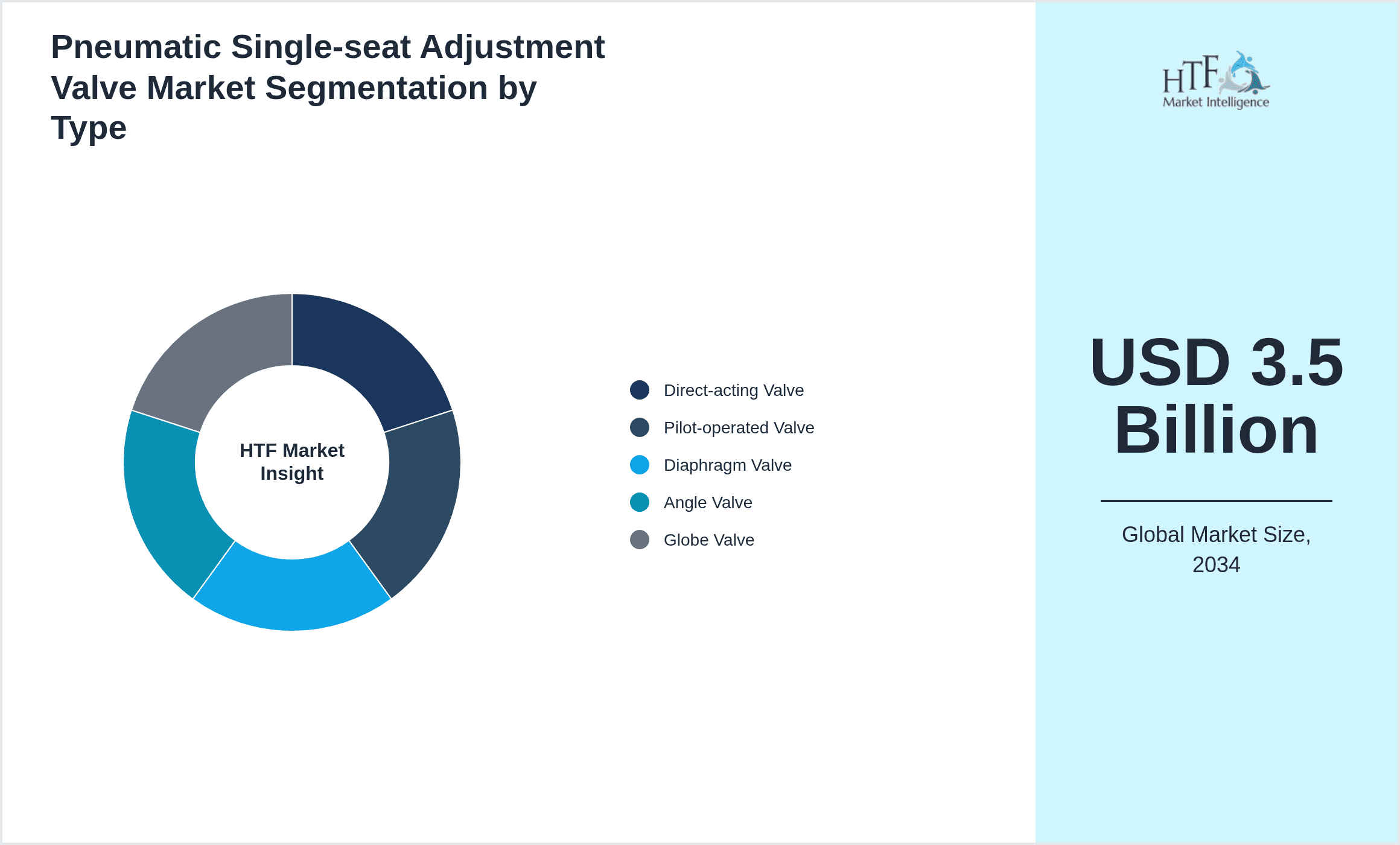
- •By Product Type
- ◦Direct-acting Valve
- ◦Pilot-operated Valve
- ◦Diaphragm Valve
- ◦Angle Valve
- ◦Globe Valve
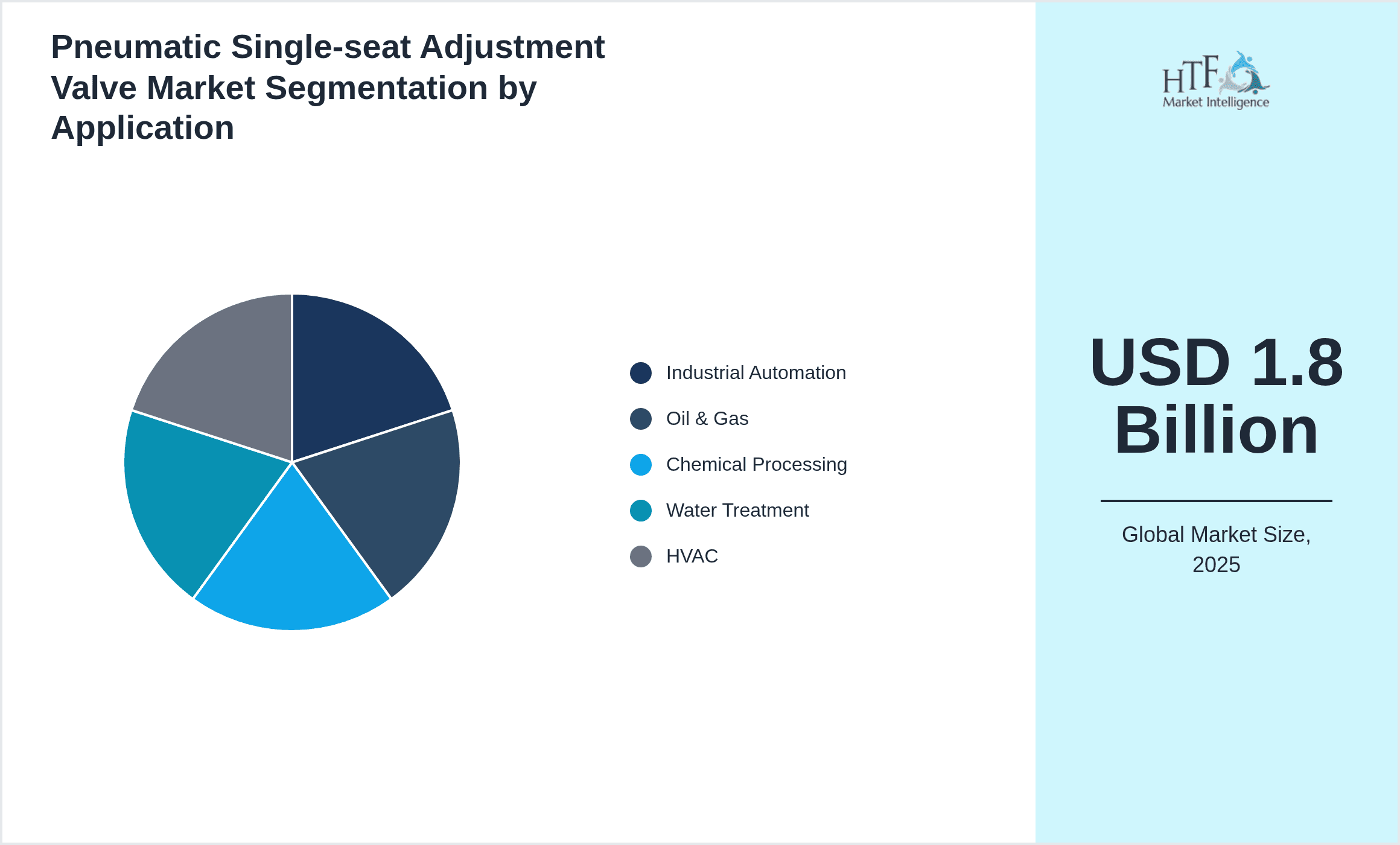
- •By Application
- ◦Industrial Automation
- ◦Oil & Gas
- ◦Chemical Processing
- ◦Water Treatment
- ◦HVAC
- •By End-Use Industry
- ◦Manufacturing
- ◦Energy & Utilities
- ◦Pharmaceuticals
- ◦Automotive
- •By Distribution Channel
- ◦Direct Sales
- ◦Distributors & Dealers
- ◦Online Sales
Growth Dynamics
- •Rising automation in manufacturing industries is a primary growth driver, with pneumatic single-seat adjustment valves essential for precise fluid control and process efficiency. Companies like Emerson and Festo have introduced advanced valve designs that enhance responsiveness and reduce operational downtime, boosting adoption worldwide.
- •Increasing regulatory emphasis on environmental safety and emission controls compels industries to upgrade their valve systems, driving demand for high-performance pneumatic valves that ensure leak-tight seals and reliable operation under harsh conditions.
- •Technological advancements, especially in smart actuation and IoT integration, enable real-time monitoring and predictive maintenance, significantly reducing unexpected failures and optimizing process control, attracting end-users towards modern valve solutions.
- •Expansion of oil & gas and chemical processing sectors, particularly in Asia-Pacific, fuels market growth, as these industries rely heavily on robust valve systems for safety and efficiency in complex fluid handling applications.
- •Growing urbanization and infrastructural development in emerging markets increase demand for water treatment and HVAC applications, requiring reliable pneumatic valves for efficient system management and energy conservation.
- •Investment in research and development by key players to improve valve materials and reduce energy consumption drives innovation, fostering competitive advantage and market expansion.
- •Increasing preference for energy-efficient and low-maintenance valve solutions among end-users stimulates demand for pneumatic single-seat adjustment valves, particularly in industries focused on sustainability and cost reduction.
Market Trends
- •The adoption of IoT-enabled pneumatic valves is accelerating, allowing for enhanced diagnostics and remote control, which improves operational efficiency and reduces downtime in industrial processes.
- •Smart valve technologies incorporating sensors and data analytics are becoming standard, enabling predictive maintenance and reducing unplanned outages, as demonstrated by recent product launches from Emerson and SMC Corporation.
- •Sustainability trends are driving the development of valves made from eco-friendly materials and designed for energy conservation, aligning with global environmental standards and corporate social responsibility goals.
- •Market players are increasingly focusing on modular valve designs to allow easy customization and integration into varied industrial systems, enhancing flexibility and reducing installation time.
- •Collaborations between valve manufacturers and digital technology firms are fostering innovation in automation and control systems, expanding the capabilities of pneumatic single-seat adjustment valves in process industries.
- •The shift toward Industry 4.0 frameworks encourages the incorporation of advanced control valves within smart factories, promoting seamless integration and data-driven decision-making.
- •Emergence of compact and lightweight valve designs caters to space-constrained applications, particularly in the automotive and pharmaceutical sectors, enhancing market appeal.
Market Opportunities
- •Expansion into emerging markets, especially in Asia-Pacific and Latin America, presents significant growth potential due to increasing industrial activities and infrastructural development requiring advanced valve systems.
- •Integration of smart technologies and IoT capabilities offers opportunities for product differentiation and entry into high-value segments demanding enhanced control and monitoring features.
- •Rising demand in renewable energy sectors such as bioenergy and hydropower creates new application avenues for pneumatic single-seat adjustment valves tailored for sustainable energy systems.
- •Customization and modularization of valve products to meet specific end-user requirements can unlock additional market segments and foster long-term customer relationships.
- •Collaborations with digital solution providers for integrated automation packages can enhance value propositions and expand the market footprint across industries.
- •Rising investments in water treatment infrastructure globally offer a lucrative opportunity for valves designed for high durability and corrosion resistance, addressing critical environmental needs.
- •Developing lightweight and compact valve designs addresses the growing demand in space-constrained applications, particularly in pharmaceuticals and automotive sectors, expanding market reach.
Market Challenges
- •High initial costs of advanced pneumatic single-seat adjustment valves limit adoption among small and medium enterprises, particularly in developing regions with budget constraints.
- •Complex regulatory environments and certification requirements across different regions pose compliance challenges for manufacturers, potentially delaying product launches and increasing costs.
- •Raw material price volatility, especially for metals and specialty polymers, impacts manufacturing costs and pricing strategies, affecting profitability and market competitiveness.
- •Technical limitations such as valve wear and susceptibility to leakage under extreme conditions necessitate continuous R&D efforts to improve reliability and lifespan, requiring significant investment.
- •Competition from alternative valve technologies, including electric and hydraulic actuated valves, may restrict market growth if pneumatic solutions do not evolve with technological advances.
- •Supply chain disruptions and logistics challenges, exacerbated by geopolitical tensions and global events, affect timely delivery and increase operational risks for manufacturers and distributors.
- •Shortage of skilled technicians for installation and maintenance of sophisticated pneumatic valve systems limits market penetration, especially in emerging markets.
Regulatory Framework
- •The Pressure Equipment Directive (PED) 2014/68/EU, enforced extensively between 2020 and 2025, mandates stringent safety and quality standards for valves used in European industrial applications, driving manufacturers to ensure compliance and certification.
- •The ASME Boiler and Pressure Vessel Code, Section VIII, implemented with updates between 2019 and 2025, governs the design and manufacturing of pressure valves in North America, emphasizing safety and durability requirements.
- •China's GB/T 12224-2019 standard for pneumatic valves sets technical specifications and testing protocols, impacting manufacturers targeting the Asia-Pacific market by enforcing rigorous quality controls.
- •The Environmental Protection Agency (EPA) regulations related to emissions and leak detection in the United States have tightened since 2021, compelling valve manufacturers to develop leak-proof and environmentally friendly products.
- •International Electrotechnical Commission (IEC) standards for pneumatic control systems have been updated recently, influencing valve manufacturers to integrate compatible control technologies and ensure interoperability across global markets.
Market Intelligence
- •15th January 2025, Emerson Electric Co. launched its latest range of smart pneumatic single-seat adjustment valves integrated with IoT sensors capable of real-time diagnostics and predictive maintenance. This new product line targets the industrial automation and oil & gas sectors, aiming to reduce downtime and operational costs. The valves feature enhanced corrosion resistance and energy-efficient actuation, aligning with global sustainability goals. Emerson's strategic objective is to strengthen its market position by addressing the growing demand for intelligent valve solutions in mature and emerging markets. Source: Official Emerson Electric Press Release.
- •10th March 2025, Festo AG & Co. KG introduced an innovative pilot-operated valve series featuring modular design and advanced pneumatic control technology. The new valves support customizable configurations for diverse industrial applications, including chemical processing and water treatment. Festo emphasized the valves’ improved responsiveness and reduced air consumption, contributing to operational efficiency and cost savings for end-users. The launch is part of Festo's broader strategy to integrate digitalization into pneumatic components and expand its global footprint, particularly in the Asia-Pacific region. Source: Festo Corporate News.
- •5th June 2025, Parker Hannifin Corporation announced a strategic partnership with a leading IoT software provider to enhance its valve product portfolio with connected solutions. The collaboration focuses on developing pneumatic single-seat adjustment valves equipped with predictive analytics capabilities to optimize maintenance schedules and improve process reliability. This initiative aims to meet the increasing demand for smart industrial components in sectors such as pharmaceuticals and energy. Parker Hannifin expects this partnership to accelerate market penetration and reinforce its leadership in valve innovation globally. Source: Parker Hannifin Investor Relations.
- •Market Intelligence: Recent developments and industry insights are being monitored. For latest updates, consult official company announcements and industry publications.
Regional Outlook
The North America currently holds a significant share of the market, primarily due to several key factors: increasing consumption rates, a burgeoning population, and robust economic momentum. These elements collectively drive demand, positioning this region as a leader in the market. On the other hand, Asia-Pacific is rapidly emerging as the fastest-growing area within the industry. This remarkable growth can be attributed to swift infrastructure development, the expansion of various industrial sectors, and a marked increase in consumer demand. These dynamics make this region a crucial player in shaping future market growth.
In our report, we cover a comprehensive analysis of the following regions and countries:
- North America
- LATAM
- West Europe
- Central & Eastern Europe
- Northern Europe
- Southern Europe
- East Asia
- Southeast Asia
- South Asia
- Central Asia
- Oceania
- MEA
| Feature | Details |
|---|---|
| Base Year Market Size | USD 1.8 Billion |
| Forecast Year Market Size | USD 3.5 Billion |
| CAGR | 7.75% |
| Forecast Period | 2026 to 2033 |
| YoY Growth | 7.9% |
| Scope of Report | Market is segmented by Product Type (Direct-acting Valve, Pilot-operated Valve, Diaphragm Valve, Angle Valve, Globe Valve), Application (Industrial Automation, Oil & Gas, Chemical Processing, Water Treatment, HVAC), End-Use Industry (Manufacturing, Energy & Utilities, Pharmaceuticals, Automotive), Distribution Channel (Direct Sales, Distributors & Dealers, Online Sales) |
| Regions Covered | North America, LATAM, West Europe, Central & Eastern Europe, Northern Europe, Southern Europe, East Asia, Southeast Asia, South Asia, Central Asia, Oceania, MEA |
| Key Companies | Emerson Electric Co. (United States), Festo AG & Co. KG (Germany), SMC Corporation (Japan), Parker Hannifin Corporation (United States), ASCO Valve, Inc. (United States), Bosch Rexroth AG (Germany), Norgren (United Kingdom), Schneider Electric SE (France), Burkert Fluid Control Systems (Germany), Danfoss A/S (Denmark), CKD Corporation (Japan), Aventics GmbH (Germany), Mindman Industrial Co., Ltd. (Taiwan), Koganei Corporation (Japan), Aventics GmbH (Germany), SMC Pneumatics India Pvt. Ltd. (India), MAC Valves, Inc. (United States), Norgren Ltd. (United Kingdom), Airtac International Group (Taiwan), AirTAC (China), Festo Didactic SE (Germany), CKD Corporation (Japan), Mindman Industrial Co., Ltd. (Taiwan), Pneumax S.p.A. (Italy), SMC Corporation of America (United States) |
Global Pneumatic Single-seat Adjustment Valve Market Size, Growth & Revenue 2025-2034 - Table of Contents
Multidisciplinary researcher with 10+ years of experience uncovering insights across diverse domains focused on uncovering insights that drive informed decisions.
Frequently Asked Questions (FAQ):
The Market market is expected to see significant growth and value in 2025.
North America currently leads the market, followed by Europe and Asia-Pacific.
Key growth drivers include increasing activities, rising demand for innovative solutions, technological advancements, and growing preference for efficient products.