
Global Nanopore Single Molecule Sequencer Market Size, Growth & Revenue 2024-2034
Global Nanopore Single Molecule Sequencer Market is segmented by Product Type (Portable Sequencers, Benchtop Sequencers, High-Throughput Sequencers, Mid-Throughput Sequencers, Low-Throughput Sequencers), Application (Genomic Research, Clinical Diagnostics, Environmental Monitoring, Agricultural Biotechnology, Forensic Analysis), End-User (Academic and Research Institutes, Hospitals and Diagnostic Laboratories, Biotechnology and Pharmaceutical Companies, Agriculture and Environmental Agencies), Distribution Channel (Direct Sales, Distributors, Online Sales), and Geography (North America, LATAM, West Europe, Central & Eastern Europe, Northern Europe, Southern Europe, East Asia, Southeast Asia, South Asia, Central Asia, Oceania, MEA)
Pricing
Report Overview
Executive Summary
- •The global Nanopore Single Molecule Sequencer market represents a cutting-edge segment of molecular diagnostics and genomic analysis driven by the demand for rapid, accurate, and portable sequencing solutions. These devices enable the direct, real-time analysis of nucleic acids through nanopore technology, bypassing traditional amplification steps and offering unique advantages such as long-read sequencing and portability. The market's scope includes a variety of sequencers categorized by throughput capacity and form factor, catering to applications in genomic research, clinical diagnostics, environmental monitoring, agricultural studies, and forensic sciences. Recent technological advances have facilitated miniaturization and cost reduction, expanding the accessibility of nanopore sequencing. Increasing adoption in personalized medicine and infectious disease detection further underscores the strategic importance of this market. Forecasts indicate robust growth, fueled by ongoing innovations, regulatory support, and growing demand across developed and emerging economies worldwide.
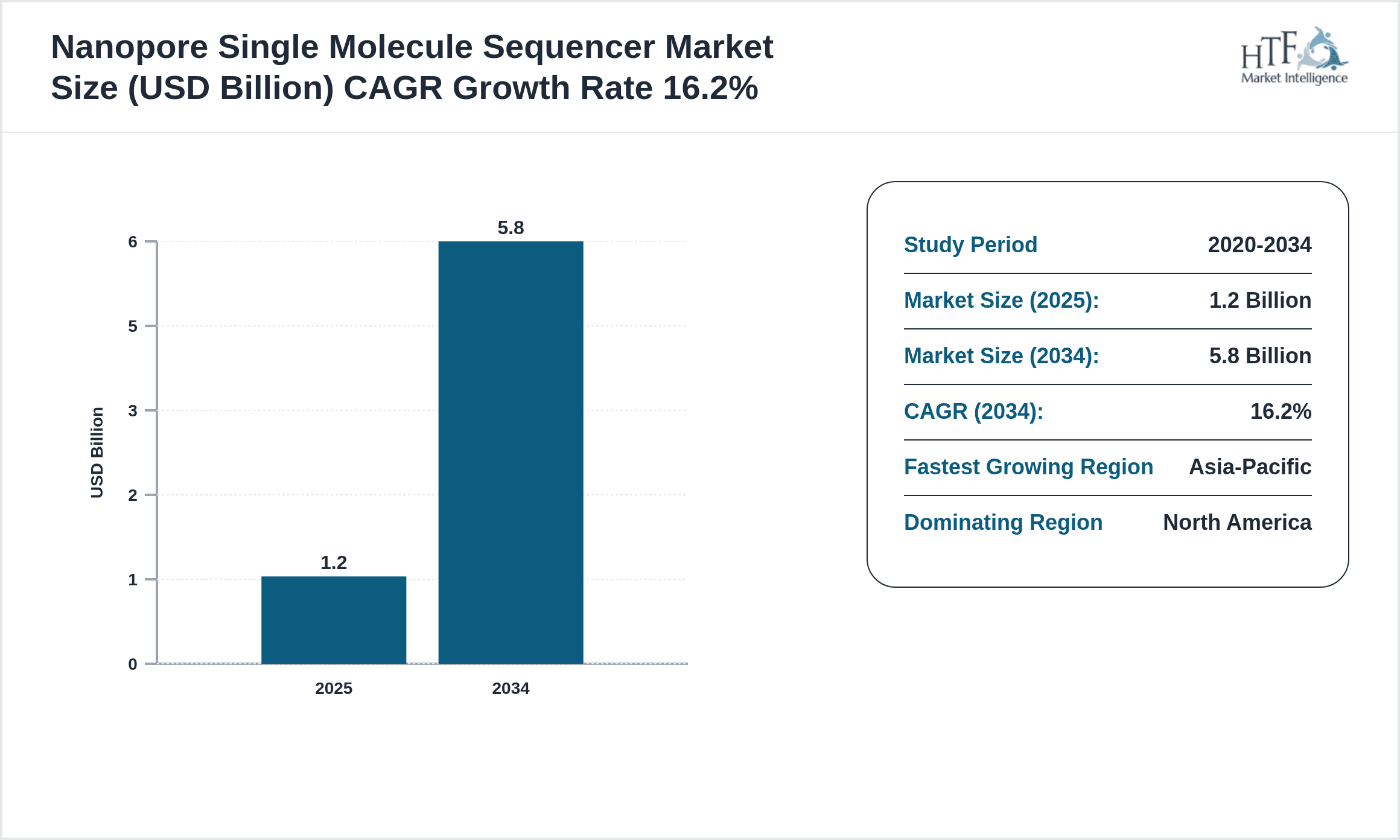
- •Key market highlights include a base market size of USD 1.2 billion in 2024, projected to reach USD 5.8 billion by 2034, reflecting a CAGR of 16.2%. Portable sequencers currently dominate the product type segment owing to their flexibility and ease of use in diverse settings. Genomic research remains the leading application, followed closely by clinical diagnostics, driven by the rising prevalence of genetic diseases and demand for precision medicine. Geographically, North America leads the market with substantial investments and technological advancements, whereas Asia-Pacific is the fastest-growing region fueled by expanding biotechnology sectors and healthcare infrastructure. Market players are focusing on product innovation, strategic collaborations, and expansion to capture emerging opportunities globally.
- •The Nanopore Single Molecule Sequencer market offers significant value across multiple industries including healthcare, biotechnology, agriculture, and environmental sciences. Its ability to provide real-time and accurate sequencing data at reduced costs is transforming research methodologies and diagnostic protocols. Stakeholders, including device manufacturers, research institutions, and healthcare providers, benefit from enhanced operational efficiency and new revenue streams. Moreover, ongoing advancements in nanopore technology are expected to reduce barriers to adoption, enabling broader application scopes and fostering a vibrant ecosystem of innovation and collaboration worldwide.
Competitive Landscape
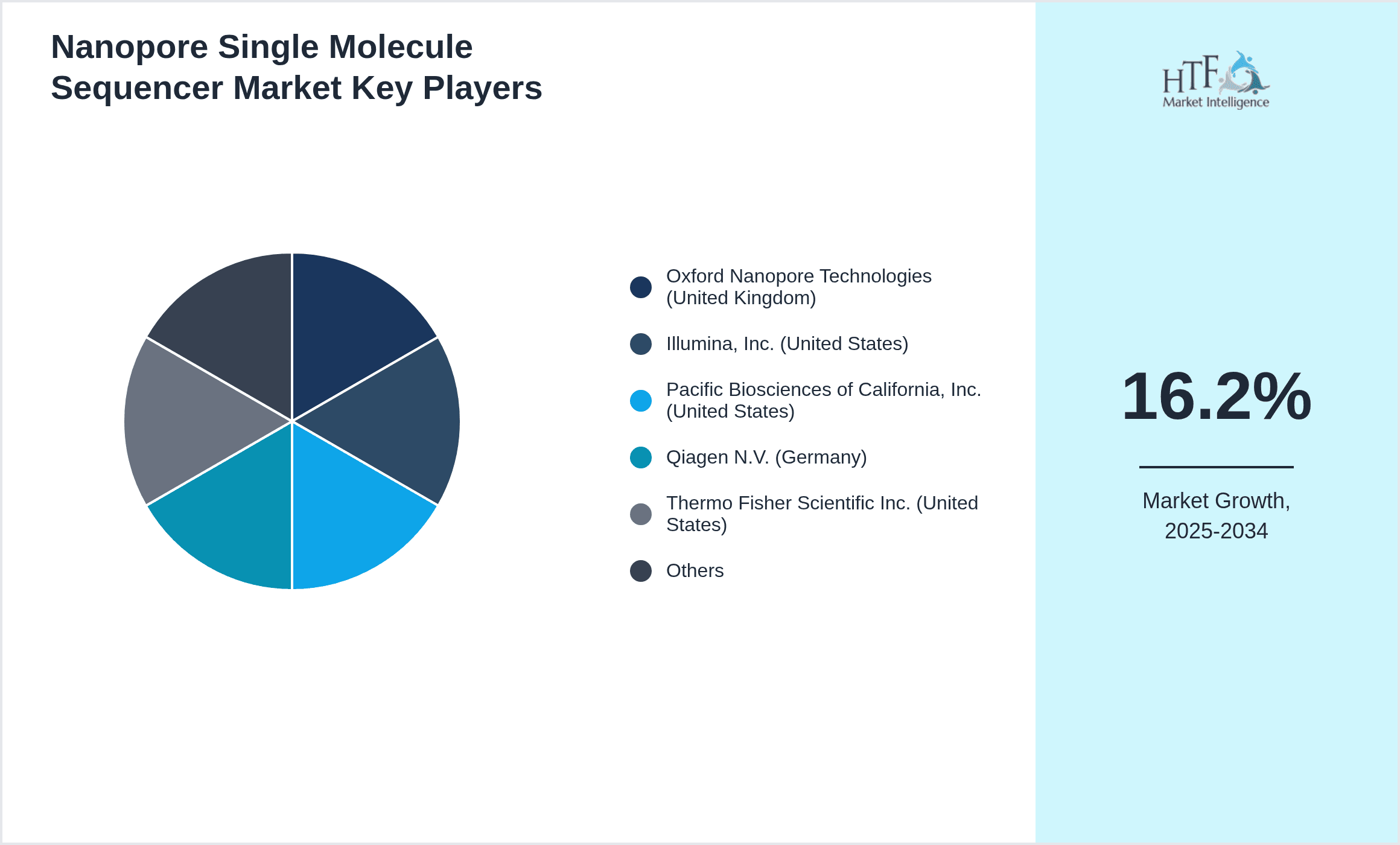
The competitive landscape in the Nanopore Single Molecule Sequencer market is characterized by intense rivalry among established global leaders and emerging innovative startups. Companies compete primarily through technological innovation, product differentiation, and strategic partnerships to enhance their market positioning. Continuous R&D investments drive novel sequencing solutions with improved accuracy, throughput, and portability, fostering a dynamic environment of technological advancement. Market players adopt aggressive pricing strategies and expand distribution networks to capture diverse customer segments. Collaborations with academic institutions and healthcare organizations are common to accelerate product development and validation. Additionally, mergers and acquisitions serve as key strategies for consolidating market share and expanding geographical footprint, while regulatory compliance and intellectual property management remain critical competitive factors. The market is expected to witness sustained innovation-led competition with a focus on expanding application domains and improving user accessibility in the coming years.
Prominent Players in Nanopore Single Molecule Sequencer Market
- •Oxford Nanopore Technologies (United Kingdom)
- •Illumina, Inc. (United States)
- •Pacific Biosciences of California, Inc. (United States)
- •Qiagen N.V. (Germany)
- •Thermo Fisher Scientific Inc. (United States)
- •Genia Technologies (United States)
- •BGI Group (China)
- •Roche Diagnostics (Switzerland)
- •Agilent Technologies, Inc. (United States)
- •Fasteris SA (Switzerland)
- •Genapsys, Inc. (United States)
- •Strand Genomics Pvt. Ltd. (India)
- •Novogene Corporation (China)
- •Helicos Biosciences Corporation (United States)
- •Ion Torrent (United States)
- •Genomatica, Inc. (United States)
- •Nabsys, Inc. (United States)
- •Qorvo, Inc. (United States)
- •10x Genomics, Inc. (United States)
- •Genomic Vision (France)
- •Twist Bioscience Corporation (United States)
- •SOPHiA GENETICS (Switzerland)
- •Ionis Pharmaceuticals, Inc. (United States)
- •Molecular Devices LLC (United States)
- •GenoCare (China)
Market Breakdown
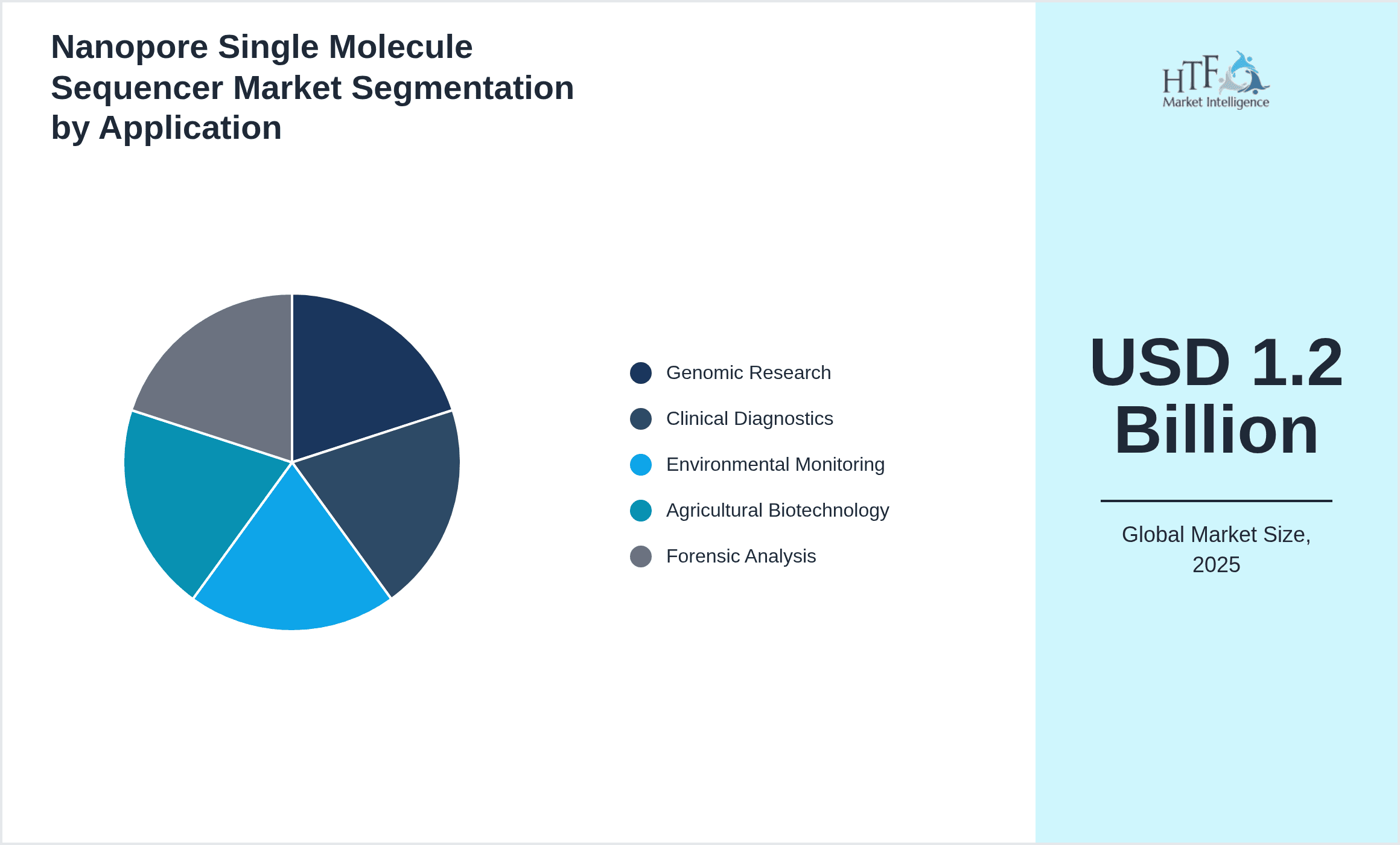
- •By Product Type
- ◦Portable Sequencers
- ◦Benchtop Sequencers
- ◦High-Throughput Sequencers
- ◦Mid-Throughput Sequencers
- ◦Low-Throughput Sequencers
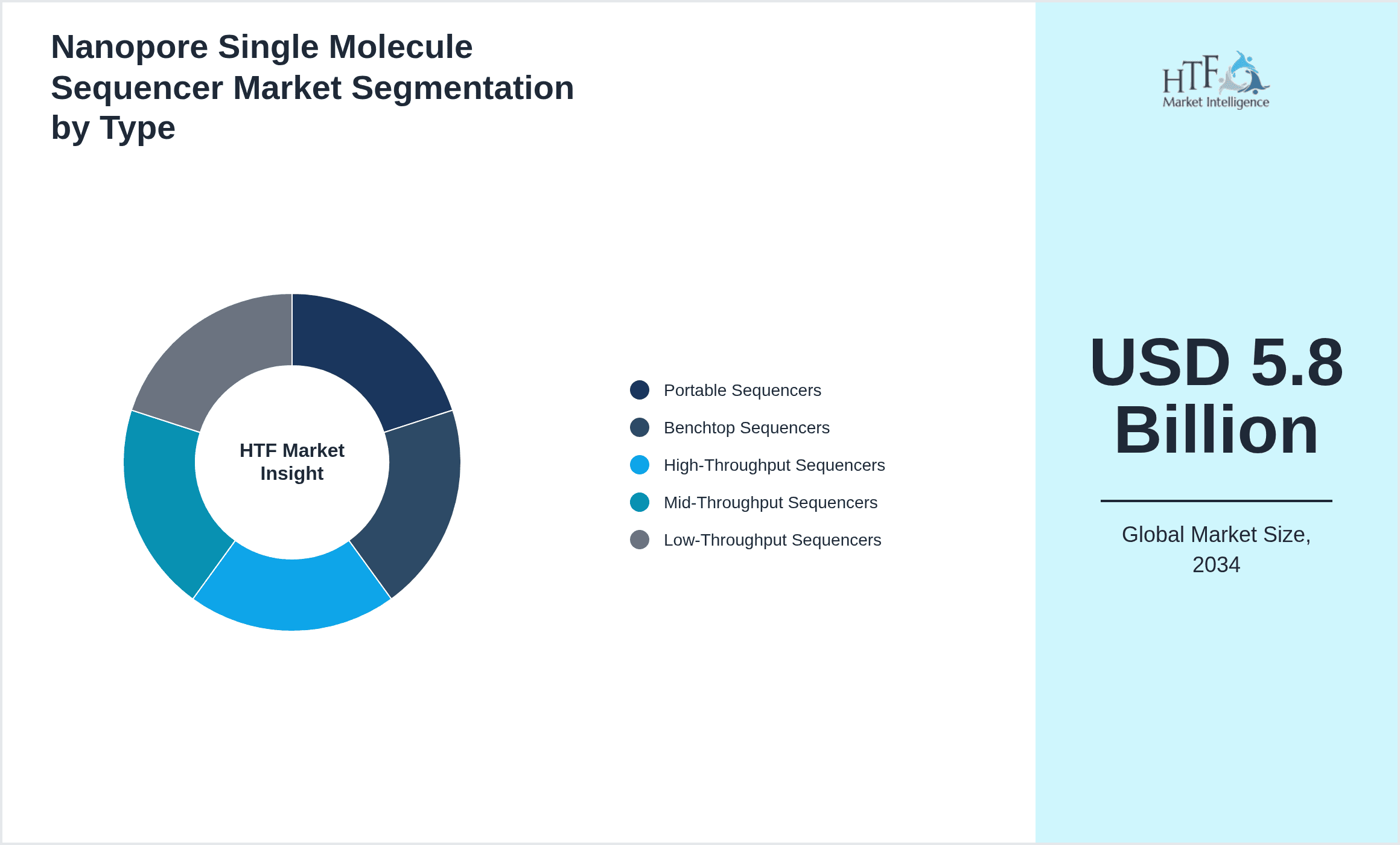
- •By Application
- ◦Genomic Research
- ◦Clinical Diagnostics
- ◦Environmental Monitoring
- ◦Agricultural Biotechnology
- ◦Forensic Analysis
- •By End-User
- ◦Academic and Research Institutes
- ◦Hospitals and Diagnostic Laboratories
- ◦Biotechnology and Pharmaceutical Companies
- ◦Agriculture and Environmental Agencies
- •By Distribution Channel
- ◦Direct Sales
- ◦Distributors
- ◦Online Sales
Growth Dynamics
- •Increasing demand for rapid and accurate genomic sequencing is a primary growth driver, with nanopore sequencing providing real-time data critical for research and clinical decision-making. The technology's capability to analyze long DNA and RNA fragments without amplification enhances its appeal across multiple sectors.
- •Technological advancements such as miniaturization and improved nanopore chemistry have expanded the usability of portable sequencers, enabling point-of-care diagnostics and field-based environmental monitoring, thus accelerating market adoption.
- •Rising prevalence of genetic diseases and infectious pathogens has increased the need for precise diagnostic tools, propelling clinical applications of nanopore sequencing particularly in personalized medicine and epidemiology.
- •Government and private sector investments in genomics infrastructure and research initiatives worldwide are fueling market expansion by supporting development and deployment of nanopore sequencing technologies.
- •Collaborations and partnerships among sequencing technology providers, research organizations, and healthcare institutions are driving innovation and facilitating access to new markets and applications.
Market Trends
- •There is a growing trend towards integration of nanopore sequencers with cloud-based bioinformatics platforms, allowing seamless data analysis and sharing across research and clinical communities.
- •Adoption of nanopore sequencing in real-time pathogen surveillance and outbreak management is rising, exemplified by its use during recent global health crises, demonstrating its critical role in public health.
- •Manufacturers are increasingly focusing on developing user-friendly interfaces and automated workflows to broaden market reach beyond specialized laboratories to point-of-care settings.
- •Sustainability is influencing market trends, with companies striving to reduce reagent consumption and device energy usage to minimize environmental impact while maintaining high sequencing accuracy.
- •Collaborative ecosystems involving device makers, software developers, and end-users are evolving to create tailored sequencing solutions addressing specific application needs.
Market Opportunities
- •Expanding applications in non-clinical fields such as agriculture, food safety, and environmental conservation offer untapped growth potential for nanopore sequencing technologies.
- •Emerging markets in Asia-Pacific and Latin America present significant opportunities due to growing investments in biotechnology and healthcare infrastructure alongside increasing awareness of genomic technologies.
- •Integration of artificial intelligence and machine learning with nanopore sequencing data analytics can enhance accuracy and speed, creating new value propositions for end-users.
- •Development of cost-effective, high-throughput nanopore sequencers aimed at large-scale population genomics and personalized medicine initiatives can substantially increase market penetration.
- •Strategic partnerships between sequencing companies and pharmaceutical firms can accelerate drug discovery processes, fueling demand for advanced sequencing solutions.
Market Challenges
- •High initial investment costs and maintenance expenses for advanced nanopore sequencers may limit adoption among smaller research entities and emerging market players.
- •Technical challenges such as sequencing errors and data interpretation complexities require ongoing improvements in device accuracy and bioinformatics tools.
- •Stringent regulatory approvals and compliance requirements across different regions can delay product launches and increase time-to-market for new sequencing technologies.
- •Competition from alternative sequencing technologies like sequencing by synthesis and single-molecule real-time sequencing poses market share challenges.
- •Supply chain disruptions and shortage of skilled personnel for operating sophisticated sequencing platforms may hinder consistent service delivery and market expansion.
Regulatory Framework
- •The introduction of the EU In Vitro Diagnostic Medical Devices Regulation (IVDR) between 2017 and 2024 has imposed rigorous compliance requirements on nanopore sequencer manufacturers, emphasizing safety and performance standards, impacting market entry timelines and cost structures.
- •The U.S. FDA has enhanced oversight of next-generation sequencing devices since 2018, mandating comprehensive validation and clinical evidence submissions for diagnostic applications, influencing product development strategies.
- •Data privacy regulations such as GDPR in Europe and HIPAA in the United States affect the handling and storage of genomic data generated by nanopore sequencing, requiring robust cybersecurity measures.
- •Regional mandates for environmental compliance and electronic waste management have prompted manufacturers to develop sustainable sequencing platforms and recycling programs.
- •Government initiatives promoting precision medicine and genomic research, including funding and streamlined regulatory pathways, have positively influenced market growth by facilitating technology adoption.
Market Intelligence
- •15th February 2025, Oxford Nanopore Technologies launched its latest portable sequencer, featuring enhanced read accuracy and extended battery life, targeting clinical diagnostics and field research applications globally. This device integrates advanced nanopore chemistry and AI-driven data analysis to deliver rapid sequencing with unprecedented precision, positioning the company as a leader in portable genomic solutions. The launch underscores the growing demand for point-of-care sequencing and real-time monitoring in healthcare and environmental sectors. Source: Official Oxford Nanopore Technologies press release
- •10th April 2025, Illumina, Inc. introduced a new benchtop sequencer optimized for mid-throughput applications, combining affordability with high accuracy to serve academic and clinical laboratories. The platform supports multiplexed sample processing and streamlined workflows, aiming to expand accessibility to next-generation sequencing technology. Illumina's strategic focus on affordable sequencing solutions bolsters its competitive stance against emerging nanopore technologies. Source: Illumina official website
- •5th June 2025, Pacific Biosciences completed the acquisition of a bioinformatics startup specializing in real-time nanopore data analytics, enhancing its capabilities in integrating sequencing data with AI-powered interpretation tools. This acquisition aims to accelerate product innovation and improve customer experience by delivering actionable insights from complex genomic datasets, reinforcing the company's position in the evolving sequencing market. Source: Pacific Biosciences press announcement
- •20th August 2025, Thermo Fisher Scientific announced a strategic partnership with a leading agricultural biotech firm to develop customized nanopore sequencing solutions for crop genomics and pathogen detection. This collaboration is set to expand market reach into the agricultural sector, leveraging Thermo Fisher's distribution network and sequencing expertise to address emerging challenges in food security and sustainable farming. Source: Thermo Fisher Scientific news release
Regional Outlook
The North America currently holds a significant share of the market, primarily due to several key factors: increasing consumption rates, a burgeoning population, and robust economic momentum. These elements collectively drive demand, positioning this region as a leader in the market. On the other hand, Asia-Pacific is rapidly emerging as the fastest-growing area within the industry. This remarkable growth can be attributed to swift infrastructure development, the expansion of various industrial sectors, and a marked increase in consumer demand. These dynamics make this region a crucial player in shaping future market growth.
In our report, we cover a comprehensive analysis of the following regions and countries:
- North America
- LATAM
- West Europe
- Central & Eastern Europe
- Northern Europe
- Southern Europe
- East Asia
- Southeast Asia
- South Asia
- Central Asia
- Oceania
- MEA
| Feature | Details |
|---|---|
| Base Year Market Size | USD 1.2 Billion |
| Forecast Year Market Size | USD 5.8 Billion |
| CAGR | 16.2% |
| Forecast Period | 2026 to 2033 |
| YoY Growth | 15.3% |
| Scope of Report | Market is segmented by Product Type (Portable Sequencers, Benchtop Sequencers, High-Throughput Sequencers, Mid-Throughput Sequencers, Low-Throughput Sequencers), Application (Genomic Research, Clinical Diagnostics, Environmental Monitoring, Agricultural Biotechnology, Forensic Analysis), End-User (Academic and Research Institutes, Hospitals and Diagnostic Laboratories, Biotechnology and Pharmaceutical Companies, Agriculture and Environmental Agencies), Distribution Channel (Direct Sales, Distributors, Online Sales) |
| Regions Covered | North America, LATAM, West Europe, Central & Eastern Europe, Northern Europe, Southern Europe, East Asia, Southeast Asia, South Asia, Central Asia, Oceania, MEA |
| Key Companies | Oxford Nanopore Technologies (United Kingdom), Illumina, Inc. (United States), Pacific Biosciences of California, Inc. (United States), Qiagen N.V. (Germany), Thermo Fisher Scientific Inc. (United States), Genia Technologies (United States), BGI Group (China), Roche Diagnostics (Switzerland), Agilent Technologies, Inc. (United States), Fasteris SA (Switzerland), Genapsys, Inc. (United States), Strand Genomics Pvt. Ltd. (India), Novogene Corporation (China), Helicos Biosciences Corporation (United States), Ion Torrent (United States), Genomatica, Inc. (United States), Nabsys, Inc. (United States), Qorvo, Inc. (United States), 10x Genomics, Inc. (United States), Genomic Vision (France), Twist Bioscience Corporation (United States), SOPHiA GENETICS (Switzerland), Ionis Pharmaceuticals, Inc. (United States), Molecular Devices LLC (United States), GenoCare (China) |
Global Nanopore Single Molecule Sequencer Market Size, Growth & Revenue 2024-2034 - Table of Contents
Frequently Asked Questions (FAQ):
The Compact Track Loaders market is projected to grow at a CAGR of 6.8% from 2025 to 2030, driven by increasing demand in construction and agricultural sectors.
North America currently leads the market with approximately 45% market share, followed by Europe at 28% and Asia-Pacific at 22%. The remaining regions account for 5% of the global market.
Key growth drivers include increasing construction activities, rising demand for versatile equipment in agriculture, technological advancements in track loader design, and growing preference for compact equipment in urban construction projects.