
Global Gold Cup EEG Electrode Market Size, Growth & Revenue 2025-2034
Global Gold Cup EEG Electrode Market is segmented by Product Type (Silver Chloride Electrodes, Gold Cup Electrodes, Disposable Electrodes, Reusable Electrodes, Dry Electrodes), Application (Clinical Diagnostics, Research Laboratories, Neurofeedback, Brain-Computer Interface, Others), End-Use Industry (Hospitals & Clinics, Research & Academic Institutes, Home Healthcare, Neurotechnology Companies), Distribution Channel (Direct Sales, Distributors & Dealers, Online Sales), and Geography (North America, LATAM, West Europe, Central & Eastern Europe, Northern Europe, Southern Europe, East Asia, Southeast Asia, South Asia, Central Asia, Oceania, MEA)
Pricing
Report Overview
Executive Summary
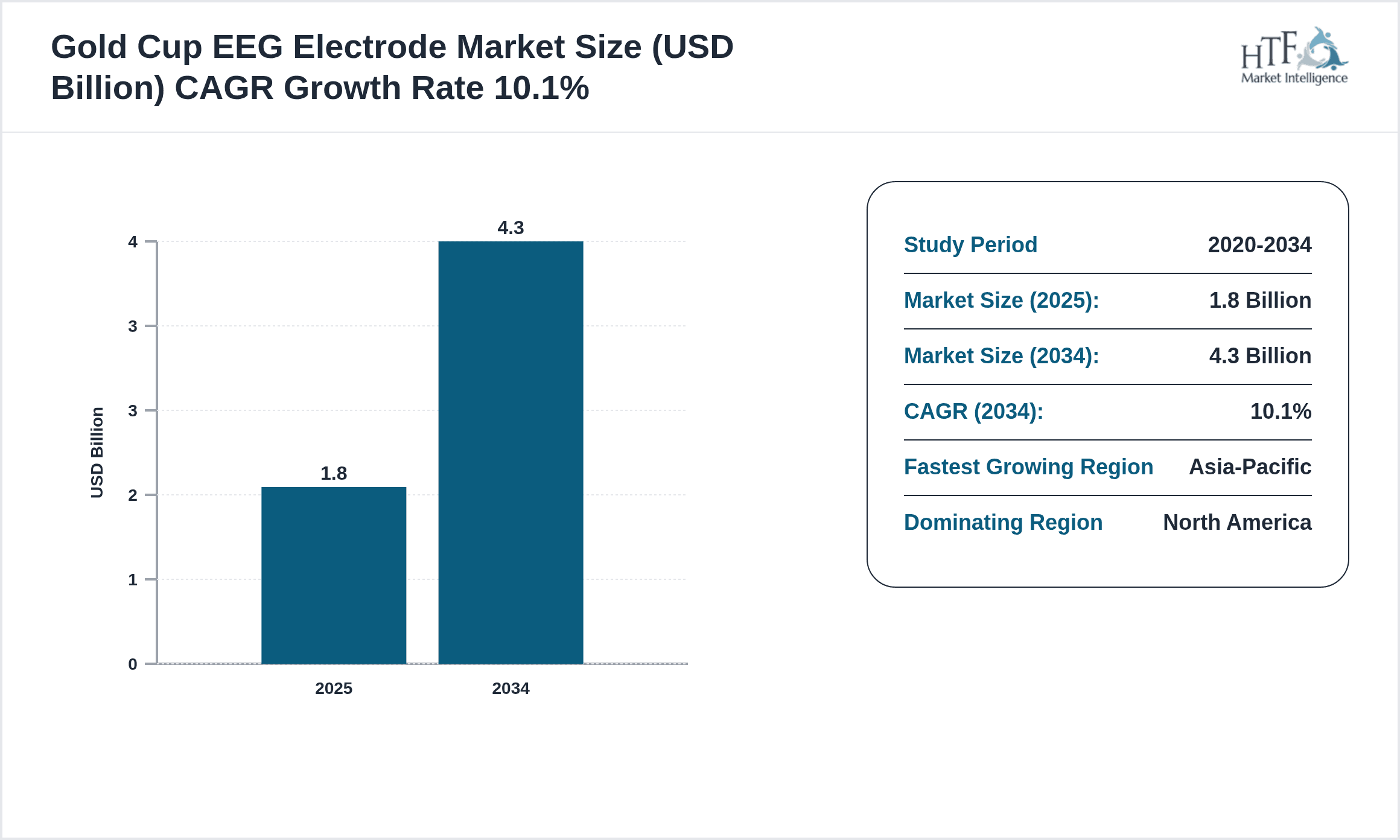
- •The global Gold Cup EEG Electrode market is characterized by its critical function in neurological diagnostics and research, with heightened adoption in clinical and neurotechnology domains. This market includes a spectrum of electrode types, notably gold cup electrodes favored for their reliability and signal clarity. Applications range from hospital EEG monitoring to brain-computer interface development and neurofeedback therapies. The market's value chain integrates advanced manufacturing processes, raw material sourcing, and distribution channels to healthcare and research sectors globally. Increasing prevalence of neurological disorders and technological progress in EEG systems are primary drivers fueling robust market growth. Additionally, the emergence of disposable electrodes enhances hygiene and ease of use, widening the scope across outpatient and home healthcare settings. The market is highly competitive with continuous product innovation targeting enhanced patient comfort, accuracy, and durability. Regional dynamics show North America as a dominant market due to advanced healthcare infrastructure, while Asia-Pacific is rapidly expanding owing to growing healthcare investments and rising neurological disease awareness. Forecast to 2034, the market is expected to grow at a CAGR of approximately 10.1%, reflecting strong demand and innovation trends. Strategic collaborations and regulatory support further underpin market expansion, making the Gold Cup EEG Electrode sector a vital component of the global neurodiagnostic ecosystem.
- •Key market highlights include a base market size of USD 1.8 Billion in 2025, with projections to reach USD 4.3 Billion by 2034. The compound annual growth rate (CAGR) stands at 10.1%, supported by a year-on-year growth rate of 9.7%. Dominance by North America is attributed to advanced neurological healthcare and research funding, while Asia-Pacific leads as the fastest growing region driven by expanding healthcare access and rising neurological disorder cases. Gold Cup electrodes remain the leading product type, prized for precision and reusability, whereas disposable electrodes exhibit the fastest growth due to infection control and convenience factors. Market dynamics are influenced by technological advancements, increasing clinical applications, and a growing patient base for neurological evaluation worldwide.
- •The strategic importance of the Gold Cup EEG Electrode market extends across medical device manufacturers, healthcare providers, research institutions, and technology innovators. The market supports critical neurological assessments that influence treatment decisions and patient outcomes. For stakeholders, this sector offers opportunities in product development, regional expansion, and integration with emerging neurotechnology platforms. The evolving regulatory landscape and increasing emphasis on patient safety and data accuracy enhance the market’s value proposition. As neurological health awareness rises globally, demand for reliable EEG electrodes intensifies, underpinning sustained investment and innovation potential within this market segment.
Competitive Landscape
The global Gold Cup EEG Electrode market exhibits a dynamic competitive environment shaped by rapid technological innovation, strategic partnerships, and market expansion efforts. Leading firms focus on enhancing electrode materials and design to improve signal fidelity and patient comfort, catering to diverse clinical and research needs. Competitive strategies include investment in R&D for disposable and reusable electrode variants, cost optimization, and expansion of distribution networks to emerging markets. Market players leverage collaborations with healthcare institutions and technology companies to integrate electrodes with advanced EEG systems and brain-computer interfaces. Pricing strategies are balanced to maintain affordability while ensuring premium quality. Barriers to entry include stringent regulatory requirements and the need for clinical validation, which consolidate market leadership among established companies. Regional competition is pronounced with North America and Europe hosting mature markets, while Asia-Pacific presents growth opportunities due to increasing healthcare expenditure and neurological disease prevalence. Future trends suggest intensifying innovation in electrode technology, including wireless and dry electrodes, to capture evolving market segments and improve user experience.
Leading Companies in Gold Cup EEG Electrode Market
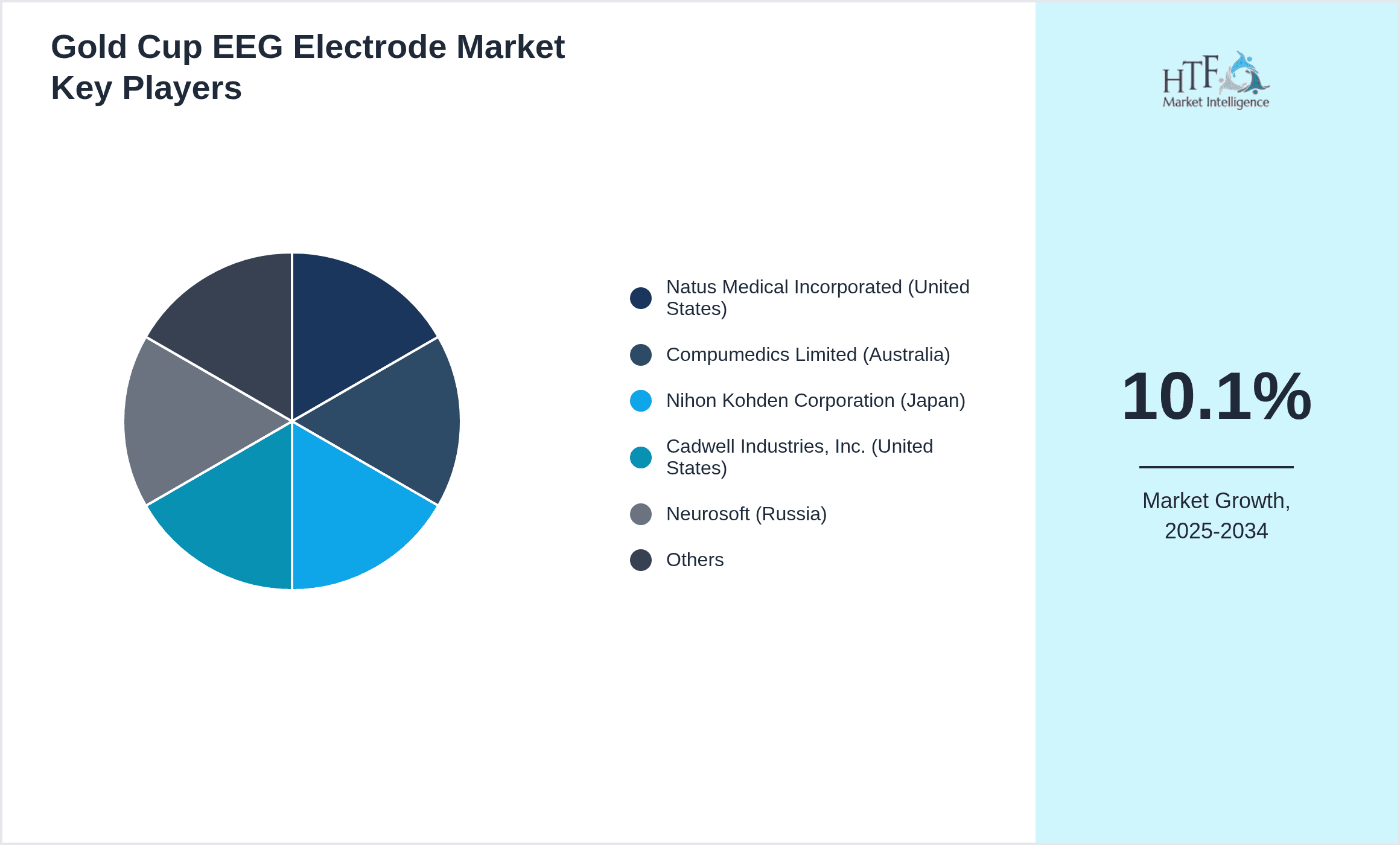
- •Natus Medical Incorporated (United States)
- •Compumedics Limited (Australia)
- •Nihon Kohden Corporation (Japan)
- •Cadwell Industries, Inc. (United States)
- •Neurosoft (Russia)
- •Ad-Tech Medical Instrument Corporation (United States)
- •Grass Technologies (United States)
- •BIOPAC Systems, Inc. (United States)
- •Deymed Diagnostic (Czech Republic)
- •Cortech Solutions (United States)
- •Soterix Medical Inc. (United States)
- •ANT Neuro (Netherlands)
- •Electrical Geodesics, Inc. (United States)
- •Brain Products GmbH (Germany)
- •EasyCap GmbH (Germany)
- •Medtronic plc (Ireland)
- •Philips Healthcare (Netherlands)
- •Nihon Kohden Europe GmbH (Germany)
- •Compumedics Neuroscan (Australia)
- •Neuroelectrics (Spain)
- •MediCapture (United States)
- •NeuroSky, Inc. (United States)
- •Wearable Sensing (United States)
- •G.Tec Medical Engineering GmbH (Austria)
- •Mind Media BV (Netherlands)
Market Breakdown
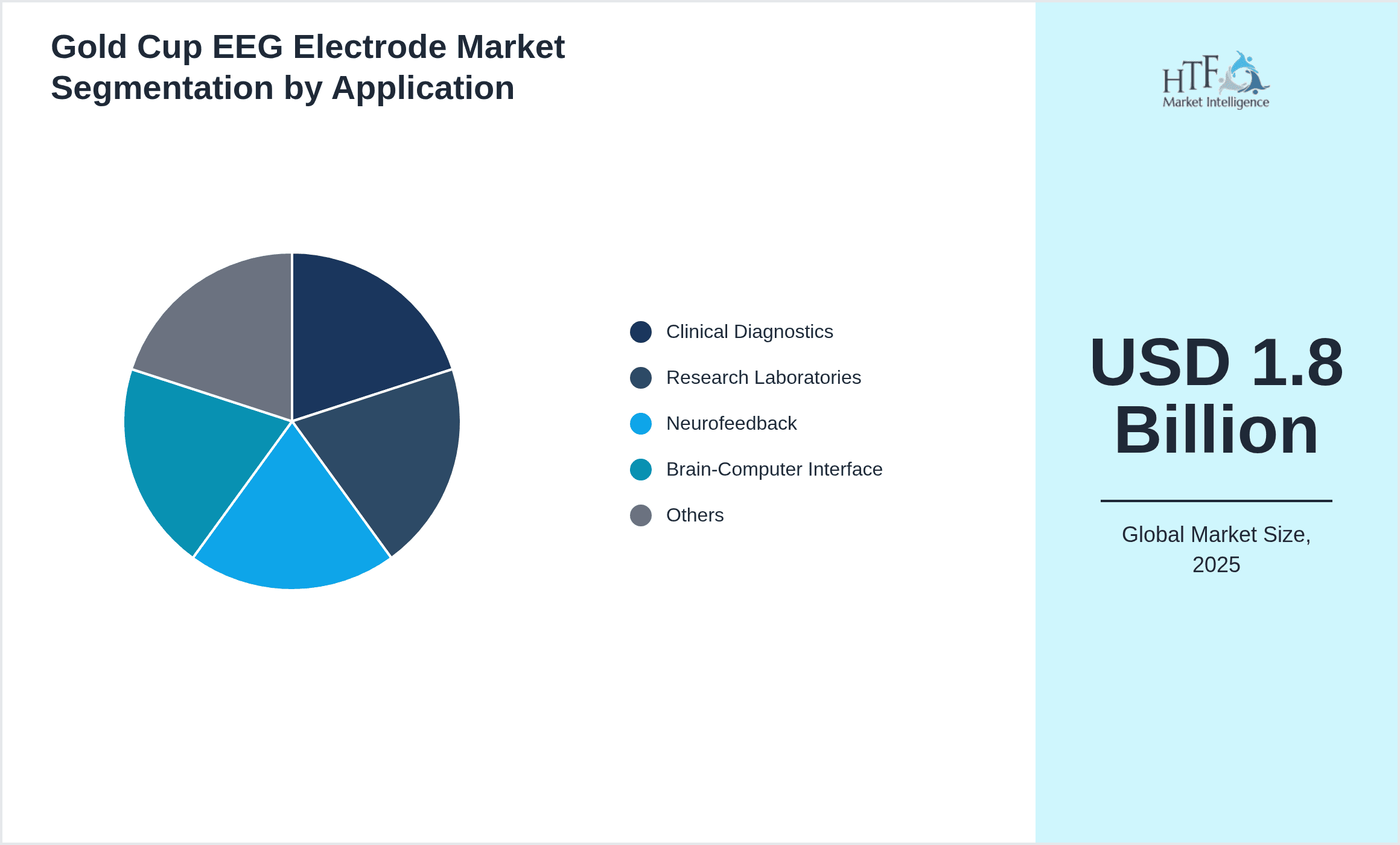
- •By Product Type
- ◦Silver Chloride Electrodes
- ◦Gold Cup Electrodes
- ◦Disposable Electrodes
- ◦Reusable Electrodes
- ◦Dry Electrodes
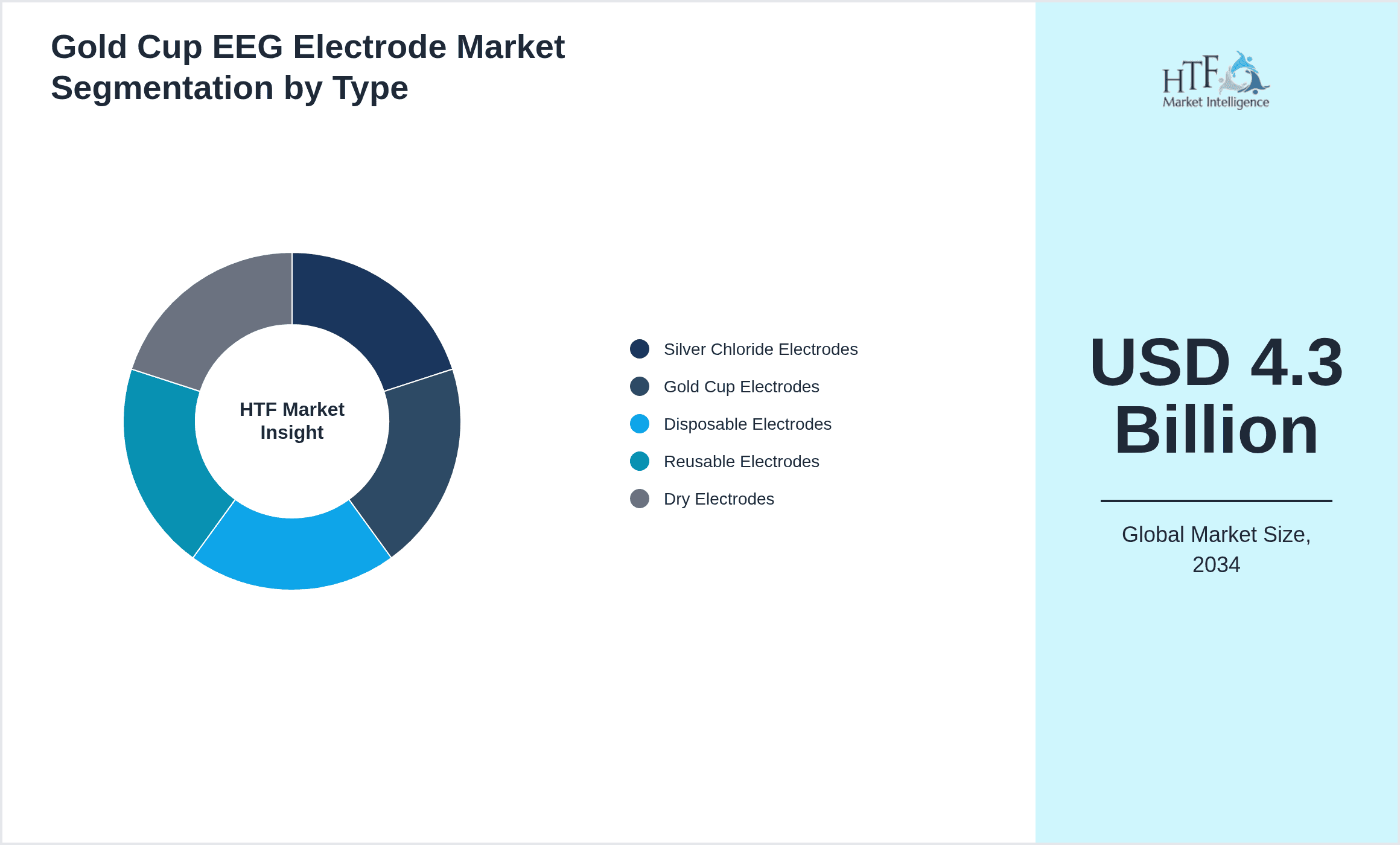
- •By Application
- ◦Clinical Diagnostics
- ◦Research Laboratories
- ◦Neurofeedback
- ◦Brain-Computer Interface
- ◦Others
- •By End-Use Industry
- ◦Hospitals & Clinics
- ◦Research & Academic Institutes
- ◦Home Healthcare
- ◦Neurotechnology Companies
- •By Distribution Channel
- ◦Direct Sales
- ◦Distributors & Dealers
- ◦Online Sales
Growth Dynamics
- •Increasing prevalence of neurological disorders such as epilepsy, Alzheimer's, and sleep disorders globally is driving demand for reliable EEG electrodes, including gold cup types, as clinicians seek precise diagnostic tools. The growing aging population in developed and developing regions further supports this trend by expanding the target patient base requiring neurodiagnostic evaluations.
- •Technological advancements in EEG systems, including integration with brain-computer interfaces and portable devices, have boosted the adoption of sophisticated electrodes that offer improved signal quality and patient comfort, fostering market growth and product innovation.
- •The rising preference for disposable electrodes, driven by infection control concerns and ease of use in outpatient and home healthcare settings, is accelerating market expansion, particularly in regions with stringent hygiene standards and growing telemedicine adoption.
- •Expansion of healthcare infrastructure and increasing investments in neurotechnology research, especially in Asia-Pacific and Latin America, are creating significant growth opportunities by improving accessibility and affordability of advanced EEG electrode solutions.
- •Regulatory support and reimbursement policies favoring neurodiagnostic procedures enhance market adoption rates and encourage manufacturers to develop compliant, high-quality electrode products tailored to regional requirements.
- •Collaborations between electrode manufacturers and neurotechnology firms facilitate innovation, resulting in hybrid electrode systems that cater to evolving clinical and research needs, thereby contributing to sustained market growth.
- •Consumer awareness regarding neurological health and early diagnosis is increasing globally, which strengthens demand for EEG monitoring devices and accompanying electrodes, supporting long-term market expansion prospects.
Market Trends
- •There is a marked shift towards dry and semi-dry electrodes to reduce preparation time and enhance patient comfort during EEG procedures, with research institutions and hospitals adopting these newer technologies alongside traditional gold cup electrodes.
- •Integration of EEG electrodes with wireless and wearable EEG systems is gaining momentum, enabling real-time brain monitoring and remote diagnostics, which is expanding applications beyond conventional clinical settings.
- •Sustainability considerations are influencing electrode design, prompting manufacturers to develop environmentally friendly disposable electrodes using biodegradable materials, aligning with global green initiatives and healthcare waste reduction efforts.
- •The rise in home healthcare and tele-neurology is driving demand for user-friendly, easy-to-apply electrodes, facilitating EEG monitoring outside traditional hospital environments and empowering patient self-management.
- •Advanced signal processing algorithms combined with improved electrode technology enhance EEG data accuracy, enabling better diagnosis and personalized treatment plans, which is influencing purchasing decisions in clinical and research sectors.
- •Collaborative ventures between medical device companies and technology startups are fostering innovation in electrode materials and manufacturing techniques, leading to novel products with enhanced durability and performance.
- •Emerging markets in Asia-Pacific and Latin America are witnessing rapid adoption of EEG technologies due to rising healthcare expenditure and neurological disorder awareness, reshaping global market shares and competitive dynamics.
Market Opportunities
- •Expanding applications of EEG electrodes in emerging fields such as brain-computer interfaces and neurofeedback therapies present significant growth potential for manufacturers to develop specialized products catering to these innovative uses.
- •Increasing demand for disposable electrodes in infection-sensitive environments offers manufacturers opportunities to invest in novel materials and designs that combine hygiene with high-performance signal acquisition.
- •Growth in telemedicine and remote patient monitoring creates avenues for developing portable EEG systems with compatible electrodes, enabling new market segments and broader geographic reach.
- •Collaborations with academic and research institutions for customized electrode solutions can facilitate product differentiation and generate new revenue streams through niche applications.
- •Geographical expansion into underpenetrated regions such as Middle East & Africa and Latin America with tailored marketing and distribution strategies can capture unmet demand and increase global market share.
- •Investment in sustainable and biodegradable electrode products aligns with environmental regulations and consumer preferences, opening new market opportunities and competitive advantages.
- •Development of multi-functional electrode arrays that support simultaneous EEG and other neuro-monitoring modalities can attract advanced clinical and research customers seeking integrated solutions.
Market Challenges
- •High costs associated with advanced EEG electrodes and related equipment limit accessibility in low-income regions, posing a significant challenge to market penetration and inclusive growth.
- •Stringent regulatory requirements and lengthy approval processes for medical electrode devices can delay product launches and increase compliance costs, impacting time-to-market and profitability.
- •Technical challenges such as maintaining consistent signal quality and ensuring electrode durability under repeated use demand continuous innovation and testing, increasing R&D expenditure for manufacturers.
- •Competition from alternative neuro-monitoring technologies and novel electrode materials may reduce demand for traditional gold cup electrodes, necessitating strategic adaptation by market players.
- •Supply chain disruptions and raw material price volatility can affect manufacturing costs and availability, impacting market stability and growth forecasts.
- •Limited awareness and training among healthcare providers in emerging markets about advanced EEG electrode applications restrict market adoption despite increasing neurological disease prevalence.
- •Environmental concerns related to electrode disposal and waste management impose additional regulatory and operational burdens on manufacturers and healthcare institutions.
Regulatory Framework
- •Between 2020 and 2025, the FDA in the United States enforced updated medical device regulations requiring enhanced clinical validation and biocompatibility testing for EEG electrodes, ensuring higher safety and efficacy standards. Compliance has led to improved market confidence and product reliability.
- •The European Union’s Medical Device Regulation (MDR) implemented in 2021 introduced stricter certification and post-market surveillance requirements for EEG electrodes marketed within member countries, compelling manufacturers to enhance quality management systems and transparency.
- •Japan’s Pharmaceuticals and Medical Devices Agency (PMDA) revised its approval guidelines for neurological monitoring devices during 2022, emphasizing clinical trial data demonstrating electrode performance in diverse patient populations, fostering innovation tailored to local market needs.
- •China’s National Medical Products Administration (NMPA) updated regulatory standards in 2023 mandating rigorous testing of electrode materials for safety and durability, reflecting growing domestic demand for high-quality neurodiagnostic products and aligning with global benchmarks.
- •Globally, increasing emphasis on environmental regulations has led to the introduction of guidelines promoting sustainable manufacturing and disposal practices for disposable EEG electrodes, influencing product design and market strategies across regions.
Market Intelligence
- •15th February 2025, Natus Medical Incorporated launched an advanced Gold Cup EEG Electrode featuring enhanced biocompatible coatings and improved signal fidelity designed for long-term neurological monitoring applications. Targeting hospitals and research centers, the product aims to reduce signal artifacts and improve patient comfort, aligning with growing clinical demands for precision diagnostics. This launch underscores Natus’s commitment to innovation and strengthening its leadership in the neurodiagnostic device market. Source: Natus Medical Official Press Release
- •10th April 2025, Nihon Kohden Corporation introduced a novel disposable Gold Cup EEG Electrode designed for single-use applications with biodegradable materials, addressing infection control concerns in outpatient and home healthcare settings. The product integrates wireless connectivity to facilitate remote monitoring, supporting telemedicine trends. This innovation positions Nihon Kohden as a pioneer in sustainable neurodiagnostic solutions and expands its footprint in emerging markets. Source: Nihon Kohden Corporate Announcement
- •23rd June 2025, Brain Products GmbH announced a strategic partnership with Neuroelectrics to co-develop hybrid electrode arrays combining gold cup and dry electrode technologies. This collaboration aims to enhance EEG signal accuracy while improving application speed and patient comfort across clinical and research environments. The initiative reflects increasing industry focus on multifunctional neuro-monitoring devices and is expected to accelerate market adoption globally. Source: Brain Products GmbH Press Release
- •30th August 2025, Compumedics Limited completed the acquisition of EasyCap GmbH, strengthening its position in the EEG electrode market with expanded product lines and manufacturing capabilities. The acquisition enables Compumedics to offer integrated EEG electrode solutions with enhanced design and material innovation, targeting both clinical and neurotechnology sectors. This consolidation reflects ongoing market consolidation trends aimed at improving competitive advantages and accelerating global reach. Source: Compumedics Official Statement
Regional Outlook
The North America currently holds a significant share of the market, primarily due to several key factors: increasing consumption rates, a burgeoning population, and robust economic momentum. These elements collectively drive demand, positioning this region as a leader in the market. On the other hand, Asia-Pacific is rapidly emerging as the fastest-growing area within the industry. This remarkable growth can be attributed to swift infrastructure development, the expansion of various industrial sectors, and a marked increase in consumer demand. These dynamics make this region a crucial player in shaping future market growth.
In our report, we cover a comprehensive analysis of the following regions and countries:
- North America
- LATAM
- West Europe
- Central & Eastern Europe
- Northern Europe
- Southern Europe
- East Asia
- Southeast Asia
- South Asia
- Central Asia
- Oceania
- MEA
| Feature | Details |
|---|---|
| Base Year Market Size | USD 1.8 Billion |
| Forecast Year Market Size | USD 4.3 Billion |
| CAGR | 10.1% |
| Forecast Period | 2026 to 2033 |
| YoY Growth | 9.7% |
| Scope of Report | Market is segmented by Product Type (Silver Chloride Electrodes, Gold Cup Electrodes, Disposable Electrodes, Reusable Electrodes, Dry Electrodes), Application (Clinical Diagnostics, Research Laboratories, Neurofeedback, Brain-Computer Interface, Others), End-Use Industry (Hospitals & Clinics, Research & Academic Institutes, Home Healthcare, Neurotechnology Companies), Distribution Channel (Direct Sales, Distributors & Dealers, Online Sales) |
| Regions Covered | North America, LATAM, West Europe, Central & Eastern Europe, Northern Europe, Southern Europe, East Asia, Southeast Asia, South Asia, Central Asia, Oceania, MEA |
| Key Companies | Natus Medical Incorporated (United States), Compumedics Limited (Australia), Nihon Kohden Corporation (Japan), Cadwell Industries, Inc. (United States), Neurosoft (Russia), Ad-Tech Medical Instrument Corporation (United States), Grass Technologies (United States), BIOPAC Systems, Inc. (United States), Deymed Diagnostic (Czech Republic), Cortech Solutions (United States), Soterix Medical Inc. (United States), ANT Neuro (Netherlands), Electrical Geodesics, Inc. (United States), Brain Products GmbH (Germany), EasyCap GmbH (Germany), Medtronic plc (Ireland), Philips Healthcare (Netherlands), Nihon Kohden Europe GmbH (Germany), Compumedics Neuroscan (Australia), Neuroelectrics (Spain), MediCapture (United States), NeuroSky, Inc. (United States), Wearable Sensing (United States), G.Tec Medical Engineering GmbH (Austria), Mind Media BV (Netherlands) |
Global Gold Cup EEG Electrode Market Size, Growth & Revenue 2025-2034 - Table of Contents
Multidisciplinary researcher with 10+ years of experience uncovering insights across diverse domains focused on uncovering insights that drive informed decisions.
Frequently Asked Questions (FAQ):
The Market market is projected to grow at a steady CAGR from 2025 to 2030, driven by increasing demand and expansion in various applications.
North America currently leads the market, followed by Europe and Asia-Pacific.
Key growth drivers include increasing activities, rising demand for innovative solutions, technological advancements, and growing preference for efficient products.