
Global Ventilation Grills Market Size, Growth & Revenue 2024-2034
Global Ventilation Grills Market is segmented by Product Type (Fixed Grills, Adjustable Grills, Return Air Grills, Linear Bar Grills, Eggcrate Grills), Application (Residential, Commercial, Industrial, Automotive, HVAC Systems), End-Use Industry (Construction, Automotive Manufacturing, Industrial Facilities, Infrastructure Projects), Distribution Channel (Direct Sales, Distributors and Dealers, Online Sales), and Geography (North America, LATAM, West Europe, Central & Eastern Europe, Northern Europe, Southern Europe, East Asia, Southeast Asia, South Asia, Central Asia, Oceania, MEA)
Pricing
Report Overview
Executive Summary
- •The global Ventilation Grills market is a fundamental segment of the HVAC industry, providing essential components that regulate and direct airflow in diverse environments spanning residential buildings, commercial complexes, industrial facilities, automotive cabins, and other specialized applications. This market includes a variety of product types such as fixed, adjustable, return air, linear bar, and eggcrate grills, each engineered to meet distinct functional and aesthetic requirements. The scope of the market extends to materials ranging from aluminum and steel to plastics and composites, alongside innovations in smart ventilation and integration with building management systems. The industry is driven by the rising emphasis on indoor air quality, energy efficiency, and regulatory mandates aimed at reducing environmental impacts. Global urbanization, construction booms, and replacement demand fuel market expansion, while technological advancements and design innovations continue to diversify product offerings. The primary use cases involve air distribution, ventilation control, and architectural integration, with growing adoption in retrofit projects and new construction worldwide.
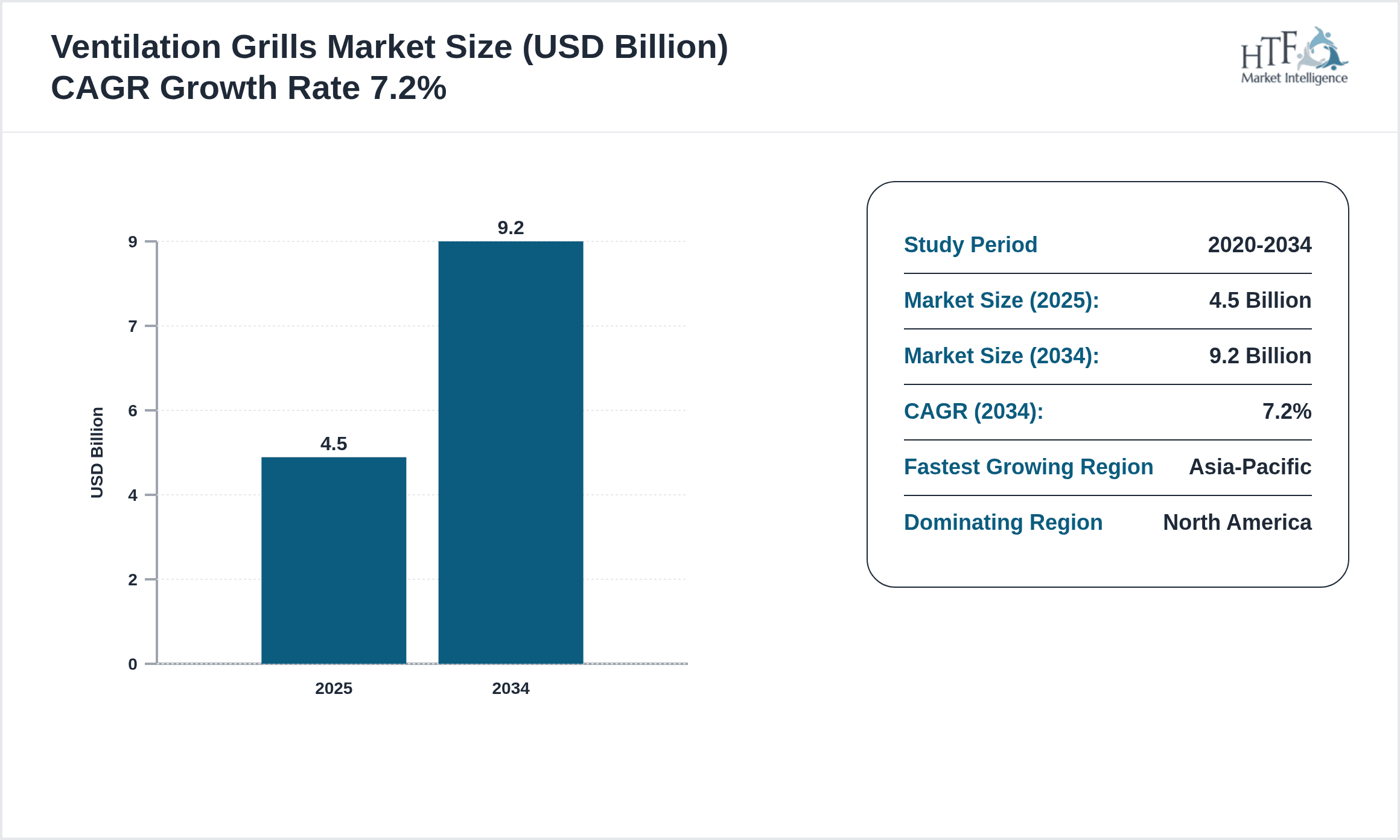
- •Market highlights underscore a robust growth trajectory, with the global market valued at USD 4.5 billion in 2024 and anticipated to reach USD 9.2 billion by 2034, reflecting a CAGR of approximately 7.2%. North America is currently the dominating region, supported by stringent building codes and high penetration of HVAC systems, while the Asia-Pacific region is the fastest-growing market due to rapid industrialization and urban infrastructure development. Fixed grills hold the largest share by type owing to their widespread use, whereas adjustable grills are experiencing rapid adoption given their flexibility and enhanced control features. Applications in residential and commercial sectors continue to dominate demand, with expanding needs in industrial and automotive segments. Market dynamics are shaped by evolving consumer preferences, environmental regulations, and technological innovation, positioning ventilation grills as critical components in sustainable building designs.
- •The Ventilation Grills market presents a compelling value proposition by enabling efficient airflow management, contributing to energy savings and improved indoor air quality. For stakeholders including manufacturers, distributors, construction companies, and end-users, this market offers strategic importance amid the rising focus on green building certifications and smart homes. The adaptability of ventilation grills to various architectural styles and HVAC configurations enhances their appeal. Moreover, advancements in materials and automation technologies provide opportunities for product differentiation and enhanced customer value. The market’s growth further supports employment generation and innovation in manufacturing processes, while fostering collaboration across supply chains globally. As regulatory frameworks tighten and environmental awareness intensifies, ventilation grills will remain integral to the evolving landscape of building infrastructure and vehicle design.
Competitive Landscape
The global Ventilation Grills market exhibits a highly competitive environment characterized by numerous established and emerging players striving for market share through innovation, strategic partnerships, and expanding geographic footprints. Companies focus on product differentiation through enhanced design aesthetics, material improvements, and integration with smart building technologies to meet evolving customer demands. The competitive rivalry is intensified by the presence of regional manufacturers offering cost-efficient products alongside global leaders delivering premium solutions. Market participants invest significantly in R&D to introduce energy-efficient, customizable, and sustainable ventilation solutions, leveraging advancements in automation and IoT connectivity. Pricing strategies are carefully balanced to maintain profitability while addressing competitive pressures, with distribution channels ranging from direct sales to extensive dealer networks. Mergers and acquisitions are pivotal in consolidating market positions and expanding product portfolios. Overall, the competitive landscape is dynamic, with innovation and customer-centric approaches defining leadership and growth sustainability.
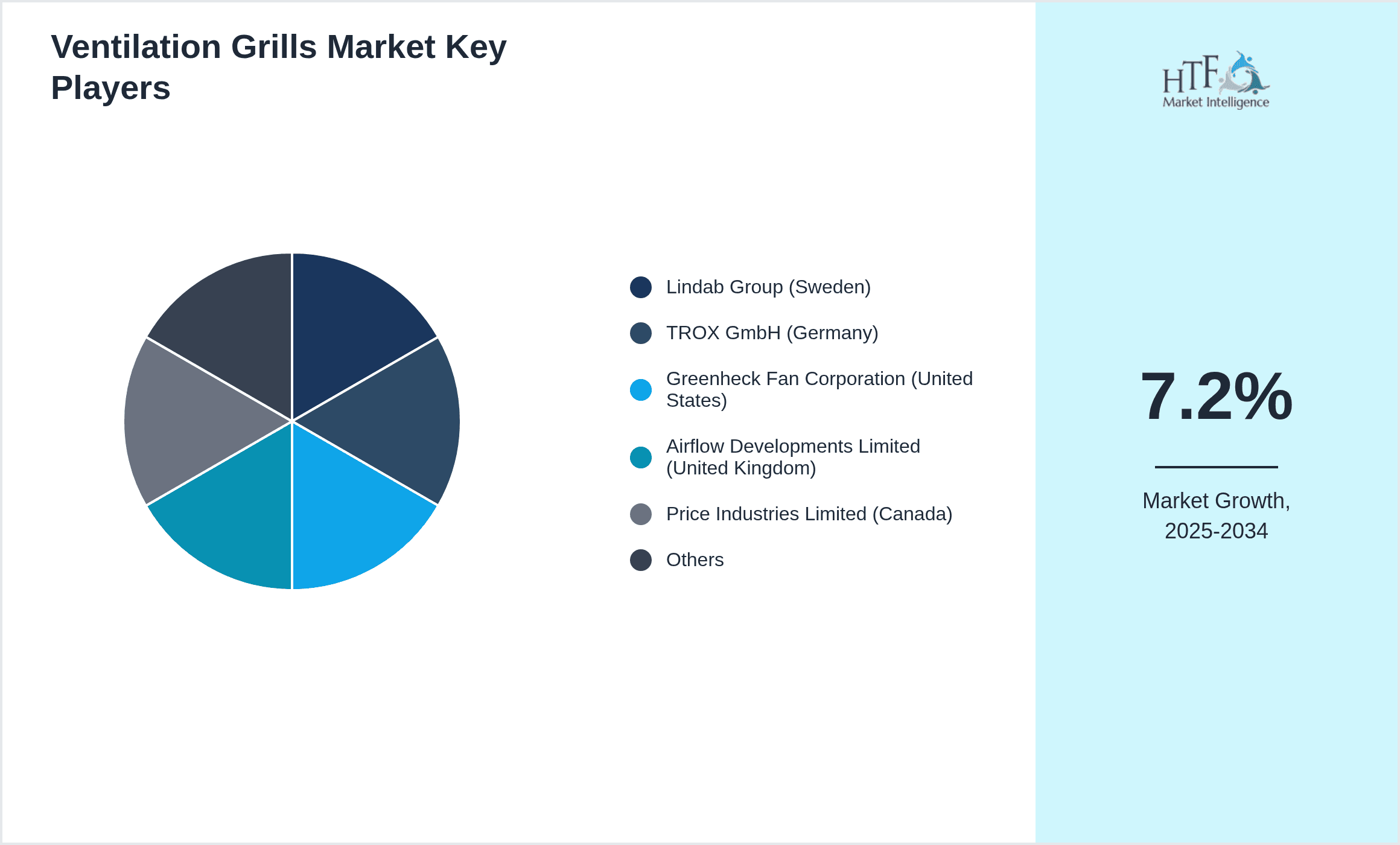
Leading Companies in Ventilation Grills Market
- •Lindab Group (Sweden)
- •TROX GmbH (Germany)
- •Greenheck Fan Corporation (United States)
- •Airflow Developments Limited (United Kingdom)
- •Price Industries Limited (Canada)
- •Nuaire Group Limited (United Kingdom)
- •Russell Anex Ltd. (United Kingdom)
- •Halton Group (Finland)
- •Systemair AB (Sweden)
- •Metalaire Inc. (United States)
- •Menerga GmbH (Germany)
- •Kruger Ventilation Industries (Canada)
- •Elta Fans (United Kingdom)
- •S&P Ventilation Group (Spain)
- •FlaktGroup (France)
- •Air Balance Inc. (United States)
- •Vents Group (Ukraine)
- •Ventilation Systems S.A. (Greece)
- •Klingenburg GmbH (Germany)
- •Korfund HVAC Products (China)
- •Greenwood Air Systems (India)
- •Titan Air LLC (United States)
- •Blauberg Ventilatoren GmbH (Germany)
- •Teddington Group (United Kingdom)
- •Airius LLC (United States)
Market Breakdown
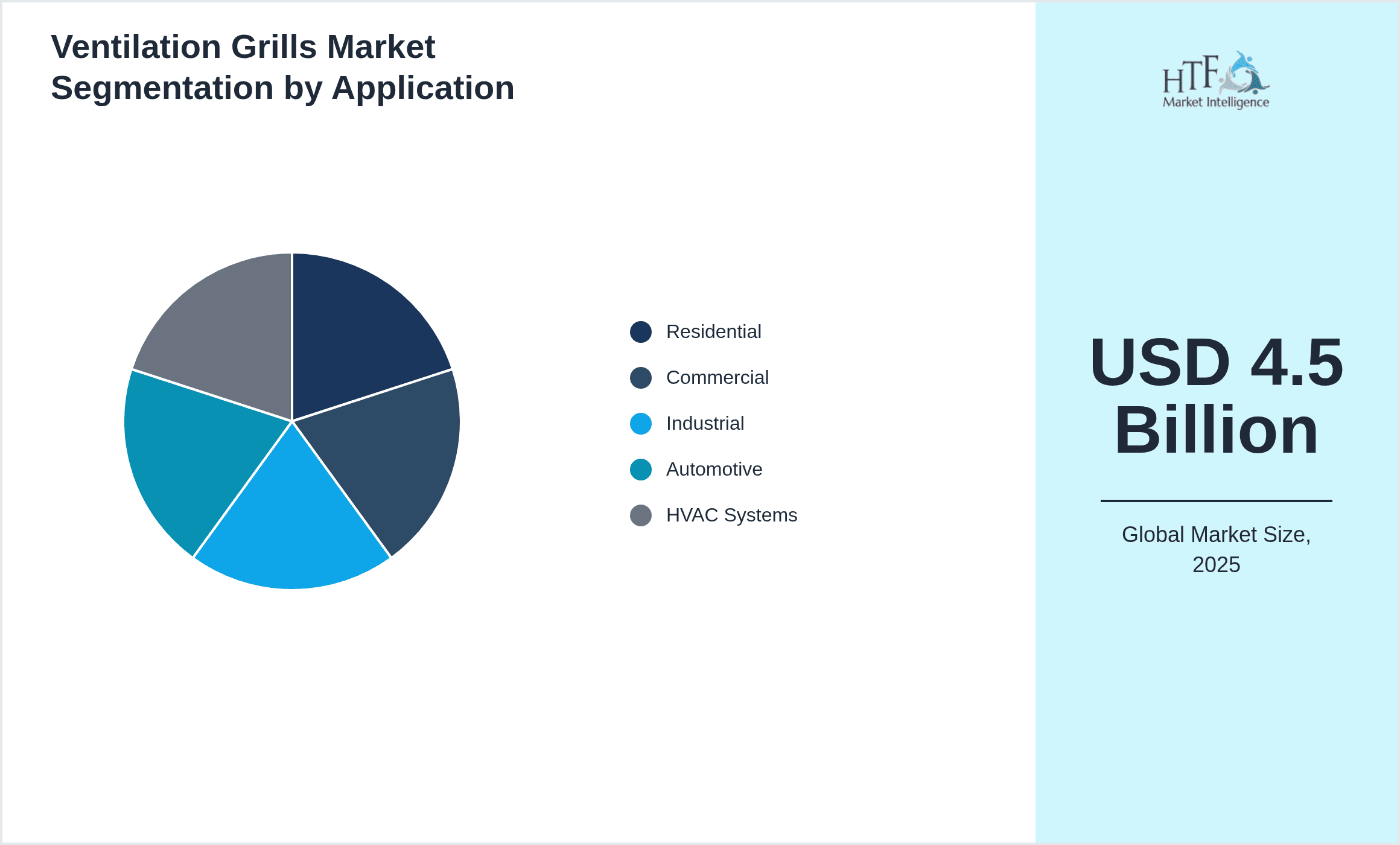
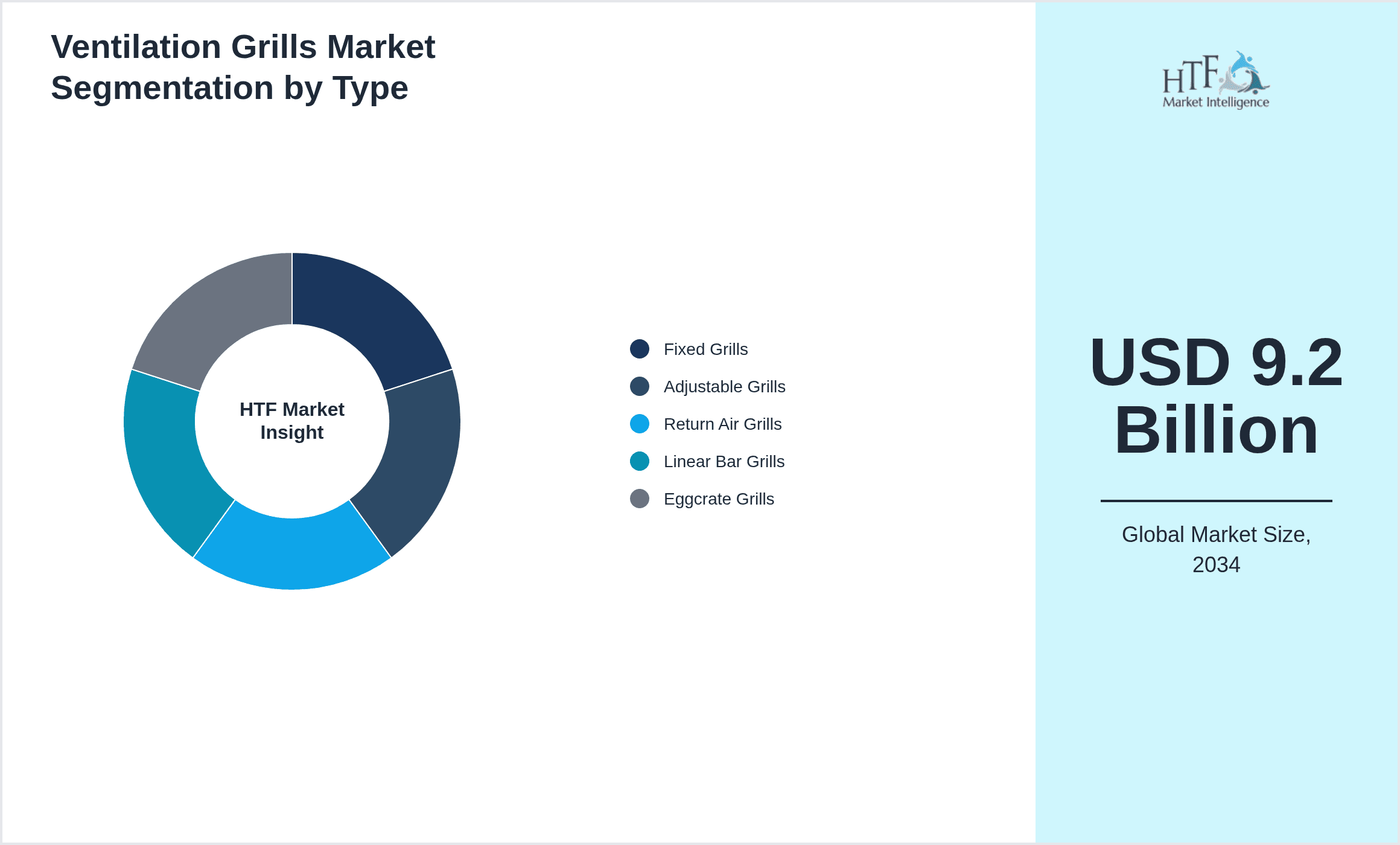
- •By Product Type
- ◦Fixed Grills
- ◦Adjustable Grills
- ◦Return Air Grills
- ◦Linear Bar Grills
- ◦Eggcrate Grills
- •By Application
- ◦Residential
- ◦Commercial
- ◦Industrial
- ◦Automotive
- ◦HVAC Systems
- •By End-Use Industry
- ◦Construction
- ◦Automotive Manufacturing
- ◦Industrial Facilities
- ◦Infrastructure Projects
- •By Distribution Channel
- ◦Direct Sales
- ◦Distributors and Dealers
- ◦Online Sales
Growth Dynamics
- •Rising urbanization and infrastructural development worldwide are driving increased demand for ventilation grills, particularly in residential and commercial construction, supporting efficient air circulation and indoor air quality improvements.
- •Technological advancements including the integration of smart ventilation and automation systems enhance product functionality, enabling real-time airflow control and energy savings, which appeal to environmentally conscious consumers and regulators.
- •Stringent government regulations on indoor air quality and energy efficiency standards across regions compel construction and manufacturing sectors to adopt advanced ventilation solutions, thus fueling market growth.
- •Growing renovation and retrofit activities in established markets create steady demand for replacement ventilation grills, especially those offering improved design and performance features.
- •Increasing awareness of health and safety standards post-pandemic has elevated the importance of effective ventilation systems, boosting demand for high-quality grills that support optimal airflow and filtration.
- •Expansion of the automotive industry, particularly in emerging economies, is driving demand for specialized ventilation grills designed for vehicle HVAC systems, contributing to market diversification and growth.
- •Investment in sustainable construction and green buildings worldwide encourages the adoption of ventilation grills that meet eco-friendly certifications, creating new market opportunities for innovative product lines.
Market Trends
- •There is a growing trend towards the use of adjustable grills that allow customizable airflow, reflecting consumer demand for personalized comfort and enhanced energy efficiency in buildings.
- •Manufacturers are increasingly incorporating antimicrobial coatings and materials into ventilation grills to address hygiene concerns in residential and healthcare environments, aligning with post-pandemic health priorities.
- •Digitalization and IoT integration in ventilation products enable smart monitoring and control, facilitating predictive maintenance and operational efficiencies in commercial and industrial applications.
- •Sustainable and recyclable materials are being adopted in grill manufacturing processes, aligning with global environmental regulations and corporate social responsibility agendas.
- •Collaborative ventures between HVAC system providers and ventilation grill manufacturers are increasing, fostering innovation in integrated air management solutions.
- •Customization of grill designs to complement architectural aesthetics is becoming a key differentiator among market players, enhancing product appeal in luxury residential and commercial projects.
- •Regional manufacturers in Asia-Pacific are rapidly expanding their production capacities to meet surging domestic and export demand, influencing global supply chain dynamics.
Market Opportunities
- •Emerging economies with rapid urban development offer untapped markets for ventilation grills, especially in affordable housing and industrial infrastructure segments, presenting significant expansion potential.
- •Innovation in smart ventilation grills with sensor-based airflow regulation can address energy efficiency mandates, creating new product categories and competitive advantages.
- •Growing retrofit projects worldwide focusing on indoor air quality improvements provide opportunities for manufacturers to supply advanced replacement grills with enhanced features.
- •Expanding automotive production in Asia-Pacific and Latin America opens avenues for specialized ventilation grills tailored to vehicle HVAC systems, diversifying market applications.
- •Collaborations with green building certification bodies enable product validation and market positioning as sustainable solutions, appealing to environmentally conscious customers.
- •Digital marketing and e-commerce channels offer manufacturers direct access to end consumers and small contractors, facilitating market penetration and brand visibility.
- •Investment in research for antimicrobial and self-cleaning ventilation grills can meet evolving health safety requirements, setting new industry standards.
Market Challenges
- •Fluctuations in raw material prices, particularly metals like aluminum and steel, pose cost pressures on ventilation grill manufacturers, affecting pricing strategies and profitability.
- •Complex regulatory landscapes across regions increase compliance costs and create barriers to market entry for smaller manufacturers lacking resources for certification processes.
- •High competition from low-cost manufacturers in emerging markets leads to price undercutting and margin erosion for established global players.
- •Challenges in product standardization and quality control can affect customer trust and limit adoption in critical applications such as healthcare and industrial environments.
- •Supply chain disruptions, including logistics delays and material shortages, impact timely delivery and project completions, constraining market growth.
- •Limited awareness of advanced ventilation grill benefits in certain developing regions restricts market penetration and slows adoption of premium products.
- •Integration complexities with existing HVAC systems, particularly in retrofit scenarios, pose design and installation challenges for ventilation grill suppliers.
Regulatory Framework
- •Between 2019 and 2024, multiple regions implemented stricter energy efficiency standards mandating ventilation components to meet defined airflow and leakage criteria, compelling manufacturers to innovate and certify products accordingly.
- •Enforcement of indoor air quality regulations in North America and Europe introduced mandatory ventilation requirements for new constructions and retrofits, driving demand for compliant grills with enhanced filtration compatibility.
- •Safety regulations regarding fire resistance and material toxicity have been updated globally, requiring ventilation grills to comply with rigorous testing protocols before market entry.
- •Country-specific mandates in Asia-Pacific emphasize sustainable building certifications, encouraging adoption of eco-friendly ventilation products and influencing product design and materials.
- •Government incentive programs and subsidies targeting green construction projects have indirectly boosted ventilation grill market growth by promoting energy-efficient HVAC solutions.
Market Intelligence
- •15th February 2025, Lindab Group launched the new LineaSmart adjustable ventilation grill, incorporating IoT-enabled sensors for real-time airflow monitoring and automated adjustment. Targeted at commercial buildings seeking energy efficiency, this product features advanced materials for durability and antimicrobial properties, aiming to reduce energy consumption and improve indoor air quality. The launch underscores Lindab’s commitment to innovation and sustainability in HVAC components, positioning it as a leader in smart ventilation technology. Source: Lindab Official Press Release
- •10th April 2025, TROX GmbH introduced its EcoFlow series of fixed ventilation grills designed with recycled aluminum and optimized aerodynamic profiles to enhance airflow while minimizing noise. Intended for residential and industrial applications, EcoFlow grills comply with the latest European energy directives and offer easy integration with building automation systems. This innovation highlights TROX’s focus on environmental responsibility and user comfort, expanding its product portfolio to meet evolving market demands. Source: TROX Corporate News
- •22nd January 2025, Greenheck Fan Corporation announced a strategic partnership with a leading building automation company to co-develop integrated ventilation systems combining advanced grills with smart control platforms. This collaboration aims to deliver seamless solutions for commercial building operators to optimize HVAC performance, energy usage, and maintenance. The initiative reflects growing industry trends towards connected building ecosystems and reinforces Greenheck’s position in the smart ventilation market segment. Source: Greenheck Press Statement
- •5th March 2025, Airflow Developments Limited completed the acquisition of a regional ventilation grill manufacturer in Southeast Asia, expanding its footprint in emerging markets and enhancing its production capabilities for adjustable and linear bar grills. The acquisition supports Airflow’s global growth strategy by leveraging local manufacturing efficiencies and broadening product offerings tailored to regional architectural preferences and climate conditions. This move strengthens its competitive position and supply chain resilience. Source: Airflow Corporate Announcement
Regional Outlook
The North America currently holds a significant share of the market, primarily due to several key factors: increasing consumption rates, a burgeoning population, and robust economic momentum. These elements collectively drive demand, positioning this region as a leader in the market. On the other hand, Asia-Pacific is rapidly emerging as the fastest-growing area within the industry. This remarkable growth can be attributed to swift infrastructure development, the expansion of various industrial sectors, and a marked increase in consumer demand. These dynamics make this region a crucial player in shaping future market growth.
In our report, we cover a comprehensive analysis of the following regions and countries:
- North America
- LATAM
- West Europe
- Central & Eastern Europe
- Northern Europe
- Southern Europe
- East Asia
- Southeast Asia
- South Asia
- Central Asia
- Oceania
- MEA
| Feature | Details |
|---|---|
| Base Year Market Size | USD 4.5 Billion |
| Forecast Year Market Size | USD 9.2 Billion |
| CAGR | 7.2% |
| Forecast Period | 2026 to 2033 |
| YoY Growth | 7% |
| Scope of Report | Market is segmented by Product Type (Fixed Grills, Adjustable Grills, Return Air Grills, Linear Bar Grills, Eggcrate Grills), Application (Residential, Commercial, Industrial, Automotive, HVAC Systems), End-Use Industry (Construction, Automotive Manufacturing, Industrial Facilities, Infrastructure Projects), Distribution Channel (Direct Sales, Distributors and Dealers, Online Sales) |
| Regions Covered | North America, LATAM, West Europe, Central & Eastern Europe, Northern Europe, Southern Europe, East Asia, Southeast Asia, South Asia, Central Asia, Oceania, MEA |
| Key Companies | Lindab Group (Sweden), TROX GmbH (Germany), Greenheck Fan Corporation (United States), Airflow Developments Limited (United Kingdom), Price Industries Limited (Canada), Nuaire Group Limited (United Kingdom), Russell Anex Ltd. (United Kingdom), Halton Group (Finland), Systemair AB (Sweden), Metalaire Inc. (United States), Menerga GmbH (Germany), Kruger Ventilation Industries (Canada), Elta Fans (United Kingdom), S&P Ventilation Group (Spain), FlaktGroup (France), Air Balance Inc. (United States), Vents Group (Ukraine), Ventilation Systems S.A. (Greece), Klingenburg GmbH (Germany), Korfund HVAC Products (China), Greenwood Air Systems (India), Titan Air LLC (United States), Blauberg Ventilatoren GmbH (Germany), Teddington Group (United Kingdom), Airius LLC (United States) |
Global Ventilation Grills Market Size, Growth & Revenue 2024-2034 - Table of Contents
Research enthusiast focused on transforming data uncovering into actionable insights through data-driven decision-making.
Frequently Asked Questions (FAQ):
The Market market is projected to grow at a steady CAGR from 2025 to 2030, driven by increasing demand and expansion in various applications.
North America currently leads the market, followed by Europe and Asia-Pacific.
Key growth drivers include increasing activities, rising demand for innovative solutions, technological advancements, and growing preference for efficient products.