
Global Aluminum Window Profile Market Size, Growth & Revenue 2025-2034
Global Aluminum Window Profile Market is segmented by Type (Casement Windows, Sliding Windows, Awning Windows, Fixed Windows, Others), Application (Residential Buildings, Commercial Buildings, Industrial Buildings, Institutional Buildings, Others), End-Use Industry (Construction, Real Estate Development, Architecture & Design, Infrastructure Projects), Distribution Channel (Direct Sales, Distributors, Online Retail), and Geography (North America, LATAM, West Europe, Central & Eastern Europe, Northern Europe, Southern Europe, East Asia, Southeast Asia, South Asia, Central Asia, Oceania, MEA)
Pricing
Report Overview
Executive Summary
- •The global Aluminum Window Profile market involves the production and supply of aluminum framing systems used to manufacture window units for diverse applications, including residential, commercial, industrial, and institutional buildings. Aluminum profiles provide superior strength-to-weight ratio, corrosion resistance, and design flexibility compared to traditional materials such as wood and PVC. These profiles are extruded and fabricated into various window types, including casement, sliding, awning, and fixed windows, which cater to different architectural and functional requirements. The market scope covers aluminum raw material procurement, extrusion, surface finishing, fabrication, and installation services worldwide. Increasing urbanization, demand for energy-efficient buildings, and evolving architectural trends drive the adoption of aluminum window profiles globally. The market also addresses sustainability concerns through recyclable materials and innovations in thermal breaks and coatings to enhance insulation properties. This market plays a fundamental role in the construction and building industry, supporting infrastructure development and modern building envelope solutions that balance aesthetics, performance, and environmental considerations.
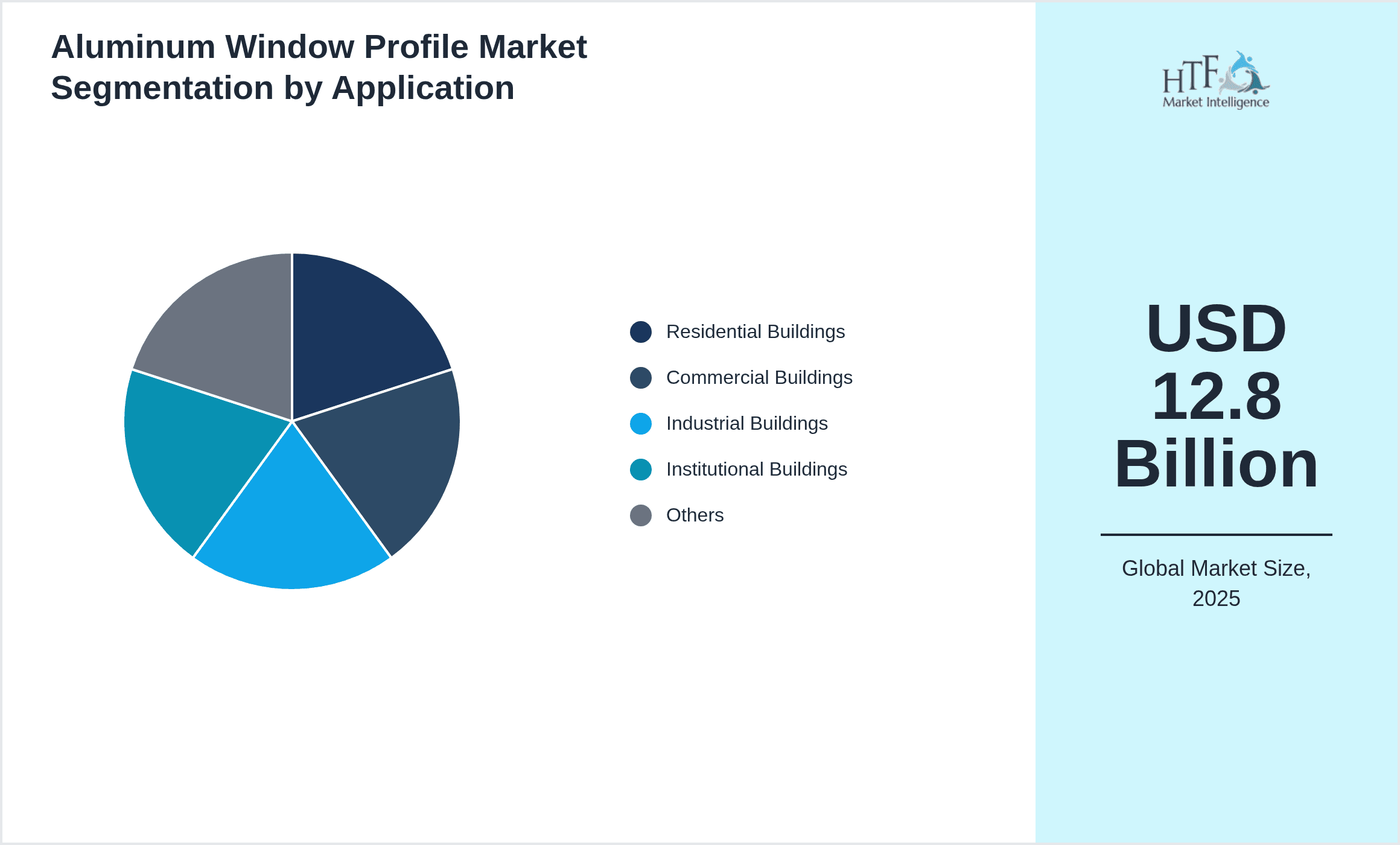
- •The Aluminum Window Profile market exhibited strong growth in 2025 with a base market size of USD 12.8 Billion and is forecasted to reach USD 29.7 Billion by 2034, reflecting a robust CAGR of 9.3%. Asia-Pacific dominates the market with the largest regional share of 34.7%, driven by rapid urban development and infrastructure expansion. Sliding windows represent the leading product type segment, accounting for significant revenue due to their wide applicability and ease of installation. The Middle East & Africa region is identified as the fastest-growing market, propelled by increasing construction activities and modernization efforts. Residential buildings remain the dominating application segment, supported by rising demand for energy-efficient and aesthetically pleasing window solutions. Market dynamics indicate strong investments in product innovation, sustainability, and regional expansion strategies by key players, underscoring the market’s growth trajectory and competitive intensity.
- •Aluminum Window Profiles offer a compelling value proposition by combining durability, lightweight construction, and recyclability with architectural versatility. These profiles enable manufacturers and builders to meet stringent energy efficiency standards and sustainability goals, addressing environmental and regulatory demands. The strategic importance of this market spans multiple industries, including construction, real estate development, and architectural design, providing essential components for modern building envelopes. Stakeholders benefit from advancements in extrusion technology, surface treatments, and integration with smart building systems, which enhance performance and occupant comfort. The market’s global footprint and regional nuances present opportunities for tailored product offerings and partnerships, driving innovation and competitive differentiation. Overall, aluminum window profiles contribute significantly to sustainable urban growth, energy savings, and building aesthetics worldwide.

Competitive Landscape
The global Aluminum Window Profile market is characterized by intense competition among multinational corporations and regional manufacturers focusing on technological innovation, strategic partnerships, and geographic expansion to sustain market leadership. Companies emphasize advanced extrusion techniques, proprietary surface coating technologies, and thermal break solutions to differentiate product offerings. Investment in research and development enables the launch of energy-efficient, durable, and customizable profiles tailored for diverse climatic conditions. Collaborations with construction firms and architects facilitate integration into large-scale infrastructure projects, enhancing market penetration. Mergers and acquisitions enable consolidation of raw material supply chains and expansion into emerging markets, optimizing cost structures and distribution networks. Pricing strategies balance competitiveness with premium-quality positioning, while digital marketing and e-commerce platforms expand customer reach. Regional players leverage local market knowledge to cater to specific regulatory frameworks and consumer preferences. Future competitive trends include adoption of sustainable manufacturing processes, digital design tools, and smart window technologies, positioning market participants for long-term growth and resilience.
Prominent Players in Aluminum Window Profile Market
- •Alcoa Corporation (United States)
- •Hydro ASA (Norway)
- •Kaiser Aluminum Corporation (United States)
- •Constellium SE (France)
- •Sapa Group (Norway)
- •Nippon Aluminum Co., Ltd. (Japan)
- •UACJ Corporation (Japan)
- •Novelis Inc. (United States)
- •Liaoning Zhongwang Group Co., Ltd. (China)
- •Zhejiang Huayuan Aluminum Co., Ltd. (China)
- •China Zhongwang Holdings Limited (China)
- •Alumil S.A. (Greece)
- •Aliplast S.A. (Greece)
- •Jiangsu Shuangma Aluminum Co., Ltd. (China)
- •Hydro Building Systems (Germany)
- •YKK AP Inc. (Japan)
- •Alutech Group (Russia)
- •Sapa Building Systems (Norway)
- •Metra Building (Italy)
- •AluK Group (United Kingdom)
Market Breakdown
- •By Type
- ◦Casement Windows
- ◦Sliding Windows
- ◦Awning Windows
- ◦Fixed Windows
- ◦Others
- •By Application
- ◦Residential Buildings
- ◦Commercial Buildings
- ◦Industrial Buildings
- ◦Institutional Buildings
- ◦Others
- •By End-Use Industry
- ◦Construction
- ◦Real Estate Development
- ◦Architecture & Design
- ◦Infrastructure Projects
- •By Distribution Channel
- ◦Direct Sales
- ◦Distributors
- ◦Online Retail
Growth Dynamics
Rapid urbanization and expanding infrastructure development worldwide accelerate demand for aluminum window profiles by increasing construction activities in residential, commercial, and institutional sectors. Governments prioritize energy-efficient building codes that favor aluminum profiles with thermal break technologies, reducing energy consumption and improving insulation. Advancements in extrusion and coating technologies enhance product durability and aesthetic appeal, meeting evolving architectural trends. Growing awareness of sustainable construction practices drives adoption of recyclable aluminum materials, aligning with environmental regulations and corporate social responsibility. Recent developments include Hydro ASA's launch of eco-friendly aluminum profiles with low carbon footprint, supporting green building certifications. Furthermore, integration of smart window systems expands product functionality, enabling automation and improved occupant comfort. These factors collectively propel market expansion and provide lucrative avenues for manufacturers and suppliers globally.

Market Trends
The Aluminum Window Profile market exhibits a strong trend towards sustainability, with increased use of recycled aluminum and innovations in low-emission extrusion processes. Manufacturers adopt advanced surface coatings that enhance corrosion resistance and offer a wide color palette, catering to architectural customization demands. Digital design tools and BIM integration facilitate precision engineering and faster project execution. Growing popularity of smart buildings encourages incorporation of automated window shading and ventilation systems using aluminum profiles. Emerging markets in Asia-Pacific and Middle East invest heavily in modern infrastructure, driving demand for high-performance window solutions. Industry players focus on lightweight, thermally efficient profiles to comply with stricter energy codes and occupant comfort standards. These trends reflect a paradigm shift towards eco-conscious, technologically advanced, and aesthetically versatile aluminum window profile solutions shaping future market dynamics.

Market Opportunities
Significant opportunities arise from growing investments in smart city projects and green building initiatives worldwide, which emphasize energy-efficient aluminum window profiles with integrated automation features. Expansion into emerging regions such as Africa and Latin America offers untapped markets with increasing construction demand. Collaborations between aluminum profile manufacturers and construction technology firms enable development of innovative products combining sustainability and digital capabilities. Adoption of circular economy principles encourages recycling and reuse of aluminum, creating new business models and cost advantages. Additionally, refurbishment and retrofitting of existing buildings with modern aluminum windows present a vast opportunity to enhance energy performance and aesthetics. Continuous innovation in extrusion technology and surface treatments also enables entry into niche applications like high-rise buildings and extreme climate zones, further diversifying growth prospects.
Market Challenges
High raw material costs and volatility in aluminum prices pose significant challenges to manufacturers, impacting profit margins and pricing strategies. Supply chain disruptions, especially in the aftermath of global events, affect timely delivery and inventory management. Technical limitations in thermal break effectiveness and manufacturing complexities require substantial R&D investments to meet evolving energy efficiency standards. Regulatory compliance across diverse regions introduces operational complexities and cost implications. Intense competition from alternative window materials such as uPVC and composite systems pressures market share and necessitates continuous innovation. Additionally, skilled labor shortages and infrastructural gaps in emerging markets hinder expansion efforts. Recent instances include production delays faced by several manufacturers due to raw material shortages, underscoring the need for supply chain resilience and strategic sourcing.
Regulatory Framework
Recent regulations emphasize energy efficiency and sustainability in building materials, with standards such as the European Union's Energy Performance of Buildings Directive requiring enhanced thermal insulation for window profiles. The U.S. Department of Energy updated its Building Energy Codes in 2023 mandating minimum thermal performance metrics for aluminum windows. Asia-Pacific countries like Japan and South Korea have introduced green building certifications promoting use of recyclable and energy-saving materials including aluminum profiles. Environmental regulations also enforce limits on volatile organic compounds emissions during profile coating and finishing processes. Compliance with these regulations drives innovation in product design and manufacturing, imposing stringent testing and certification requirements that shape market offerings and competitive strategies globally.
Market Intelligence
- •Recent market developments and strategic initiatives are continuously tracked through industry publications, company announcements, and regulatory filings. For the most current information, stakeholders are advised to monitor official corporate communications and recognized market intelligence platforms.
- •Recent market developments and strategic initiatives are continuously tracked through industry publications, company announcements, and regulatory filings. For the most current information, stakeholders are advised to monitor official corporate communications and recognized market intelligence platforms.
- •Recent market developments and strategic initiatives are continuously tracked through industry publications, company announcements, and regulatory filings. For the most current information, stakeholders are advised to monitor official corporate communications and recognized market intelligence platforms.
- •Recent market developments and strategic initiatives are continuously tracked through industry publications, company announcements, and regulatory filings. For the most current information, stakeholders are advised to monitor official corporate communications and recognized market intelligence platforms.
Regional Outlook
The Asia-Pacific currently holds a significant share of the market, primarily due to several key factors: increasing consumption rates, a burgeoning population, and robust economic momentum. These elements collectively drive demand, positioning this region as a leader in the market. On the other hand, Middle East & Africa is rapidly emerging as the fastest-growing area within the industry. This remarkable growth can be attributed to swift infrastructure development, the expansion of various industrial sectors, and a marked increase in consumer demand. These dynamics make this region a crucial player in shaping future market growth.
In our report, we cover a comprehensive analysis of the following regions and countries:
- North America
- LATAM
- West Europe
- Central & Eastern Europe
- Northern Europe
- Southern Europe
- East Asia
- Southeast Asia
- South Asia
- Central Asia
- Oceania
- MEA
| Feature | Details |
|---|---|
| Base Year Market Size | USD 12.8 Billion |
| Forecast Year Market Size | USD 29.7 Billion |
| CAGR | 9.3% |
| Forecast Period | 2026 to 2033 |
| YoY Growth | 8.9% |
| Scope of Report | Market is segmented by Type (Casement Windows, Sliding Windows, Awning Windows, Fixed Windows, Others), Application (Residential Buildings, Commercial Buildings, Industrial Buildings, Institutional Buildings, Others), End-Use Industry (Construction, Real Estate Development, Architecture & Design, Infrastructure Projects), Distribution Channel (Direct Sales, Distributors, Online Retail) |
| Regions Covered | North America, LATAM, West Europe, Central & Eastern Europe, Northern Europe, Southern Europe, East Asia, Southeast Asia, South Asia, Central Asia, Oceania, MEA |
| Key Companies | Alcoa Corporation (United States), Hydro ASA (Norway), Kaiser Aluminum Corporation (United States), Constellium SE (France), Sapa Group (Norway), Nippon Aluminum Co., Ltd. (Japan), UACJ Corporation (Japan), Novelis Inc. (United States), Liaoning Zhongwang Group Co., Ltd. (China), Zhejiang Huayuan Aluminum Co., Ltd. (China), China Zhongwang Holdings Limited (China), Alumil S.A. (Greece), Aliplast S.A. (Greece), Jiangsu Shuangma Aluminum Co., Ltd. (China), Hydro Building Systems (Germany), YKK AP Inc. (Japan), Alutech Group (Russia), Sapa Building Systems (Norway), Metra Building (Italy), AluK Group (United Kingdom) |
Global Aluminum Window Profile Market Size, Growth & Revenue 2025-2034 - Table of Contents
Frequently Asked Questions (FAQ):
The Compact Track Loaders market is expected to see value worth 5.3 Billion in 2025.
North America currently leads the market with approximately 45% market share, followed by Europe at 28% and Asia-Pacific at 22%. The remaining regions account for 5% of the global market.
Key growth drivers include increasing construction activities, rising demand for versatile equipment in agriculture, technological advancements in track loader design, and growing preference for compact equipment in urban construction projects.