
Global Blood Irradiation Market Size, Growth & Revenue 2024-2034
Global Blood Irradiation Market is segmented by Product Type (Gamma Irradiation, X-Ray Irradiation, Electron Beam Irradiation, Others), Application (Transfusion Medicine, Therapeutic Applications, Research, Blood Component Processing, Others), End-User (Hospitals, Blood Banks, Research Institutes, Diagnostic Centers), Distribution Channel (Direct Sales, Distributors, Online Channels), and Geography (North America, LATAM, West Europe, Central & Eastern Europe, Northern Europe, Southern Europe, East Asia, Southeast Asia, South Asia, Central Asia, Oceania, MEA)
Pricing
Report Overview
Executive Summary
- •The Global Blood Irradiation Market is a specialized segment within the healthcare industry focusing on the irradiation of blood components to enhance transfusion safety and prevent transfusion-associated complications. This market includes various irradiation technologies such as gamma rays, X-rays, and electron beams, each offering distinct advantages in sterilizing blood products without compromising their quality. The scope extends to applications across transfusion medicine, therapeutic interventions, research, and blood component processing, targeting hospitals, blood banks, and research institutions worldwide. Increasing incidences of blood-related disorders, advancements in radiation technology, and growing awareness of transfusion safety protocols are key factors expanding the market. Furthermore, rigorous regulatory frameworks across regions mandate blood irradiation for certain patient groups, fueling demand. The market's evolution is supported by continuous innovation in irradiation equipment, enhanced automation, and integration with blood management systems, driving global adoption and operational efficiency in blood irradiation processes.
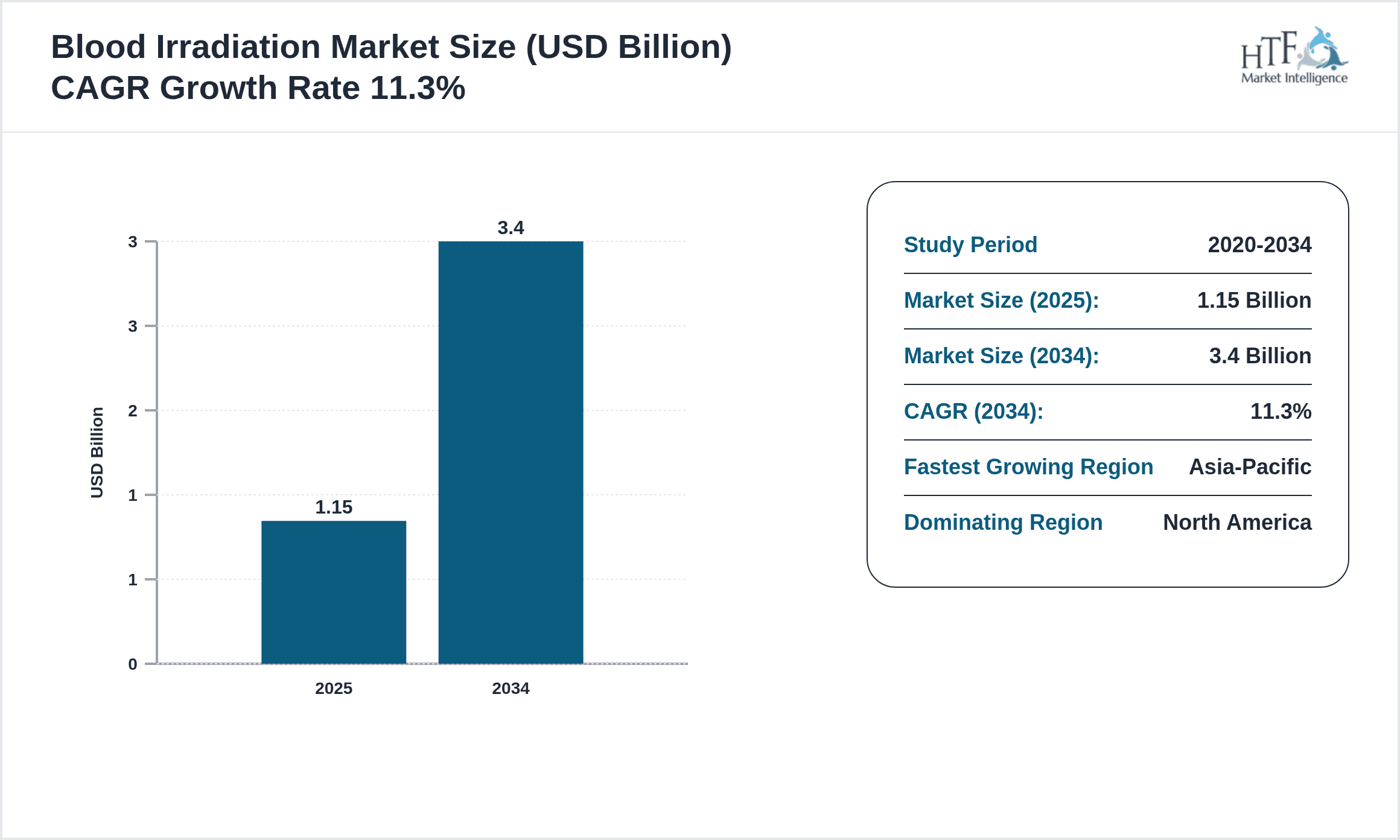
- •Key market highlights include a robust CAGR of 11.3% projected from 2024 to 2034, with the market size expected to grow from USD 1.15 billion in 2024 to USD 3.40 billion by 2034. Gamma irradiation remains the dominant technology due to its established efficacy and wide acceptance, while X-ray irradiation is witnessing the fastest growth owing to its safety profile and technological advancements. North America leads the market with the largest share driven by advanced healthcare infrastructure and regulatory mandates, whereas Asia-Pacific exhibits the highest growth rate fueled by expanding healthcare access and rising demand for safe blood transfusions. The transfusion medicine segment continues to dominate applications, supported by increasing blood transfusion procedures globally.
- •The blood irradiation market provides significant value propositions to healthcare providers, blood banks, and patients by ensuring safer transfusion outcomes and reducing the risk of graft-versus-host disease. Strategic importance stems from its role in improving blood product quality and compliance with regulatory standards, which enhances patient safety and optimizes clinical protocols. Furthermore, the market's growth enables technological innovation investments and fosters global collaboration among manufacturers, healthcare institutions, and regulatory bodies. These factors collectively contribute to the evolving landscape, positioning blood irradiation as a critical component in modern transfusion practices and blood management strategies worldwide.
Competitive Landscape
The competitive landscape of the Global Blood Irradiation Market is characterized by intense rivalry among established multinational corporations and emerging regional players, each striving to innovate and expand their product portfolios. Market leaders focus on advancing irradiation technologies, enhancing product safety, and integrating automation to differentiate their offerings. Strategic partnerships, mergers, and acquisitions are common approaches to consolidate market position and access new geographies. Companies maintain competitive advantages through continuous investment in research and development, regulatory compliance, and customer-centric service models. Pricing strategies are influenced by technological sophistication and the scale of deployment in healthcare facilities. Regional competition varies with North America and Europe exhibiting mature markets emphasizing innovation and compliance, while Asia-Pacific presents opportunities through expanding healthcare infrastructure and increasing awareness. The market is also witnessing the adoption of novel irradiation sources and advanced control systems, reinforcing the dynamic and innovation-driven competitive environment that shapes future growth trajectories.
Leading Companies in Blood Irradiation Market
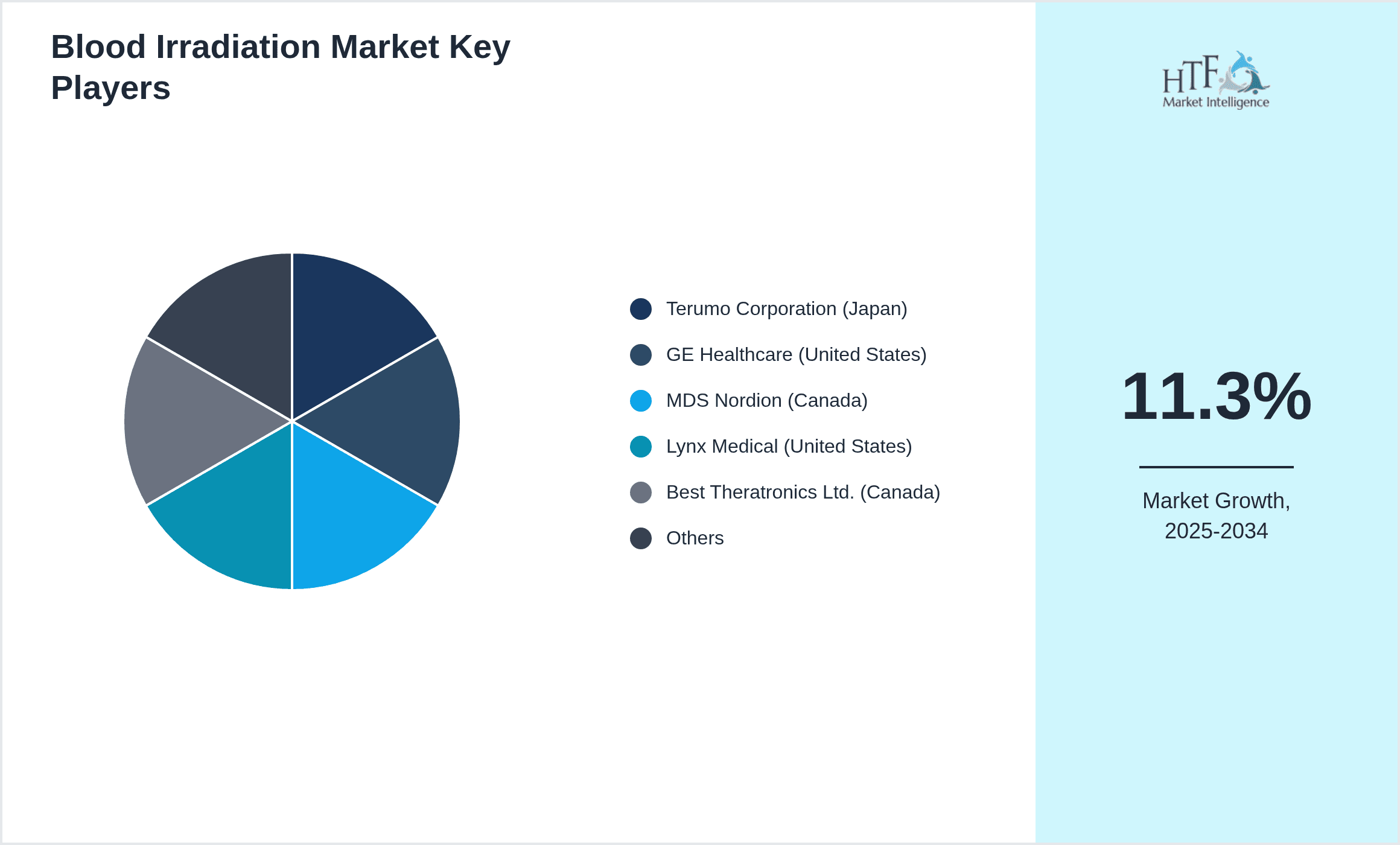
- •Terumo Corporation (Japan)
- •GE Healthcare (United States)
- •MDS Nordion (Canada)
- •Lynx Medical (United States)
- •Best Theratronics Ltd. (Canada)
- •Sapphire Medical Solutions (United States)
- •Radiation Dynamics, Inc. (United States)
- •IBA Group (Belgium)
- •Hitachi, Ltd. (Japan)
- •Shimadzu Corporation (Japan)
- •Eckert & Ziegler BEBIG (Germany)
- •Nordic Imaging & Therapy (Denmark)
- •Best Theratronics Ltd. (Canada)
- •Sterigenics International (United States)
- •Sodick Co., Ltd. (Japan)
- •Cobalt-60 Ltd. (India)
- •Nordion (Canada)
- •Rad Source Technologies, Inc. (United States)
- •Mevex Corporation (Canada)
- •Steris Corporation (United States)
- •IsoRay Medical, Inc. (United States)
- •Varian Medical Systems (United States)
- •Siemens Healthineers (Germany)
- •Bruker Corporation (United States)
- •Hitachi High-Technologies Corporation (Japan)
Market Breakdown
- •By Product Type
- ◦Gamma Irradiation
- ◦X-Ray Irradiation
- ◦Electron Beam Irradiation
- ◦Others
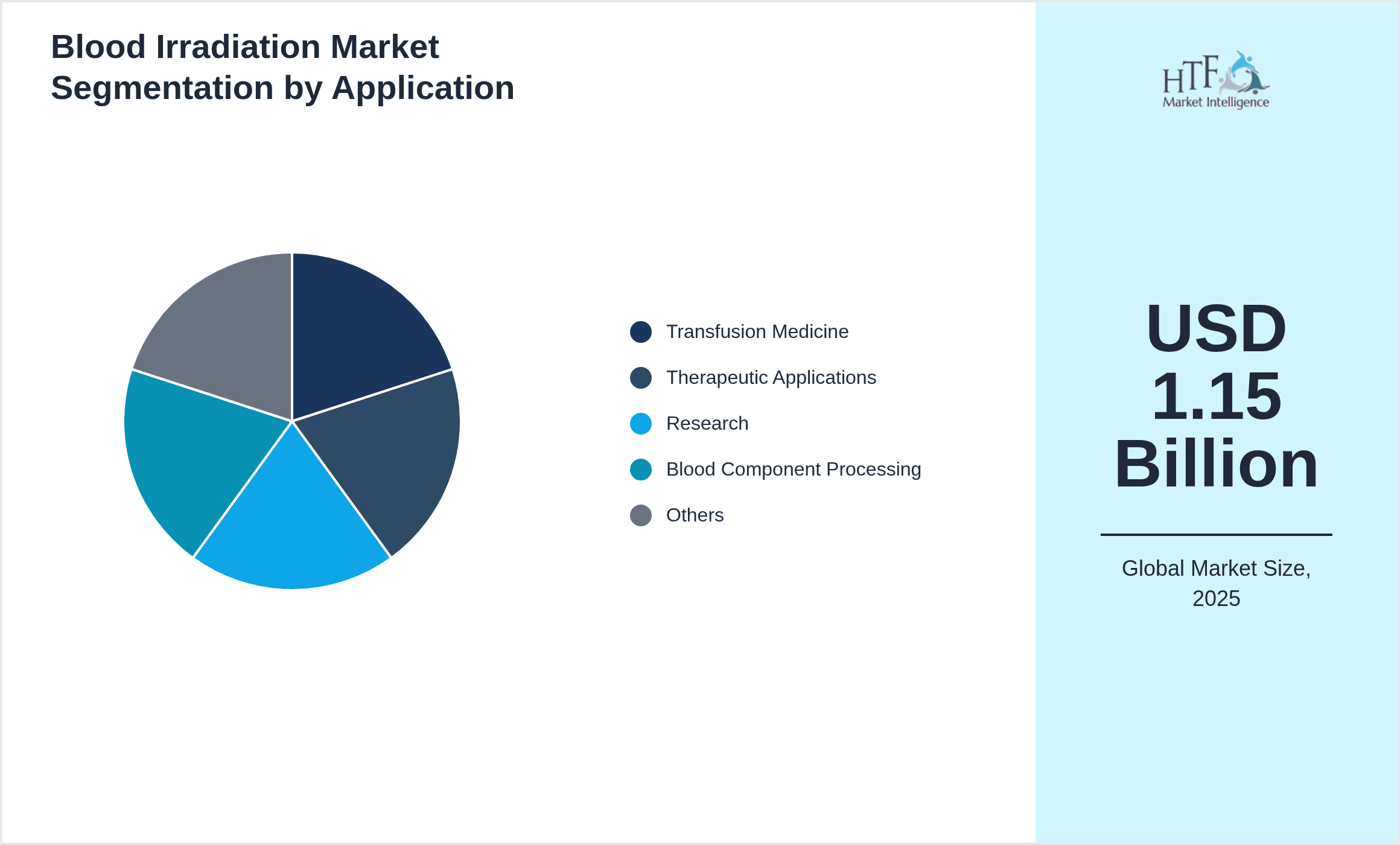
- •By Application
- ◦Transfusion Medicine
- ◦Therapeutic Applications
- ◦Research
- ◦Blood Component Processing
- ◦Others
- •By End-User
- ◦Hospitals
- ◦Blood Banks
- ◦Research Institutes
- ◦Diagnostic Centers
- •By Distribution Channel
- ◦Direct Sales
- ◦Distributors
- ◦Online Channels
Growth Dynamics
- •The growing prevalence of blood transfusion procedures worldwide, driven by increased incidences of anemia, cancer, and other blood disorders, is a primary growth driver for the blood irradiation market. Enhanced safety protocols and governmental regulations mandating irradiation for immunocompromised patients are accelerating market adoption globally.
- •Technological advancements such as the development of portable and automated irradiation devices improve operational efficiency and accessibility, particularly in emerging markets, fostering market expansion.
- •Rising awareness among healthcare providers about transfusion-associated graft-versus-host disease prevention is increasing demand for blood irradiation, especially in developed regions with stringent healthcare standards.
- •Expansion of healthcare infrastructure and blood bank facilities in Asia-Pacific and Latin America regions provides significant opportunities for market growth by increasing the availability of irradiation services.
- •Investments in research and development to introduce safer, more efficient radiation sources and protocols are enhancing the technological landscape and driving competitive growth in the market.
- •Government initiatives and funding programs aimed at improving blood safety and transfusion outcomes globally are catalyzing market growth through increased adoption and innovation.
- •Collaborations between equipment manufacturers and healthcare institutions to develop customized irradiation solutions are expanding market penetration and customer base.

Market Trends
- •The integration of automation and digital control systems in blood irradiation equipment is a key trend, improving precision, reducing human error, and enhancing workflow efficiency in blood banks and hospitals.
- •An increasing shift towards X-ray irradiation methods, driven by concerns over radioactive source management and disposal, is reshaping technology preferences in the market.
- •Sustainability and eco-friendly practices are becoming more prominent, with manufacturers developing irradiation systems that minimize environmental impact and improve energy efficiency.
- •The adoption of cloud-based monitoring and maintenance platforms for irradiation devices is enhancing remote diagnostics and service capabilities, reflecting digital transformation in healthcare.
- •Collaborative ecosystems involving manufacturers, research institutions, and healthcare providers are fostering innovation in blood irradiation protocols and equipment design.
- •Expansion of market reach through strategic partnerships and distribution agreements is enabling companies to access underserved regions and improve service delivery.
- •Increasing regulatory harmonization across key markets is standardizing irradiation practices and facilitating global market growth.
Market Opportunities
- •Emerging economies in Asia-Pacific and Latin America offer significant growth potential due to expanding healthcare infrastructure and increasing demand for safe blood transfusions.
- •Development of compact, portable irradiation devices presents opportunities for blood banks and remote healthcare settings to adopt irradiation practices more broadly.
- •Innovations in X-ray and electron beam irradiation technologies provide avenues for market expansion by addressing safety and regulatory concerns associated with gamma irradiation.
- •Investment in training and educational programs for healthcare professionals on the benefits and usage of blood irradiation can enhance market penetration and acceptance.
- •Collaborative ventures between technology providers and healthcare systems can lead to customized irradiation solutions meeting diverse clinical needs, fostering growth.
- •Expansion into research and therapeutic applications beyond transfusion medicine opens new revenue streams and increases market scope.
- •Government support and funding for blood safety initiatives globally create a favorable environment for market development and innovation.
Market Challenges
- •High initial capital investment and maintenance costs of irradiation equipment pose significant barriers to entry, especially for smaller blood banks and facilities in developing regions.
- •Stringent regulatory requirements and prolonged approval processes can delay product launches and market penetration, limiting growth speed.
- •Management and disposal of radioactive sources used in gamma irradiation present environmental and safety challenges that restrict adoption of certain technologies.
- •Limited awareness and training regarding blood irradiation benefits among healthcare practitioners in emerging markets lead to underutilization of available technologies.
- •Competition from alternative blood safety technologies and practices may impact demand for irradiation-based solutions.
- •Supply chain disruptions and raw material shortages can affect equipment manufacturing and delivery timelines, impacting market stability.
- •Complexity in integrating irradiation equipment with existing blood management systems may hinder adoption in certain healthcare setups.
Regulatory Framework
- •Between 2019 and 2024, several regions implemented stringent regulations mandating blood irradiation for immunocompromised patients and specific transfusion protocols. These regulations require compliance with safety, efficacy, and quality standards, significantly influencing market demand and product development.
- •Enforcement mechanisms include mandatory certification of blood irradiation devices and regular audit requirements for blood banks, enhancing market accountability and patient safety.
- •Safety standards addressing radiation exposure limits, source handling, and disposal were updated globally, compelling manufacturers to innovate safer and more efficient irradiation technologies.
- •Country-specific mandates, especially in North America and Europe, introduced timelines for phased adoption of non-radioactive irradiation technologies, encouraging transition from gamma sources to X-ray and electron beam methods.
- •Government initiatives offering incentives for modernization of blood irradiation infrastructure and funding for research programs have supported technological advancement and market expansion.
Market Intelligence
- •15th January 2025, Terumo Corporation launched an advanced gamma irradiation system featuring enhanced automation and real-time dose monitoring designed to improve blood product safety and operational efficiency. The new system targets large hospitals and blood banks globally, aiming to reduce human error and increase throughput while complying with international regulatory standards. This launch signifies Terumo’s commitment to innovation and expanding its footprint in the blood irradiation market.
- •20th March 2025, GE Healthcare introduced a next-generation X-ray blood irradiator that eliminates the need for radioactive sources, enhancing safety and regulatory compliance. The device incorporates AI-driven controls for dose optimization and remote monitoring capabilities, positioning it as a disruptive innovation in blood irradiation technology. This offering is expected to accelerate the adoption of X-ray irradiation particularly in markets with strict radioactive source regulations.
- •5th June 2024, MDS Nordion announced a strategic partnership with a leading research institute to develop novel electron beam irradiation solutions aimed at expanding therapeutic applications of blood irradiation. This collaboration focuses on improving dose precision and minimizing product degradation, with plans to commercialize innovative equipment by late 2025, reinforcing MDS Nordion’s position as a technology leader.
- •12th November 2024, Lynx Medical completed the acquisition of a regional blood irradiation equipment manufacturer, enhancing its product portfolio and expanding market access in Asia-Pacific. This strategic move aims to leverage local market knowledge and manufacturing capabilities to meet rising demand and support regional growth initiatives.
- •Source: Official company press releases and industry reports
Regional Outlook
The North America currently holds a significant share of the market, primarily due to several key factors: increasing consumption rates, a burgeoning population, and robust economic momentum. These elements collectively drive demand, positioning this region as a leader in the market. On the other hand, Asia-Pacific is rapidly emerging as the fastest-growing area within the industry. This remarkable growth can be attributed to swift infrastructure development, the expansion of various industrial sectors, and a marked increase in consumer demand. These dynamics make this region a crucial player in shaping future market growth.
In our report, we cover a comprehensive analysis of the following regions and countries:
- North America
- LATAM
- West Europe
- Central & Eastern Europe
- Northern Europe
- Southern Europe
- East Asia
- Southeast Asia
- South Asia
- Central Asia
- Oceania
- MEA
| Feature | Details |
|---|---|
| Base Year Market Size | USD 1.15 Billion |
| Forecast Year Market Size | USD 3.4 Billion |
| CAGR | 11.3% |
| Forecast Period | 2026 to 2033 |
| YoY Growth | 11.3% |
| Scope of Report | Market is segmented by Product Type (Gamma Irradiation, X-Ray Irradiation, Electron Beam Irradiation, Others), Application (Transfusion Medicine, Therapeutic Applications, Research, Blood Component Processing, Others), End-User (Hospitals, Blood Banks, Research Institutes, Diagnostic Centers), Distribution Channel (Direct Sales, Distributors, Online Channels) |
| Regions Covered | North America, LATAM, West Europe, Central & Eastern Europe, Northern Europe, Southern Europe, East Asia, Southeast Asia, South Asia, Central Asia, Oceania, MEA |
| Key Companies | Terumo Corporation (Japan), GE Healthcare (United States), MDS Nordion (Canada), Lynx Medical (United States), Best Theratronics Ltd. (Canada), Sapphire Medical Solutions (United States), Radiation Dynamics, Inc. (United States), IBA Group (Belgium), Hitachi, Ltd. (Japan), Shimadzu Corporation (Japan), Eckert & Ziegler BEBIG (Germany), Nordic Imaging & Therapy (Denmark), Best Theratronics Ltd. (Canada), Sterigenics International (United States), Sodick Co., Ltd. (Japan), Cobalt-60 Ltd. (India), Nordion (Canada), Rad Source Technologies, Inc. (United States), Mevex Corporation (Canada), Steris Corporation (United States), IsoRay Medical, Inc. (United States), Varian Medical Systems (United States), Siemens Healthineers (Germany), Bruker Corporation (United States), Hitachi High-Technologies Corporation (Japan) |
Global Blood Irradiation Market Size, Growth & Revenue 2024-2034 - Table of Contents
Frequently Asked Questions (FAQ):
The Compact Track Loaders market is projected to grow at a CAGR of 6.8% from 2025 to 2030, driven by increasing demand in construction and agricultural sectors.
North America currently leads the market with approximately 45% market share, followed by Europe at 28% and Asia-Pacific at 22%. The remaining regions account for 5% of the global market.
Key growth drivers include increasing construction activities, rising demand for versatile equipment in agriculture, technological advancements in track loader design, and growing preference for compact equipment in urban construction projects.