
Global Busulfan Market Size, Growth & Revenue 2025-2034
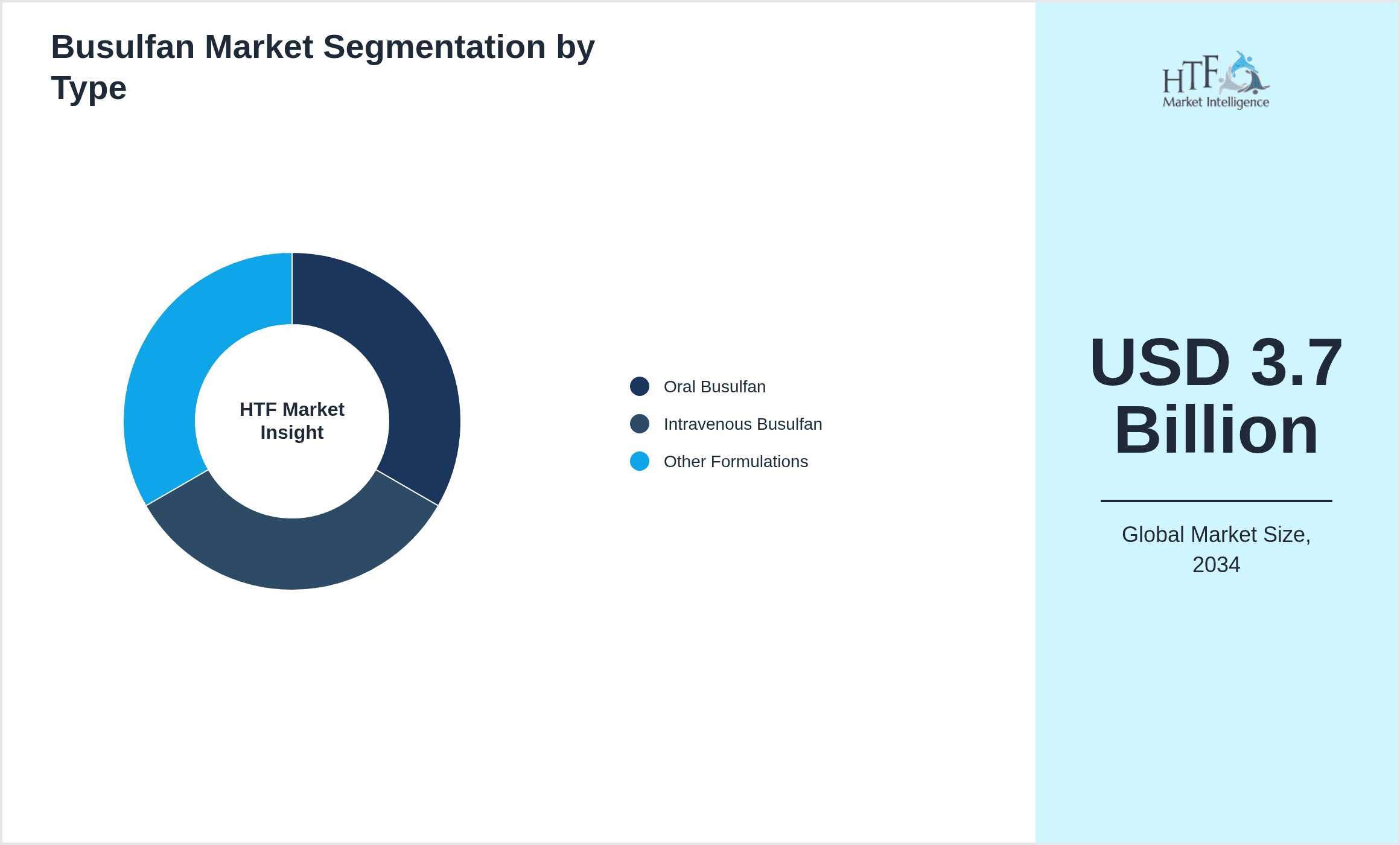
Global Busulfan Market is segmented by Product Type (Oral Busulfan, Intravenous Busulfan, Other Formulations), Application (Chemotherapy, Bone Marrow Transplant Conditioning, Leukemia Treatment, Cancer Therapy, Other Therapeutic Uses), End-Use Industry (Hospitals, Specialty Clinics, Research Institutes, Pharmaceutical Companies), Distribution Channel (Hospital Pharmacies, Retail Pharmacies, Online Pharmacies), and Geography (North America, LATAM, West Europe, Central & Eastern Europe, Northern Europe, Southern Europe, East Asia, Southeast Asia, South Asia, Central Asia, Oceania, MEA)
Pricing
Report Overview
Executive Summary
- •The global Busulfan market represents a critical segment within oncology therapeutics, focusing on chemotherapy agents used primarily for conditioning prior to hematopoietic stem cell transplantation. Busulfan’s alkylating mechanism disrupts DNA replication in malignant cells, making it essential for treatment protocols for various leukemias and other cancers. The market includes oral and intravenous formulations, with intravenous Busulfan gaining preference due to improved bioavailability and safety profiles. Increasing prevalence of hematologic malignancies worldwide, coupled with advancements in transplant technology, drives demand for Busulfan. Additionally, expanding indications and clinical trials exploring novel combination therapies bolster the market's growth potential. The competitive landscape is characterized by innovation in formulation and delivery methods, alongside patent expirations fostering generic drug availability. Key regions such as North America and Europe dominate the market due to advanced healthcare infrastructure and high treatment adoption rates, while Asia-Pacific emerges as the fastest growing region fueled by rising cancer incidence and expanding healthcare access. Regulatory frameworks continue to evolve, ensuring safety and efficacy standards that shape market dynamics. Overall, the Busulfan market is poised for robust growth, driven by clinical demand, technological advancements, and expanding therapeutic applications.
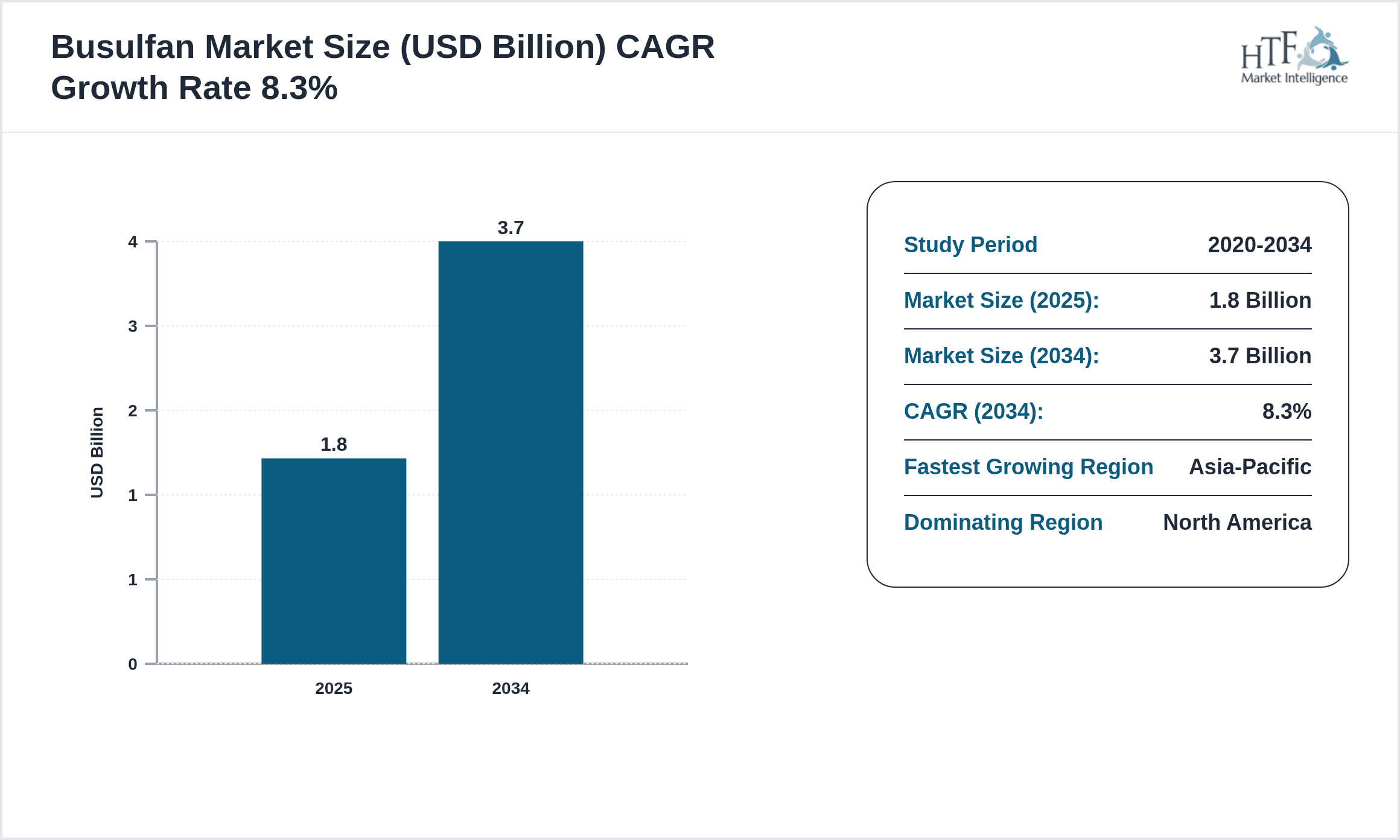
- •Key highlights include a global market valuation of USD 1.8 billion in 2025, projected to reach USD 3.7 billion by 2034 at a CAGR of 8.3%. Intravenous Busulfan is the leading product type, favored for its precision dosing and reduced toxicity risk. The Asia-Pacific region is witnessing the fastest growth due to increasing healthcare investments and growing patient populations. Market trends emphasize innovation in drug delivery systems and combination chemotherapy protocols. Challenges such as stringent regulatory requirements and high treatment costs persist but are mitigated by expanding generic formulations and government initiatives supporting cancer care access.
- •The Busulfan market holds strategic importance for pharmaceutical companies, healthcare providers, and investors by offering critical therapies for life-threatening conditions. Its role in bone marrow transplant conditioning underscores its value in improving patient survival and treatment outcomes. Stakeholders benefit from ongoing research, regulatory advancements, and increasing global awareness of hematologic cancers. The market’s growth trajectory suggests significant opportunities for new entrants and established players alike, with a focus on enhancing therapeutic efficacy and patient safety.
Competitive Landscape
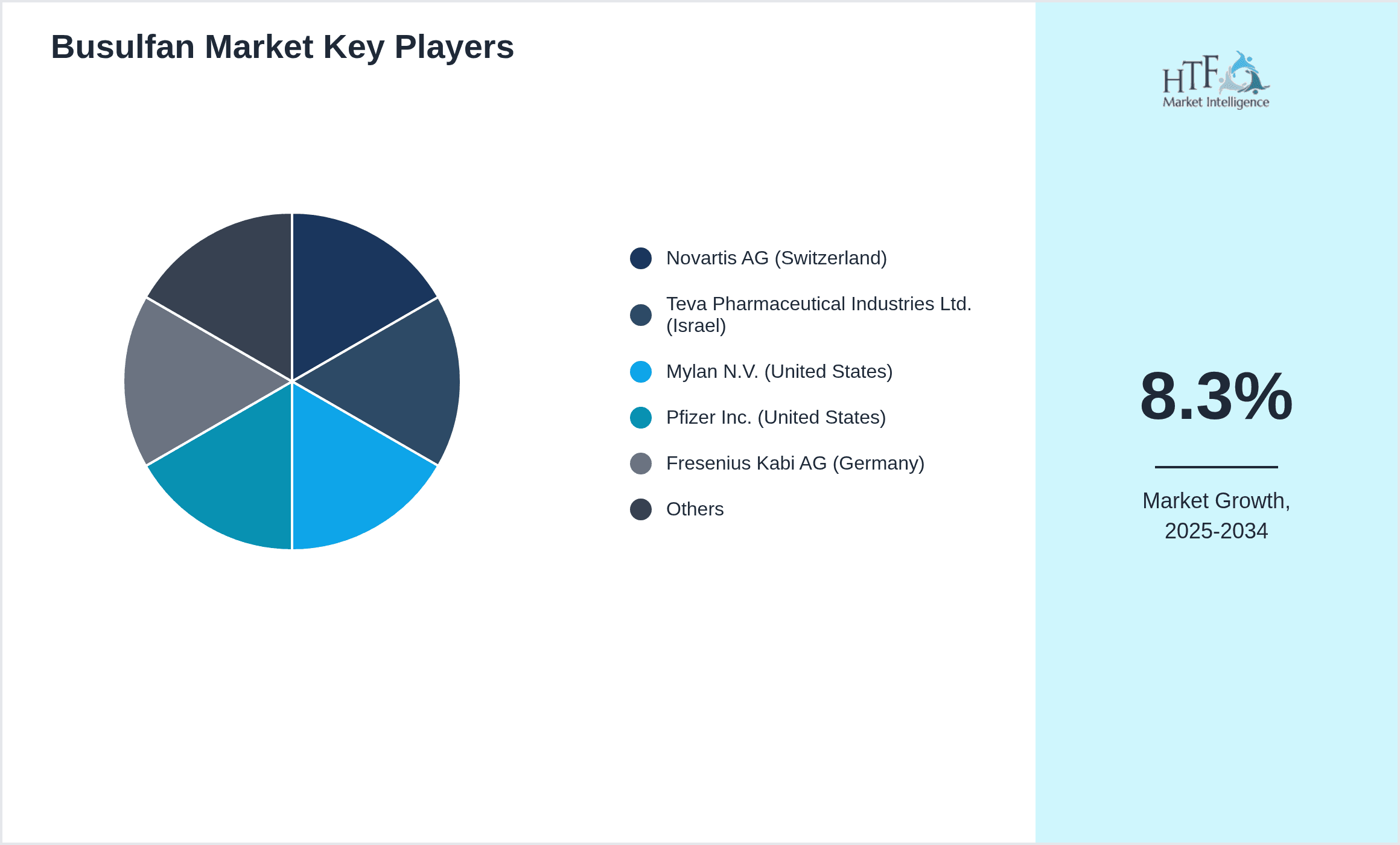
The competitive environment of the global Busulfan market is shaped by the presence of multinational pharmaceutical companies, generic drug manufacturers, and biotechnology firms focusing on oncology therapeutics. Market dynamics are influenced by continuous innovation in formulation technologies, including intravenous and oral delivery systems, to improve patient compliance and reduce adverse effects. Strategic partnerships, licensing agreements, and mergers & acquisitions are common competitive strategies to expand product portfolios and geographic reach. Companies invest heavily in R&D to develop next-generation chemotherapy agents and combination therapies that enhance Busulfan’s efficacy and safety profile. Pricing strategies vary between branded and generic products, with generics exerting downward pressure on costs while increasing accessibility. Distribution channels encompass hospitals, specialty clinics, and cancer treatment centers, often supported by direct sales forces and partnerships with healthcare providers. Regulatory approvals and patent expirations further impact competitive positioning, with new entrants leveraging biosimilar developments to gain market share. Regional competition varies, with North American and European markets dominated by established players, while Asia-Pacific presents opportunities for emerging companies. Future trends indicate a shift towards personalized medicine approaches and the integration of Busulfan with novel immunotherapies, underscoring the importance of innovation and strategic agility in maintaining competitive advantage.
Leading Companies in Busulfan Market
- •Novartis AG (Switzerland)
- •Teva Pharmaceutical Industries Ltd. (Israel)
- •Mylan N.V. (United States)
- •Pfizer Inc. (United States)
- •Fresenius Kabi AG (Germany)
- •Sun Pharmaceutical Industries Ltd. (India)
- •Sandoz International GmbH (Switzerland)
- •Cipla Limited (India)
- •Hospira, Inc. (United States)
- •Baxter International Inc. (United States)
- •Astellas Pharma Inc. (Japan)
- •Celltrion, Inc. (South Korea)
- •Hikma Pharmaceuticals PLC (United Kingdom)
- •Medi-Globe Corporation (Germany)
- •Eisai Co., Ltd. (Japan)
- •Lupin Limited (India)
- •Actavis (United States)
- •Zhejiang Hisun Pharmaceutical Co., Ltd. (China)
- •Sagent Pharmaceuticals (United States)
- •Mallinckrodt Pharmaceuticals (Ireland)
- •Helsinn Healthcare SA (Switzerland)
- •Sichuan Kelun Pharmaceutical Co., Ltd. (China)
- •Alvogen, Inc. (United States)
- •Gland Pharma Limited (India)
- •Chongqing Huapont Pharmaceutical Co., Ltd. (China)

Market Breakdown
- •By Product Type
- ◦Oral Busulfan
- ◦Intravenous Busulfan
- ◦Other Formulations
- •By Application
- ◦Chemotherapy
- ◦Bone Marrow Transplant Conditioning
- ◦Leukemia Treatment
- ◦Cancer Therapy
- ◦Other Therapeutic Uses
- •By End-Use Industry
- ◦Hospitals
- ◦Specialty Clinics
- ◦Research Institutes
- ◦Pharmaceutical Companies
- •By Distribution Channel
- ◦Hospital Pharmacies
- ◦Retail Pharmacies
- ◦Online Pharmacies
Growth Dynamics
The global Busulfan market is propelled by the increasing incidence of hematologic cancers such as leukemia and lymphoma, which necessitate conditioning regimens involving Busulfan for effective bone marrow transplantation. Rising awareness and diagnosis rates in developing regions also contribute to expanding patient pools. Advances in intravenous Busulfan formulations have improved safety profiles and dosing accuracy, enhancing clinical adoption. Additionally, expansion of healthcare infrastructure in emerging markets supports greater accessibility to Busulfan therapies. Pharmaceutical innovations focusing on combination therapies and personalized medicine further stimulate market growth by improving treatment outcomes and patient quality of life. Government initiatives and funding for cancer research and treatment programs in key regions also underpin market expansion, while patent expirations enable generic manufacturers to increase market penetration. These dynamics collectively contribute to sustained growth with an expected CAGR of 8.3% over the forecast period.
Market Trends
A prominent trend in the Busulfan market is the shift towards intravenous formulations due to their enhanced pharmacokinetic control and reduced variability compared to oral dosing. Innovations in drug delivery systems, including liposomal and nanoparticle-based Busulfan, are gaining traction for targeted therapy with minimized toxicity. Combination regimens integrating Busulfan with novel immunotherapies and targeted agents are becoming standard practice, reflecting the evolving oncology treatment landscape. Additionally, there is growing adoption of therapeutic drug monitoring to optimize Busulfan dosing and reduce adverse effects. The market also sees increasing generic drug availability following patent expirations, fostering competitive pricing and broader patient access globally. Digital health technologies supporting patient management and adherence are emerging adjuncts to Busulfan therapy protocols, enhancing treatment efficacy and safety.
Market Opportunities
The Busulfan market offers significant opportunities in emerging economies where rising cancer prevalence and improving healthcare infrastructure create unmet medical needs. Development of novel formulations with improved safety profiles and patient convenience presents avenues for differentiation and market expansion. Expanding indications beyond hematologic malignancies into solid tumors and other therapeutic areas can open new revenue streams. Strategic collaborations between pharmaceutical companies and research institutions to advance clinical trials and drug development can accelerate innovation. Additionally, increasing government investment and funding in oncology research provide financial support for market growth. The rising trend of personalized medicine and genetic profiling enables targeted Busulfan therapies, enhancing efficacy and patient outcomes, thus representing a key growth opportunity.
Market Challenges
Challenges facing the Busulfan market include stringent regulatory requirements that prolong product approval timelines and increase development costs. The drug’s narrow therapeutic index necessitates careful dosing and monitoring, complicating clinical administration. High treatment costs and limited reimbursement in certain regions restrict patient access. Potential adverse effects such as veno-occlusive disease and pulmonary toxicity pose safety concerns, impacting physician and patient acceptance. Competition from emerging chemotherapy agents and alternative conditioning regimens adds pressure on market share. Supply chain complexities and raw material sourcing issues also affect consistent product availability. Furthermore, intellectual property disputes and patent litigations may impede market entry for new formulations or generics.
Regulatory Framework
From 2020 to 2025, the regulatory landscape for Busulfan has been shaped by evolving guidelines from major agencies such as the US FDA, EMA, and PMDA, focusing on safety, efficacy, and quality standards. The FDA’s approval of intravenous Busulfan formulations mandated rigorous clinical trials demonstrating improved pharmacokinetics and reduced toxicity compared to oral forms. Regulatory agencies have enforced stringent post-marketing surveillance to monitor adverse events, particularly concerning hepatic veno-occlusive disease risks. Guidelines emphasize therapeutic drug monitoring to optimize dosing, supported by mandatory labeling updates. Additionally, harmonization efforts across regions aim to streamline approval pathways for generics and biosimilars, facilitating market entry and competition. Compliance with Good Manufacturing Practices (GMP) and pharmacovigilance requirements remains critical. Regional mandates also include expedited review programs for oncology drugs addressing unmet medical needs. Government initiatives promoting access to essential medicines influence pricing and reimbursement policies, impacting market accessibility and growth.
Market Intelligence
- •15th January 2025, Novartis AG launched a next-generation intravenous Busulfan formulation featuring enhanced bioavailability and reduced side effects, targeting bone marrow transplant patients globally. This product integrates advanced drug delivery technology to maintain steady plasma concentrations, minimizing toxicity risks. The launch aims to capture market share by addressing limitations of conventional Busulfan products and is supported by comprehensive clinical trial data demonstrating improved patient outcomes. Novartis’s strategic marketing and distribution efforts focus on key oncology centers worldwide, reinforcing its leadership position. Source: Novartis Official Press Release.
- •22nd March 2025, Teva Pharmaceutical Industries Ltd. announced the commercial release of its generic oral Busulfan product in multiple international markets, following successful regulatory approvals. This initiative expands affordable treatment options for hematologic malignancies, particularly in emerging economies. Teva’s product meets stringent quality and safety standards, with plans to increase production capacity to meet rising demand. The launch supports Teva’s strategy to strengthen its oncology portfolio and enhance global accessibility. Source: Teva Corporate Website.
- •10th June 2025, Pfizer Inc. entered a strategic partnership with a biotechnology firm specializing in nanoparticle drug delivery to co-develop innovative Busulfan formulations aimed at targeted cancer therapy. The collaboration focuses on enhancing therapeutic efficacy while reducing systemic toxicity. This joint venture leverages Pfizer’s global commercialization capabilities and the partner’s technological expertise, expected to accelerate time-to-market for novel Busulfan products. The initiative aligns with Pfizer’s long-term oncology innovation roadmap. Source: Pfizer Press Release.
- •28th September 2024, Mylan N.V. completed the acquisition of a specialty pharmaceutical company with a portfolio including Busulfan generics and oncology injectables. The acquisition strengthens Mylan’s position in the chemotherapy drug market and broadens its product offerings. Synergies from the merger are anticipated to enhance distribution networks and R&D capabilities. Market consolidation trends such as this reflect growing competition and the strategic importance of oncology therapeutics. Source: Mylan Corporate Announcement.
Regional Outlook
The North America currently holds a significant share of the market, primarily due to several key factors: increasing consumption rates, a burgeoning population, and robust economic momentum. These elements collectively drive demand, positioning this region as a leader in the market. On the other hand, Asia-Pacific is rapidly emerging as the fastest-growing area within the industry. This remarkable growth can be attributed to swift infrastructure development, the expansion of various industrial sectors, and a marked increase in consumer demand. These dynamics make this region a crucial player in shaping future market growth.
In our report, we cover a comprehensive analysis of the following regions and countries:
- North America
- LATAM
- West Europe
- Central & Eastern Europe
- Northern Europe
- Southern Europe
- East Asia
- Southeast Asia
- South Asia
- Central Asia
- Oceania
- MEA
| Feature | Details |
|---|---|
| Base Year Market Size | USD 1.8 Billion |
| Forecast Year Market Size | USD 3.7 Billion |
| CAGR | 8.3% |
| Forecast Period | 2026 to 2033 |
| YoY Growth | 8% |
| Scope of Report | Market is segmented by Product Type (Oral Busulfan, Intravenous Busulfan, Other Formulations), Application (Chemotherapy, Bone Marrow Transplant Conditioning, Leukemia Treatment, Cancer Therapy, Other Therapeutic Uses), End-Use Industry (Hospitals, Specialty Clinics, Research Institutes, Pharmaceutical Companies), Distribution Channel (Hospital Pharmacies, Retail Pharmacies, Online Pharmacies) |
| Regions Covered | North America, LATAM, West Europe, Central & Eastern Europe, Northern Europe, Southern Europe, East Asia, Southeast Asia, South Asia, Central Asia, Oceania, MEA |
| Key Companies | Novartis AG (Switzerland), Teva Pharmaceutical Industries Ltd. (Israel), Mylan N.V. (United States), Pfizer Inc. (United States), Fresenius Kabi AG (Germany), Sun Pharmaceutical Industries Ltd. (India), Sandoz International GmbH (Switzerland), Cipla Limited (India), Hospira, Inc. (United States), Baxter International Inc. (United States), Astellas Pharma Inc. (Japan), Celltrion, Inc. (South Korea), Hikma Pharmaceuticals PLC (United Kingdom), Medi-Globe Corporation (Germany), Eisai Co., Ltd. (Japan), Lupin Limited (India), Actavis (United States), Zhejiang Hisun Pharmaceutical Co., Ltd. (China), Sagent Pharmaceuticals (United States), Mallinckrodt Pharmaceuticals (Ireland), Helsinn Healthcare SA (Switzerland), Sichuan Kelun Pharmaceutical Co., Ltd. (China), Alvogen, Inc. (United States), Gland Pharma Limited (India), Chongqing Huapont Pharmaceutical Co., Ltd. (China) |
Global Busulfan Market Size, Growth & Revenue 2025-2034 - Table of Contents
Frequently Asked Questions (FAQ):
The Compact Track Loaders market is projected to grow at a CAGR of 6.8% from 2025 to 2030, driven by increasing demand in construction and agricultural sectors.
North America currently leads the market with approximately 45% market share, followed by Europe at 28% and Asia-Pacific at 22%. The remaining regions account for 5% of the global market.
Key growth drivers include increasing construction activities, rising demand for versatile equipment in agriculture, technological advancements in track loader design, and growing preference for compact equipment in urban construction projects.