
Global Electrochemical Oxygen Pumps Market Size, Growth & Revenue 2024-2034
Global Electrochemical Oxygen Pumps Market is segmented by Product Type (Solid Oxide Electrochemical Oxygen Pumps, Polymer Electrolyte Membrane Oxygen Pumps, Alkaline Electrochemical Oxygen Pumps, Zirconia Electrochemical Oxygen Pumps, Other Types), Application (Industrial Gas Production, Medical Oxygen Supply, Environmental Monitoring, Fuel Cells, Metal Processing), End-Use Industry (Healthcare, Energy & Power, Metallurgy, Environmental Services), Distribution Channel (Direct Sales, Distributors, Online Platforms), and Geography (North America, LATAM, West Europe, Central & Eastern Europe, Northern Europe, Southern Europe, East Asia, Southeast Asia, South Asia, Central Asia, Oceania, MEA)
Pricing
Report Overview
Executive Summary
- •The global Electrochemical Oxygen Pumps market comprises advanced devices designed to generate and supply oxygen by electrochemical ion transport, featuring compact and energy-efficient technologies that address industrial and medical oxygen needs. This market includes a variety of product types such as Solid Oxide, Polymer Electrolyte Membrane, Alkaline, and Zirconia pumps, catering to applications including industrial gas production, medical oxygen supply, environmental monitoring, fuel cells, and metal processing. These pumps offer high purity oxygen delivery and contribute to sustainability by minimizing emissions and optimizing energy consumption. Market growth is propelled by increasing demand for clean energy solutions, stringent environmental regulations, and technological advancements in membrane materials and manufacturing processes. Key industries driving demand include healthcare, energy, metallurgy, and environmental sectors. The market is highly competitive, characterized by continuous innovation, strategic partnerships, and expansion into emerging regions. This comprehensive analysis covers market segmentation, growth dynamics, competitive landscape, regulatory updates, and future opportunities, providing stakeholders with actionable insights for informed decision-making.
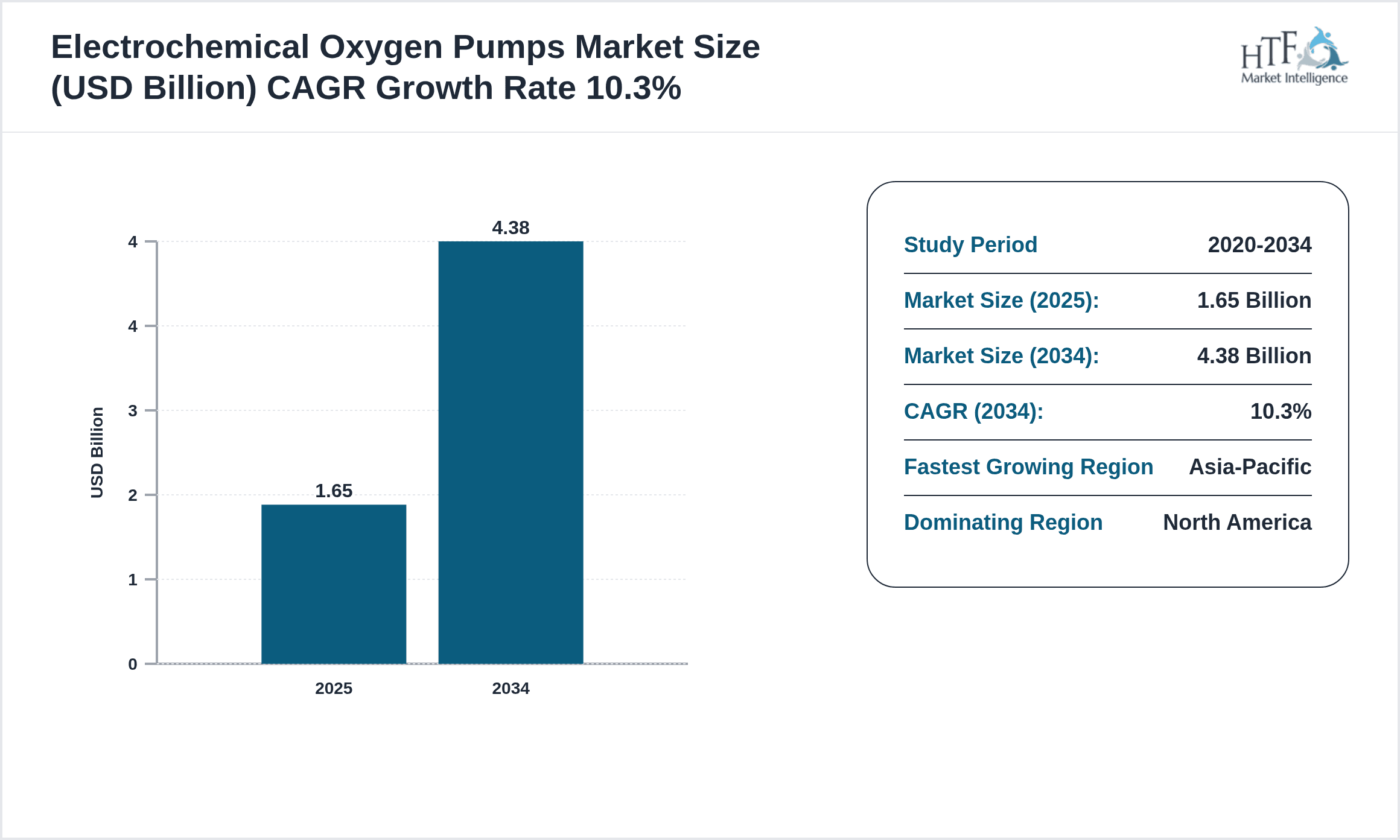
- •The Electrochemical Oxygen Pumps market is projected to grow from USD 1.65 billion in 2024 to USD 4.38 billion by 2034, exhibiting a CAGR of 10.3%. North America dominates the market due to its technological advancements and established industrial base, while Asia-Pacific is the fastest-growing region driven by increasing industrialization and healthcare infrastructure development. The solid oxide type leads in market share, supported by its high efficiency and robustness, whereas polymer electrolyte membrane pumps are gaining rapid traction owing to their suitability for fuel cell applications. Key market drivers include rising demand for clean energy, environmental regulations, and expanding industrial oxygen needs. Challenges such as high production costs and material limitations persist, but ongoing R&D and regulatory support offer significant growth opportunities. Leading companies focus on innovation, strategic collaborations, and geographic expansion to consolidate their market positions.
- •This market offers substantial value propositions to diverse stakeholders including manufacturers, end-users, and regulatory bodies. For manufacturers, the market provides avenues for technological innovation and product differentiation. End-users benefit from efficient, reliable oxygen supply systems that enhance operational productivity and environmental compliance. Regulatory bodies influence market dynamics through standards promoting sustainability and safety. The strategic importance of electrochemical oxygen pumps is underscored by their role in advancing clean energy technologies such as fuel cells and reducing industrial emissions. Moreover, the market's global reach enables cross-regional technology transfer and investment opportunities, fostering economic growth and environmental stewardship. Stakeholders leveraging market insights can capitalize on emerging trends, address challenges effectively, and drive sustainable market expansion.
Competitive Landscape
The competitive environment in the global Electrochemical Oxygen Pumps market is marked by intense rivalry among established multinational corporations and innovative regional players, fostering rapid technological advancements and strategic differentiation. Market leaders focus on developing proprietary membrane technologies, enhancing energy efficiency, and expanding product portfolios to cater to diverse applications. Strategic partnerships, joint ventures, and mergers & acquisitions are prevalent as companies aim to consolidate market share and penetrate emerging regions. Pricing strategies are balanced with product quality and service excellence to maintain customer loyalty. Distribution networks are optimized to ensure timely delivery and after-sales support globally. Innovation in materials science and manufacturing processes remains a critical competitive lever, enabling companies to overcome technical challenges and reduce costs. Regulatory compliance and sustainability initiatives further influence competitive positioning. Future trends suggest a shift towards integrated system solutions and digitalization to enhance operational performance and customer engagement, intensifying competition and market complexity.
Leading Companies in Electrochemical Oxygen Pumps Market
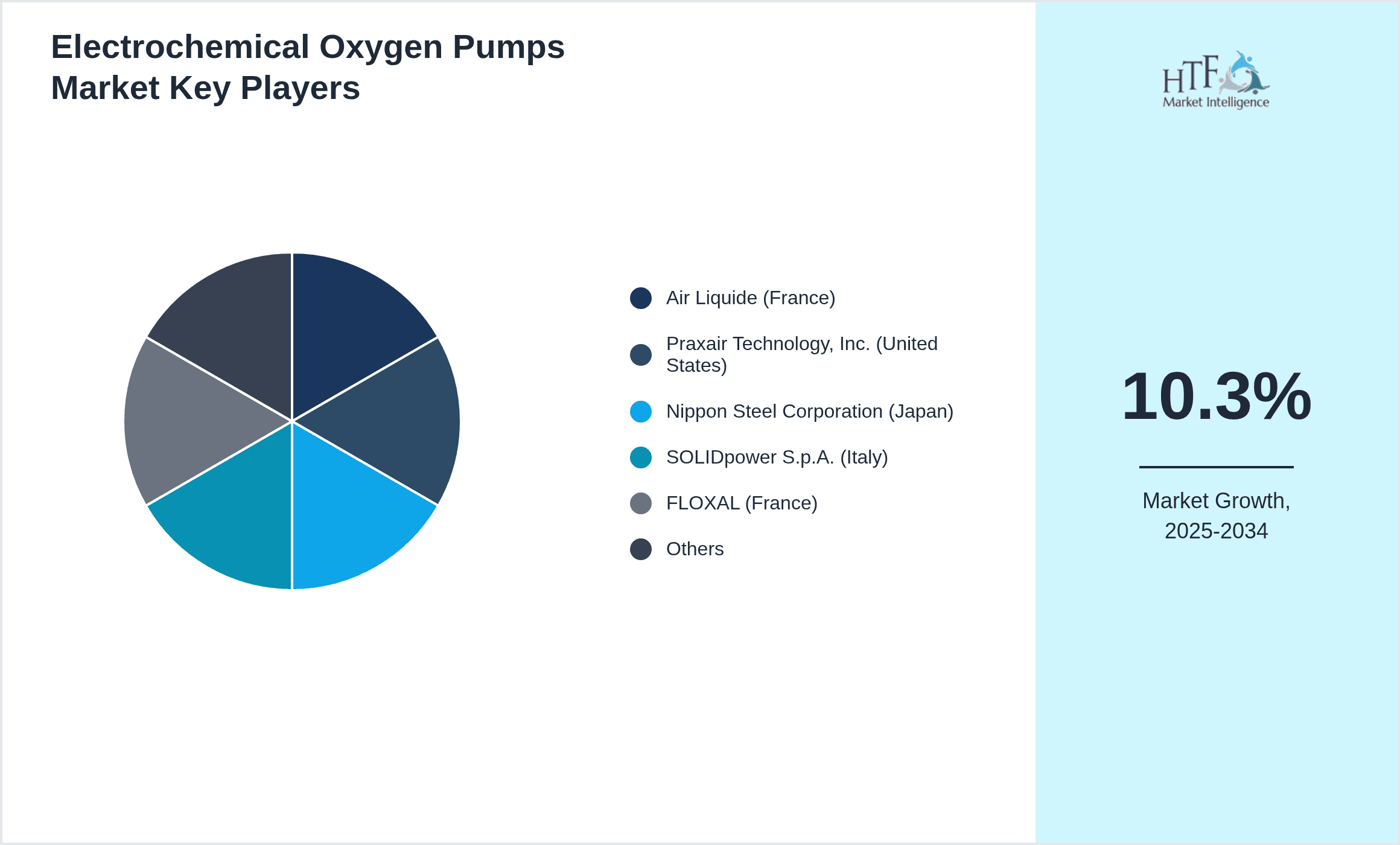
- •Air Liquide (France)
- •Praxair Technology, Inc. (United States)
- •Nippon Steel Corporation (Japan)
- •SOLIDpower S.p.A. (Italy)
- •FLOXAL (France)
- •Ceramic Fuel Cells Limited (Australia)
- •FuelCell Energy, Inc. (United States)
- •Proton OnSite (United States)
- •Oxygen Technologies, Inc. (Canada)
- •Messer Group GmbH (Germany)
- •Linde plc (United Kingdom)
- •Siemens Energy (Germany)
- •Hitachi Zosen Corporation (Japan)
- •Elcore ApS (Denmark)
- •H-TEC Systems GmbH (Germany)
- •Sumitomo Electric Industries, Ltd. (Japan)
- •Sunfire GmbH (Germany)
- •Ceramatec, Inc. (United States)
- •Toshiba Energy Systems & Solutions Corporation (Japan)
- •FuelCell Systems, Inc. (United States)
- •HyGear BV (Netherlands)
- •Elcogen AS (Estonia)
- •Ceres Power Holdings plc (United Kingdom)
- •Haldor Topsøe A/S (Denmark)
- •Johnson Matthey plc (United Kingdom)
Market Breakdown
- •By Product Type
- ◦Solid Oxide Electrochemical Oxygen Pumps
- ◦Polymer Electrolyte Membrane Oxygen Pumps
- ◦Alkaline Electrochemical Oxygen Pumps
- ◦Zirconia Electrochemical Oxygen Pumps
- ◦Other Types
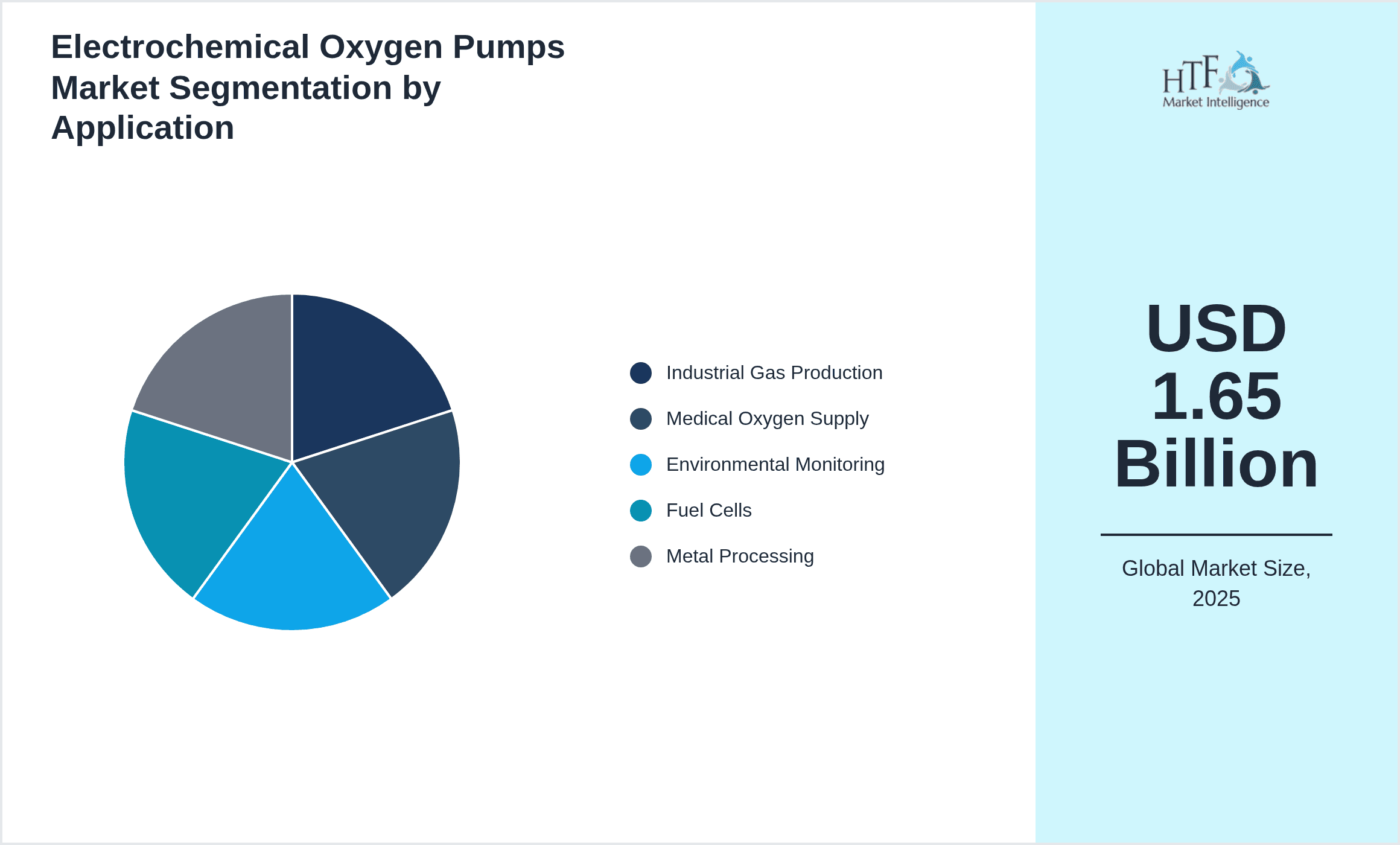
- •By Application
- ◦Industrial Gas Production
- ◦Medical Oxygen Supply
- ◦Environmental Monitoring
- ◦Fuel Cells
- ◦Metal Processing
- •By End-Use Industry
- ◦Healthcare
- ◦Energy & Power
- ◦Metallurgy
- ◦Environmental Services
- •By Distribution Channel
- ◦Direct Sales
- ◦Distributors
- ◦Online Platforms
Growth Dynamics
- •Rising global demand for clean and efficient oxygen generation technologies is a major growth driver, fueled by stricter environmental regulations and increasing industrial oxygen consumption across sectors such as healthcare, energy, and metallurgy. The emphasis on reducing carbon emissions encourages adoption of electrochemical oxygen pumps as sustainable alternatives to conventional methods.
- •Technological advancements in membrane materials and manufacturing processes enhance pump efficiency, durability, and cost-effectiveness, enabling broader application in fuel cells and medical oxygen supply systems. Innovations such as nanostructured ceramics improve ion conductivity and operational lifespan, driving market expansion.
- •Growing investments in renewable energy infrastructure and fuel cell technology adoption stimulate demand for polymer electrolyte membrane oxygen pumps, which offer compact design and rapid response capabilities. Government incentives and subsidies for clean energy projects further accelerate market growth in emerging regions.
- •Increasing healthcare infrastructure development worldwide, particularly in emerging economies, boosts the need for reliable medical oxygen supply systems. Electrochemical oxygen pumps provide on-site oxygen generation solutions essential for hospitals and clinics, especially during health crises and pandemics.
- •Strategic collaborations and partnerships among technology providers and industrial end-users facilitate market penetration and product innovation. Such alliances enable customized solutions tailored to specific industry requirements, enhancing competitive advantage and customer retention.

Market Trends
- •There is a significant shift towards integrating digital monitoring and control systems with electrochemical oxygen pumps, enabling real-time performance tracking, predictive maintenance, and remote operation, which enhances reliability and reduces downtime in critical applications.
- •Sustainability-focused innovations are driving the development of low-energy consumption oxygen pumps with enhanced membrane selectivity, aligning with global carbon neutrality goals and regulatory pressures to minimize environmental impact.
- •Modular and scalable pump designs are gaining traction to accommodate varying oxygen demand levels across industries, offering flexibility and cost savings in both small-scale healthcare facilities and large industrial plants.
- •Collaborative ecosystems involving manufacturers, research institutions, and end-users are fostering rapid prototyping and commercialization of next-generation electrochemical oxygen pumps with improved efficiency and reduced costs.
- •Emerging applications in aerospace and underwater technologies are expanding the market scope, leveraging the pumps’ compactness and reliability under extreme operating conditions.
Market Opportunities
- •Untapped markets in developing regions present significant growth opportunities due to expanding industrial and healthcare infrastructure, creating demand for efficient oxygen generation technologies and localized manufacturing capabilities.
- •Advancements in materials science open avenues for producing next-generation membranes with superior ionic conductivity and mechanical strength, enabling performance breakthroughs and cost reductions.
- •Integration of renewable energy sources such as solar and wind power with electrochemical oxygen pumps presents innovative solutions for off-grid oxygen generation, particularly in remote and rural areas.
- •Strategic partnerships between pump manufacturers and fuel cell developers can accelerate adoption in the clean energy sector, enhancing market penetration and technology refinement.
- •Digitalization of monitoring and maintenance services offers potential for value-added offerings, including data analytics and predictive maintenance contracts, improving customer engagement and revenue streams.
Market Challenges
- •High costs associated with advanced membrane materials and manufacturing processes limit widespread adoption, especially in cost-sensitive emerging markets, posing a barrier to market growth.
- •Technical challenges such as membrane degradation, limited operational lifespan, and sensitivity to impurities affect reliability and necessitate frequent maintenance, impacting end-user confidence.
- •Competition from conventional oxygen generation technologies like cryogenic distillation and pressure swing adsorption continues to challenge market penetration due to established infrastructure and economies of scale.
- •Regulatory uncertainties and varying standards across regions complicate market entry and compliance efforts, increasing operational risks and costs for manufacturers.
- •Supply chain disruptions and raw material scarcity can impede production schedules and increase component costs, affecting overall market stability.
Regulatory Framework
- •Between 2019 and 2024, multiple regions implemented stringent environmental standards mandating reduced emissions and enhanced energy efficiency for industrial gas generation equipment, directly impacting electrochemical oxygen pump designs and certification requirements.
- •Mandatory compliance with ISO standards related to medical device oxygen supply systems, introduced globally in the last five years, requires manufacturers to ensure product safety, reliability, and quality assurance in hospital applications.
- •The European Union's Ecodesign Directive revisions in 2021 established minimum energy performance criteria for oxygen generation devices, promoting adoption of electrochemical pumps with lower carbon footprints.
- •In North America, the introduction of updated Occupational Safety and Health Administration (OSHA) guidelines between 2020 and 2023 emphasizes safe handling and generation of oxygen in workplaces, influencing product design and end-user training protocols.
- •Government incentive programs targeting clean energy and medical infrastructure development provide subsidies and tax benefits for electrochemical oxygen pump adoption, facilitating market growth and innovation funding.
Market Intelligence
- •15th January 2025, Air Liquide announced the launch of its next-generation Solid Oxide Electrochemical Oxygen Pump, featuring enhanced membrane durability and 15% improved energy efficiency, targeting industrial gas production and medical sectors. This innovation aims to reduce operational costs and carbon emissions, aligning with global sustainability targets. The product launch includes a scalable modular design adaptable to various capacity requirements, strengthening Air Liquide’s competitive positioning in key global markets. Source: Air Liquide Official Press Release.
- •3rd March 2025, SOLIDpower S.p.A. unveiled a breakthrough Polymer Electrolyte Membrane Oxygen Pump optimized for fuel cell applications, offering rapid response times and compact form factors suitable for automotive and stationary energy storage systems. This development supports the growing clean energy market and reflects strategic investments in R&D to enhance product performance and reliability. The company plans to expand manufacturing capacity in Europe to meet increasing demand. Source: SOLIDpower Corporate Announcement.
- •18th May 2025, Linde plc entered into a strategic partnership with a leading fuel cell manufacturer to co-develop integrated oxygen supply solutions combining electrochemical pumps with advanced fuel cell stacks. This collaboration aims to accelerate commercialization of zero-emission power systems for industrial and transportation sectors, leveraging Linde’s global distribution network and technological expertise. The initiative is expected to open new revenue streams and strengthen market presence. Source: Linde plc Newsroom.
- •7th July 2025, Ceramatec, Inc. completed the acquisition of a membrane technology startup specializing in nanostructured ceramic materials, enhancing its product portfolio for Solid Oxide Electrochemical Oxygen Pumps. This acquisition is expected to boost innovation capabilities and reduce production costs, facilitating competitive advantage in the global market. Ceramatec plans to integrate the new technology into existing product lines by early 2026. Source: Ceramatec Press Release.
Regional Outlook
The North America currently holds a significant share of the market, primarily due to several key factors: increasing consumption rates, a burgeoning population, and robust economic momentum. These elements collectively drive demand, positioning this region as a leader in the market. On the other hand, Asia-Pacific is rapidly emerging as the fastest-growing area within the industry. This remarkable growth can be attributed to swift infrastructure development, the expansion of various industrial sectors, and a marked increase in consumer demand. These dynamics make this region a crucial player in shaping future market growth.
In our report, we cover a comprehensive analysis of the following regions and countries:
- North America
- LATAM
- West Europe
- Central & Eastern Europe
- Northern Europe
- Southern Europe
- East Asia
- Southeast Asia
- South Asia
- Central Asia
- Oceania
- MEA
| Feature | Details |
|---|---|
| Base Year Market Size | USD 1.65 Billion |
| Forecast Year Market Size | USD 4.38 Billion |
| CAGR | 10.3% |
| Forecast Period | 2026 to 2033 |
| YoY Growth | 10.3% |
| Scope of Report | Market is segmented by Product Type (Solid Oxide Electrochemical Oxygen Pumps, Polymer Electrolyte Membrane Oxygen Pumps, Alkaline Electrochemical Oxygen Pumps, Zirconia Electrochemical Oxygen Pumps, Other Types), Application (Industrial Gas Production, Medical Oxygen Supply, Environmental Monitoring, Fuel Cells, Metal Processing), End-Use Industry (Healthcare, Energy & Power, Metallurgy, Environmental Services), Distribution Channel (Direct Sales, Distributors, Online Platforms) |
| Regions Covered | North America, LATAM, West Europe, Central & Eastern Europe, Northern Europe, Southern Europe, East Asia, Southeast Asia, South Asia, Central Asia, Oceania, MEA |
| Key Companies | Air Liquide (France), Praxair Technology, Inc. (United States), Nippon Steel Corporation (Japan), SOLIDpower S.p.A. (Italy), FLOXAL (France), Ceramic Fuel Cells Limited (Australia), FuelCell Energy, Inc. (United States), Proton OnSite (United States), Oxygen Technologies, Inc. (Canada), Messer Group GmbH (Germany), Linde plc (United Kingdom), Siemens Energy (Germany), Hitachi Zosen Corporation (Japan), Elcore ApS (Denmark), H-TEC Systems GmbH (Germany), Sumitomo Electric Industries, Ltd. (Japan), Sunfire GmbH (Germany), Ceramatec, Inc. (United States), Toshiba Energy Systems & Solutions Corporation (Japan), FuelCell Systems, Inc. (United States), HyGear BV (Netherlands), Elcogen AS (Estonia), Ceres Power Holdings plc (United Kingdom), Haldor Topsøe A/S (Denmark), Johnson Matthey plc (United Kingdom) |
Global Electrochemical Oxygen Pumps Market Size, Growth & Revenue 2024-2034 - Table of Contents
Frequently Asked Questions (FAQ):
The Compact Track Loaders market is expected to see value worth 5.3 Billion in 2025.
North America currently leads the market with approximately 45% market share, followed by Europe at 28% and Asia-Pacific at 22%. The remaining regions account for 5% of the global market.
Key growth drivers include increasing construction activities, rising demand for versatile equipment in agriculture, technological advancements in track loader design, and growing preference for compact equipment in urban construction projects.