
Global Abdominal Aortic Stent Graft Market Size, Growth & Revenue 2024-2034
Global Abdominal Aortic Stent Graft Market is segmented by Product Type (Standard Stent Graft, Fenestrated Stent Graft, Branched Stent Graft, Custom-made Stent Graft, Aortic Cuff), Application (Abdominal Aortic Aneurysm Repair, Thoracoabdominal Aneurysm Repair, Iliac Artery Aneurysm Repair, Endovascular Aneurysm Repair, Complex Aortic Repair), End-Use Industry (Hospitals, Ambulatory Surgical Centers, Specialty Clinics, Research and Academic Institutes), Distribution Channel (Direct Sales, Third-Party Distributors, E-commerce Platforms), and Geography (North America, LATAM, West Europe, Central & Eastern Europe, Northern Europe, Southern Europe, East Asia, Southeast Asia, South Asia, Central Asia, Oceania, MEA)
Pricing
Report Overview
Executive Summary
- •The global Abdominal Aortic Stent Graft Market represents a critical segment within the cardiovascular medical devices industry, focusing on implantable devices engineered to treat abdominal aortic aneurysms and related vascular disorders. This market includes a variety of stent graft types such as standard, fenestrated, branched, custom-made, and aortic cuffs, designed to provide tailored solutions for complex anatomical challenges. Applications predominantly cover endovascular aneurysm repair (EVAR), including abdominal aortic, thoracoabdominal, and iliac artery aneurysm interventions. The market's scope extends across multiple regions, including North America, Europe, Asia-Pacific, Latin America, and the Middle East & Africa, driven by rising cardiovascular disease prevalence, aging patient populations, and advancements in minimally invasive surgical techniques. Increasing healthcare expenditure and growing awareness about early aneurysm detection contribute to heightened adoption of stent grafts globally. Market dynamics are shaped by continuous innovation in graft materials and designs, regulatory approvals, and expanding reimbursement frameworks. Overall, this market is poised for significant growth, supported by unmet clinical needs and strategic investments by leading medical device manufacturers.
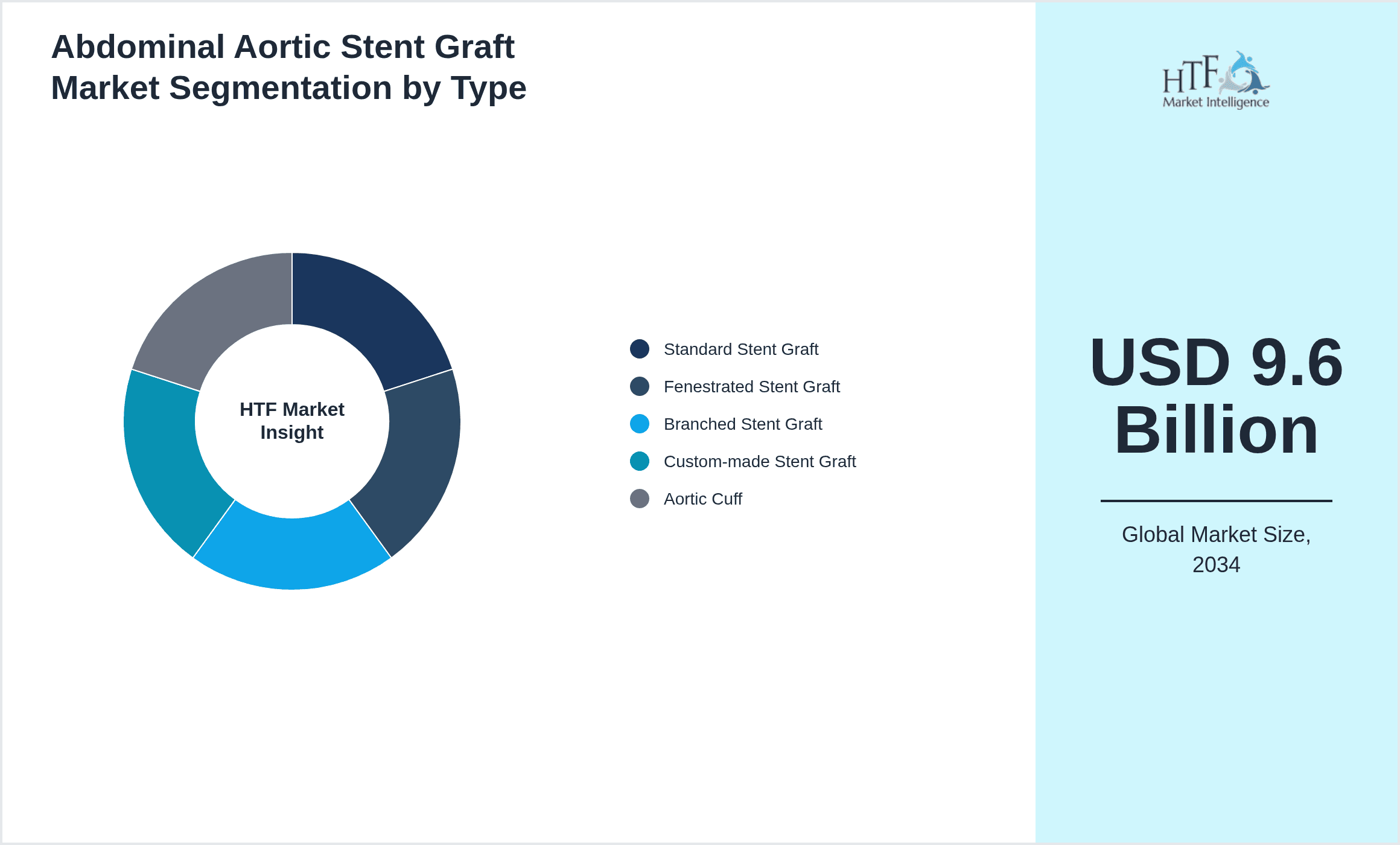
- •Key market highlights include a projected compound annual growth rate (CAGR) of 10.3% from 2025 to 2034, with the market size expected to more than double from USD 3.8 billion in 2025 to USD 9.6 billion by 2034. North America currently dominates the global market in terms of revenue share, attributed to advanced healthcare infrastructure and high adoption rates of innovative devices. Asia-Pacific is forecasted as the fastest-growing region, driven by improving healthcare access and rising prevalence of cardiovascular diseases. Standard stent grafts remain the leading product type, while fenestrated stent grafts demonstrate the highest growth rate due to their applicability in complex aneurysm repairs. Applications such as abdominal aortic aneurysm repair hold the largest market share, with emerging use cases in thoracoabdominal and iliac artery repairs contributing to market expansion. The competitive landscape is marked by continuous product innovation, strategic partnerships, and mergers and acquisitions among key players.
- •The value proposition of the Abdominal Aortic Stent Graft Market lies in its ability to provide minimally invasive, life-saving treatment options that reduce patient recovery times and procedural risks compared to traditional open surgeries. These devices enable targeted therapy for aneurysm stabilization, significantly lowering the risk of fatal ruptures. The market’s strategic importance spans healthcare providers, medical device manufacturers, and regulatory bodies, emphasizing innovation, safety, and efficacy. Furthermore, growing geriatric populations globally and an increasing burden of cardiovascular diseases underscore the critical need for advanced stent graft technologies. Stakeholders benefit from expanding reimbursement policies and technological advancements, fostering an environment conducive to sustained market growth and improved patient outcomes worldwide.

Competitive Landscape
The global Abdominal Aortic Stent Graft Market is characterized by intense competition among established medical device manufacturers and emerging players focused on innovation and geographic expansion. Market dynamics revolve around continuous product development, including enhanced graft materials, design improvements for complex aneurysm repairs, and integration of advanced imaging technologies for precise deployment. Companies leverage strategic partnerships and collaborations to expand product portfolios and distribution networks, enhancing market reach across diverse regions. Pricing strategies vary based on product complexity and regional healthcare reimbursement frameworks, influencing competitive positioning. Mergers and acquisitions have been a significant trend, enabling consolidation and access to new technologies. Barriers to entry include stringent regulatory requirements and high R&D costs, which favor well-capitalized incumbents. Regional competition dynamics also influence strategies, as companies tailor offerings to meet local clinical needs and regulatory environments. Looking forward, the competitive landscape will be shaped by innovation in personalized stent graft solutions, digital health integration, and expansion into emerging markets, driving differentiation and growth.
Key Players in Abdominal Aortic Stent Graft Market
- •Medtronic plc (Ireland)
- •W.L. Gore & Associates, Inc. (United States)
- •Terumo Corporation (Japan)
- •Cook Medical (United States)
- •Endologix, Inc. (United States)
- •C.R. Bard, Inc. (United States)
- •Bolton Medical (United Kingdom)
- •Jotec GmbH (Germany)
- •Shanghai Waston Medical Co., Ltd. (China)
- •Vascutek Ltd. (United Kingdom)
- •Lombard Medical, Inc. (United States)
- •B. Braun Melsungen AG (Germany)
- •Shanghai MicroPort Medical (China)
- •LeMaitre Vascular, Inc. (United States)
- •CryoLife, Inc. (United States)
- •Terumo Aortic (Japan)
- •Endospan Ltd. (Israel)
- •Aptus Endosystems (United States)
- •Cardinal Health, Inc. (United States)
- •Abbott Laboratories (United States)
- •Becton Dickinson and Company (United States)
- •Shanghai Shape Memory Alloy Co., Ltd. (China)
- •Invatec S.p.A. (Italy)
- •Terumo Europe NV (Belgium)
- •Sorin Group (Italy)

Market Breakdown
- •By Product Type
- ◦Standard Stent Graft
- ◦Fenestrated Stent Graft
- ◦Branched Stent Graft
- ◦Custom-made Stent Graft
- ◦Aortic Cuff
- •By Application
- ◦Abdominal Aortic Aneurysm Repair
- ◦Thoracoabdominal Aneurysm Repair
- ◦Iliac Artery Aneurysm Repair
- ◦Endovascular Aneurysm Repair
- ◦Complex Aortic Repair
- •By End-Use Industry
- ◦Hospitals
- ◦Ambulatory Surgical Centers
- ◦Specialty Clinics
- ◦Research and Academic Institutes
- •By Distribution Channel
- ◦Direct Sales
- ◦Third-Party Distributors
- ◦E-commerce Platforms
Growth Dynamics
- •The global Abdominal Aortic Stent Graft Market is propelled by the rising prevalence of abdominal aortic aneurysms, particularly among aging populations worldwide. Advancements in minimally invasive endovascular repair techniques have increased the adoption of stent grafts, owing to reduced patient morbidity and faster recovery times compared to open surgery. Growing awareness and improved diagnostic capabilities facilitate early detection, expanding the eligible patient base. Additionally, healthcare infrastructure development in emerging economies supports increasing procedural volumes. Investment in R&D leads to innovative graft designs, including fenestrated and branched options, enabling treatment of complex aneurysms. Furthermore, favorable reimbursement policies and increasing healthcare expenditure globally stimulate market growth. The entrance of new players and expansion into untapped regions further contribute to the dynamic upward trajectory of this market segment.
- •Technological innovation is a key growth driver, with ongoing development of stent grafts featuring enhanced flexibility, durability, and conformability to diverse anatomical variations. Integration of image-guided navigation and 3D printing for custom graft fabrication improves clinical outcomes and broadens application scope. The trend towards personalized medicine encourages tailored device solutions, while improvements in delivery systems reduce procedural complications. Expansion of healthcare access in Asia-Pacific and Latin America, along with rising incidence of cardiovascular diseases, fuels demand. Strategic collaborations between medical device companies and research institutions accelerate product pipeline development. Collectively, these factors underpin sustained market expansion and increased adoption across multiple geographies.
- •Economic growth and increased healthcare spending in developing countries enable infrastructure enhancement and adoption of advanced vascular therapies. Growing geriatric demographics intensify the burden of aortic aneurysms, necessitating effective treatment modalities. Awareness campaigns and screening programs improve early diagnosis, increasing market opportunities. Furthermore, evolving clinical guidelines endorse endovascular procedures, bolstering physician preference for stent grafts. Manufacturers’ focus on cost optimization and expanding distribution networks enhances affordability and accessibility. These dynamics collectively stimulate market growth and encourage competitive innovation.
- •Increasing demand for minimally invasive procedures due to shorter hospital stays and lower complication rates supports the widespread adoption of abdominal aortic stent grafts. Healthcare providers are investing in advanced surgical suites and training programs to facilitate endovascular aneurysm repair procedures. Moreover, the development of hybrid operating rooms combining imaging and surgical capabilities enhances procedural precision. The penetration of digital health and telemedicine complements patient management pre- and post-surgery, contributing to improved outcomes and market acceptance. These factors collectively drive market expansion and improve patient quality of life globally.
- •Government initiatives aimed at reducing cardiovascular disease mortality through improved diagnosis and treatment access contribute to market growth. Public-private partnerships fund research and infrastructure development, while reimbursement reforms support higher procedural volumes. Additionally, increasing collaborations between device manufacturers and healthcare providers foster product innovation and clinical adoption. The emergence of value-based healthcare models encourages adoption of effective, cost-efficient therapies like stent grafts. Collectively, these policy and market forces sustain the positive growth trajectory of the global abdominal aortic stent graft market.
Market Trends
- •The market is witnessing a trend towards the development of fenestrated and branched stent grafts that cater to complex aneurysms involving visceral arteries, expanding treatment options beyond standard grafts. This innovation allows for personalized therapy addressing challenging anatomies, improving patient outcomes. Companies are investing heavily in R&D to refine graft designs and delivery systems. Integration of 3D imaging and printing technologies facilitates pre-procedural planning and custom device fabrication, enhancing procedural success rates. These technological advancements drive adoption in developed and emerging markets, influencing overall market dynamics.
- •Another emerging trend is the increased focus on minimally invasive endovascular procedures as a preferred alternative to open surgical repair. This shift is supported by clinical evidence demonstrating lower morbidity and mortality rates, shorter hospital stays, and faster patient recovery. Healthcare providers are upgrading infrastructure to accommodate advanced imaging and navigation tools, enabling precise graft deployment. This growing acceptance of endovascular aneurysm repair fuels market growth and intensifies competition among manufacturers to offer innovative, user-friendly products.
- •Sustainability and biocompatibility considerations are influencing material selection for stent graft fabrication. Companies are exploring novel polymers and coatings to reduce inflammatory responses and enhance long-term graft durability. Additionally, the trend towards cost-effectiveness and value-based procurement drives manufacturers to optimize production processes and supply chains. Digital health integration, including remote patient monitoring and data analytics, is gaining traction to improve post-operative care and reduce readmission rates. These trends collectively strengthen the market’s technological and clinical landscape.
- •Collaborative partnerships and strategic alliances between medical device companies, research institutions, and healthcare providers are becoming increasingly prevalent. These collaborations accelerate innovation, clinical trials, and regulatory approvals, enabling faster market entry of novel stent grafts. Companies are also focusing on geographic expansion through joint ventures and licensing agreements, particularly in Asia-Pacific and Latin America. This collaborative ecosystem fosters competitive advantage and broadens patient access globally.
- •The market is also experiencing a trend towards regulatory harmonization and streamlined approval processes across regions, facilitating quicker commercialization of advanced stent graft technologies. Enhanced post-market surveillance and reporting mechanisms improve device safety and performance monitoring. These regulatory evolutions foster industry confidence and support sustained investment in abdominal aortic stent graft innovations, ultimately benefiting patients and healthcare systems worldwide.

Market Opportunities
- •Significant growth potential exists in emerging markets due to rising healthcare infrastructure investments and increasing cardiovascular disease burden. Expanding awareness and screening programs in these regions create unmet clinical needs for effective aneurysm treatment, presenting lucrative opportunities for market entrants and established players alike. Tailored marketing and distribution strategies can capitalize on this demand, fostering rapid adoption of abdominal aortic stent grafts.
- •The development of customized and patient-specific stent grafts using advanced imaging and 3D printing technologies presents a promising opportunity. These innovations can address anatomical complexities and enhance therapeutic outcomes, differentiating product offerings and commanding premium pricing. Companies investing in personalized solutions have the potential to capture significant market share.
- •Collaborations with healthcare providers and research organizations to conduct clinical trials and post-market studies can strengthen evidence of safety and efficacy, facilitating regulatory approvals and payer reimbursement. Such partnerships also enhance brand credibility and market penetration, representing a strategic avenue for growth.
- •Expanding product portfolios to include integrated delivery systems and complementary vascular devices offers cross-selling opportunities and improved procedural efficiency. Bundled solutions can increase customer loyalty and market competitiveness.
- •Digital health solutions, including telemedicine and remote monitoring tools, can be integrated with stent graft therapies to improve patient management and outcomes. Leveraging data analytics for predictive maintenance and personalized care represents a forward-looking market opportunity.
- •Geographic expansion through entry into underserved markets with tailored pricing and localized regulatory strategies can unlock substantial revenue streams. Addressing regional healthcare challenges with context-specific approaches enhances market acceptance.
- •Investment in sustainable and biocompatible materials aligns with growing environmental and safety regulations, offering differentiation and compliance advantages. Focus on eco-friendly manufacturing can appeal to socially responsible stakeholders.
Market Challenges
- •High costs associated with stent graft devices and endovascular repair procedures limit adoption, particularly in developing regions with constrained healthcare budgets. This economic barrier restricts market penetration despite growing clinical need, necessitating cost-optimization strategies by manufacturers.
- •Stringent regulatory requirements and prolonged approval timelines pose significant challenges, delaying product launches and increasing development expenditures. Variability in regional regulatory frameworks adds complexity to global commercialization efforts, demanding substantial compliance resources.
- •Technical limitations such as graft migration, endoleaks, and device durability concerns affect clinical outcomes and physician confidence. Addressing these challenges requires continuous innovation and robust post-market surveillance, increasing R&D investments and operational costs.
- •Competition from alternative treatment modalities, including open surgical repair and emerging technologies, exerts pressure on market growth and pricing strategies. Differentiation through clinical evidence and product innovation is essential to maintain market share.
- •Limited availability of trained specialists and advanced surgical facilities in certain regions constrains procedural volumes and market expansion. Investment in education and infrastructure is necessary to overcome these barriers.
- •Supply chain complexities and raw material price volatility impact manufacturing costs and product availability, affecting timely delivery and profitability. Strategic sourcing and inventory management are critical to mitigate these risks.
- •Reimbursement challenges and lack of uniform insurance coverage in various countries restrict patient access and market growth. Advocacy for policy reforms and evidence generation is required to enhance reimbursement landscapes.
Regulatory Framework
- •Between 2019 and 2025, regulatory bodies worldwide have intensified scrutiny on abdominal aortic stent graft devices, enforcing stringent pre-market evaluation to ensure safety and efficacy. The U.S. FDA has updated guidance on clinical trial requirements and post-market surveillance, emphasizing real-world evidence collection and enhanced adverse event reporting. These measures aim to mitigate risks such as endoleaks and graft failures, fostering patient safety.
- •The European Union’s Medical Device Regulation (MDR), implemented in 2021, introduced rigorous conformity assessment procedures, including clinical evaluation and traceability obligations. Manufacturers must comply with these standards to maintain CE marking, impacting market access and product lifecycle management within Europe.
- •Emerging regulatory frameworks in Asia-Pacific countries, such as China’s National Medical Products Administration (NMPA) reforms, have accelerated approval timelines while maintaining quality standards. These developments facilitate faster introduction of innovative stent graft technologies to regional markets, expanding patient access.
- •Regulations focusing on biocompatibility, sterilization validation, and labeling requirements have been harmonized globally, promoting consistency across markets. Manufacturers are required to adhere to international standards such as ISO 13485 and ISO 10993, ensuring device safety and reliability.
- •Government initiatives promoting cardiovascular disease management and reimbursement reforms have improved procedural funding, encouraging adoption of endovascular therapies. Policy frameworks supporting innovation and market entry incentivize manufacturers and enhance competitive dynamics.
Market Intelligence
- •15th January 2025, Medtronic plc announced the launch of its latest generation of fenestrated stent grafts designed specifically for complex thoracoabdominal aneurysm repairs. The new device incorporates advanced conformability and enhanced sealing mechanisms to improve patient outcomes and reduce procedural complications. Targeting both developed and emerging markets, the product rollout is supported by robust clinical data demonstrating superior efficacy and safety profiles. This strategic launch underscores Medtronic’s commitment to innovation and leadership in the abdominal aortic stent graft market. Source: Medtronic Official Press Release
- •22nd March 2025, W.L. Gore & Associates, Inc. introduced a novel branched stent graft system featuring integrated imaging guidance and simplified deployment technology. This advancement aims to reduce operative time and enhance precision in treating complex aneurysms involving visceral branches. The device has received regulatory clearance in multiple regions and is expected to expand the company’s market share globally. The launch reflects the broader trend of combining device innovation with digital health tools to optimize clinical workflows. Source: Gore Medical News
- •8th July 2024, Terumo Corporation completed the acquisition of a European vascular device startup specializing in custom-made aortic stent grafts. This strategic move strengthens Terumo’s product portfolio and accelerates its presence in personalized vascular therapies. The acquisition enables the integration of cutting-edge 3D printing technologies and expands clinical trial capabilities. This consolidation aligns with market trends favoring customized treatment solutions and supports Terumo’s growth ambitions in the global abdominal aortic stent graft sector. Source: Terumo Corporate Announcement
- •30th November 2024, Cook Medical announced a collaboration with a leading academic medical center to develop next-generation stent graft delivery systems incorporating robotic assistance and real-time intraoperative imaging. This partnership aims to enhance procedural accuracy and patient safety, potentially transforming endovascular aneurysm repair practices. Clinical trials are underway, with preliminary results indicating improved deployment outcomes. The initiative exemplifies the industry’s focus on combining engineering innovation with clinical expertise to advance vascular care. Source: Cook Medical Press Release
Regional Outlook
The North America currently holds a significant share of the market, primarily due to several key factors: increasing consumption rates, a burgeoning population, and robust economic momentum. These elements collectively drive demand, positioning this region as a leader in the market. On the other hand, Asia-Pacific is rapidly emerging as the fastest-growing area within the industry. This remarkable growth can be attributed to swift infrastructure development, the expansion of various industrial sectors, and a marked increase in consumer demand. These dynamics make this region a crucial player in shaping future market growth.
In our report, we cover a comprehensive analysis of the following regions and countries:
- North America
- LATAM
- West Europe
- Central & Eastern Europe
- Northern Europe
- Southern Europe
- East Asia
- Southeast Asia
- South Asia
- Central Asia
- Oceania
- MEA
| Feature | Details |
|---|---|
| Base Year Market Size | USD 3.8 Billion |
| Forecast Year Market Size | USD 9.6 Billion |
| CAGR | 10.3% |
| Forecast Period | 2026 to 2033 |
| YoY Growth | 9.8% |
| Scope of Report | Market is segmented by Product Type (Standard Stent Graft, Fenestrated Stent Graft, Branched Stent Graft, Custom-made Stent Graft, Aortic Cuff), Application (Abdominal Aortic Aneurysm Repair, Thoracoabdominal Aneurysm Repair, Iliac Artery Aneurysm Repair, Endovascular Aneurysm Repair, Complex Aortic Repair), End-Use Industry (Hospitals, Ambulatory Surgical Centers, Specialty Clinics, Research and Academic Institutes), Distribution Channel (Direct Sales, Third-Party Distributors, E-commerce Platforms) |
| Regions Covered | North America, LATAM, West Europe, Central & Eastern Europe, Northern Europe, Southern Europe, East Asia, Southeast Asia, South Asia, Central Asia, Oceania, MEA |
| Key Companies | Medtronic plc (Ireland), W.L. Gore & Associates, Inc. (United States), Terumo Corporation (Japan), Cook Medical (United States), Endologix, Inc. (United States), C.R. Bard, Inc. (United States), Bolton Medical (United Kingdom), Jotec GmbH (Germany), Shanghai Waston Medical Co., Ltd. (China), Vascutek Ltd. (United Kingdom), Lombard Medical, Inc. (United States), B. Braun Melsungen AG (Germany), Shanghai MicroPort Medical (China), LeMaitre Vascular, Inc. (United States), CryoLife, Inc. (United States), Terumo Aortic (Japan), Endospan Ltd. (Israel), Aptus Endosystems (United States), Cardinal Health, Inc. (United States), Abbott Laboratories (United States), Becton Dickinson and Company (United States), Shanghai Shape Memory Alloy Co., Ltd. (China), Invatec S.p.A. (Italy), Terumo Europe NV (Belgium), Sorin Group (Italy) |
Global Abdominal Aortic Stent Graft Market Size, Growth & Revenue 2024-2034 - Table of Contents
Frequently Asked Questions (FAQ):
The Compact Track Loaders market is expected to see value worth 5.3 Billion in 2025.
North America currently leads the market with approximately 45% market share, followed by Europe at 28% and Asia-Pacific at 22%. The remaining regions account for 5% of the global market.
Key growth drivers include increasing construction activities, rising demand for versatile equipment in agriculture, technological advancements in track loader design, and growing preference for compact equipment in urban construction projects.