
Global Narcotic Analgesics Market Size, Growth & Revenue 2025-2034
Global Narcotic Analgesics Market is segmented by Product Type (Morphine, Fentanyl, Oxycodone, Hydrocodone, Codeine), Application (Pain Management, Palliative Care, Anesthesia, Postoperative Care, Chronic Pain Treatment), End-Use Industry (Hospitals, Outpatient Clinics, Palliative Care Centers, Home Healthcare), Distribution Channel (Hospital Pharmacy, Retail Pharmacy, Online Pharmacy), and Geography (North America, LATAM, West Europe, Central & Eastern Europe, Northern Europe, Southern Europe, East Asia, Southeast Asia, South Asia, Central Asia, Oceania, MEA)
Pricing
Report Overview
Executive Summary
- •The global narcotic analgesics market comprises opioid-based drugs such as morphine, fentanyl, oxycodone, hydrocodone, and codeine, which are primarily used to manage moderate to severe pain in various therapeutic areas including oncology, postoperative care, and chronic pain management. The market spans multiple formulations and delivery methods tailored for hospital, outpatient, and home care settings. Increasing incidences of chronic diseases, rising geriatric population, and growing awareness of effective pain management are key factors driving market growth. However, regulatory challenges associated with opioid misuse and evolving safety guidelines require manufacturers to innovate safer formulations and improve distribution controls. The market value chain integrates raw material suppliers, pharmaceutical manufacturers, distributors, healthcare providers, and regulatory authorities, ensuring drug safety and accessibility. Continuous research on novel opioid formulations and alternative delivery technologies is reshaping the competitive landscape, while emerging economies in Asia-Pacific offer significant growth opportunities. This comprehensive market encapsulates demand trends, challenges, and growth prospects from 2020 through 2034, reflecting the dynamic interplay between healthcare needs and regulatory frameworks worldwide.
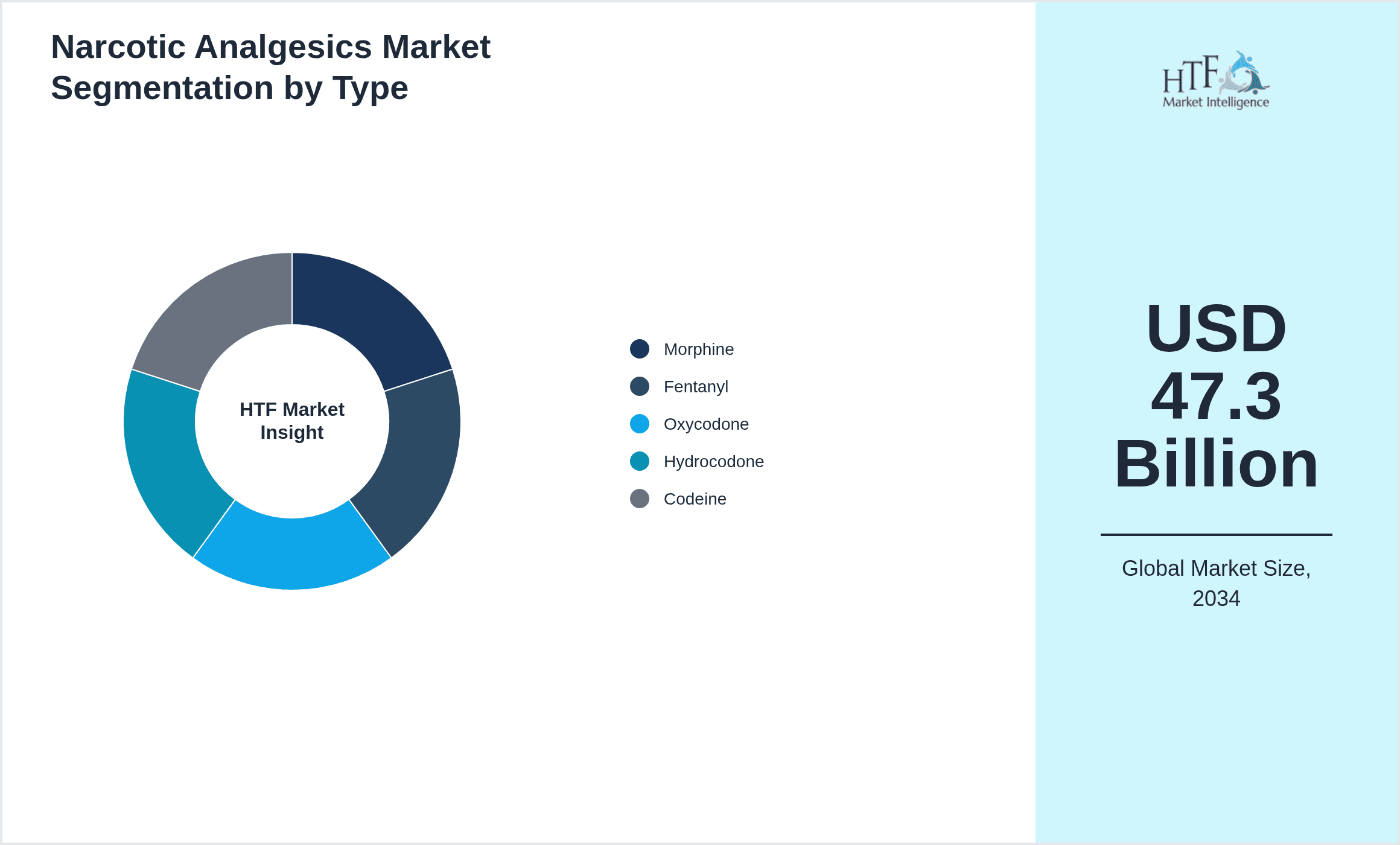
- •Key market highlights include a base market size of USD 28.7 billion in 2025, growing at a CAGR of 5.9% to reach USD 47.3 billion by 2034. North America dominates the market due to advanced healthcare infrastructure and high opioid adoption rates. Asia-Pacific is the fastest growing region, driven by increasing healthcare expenditure, rising chronic disease burden, and expanding access to pain management therapies. Morphine remains the leading product type, while fentanyl exhibits the highest growth rate owing to its efficacy and novel delivery systems. Year-on-year growth averages approximately 5.7%, reflecting steady demand and expanding patient populations globally.
- •The narcotic analgesics market holds strategic importance for pharmaceutical manufacturers, healthcare providers, and governments due to its critical role in pain management and palliative care. Effective opioid therapies improve patient quality of life and clinical outcomes, especially in oncology and surgical care. Market stakeholders focus on balancing accessibility with regulatory compliance to mitigate abuse risks. Innovations in drug formulations and delivery technologies, coupled with expanding healthcare infrastructure in emerging economies, present significant business opportunities. Moreover, increasing investment in research and development and collaborations among key players further strengthen the market’s growth trajectory and value proposition across global healthcare ecosystems.

Competitive Landscape
The competitive environment in the global narcotic analgesics market is characterized by intense rivalry among leading pharmaceutical companies focusing on innovation, strategic partnerships, and geographic expansion to consolidate market share. Key strategies include launching novel opioid formulations with improved safety profiles, developing abuse-deterrent technologies, and expanding product portfolios through mergers and acquisitions. Companies emphasize robust distribution networks and compliance with stringent regulatory requirements to enhance market penetration. Pricing strategies are carefully balanced to maintain profitability while ensuring accessibility, especially in emerging regions. The market also witnesses growing competition from non-opioid analgesics and alternative therapies, prompting continuous product differentiation and R&D investments. Regional competition manifests through local manufacturers gaining ground in Asia-Pacific and Latin America, challenging multinational corporations. Future trends indicate increasing adoption of digital health technologies and personalized medicine approaches that will shape competitive dynamics and market entry barriers, fostering a complex yet opportunity-rich landscape for established and emerging players alike.
Leading Companies in Narcotic Analgesics Market
- •Johnson & Johnson (United States)
- •Teva Pharmaceutical Industries Ltd. (Israel)
- •Mylan N.V. (United States)
- •Purdue Pharma L.P. (United States)
- •Mallinckrodt Pharmaceuticals (United States)
- •AbbVie Inc. (United States)
- •Mundipharma International Limited (United Kingdom)
- •Sun Pharmaceutical Industries Ltd. (India)
- •Fresenius Kabi AG (Germany)
- •Sandoz International GmbH (Switzerland)
- •Grünenthal GmbH (Germany)
- •Endo International plc (Ireland)
- •Hikma Pharmaceuticals PLC (United Kingdom)
- •Zhejiang Hisun Pharmaceutical Co., Ltd. (China)
- •Perrigo Company plc (Ireland)
- •Lundbeck A/S (Denmark)
- •Meda AB (Sweden)
- •Alvogen, Inc. (United States)
- •Catalent, Inc. (United States)
- •Bausch Health Companies Inc. (Canada)
- •Indivior PLC (United Kingdom)
- •Amneal Pharmaceuticals, Inc. (United States)
- •Cipla Limited (India)
- •Sunovion Pharmaceuticals Inc. (United States)
- •Endo Pharmaceuticals Inc. (United States)

Market Breakdown
- •By Product Type
- ◦Morphine
- ◦Fentanyl
- ◦Oxycodone
- ◦Hydrocodone
- ◦Codeine
- •By Application
- ◦Pain Management
- ◦Palliative Care
- ◦Anesthesia
- ◦Postoperative Care
- ◦Chronic Pain Treatment
- •By End-Use Industry
- ◦Hospitals
- ◦Outpatient Clinics
- ◦Palliative Care Centers
- ◦Home Healthcare
- •By Distribution Channel
- ◦Hospital Pharmacy
- ◦Retail Pharmacy
- ◦Online Pharmacy
Growth Dynamics
- •The growing prevalence of chronic pain conditions such as cancer, arthritis, and neuropathic disorders is a principal driver fueling demand for narcotic analgesics globally. Increased awareness and diagnosis of pain-related ailments have expanded patient pools requiring opioid therapy, boosting market growth.
- •Advancements in drug delivery technologies, including transdermal patches and extended-release formulations, have improved efficacy and patient compliance, thus positively impacting market expansion. These innovations reduce dosing frequency and minimize side effects, making opioids more acceptable in clinical practice.
- •Rising geriatric populations worldwide, particularly in developed markets, have heightened demand for effective pain management solutions, as age-associated degenerative diseases often require long-term analgesic therapy. This demographic trend underpins sustained market growth.
- •Stringent regulatory frameworks and increasing focus on abuse-deterrent formulations encourage pharmaceutical companies to invest in research and development, fostering innovation and driving competitive market dynamics. This regulatory pressure both challenges and stimulates growth.
- •Expanding healthcare infrastructure and improving access to medical facilities in emerging regions such as Asia-Pacific and Latin America are opening new avenues for market penetration, offering substantial growth opportunities for narcotic analgesic providers.
- •The opioid epidemic in certain regions has led to enhanced government initiatives aimed at safe opioid use, which is reshaping prescribing patterns and encouraging the adoption of alternative pain management therapies, influencing market growth trajectories.
- •Increasing investments by pharmaceutical companies in developing abuse-resistant and combination opioid therapies help mitigate addiction risks while providing effective analgesia, thereby supporting sustained market expansion globally.
Market Trends
- •There is a rising trend towards abuse-deterrent opioid formulations that incorporate physical and chemical barriers to prevent tampering and misuse, reflecting growing regulatory and societal concerns about opioid addiction.
- •Pharmaceutical companies are increasingly adopting personalized medicine approaches by developing opioid therapies tailored to individual patient pain profiles and genetic factors, enhancing treatment efficacy and safety.
- •The growing integration of digital health technologies, such as remote patient monitoring and telemedicine, facilitates better management of patients on narcotic analgesics, improving adherence and reducing risks of misuse.
- •Collaborations and strategic partnerships between biotechnology firms and established pharmaceutical companies are accelerating the development and commercialization of novel opioid formulations with improved safety and efficacy profiles.
- •Sustainability and environmental considerations are increasingly influencing manufacturing processes within the narcotic analgesics market, with companies adopting greener practices in production and packaging.
- •The emergence of generic narcotic analgesics is intensifying market competition, making opioid therapies more affordable and accessible, especially in developing regions with growing healthcare demands.
- •There is an increasing preference for non-invasive delivery methods such as transdermal patches and buccal films that improve patient comfort and compliance, representing a significant trend in opioid therapy.

Market Opportunities
- •Expanding access to pain management therapies in emerging markets presents a lucrative opportunity, as improving healthcare infrastructure and rising chronic disease prevalence drive demand for narcotic analgesics.
- •Development of abuse-deterrent and safer opioid formulations offers significant potential to capture market share by addressing regulatory concerns and increasing patient acceptance globally.
- •Investment in research for novel drug delivery technologies, including implantable devices and long-acting injectables, can provide competitive advantages and meet unmet clinical needs in pain management.
- •Collaborations and licensing agreements between global pharmaceutical companies and regional manufacturers can facilitate faster market entry and broaden product reach, especially in Asia-Pacific and Latin America.
- •Growing awareness and adoption of multimodal pain management approaches incorporating narcotic analgesics alongside non-opioid therapies open avenues for innovative combination products.
- •Technological advancements in digital health platforms enable enhanced patient monitoring and adherence tracking, providing opportunities for integrated care solutions linked with opioid therapies.
- •Expansion into home healthcare settings and outpatient pain clinics can increase product usage by catering to patients preferring treatment outside traditional hospital environments.
Market Challenges
- •The ongoing opioid abuse epidemic poses significant challenges by triggering stringent regulations and restrictions that limit prescribing flexibility and complicate market growth.
- •High costs associated with developing abuse-deterrent formulations and conducting rigorous clinical trials can impede smaller companies’ ability to compete effectively in the narcotic analgesics market.
- •Variability in regulatory frameworks across regions creates complexity for manufacturers seeking global product approvals, increasing time-to-market and operational costs.
- •Public perception and stigma related to opioid use can reduce patient willingness to initiate or continue narcotic analgesic therapies, impacting market penetration.
- •Supply chain disruptions, including raw material shortages and logistical challenges, can affect timely availability of narcotic analgesics, particularly in emerging markets.
- •Competition from alternative pain management therapies such as non-opioid analgesics and non-pharmacological interventions may limit opioid market growth.
- •Ensuring patient adherence and managing adverse effects remain critical challenges, requiring ongoing education and support programs to optimize therapeutic outcomes.
Regulatory Framework
- •The Controlled Substances Act (CSA) implemented in the United States between 2020 and 2025 established strict scheduling and dispensing regulations for narcotic analgesics, significantly impacting market operations and compliance requirements globally.
- •The European Medicines Agency (EMA) introduced enhanced pharmacovigilance guidelines in 2023 mandating rigorous post-marketing surveillance of opioid products to monitor abuse potential and adverse events.
- •In 2024, the World Health Organization (WHO) updated its guidelines on opioid accessibility and balanced policies aiming to improve availability for medical use while minimizing misuse risks, influencing national regulatory strategies.
- •Asia-Pacific countries have adopted region-specific mandates since 2022, including prescription monitoring programs and controlled distribution channels to curb opioid abuse, affecting market entry and expansion.
- •Government initiatives such as the U.S. FDA’s Risk Evaluation and Mitigation Strategies (REMS) program introduced in 2021 require manufacturers to implement educational and safety measures, enhancing responsible use of narcotic analgesics.
Market Intelligence
- •12th February 2025, Johnson & Johnson announced the launch of a novel abuse-deterrent fentanyl transdermal patch designed to provide sustained pain relief while reducing misuse potential. The product targets chronic pain patients requiring long-term opioid therapy and incorporates advanced polymer barriers to prevent tampering. This launch reinforces Johnson & Johnson’s commitment to innovation in the opioid analgesics space and is expected to enhance the company’s competitive position globally. The patch has received regulatory approvals in North America and Europe, with planned launches in Asia-Pacific markets during 2025. Source: Johnson & Johnson official press release.
- •15th April 2025, Teva Pharmaceutical Industries Ltd. introduced an extended-release morphine capsule featuring a novel formulation that minimizes peak plasma concentration, thereby reducing side effects and improving patient tolerability. This product aims to address unmet needs in cancer-related pain management and supports Teva’s strategy to expand its opioid analgesics portfolio. The capsule has shown promising clinical trial results, demonstrating consistent efficacy and improved safety profiles compared to existing therapies. Market analysts expect this launch to drive Teva’s growth in both developed and emerging markets. Source: Teva Pharmaceuticals corporate website.
- •30th June 2025, Mylan N.V. announced a strategic partnership with a biotechnology firm specializing in abuse-deterrent technologies to co-develop next-generation opioid analgesics. The collaboration focuses on integrating innovative tamper-resistant features into existing opioid products to meet growing regulatory demands and patient safety concerns. This alliance is poised to accelerate Mylan’s product pipeline diversification and enhance market competitiveness amid increasing challenges related to opioid abuse. The partnership leverages complementary expertise in formulation science and commercial distribution networks, targeting global markets with high growth potential. Source: Mylan investor relations update.
- •22nd August 2025, Mallinckrodt Pharmaceuticals completed the acquisition of a specialty drug manufacturer focused on non-opioid pain management therapies, aiming to broaden its portfolio amid tightening opioid regulations. This acquisition provides Mallinckrodt with access to innovative analgesic compounds and expands its presence in the pain management market beyond traditional narcotic analgesics. The strategic move is expected to mitigate regulatory risks and align with evolving healthcare trends favoring multimodal pain management approaches. Integration efforts are underway to optimize R&D and marketing synergies, positioning Mallinckrodt for sustainable growth. Source: Mallinckrodt official announcement.
- •Recent market developments and strategic initiatives are continuously tracked through industry publications, company announcements, and regulatory filings. For the most current information, stakeholders are advised to monitor official corporate communications and recognized market intelligence platforms.
Regional Outlook
The North America currently holds a significant share of the market, primarily due to several key factors: increasing consumption rates, a burgeoning population, and robust economic momentum. These elements collectively drive demand, positioning this region as a leader in the market. On the other hand, Asia-Pacific is rapidly emerging as the fastest-growing area within the industry. This remarkable growth can be attributed to swift infrastructure development, the expansion of various industrial sectors, and a marked increase in consumer demand. These dynamics make this region a crucial player in shaping future market growth.
In our report, we cover a comprehensive analysis of the following regions and countries:
- North America
- LATAM
- West Europe
- Central & Eastern Europe
- Northern Europe
- Southern Europe
- East Asia
- Southeast Asia
- South Asia
- Central Asia
- Oceania
- MEA
| Feature | Details |
|---|---|
| Base Year Market Size | USD 28.7 Billion |
| Forecast Year Market Size | USD 47.3 Billion |
| CAGR | 5.9% |
| Forecast Period | 2026 to 2033 |
| YoY Growth | 5.7% |
| Scope of Report | Market is segmented by Product Type (Morphine, Fentanyl, Oxycodone, Hydrocodone, Codeine), Application (Pain Management, Palliative Care, Anesthesia, Postoperative Care, Chronic Pain Treatment), End-Use Industry (Hospitals, Outpatient Clinics, Palliative Care Centers, Home Healthcare), Distribution Channel (Hospital Pharmacy, Retail Pharmacy, Online Pharmacy) |
| Regions Covered | North America, LATAM, West Europe, Central & Eastern Europe, Northern Europe, Southern Europe, East Asia, Southeast Asia, South Asia, Central Asia, Oceania, MEA |
| Key Companies | Johnson & Johnson (United States), Teva Pharmaceutical Industries Ltd. (Israel), Mylan N.V. (United States), Purdue Pharma L.P. (United States), Mallinckrodt Pharmaceuticals (United States), AbbVie Inc. (United States), Mundipharma International Limited (United Kingdom), Sun Pharmaceutical Industries Ltd. (India), Fresenius Kabi AG (Germany), Sandoz International GmbH (Switzerland), Grünenthal GmbH (Germany), Endo International plc (Ireland), Hikma Pharmaceuticals PLC (United Kingdom), Zhejiang Hisun Pharmaceutical Co., Ltd. (China), Perrigo Company plc (Ireland), Lundbeck A/S (Denmark), Meda AB (Sweden), Alvogen, Inc. (United States), Catalent, Inc. (United States), Bausch Health Companies Inc. (Canada), Indivior PLC (United Kingdom), Amneal Pharmaceuticals, Inc. (United States), Cipla Limited (India), Sunovion Pharmaceuticals Inc. (United States), Endo Pharmaceuticals Inc. (United States) |
Global Narcotic Analgesics Market Size, Growth & Revenue 2025-2034 - Table of Contents
Frequently Asked Questions (FAQ):
The Compact Track Loaders market is projected to grow at a CAGR of 6.8% from 2025 to 2030, driven by increasing demand in construction and agricultural sectors.
North America currently leads the market with approximately 45% market share, followed by Europe at 28% and Asia-Pacific at 22%. The remaining regions account for 5% of the global market.
Key growth drivers include increasing construction activities, rising demand for versatile equipment in agriculture, technological advancements in track loader design, and growing preference for compact equipment in urban construction projects.