
Global Cylindrical Robot Market Size, Growth & Revenue 2025-2034
Global Cylindrical Robot Market is segmented by Product Type (Articulated Cylindrical Robots, Electric Cylindrical Robots, Hydraulic Cylindrical Robots, Pneumatic Cylindrical Robots, Hybrid Cylindrical Robots), Application (Automotive, Electronics, Food & Beverage, Pharmaceuticals, Metal Fabrication), End-Use Industry (Manufacturing, Healthcare, Consumer Goods, Logistics), Distribution Channel (Direct Sales, Authorized Dealers, Online Platforms), and Geography (North America, LATAM, West Europe, Central & Eastern Europe, Northern Europe, Southern Europe, East Asia, Southeast Asia, South Asia, Central Asia, Oceania, MEA)
Pricing
Report Overview
Executive Summary
- •The global cylindrical robot market represents a pivotal segment of the industrial automation landscape, characterized by robotic arms operating within a cylindrical coordinate framework that facilitates rotational and linear movements essential for diverse manufacturing processes. These robots provide precision, flexibility, and efficiency in applications such as automotive assembly, electronics manufacturing, food and beverage packaging, pharmaceutical production, and metal fabrication. The market's scope extends beyond hardware, encompassing software programming, integration services, and after-sales support, forming a comprehensive ecosystem. Driven by the increasing need for automation to reduce labor costs, enhance productivity, and improve safety, cylindrical robots have become fundamental in modern manufacturing. Technological innovations such as electric actuation, AI-enabled control systems, and IoT connectivity amplify their capabilities, enabling real-time monitoring, predictive maintenance, and adaptability to complex tasks. End users benefit from improved throughput, quality consistency, and operational agility. The value chain integrates raw material suppliers, component manufacturers, system integrators, and maintenance providers, ensuring seamless delivery and service. Overall, the market is positioned for robust growth fueled by digital transformation trends and expanding industrial robotics adoption across major global regions.
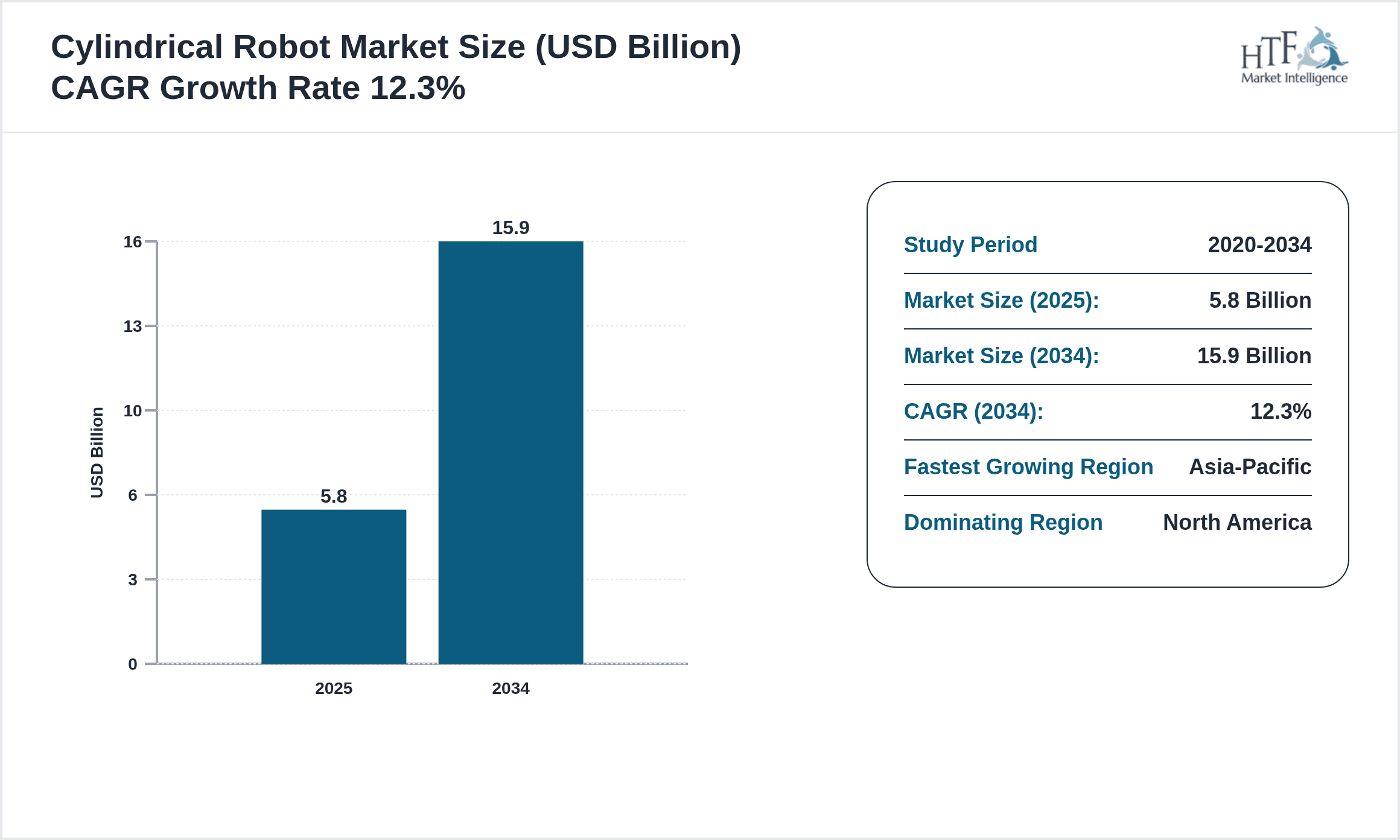
- •Key highlights of the cylindrical robot market include a base market size of USD 5.8 billion in 2025, projected to reach USD 15.9 billion by 2034, reflecting a compound annual growth rate (CAGR) of 12.3%. North America currently dominates the market due to early adoption and strong industrial infrastructure, while the Asia-Pacific region is the fastest-growing market driven by escalating manufacturing automation and supportive government initiatives. Leading product types such as articulated cylindrical robots maintain substantial market share, with electric cylindrical robots witnessing the fastest growth owing to their efficiency and precision advantages. Emerging applications in pharmaceuticals and food processing represent new growth frontiers. These data points underscore the market’s dynamic expansion and evolving technological landscape during the forecast period.
- •The cylindrical robot market holds strategic importance for industries aiming to enhance automation capabilities, reduce operational costs, and improve production quality. Its adoption facilitates seamless integration into complex manufacturing lines, enabling customization and scalability. For stakeholders including manufacturers, system integrators, and investors, the market offers significant value through innovation-driven product portfolios and expanding application scopes. The ongoing digital transformation and Industry 4.0 adoption further strengthen the market’s relevance, fostering collaborations and technological advancements that enhance competitiveness. Consequently, cylindrical robots serve as critical enablers for manufacturing excellence and sustainable growth across global industrial sectors.
Competitive Landscape
The competitive environment of the global cylindrical robot market is characterized by intense rivalry among established multinational corporations and emerging regional players focusing on innovation, product differentiation, and strategic partnerships to capture market share. Key competitive strategies include the development of advanced robotic systems featuring enhanced payload capacities, precision control, and integration with AI and IoT technologies, enabling superior performance and adaptability across diverse applications. Companies invest heavily in research and development to introduce electric and hybrid cylindrical robots that offer energy efficiency and reduced operational costs. Market positioning is often reinforced through comprehensive service offerings, including system integration, customized solutions, and after-sales support, enhancing customer retention and satisfaction. Mergers and acquisitions play a significant role in consolidating market presence and expanding technological capabilities, while joint ventures facilitate entry into new geographic regions and industry verticals. Pricing strategies are tailored to balance affordability with technological sophistication, targeting both large-scale manufacturers and small-to-medium enterprises. Distribution channels encompass direct sales, authorized dealers, and digital platforms, ensuring broad market reach. Regional competition varies, with North America and Europe emphasizing innovation and quality, while Asia-Pacific focuses on volume production and cost competitiveness. Future trends indicate a shift towards collaborative robots and cloud-based control systems, intensifying the need for continuous innovation and agility among competitors.
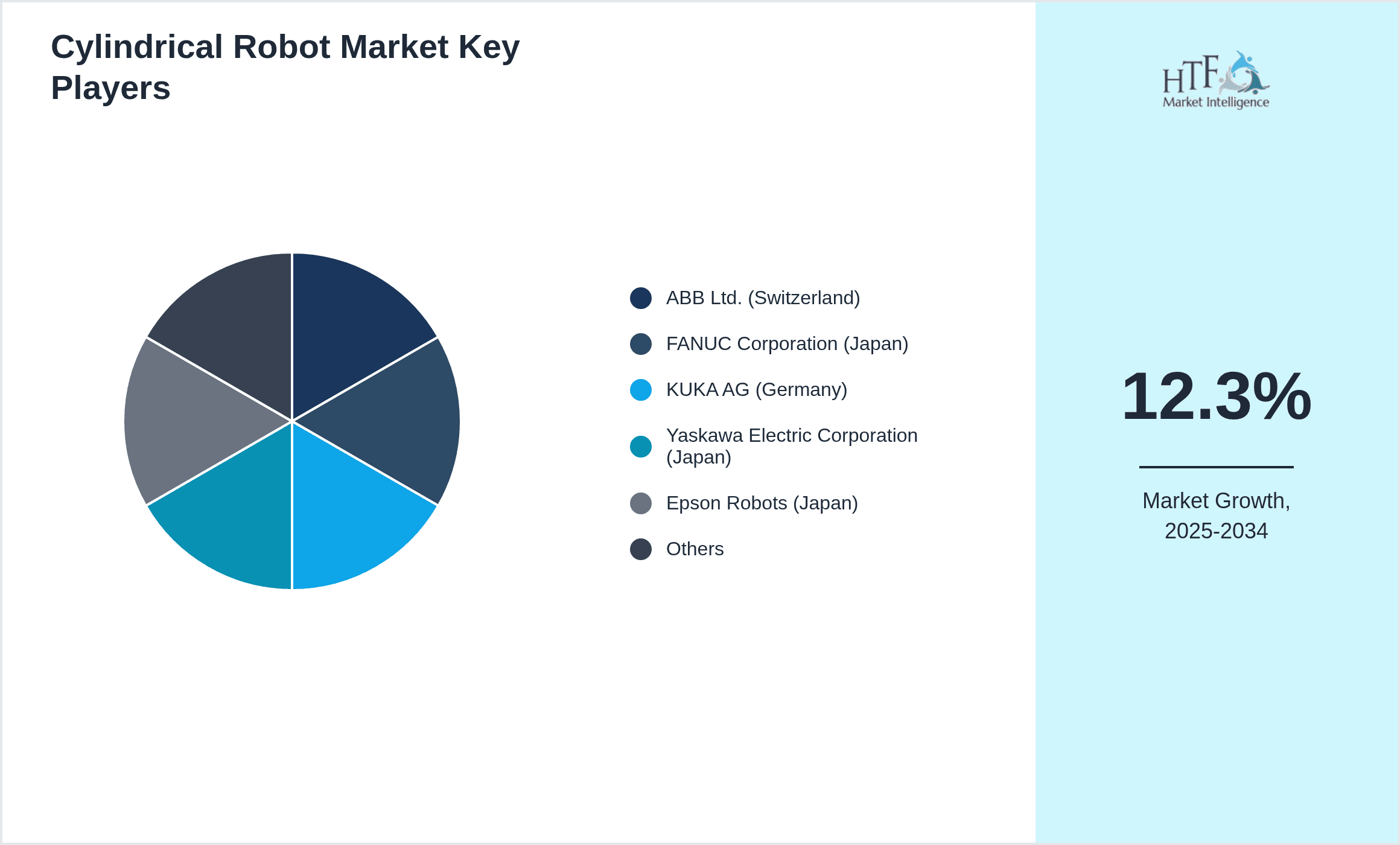
Prominent Players in Cylindrical Robot Market
- •ABB Ltd. (Switzerland)
- •FANUC Corporation (Japan)
- •KUKA AG (Germany)
- •Yaskawa Electric Corporation (Japan)
- •Epson Robots (Japan)
- •Mitsubishi Electric Corporation (Japan)
- •Universal Robots A/S (Denmark)
- •Denso Corporation (Japan)
- •Omron Corporation (Japan)
- •Panasonic Corporation (Japan)
- •Staubli International AG (Switzerland)
- •Comau S.p.A. (Italy)
- •Kawasaki Heavy Industries Ltd. (Japan)
- •Techman Robot Inc. (Taiwan)
- •Hyundai Robotics (South Korea)
- •Adept Technology Inc. (United States)
- •Schunk GmbH & Co. KG (Germany)
- •Stäubli Robotics (Switzerland)
- •Bosch Rexroth AG (Germany)
- •Kawasaki Robotics (Japan)
- •Seiko Epson Corporation (Japan)
- •Universal Robots (Denmark)
- •Festo AG & Co. KG (Germany)
- •Omron Adept Technologies (United States)
- •Dürr AG (Germany)
Market Breakdown
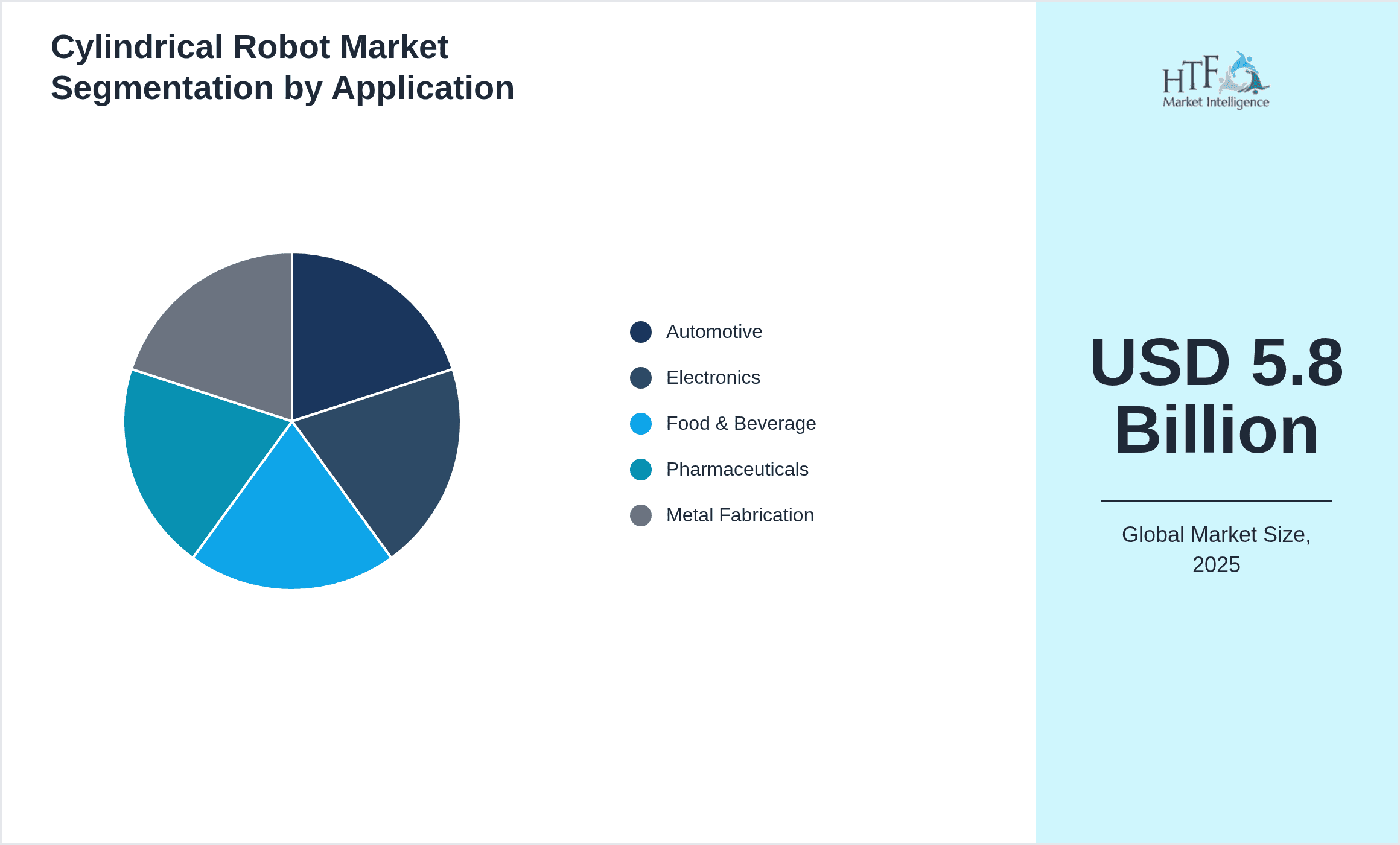
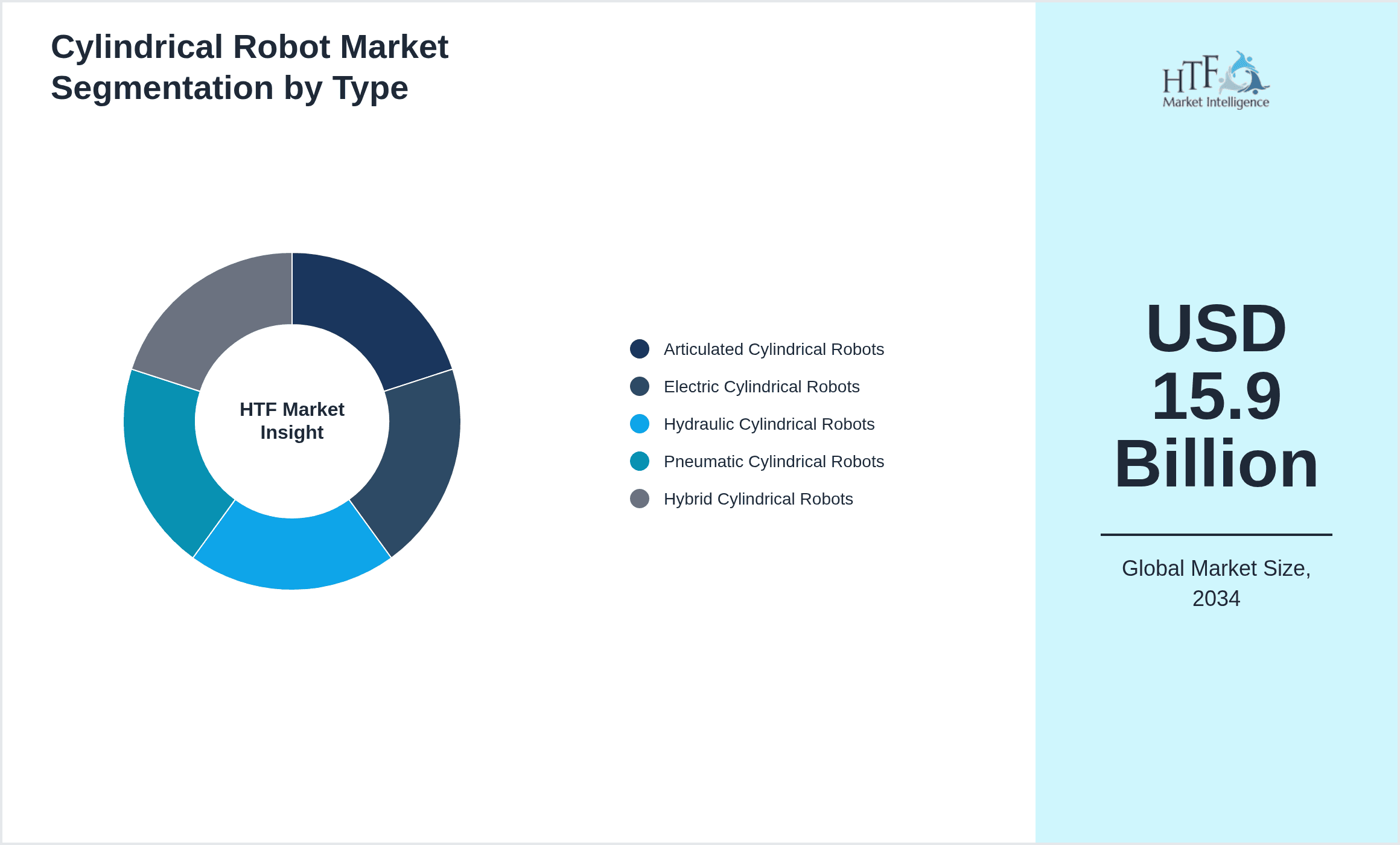
- •By Product Type
- ◦Articulated Cylindrical Robots
- ◦Electric Cylindrical Robots
- ◦Hydraulic Cylindrical Robots
- ◦Pneumatic Cylindrical Robots
- ◦Hybrid Cylindrical Robots
- •By Application
- ◦Automotive
- ◦Electronics
- ◦Food & Beverage
- ◦Pharmaceuticals
- ◦Metal Fabrication
- •By End-Use Industry
- ◦Manufacturing
- ◦Healthcare
- ◦Consumer Goods
- ◦Logistics
- •By Distribution Channel
- ◦Direct Sales
- ◦Authorized Dealers
- ◦Online Platforms
Growth Dynamics
- •Increasing demand for automation in manufacturing industries is a primary growth driver, as cylindrical robots provide enhanced precision and efficiency, leading to reduced operational costs and improved throughput.
- •Technological advancements such as integration of AI and IoT enable predictive maintenance and real-time monitoring, significantly improving robot performance and reducing downtime.
- •Rising adoption of electric cylindrical robots, which offer energy efficiency and lower emissions compared to hydraulic and pneumatic types, is accelerating market expansion globally.
- •Government initiatives and subsidies promoting Industry 4.0 and smart factories are fostering investments in robotic automation, particularly in Asia-Pacific and Europe.
- •Expansion of end-use industries such as pharmaceuticals and food processing creates new application opportunities, driving demand for hygienic and precise robotic handling solutions.
- •Increasing labor costs and shortage of skilled workers worldwide motivate manufacturers to adopt cylindrical robots to maintain production continuity and competitiveness.
- •Collaborations between robotics manufacturers and software developers are leading to innovative robot control systems, enhancing functionality and user-friendliness.
Market Trends
- •There is a growing trend towards collaborative cylindrical robots that work alongside human operators, enhancing safety while maintaining productivity in manufacturing environments.
- •Adoption of modular and customizable robot designs allows manufacturers to tailor robotic systems to specific production requirements, improving flexibility and cost efficiency.
- •Increasing use of cloud-based control and data analytics platforms enables remote monitoring and optimization of cylindrical robots, contributing to smarter factory operations.
- •Sustainability considerations drive the development of energy-efficient robot models, reducing environmental impact and aligning with corporate social responsibility goals.
- •Strategic partnerships between robotics companies and industrial automation providers facilitate integrated solutions, expanding market reach and technological capabilities.
- •The market witnesses rising demand for robots capable of handling delicate and complex tasks, particularly in electronics and pharmaceutical manufacturing sectors.
- •Advancements in sensor technology and machine learning algorithms improve robot adaptability and precision, enabling their deployment in increasingly sophisticated applications.
Market Opportunities
- •Emerging economies in Asia-Pacific and Latin America present substantial growth potential due to rapid industrialization and increasing automation adoption in manufacturing sectors.
- •Development of low-cost, high-performance cylindrical robots tailored for small and medium enterprises offers a significant opportunity to broaden market penetration.
- •Integration of advanced AI-based vision systems can enhance robot capabilities in quality inspection and complex assembly, opening new application avenues.
- •Expansion into specialized sectors such as healthcare and logistics through customized robotic solutions can diversify revenue streams and reduce market risks.
- •Strategic alliances with software and AI firms to develop next-generation robot control platforms can drive innovation and competitive differentiation.
- •Investment in sustainable robot designs focusing on energy efficiency and recyclability aligns with global environmental regulations and customer preferences.
- •Growing demand for automation in food safety and pharmaceutical manufacturing due to stringent regulatory standards offers lucrative market prospects.
Market Challenges
- •High initial investment costs for advanced cylindrical robotic systems limit adoption, especially among small and medium-sized enterprises.
- •Technical complexity in programming and integrating robots into existing production lines poses a barrier to widespread deployment.
- •Shortage of skilled workforce capable of managing and maintaining robotic systems hinders operational efficiency and scalability.
- •Concerns related to cybersecurity risks and data privacy in connected robot systems require robust protective measures and compliance.
- •Regulatory uncertainty and varying standards across regions complicate product certification and market entry strategies.
- •Competition from alternative automation technologies such as SCARA and Cartesian robots challenges market share growth for cylindrical robots.
- •Supply chain disruptions affecting component availability may delay production and increase costs for cylindrical robot manufacturers.
Regulatory Framework
- •Between 2020 and 2025, the implementation of ISO 10218 and ISO/TS 15066 standards mandated safety requirements for industrial robots, including cylindrical types, ensuring operator protection and system reliability across global manufacturing hubs.
- •The European Union introduced the Machinery Directive 2006/42/EC enforcement with stricter compliance requirements for robotic systems, necessitating manufacturers to adopt enhanced safety features and certification processes.
- •In the United States, OSHA regulations updated in this period focused on safeguarding human-robot interactions, mandating risk assessments and protective measures for collaborative robot deployments.
- •China’s GB/T standards for industrial robots were revised to include specific guidelines addressing the integration of AI and networked control systems, promoting safer and smarter robotic operations.
- •Government incentives and regulatory support programs, particularly in Asia-Pacific and Europe, provided subsidies and tax benefits to encourage adoption of automated robotic solutions in manufacturing sectors.
Market Intelligence
- •15th January 2025, ABB Ltd. launched its latest articulated cylindrical robot model, the IRB 6700C, featuring enhanced payload capacity of up to 150 kg and improved precision control enabled by AI-driven software integration. Targeted at automotive and metal fabrication industries, the robot supports real-time diagnostics and predictive maintenance through IoT connectivity, aiming to reduce downtime and operational costs. This launch strengthens ABB’s position in the global cylindrical robot market, particularly in North America and Europe, by addressing customer demands for high-performance and reliable automation solutions. Source: ABB Official Press Release
- •10th March 2025, FANUC Corporation introduced its new electric cylindrical robot series, the CRX-E, designed for cleanroom applications in pharmaceuticals and electronics manufacturing. The CRX-E features a compact design with energy-efficient actuators and advanced safety sensors to enable collaborative operations alongside human workers. FANUC’s innovation targets the growing demand for automation in sensitive environments, enhancing productivity while ensuring compliance with stringent hygiene standards globally. The launch is expected to fuel market growth in Asia-Pacific and Europe significantly. Source: FANUC Corporate News
- •22nd July 2025, KUKA AG announced a strategic partnership with a leading AI software developer to co-develop smart control systems for cylindrical robots. The collaboration aims to integrate machine learning algorithms into robotic arms to improve adaptability and autonomous decision-making in complex manufacturing tasks. This initiative will enable KUKA to offer cutting-edge robotic solutions enhancing operational efficiency and flexibility for clients worldwide, particularly focusing on automotive and electronics sectors. The partnership is poised to accelerate innovation and competitive advantage in the cylindrical robot market. Source: KUKA Press Release
- •30th September 2025, Mitsubishi Electric Corporation completed the acquisition of a robotics software startup specializing in cloud-based robot management platforms. This acquisition enables Mitsubishi to expand its cylindrical robot portfolio by offering integrated hardware and software solutions that facilitate remote monitoring, diagnostics, and maintenance services. The move is aligned with growing Industry 4.0 trends and aims to enhance customer experience and market reach in North America and Asia-Pacific regions. The integration is expected to drive substantial growth and technological advancement in the next five years. Source: Mitsubishi Electric Corporate Announcement
Regional Outlook
The North America currently holds a significant share of the market, primarily due to several key factors: increasing consumption rates, a burgeoning population, and robust economic momentum. These elements collectively drive demand, positioning this region as a leader in the market. On the other hand, Asia-Pacific is rapidly emerging as the fastest-growing area within the industry. This remarkable growth can be attributed to swift infrastructure development, the expansion of various industrial sectors, and a marked increase in consumer demand. These dynamics make this region a crucial player in shaping future market growth.
In our report, we cover a comprehensive analysis of the following regions and countries:
- North America
- LATAM
- West Europe
- Central & Eastern Europe
- Northern Europe
- Southern Europe
- East Asia
- Southeast Asia
- South Asia
- Central Asia
- Oceania
- MEA
| Feature | Details |
|---|---|
| Base Year Market Size | USD 5.8 Billion |
| Forecast Year Market Size | USD 15.9 Billion |
| CAGR | 12.3% |
| Forecast Period | 2026 to 2033 |
| YoY Growth | 12% |
| Scope of Report | Market is segmented by Product Type (Articulated Cylindrical Robots, Electric Cylindrical Robots, Hydraulic Cylindrical Robots, Pneumatic Cylindrical Robots, Hybrid Cylindrical Robots), Application (Automotive, Electronics, Food & Beverage, Pharmaceuticals, Metal Fabrication), End-Use Industry (Manufacturing, Healthcare, Consumer Goods, Logistics), Distribution Channel (Direct Sales, Authorized Dealers, Online Platforms) |
| Regions Covered | North America, LATAM, West Europe, Central & Eastern Europe, Northern Europe, Southern Europe, East Asia, Southeast Asia, South Asia, Central Asia, Oceania, MEA |
| Key Companies | ABB Ltd. (Switzerland), FANUC Corporation (Japan), KUKA AG (Germany), Yaskawa Electric Corporation (Japan), Epson Robots (Japan), Mitsubishi Electric Corporation (Japan), Universal Robots A/S (Denmark), Denso Corporation (Japan), Omron Corporation (Japan), Panasonic Corporation (Japan), Staubli International AG (Switzerland), Comau S.p.A. (Italy), Kawasaki Heavy Industries Ltd. (Japan), Techman Robot Inc. (Taiwan), Hyundai Robotics (South Korea), Adept Technology Inc. (United States), Schunk GmbH & Co. KG (Germany), Stäubli Robotics (Switzerland), Bosch Rexroth AG (Germany), Kawasaki Robotics (Japan), Seiko Epson Corporation (Japan), Universal Robots (Denmark), Festo AG & Co. KG (Germany), Omron Adept Technologies (United States), Dürr AG (Germany) |
Global Cylindrical Robot Market Size, Growth & Revenue 2025-2034 - Table of Contents
Multidisciplinary researcher with 10+ years of experience uncovering insights across diverse domains focused on uncovering insights that drive informed decisions.
Frequently Asked Questions (FAQ):
The Compact Track Loaders market is projected to grow at a CAGR of 6.8% from 2025 to 2030, driven by increasing demand in construction and agricultural sectors.
North America currently leads the market with approximately 45% market share, followed by Europe at 28% and Asia-Pacific at 22%. The remaining regions account for 5% of the global market.
Key growth drivers include increasing construction activities, rising demand for versatile equipment in agriculture, technological advancements in track loader design, and growing preference for compact equipment in urban construction projects.