
Global Rapeseed Oilseed Processing Market Size, Growth & Revenue 2024-2034
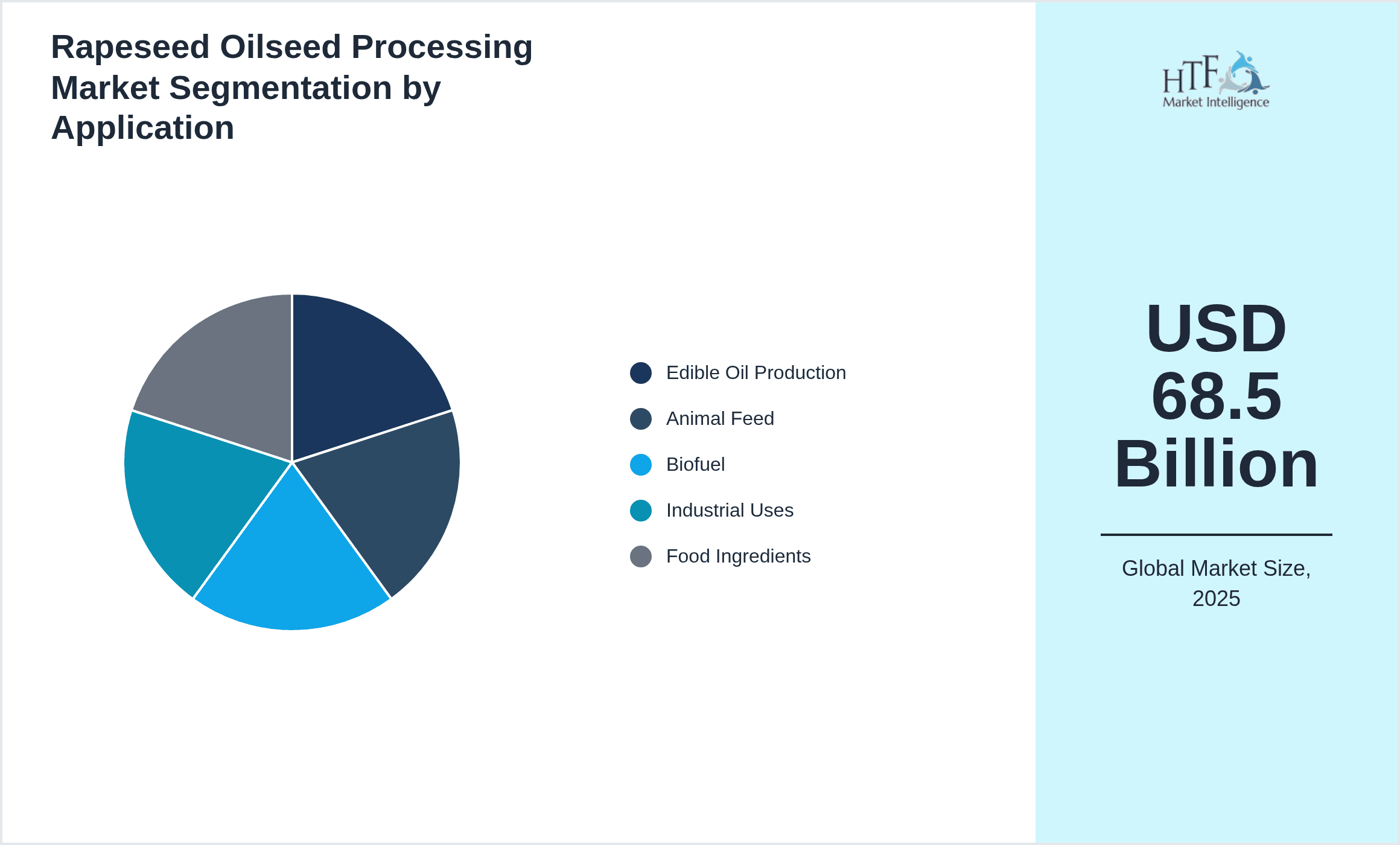
Global Rapeseed Oilseed Processing Market is segmented by Product Type (Cold-Pressed Rapeseed Oil, Expeller-Pressed Rapeseed Oil, Solvent Extracted Rapeseed Oil, Refined Rapeseed Oil, Organic Rapeseed Oil), Application (Edible Oil Production, Animal Feed, Biofuel, Industrial Uses, Food Ingredients), End-Use Industry (Food & Beverage, Energy & Biofuels, Animal Nutrition, Industrial Manufacturing), Distribution Channel (Direct Sales, Distributors & Wholesalers, Online Retail), and Geography (North America, LATAM, West Europe, Central & Eastern Europe, Northern Europe, Southern Europe, East Asia, Southeast Asia, South Asia, Central Asia, Oceania, MEA)
Pricing
Report Overview
Executive Summary
- •The global Rapeseed Oilseed Processing market involves the extraction and refinement of oil from rapeseed seeds, a prominent oilseed crop cultivated extensively across continents. The market covers multiple processing techniques including cold-pressing, expeller pressing, solvent extraction, and refining, which enable production of edible oils, biofuels, animal feed, and industrial lubricants. This industry plays a pivotal role in global food security and renewable energy sectors, responding to rising health awareness and sustainability trends. Increasing consumer preference for organic and cold-pressed oils is driving innovation and diversification within the market. Moreover, the market is shaped by technological advancements, regulatory policies, and agricultural productivity, spanning regions such as North America, Europe, Asia-Pacific, Latin America, and the Middle East & Africa. Key applications range from culinary uses and food ingredients to biofuel production and industrial applications, underscoring the broad utility of processed rapeseed oil. The market's growth trajectory is influenced by evolving consumer preferences, environmental concerns, and strategic investments in processing infrastructure globally.
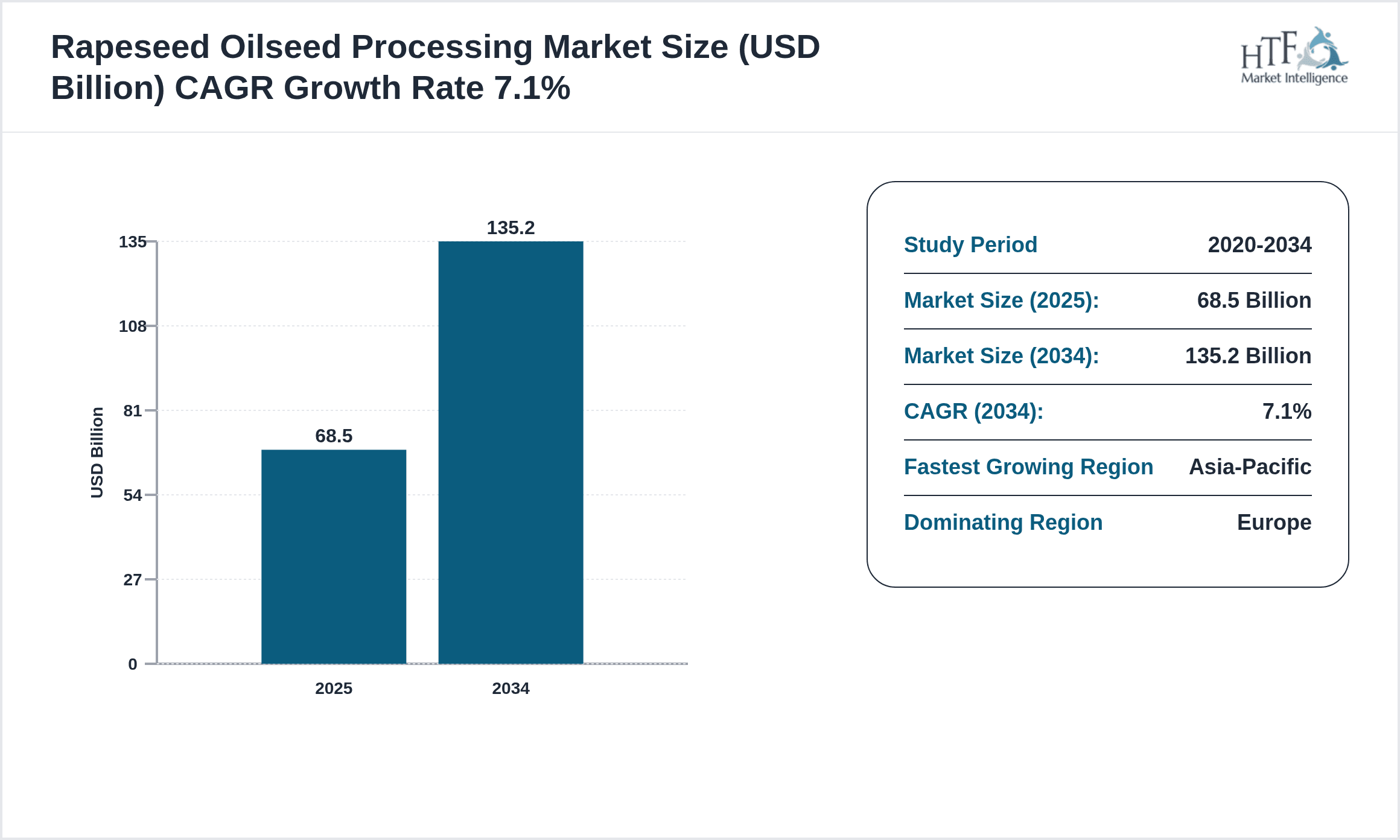
- •The market is projected to grow from USD 68.5 billion in 2024 to USD 135.2 billion by 2034, registering a CAGR of 7.1%. Solvent extracted rapeseed oil currently dominates the market due to its cost-effective large-scale production, while organic rapeseed oil represents the fastest-growing segment, driven by rising health-conscious consumption. Europe leads the global market in volume and value, supported by strong regulatory frameworks and established processing infrastructure. Asia-Pacific is expected to exhibit the fastest growth rate owing to expanding agricultural output and increasing demand for edible oils and biofuels in developing countries. The edible oil production application remains the largest segment, with biofuel usage gaining momentum due to environmental sustainability initiatives. Market drivers include technological improvements, rising consumer demand for healthy oils, and government support for renewable fuels. Challenges involve raw material price volatility, regulatory compliance costs, and competition from alternative oilseeds.
- •This market offers significant value propositions by contributing to global food supplies, renewable energy, and industrial raw materials. It supports the agricultural value chain from seed cultivation to end-user consumption, facilitating economic growth in agro-based economies. For stakeholders including processors, manufacturers, distributors, and investors, the market presents opportunities to innovate with sustainable and organic products, expand into emerging regions, and leverage evolving consumer health trends. Strategic importance also lies in the sector's role in advancing biofuel adoption, reducing carbon footprints, and complying with environmental regulations. Continuous market evolution driven by technological advancements, changing regulatory landscapes, and shifting consumer preferences underscores the dynamic nature of the rapeseed oilseed processing industry worldwide.
Competitive Landscape
The global rapeseed oilseed processing market is characterized by intense competition among multinational corporations and regional processors striving for market share through innovation, capacity expansion, and strategic partnerships. Market leaders focus on technological advancements such as enhanced extraction techniques and refining processes to improve yield and product quality while reducing environmental impact. Competitive strategies involve differentiation through organic and cold-pressed product lines catering to health-conscious consumers. Price competitiveness remains critical due to raw material cost fluctuations and commodity nature of the product. Mergers and acquisitions are prevalent to consolidate processing capabilities and expand geographic reach, while investments in sustainability and biofuel technologies are redefining competitive positioning. Regional competition varies with Europe and North America exhibiting mature, technologically sophisticated markets, whereas Asia-Pacific sees rapid growth driven by emerging players and increasing consumption. Overall, rivalry is fueled by innovation, regulatory compliance, cost optimization, and market diversification into new applications.
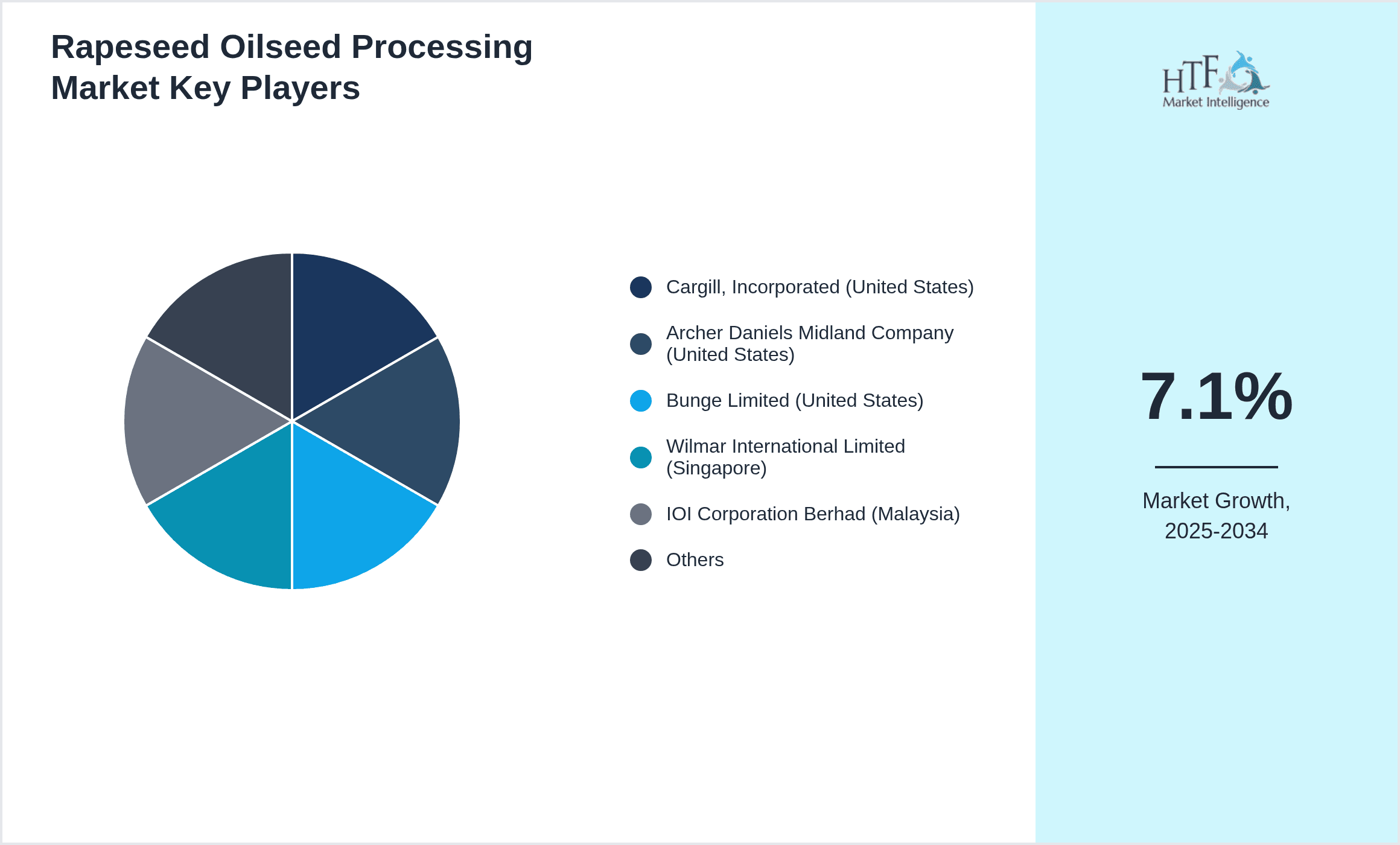
Key Players in Rapeseed Oilseed Processing Market
- •Cargill, Incorporated (United States)
- •Archer Daniels Midland Company (United States)
- •Bunge Limited (United States)
- •Wilmar International Limited (Singapore)
- •IOI Corporation Berhad (Malaysia)
- •Louis Dreyfus Company B.V. (Netherlands)
- •Sinopec Group (China)
- •SovEcon (Russia)
- •Adani Wilmar Limited (India)
- •BASF SE (Germany)
- •CHS Inc. (United States)
- •Nexen Energy ULC (Canada)
- •Ruchi Soya Industries Limited (India)
- •Sappi Limited (South Africa)
- •Cofco Corporation (China)
- •Evergrow Group (China)
- •Ag Processing Inc. (United States)
- •Viterra Inc. (Canada)
- •Marathon Petroleum Corporation (United States)
- •Wilmar Europe Ltd. (United Kingdom)
- •SunOpta Inc. (Canada)
- •Oleon NV (Belgium)
- •Alfa Laval Corporate AB (Sweden)
- •Bunge Loders Croklaan (Netherlands)
- •The Scoular Company (United States)
Market Breakdown
- •By Product Type
- ◦Cold-Pressed Rapeseed Oil
- ◦Expeller-Pressed Rapeseed Oil
- ◦Solvent Extracted Rapeseed Oil
- ◦Refined Rapeseed Oil
- ◦Organic Rapeseed Oil
- •By Application
- ◦Edible Oil Production
- ◦Animal Feed
- ◦Biofuel
- ◦Industrial Uses
- ◦Food Ingredients
- •By End-Use Industry
- ◦Food & Beverage
- ◦Energy & Biofuels
- ◦Animal Nutrition
- ◦Industrial Manufacturing
- •By Distribution Channel
- ◦Direct Sales
- ◦Distributors & Wholesalers
- ◦Online Retail
Growth Dynamics
- •Rising consumer awareness about health benefits of rapeseed oil, such as low saturated fat and high omega-3 content, is significantly driving demand for organic and cold-pressed varieties globally. This shift in dietary preferences is encouraging manufacturers to invest in premium processing technologies and product differentiation.
- •Technological advancements in solvent extraction and refining processes have improved oil yield and quality, reducing production costs and enhancing scalability. Companies adopting innovative processing equipment are gaining competitive advantages in efficiency and environmental compliance.
- •Government initiatives promoting biofuels as sustainable energy sources are stimulating rapeseed oil demand for biodiesel production, especially in Europe and Asia-Pacific. Subsidies, mandates, and carbon reduction targets are accelerating industry investments and capacity expansions in this segment.
- •Expansion of rapeseed cultivation areas in emerging regions, coupled with improved seed varieties, is ensuring steady raw material supply. This agricultural growth supports processing industry scalability and regional market penetration, particularly in Asia-Pacific and Latin America.
- •Increasing urbanization and rising disposable incomes in developing countries are boosting consumption of processed edible oils, including rapeseed oil. Enhanced distribution networks and e-commerce platforms are facilitating easier market access and consumer reach.
- •Strategic collaborations between oilseed processors and downstream industries, such as food manufacturers and biofuel producers, are fostering integrated supply chains that optimize cost and product innovation. This trend is improving market resilience and driving sustained growth.
- •Environmental sustainability concerns and tightening regulations on greenhouse gas emissions are prompting processors to adopt cleaner technologies and develop eco-friendly oilseed processing methods, aligning market growth with global climate goals.

Market Trends
- •The shift towards organic and cold-pressed rapeseed oil varieties is gaining traction as consumers increasingly seek natural, minimally processed oils with higher nutritional value. This trend is reshaping product portfolios and marketing strategies among leading processors.
- •Integration of digital technologies such as IoT and AI in processing plants is enhancing operational efficiency, quality control, and traceability, enabling processors to meet stringent quality standards and regulatory requirements effectively.
- •Rising investments in biofuel production from rapeseed oil are driven by global decarbonization efforts and energy security priorities, leading to increased capacity expansions and innovation in biodiesel technologies.
- •Sustainability initiatives including zero-waste processing and by-product valorization are becoming mainstream, with companies developing value-added products from rapeseed meal and other residues, diversifying revenue streams.
- •Consumer demand for transparent labeling and certification, such as non-GMO and fair trade, is influencing supply chain practices and product development, compelling processors to adopt rigorous quality and ethical standards.
- •Collaborations between agritech firms and oilseed processors are fostering innovations in seed genetics and cultivation practices, enhancing crop yields and oil content, thereby boosting raw material quality and availability.
- •Emerging markets in Asia-Pacific and Latin America are witnessing rapid growth in rapeseed oil consumption due to changing dietary patterns and expanding food processing industries, representing key future growth frontiers.
Market Opportunities
- •Expanding organic rapeseed oil production offers significant growth potential by tapping into rising consumer health consciousness and demand for clean-label products, particularly in mature markets like Europe and North America.
- •Investments in advanced extraction technologies and refining processes can enhance oil quality and yield, enabling processors to cater to premium market segments and diversify product applications beyond edible oils.
- •Developing biofuel production capacities in emerging regions presents opportunities to capitalize on governmental renewable energy mandates and growing environmental awareness, supporting sustainable industry expansion.
- •Geographic expansion into underserved markets in Latin America and the Middle East & Africa can drive volume growth, supported by increasing urbanization and rising disposable incomes in these regions.
- •Value-added product development from rapeseed meal and by-products, including animal feed and industrial derivatives, offers prospects for revenue diversification and improved supply chain sustainability.
- •Collaborations and strategic alliances between processors, agribusinesses, and technology providers can accelerate innovation, enhance operational efficiency, and foster market penetration.
- •Adoption of digitalization and automation in processing facilities can yield operational cost savings and quality improvements, positioning companies competitively in a technology-driven market landscape.
Market Challenges
- •Volatility in raw material prices due to climate variability, geopolitical tensions, and supply chain disruptions poses significant challenges to cost management and profitability for rapeseed oil processors globally.
- •Strict and evolving regulatory standards related to food safety, environmental protection, and biofuel mandates require continuous compliance efforts and investments, increasing operational complexity and costs.
- •Competition from alternative edible oils such as palm, sunflower, and soybean oil, which may offer cost advantages or regional production benefits, intensifies market rivalry and pressures pricing strategies.
- •High capital investment requirements for advanced processing technologies and capacity expansions can limit market entry for smaller players and constrain industry growth in certain regions.
- •Supply chain challenges including inconsistent seed quality, logistical inefficiencies, and limited infrastructure in emerging markets hinder smooth raw material procurement and product distribution.
- •Consumer skepticism regarding genetically modified organisms (GMOs) and product authenticity necessitates transparent supply chains and rigorous certification, imposing additional operational burdens.
- •Environmental concerns and sustainability pressures require processors to adopt eco-friendly practices, which may increase production costs and necessitate strategic reorientation.
Regulatory Framework
- •Between 2019 and 2024, several countries implemented stricter food safety regulations mandating comprehensive traceability and quality assurance in oilseed processing, compelling companies to upgrade processing standards and documentation practices.
- •Environmental regulations enacted in Europe and North America during 2020-2023 introduced limits on industrial emissions and waste disposal from oil extraction plants, requiring investment in cleaner technologies and waste treatment solutions.
- •Biofuel mandates updated in 2021-2024 across Asia-Pacific and Europe incentivized renewable diesel production from rapeseed oil, stimulating market demand but also imposing certification and sustainability criteria on processors.
- •New labeling standards introduced globally since 2019 emphasize transparency regarding organic status, GMO content, and nutritional information, affecting product packaging and marketing approaches within the rapeseed oil market.
- •Government support programs launched between 2020 and 2024, including subsidies for sustainable agriculture and renewable energy projects, have facilitated capacity expansions and technology upgrades in the rapeseed oilseed processing sector worldwide.
Market Intelligence
- •15th February 2025, Cargill, Incorporated announced the launch of an advanced cold-pressed rapeseed oil product line tailored for premium edible oil markets. This innovation features enhanced nutrient retention and sustainable extraction methods, targeting health-conscious consumers in North America and Europe. The company aims to expand its organic product portfolio and meet rising demand for natural oils, reinforcing its market leadership. This launch includes investments in new processing facilities equipped with state-of-the-art technology to improve quality and reduce environmental impact. Strategic objectives focus on gaining market share in the premium segment and supporting sustainability commitments.
- •10th March 2025, Archer Daniels Midland Company introduced an AI-enabled extraction system at its European processing plants, enhancing solvent extraction efficiency and reducing energy consumption by 15%. This technology integration improves throughput and oil quality while lowering operational costs. The innovation aligns with ADM's sustainability goals and strengthens its competitive edge in the solvent extracted rapeseed oil market. Market positioning emphasizes technological leadership and environmental responsibility, responding to regulatory pressures and consumer expectations for sustainable products.
- •20th January 2025, Bunge Limited announced a strategic partnership with a leading agritech firm to develop high-yield rapeseed seed varieties optimized for biofuel applications. This collaboration aims to increase raw material availability and quality, addressing supply chain challenges in Asia-Pacific and Europe. The initiative supports Bunge's expansion into renewable energy markets and strengthens its integrated supply chain capabilities. The partnership combines genetic innovation with advanced breeding techniques to enhance oil content and environmental resilience.
- •5th April 2025, Wilmar International Limited completed the acquisition of a mid-sized rapeseed oil processor in Eastern Europe to expand its footprint in the organic and cold-pressed oil segment. This acquisition enhances Wilmar's production capacity and diversifies its product offerings to meet growing consumer demand for premium and sustainable oils. The deal strengthens Wilmar's presence in a key geographic market and supports its long-term growth strategy focused on health-conscious and environmentally friendly products.
- •Source: Official company press releases and verified industry reports
Regional Outlook
The Europe currently holds a significant share of the market, primarily due to several key factors: increasing consumption rates, a burgeoning population, and robust economic momentum. These elements collectively drive demand, positioning this region as a leader in the market. On the other hand, Asia-Pacific is rapidly emerging as the fastest-growing area within the industry. This remarkable growth can be attributed to swift infrastructure development, the expansion of various industrial sectors, and a marked increase in consumer demand. These dynamics make this region a crucial player in shaping future market growth.
In our report, we cover a comprehensive analysis of the following regions and countries:
- North America
- LATAM
- West Europe
- Central & Eastern Europe
- Northern Europe
- Southern Europe
- East Asia
- Southeast Asia
- South Asia
- Central Asia
- Oceania
- MEA
| Feature | Details |
|---|---|
| Base Year Market Size | USD 68.5 Billion |
| Forecast Year Market Size | USD 135.2 Billion |
| CAGR | 7.1% |
| Forecast Period | 2026 to 2033 |
| YoY Growth | 6.9% |
| Scope of Report | Market is segmented by Product Type (Cold-Pressed Rapeseed Oil, Expeller-Pressed Rapeseed Oil, Solvent Extracted Rapeseed Oil, Refined Rapeseed Oil, Organic Rapeseed Oil), Application (Edible Oil Production, Animal Feed, Biofuel, Industrial Uses, Food Ingredients), End-Use Industry (Food & Beverage, Energy & Biofuels, Animal Nutrition, Industrial Manufacturing), Distribution Channel (Direct Sales, Distributors & Wholesalers, Online Retail) |
| Regions Covered | North America, LATAM, West Europe, Central & Eastern Europe, Northern Europe, Southern Europe, East Asia, Southeast Asia, South Asia, Central Asia, Oceania, MEA |
| Key Companies | Cargill, Incorporated (United States), Archer Daniels Midland Company (United States), Bunge Limited (United States), Wilmar International Limited (Singapore), IOI Corporation Berhad (Malaysia), Louis Dreyfus Company B.V. (Netherlands), Sinopec Group (China), SovEcon (Russia), Adani Wilmar Limited (India), BASF SE (Germany), CHS Inc. (United States), Nexen Energy ULC (Canada), Ruchi Soya Industries Limited (India), Sappi Limited (South Africa), Cofco Corporation (China), Evergrow Group (China), Ag Processing Inc. (United States), Viterra Inc. (Canada), Marathon Petroleum Corporation (United States), Wilmar Europe Ltd. (United Kingdom), SunOpta Inc. (Canada), Oleon NV (Belgium), Alfa Laval Corporate AB (Sweden), Bunge Loders Croklaan (Netherlands), The Scoular Company (United States) |
Global Rapeseed Oilseed Processing Market Size, Growth & Revenue 2024-2034 - Table of Contents
Multidisciplinary researcher with 10+ years of experience uncovering insights across diverse domains focused on uncovering insights that drive informed decisions.
Frequently Asked Questions (FAQ):
The Compact Track Loaders market is projected to grow at a CAGR of 6.8% from 2025 to 2030, driven by increasing demand in construction and agricultural sectors.
North America currently leads the market with approximately 45% market share, followed by Europe at 28% and Asia-Pacific at 22%. The remaining regions account for 5% of the global market.
Key growth drivers include increasing construction activities, rising demand for versatile equipment in agriculture, technological advancements in track loader design, and growing preference for compact equipment in urban construction projects.