
Global Oral Care Product Market Roadmap to 2033
Global Oral Care Product Market is segmented by Application (Personal Care, Dental Clinics, Travel Kits, Retail, Hospitals), Type (Toothpaste, Mouthwash, Brushes, Floss, Chewing Gum), and Geography (North America, LATAM, West Europe, Central & Eastern Europe, Northern Europe, Southern Europe, East Asia, Southeast Asia, South Asia, Central Asia, Oceania, MEA)
Pricing
Report Overview
Oral Care Product Industry Overview
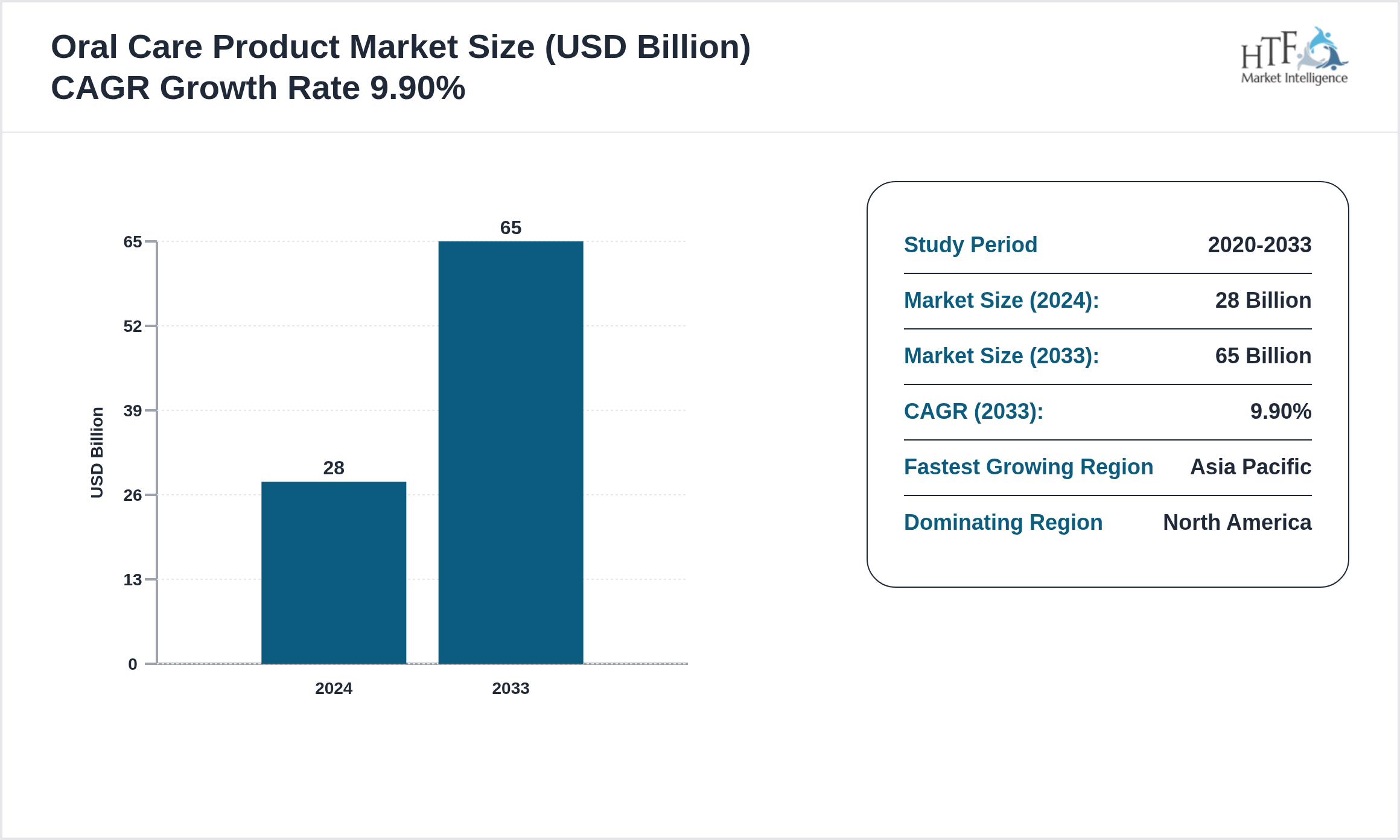
The Oral Care Product market is experiencing robust growth, projected to achieve a compound annual growth rate CAGR of 9.90% during the forecast period. Valued at 28.00 billion, the market is expected to reach 65.00 billion by 2033, with a year-on-year growth rate of {YOY_GROWTH}.
Oral-care products—toothpaste, mouthwash, floss, interdental brushes—maintain dental hygiene and prevent caries, gingivitis, and halitosis. Fluoride pastes at 1 450 ppm remineralize enamel, while stannous fluoride and zinc ions inhibit plaque biofilms. Whitening formulas add low-dose hydrogen peroxide encapsulated for enamel safety. SLS-free options reduce mucosal irritation. Smart electric toothbrushes with pressure sensors and Bluetooth apps coach users to meet American Dental Association two-minute brushing guidelines. Sustainable packaging swaps PET tubes for recyclable HDPE and bamboo fiber floss cases, aligning with eco-conscious consumer demand.
Key Highlights of the Oral Care Product
• The Oral Care Product is growing at a CAGR of 9.90% during the forecasted period of 2024 to 2033
• Year-on-year growth for the market is {YOY_GROWTH}
• Asia Pacific is the largest market in 2024
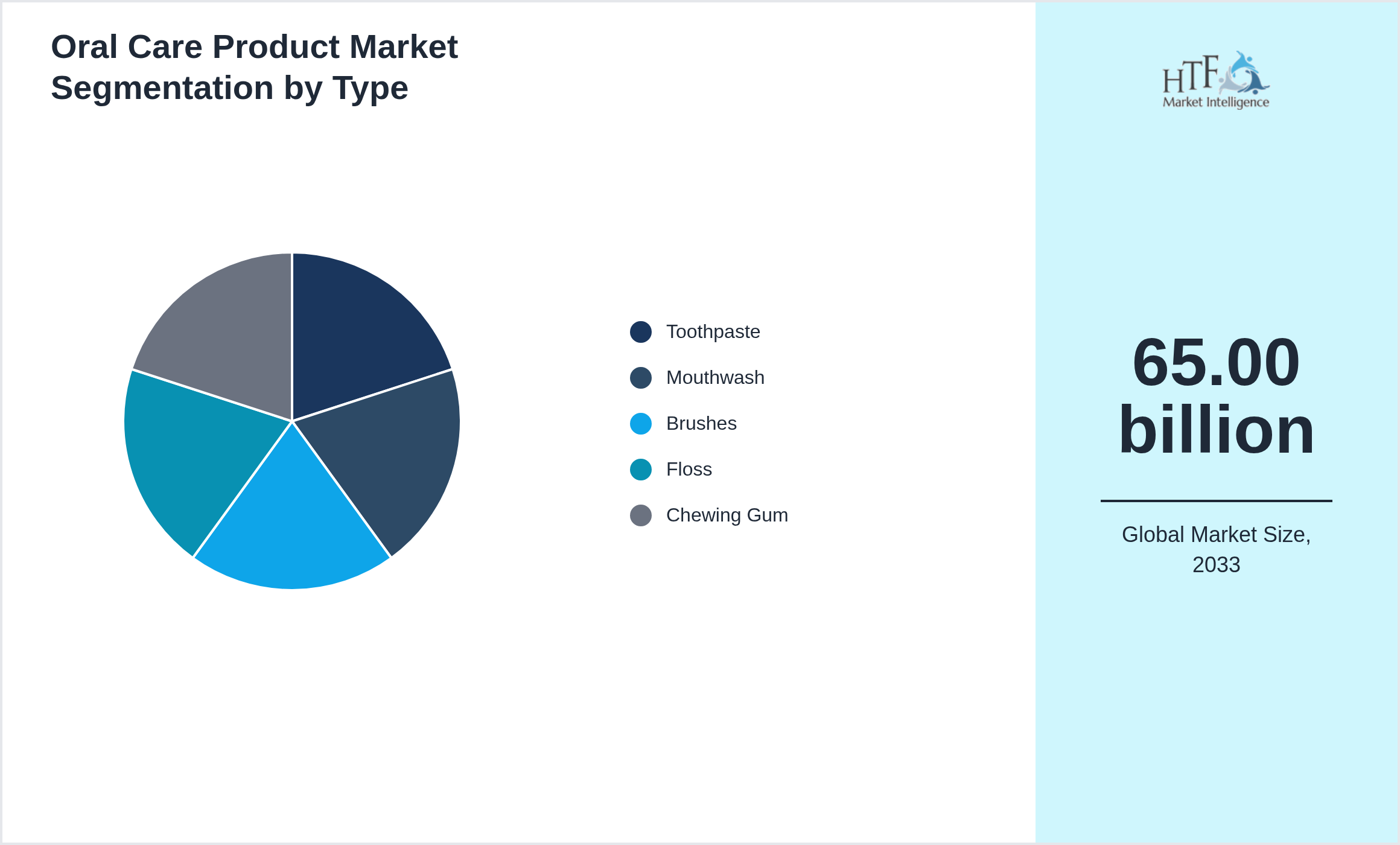
• Based on type, the market is bifurcated into Toothpaste, Mouthwash, Brushes, Floss, Chewing Gum segments, which dominated the market share during the forecasted period.
Patent Analysis
- • Patents include antimicrobial formulations smart brushing sensors whitening agents and sustainable packaging.
Investment and Funding Scenario
- • Major FMCG investment frequent M&A in digital health and natural oral care startups.
Market Segmentation
Segmentation by Type
- • Toothpaste
- • Mouthwash
- • Brushes
- • Floss
- • Chewing Gum
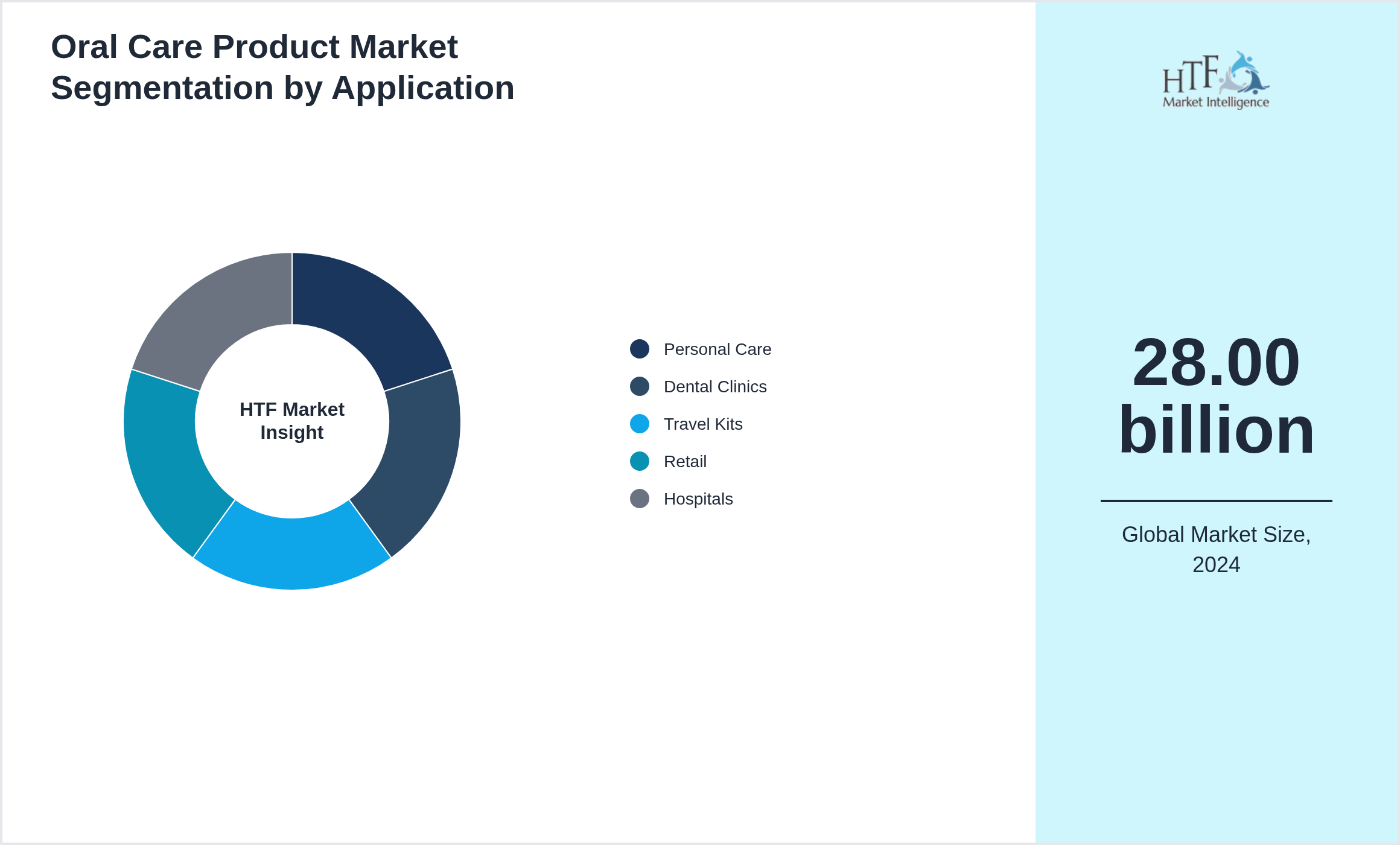
Segmentation by Application
- • Personal Care
- • Dental Clinics
- • Travel Kits
- • Retail
- • Hospitals
{SIDE_TAG The report also splits the market by region.
- North America
- LATAM
- West Europe
- Central & Eastern Europe
- Northern Europe
- Southern Europe
- East Asia
- Southeast Asia
- South Asia
- Central Asia
- Oceania
- MEA
Regional Insights
The Oral Care Product market exhibits significant regional variation, shaped by different economic conditions and consumer behaviors.
Currently, North America dominates the market due to high consumption, population growth, and sustained economic progress. Meanwhile, Asia Pacific is experiencing the fastest growth, driven by large-scale infrastructure investments, industrial development, and rising consumer demand.
Key Regional Analysis
- • North America and Europe lead with advanced R&D strong brands and high per capita spend. AsiaPacific shows fastest growth via urbanization and rising awareness.
Mergers, Acquisitions & Strategic Partnerships
- • Apr 2025 – SmileBright Brands acquired HerbalDent Naturals integrating probiotic lozenges fluoridefree hydroxyapatite pastes and blockchain herb sourcing; retailers unveil refillpod dispensers that cut plastic 70 % and lift shelf share.
Regulatory Landscape
- • FDA EFSA and regional regulators oversee product safety ingredient labeling and efficacy claims. Biocompatibility and fluoride limits strictly enforced.
Key Players
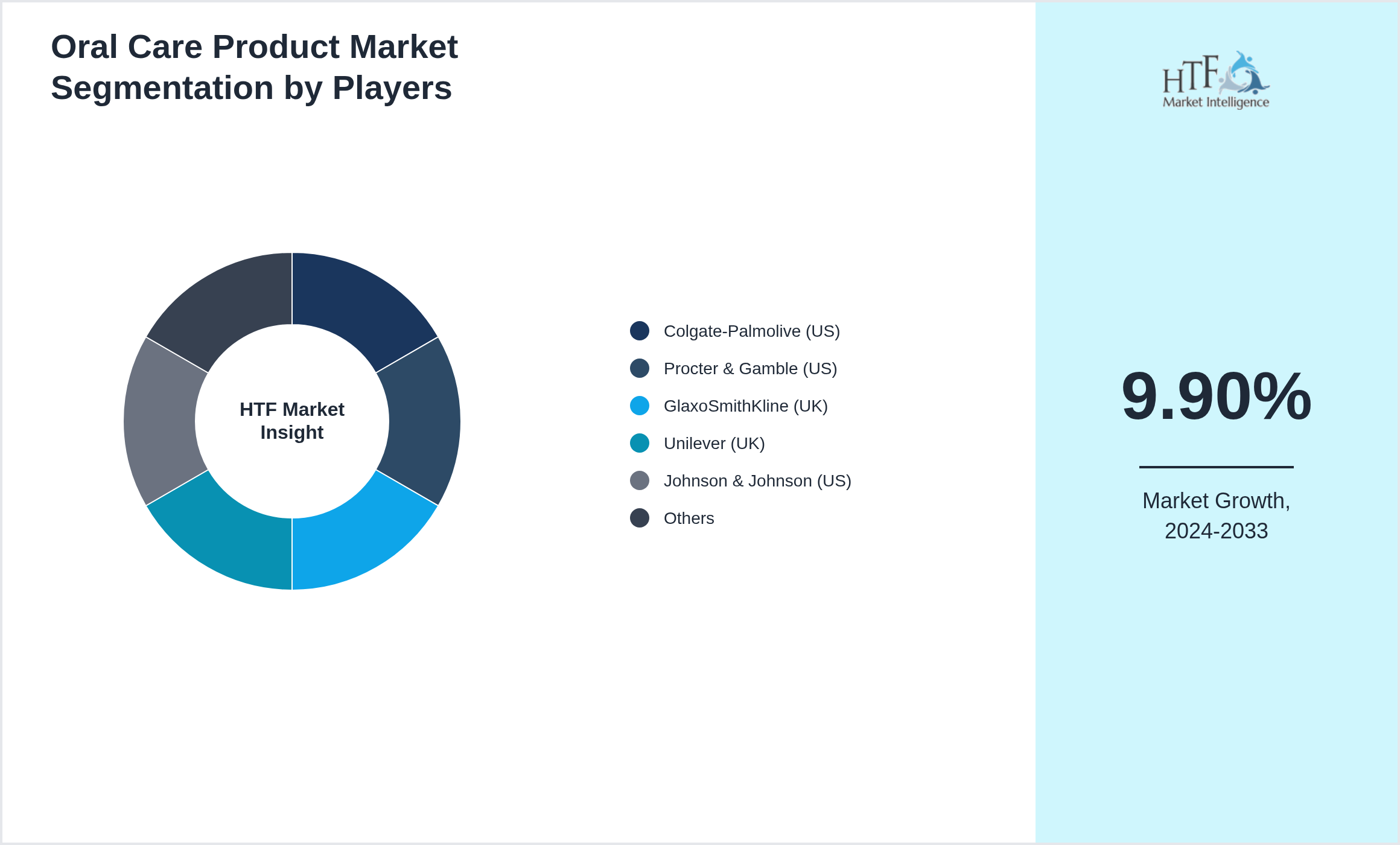
The companies highlighted in this profile were selected based on insights from primary experts and an evaluation of their market penetration, product offerings, and geographical reach:
- • Colgate-Palmolive (US)
- • Procter & Gamble (US)
- • GlaxoSmithKline (UK)
- • Unilever (UK)
- • Johnson & Johnson (US)
- • Church & Dwight (US)
- • Lion (Japan)
- • Dabur (India)
- • Himalaya (India)
- • Marico (India)
- • Tom’s (US)
- • Sensodyne (UK)
- • Crest (US)
- • Pepsodent (UK)
- • Oral-B (US)
- • Listerine (US)
- • Philips Sonicare (Netherlands)
- • Waterpik (US)
- • Kuraray (Japan)
- • Sunstar (Japan)
- • Evora (US)
- • Apagard (Japan)
- • Colgate India (India)
- • P&G India (India)
- • GSK India (India)
Companies within the industry are increasingly concentrating on broadening their market presence through a variety of strategic initiatives. These include mergers and acquisitions, as well as green investments, particularly in underdeveloped regions. Such strategies are proving instrumental in enabling these companies to capture a larger share of the market. By consolidating resources and expanding their geographical footprint, they not only enhance their competitive edge but also contribute to sustainable development in emerging markets. This approach not only fosters growth but also aligns with global trends toward environmental responsibility and corporate sustainability.
Competitive Landscape
The competitive landscape is shaped by a mix of global leaders and regional players, with large companies like Colgate-Palmolive (US), Procter & Gamble (US), GlaxoSmithKline (UK), Unilever (UK), Johnson & Johnson (US), Church & Dwight (US), Lion (Japan), Dabur (India), Himalaya (India), Marico (India), Tom’s (US), Sensodyne (UK), Crest (US), Pepsodent (UK), Oral-B (US), Listerine (US), Philips Sonicare (Netherlands), Waterpik (US), Kuraray (Japan), Sunstar (Japan), Evora (US), Apagard (Japan), Colgate India (India), P&G India (India), GSK India (India) dominating the market through their extensive resources, innovation, and established brand presence. However, emerging players are disrupting the market with niche products and innovative technologies, challenging the incumbents. Pricing strategies vary, with larger firms benefiting from economies of scale while smaller players offer value-added services or customization.
Get the full report to explore critical industry dynamics.
Price Trend Analysis
Price trend analysis is the study of historical pricing data to identify patterns and predict future price movements in Oral Care Product Market. It provides businesses with insights into how prices for goods or services change over time due to factors like demand and supply levels in Oral Care Product Industry, economic conditions, and external influences such as inflation or raw material costs.
Price trend analysis is also essential for forecasting. It allows companies to predict future price fluctuations and plan accordingly, whether for purchasing, production, or sales strategies. This is particularly important for Oral Care Product industries where price volatility is common, such as commodities or seasonal products.
Furthermore, analyzing price trends in Oral Care Product Industry offers valuable insights for Oral Care Product stakeholders. Businesses can gain a clearer view of consumer behavior, competitor pricing tactics, and overall market health. This helps in making informed decisions about product positioning, promotions, and inventory management.
Oral Care Product Market Dynamics
Market dynamics refer to the forces that influence the supply and demand of products and services within a market. These forces include factors such as consumer preferences, technological advancements, regulatory changes, economic conditions, and competitive actions. Understanding market dynamics is crucial for businesses, as it helps them anticipate changes, identify opportunities, and mitigate risks.
What Is Driving Growth in the Oral Care Product Market?
- • Growing awareness of dental hygiene
- • Expansion of cosmetic dentistry
- • Rising disposable incomes
- • Influence of social media aesthetics
- • Increase in pediatric dental care
What are the Latest Trends in the Oral Care Product Market?
- • Herbal and natural ingredient toothpaste
- • Electric and smart toothbrushes
- • Charcoal whitening products
- • Subscription refill models
- • Fluoride-free alternatives
Where are the Biggest Growth Opportunities in the Oral Care Product Market?
- • Premium whitening product lines
- • Expansion in rural markets
- • Collaboration with dental clinics
- • E-commerce brand growth
- • Pediatric-friendly flavored variants
Why does the Oral Care Product Market face Growth Challenges?
- • Regulatory scrutiny on ingredients
- • Counterfeit products in developing regions
- • Price competition in mass market
- • Environmental concerns over plastic tubes
- • Sensitivity reactions in users
Major Industry Advancements
- • Dec 2025: Consumer brands released probiotic oralcare strips designed to rebalance the oral microbiome and reduce plaque formation.
|
Report Features |
Details |
|
Base Year |
2026 |
|
Based Year Market Size (2024) |
28.00 billion |
|
Historical Period Market Size (2020) |
USD Million ZZ |
|
CAGR (2026 to 2033) |
9.90% |
|
Forecast Period |
2026 to 2033 |
|
Forecasted Period Market Size (2033) |
65.00 billion |
|
Scope of the Report |
By Type: Toothpaste, Mouthwash, Brushes, Floss, Chewing Gum, By Application: Personal Care, Dental Clinics, Travel Kits, Retail, Hospitals |
|
Regions Covered |
North America, LATAM, West Europe, Central & Eastern Europe, Northern Europe, Southern Europe, East Asia, Southeast Asia, South Asia, Central Asia, Oceania, MEA |
|
Year-on-Year Growth |
5.90% |
|
Companies Covered |
Colgate-Palmolive (US), Procter & Gamble (US), GlaxoSmithKline (UK), Unilever (UK), Johnson & Johnson (US), Church & Dwight (US), Lion (Japan), Dabur (India), Himalaya (India), Marico (India), Tom’s (US), Sensodyne (UK), Crest (US), Pepsodent (UK), Oral-B (US), Listerine (US), Philips Sonicare (Netherlands), Waterpik (US), Kuraray (Japan), Sunstar (Japan), Evora (US), Apagard (Japan), Colgate India (India), P&G India (India), GSK India (India) |
|
Customization Scope |
15% Free Customization (For example) |
|
Delivery Format |
PDF and Excel through Email |
Data Collection Method
Data triangulation is a method used to analyze markets by gathering and comparing information from multiple sources or utilizing different research approaches to examine the same topic. This technique involves integrating data from various sources, such as surveys, interviews, and industry reports, or combining both qualitative and quantitative methods. By employing data triangulation, researchers can cross-verify information, reduce biases, and achieve a more accurate and comprehensive understanding of market dynamics.
Research Process
The research process is a systematic approach to gathering and analyzing information to address specific questions or hypotheses. It typically begins with identifying a problem or research question that needs exploration. Once the question is defined, researchers review existing literature to gain a deeper understanding of the subject and identify gaps that need addressing.
Next, researchers develop a research plan or methodology, outlining how data will be collected and analyzed. This may involve choosing between qualitative, quantitative, or mixed methods depending on the nature of the research. Data collection methods can include surveys, experiments, observations, or secondary data analysis.
Once data is collected, the next step is analyzing the information using appropriate tools or techniques, such as statistical software for quantitative data or thematic analysis for qualitative data. This analysis helps draw conclusions and identify patterns relevant to the research question.
Finally, the findings are interpreted and communicated through reports, presentations, or publications. The results are often compared against the initial hypotheses, and limitations or further areas of study are highlighted. This structured process ensures that research is rigorous, transparent, and reliable, contributing valuable insights to the field of study.
Multidisciplinary researcher with 10+ years of experience uncovering insights across diverse domains focused on uncovering insights that drive informed decisions.