
Global Champagne Glass Market Size, Growth & Revenue 2025-2034
Global Champagne Glass Market is segmented by Type (Crystal Champagne Glass, Glass Champagne Glass, Plastic Champagne Glass, Stainless Steel Champagne Glass, Other Materials), Application (Household, Hospitality, Events, Gifts, Others), End-Use Industry (Residential, Hotels & Restaurants, Event Management, Retail & Gifting), Distribution Channel (Offline Retail, Online Retail, Direct Sales), and Geography (North America, LATAM, West Europe, Central & Eastern Europe, Northern Europe, Southern Europe, East Asia, Southeast Asia, South Asia, Central Asia, Oceania, MEA)
Pricing
Report Overview
Executive Summary
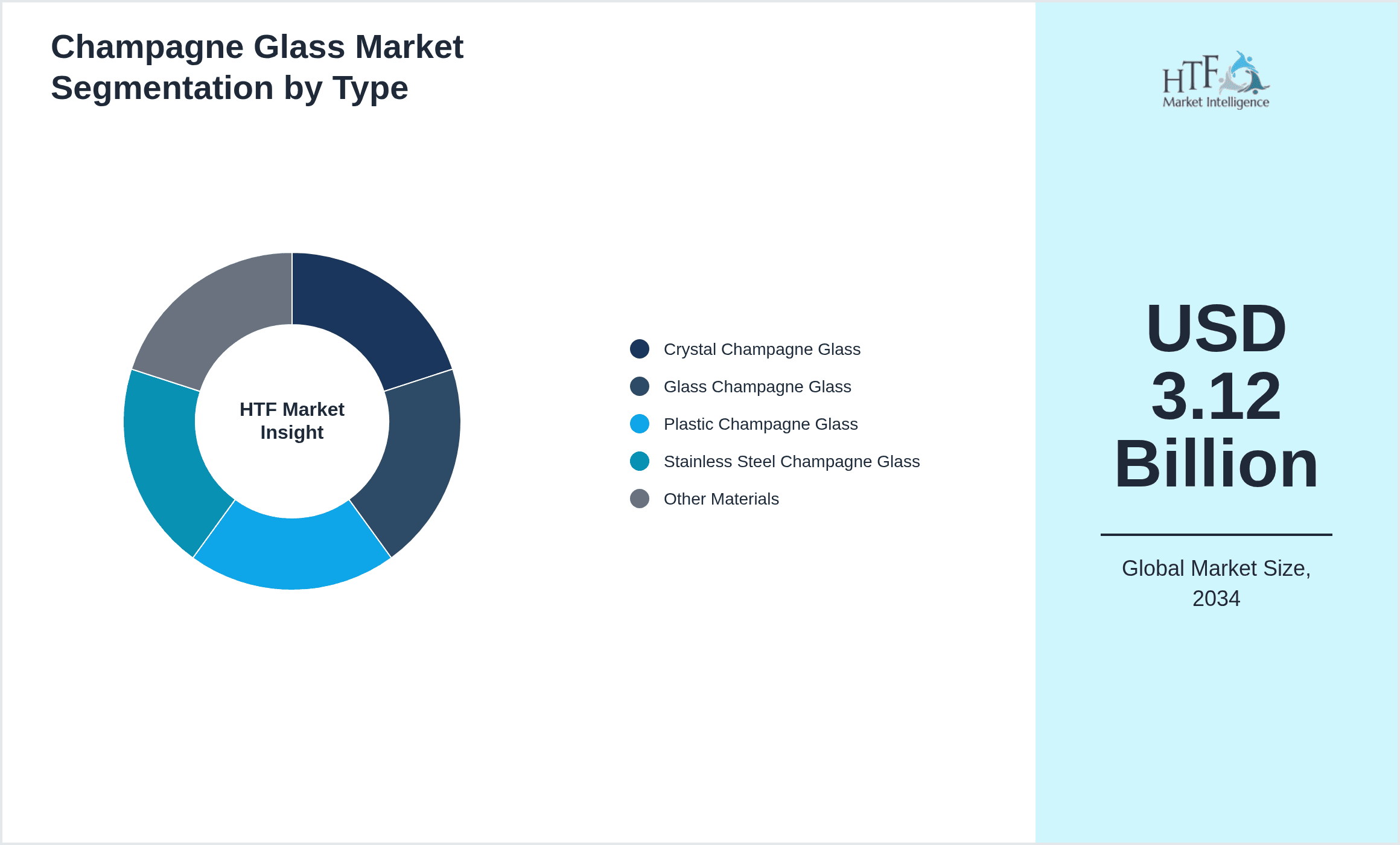
- •The global Champagne Glass market represents a specialized segment within the glassware industry focused on the production and distribution of glassware specifically designed for champagne and sparkling wine consumption. This market includes a variety of types such as crystal, glass, plastic, and stainless steel, serving applications ranging from household use to hospitality, events, and gifting. Its significance stems from evolving consumer lifestyles that emphasize premium experiences and aesthetic presentation in beverage service. The market encompasses innovations in material science and design that enhance durability, functionality, and sustainability, addressing environmental concerns and shifting consumer preferences. International demand is driven by increasing celebratory occasions, growth in luxury hospitality, and rising disposable incomes across emerging and developed economies. Moreover, market players are leveraging customization and branding strategies to capture niche segments and regional tastes. The champagne glass market's growth is closely tied to global trends in social entertainment, gifting culture, and eco-conscious product development, making it a strategically important sector within lifestyle and luxury product markets.
- •The Champagne Glass market is poised for substantial growth with a projected CAGR of 9.3% from 2025 to 2034, expanding from a base market size of USD 1.35 Billion in 2025 to USD 3.12 Billion by 2034. Market highlights include the dominance of crystal champagne glasses owing to their premium appeal and superior clarity. Asia-Pacific emerges as the fastest growing region propelled by rising middle-class populations and expanding hospitality sectors. North America continues to dominate the market due to established luxury consumption and robust distribution networks. Increasing demand for eco-friendly materials and innovative designs also contributes to market expansion. Growing trends include the adoption of sustainable raw materials and smart glassware technologies that enhance user experience. Market players focus on product differentiation, strategic partnerships, and regional expansions to capitalize on emerging opportunities and maintain competitive advantage.
- •The Champagne Glass market offers strategic value to manufacturers, distributors, hospitality businesses, and retailers by enabling premium product offerings that enhance consumer experience and brand loyalty. It supports the luxury beverage industry's growth by providing elegant and functional glassware that elevates presentation and customer satisfaction. The market's importance extends to event organizers and gift industry stakeholders who leverage unique glass designs to attract clientele. Innovations in sustainable materials align with global environmental goals, enhancing corporate social responsibility and market appeal. The expanding global middle class and increasing cultural emphasis on celebrations drive demand, offering long-term growth potential. Stakeholders benefit from insights into consumer preferences, regional dynamics, and technological advancements, facilitating informed decision-making and strategic investments across the supply chain.
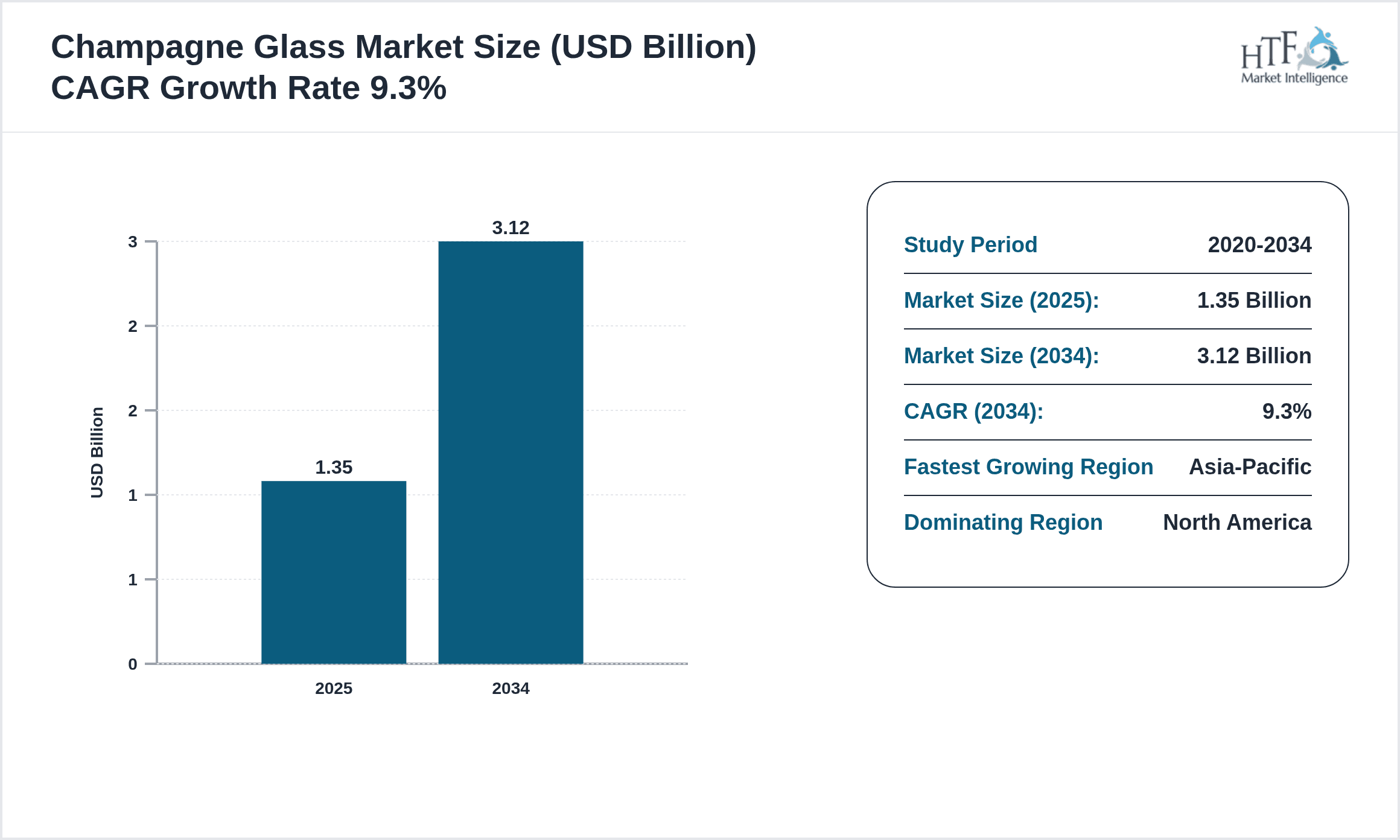
Competitive Landscape
The competitive landscape within the global Champagne Glass market is characterized by a blend of established multinational corporations and regional manufacturers adopting multifaceted strategies to enhance market presence. Companies pursue innovation in product design and material technology to differentiate offerings, focusing on premium crystal and eco-friendly glassware. Strategic partnerships with luxury beverage brands and hospitality chains enhance brand visibility and distribution reach. Geographic expansion into emerging markets, particularly in Asia-Pacific and Latin America, addresses growing demand and diversifies revenue streams. Technological adoption includes advanced molding techniques and smart glass features that improve durability and user experience. Mergers and acquisitions serve as critical mechanisms for consolidating market share and expanding product portfolios. Pricing strategies balance premium positioning with accessibility to capture diverse consumer segments. Distribution channels encompass direct sales, e-commerce, and collaborations with hospitality and event management sectors. Sustainability initiatives and customization options contribute to competitive advantage, while ongoing investment in marketing and brand equity supports long-term growth and resilience amid fluctuating market conditions.
Key Players in Champagne Glass Market
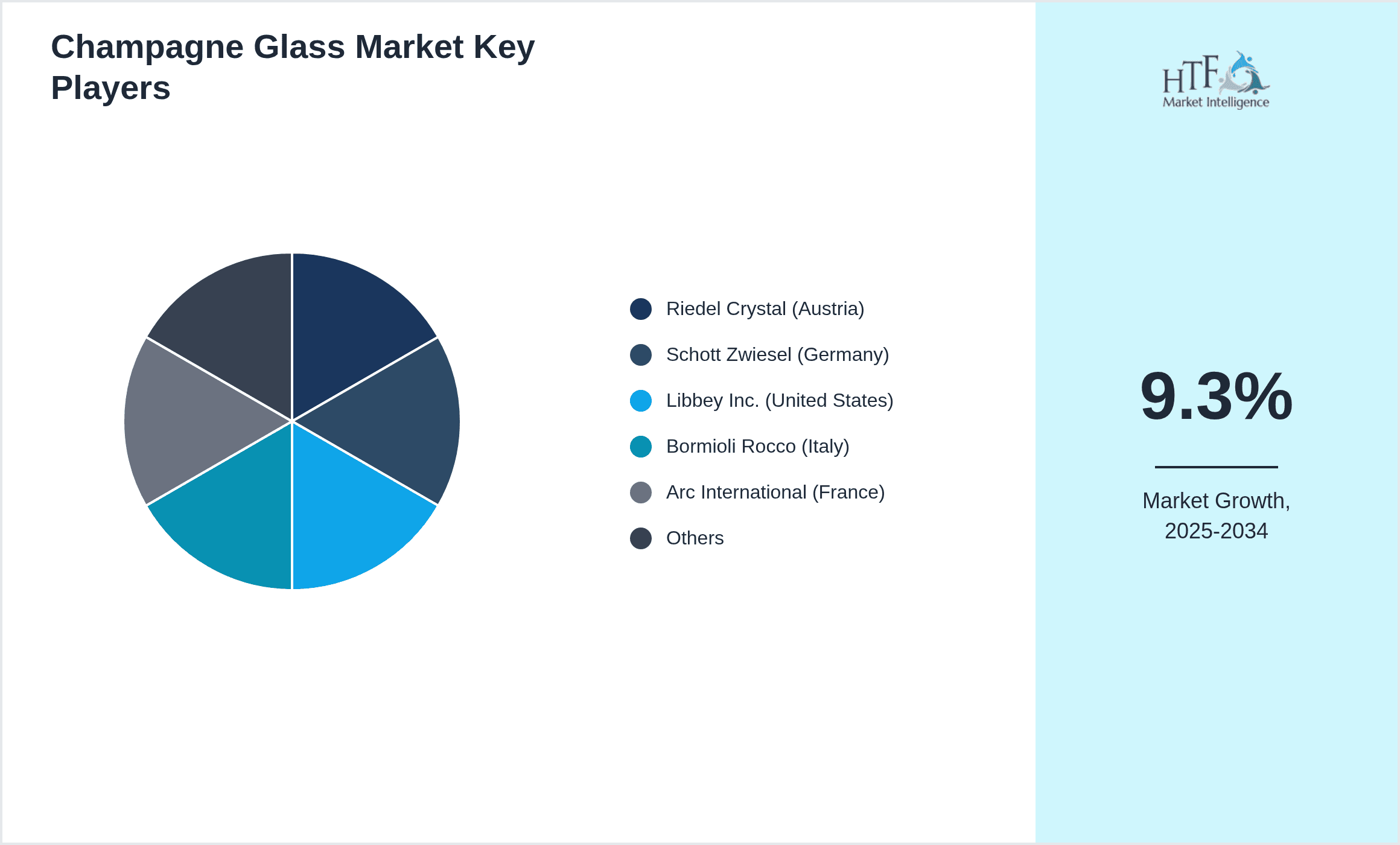
- •Riedel Crystal (Austria)
- •Schott Zwiesel (Germany)
- •Libbey Inc. (United States)
- •Bormioli Rocco (Italy)
- •Arc International (France)
- •Zwiesel Kristallglas AG (Germany)
- •Luminarc (France)
- •Nachtmann (Germany)
- •Dart Container Corporation (United States)
- •Pasabahce Group (Turkey)
- •Libbey Glass (United States)
- •Ocean Glass (Denmark)
- •Villeroy & Boch AG (Germany)
- •Royal Leerdam (Netherlands)
- •Luigi Bormioli (Italy)
- •Krosno Glass (Poland)
- •Crystalex (Czech Republic)
- •Toyo-Sasaki Glass Co., Ltd. (Japan)
- •Duralex International (France)
- •Anchor Hocking (United States)

Market Breakdown
- •By Type
- ◦Crystal Champagne Glass
- ◦Glass Champagne Glass
- ◦Plastic Champagne Glass
- ◦Stainless Steel Champagne Glass
- ◦Other Materials
- •By Application
- ◦Household
- ◦Hospitality
- ◦Events
- ◦Gifts
- ◦Others
- •By End-Use Industry
- ◦Residential
- ◦Hotels & Restaurants
- ◦Event Management
- ◦Retail & Gifting
- •By Distribution Channel
- ◦Offline Retail
- ◦Online Retail
- ◦Direct Sales
Growth Dynamics
The global Champagne Glass market growth is propelled by increasing consumer inclination towards premium and aesthetic beverage experiences, particularly in luxury hospitality and event sectors. Rising disposable incomes in emerging economies have expanded the consumer base for designer and crystal glassware. Innovations in eco-friendly materials and sustainable manufacturing processes address environmental concerns, attracting environmentally conscious consumers. Integration of smart technologies enhancing functionality and durability further bolsters demand. Strategic collaborations between glass manufacturers and luxury beverage brands amplify market penetration. Recent launches of bespoke and customizable champagne glasses cater to personalized gifting trends. Growing urbanization and lifestyle changes contribute to increased consumption occasions. Expansion of e-commerce platforms facilitates broader accessibility and convenience for consumers worldwide, driving volume growth. These factors collectively foster a robust market environment with sustained upward trajectories supported by evolving consumer preferences and technological advancements.
Market Trends
Sustainability and eco-conscious product development dominate current trends within the Champagne Glass market, with manufacturers adopting recycled and biodegradable materials. The shift towards smart glassware embedded with temperature control and durability sensors gains traction. Customization and limited-edition collections emerge as key differentiators, enhancing brand exclusivity and consumer engagement. Regional preference shifts, notably in Asia-Pacific, drive demand for culturally adapted designs and premium craftsmanship. Digital sales channels evolve rapidly, supported by augmented reality tools enabling virtual try-before-you-buy experiences. Collaborations between glassmakers and luxury beverage producers intensify, creating co-branded products that attract affluent consumers. Market players emphasize design innovation blending aesthetics with functionality to meet sophisticated consumer demands. These trends indicate a future market characterized by technological integration, sustainability focus, and personalized luxury experiences aligned with global lifestyle transformations.
Market Opportunities
Expansion in emerging markets, especially within Asia-Pacific and Latin America, presents significant growth opportunities driven by increasing urbanization and disposable income. The rise in luxury hospitality and premium event services fuels demand for high-quality champagne glassware. Innovations in sustainable and smart materials offer avenues for product differentiation and appeal to environmentally conscious consumers. E-commerce growth facilitates access to wider consumer bases and niche segments, enabling targeted marketing and direct sales. Collaborations with luxury beverage brands and event organizers unlock co-branding and promotional opportunities. Customization and personalization services provide value-added options that command premium pricing. Additionally, increased interest in experiential gifting supports market expansion. Leveraging technological advancements and digital marketing strategies will enable manufacturers to capitalize on evolving consumer behaviors and global market dynamics.
Market Challenges
High production costs associated with premium materials such as crystal and advanced manufacturing techniques limit affordability and market penetration in price-sensitive regions. Supply chain disruptions and raw material shortages exacerbate production delays and cost volatility. Intense competition from low-cost plastic and alternative material glassware challenges premium product positioning. Regulatory compliance related to environmental standards and import-export tariffs introduces operational complexities. Counterfeit products and unbranded glassware affect brand reputation and reduce market share for established players. Consumer preference fragmentation requires continuous innovation and marketing investments. Additionally, the COVID-19 pandemic's lingering effects on hospitality and event industries temporarily suppressed demand, requiring strategic adaptations. Companies face challenges in balancing sustainability goals with cost efficiency, necessitating ongoing research and development. These factors collectively impose constraints that require agile responses and strategic planning to maintain growth momentum.
Regulatory Framework
In the last five years, several countries have introduced stringent regulations focused on environmental sustainability impacting the Champagne Glass industry. These include mandates for using recycled materials and reducing carbon footprints during manufacturing processes. The European Union’s directive on packaging waste requires producers to adhere to strict recycling and waste management protocols, influencing glassware production standards. North America has implemented regulations targeting chemical safety and material composition to ensure consumer health and environmental protection. Additionally, import-export compliance regulations have evolved, affecting tariff classifications and cross-border trade of glass products. These regulatory frameworks encourage manufacturers to innovate sustainable production techniques while maintaining product quality. Compliance ensures market access and mitigates legal risks, fostering responsible business practices across the global Champagne Glass supply chain.
Market Intelligence
- •Recent market developments and strategic initiatives are continuously tracked through industry publications, company announcements, and regulatory filings. For the most current information, stakeholders are advised to monitor official corporate communications and recognized market intelligence platforms.
- •Recent market developments and strategic initiatives are continuously tracked through industry publications, company announcements, and regulatory filings. For the most current information, stakeholders are advised to monitor official corporate communications and recognized market intelligence platforms.
- •Recent market developments and strategic initiatives are continuously tracked through industry publications, company announcements, and regulatory filings. For the most current information, stakeholders are advised to monitor official corporate communications and recognized market intelligence platforms.
- •Recent market developments and strategic initiatives are continuously tracked through industry publications, company announcements, and regulatory filings. For the most current information, stakeholders are advised to monitor official corporate communications and recognized market intelligence platforms.
- •Source: Industry Publications, Company Websites, Regulatory Agencies
Regional Outlook
The North America currently holds a significant share of the market, primarily due to several key factors: increasing consumption rates, a burgeoning population, and robust economic momentum. These elements collectively drive demand, positioning this region as a leader in the market. On the other hand, Asia-Pacific is rapidly emerging as the fastest-growing area within the industry. This remarkable growth can be attributed to swift infrastructure development, the expansion of various industrial sectors, and a marked increase in consumer demand. These dynamics make this region a crucial player in shaping future market growth.
In our report, we cover a comprehensive analysis of the following regions and countries:
- North America
- LATAM
- West Europe
- Central & Eastern Europe
- Northern Europe
- Southern Europe
- East Asia
- Southeast Asia
- South Asia
- Central Asia
- Oceania
- MEA
| Feature | Details |
|---|---|
| Base Year Market Size | USD 1.35 Billion |
| Forecast Year Market Size | USD 3.12 Billion |
| CAGR | 9.3% |
| Forecast Period | 2026 to 2033 |
| YoY Growth | 9% |
| Scope of Report | Market is segmented by Type (Crystal Champagne Glass, Glass Champagne Glass, Plastic Champagne Glass, Stainless Steel Champagne Glass, Other Materials), Application (Household, Hospitality, Events, Gifts, Others), End-Use Industry (Residential, Hotels & Restaurants, Event Management, Retail & Gifting), Distribution Channel (Offline Retail, Online Retail, Direct Sales) |
| Regions Covered | North America, LATAM, West Europe, Central & Eastern Europe, Northern Europe, Southern Europe, East Asia, Southeast Asia, South Asia, Central Asia, Oceania, MEA |
| Key Companies | Riedel Crystal (Austria), Schott Zwiesel (Germany), Libbey Inc. (United States), Bormioli Rocco (Italy), Arc International (France) |
Global Champagne Glass Market Size, Growth & Revenue 2025-2034 - Table of Contents
Frequently Asked Questions (FAQ):
The Compact Track Loaders market is projected to grow at a CAGR of 6.8% from 2025 to 2030, driven by increasing demand in construction and agricultural sectors.
North America currently leads the market with approximately 45% market share, followed by Europe at 28% and Asia-Pacific at 22%. The remaining regions account for 5% of the global market.
Key growth drivers include increasing construction activities, rising demand for versatile equipment in agriculture, technological advancements in track loader design, and growing preference for compact equipment in urban construction projects.