
Global Community College Market Size, Growth & Revenue 2024-2034
Global Community College Market is segmented by Type (Public Community Colleges, Private Community Colleges, Technical Colleges, Vocational Institutes, Online Community Colleges), Application (Academic Programs, Vocational Training, Continuing Education, Online Learning, Student Services), End-User Industry (Healthcare, Information Technology, Manufacturing, Retail and Services), Distribution Channel (On-Campus Learning, Online Platforms, Hybrid Learning Models), and Geography (North America, LATAM, West Europe, Central & Eastern Europe, Northern Europe, Southern Europe, East Asia, Southeast Asia, South Asia, Central Asia, Oceania, MEA)
Pricing
Report Overview
Executive Summary
- •The Global Community College Market represents a critical segment of the global education ecosystem, delivering accessible, affordable, and flexible post-secondary education and vocational training. This market comprises a diverse range of institution types including public and private community colleges, technical schools, vocational institutes, and increasingly, online community colleges. These institutions provide academic programs leading to associate degrees, certifications, and workforce readiness courses that support various learner demographics from recent graduates to adult learners seeking career advancement or skill enhancement. The market’s scope extends beyond traditional education to include continuing education and student services, enabled by technological advancements such as virtual classrooms, digital content delivery, and learning management systems. The community college sector is instrumental in addressing skill shortages, facilitating lifelong learning, and promoting social mobility across regions worldwide. Fueled by rising demand for cost-effective education and government policies supporting workforce development, the market is poised for robust growth over the next decade.
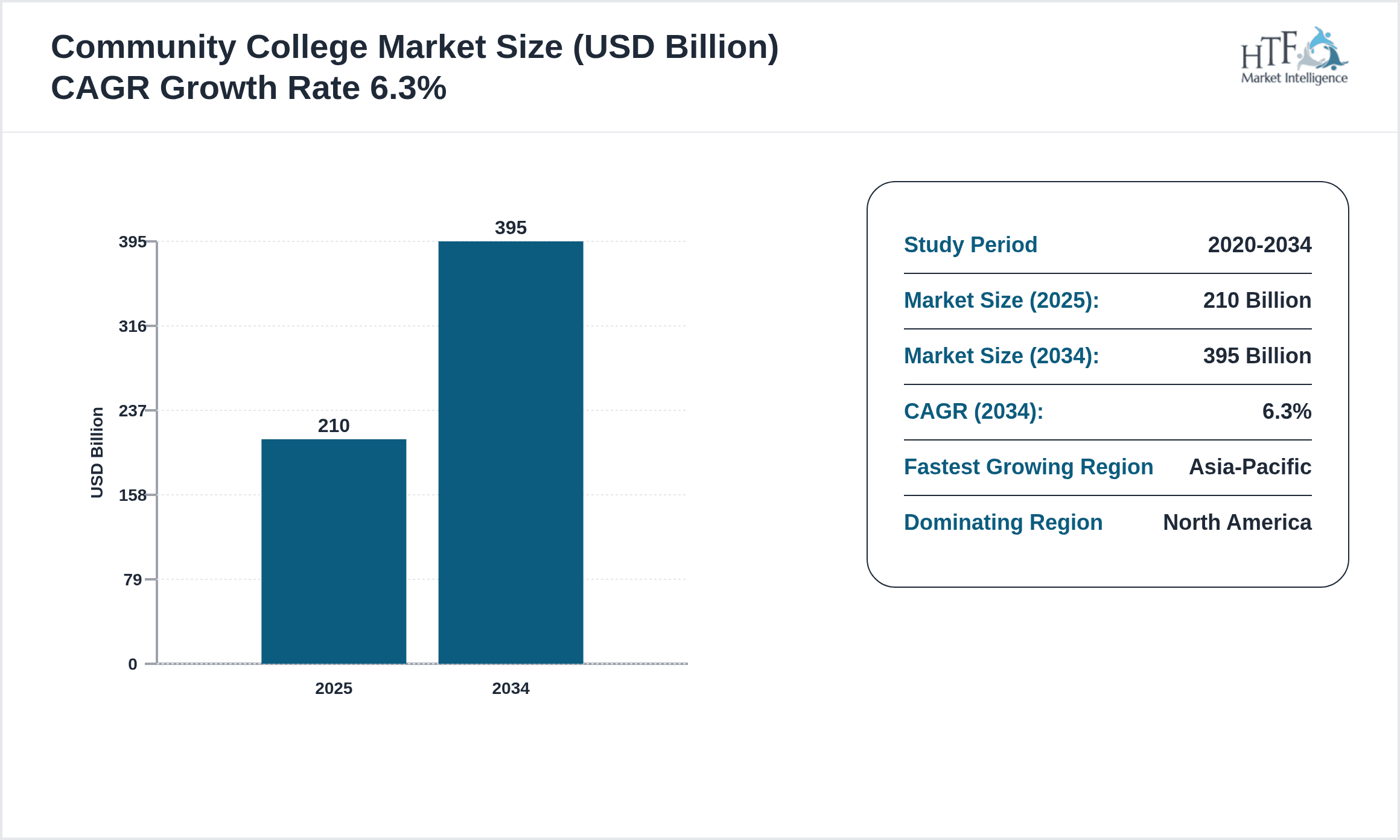
- •Key market highlights include a base market valuation of USD 210 Billion in 2024, projected to reach USD 395 Billion by 2034, reflecting a compound annual growth rate (CAGR) of 6.3%. North America currently dominates the market due to its mature education infrastructure and extensive public community college network, while the Asia-Pacific region is identified as the fastest-growing market driven by increasing government investments and expanding online education adoption. Public community colleges remain the leading type segment, supported by comprehensive government funding and policy initiatives, whereas online community colleges exhibit the fastest growth trajectory fueled by digital transformation and growing preference for flexible learning options. Academic Programs constitute the dominating application segment, followed by vocational training and continuing education, underscoring the market’s role in both academic advancement and workforce skill development.
- •The Global Community College Market offers significant value propositions to stakeholders including educational institutions, governments, employers, and learners. For institutions, it provides opportunities to expand program offerings and adopt innovative delivery models to enhance accessibility and engagement. Governments benefit from an educated workforce contributing to economic growth and reduced unemployment. Employers gain access to a pipeline of skilled workers tailored to industry needs through vocational and continuing education programs. Learners receive affordable, flexible education pathways facilitating career advancement and lifelong learning. Collectively, these factors position the community college market as a vital component of the global education landscape with strategic importance for inclusive and sustainable economic development.
Competitive Landscape
The competitive environment in the Global Community College Market is characterized by a diverse mix of public and private institutions competing on program quality, accessibility, technological integration, and cost-effectiveness. Market participants employ innovation through the adoption of advanced e-learning platforms, hybrid instructional models, and personalized learning pathways to differentiate their offerings and respond to evolving learner expectations. Strategic partnerships with industry players and technology providers are common to enhance curriculum relevance and employability outcomes. Institutions also focus on expanding geographic reach and student enrollment through targeted marketing and flexible scheduling. Competition is intensified by the entrance of online-only community colleges and vocational training providers leveraging digital technologies. Pricing strategies are influenced by government funding models and scholarship programs. Barriers to entry include accreditation requirements, regulatory compliance, and the need for robust infrastructure. Regional competition varies, with North America leading in institutional maturity and Asia-Pacific witnessing rapid expansion fueled by demographic trends and policy support. Future competitive trends point towards greater consolidation, enhanced technology adoption, and increased focus on lifelong learning solutions.
Companies Shaping the Community College Market
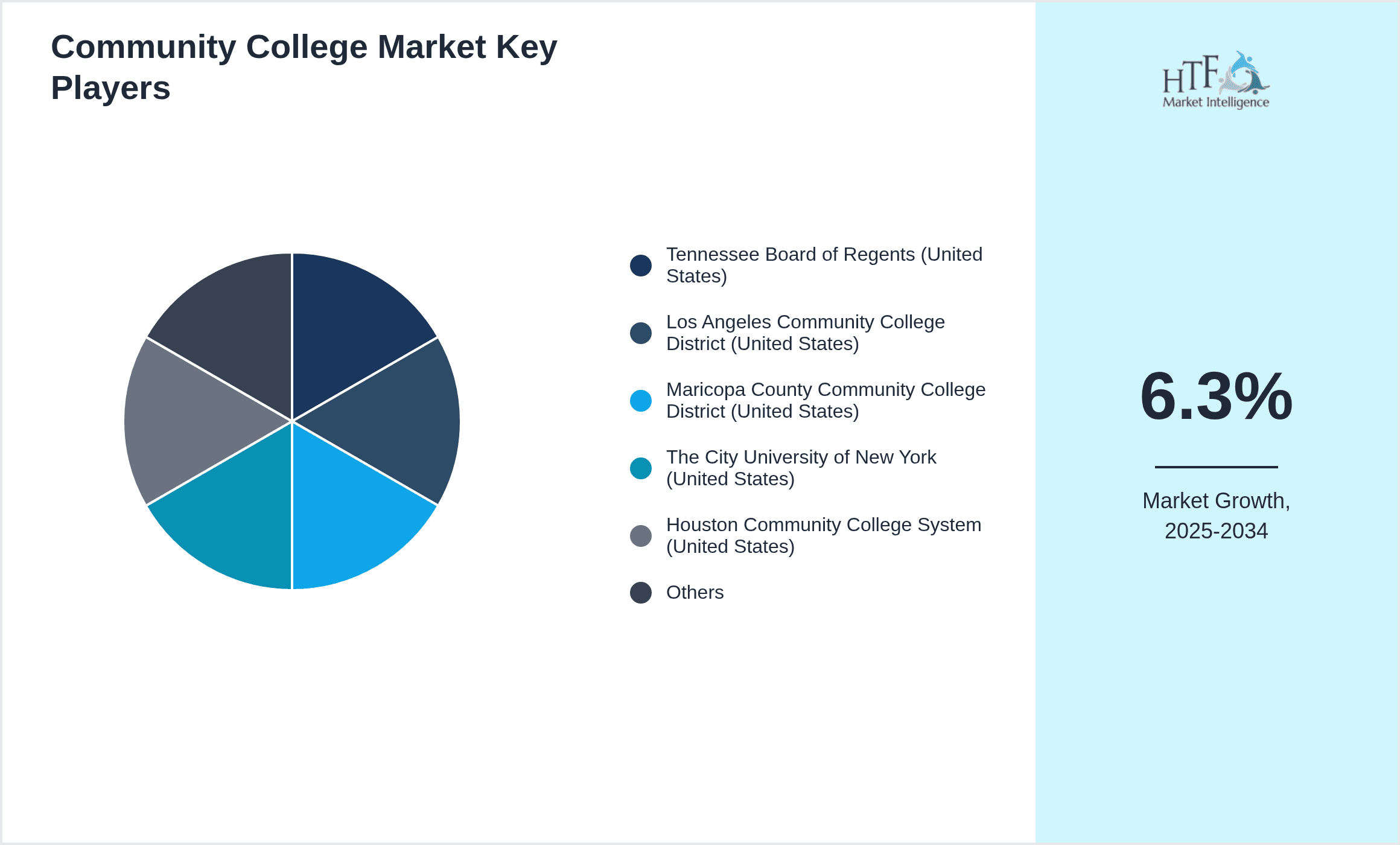
- •Tennessee Board of Regents (United States)
- •Los Angeles Community College District (United States)
- •Maricopa County Community College District (United States)
- •The City University of New York (United States)
- •Houston Community College System (United States)
- •Northern Virginia Community College (United States)
- •Open University (United Kingdom)
- •Seneca College (Canada)
- •TAFE NSW (Australia)
- •Hanze University of Applied Sciences (Netherlands)
- •Hong Kong Community College (Hong Kong)
- •Korean Community College Association (South Korea)
- •Fachhochschule Köln (Germany)
- •Cégep du Vieux Montréal (Canada)
- •Singapore Polytechnic (Singapore)
- •Instituto Federal de Educação, Ciência e Tecnologia (Brazil)
- •South African College of Applied Psychology (South Africa)
- •Raffles College of Higher Education (Singapore)
- •National Institute of Open Schooling (India)
- •Instituto Politécnico Nacional (Mexico)
- •Queenstown Community College (New Zealand)
- •College of the North Atlantic (Canada)
- •University of the People (United States)
- •Central Texas College (United States)
- •British Columbia Institute of Technology (Canada)
Market Breakdown
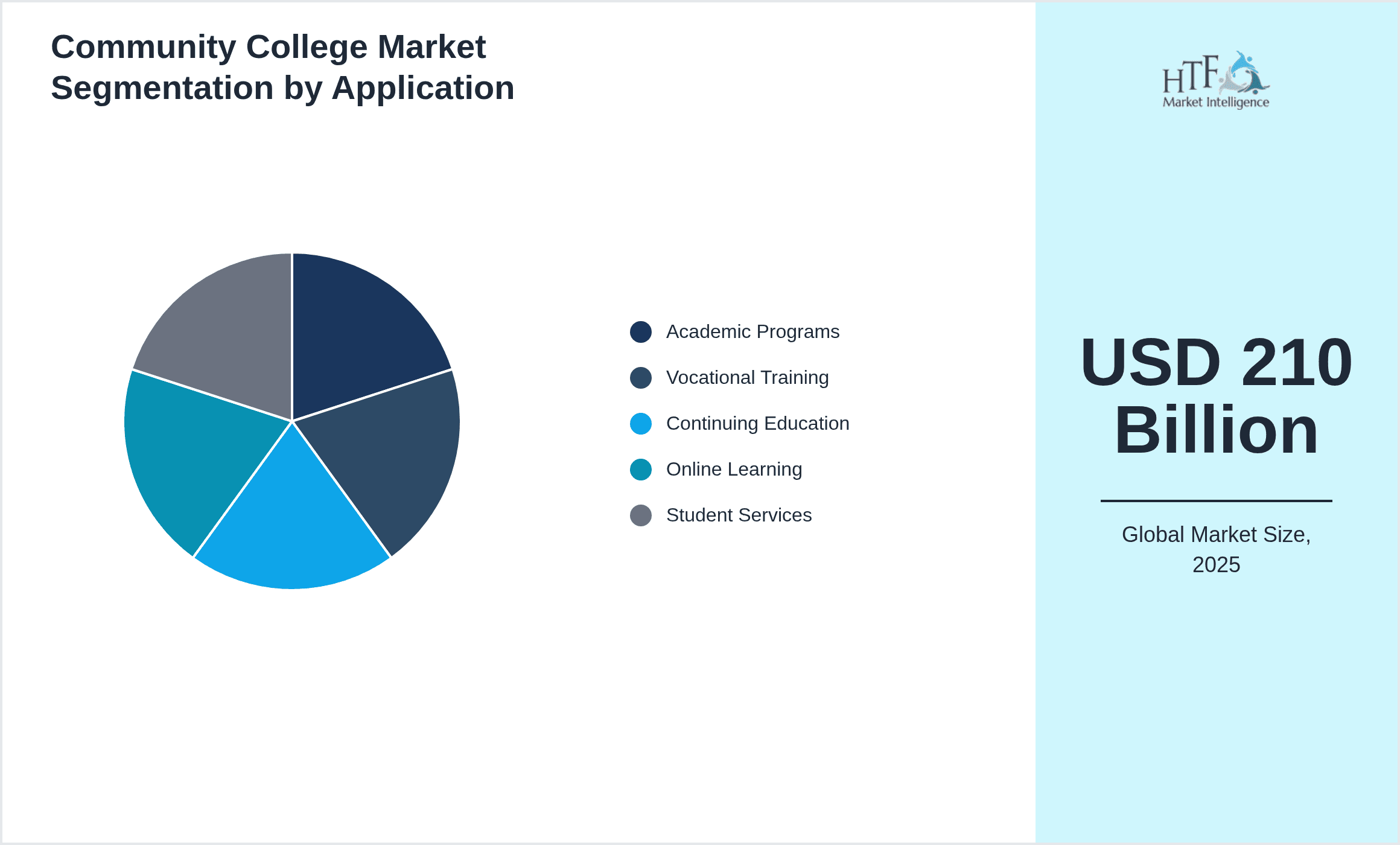
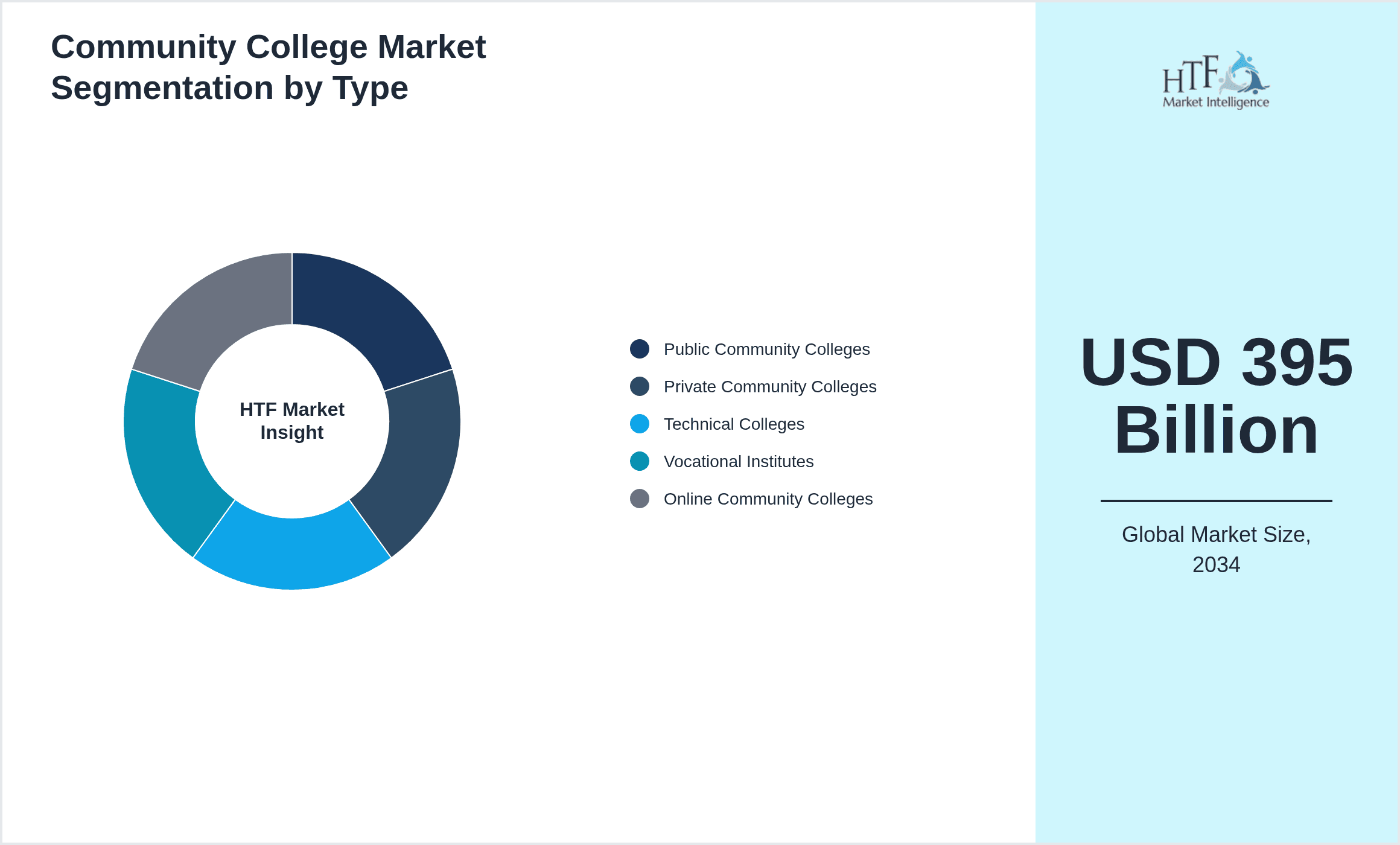
- •By Type
- ◦Public Community Colleges
- ◦Private Community Colleges
- ◦Technical Colleges
- ◦Vocational Institutes
- ◦Online Community Colleges
- •By Application
- ◦Academic Programs
- ◦Vocational Training
- ◦Continuing Education
- ◦Online Learning
- ◦Student Services
- •By End-User Industry
- ◦Healthcare
- ◦Information Technology
- ◦Manufacturing
- ◦Retail and Services
- •By Distribution Channel
- ◦On-Campus Learning
- ◦Online Platforms
- ◦Hybrid Learning Models
Growth Dynamics
- •Rising demand for affordable and flexible education options is a primary growth driver. Community colleges provide cost-effective pathways to higher education and skills training, attracting diverse learner demographics globally. For example, governments investing in public community colleges expand access and affordability, supporting workforce needs.
- •Technological advancements such as e-learning platforms and digital classrooms enable community colleges to broaden reach and enhance learner engagement. These innovations facilitate hybrid and fully online programs, catering to working adults and remote learners, thus driving market expansion.
- •Increasing emphasis on vocational training and workforce development by governments and industries fuels growth. Community colleges collaborate with employers to tailor curricula that address current skill gaps, boosting employability and economic productivity.
- •Demographic trends, including a growing population of young adults and working professionals seeking reskilling, contribute to escalating enrollments worldwide. This influx necessitates expansion of community college capacities and program diversity.
- •Government policies and funding initiatives promoting lifelong learning and upskilling enhance market demand. Incentives such as scholarships, grants, and public-private partnerships support institutional growth and innovation in program delivery.
- •Globalization and increasing recognition of community colleges as viable education alternatives encourage international student enrollment, adding to market growth and cross-border educational collaborations.
- •The shift toward competency-based education and micro-credentialing aligns with labor market needs, positioning community colleges as key players in flexible and outcome-focused education solutions.
Market Trends
- •A growing trend is the integration of artificial intelligence and data analytics to personalize learning experiences and improve student retention rates. Institutions employ AI-driven tools for adaptive learning, predictive analytics, and administrative automation, enhancing operational efficiency.
- •Expansion of online and hybrid learning models accelerates as community colleges adopt digital technologies to increase accessibility. This trend has been amplified by global disruptions such as the COVID-19 pandemic, which catalyzed remote learning adoption.
- •Strategic partnerships between community colleges and industry leaders are becoming prevalent, facilitating curriculum co-creation, internships, and job placement programs that align education with market demands.
- •Sustainability initiatives and green campus programs are gaining traction, reflecting increased environmental awareness and institutional commitments to social responsibility.
- •Enhanced focus on diversity, equity, and inclusion (DEI) drives policy reforms and program offerings to support underrepresented and marginalized student groups, fostering inclusive education environments.
- •Micro-credentialing and stackable certificates emerge as popular alternatives to traditional degrees, providing learners with flexible, targeted skills training relevant to evolving job markets.
- •Global mobility and international collaboration among community colleges increase, promoting student exchanges, joint programs, and cross-border educational technology adoption.
Market Opportunities
- •Expanding online learning platforms offers significant growth opportunities by reaching underserved populations and international students, enabling institutions to scale efficiently and diversify revenue streams.
- •Developing specialized vocational and technical training programs aligned with emerging industries such as renewable energy, cybersecurity, and healthcare technology can capture new market segments and address skill shortages.
- •Leveraging public-private partnerships to enhance funding and resource sharing creates opportunities for infrastructure development, curriculum innovation, and enhanced student services.
- •Geographic expansion into developing regions with growing youth populations presents untapped markets for community college models adapted to local needs and economic contexts.
- •Implementing competency-based education and modular learning pathways can attract non-traditional learners seeking flexible, outcome-oriented education options.
- •Investing in artificial intelligence and learning analytics technologies can improve student outcomes, reduce dropout rates, and optimize institutional operations, providing competitive advantage.
- •Enhancing lifelong learning and continuous education offerings to support workforce reskilling amid technological disruptions opens sustained revenue channels.
Market Challenges
- •Funding constraints, especially for public community colleges, limit capacity expansion and program innovation, posing a significant barrier to meeting rising demand and technological upgrades.
- •Maintaining quality and accreditation standards amid rapid growth and diverse delivery modes challenges institutions’ operational and academic governance frameworks.
- •Competition from traditional universities, private training providers, and online education platforms intensifies market pressure, requiring continuous differentiation and value creation.
- •Technological disparities and digital divide issues impede equal access to online and hybrid learning, particularly in developing regions and underserved communities.
- •Student retention and completion rates remain concerns due to factors like financial hardship, work commitments, and academic preparedness, affecting institutional performance metrics.
- •Regulatory complexities and varying education policies across regions complicate international collaborations and cross-border program implementations.
- •Talent shortages in faculty skilled in emerging technologies and pedagogical innovations hinder curriculum modernization and quality enhancement efforts.
Regulatory Framework
- •Between 2019 and 2024, several countries implemented new accreditation standards emphasizing online education quality and institutional accountability, requiring community colleges to enhance digital infrastructure and compliance mechanisms.
- •Data privacy regulations such as GDPR in Europe and similar laws in other regions mandate strict controls on student information management, impacting e-learning platform operations and administrative processes.
- •Workforce development policies introduced regionally incentivize community college programs aligned with national economic priorities, including grant funding and tax benefits for vocational training initiatives.
- •Environmental regulations encourage sustainable campus development and energy-efficient operations, leading institutions to integrate green practices within infrastructure and curricula.
- •Government initiatives supporting diversity and inclusion in education enforce affirmative action policies and accessibility standards, fostering equitable enrollment and participation opportunities.
Market Intelligence
- •15th January 2025, Tennessee Board of Regents launched a comprehensive online learning platform incorporating AI-driven personalized learning pathways designed to improve student engagement and retention. This platform targets adult learners and working professionals, aiming to expand access across rural and underserved areas in North America while enhancing educational outcomes through data analytics and adaptive content delivery. The initiative aligns with broader institutional goals of digital transformation and inclusivity.
- •10th March 2025, Open University (UK) introduced a flexible micro-credentialing program in partnership with leading technology firms to address skills shortages in cybersecurity and data science. The program offers stackable certificates recognized by industry employers, enabling learners to upskill rapidly and improve employability. This innovation reflects shifting demand towards competency-based education and lifelong learning models, positioning the university as a pioneer in digital education solutions.
- •20th February 2025, Seneca College (Canada) announced a strategic alliance with multinational manufacturing companies to co-develop vocational training curricula focused on advanced manufacturing technologies and automation. The partnership includes internship opportunities and joint research initiatives designed to align educational outcomes with industry needs, enhancing job placement rates and regional economic development.
- •5th April 2025, University of the People (United States) completed a merger with a leading online vocational training provider to broaden program offerings and global reach. The consolidation enables resource sharing, expanded course catalogs, and improved learner support services, reinforcing the institution’s commitment to accessible and affordable education worldwide.
- •Source: Official press releases and industry publications
Regional Outlook
The North America currently holds a significant share of the market, primarily due to several key factors: increasing consumption rates, a burgeoning population, and robust economic momentum. These elements collectively drive demand, positioning this region as a leader in the market. On the other hand, Asia-Pacific is rapidly emerging as the fastest-growing area within the industry. This remarkable growth can be attributed to swift infrastructure development, the expansion of various industrial sectors, and a marked increase in consumer demand. These dynamics make this region a crucial player in shaping future market growth.
In our report, we cover a comprehensive analysis of the following regions and countries:
- North America
- LATAM
- West Europe
- Central & Eastern Europe
- Northern Europe
- Southern Europe
- East Asia
- Southeast Asia
- South Asia
- Central Asia
- Oceania
- MEA
| Feature | Details |
|---|---|
| Base Year Market Size | USD 210 Billion |
| Forecast Year Market Size | USD 395 Billion |
| CAGR | 6.3% |
| Forecast Period | 2026 to 2033 |
| YoY Growth | 6.1% |
| Scope of Report | Market is segmented by Type (Public Community Colleges, Private Community Colleges, Technical Colleges, Vocational Institutes, Online Community Colleges), Application (Academic Programs, Vocational Training, Continuing Education, Online Learning, Student Services), End-User Industry (Healthcare, Information Technology, Manufacturing, Retail and Services), Distribution Channel (On-Campus Learning, Online Platforms, Hybrid Learning Models) |
| Regions Covered | North America, LATAM, West Europe, Central & Eastern Europe, Northern Europe, Southern Europe, East Asia, Southeast Asia, South Asia, Central Asia, Oceania, MEA |
| Key Companies | Tennessee Board of Regents (United States), Los Angeles Community College District (United States), Maricopa County Community College District (United States), The City University of New York (United States), Houston Community College System (United States), Northern Virginia Community College (United States), Open University (United Kingdom), Seneca College (Canada), TAFE NSW (Australia), Hanze University of Applied Sciences (Netherlands), Hong Kong Community College (Hong Kong), Korean Community College Association (South Korea), Fachhochschule Köln (Germany), Cégep du Vieux Montréal (Canada), Singapore Polytechnic (Singapore), Instituto Federal de Educação, Ciência e Tecnologia (Brazil), South African College of Applied Psychology (South Africa), Raffles College of Higher Education (Singapore), National Institute of Open Schooling (India), Instituto Politécnico Nacional (Mexico), Queenstown Community College (New Zealand), College of the North Atlantic (Canada), University of the People (United States), Central Texas College (United States), British Columbia Institute of Technology (Canada) |
Global Community College Market Size, Growth & Revenue 2024-2034 - Table of Contents
Frequently Asked Questions (FAQ):
The Compact Track Loaders market is projected to grow at a CAGR of 6.8% from 2025 to 2030, driven by increasing demand in construction and agricultural sectors.
North America currently leads the market with approximately 45% market share, followed by Europe at 28% and Asia-Pacific at 22%. The remaining regions account for 5% of the global market.
Key growth drivers include increasing construction activities, rising demand for versatile equipment in agriculture, technological advancements in track loader design, and growing preference for compact equipment in urban construction projects.