
Global Cork Floor Market Size, Growth & Revenue 2024-2034
Global Cork Floor Market is segmented by Product Type (Floating Cork Flooring, Glue-Down Cork Flooring, Click-Lock Cork Flooring, Cork Tiles, Cork Planks), Application (Residential, Commercial, Institutional, Hospitality, Retail), End-Use Industry (Construction, Real Estate, Hospitality & Tourism, Education & Healthcare), Distribution Channel (Direct Sales, Retail Stores, Online Sales), and Geography (North America, LATAM, West Europe, Central & Eastern Europe, Northern Europe, Southern Europe, East Asia, Southeast Asia, South Asia, Central Asia, Oceania, MEA)
Pricing
Report Overview
Executive Summary
- •The global cork floor market represents a dynamic and evolving segment of the flooring industry characterized by the use of cork, a natural and sustainable material derived from cork oak bark. This market includes a variety of cork flooring products such as floating cork floors, glue-down options, click-lock systems, cork tiles, and planks, each tailored to meet diverse consumer needs across residential, commercial, institutional, hospitality, and retail applications. The cork floor market is driven by increasing demand for eco-friendly, comfortable, and sound-absorbing flooring solutions that contribute to energy efficiency and indoor air quality. The industry spans the entire value chain from cork harvesting and processing to product manufacturing and installation, integrating technological advancements and design innovations. Globally, the market is influenced by rising construction activities, green building certifications, and consumer awareness about sustainability, positioning cork flooring as a preferred choice in modern architectural and interior design projects. The market also faces challenges such as raw material availability and cost factors, which are balanced by opportunities in product diversification and emerging regional markets.
- •Key highlights of the global cork floor market include a base market size of USD 3.6 billion in 2024, expected to reach USD 9.5 billion by 2034, reflecting a strong CAGR of approximately 10.1%. North America currently dominates the market, attributed to high consumer preference for sustainable flooring and stringent environmental regulations, while Asia-Pacific is the fastest-growing region, driven by rapid urbanization, rising disposable incomes, and increasing construction activities. Floating cork flooring leads the product type segment due to its ease of installation and repair, whereas click-lock cork flooring is emerging rapidly with innovative locking mechanisms appealing to DIY consumers and commercial projects. Residential application holds the largest market share, given the growing trend for eco-conscious home improvements, followed by commercial use in office spaces and hospitality sectors. Market growth is also supported by government initiatives promoting green building practices and increased investments in flooring infrastructure globally.
- •The cork floor market offers significant value propositions to manufacturers, distributors, architects, and end-users by providing versatile, sustainable, and health-friendly flooring options that enhance comfort, design aesthetics, and acoustic performance. The strategic importance of cork flooring spans multiple industries, including construction, real estate, and hospitality, where eco-friendly materials are increasingly mandated. Cork flooring solutions contribute to LEED certifications and other green building standards, making them highly attractive in both developed and emerging markets. The market’s growth potential is underscored by continuous product innovation, expanding application areas, and increasing consumer awareness regarding environmental impact, positioning cork flooring as a critical component in the transition toward sustainable living and working environments worldwide.

Competitive Landscape
The global cork floor market is characterized by intense competition among manufacturers, distributors, and innovators striving to enhance product quality, design, and sustainability credentials. Market players compete on multiple fronts including technological innovation, product differentiation, pricing strategies, and geographic reach. Companies invest heavily in research and development to introduce advanced cork flooring solutions such as improved click-lock mechanisms, enhanced durability coatings, and hybrid products that combine cork with other materials. Strategic partnerships and collaborations with construction firms and interior designers are common to expand market penetration and brand visibility. The competitive environment is also shaped by mergers and acquisitions aimed at consolidating market share and accessing new regional markets. Additionally, the market faces challenges such as raw material sourcing and fluctuating cork supply, compelling firms to optimize supply chains and explore alternative cork processing techniques. Overall, competition drives continuous innovation and quality improvement, benefiting end-users with a broad portfolio of cork flooring options tailored to evolving market demands.
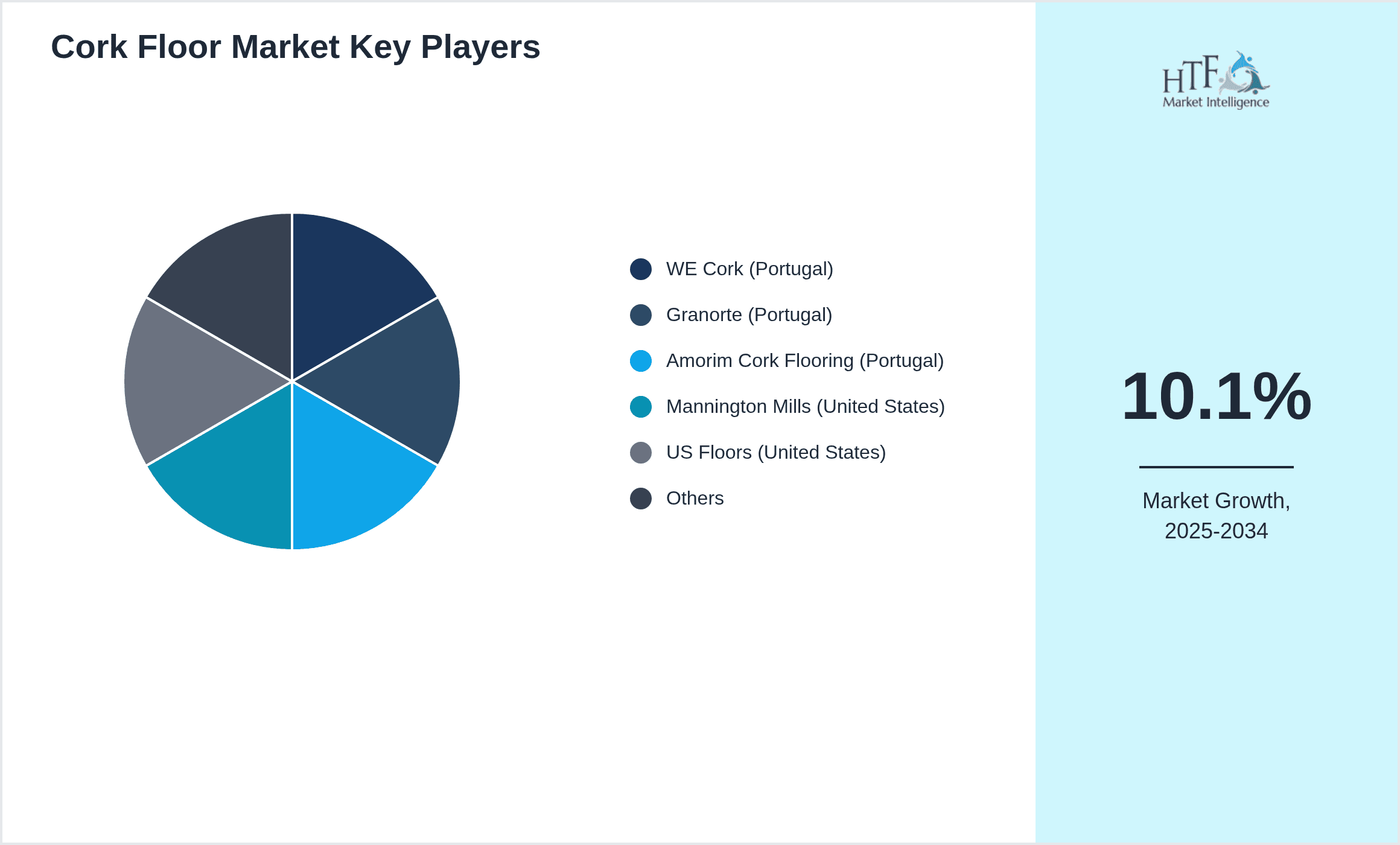
Prominent Players in Cork Floor Market
- •WE Cork (Portugal)
- •Granorte (Portugal)
- •Amorim Cork Flooring (Portugal)
- •Mannington Mills (United States)
- •US Floors (United States)
- •Corksribas (Spain)
- •Jelinek Cork Group (Czech Republic)
- •Henkel AG & Co. KGaA (Germany)
- •Ziroli Cork (Portugal)
- •Floors@Work (United States)
- •ByKlip (United States)
- •Corkstyle (United Kingdom)
- •Corkart (Portugal)
- •Foresfloor (Portugal)
- •VinylFlooring (Netherlands)
- •Quick-Step (Belgium)
- •Teragren (United States)
- •Bubolz (United States)
- •Woodpecker Flooring (United Kingdom)
- •Corkcity (Portugal)
- •Greenfloor (United States)
- •Cork House (Canada)
- •Cork Factory (United States)
- •Floors & More (United States)
- •Corkflooring.biz (United Kingdom)
Market Breakdown
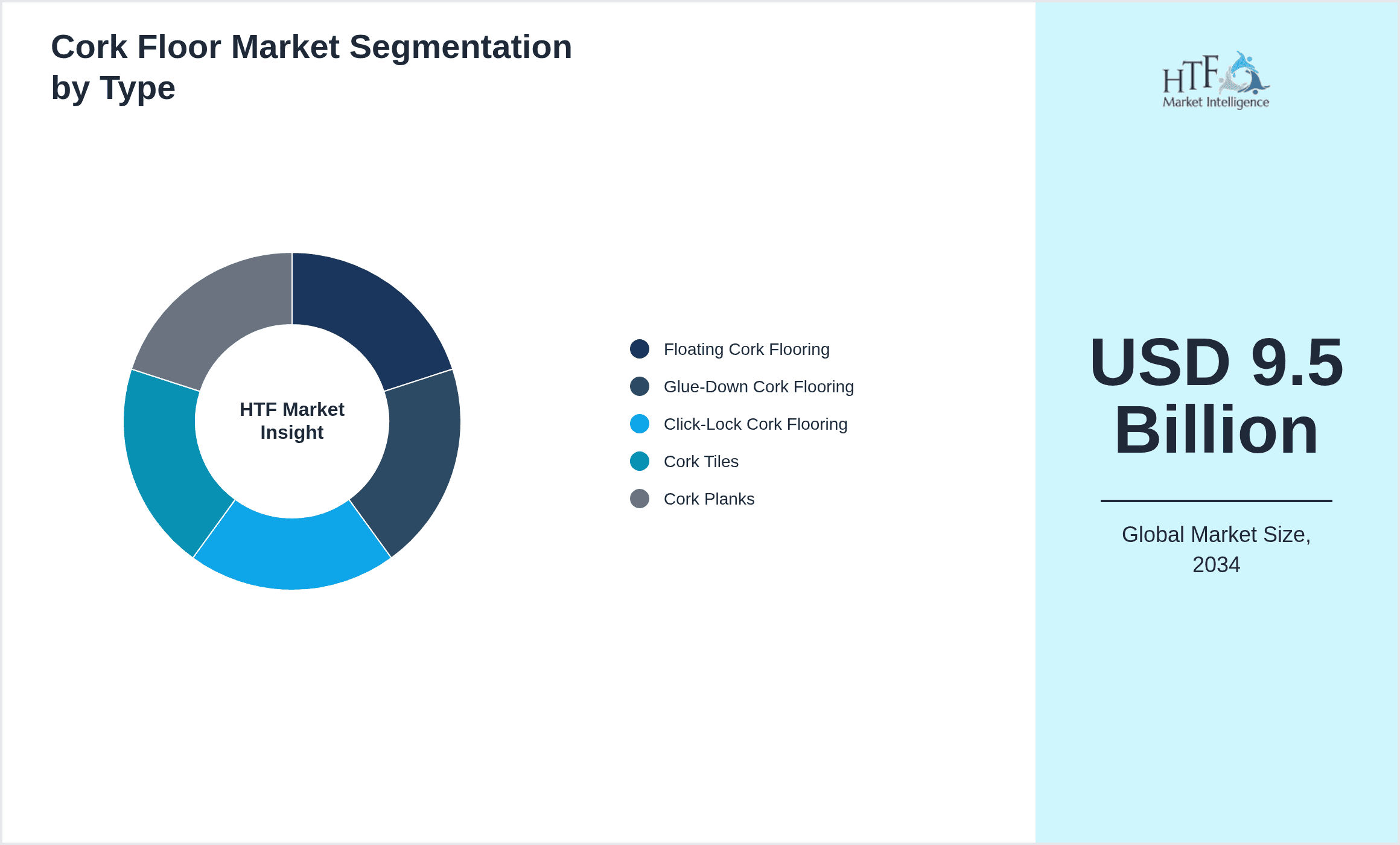
- •By Product Type
- ◦Floating Cork Flooring
- ◦Glue-Down Cork Flooring
- ◦Click-Lock Cork Flooring
- ◦Cork Tiles
- ◦Cork Planks
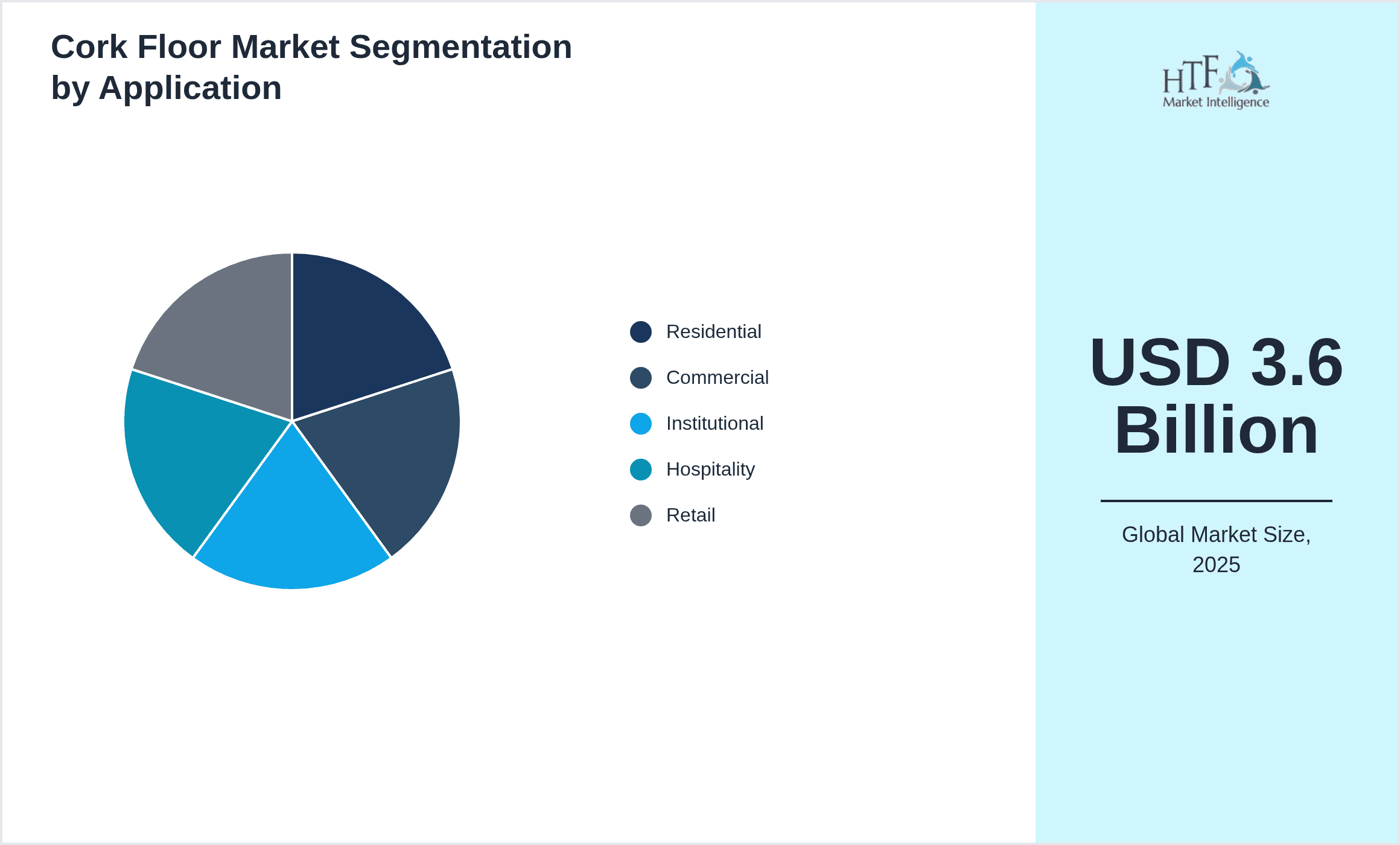
- •By Application
- ◦Residential
- ◦Commercial
- ◦Institutional
- ◦Hospitality
- ◦Retail
- •By End-Use Industry
- ◦Construction
- ◦Real Estate
- ◦Hospitality & Tourism
- ◦Education & Healthcare
- •By Distribution Channel
- ◦Direct Sales
- ◦Retail Stores
- ◦Online Sales
Growth Dynamics
- •Rising environmental awareness and demand for sustainable building materials are key growth drivers, as cork flooring offers eco-friendly benefits including renewability, recyclability, and low carbon footprint. Increasing green building certifications globally stimulate cork floor adoption in new constructions and renovations.
- •Technological advancements in cork processing and installation systems, such as click-lock designs and improved adhesives, enhance product durability and ease of installation, attracting both residential and commercial customers seeking efficient flooring solutions.
- •The growth of the real estate and construction sectors, particularly in emerging markets within Asia-Pacific and Latin America, supports demand for cork flooring due to its thermal insulation and acoustic properties, which improve occupant comfort and energy efficiency.
- •Increasing consumer preference for natural and hypoallergenic materials in home and office interiors drives cork flooring popularity, especially among environmentally conscious and health-focused demographics.
- •Government initiatives promoting sustainable construction practices and subsidies for green materials adoption contribute to cork floor market expansion, providing financial incentives and regulatory encouragement across multiple regions.
Market Trends
- •The integration of cork flooring with other innovative materials such as bamboo and recycled composites is gaining traction, offering hybrid products that combine aesthetics with enhanced performance characteristics.
- •Digital marketing and e-commerce platforms are increasingly utilized by cork floor manufacturers and distributors to reach wider consumer bases, enabling easy access to product information and purchase options worldwide.
- •Customization trends, including various finishes, colors, and textures, allow consumers to personalize cork flooring to suit diverse interior design preferences, enhancing market appeal.
- •Sustainability certifications and transparent supply chain disclosures are becoming standard practices, reinforcing brand credibility and supporting consumer trust in cork floor products.
- •Collaborations between cork producers and architectural firms promote the use of cork flooring in landmark green building projects, showcasing cork’s versatility and environmental benefits on a global stage.
Market Opportunities
- •Expanding cork floor applications into commercial sectors such as offices, retail outlets, and hospitality venues presents significant growth potential due to the material’s acoustic and comfort advantages.
- •Emerging markets in Asia-Pacific and Latin America offer untapped opportunities as urbanization and disposable incomes rise, encouraging adoption of premium and sustainable flooring alternatives like cork.
- •Technological innovation in manufacturing processes can reduce production costs and improve product quality, enabling market players to offer competitively priced cork flooring solutions to a broader audience.
- •Partnerships with green building certification bodies and sustainability organizations can enhance market visibility and acceptance of cork flooring as a preferred eco-friendly option.
- •Development of modular and DIY-friendly cork flooring products, such as advanced click-lock systems, can attract the growing segment of self-installers and small contractors seeking convenient flooring solutions.
Market Challenges
- •Limited availability and geographic concentration of cork oak trees constrain raw material supply, leading to potential price volatility and supply chain disruptions for cork flooring manufacturers.
- •Higher upfront costs of cork flooring compared to conventional materials like vinyl or laminate may deter price-sensitive buyers, especially in developing regions with cost-driven purchasing behaviors.
- •Lack of consumer awareness and misconceptions about cork durability and maintenance requirements hinder broader market penetration, necessitating focused education and marketing efforts.
- •Competition from alternative sustainable flooring materials such as bamboo, engineered wood, and recycled composites challenges cork flooring’s market share and requires continuous product innovation.
- •Regulatory complexities and varying environmental standards across regions complicate market entry strategies and product certification processes for global manufacturers.
Regulatory Framework
- •Between 2019 and 2024, several regions have introduced stringent environmental regulations mandating the use of sustainable and low-VOC (volatile organic compound) materials in flooring products, directly benefiting cork floor adoption.
- •European Union’s REACH regulations require manufacturers to disclose chemical substances in cork flooring products, ensuring consumer safety and compliance with sustainability standards.
- •North American LEED certification programs increasingly recognize cork flooring as a valuable contribution towards green building credits, influencing procurement decisions in public and private sectors.
- •Asia-Pacific countries have developed localized eco-labels and sustainability certification schemes promoting renewable materials, which are driving cork floor market growth in the region.
- •Government incentives and tax rebates for green construction projects have been implemented in multiple regions, encouraging the use of environmentally friendly flooring options like cork in new developments and renovations.
Market Intelligence
- •15th January 2025, Amorim Cork Flooring launched an innovative click-lock cork flooring system featuring enhanced moisture resistance and ease of installation targeted at both residential and commercial markets. This product integrates advanced polyurethane coatings for improved durability, positioning Amorim as a leader in technological innovation within the cork flooring sector. The launch aims to capitalize on rising DIY consumer trends and increasing demand for sustainable, easy-to-maintain flooring solutions globally. Source: Official company press release
- •7th March 2025, WE Cork announced a strategic partnership with a major Asian distributor to expand its market presence across Southeast Asia. This initiative includes joint marketing campaigns and localized product adaptations to meet regional preferences for eco-friendly flooring. The collaboration is expected to significantly boost WE Cork’s sales footprint and brand recognition in one of the fastest-growing cork floor markets worldwide. Source: Industry publication
- •22nd June 2024, Mannington Mills introduced a new line of hybrid cork flooring combining cork with recycled wood fibers, enhancing both sustainability and aesthetic appeal. This product addresses consumer demand for environmentally responsible alternatives with premium design features suitable for high-traffic commercial environments. The launch is part of Mannington’s broader sustainability strategy aiming to reduce carbon footprint and promote circular economy principles. Source: Company website
- •30th November 2024, Granorte completed acquisition of a boutique cork tile manufacturer to diversify its product portfolio and strengthen technological capabilities in high-end residential flooring. This acquisition enables Granorte to leverage innovative design expertise and expand its reach in premium global markets. The move reflects industry consolidation trends and increased focus on product differentiation. Source: Official company announcement
Regional Outlook
The North America currently holds a significant share of the market, primarily due to several key factors: increasing consumption rates, a burgeoning population, and robust economic momentum. These elements collectively drive demand, positioning this region as a leader in the market. On the other hand, Asia-Pacific is rapidly emerging as the fastest-growing area within the industry. This remarkable growth can be attributed to swift infrastructure development, the expansion of various industrial sectors, and a marked increase in consumer demand. These dynamics make this region a crucial player in shaping future market growth.
In our report, we cover a comprehensive analysis of the following regions and countries:
- North America
- LATAM
- West Europe
- Central & Eastern Europe
- Northern Europe
- Southern Europe
- East Asia
- Southeast Asia
- South Asia
- Central Asia
- Oceania
- MEA
| Feature | Details |
|---|---|
| Base Year Market Size | USD 3.6 Billion |
| Forecast Year Market Size | USD 9.5 Billion |
| CAGR | 10.1% |
| Forecast Period | 2026 to 2033 |
| YoY Growth | 10% |
| Scope of Report | Market is segmented by Product Type (Floating Cork Flooring, Glue-Down Cork Flooring, Click-Lock Cork Flooring, Cork Tiles, Cork Planks), Application (Residential, Commercial, Institutional, Hospitality, Retail), End-Use Industry (Construction, Real Estate, Hospitality & Tourism, Education & Healthcare), Distribution Channel (Direct Sales, Retail Stores, Online Sales) |
| Regions Covered | North America, LATAM, West Europe, Central & Eastern Europe, Northern Europe, Southern Europe, East Asia, Southeast Asia, South Asia, Central Asia, Oceania, MEA |
| Key Companies | WE Cork (Portugal), Granorte (Portugal), Amorim Cork Flooring (Portugal), Mannington Mills (United States), US Floors (United States), Corksribas (Spain), Jelinek Cork Group (Czech Republic), Henkel AG & Co. KGaA (Germany), Ziroli Cork (Portugal), Floors@Work (United States), ByKlip (United States), Corkstyle (United Kingdom), Corkart (Portugal), Foresfloor (Portugal), VinylFlooring (Netherlands), Quick-Step (Belgium), Teragren (United States), Bubolz (United States), Woodpecker Flooring (United Kingdom), Corkcity (Portugal), Greenfloor (United States), Cork House (Canada), Cork Factory (United States), Floors & More (United States), Corkflooring.biz (United Kingdom) |
Global Cork Floor Market Size, Growth & Revenue 2024-2034 - Table of Contents
Research enthusiast focused on transforming data uncovering into actionable insights through data-driven decision-making.
Frequently Asked Questions (FAQ):
The Compact Track Loaders market is expected to see value worth 5.3 Billion in 2025.
North America currently leads the market with approximately 45% market share, followed by Europe at 28% and Asia-Pacific at 22%. The remaining regions account for 5% of the global market.
Key growth drivers include increasing construction activities, rising demand for versatile equipment in agriculture, technological advancements in track loader design, and growing preference for compact equipment in urban construction projects.