
Global Women's Wear Market Size, Growth & Revenue 2024-2034
Global Women's Wear Market is segmented by Product Type (Dresses, Tops, Bottoms, Outerwear, Activewear), Application (Casual Wear, Formal Wear, Sportswear, Ethnic Wear, Outerwear), End-Use Industry (Retail, E-commerce, Wholesale, Specialty Stores), Distribution Channel (Online Retail, Department Stores, Specialty Boutiques), and Geography (North America, LATAM, West Europe, Central & Eastern Europe, Northern Europe, Southern Europe, East Asia, Southeast Asia, South Asia, Central Asia, Oceania, MEA)
Pricing
Report Overview
Executive Summary
- •The Global Women's Wear Market is a vast and dynamic sector encompassing a wide range of clothing designed exclusively for women, covering diverse product types such as dresses, tops, bottoms, outerwear, and activewear. These products serve multiple applications including casual wear, formal wear, sportswear, ethnic wear, and outerwear, catering to the varying lifestyle and cultural preferences of women globally. The market operates through multiple distribution channels, including online platforms, specialty stores, department stores, and mass retailers, reflecting the intricate retail ecosystem. Key drivers of market growth include rising disposable income levels, the proliferation of e-commerce, increasing fashion consciousness, and the emergence of sustainable and smart textile technologies. The industry is highly competitive, influenced by fast-changing fashion trends, consumer demands, and regional cultural nuances. Furthermore, the market is expanding geographically with notable growth in emerging regions such as Asia-Pacific and Latin America. Overall, the women’s wear industry represents a significant segment of the global fashion landscape, poised for steady growth fueled by innovation and evolving consumer behavior.
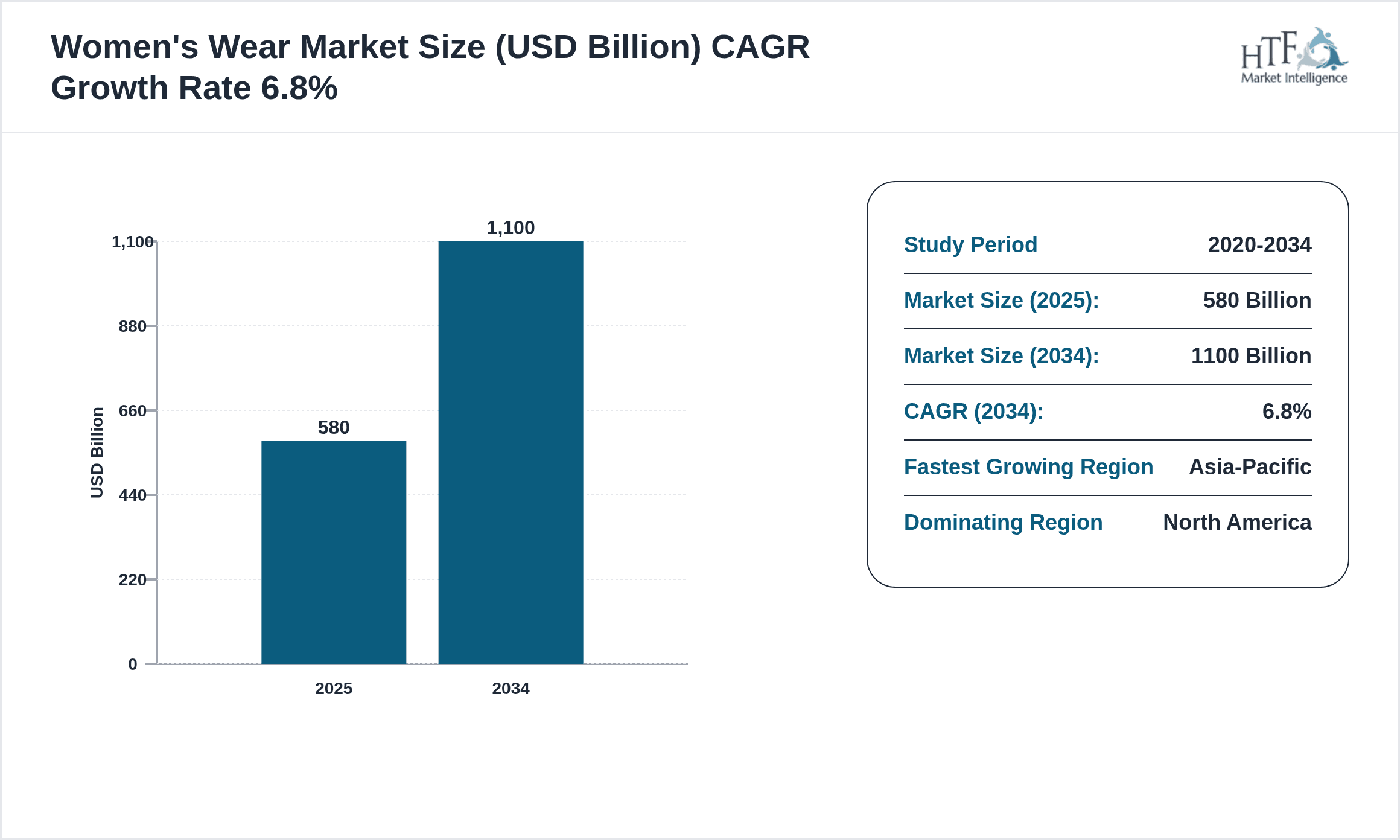
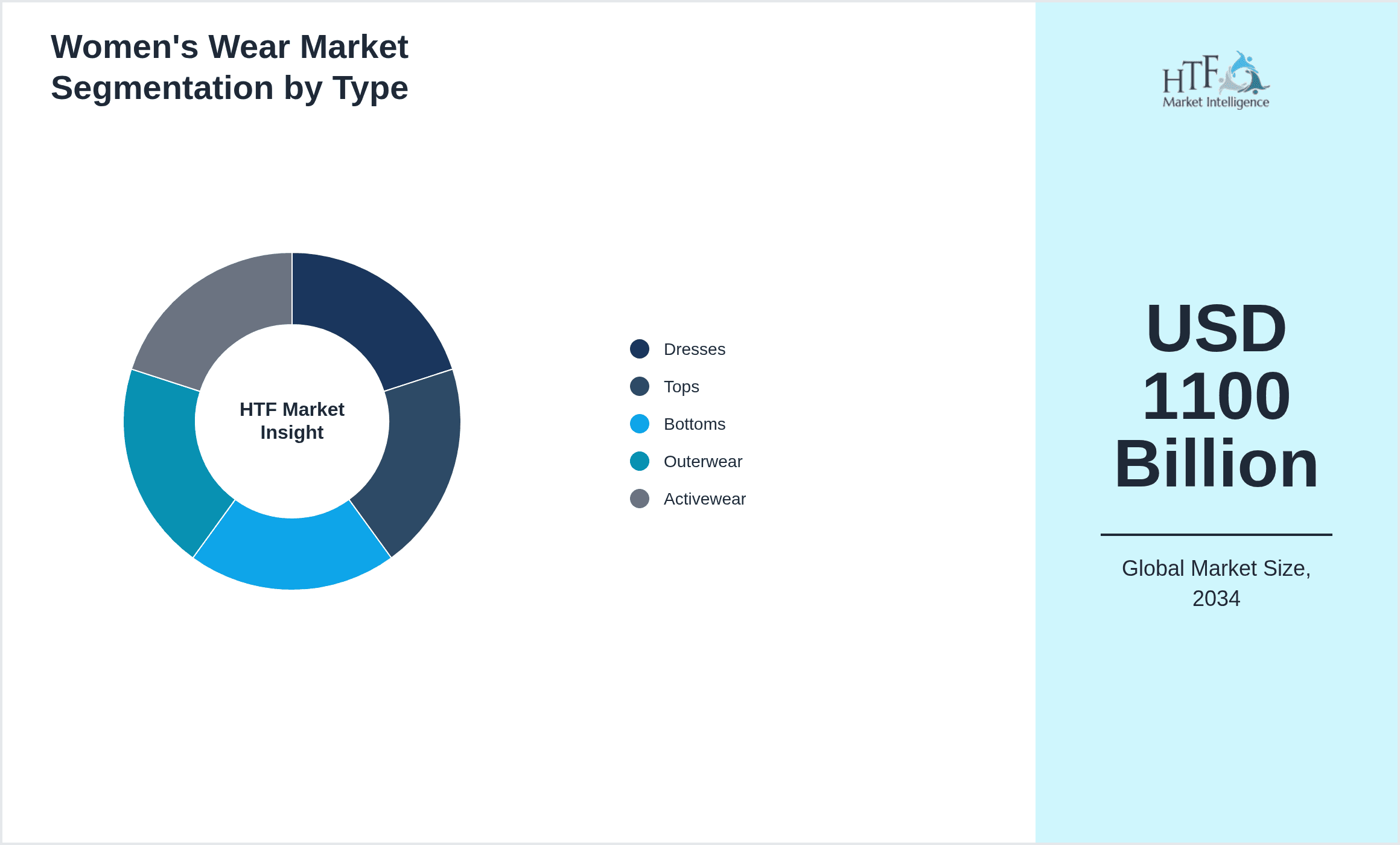
- •Key highlights of the market include a robust CAGR of 6.8% anticipated from 2024 to 2034, with the market size expected to nearly double from USD 580 Billion in 2024 to USD 1100 Billion by 2034. North America maintains dominance in market share due to high consumer spending and fashion innovation, while Asia-Pacific emerges as the fastest-growing region, driven by expanding urban populations and increasing e-commerce penetration. Dresses remain the leading product type, closely followed by activewear, which is registering the fastest growth due to rising health and fitness trends globally. Casual wear leads in application segments, reflecting changing lifestyle preferences, with formal wear as the secondary segment. These data points indicate a vibrant market landscape shaped by regional diversity and evolving consumer preferences.
- •The market holds strategic importance for fashion brands, retailers, manufacturers, and investors by offering significant revenue potential and opportunities for innovation. It supports a complex value chain encompassing raw material suppliers, designers, technology developers, and logistics providers. The growth trajectory is influenced by shifts towards sustainable production, digital marketing, and personalized shopping experiences. Additionally, the market's responsiveness to socio-economic changes and cultural trends makes it critical for stakeholders aiming to capture emerging consumer segments globally. The increasing adoption of omnichannel retailing and integration of AI in fashion design and customer engagement further enhance the market’s competitive edge and value proposition.
Competitive Landscape
The competitive environment within the Global Women's Wear Market is characterized by intense rivalry among established multinational corporations and emerging regional players. Companies adopt diverse competitive strategies including innovation in design, sustainable manufacturing practices, and digital transformation to enhance customer engagement and operational efficiency. Market leaders emphasize brand differentiation through exclusive collections, celebrity endorsements, and fast fashion responsiveness to rapidly changing trends. Strategic partnerships, collaborations, and mergers and acquisitions are prevalent as firms seek to expand geographical reach and diversify product portfolios. Pricing strategies vary from premium pricing for luxury segments to competitive pricing in mass-market categories, reflecting broad consumer demographics. Distribution channels are continually optimized, with significant investment in e-commerce platforms and omnichannel retail solutions to meet evolving consumer preferences. Technological adoption, including AI-driven analytics and virtual fitting rooms, offers competitive advantages. Barriers to entry such as high capital requirements and brand loyalty further shape the competitive dynamics, positioning market players to focus on innovation and customer-centric approaches for sustainable growth.
Companies Shaping the Women's Wear Market
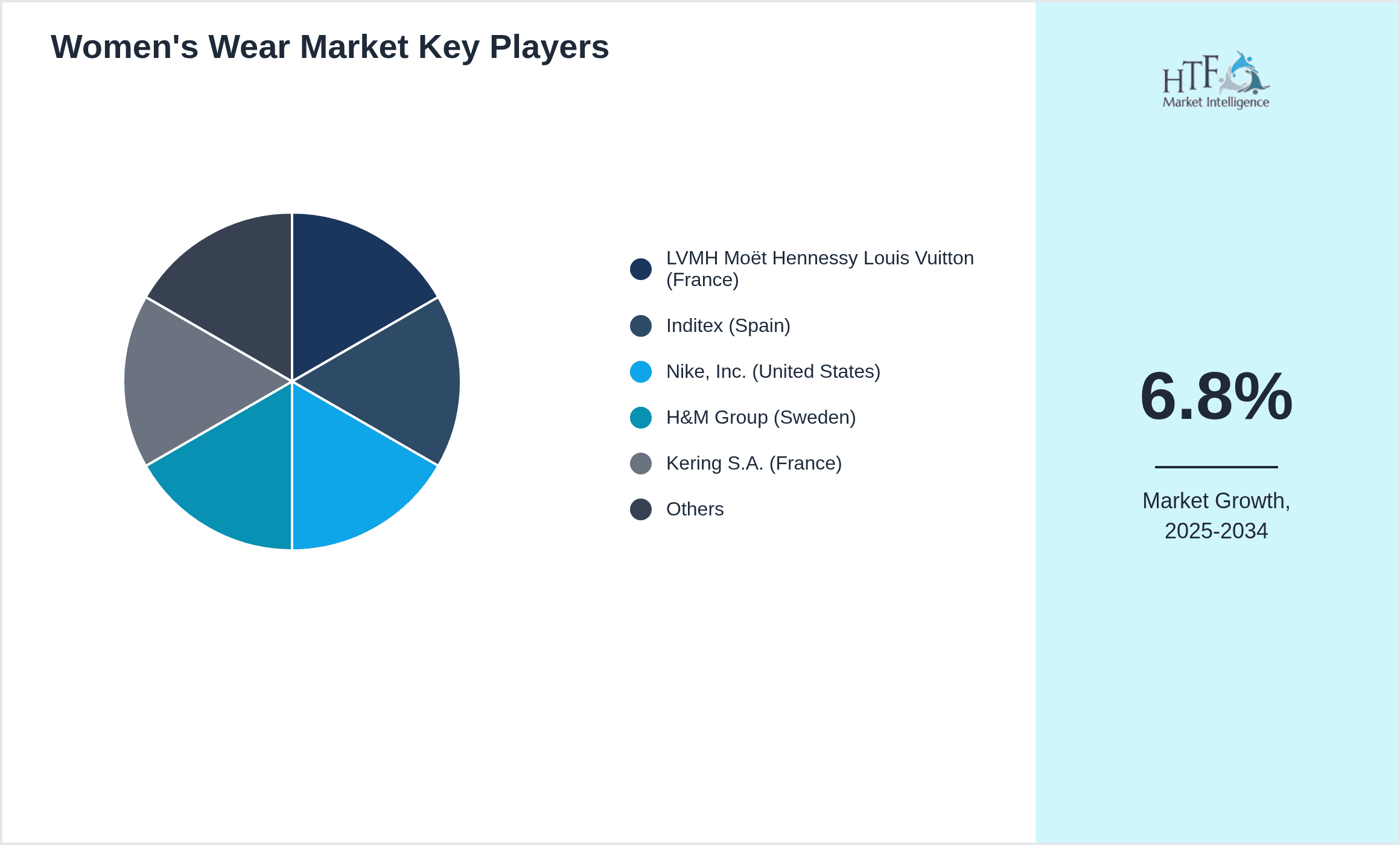
- •LVMH Moët Hennessy Louis Vuitton (France)
- •Inditex (Spain)
- •Nike, Inc. (United States)
- •H&M Group (Sweden)
- •Kering S.A. (France)
- •VF Corporation (United States)
- •Uniqlo Co., Ltd. (Japan)
- •Gap Inc. (United States)
- •Fast Retailing Co., Ltd. (Japan)
- •PVH Corp. (United States)
- •Adidas AG (Germany)
- •Chanel S.A. (France)
- •GAP Inc. (United States)
- •Burberry Group plc (United Kingdom)
- •Michael Kors Holdings Limited (United States)
- •Coach, Inc. (United States)
- •Tapestry, Inc. (United States)
- •Hermès International S.A. (France)
- •Lululemon Athletica Inc. (Canada)
- •Skechers U.S.A., Inc. (United States)
- •American Eagle Outfitters (United States)
- •Abercrombie & Fitch Co. (United States)
- •Mango (Spain)
- •EssilorLuxottica (France)
- •Zara (Spain)

Market Breakdown
- •By Product Type
- ◦Dresses
- ◦Tops
- ◦Bottoms
- ◦Outerwear
- ◦Activewear
- •By Application
- ◦Casual Wear
- ◦Formal Wear
- ◦Sportswear
- ◦Ethnic Wear
- ◦Outerwear
- •By End-Use Industry
- ◦Retail
- ◦E-commerce
- ◦Wholesale
- ◦Specialty Stores
- •By Distribution Channel
- ◦Online Retail
- ◦Department Stores
- ◦Specialty Boutiques
Growth Dynamics
The Global Women's Wear Market is propelled by rising disposable incomes and increasing urbanization, fueling consumer spending on fashion apparel worldwide. E-commerce growth has significantly expanded market reach, enabling brands to connect with diverse demographics and penetrate emerging markets. The increasing popularity of active lifestyles has boosted demand for activewear, while casual and ethnic wear segments benefit from cultural trends and social shifts. Technological advancements in fabric innovation, including sustainable and smart textiles, are driving product differentiation, enhancing consumer appeal. Additionally, social media and influencer marketing amplify brand visibility, accelerating trend adoption and customer engagement. These factors collectively position the market for robust growth, with companies focusing on innovation, sustainability, and digital transformation to capture evolving consumer preferences and global expansion opportunities.
Market Trends
Sustainability has emerged as a dominant trend in the women's wear industry, with brands integrating eco-friendly materials and ethical manufacturing processes to meet consumer demand for responsible fashion. The rise of athleisure has transformed traditional apparel categories by blending comfort and style, appealing to a broad demographic seeking versatile clothing. Digitalization of retail through virtual fitting rooms, AI-driven personalization, and augmented reality shopping experiences is reshaping consumer interactions and purchase behaviors. Additionally, there is growing emphasis on inclusivity and size diversity, leading to expanded product ranges. The market is also witnessing collaborations between fashion brands and technology firms to develop smart textiles and wearable tech, signaling a paradigm shift towards innovation-driven growth. These trends collectively enhance market resilience and create new avenues for differentiation.
Market Opportunities
Expansion into emerging markets presents substantial growth opportunities for women's wear companies, driven by rising middle-class populations and increasing fashion awareness. The integration of sustainable materials and circular fashion initiatives offers avenues for product innovation and brand loyalty. E-commerce platforms continue to evolve, providing scalable channels for direct-to-consumer sales and personalized marketing campaigns. Collaborations with technology providers to develop smart apparel and wearable devices open new frontiers in product functionality and consumer engagement. Additionally, tapping into niche segments such as plus-size fashion and culturally specific ethnic wear can unlock underserved markets. Strategic partnerships and acquisitions can accelerate geographic expansion and portfolio diversification. These opportunities highlight the importance of agile business models and customer-centric innovation to capitalize on evolving market demands.
Market Challenges
The women's wear market faces challenges including intense price competition and margin pressure, particularly in mass-market segments. Supply chain disruptions and raw material cost volatility impact production schedules and profitability. Regulatory compliance related to labor practices and environmental standards adds complexity and cost burdens for manufacturers. The rapid pace of fashion cycles demands agile and flexible operations, which can strain resources and inventory management. Counterfeit products and brand dilution pose risks to reputation and revenue. Additionally, shifting consumer preferences require continuous innovation and adaptation, challenging traditional players. The rise of digital retail also introduces cyber-security concerns and the need for robust data management. Addressing these challenges requires strategic investments in technology, supply chain resilience, and sustainable practices to maintain competitive advantage and market relevance.
Regulatory Framework
Between 2020 and 2024, the women's wear market has been influenced by increasing regulations on sustainable sourcing and environmental impact. Governments and international bodies have imposed stricter standards on textile waste management, chemical usage, and carbon emissions in garment manufacturing. Compliance with labor laws and fair trade practices has gained prominence, with mandatory reporting and certifications becoming industry norms. Regions such as the European Union have introduced directives promoting circular economy principles, compelling brands to adopt eco-friendly packaging and recycling initiatives. Additionally, safety standards for materials and product labeling have been updated to enhance consumer protection. These regulatory developments necessitate significant operational adjustments, encouraging brands to innovate in sustainable materials and transparent supply chains while ensuring adherence to evolving global compliance requirements.
Market Intelligence
- •15th March 2024, LVMH Moët Hennessy Louis Vuitton launched a new sustainable women's wear collection featuring eco-friendly fabrics and zero-waste design techniques. Targeting environmentally conscious consumers, the collection integrates innovative textile recycling technologies and biodegradable packaging. The launch aims to strengthen the company's position in sustainable fashion and capitalize on growing demand for eco-conscious apparel globally. This initiative also includes partnerships with technology firms to enhance supply chain transparency and traceability, aligning with emerging regulatory requirements and consumer expectations. The strategic move reflects LVMH’s commitment to environmental stewardship and market leadership in luxury women's wear. Source: Official LVMH Press Release
- •22nd November 2023, Nike, Inc. introduced a cutting-edge line of women's activewear incorporating smart textile technology that monitors biometric data to optimize athletic performance. The product range includes tops and leggings embedded with sensors that provide real-time feedback via a connected app, targeting fitness enthusiasts and professional athletes. This innovation leverages AI-driven analytics to personalize workout experiences and promote health awareness. The launch is expected to disrupt traditional sportswear categories and enhance Nike’s competitive edge in the growing smart apparel market segment. By integrating technology and fashion, Nike aims to expand market share and strengthen brand loyalty within the global women's activewear sector. Source: Nike Corporate Announcement
- •Recent market developments and strategic initiatives are continuously tracked through industry publications, company announcements, and regulatory filings. For the most current information, stakeholders are advised to monitor official corporate communications and recognized market intelligence platforms.
- •Recent market developments and strategic initiatives are continuously tracked through industry publications, company announcements, and regulatory filings. For the most current information, stakeholders are advised to monitor official corporate communications and recognized market intelligence platforms.
Regional Outlook
The North America currently holds a significant share of the market, primarily due to several key factors: increasing consumption rates, a burgeoning population, and robust economic momentum. These elements collectively drive demand, positioning this region as a leader in the market. On the other hand, Asia-Pacific is rapidly emerging as the fastest-growing area within the industry. This remarkable growth can be attributed to swift infrastructure development, the expansion of various industrial sectors, and a marked increase in consumer demand. These dynamics make this region a crucial player in shaping future market growth.
In our report, we cover a comprehensive analysis of the following regions and countries:
- North America
- LATAM
- West Europe
- Central & Eastern Europe
- Northern Europe
- Southern Europe
- East Asia
- Southeast Asia
- South Asia
- Central Asia
- Oceania
- MEA
| Feature | Details |
|---|---|
| Base Year Market Size | USD 580 Billion |
| Forecast Year Market Size | USD 1100 Billion |
| CAGR | 6.8% |
| Forecast Period | 2026 to 2033 |
| YoY Growth | 6.6% |
| Scope of Report | Market is segmented by Product Type (Dresses, Tops, Bottoms, Outerwear, Activewear), Application (Casual Wear, Formal Wear, Sportswear, Ethnic Wear, Outerwear), End-Use Industry (Retail, E-commerce, Wholesale, Specialty Stores), Distribution Channel (Online Retail, Department Stores, Specialty Boutiques) |
| Regions Covered | North America, LATAM, West Europe, Central & Eastern Europe, Northern Europe, Southern Europe, East Asia, Southeast Asia, South Asia, Central Asia, Oceania, MEA |
| Key Companies | LVMH Moët Hennessy Louis Vuitton (France), Inditex (Spain), Nike, Inc. (United States), H&M Group (Sweden), Kering S.A. (France), VF Corporation (United States), Uniqlo Co., Ltd. (Japan), Gap Inc. (United States), Fast Retailing Co., Ltd. (Japan), PVH Corp. (United States), Adidas AG (Germany), Chanel S.A. (France), GAP Inc. (United States), Burberry Group plc (United Kingdom), Michael Kors Holdings Limited (United States), Coach, Inc. (United States), Tapestry, Inc. (United States), Hermès International S.A. (France), Lululemon Athletica Inc. (Canada), Skechers U.S.A., Inc. (United States), American Eagle Outfitters (United States), Abercrombie & Fitch Co. (United States), Mango (Spain), EssilorLuxottica (France), Zara (Spain) |
Global Women's Wear Market Size, Growth & Revenue 2024-2034 - Table of Contents
Frequently Asked Questions (FAQ):
The Compact Track Loaders market is expected to see value worth 5.3 Billion in 2025.
North America currently leads the market with approximately 45% market share, followed by Europe at 28% and Asia-Pacific at 22%. The remaining regions account for 5% of the global market.
Key growth drivers include increasing construction activities, rising demand for versatile equipment in agriculture, technological advancements in track loader design, and growing preference for compact equipment in urban construction projects.