
Global Valve Position Indicator Market Size, Growth & Revenue 2025-2034
Global Valve Position Indicator Market is segmented by Product Type (Electromechanical Valve Position Indicators, Magnetic Valve Position Indicators, Pneumatic Valve Position Indicators, Hydraulic Valve Position Indicators, Smart Valve Position Indicators), Application (Oil & Gas, Power Generation, Water & Wastewater Treatment, Chemical Processing, Pharmaceuticals), End-Use Industry (Energy & Utilities, Manufacturing, Oil & Gas, Chemical & Petrochemical), Distribution Channel (Direct Sales, Distributors, Online Channels), and Geography (North America, LATAM, West Europe, Central & Eastern Europe, Northern Europe, Southern Europe, East Asia, Southeast Asia, South Asia, Central Asia, Oceania, MEA)
Pricing
Report Overview
Executive Summary
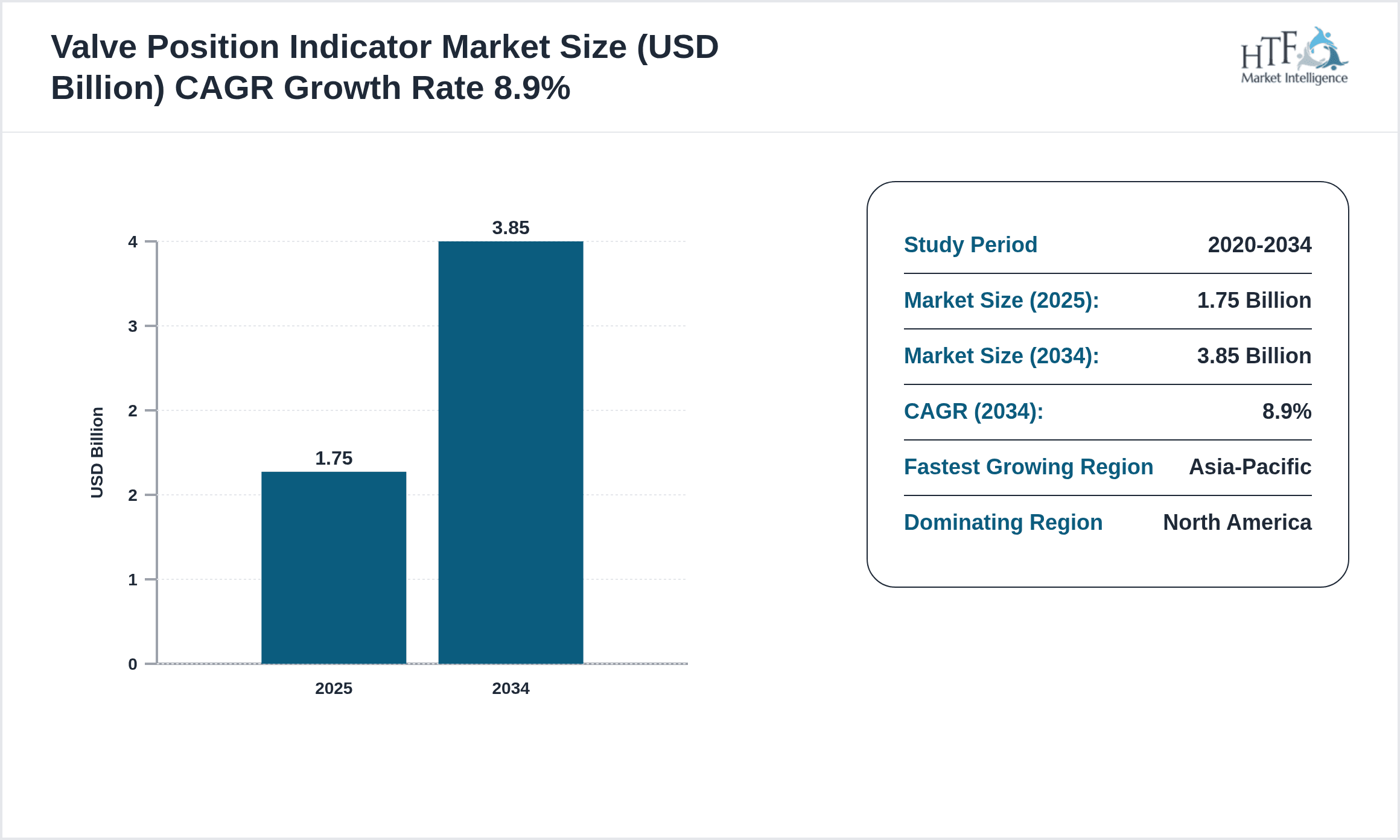
The Global Valve Position Indicator market represents a pivotal segment in industrial instrumentation, providing critical feedback on valve positions to ensure operational efficiency and safety. These devices are integral to process automation, enabling real-time valve status monitoring across oil & gas, power generation, water treatment, chemical, and pharmaceutical industries. Technological advancements, including the integration of smart sensors and IoT connectivity, are transforming traditional valve position indicators into sophisticated assets that support predictive maintenance and remote diagnostics. The market is expanding due to increased industrial automation, stringent safety regulations, and growing demand for reliable process control systems worldwide. The forecast period from 2025 to 2034 anticipates robust growth driven by digital transformation in industrial sectors and rising adoption of smart valve position indicators. North America currently dominates the market, benefiting from advanced industrial infrastructure and regulatory frameworks, while Asia-Pacific emerges as the fastest growing region due to rapid industrialization and infrastructure development. Key challenges include high initial costs and integration complexities, yet opportunities abound in emerging economies and through technological innovation. This comprehensive report delves into market segmentation by type and application, regional dynamics, competitive landscape, and strategic growth drivers shaping the global Valve Position Indicator market.
Competitive Landscape
The global competitive environment for Valve Position Indicators is characterized by intense rivalry among established industrial automation and instrumentation companies competing on innovation, product quality, and service integration. Market leaders invest heavily in research and development to introduce advanced smart valve position indicators that enable seamless integration with digital control systems and IoT platforms. Strategic partnerships and collaborations with end-users and system integrators further enhance competitive positioning, allowing tailored solutions for diverse industries. Pricing strategies are balanced with value-added features such as enhanced accuracy, durability, and communication protocols support. Mergers and acquisitions have consolidated market share among top players, enabling expanded geographic reach and technology portfolios. Market entry barriers include stringent industry standards, high capital investment requirements, and the need for domain expertise, which protect incumbents but also stimulate innovation. Regional competition is shaped by local manufacturing capabilities and regulatory environments, with North America and Europe hosting many key players, while Asia-Pacific sees a surge of competitive new entrants leveraging cost advantages and rapid market growth. Future trends suggest continued emphasis on smart, connected devices and integration with Industry 4.0 frameworks driving competitive differentiation.
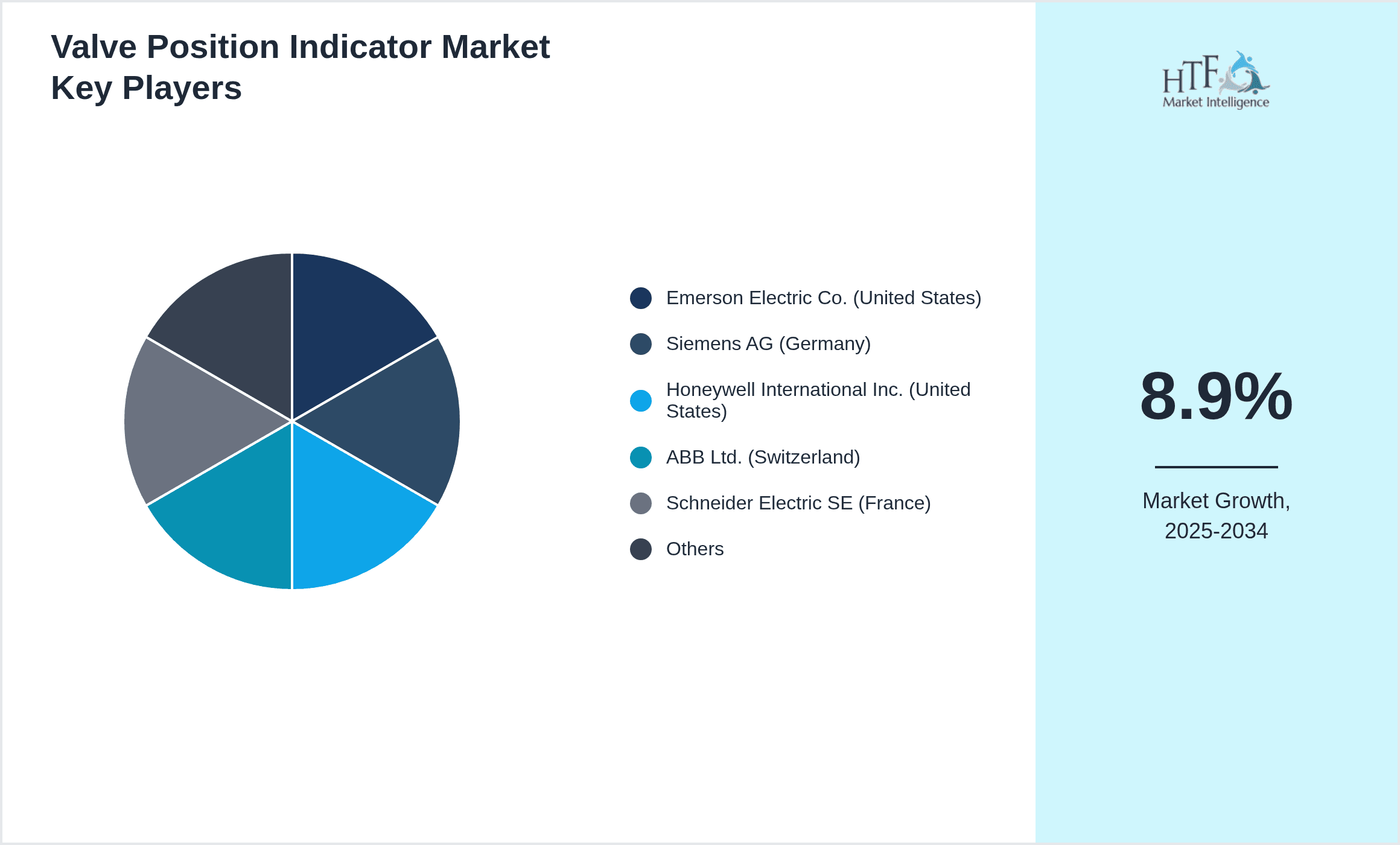
Prominent Players in Valve Position Indicator Market
- •Emerson Electric Co. (United States)
- •Siemens AG (Germany)
- •Honeywell International Inc. (United States)
- •ABB Ltd. (Switzerland)
- •Schneider Electric SE (France)
- •Yokogawa Electric Corporation (Japan)
- •Rotork plc (United Kingdom)
- •FMC Technologies, Inc. (United States)
- •General Electric Company (United States)
- •Endress+Hauser Group (Switzerland)
- •Metso Corporation (Finland)
- •Flowserve Corporation (United States)
- •Emerson Automation Solutions (United States)
- •Azbil Corporation (Japan)
- •Hach Company (United States)
- •MTS Systems Corporation (United States)
- •Moog Inc. (United States)
- •KROHNE Messtechnik GmbH (Germany)
- •Siemens Energy (Germany)
- •Badger Meter, Inc. (United States)
- •Neles Oyj (Finland)
- •Baker Hughes Company (United States)
- •Invensys Operations Management (United Kingdom)
- •Emerson Process Management (United States)
- •SAMSON AG (Germany)
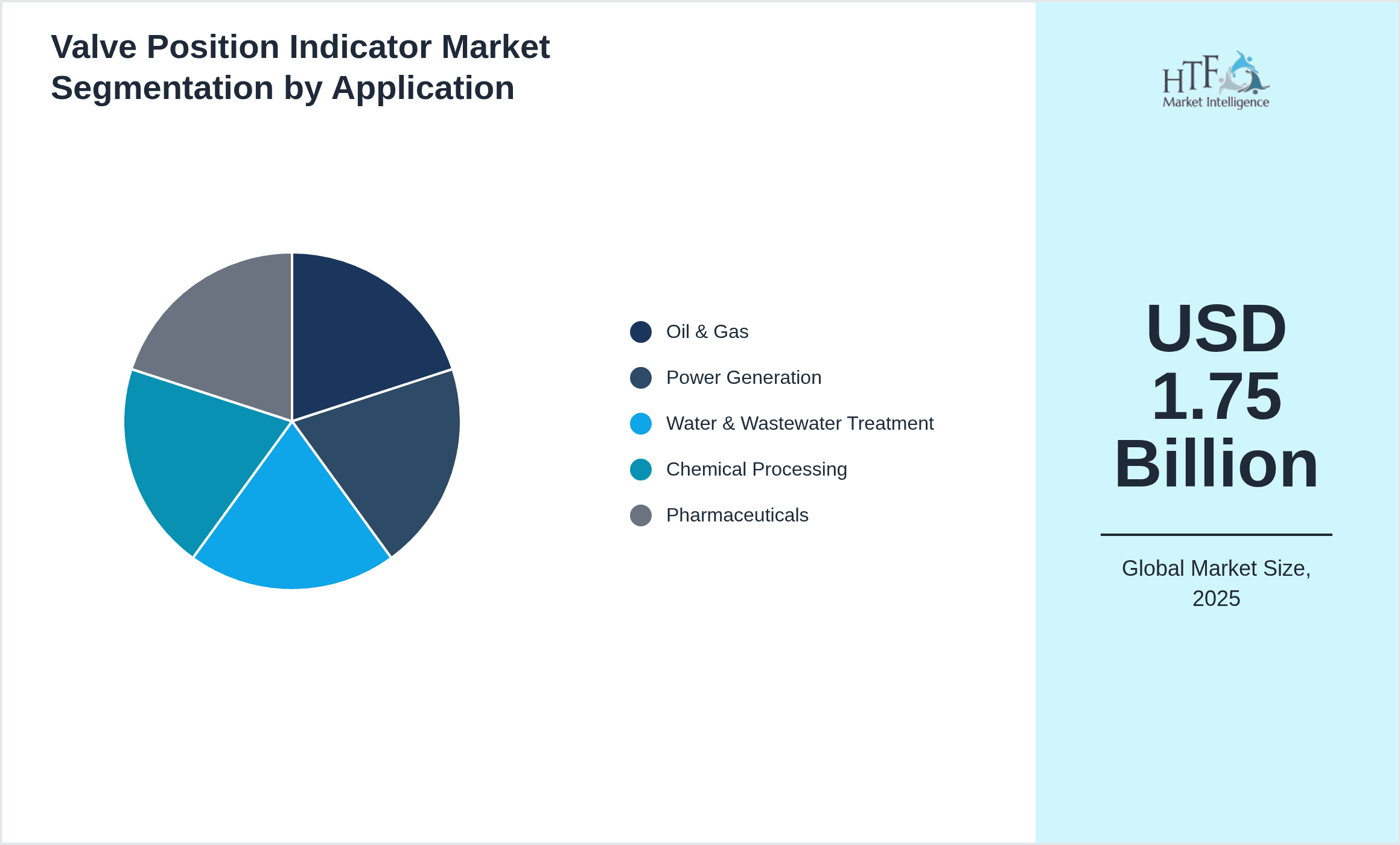
Market Breakdown
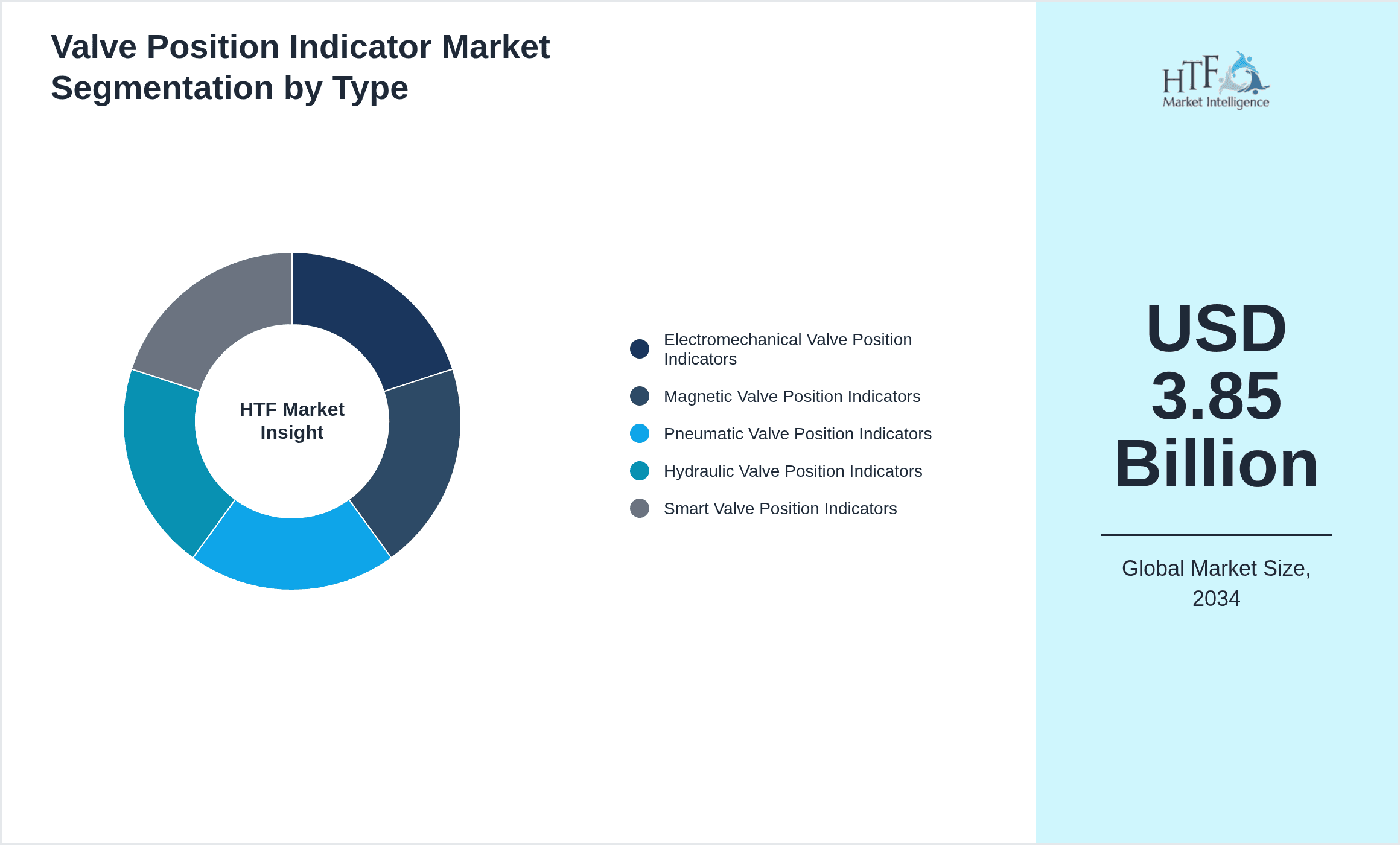
- •By Product Type
- ◦Electromechanical Valve Position Indicators
- ◦Magnetic Valve Position Indicators
- ◦Pneumatic Valve Position Indicators
- ◦Hydraulic Valve Position Indicators
- ◦Smart Valve Position Indicators
- •By Application
- ◦Oil & Gas
- ◦Power Generation
- ◦Water & Wastewater Treatment
- ◦Chemical Processing
- ◦Pharmaceuticals
- •By End-Use Industry
- ◦Energy & Utilities
- ◦Manufacturing
- ◦Oil & Gas
- ◦Chemical & Petrochemical
- •By Distribution Channel
- ◦Direct Sales
- ◦Distributors
- ◦Online Channels
Growth Dynamics
The global Valve Position Indicator market is propelled by increasing industrial automation and the adoption of smart technologies that enable precise valve monitoring and control. Growing demand within the oil & gas and power generation sectors, driven by expanding infrastructure and energy needs, significantly contributes to market growth. Stringent safety and environmental regulations compel industries to implement reliable valve monitoring solutions to prevent hazardous incidents and ensure compliance. Technological advancements such as IoT-enabled smart valve position indicators facilitate real-time data acquisition and predictive maintenance, reducing operational downtime and maintenance costs. Additionally, the rising trend of digital transformation across industries accelerates adoption rates, especially in emerging economies within Asia-Pacific. Investment in upgrading aging infrastructure with modern valve position indicators further fuels the market. Collectively, these factors create a robust growth environment, underscoring the strategic importance of valve position indicators in modern industrial ecosystems.
Market Trends
The Valve Position Indicator market is witnessing accelerated adoption of smart indicators integrated with IoT and digital communication protocols, enabling remote monitoring and advanced analytics. Industry 4.0 initiatives are reshaping traditional valve monitoring by embedding sensors that provide continuous feedback and predictive diagnostics. Manufacturers are increasingly focusing on developing ruggedized and explosion-proof indicators tailored for harsh industrial environments, enhancing reliability and safety. The shift towards wireless communication technologies reduces installation complexity and costs, supporting flexible deployment in remote or difficult-to-access locations. Additionally, collaborations between valve manufacturers and automation solution providers are fostering development of integrated systems that streamline maintenance and improve operational efficiency. Sustainability considerations are also driving innovation towards energy-efficient and eco-friendly valve position indicators.
Market Opportunities
Emerging markets in Asia-Pacific and Latin America present significant opportunities due to rapid industrialization, infrastructural development, and increasing automation adoption. The transition to smart manufacturing and digital factories offers avenues for advanced valve position indicator technologies with integrated diagnostics and communication capabilities. Expanding applications in renewable energy sectors such as wind and solar power also open new growth avenues for valve position indicators adapted to specialized operational requirements. Moreover, aftermarket services including retrofitting and system upgrades provide additional revenue streams for manufacturers. Strategic partnerships with technology firms to develop AI-driven predictive maintenance solutions can further capitalize on untapped market potential, enhancing operational reliability and reducing lifecycle costs for end-users.
Market Challenges
High installation and maintenance costs of advanced valve position indicators can constrain adoption, particularly in cost-sensitive segments and emerging economies. Integration complexities with existing legacy control systems pose technical challenges, requiring customization and skilled workforce. Market growth is also impeded by limited standardization across different industries and regions, creating interoperability issues. Additionally, the volatility of raw material prices and supply chain disruptions may affect manufacturing costs and delivery schedules. Resistance to change from traditional manual valve monitoring practices in certain sectors slows digital adoption. Data security concerns related to IoT-enabled smart valve indicators also present challenges around cybersecurity and compliance.
Regulatory Framework
Between 2020 and 2025, global regulatory bodies have increasingly emphasized safety and environmental compliance, impacting the Valve Position Indicator market significantly. Standards such as IECEx and ATEX for explosion-proof equipment mandate stringent certification requirements for valve position indicators used in hazardous environments. The International Electrotechnical Commission (IEC) has updated safety and performance standards, compelling manufacturers to enhance product reliability and durability. Regional regulations, including the US OSHA requirements and the European Union’s Machinery Directive, specify operational safety protocols that necessitate precise valve monitoring to prevent industrial accidents. Additionally, environmental regulations targeting emission control and wastewater treatment drive demand for accurate valve position feedback systems. Governments have introduced incentives for digital infrastructure upgrades that align with Industry 4.0 standards, further promoting smart valve position indicator deployment. Compliance with cybersecurity frameworks is also gaining prominence due to the rise of connected industrial devices, ensuring data integrity and protection against cyber threats.
Market Intelligence
- •15th February 2025, Emerson Electric Co. launched a next-generation smart valve position indicator featuring enhanced IoT connectivity, predictive diagnostics, and energy-efficient design, targeting oil & gas and power generation sectors globally. This product integrates seamlessly with existing SCADA and DCS systems, enabling real-time valve status monitoring and reducing unplanned downtime. Emerson's innovation aims to strengthen its market leadership by addressing growing customer demand for digital transformation and operational efficiency. Source: Official Emerson press release.
- •10th April 2025, Siemens AG introduced a wireless magnetic valve position indicator designed for hazardous environments, supporting explosion-proof certifications and offering extended battery life for remote installations. The device enhances installation flexibility and reduces maintenance costs, catering to chemical and water treatment industries. Siemens’ strategic focus on wireless sensor networks aligns with Industry 4.0 trends and customer needs for robust, connected instrumentation. Source: Siemens corporate announcement.
- •22nd August 2025, Honeywell International Inc. announced a strategic partnership with a leading IoT platform provider to develop integrated valve position monitoring solutions with AI-enabled predictive analytics. This collaboration aims to deliver improved asset management and operational insights to industrial customers, accelerating smart factory adoption. The initiative positions Honeywell at the forefront of digital industrial transformation. Source: Honeywell official news.
- •Market Intelligence: Recent developments and industry insights are being monitored. For latest updates, consult official company announcements and industry publications.
Regional Outlook
The North America currently holds a significant share of the market, primarily due to several key factors: increasing consumption rates, a burgeoning population, and robust economic momentum. These elements collectively drive demand, positioning this region as a leader in the market. On the other hand, Asia-Pacific is rapidly emerging as the fastest-growing area within the industry. This remarkable growth can be attributed to swift infrastructure development, the expansion of various industrial sectors, and a marked increase in consumer demand. These dynamics make this region a crucial player in shaping future market growth.
In our report, we cover a comprehensive analysis of the following regions and countries:
- North America
- LATAM
- West Europe
- Central & Eastern Europe
- Northern Europe
- Southern Europe
- East Asia
- Southeast Asia
- South Asia
- Central Asia
- Oceania
- MEA
| Feature | Details |
|---|---|
| Base Year Market Size | USD 1.75 Billion |
| Forecast Year Market Size | USD 3.85 Billion |
| CAGR | 8.9% |
| Forecast Period | 2026 to 2033 |
| YoY Growth | 8.6% |
| Scope of Report | Market is segmented by Product Type (Electromechanical Valve Position Indicators, Magnetic Valve Position Indicators, Pneumatic Valve Position Indicators, Hydraulic Valve Position Indicators, Smart Valve Position Indicators), Application (Oil & Gas, Power Generation, Water & Wastewater Treatment, Chemical Processing, Pharmaceuticals), End-Use Industry (Energy & Utilities, Manufacturing, Oil & Gas, Chemical & Petrochemical), Distribution Channel (Direct Sales, Distributors, Online Channels) |
| Regions Covered | North America, LATAM, West Europe, Central & Eastern Europe, Northern Europe, Southern Europe, East Asia, Southeast Asia, South Asia, Central Asia, Oceania, MEA |
| Key Companies | Emerson Electric Co. (United States), Siemens AG (Germany), Honeywell International Inc. (United States), ABB Ltd. (Switzerland), Schneider Electric SE (France) |
Global Valve Position Indicator Market Size, Growth & Revenue 2025-2034 - Table of Contents
Research enthusiast focused on transforming data uncovering into actionable insights through data-driven decision-making.
Frequently Asked Questions (FAQ):
The Market market is expected to see significant growth and value in 2025.
North America currently leads the market, followed by Europe and Asia-Pacific.
Key growth drivers include increasing activities, rising demand for innovative solutions, technological advancements, and growing preference for efficient products.