
Global Wall Mount Range Hoods Market - Outlook 2020-2034
Global Wall Mount Range Hoods Market is segmented by Product Type (Ducted Wall Mount Range Hoods, Ductless Wall Mount Range Hoods, Convertible Wall Mount Range Hoods, Island Range Hoods, Wall Mount Range Hoods), Application (Residential Kitchens, Commercial Kitchens, Hospitality, Institutional Kitchens, Others), End-Use Industry (Residential, Food Service, Hospitality, Institutional), Distribution Channel (Offline Retail, Online Retail, Direct Sales), and Geography (North America, LATAM, West Europe, Central & Eastern Europe, Northern Europe, Southern Europe, East Asia, Southeast Asia, South Asia, Central Asia, Oceania, MEA)
Pricing
Report Overview
Executive Summary
- •The Wall Mount Range Hoods market globally has witnessed significant growth from 2020 to 2025, driven by rising urbanization, increased disposable income, and surging demand for energy-efficient ventilation solutions. The market encompasses various types such as ducted, ductless, convertible, island, and wall mount hoods, which serve applications across residential, commercial, hospitality, and institutional kitchens. The growing construction of new homes and commercial establishments, along with heightened awareness about indoor air quality and health concerns, has accelerated adoption worldwide. Technological advancements like smart sensor integration and improved filtration systems have enhanced product appeal, providing differentiated value propositions. North America currently dominates the market owing to stringent air quality regulations and high consumer spending, while Asia-Pacific is the fastest-growing region propelled by rapid urbanization and expanding middle-class populations. Challenges such as high installation costs and maintenance requirements persist but are counterbalanced by opportunities in emerging markets and product innovation. This report provides a comprehensive analysis of market dynamics, competitive landscape, regulatory environment, and growth prospects up to 2034, delivering actionable insights for stakeholders.
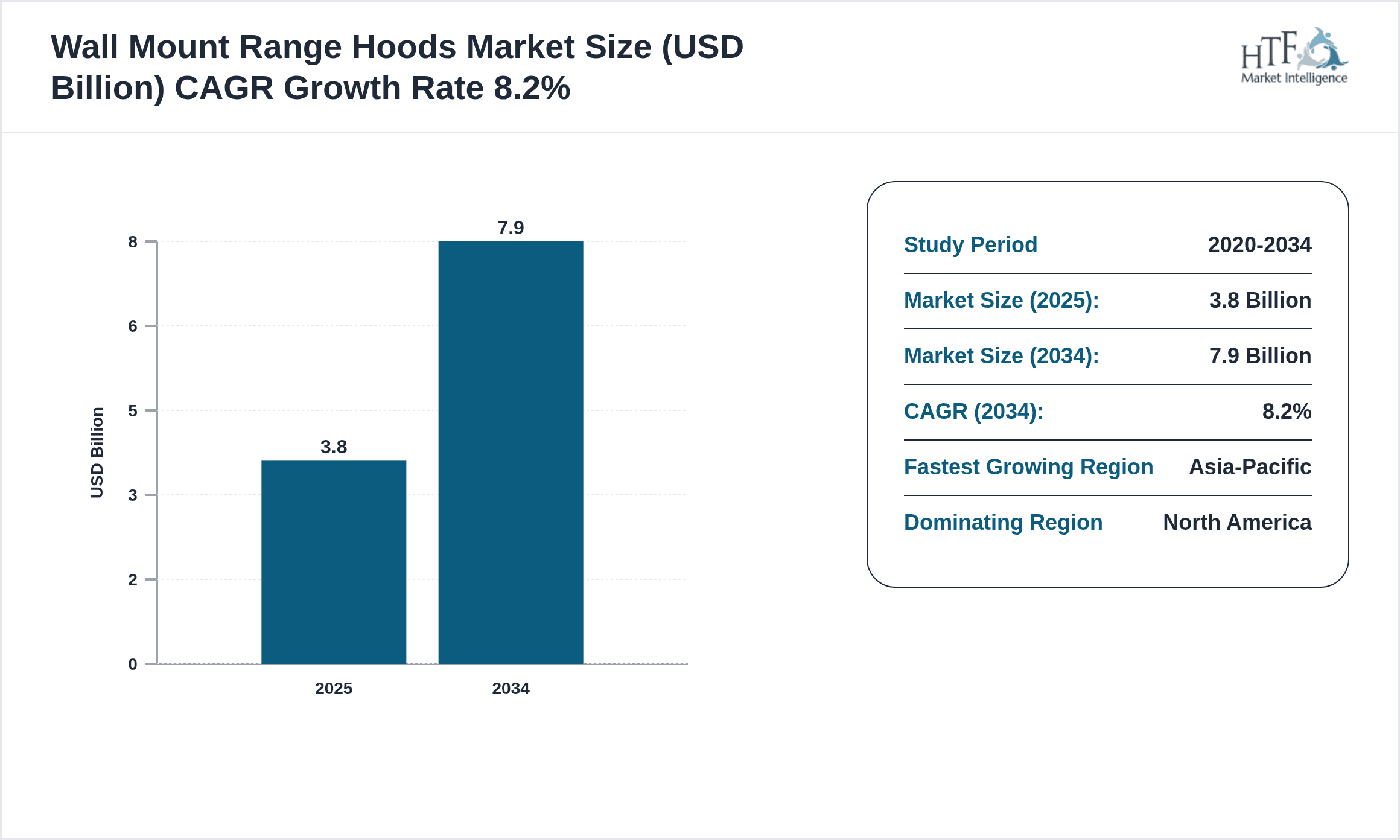
- •Key market highlights include a base market size of USD 3.8 Billion in 2025, forecasted to reach USD 7.9 Billion by 2034 at a CAGR of 8.2%, reflecting robust demand growth across all major regions. North America leads in market share driven by advanced infrastructure and consumer preferences for premium products, while Asia-Pacific exhibits the highest growth rate fueled by expanding construction and urban migration. Convertible wall mount range hoods are emerging as the fastest-growing product segment due to their flexibility in installation and energy efficiency. Residential kitchens remain the largest application segment, supported by increasing home renovation activities and smart home integration trends. The market is anticipated to benefit from regulatory support promoting energy conservation and indoor air quality standards worldwide.
- •The Wall Mount Range Hoods market offers significant value to manufacturers, distributors, and end-users by improving kitchen air quality, reducing health hazards from indoor pollutants, and enhancing overall cooking experience. For manufacturers, innovation in filtration technology and smart controls provides differentiation and premium pricing opportunities. Distributors and retailers benefit from growing consumer demand and expanding product portfolios. End-users including homeowners, restaurant operators, and institutional facility managers gain from improved ventilation efficiency and compliance with environmental standards. The market’s strategic importance is underscored by rising environmental awareness, urban lifestyle changes, and evolving kitchen design trends, positioning it as a growth avenue in the global home appliances and commercial kitchen equipment landscape.
Competitive Landscape
The global Wall Mount Range Hoods market is characterized by intense competition among established multinational corporations and emerging regional players. Market dynamics include aggressive innovation strategies focusing on energy-efficient technology, smart integration, and advanced filtration systems to meet evolving consumer demands and regulatory requirements. Companies are leveraging mergers and acquisitions to consolidate market presence, expand geographical reach, and diversify product offerings. Pricing strategies are calibrated to balance premium product positioning with affordability to capture diverse consumer segments. Distribution channels combine traditional retail, e-commerce, and direct sales to optimize market penetration. Additionally, companies invest heavily in branding and after-sales services to enhance customer loyalty. Barriers to entry include high capital expenditure, compliance with stringent regulations, and technological complexities. Regional competition varies, with North America and Europe emphasizing high-end, eco-friendly solutions while Asia-Pacific focuses on cost-effective, scalable products. Future competitive trends are expected to revolve around sustainability, IoT-enabled appliances, and customization capabilities, creating a rapidly evolving market landscape.
Leading Companies in Wall Mount Range Hoods Market
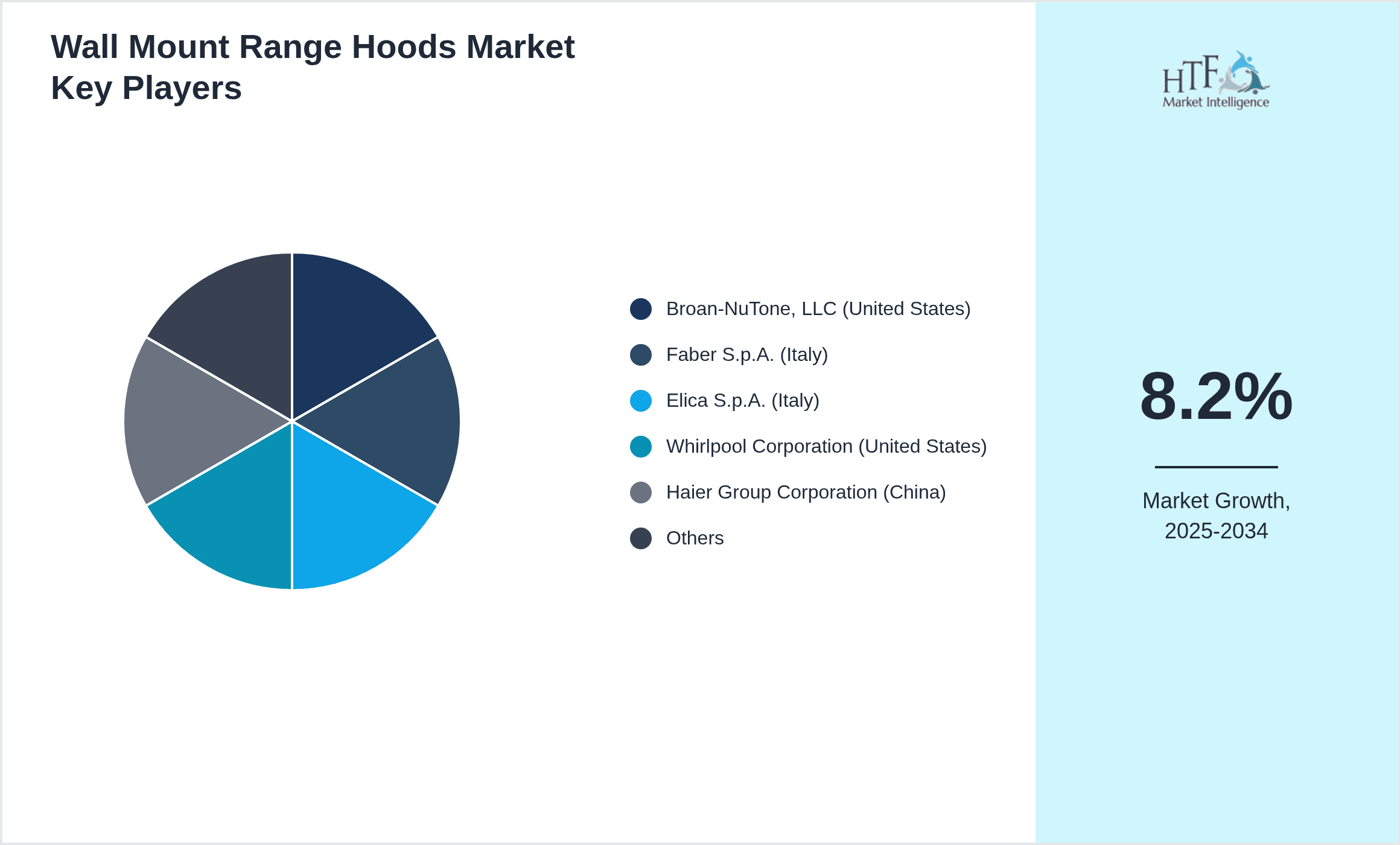
- •Broan-NuTone, LLC (United States)
- •Faber S.p.A. (Italy)
- •Elica S.p.A. (Italy)
- •Whirlpool Corporation (United States)
- •Haier Group Corporation (China)
- •Samsung Electronics Co., Ltd. (South Korea)
- •Miele & Cie. KG (Germany)
- •Bosch Siemens Hausgeräte GmbH (Germany)
- •Panasonic Corporation (Japan)
- •Fisher & Paykel Appliances Holdings Limited (New Zealand)
- •GE Appliances, a Haier company (United States)
- •Electrolux AB (Sweden)
- •Kobe Range Hoods (United States)
- •Zephyr Ventilation (United States)
- •Canbo Electrical Appliances (China)
- •Smeg S.p.A. (Italy)
- •Viking Range, LLC (United States)
- •FOTILE Kitchen Appliances Co., Ltd. (China)
- •Broan Ltd. (Canada)
- •Thermex (Sweden)
- •Cata Electrodomésticos S.A. (Spain)
- •Bora Lüfttechnik GmbH & Co. KG (Germany)
- •Whirlpool Europe S.r.l. (Italy)
- •Mabe S.A. de C.V. (Mexico)
- •Fulgor Milano (Italy)
Market Breakdown
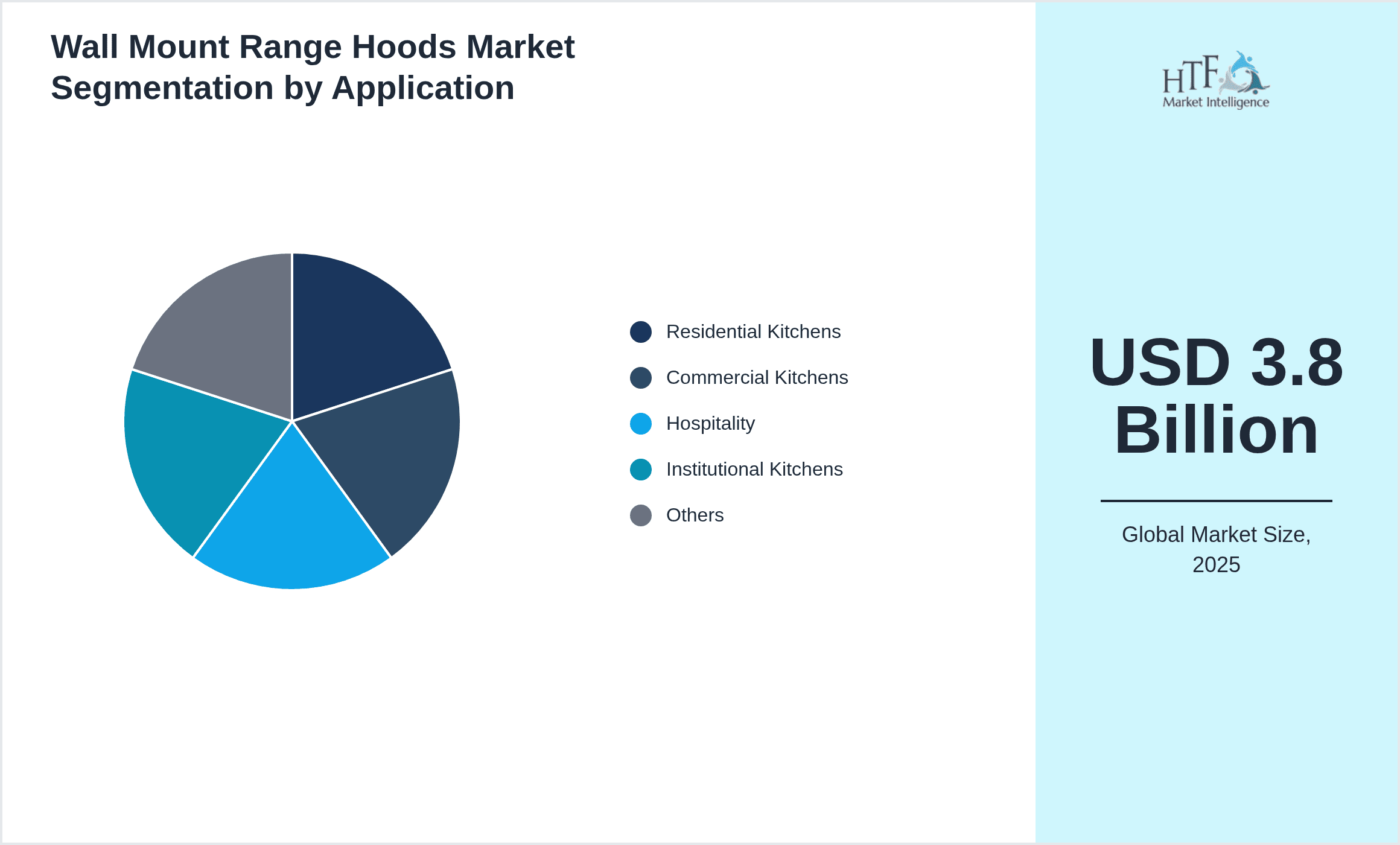
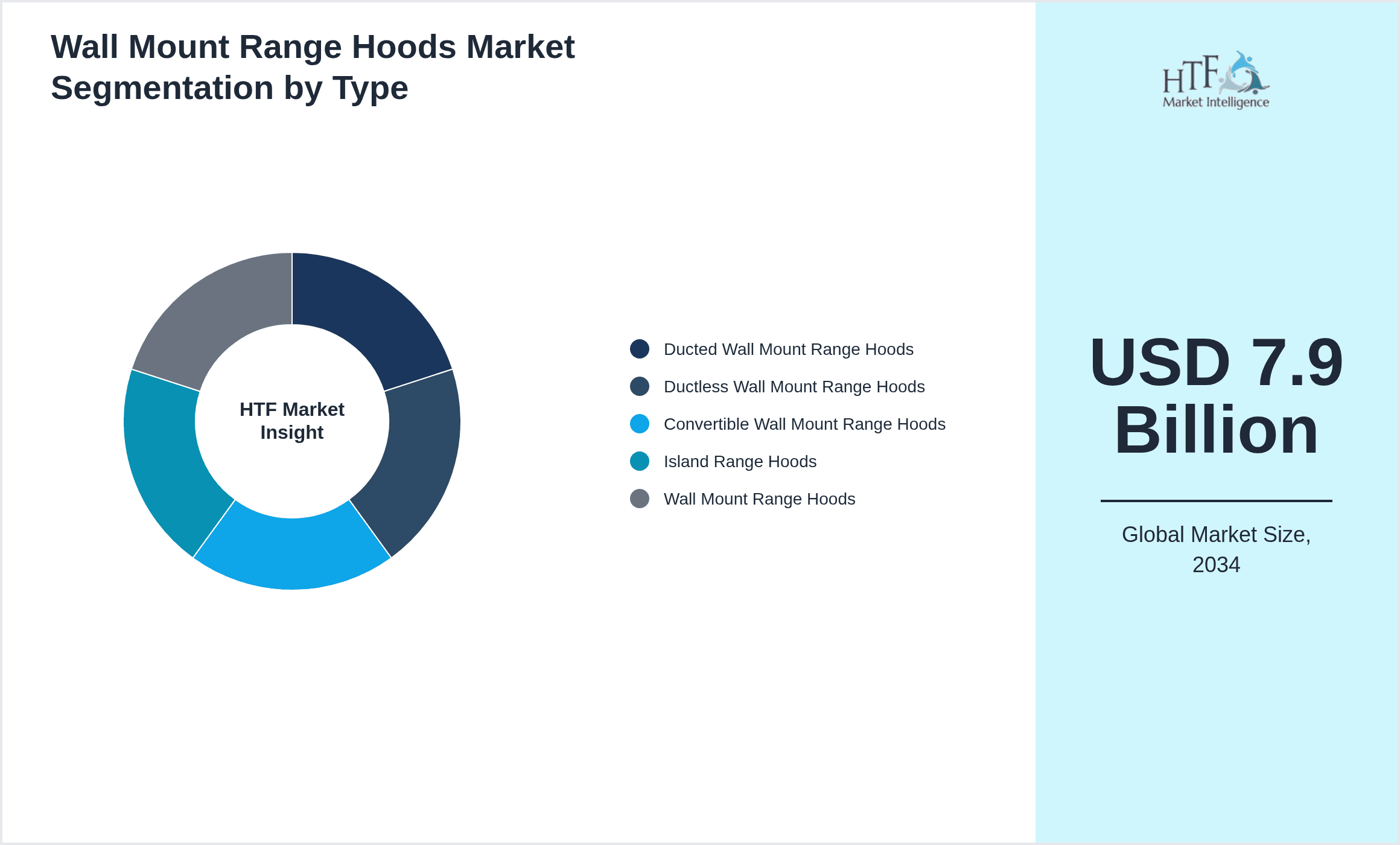
- •By Product Type
- ◦Ducted Wall Mount Range Hoods
- ◦Ductless Wall Mount Range Hoods
- ◦Convertible Wall Mount Range Hoods
- ◦Island Range Hoods
- ◦Wall Mount Range Hoods
- •By Application
- ◦Residential Kitchens
- ◦Commercial Kitchens
- ◦Hospitality
- ◦Institutional Kitchens
- ◦Others
- •By End-Use Industry
- ◦Residential
- ◦Food Service
- ◦Hospitality
- ◦Institutional
- •By Distribution Channel
- ◦Offline Retail
- ◦Online Retail
- ◦Direct Sales
Growth Dynamics
- •Increasing urbanization and rising disposable incomes globally have driven demand for modern kitchen appliances including wall mount range hoods, as consumers seek convenience, aesthetics, and improved indoor air quality. Residential construction growth, especially in emerging economies, contributes significantly to this trend.
- •Technological advancements such as integration of smart sensors, quiet motor designs, and energy-efficient LED lighting enhance product appeal and functionality, prompting manufacturers to innovate and differentiate their offerings in a competitive marketplace.
- •Regulatory pressures to reduce indoor air pollutants and improve energy consumption standards in developed markets have compelled manufacturers to develop compliant and eco-friendly range hoods, fostering market growth and adoption.
- •Expanding commercial and institutional foodservice industries worldwide, including restaurants and hotels, continue to invest in high-performance ventilation solutions to meet hygiene and safety standards, thereby expanding product demand.
- •Growing consumer preference for aesthetically designed kitchen appliances that blend with modern home interiors encourages adoption of wall mount range hoods with innovative designs and finishes.
- •Government incentives and subsidies promoting energy-efficient appliances in various regions are stimulating market growth by making advanced range hoods more affordable to end-users.
- •Increasing awareness about health risks related to indoor air quality is driving demand for effective ventilation solutions, positioning wall mount range hoods as essential kitchen components globally.
Market Trends
- •Smart kitchen integration is a prominent trend, with manufacturers embedding IoT capabilities allowing remote control, air quality monitoring, and energy optimization, improving user convenience and operational efficiency.
- •Sustainability and energy efficiency are increasingly prioritized, leading to the development of range hoods with eco-friendly materials, low power consumption motors, and recyclable components, aligning with global environmental initiatives.
- •Customization and modular designs are gaining traction, enabling consumers to select features, sizes, and finishes tailored to their kitchen layouts and aesthetic preferences, enhancing market appeal.
- •The rise of online retail channels is transforming distribution strategies, providing consumers with easier access to a wider range of products and enabling manufacturers to reach global markets efficiently.
- •Collaborations between appliance manufacturers and kitchen designers are fostering innovative product designs that integrate ventilation seamlessly with cabinetry and kitchen architecture, driving premium product demand.
- •The market is witnessing a shift towards quieter range hood models, responding to consumer demand for noise reduction without compromising performance, supported by advances in motor and fan technology.
- •Emerging markets are experiencing increased penetration due to urban lifestyle changes and rising awareness about kitchen safety and hygiene, creating new growth avenues beyond traditional strongholds.
Market Opportunities
- •Untapped residential markets in Asia-Pacific and Latin America present significant growth potential due to expanding middle-class populations and increasing home renovation activities, offering lucrative entry points for manufacturers.
- •Advancements in smart technology and AI integration provide opportunities for product differentiation, enabling manufacturers to offer value-added features such as predictive maintenance and adaptive ventilation control.
- •Developing eco-friendly and low-noise products tailored to stringent environmental regulations in Europe and North America can capture premium market segments seeking sustainable solutions.
- •Strategic partnerships with kitchen appliance and home automation companies can facilitate cross-selling opportunities and expand product reach through bundled offerings.
- •Customization and modular product offerings can address diverse consumer preferences, especially in luxury residential and boutique hospitality sectors, enhancing brand loyalty and market share.
- •Expansion of online distribution networks and direct-to-consumer sales channels can improve market accessibility and reduce costs, increasing competitiveness in price-sensitive markets.
- •Emerging regulatory frameworks incentivizing energy-efficient appliances open avenues for innovation and grant access to government-supported programs, driving product adoption.
Market Challenges
- •High initial installation costs and complex ductwork requirements for certain range hood types can deter adoption, especially in cost-sensitive residential segments and emerging markets.
- •Maintenance challenges including filter replacement and cleaning requirements impact user convenience and ongoing operational costs, potentially affecting customer satisfaction and retention.
- •Intense competition from low-cost unbranded products and counterfeit items in developing regions poses pricing pressure and brand dilution risks for established manufacturers.
- •Compliance with diverse and evolving international regulatory standards requires continuous investment in product development and testing, increasing operational complexity and costs.
- •Supply chain disruptions and raw material price volatility, exacerbated by geopolitical tensions and global logistics challenges, can affect production schedules and profitability.
- •Consumer reluctance to upgrade existing kitchen ventilation due to lack of awareness or perceived complexity can limit market penetration in mature markets.
- •Technological integration challenges, including compatibility issues with existing smart home systems, may hinder adoption of advanced range hood models.
Regulatory Framework
- •Between 2020 and 2025, the U.S. Department of Energy implemented updated energy conservation standards requiring manufacturers to improve efficiency of kitchen ventilation appliances, significantly impacting product design and market offerings.
- •The European Union’s Ecodesign Directive, updated in 2021, mandated stricter energy efficiency and noise level requirements for range hoods, encouraging innovation towards environmentally friendly and quieter products in member countries.
- •China introduced the China Energy Label revisions in 2023, enhancing transparency on appliance energy consumption and promoting adoption of high-efficiency models across residential and commercial sectors.
- •Japan enforced the Building Energy Efficiency Act amendments in 2022, requiring improved indoor air quality standards in new residential and commercial constructions, boosting demand for advanced ventilation solutions including wall mount range hoods.
- •Government incentive programs across North America and Europe, such as rebates for energy-efficient appliances launched between 2020 and 2025, have supported market growth by lowering consumer purchase barriers.
Market Intelligence
- •15th March 2024, Broan-NuTone, LLC launched its new line of ductless wall mount range hoods featuring advanced carbon filtration and smart air quality sensors, targeting the North American residential market. The product aims to improve indoor air purification while offering quiet operation and energy efficiency, responding to consumer demands for health-conscious and eco-friendly kitchen solutions. This launch strengthens Broan-NuTone's positioning in the smart kitchen appliance segment and aligns with increasing urban air quality concerns. Source: Broan-NuTone Official Press Release
- •22nd January 2025, Elica S.p.A. introduced a convertible wall mount range hood equipped with IoT connectivity and voice control features, targeting the European and Asia-Pacific markets. The product allows seamless switching between ducted and ductless modes, enhancing installation flexibility and user convenience. Elica's innovation leverages artificial intelligence for adaptive ventilation control based on cooking activity, positioning the company as a leader in smart kitchen ventilation technology. Source: Elica Corporate Website
- •5th July 2024, Whirlpool Corporation announced a strategic partnership with a leading smart home platform to integrate its range hood appliances with home automation systems. This initiative enables consumers to remotely monitor and control ventilation settings through mobile applications, enhancing user experience and energy management. The collaboration is expected to accelerate adoption of connected kitchen appliances across North America and Europe, reinforcing Whirlpool's innovation-driven growth strategy. Source: Whirlpool Investor Relations
- •30th November 2023, Haier Group Corporation completed the acquisition of a regional kitchen appliance manufacturer specializing in energy-efficient range hoods in Southeast Asia. This acquisition aims to expand Haier’s footprint in emerging markets and leverage local manufacturing capabilities to reduce costs and improve supply chain resilience. The deal is anticipated to enhance Haier’s product portfolio with region-specific designs tailored to local consumer preferences. Source: Haier Group Official Announcement
Regional Outlook
The North America currently holds a significant share of the market, primarily due to several key factors: increasing consumption rates, a burgeoning population, and robust economic momentum. These elements collectively drive demand, positioning this region as a leader in the market. On the other hand, Asia-Pacific is rapidly emerging as the fastest-growing area within the industry. This remarkable growth can be attributed to swift infrastructure development, the expansion of various industrial sectors, and a marked increase in consumer demand. These dynamics make this region a crucial player in shaping future market growth.
In our report, we cover a comprehensive analysis of the following regions and countries:
- North America
- LATAM
- West Europe
- Central & Eastern Europe
- Northern Europe
- Southern Europe
- East Asia
- Southeast Asia
- South Asia
- Central Asia
- Oceania
- MEA
| Feature | Details |
|---|---|
| Base Year Market Size | USD 3.8 Billion |
| Forecast Year Market Size | USD 7.9 Billion |
| CAGR | 8.2% |
| Forecast Period | 2026 to 2033 |
| YoY Growth | 7.9% |
| Scope of Report | Market is segmented by Product Type (Ducted Wall Mount Range Hoods, Ductless Wall Mount Range Hoods, Convertible Wall Mount Range Hoods, Island Range Hoods, Wall Mount Range Hoods), Application (Residential Kitchens, Commercial Kitchens, Hospitality, Institutional Kitchens, Others), End-Use Industry (Residential, Food Service, Hospitality, Institutional), Distribution Channel (Offline Retail, Online Retail, Direct Sales) |
| Regions Covered | North America, LATAM, West Europe, Central & Eastern Europe, Northern Europe, Southern Europe, East Asia, Southeast Asia, South Asia, Central Asia, Oceania, MEA |
| Key Companies | Broan-NuTone, LLC (United States), Faber S.p.A. (Italy), Elica S.p.A. (Italy), Whirlpool Corporation (United States), Haier Group Corporation (China) |
Global Wall Mount Range Hoods Market - Outlook 2020-2034 - Table of Contents
Frequently Asked Questions (FAQ):
The Compact Track Loaders market is expected to see value worth 5.3 Billion in 2025.
North America currently leads the market with approximately 45% market share, followed by Europe at 28% and Asia-Pacific at 22%. The remaining regions account for 5% of the global market.
Key growth drivers include increasing construction activities, rising demand for versatile equipment in agriculture, technological advancements in track loader design, and growing preference for compact equipment in urban construction projects.