
Global Bathtime Toys Market Size, Growth & Revenue 2025-2034
Global Bathtime Toys Market is segmented by Product Type (Rubber Ducks, Floating Toys, Water Squirters, Bath Books, Interactive Toys), Application (Infant Play, Toddler Entertainment, Early Learning, Sensory Development, Recreational Bathing), End-Use Industry (Households, Daycare Centers, Early Childhood Education Institutions, Retail Stores), Distribution Channel (Specialty Toy Stores, Mass Merchandisers, E-commerce Platforms), and Geography (North America, LATAM, West Europe, Central & Eastern Europe, Northern Europe, Southern Europe, East Asia, Southeast Asia, South Asia, Central Asia, Oceania, MEA)
Pricing
Report Overview
Executive Summary
- •The global bathtime toys market comprises a broad spectrum of playthings designed specifically for use during bathing to entertain and stimulate infants and toddlers. This market includes varying product types such as rubber ducks, floating toys, water squirters, bath books, and interactive toys that promote sensory development and early learning. The market serves end users including households, daycare centers, and early childhood education facilities worldwide. The value chain encompasses raw material suppliers, manufacturers, distributors, and retailers, with a strong emphasis on safety and compliance with international regulations. Growing awareness among parents regarding the cognitive and sensory benefits of bathtime play, coupled with rising disposable incomes across developing and developed regions, has accelerated demand for innovative and interactive products. Technological advancements have led to the integration of digital features like sound and light, enhancing user engagement. The market also benefits from expanding e-commerce channels facilitating wider distribution. Regional dynamics show North America as the dominant market due to high consumer spending and product innovation, while Asia-Pacific is the fastest-growing region driven by increasing urbanization and rising middle-class populations. The forecast period from 2025 to 2034 is expected to witness robust growth driven by these factors and a sustained focus on child safety and eco-friendly materials.
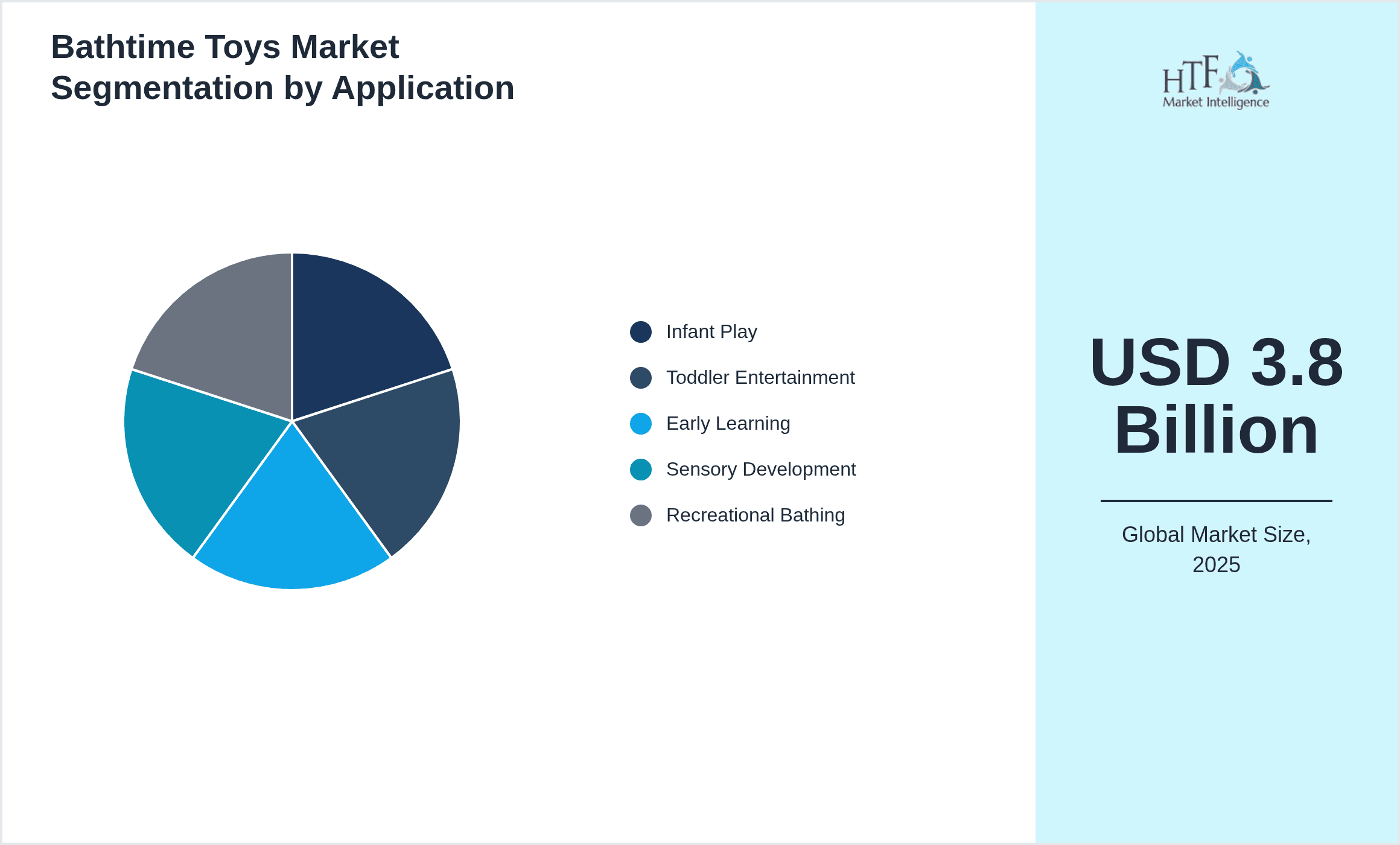
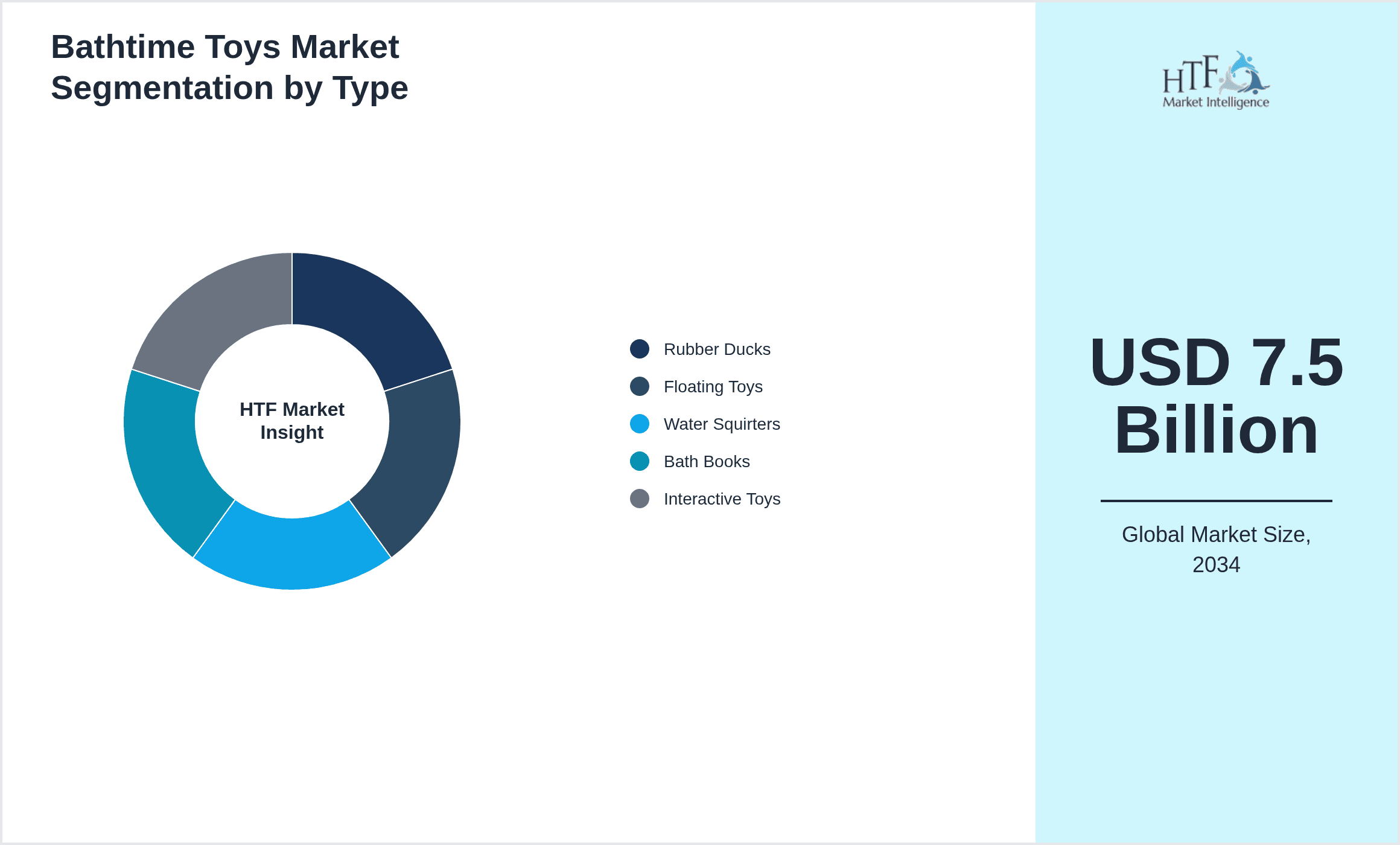
- •The bathtime toys market recorded a base size of USD 3.8 billion in 2025, growing from USD 2.5 billion in 2020, and is projected to reach USD 7.5 billion by 2034. This represents a CAGR of 7.9%, with an average year-on-year growth rate of approximately 7.6%. Key drivers include increased consumer preference for educational and sensory development toys, rising e-commerce penetration, and innovations in product design such as interactive and eco-friendly materials. North America leads the market in revenue share, while Asia-Pacific exhibits the fastest growth momentum. Market participants are focusing on expanding their portfolios with technologically advanced and sustainable products to capture emerging opportunities.
- •The bathtime toys market offers significant value to manufacturers, retailers, and investors by providing a growing platform to cater to evolving consumer preferences in child care and entertainment. Its strategic importance lies in blending traditional play with educational elements, fostering early childhood development, and supporting parental engagement during routine activities. The market's expansion is vital for industries related to toy manufacturing, child safety products, and e-commerce, offering diverse revenue streams and growth potential. Stakeholders benefit from emerging trends in digital-enabled toys and sustainable materials, positioning the market as a key segment within the broader children’s products industry.

Competitive Landscape
The global bathtime toys market exhibits a highly competitive environment characterized by a mix of multinational corporations and agile regional players. Market dynamics revolve around product innovation, strategic partnerships, and geographic expansion to capture diverse consumer bases. Companies adopt differentiation strategies focusing on safety certifications, eco-friendly materials, and digital integration to enhance product appeal. Pricing strategies vary to address premium and mass-market segments, while distribution channels include traditional retail, specialty stores, and rapidly growing e-commerce platforms. Mergers and acquisitions play a significant role in consolidating market presence and expanding technological capabilities. Barriers to entry include stringent safety regulations and the need for continuous innovation to meet evolving consumer expectations. Regional competition is intense, with North American and European firms leading innovation, while Asia-Pacific players capitalize on cost advantages and growing domestic demand. Future competitive trends point towards increased investment in smart toys and sustainability to maintain market leadership.
Leading Companies in Bathtime Toys Market
- •Hasbro, Inc. (United States)
- •Mattel, Inc. (United States)
- •Spin Master Corp. (Canada)
- •Fisher-Price, Inc. (United States)
- •VTech Holdings Limited (Hong Kong)
- •LeapFrog Enterprises, Inc. (United States)
- •Munchkin, Inc. (United States)
- •Green Toys, Inc. (United States)
- •WowWee Group Limited (Hong Kong)
- •Tomy Company, Ltd. (Japan)
- •Melissa & Doug, LLC (United States)
- •Chicco (Italy)
- •LEGO Group (Denmark)
- •Bandai Namco Holdings Inc. (Japan)
- •Disney Consumer Products, Inc. (United States)
- •Hape International AG (Switzerland)
- •The Entertainer (United Kingdom)
- •Boon Inc. (United States)
- •PlanToys (Thailand)
- •KidKraft (United States)
- •Janod (France)
- •Sassy Baby Products (United States)
- •Little Tikes (United States)
- •Step2 Company (United States)
- •Infantino (United States)
Market Breakdown
- •By Product Type
- ◦Rubber Ducks
- ◦Floating Toys
- ◦Water Squirters
- ◦Bath Books
- ◦Interactive Toys
- •By Application
- ◦Infant Play
- ◦Toddler Entertainment
- ◦Early Learning
- ◦Sensory Development
- ◦Recreational Bathing
- •By End-Use Industry
- ◦Households
- ◦Daycare Centers
- ◦Early Childhood Education Institutions
- ◦Retail Stores
- •By Distribution Channel
- ◦Specialty Toy Stores
- ◦Mass Merchandisers
- ◦E-commerce Platforms
Growth Dynamics
- •Increasing parental awareness of the developmental benefits of bathtime play is driving demand for sensory and educational toys, bolstering market growth. Products that combine play with cognitive stimulation are particularly favored in North America and Europe.
- •Technological advancements have enabled the introduction of interactive and smart bathtime toys featuring lights, sounds, and connectivity, enhancing engagement and contributing to the expansion of product portfolios.
- •Rising disposable incomes and urbanization in emerging economies, particularly in Asia-Pacific, have led to increased spending on premium and innovative children’s toys, supporting the fastest market growth in the region.
- •The growth of e-commerce platforms has broadened market reach and accessibility, allowing manufacturers to directly engage with consumers and introduce new product lines effectively across global regions.
- •Stringent safety regulations and rising consumer demand for eco-friendly, non-toxic materials have prompted manufacturers to innovate with sustainable product offerings, positively influencing market development.
- •Strategic collaborations between toy manufacturers and technology firms are facilitating the integration of digital features into bathtime toys, opening new avenues for product differentiation and consumer engagement.
- •Government initiatives promoting early childhood education and development in several countries are increasing institutional demand for educational bathtime toys, thereby driving market expansion.
Market Trends
- •There is a rising trend toward the development of eco-friendly and biodegradable bathtime toys made from sustainable materials, reflecting increasing consumer environmental consciousness globally.
- •Integration of smart technology such as Bluetooth connectivity and app-controlled features in bathtime toys is gaining traction, offering enhanced interactive experiences and parental control.
- •Customization and personalization of bathtime toys are emerging trends, with manufacturers offering products that can be tailored with names, colors, or sounds to improve customer engagement and loyalty.
- •Collaborations between toy manufacturers and popular children’s entertainment franchises are driving brand recognition and sales by leveraging familiar characters and storylines within bathtime toys.
- •E-commerce and direct-to-consumer sales channels are increasingly preferred by parents for convenience and variety, influencing market distribution dynamics and competitive strategies.
- •Growing emphasis on gender-neutral and inclusive toy designs is shaping product development to appeal to a broader demographic and align with modern social values.
- •Sustainability certifications and eco-labeling on bathtime toys are becoming important marketing tools, reflecting consumer demand for transparency and responsible manufacturing practices.

Market Opportunities
- •Expanding urban middle-class populations in Asia-Pacific and Latin America present significant growth opportunities for premium and innovative bathtime toys tailored to evolving consumer preferences.
- •Development of smart bathtime toys integrating augmented reality (AR) and artificial intelligence (AI) offers untapped potential for creating immersive educational experiences and market differentiation.
- •Increasing demand for sustainable and eco-friendly products provides opportunities for manufacturers to innovate with biodegradable materials and environmentally responsible production processes.
- •Collaborations with popular children’s brands and content creators can enhance product appeal and open new market segments through co-branded bathtime toy offerings.
- •Growth in institutional demand from daycare centers and early childhood education facilities for developmental toys supports expansion opportunities beyond traditional household consumers.
- •Emerging e-commerce markets in regions like Middle East & Africa enable manufacturers to reach new customer bases with tailored marketing and distribution strategies.
- •Government initiatives promoting child health and early education in developing economies create favorable conditions for market penetration and product adoption.
Market Challenges
- •Stringent safety regulations across different countries create complex compliance requirements that can increase production costs and delay product launches.
- •High competition from low-cost manufacturers in emerging markets can pressure pricing and profit margins for established players in developed regions.
- •Consumer concerns regarding chemical safety and durability of bathtime toys necessitate ongoing investment in quality control and material innovation.
- •Supply chain disruptions, including raw material shortages and logistics challenges, can impact timely product availability and market responsiveness.
- •Rapid technological changes require continuous R&D investment to keep pace with innovations and maintain competitive advantage.
- •Counterfeit products and intellectual property infringement pose risks to brand reputation and market share.
- •Limited consumer awareness in certain emerging markets restricts adoption of specialized and premium bathtime toys.
Regulatory Framework
- •The ASTM F963 standard, enforced between 2020 and 2025, mandates rigorous safety requirements for toy materials and design in the United States, significantly influencing manufacturing practices worldwide.
- •The European Union's Toy Safety Directive 2009/48/EC, updated during the historical to base years, imposes strict chemical composition and labeling requirements ensuring child safety across member states.
- •The Consumer Product Safety Improvement Act (CPSIA) enacted in the United States includes limits on lead content and phthalates, impacting product formulation and compliance costs.
- •China’s GB 6675 toy safety standards, refined between 2020 and 2025, require enhanced testing and certification for toys manufactured or sold in the Chinese market, influencing global supply chains.
- •Various countries have introduced regulations promoting the use of sustainable and non-toxic materials in children’s toys, encouraging manufacturers to adopt eco-friendly production methods and improve transparency.
Market Intelligence
- •12th February 2025, Hasbro, Inc. launched an innovative line of smart bathtime toys equipped with Bluetooth connectivity and interactive sound features aimed at enhancing early childhood sensory development. This product series targets tech-savvy parents seeking educational yet entertaining options for their children. The launch reflects Hasbro’s strategic focus on integrating digital technology with traditional toys to capture emerging consumer trends and expand its market share globally. The new offerings are compliant with international safety standards and incorporate eco-friendly materials, aligning with growing environmental concerns. This initiative is expected to strengthen Hasbro’s competitive positioning in the bathtime toys segment. Source: Hasbro Official Press Release
- •30th March 2025, Mattel, Inc. introduced a sustainable bathtime toy collection made from 100% recycled plastics and biodegradable components, targeting environmentally conscious consumers worldwide. The collection includes rubber ducks and floating toys featuring vibrant colors and safe, non-toxic coatings. Mattel’s innovation responds to increasing regulatory pressures and consumer demand for green products. The launch is part of the company’s broader sustainability strategy to reduce its carbon footprint and promote circular economy principles within the toy industry. Early market feedback indicates strong acceptance, particularly in North American and European markets. Source: Mattel Sustainability Report 2025
- •18th April 2025, Spin Master Corp. announced a strategic partnership with a leading AR technology developer to create augmented reality-enabled bathtime toys that provide immersive learning experiences. The collaboration combines Spin Master’s expertise in toy manufacturing with advanced digital capabilities to innovate the sensory development segment. This initiative aims to capture the growing demand for interactive and tech-driven children’s products, especially among millennials and Gen Z parents. The partnership is expected to accelerate Spin Master’s product diversification and enhance its presence in Asia-Pacific markets. Source: Spin Master Corporate Announcement
- •5th May 2025, Fisher-Price, Inc. completed the acquisition of a niche eco-friendly toy manufacturer specializing in biodegradable bathtime toys, expanding its sustainable product portfolio. The acquisition aligns with Fisher-Price’s commitment to environmental responsibility and market leadership in safe, innovative children’s toys. This move enhances Fisher-Price’s competitive advantage by integrating new materials technology and expanding its distribution channels across North America and Europe. The strategic acquisition is projected to increase revenue growth and strengthen brand loyalty among environmentally conscious consumers. Source: Fisher-Price Press Release
Regional Outlook
The North America currently holds a significant share of the market, primarily due to several key factors: increasing consumption rates, a burgeoning population, and robust economic momentum. These elements collectively drive demand, positioning this region as a leader in the market. On the other hand, Asia-Pacific is rapidly emerging as the fastest-growing area within the industry. This remarkable growth can be attributed to swift infrastructure development, the expansion of various industrial sectors, and a marked increase in consumer demand. These dynamics make this region a crucial player in shaping future market growth.
In our report, we cover a comprehensive analysis of the following regions and countries:
- North America
- LATAM
- West Europe
- Central & Eastern Europe
- Northern Europe
- Southern Europe
- East Asia
- Southeast Asia
- South Asia
- Central Asia
- Oceania
- MEA
| Feature | Details |
|---|---|
| Base Year Market Size | USD 3.8 Billion |
| Forecast Year Market Size | USD 7.5 Billion |
| CAGR | 7.9% |
| Forecast Period | 2026 to 2033 |
| YoY Growth | 7.6% |
| Scope of Report | Market is segmented by Product Type (Rubber Ducks, Floating Toys, Water Squirters, Bath Books, Interactive Toys), Application (Infant Play, Toddler Entertainment, Early Learning, Sensory Development, Recreational Bathing), End-Use Industry (Households, Daycare Centers, Early Childhood Education Institutions, Retail Stores), Distribution Channel (Specialty Toy Stores, Mass Merchandisers, E-commerce Platforms) |
| Regions Covered | North America, LATAM, West Europe, Central & Eastern Europe, Northern Europe, Southern Europe, East Asia, Southeast Asia, South Asia, Central Asia, Oceania, MEA |
| Key Companies | Hasbro, Inc. (United States), Mattel, Inc. (United States), Spin Master Corp. (Canada), Fisher-Price, Inc. (United States), VTech Holdings Limited (Hong Kong) |
Global Bathtime Toys Market Size, Growth & Revenue 2025-2034 - Table of Contents
Frequently Asked Questions (FAQ):
The Compact Track Loaders market is expected to see value worth 5.3 Billion in 2025.
North America currently leads the market with approximately 45% market share, followed by Europe at 28% and Asia-Pacific at 22%. The remaining regions account for 5% of the global market.
Key growth drivers include increasing construction activities, rising demand for versatile equipment in agriculture, technological advancements in track loader design, and growing preference for compact equipment in urban construction projects.