
Global Commercial Audio Mixers Market Size, Growth & Revenue 2024-2034
Global Commercial Audio Mixers Market is segmented by Product Type (Analog Mixers, Digital Mixers, Powered Mixers, Rackmount Mixers, Software Mixers), Application (Live Events, Broadcast Studios, Recording Studios, Public Address Systems, Installation), End-Use Industry (Entertainment & Media, Corporate & Education, Government & Public Safety, Hospitality & Retail), Distribution Channel (Direct Sales, Distributors & Dealers, Online Retail), and Geography (North America, LATAM, West Europe, Central & Eastern Europe, Northern Europe, Southern Europe, East Asia, Southeast Asia, South Asia, Central Asia, Oceania, MEA)
Pricing
Report Overview
Executive Summary
- •The global commercial audio mixers market is characterized by a wide array of products designed to facilitate precise audio control and mixing for professional environments. These mixers serve critical roles in live event sound management, broadcast and recording studios, and fixed audio installations, offering diverse capabilities from traditional analog mixing to sophisticated digital and software-based solutions. The market’s scope spans multiple applications, including live performances, broadcasting, public address, and studio recordings, catering to various end-user industries such as entertainment, media, education, and corporate sectors. Innovations in digital signal processing, integration with networked audio systems, and user-friendly interfaces are propelling market growth. Furthermore, the rising demand for high-quality audio experiences in live and virtual events, coupled with increasing investments in entertainment infrastructure worldwide, is driving expansion. The market is also shaped by regional variations in adoption, with North America currently dominating due to its mature entertainment industry, while Asia-Pacific is emerging as the fastest-growing region owing to growing media consumption and technological adoption.
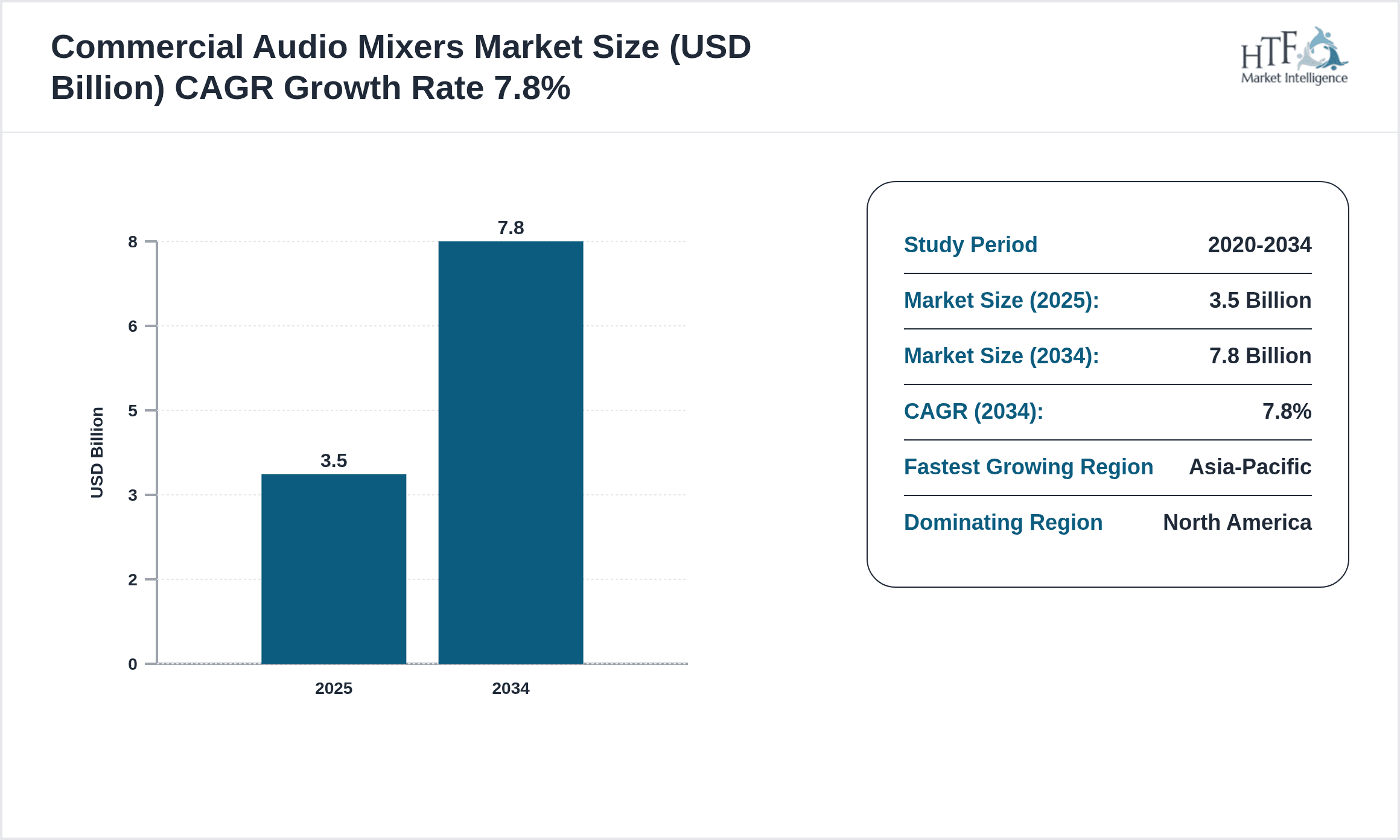
- •Key highlights include a projected compound annual growth rate (CAGR) of 7.8% from 2024 to 2034, with the market size expected to more than double from USD 3.5 billion in 2024 to USD 7.8 billion by 2034. Digital mixers lead in product type dominance due to their versatility and feature-rich capabilities, while software mixers are the fastest-growing segment driven by rising digital media production and remote collaboration needs. Live events remain the primary application segment, accounting for significant revenue share, followed by broadcast studios. North America holds the dominant regional market position, supported by a well-established entertainment and media sector, whereas Asia-Pacific is forecasted to witness rapid growth credited to increasing investments in infrastructure and growing demand in emerging economies.
- •The commercial audio mixers market offers significant value propositions to manufacturers, distributors, and end-users by enabling superior sound quality, streamlined audio management, and enhanced user control. For the entertainment and media industries, these mixers are crucial in delivering immersive audio experiences, while in corporate and educational sectors, they facilitate effective communication and presentations. Strategic importance lies in the continuous innovation of mixing technologies, integration with digital ecosystems, and adaptability to evolving audio standards. Stakeholders benefit from expanding application scopes and the increasing prevalence of virtual and hybrid events, which further fuel demand. Additionally, growing consumer preference for premium audio equipment and the expansion of content creation platforms are expected to drive market growth, making commercial audio mixers indispensable tools across various global audio applications.
Competitive Landscape
The competitive environment of the global commercial audio mixers market is highly dynamic, characterized by intense rivalry among established multinational corporations and innovative regional players. Leading companies focus on continuous product innovation, integrating cutting-edge digital technologies such as advanced signal processing, network connectivity, and software enhancements to meet evolving customer needs. Competitive strategies include expanding product portfolios, entering new regional markets, and forming strategic partnerships with distributors and system integrators to enhance market penetration. Pricing strategies vary from premium pricing for high-end digital mixers to cost-effective solutions for entry-level applications. Mergers and acquisitions are notable for consolidating market positions and acquiring technological capabilities. Additionally, companies invest heavily in research and development to maintain differentiation, address diverse end-user requirements, and adapt to shifting industry standards. Distribution channel optimization and after-sales service excellence also constitute vital aspects of competitive advantage. The landscape is further influenced by regional market dynamics, regulatory compliance, and increasing demand for eco-friendly and sustainable product offerings.
Companies Shaping the Commercial Audio Mixers Market
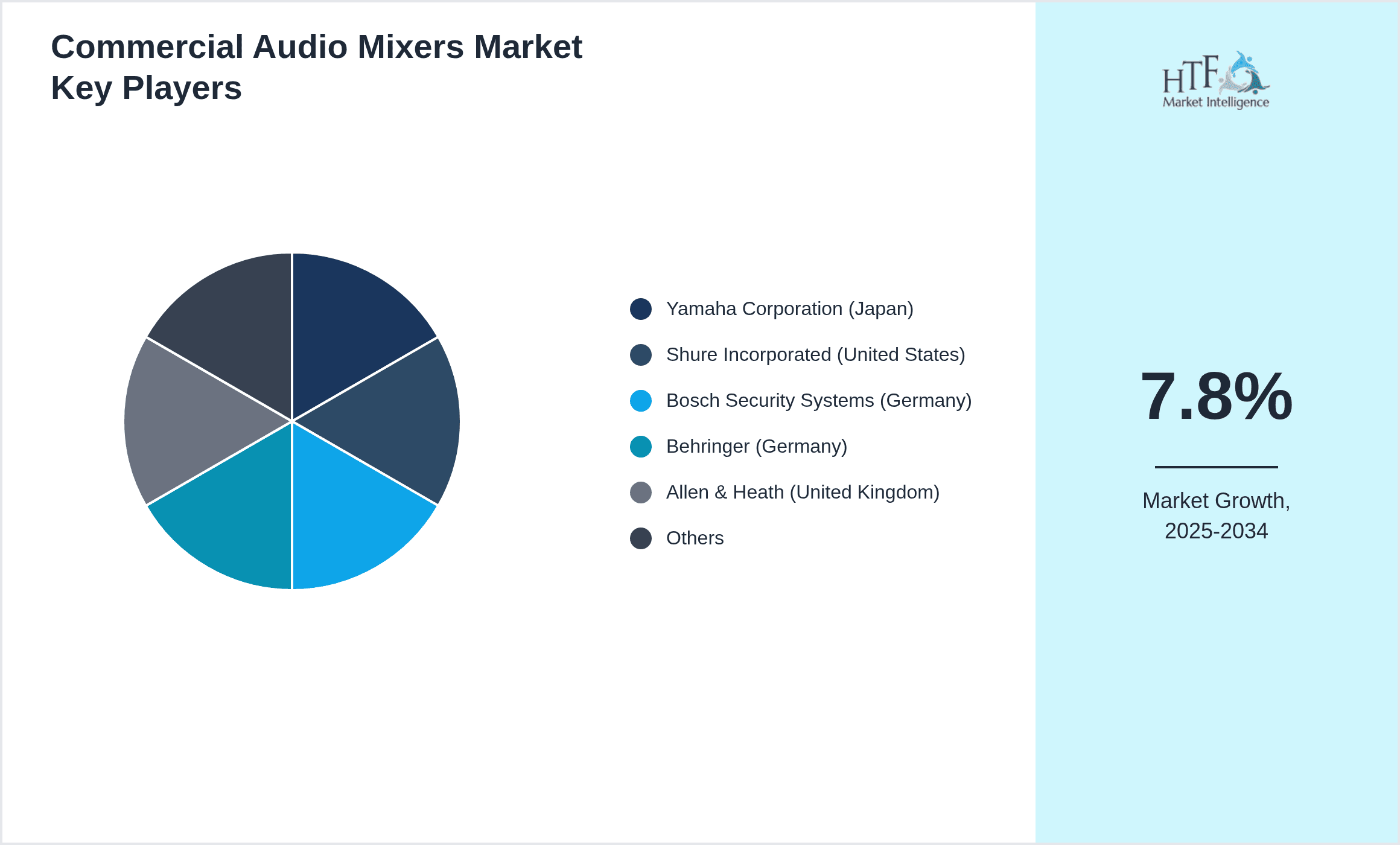
- •Yamaha Corporation (Japan)
- •Shure Incorporated (United States)
- •Bosch Security Systems (Germany)
- •Behringer (Germany)
- •Allen & Heath (United Kingdom)
- •Soundcraft (United Kingdom)
- •Mackie (United States)
- •Roland Corporation (Japan)
- •Tascam (Japan)
- •Avid Technology, Inc. (United States)
- •PreSonus Audio Electronics, Inc. (United States)
- •Midas (United Kingdom)
- •Lexicon (United States)
- •QSC, LLC (United States)
- •Digital Audio Labs (United States)
- •Korg Inc. (Japan)
- •Zoom Corporation (Japan)
- •Clear-Com LLC (United States)
- •DiGiCo (United Kingdom)
- •Peavey Electronics Corporation (United States)
- •Lawo AG (Germany)
- •Sound Devices LLC (United States)
- •Turbosound (United Kingdom)
- •Fender Musical Instruments Corporation (United States)
- •Soundcraft (United Kingdom)
Market Breakdown
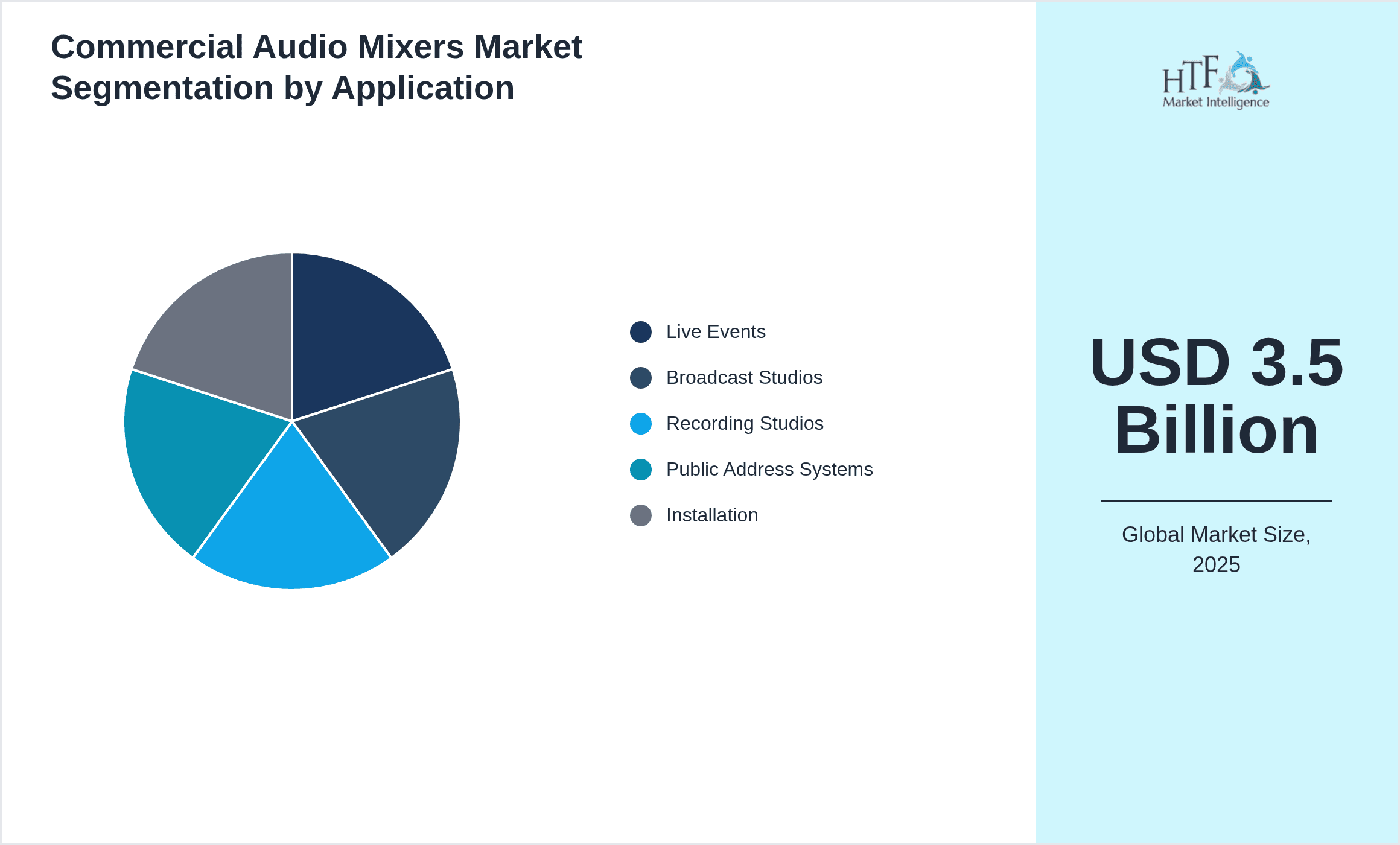
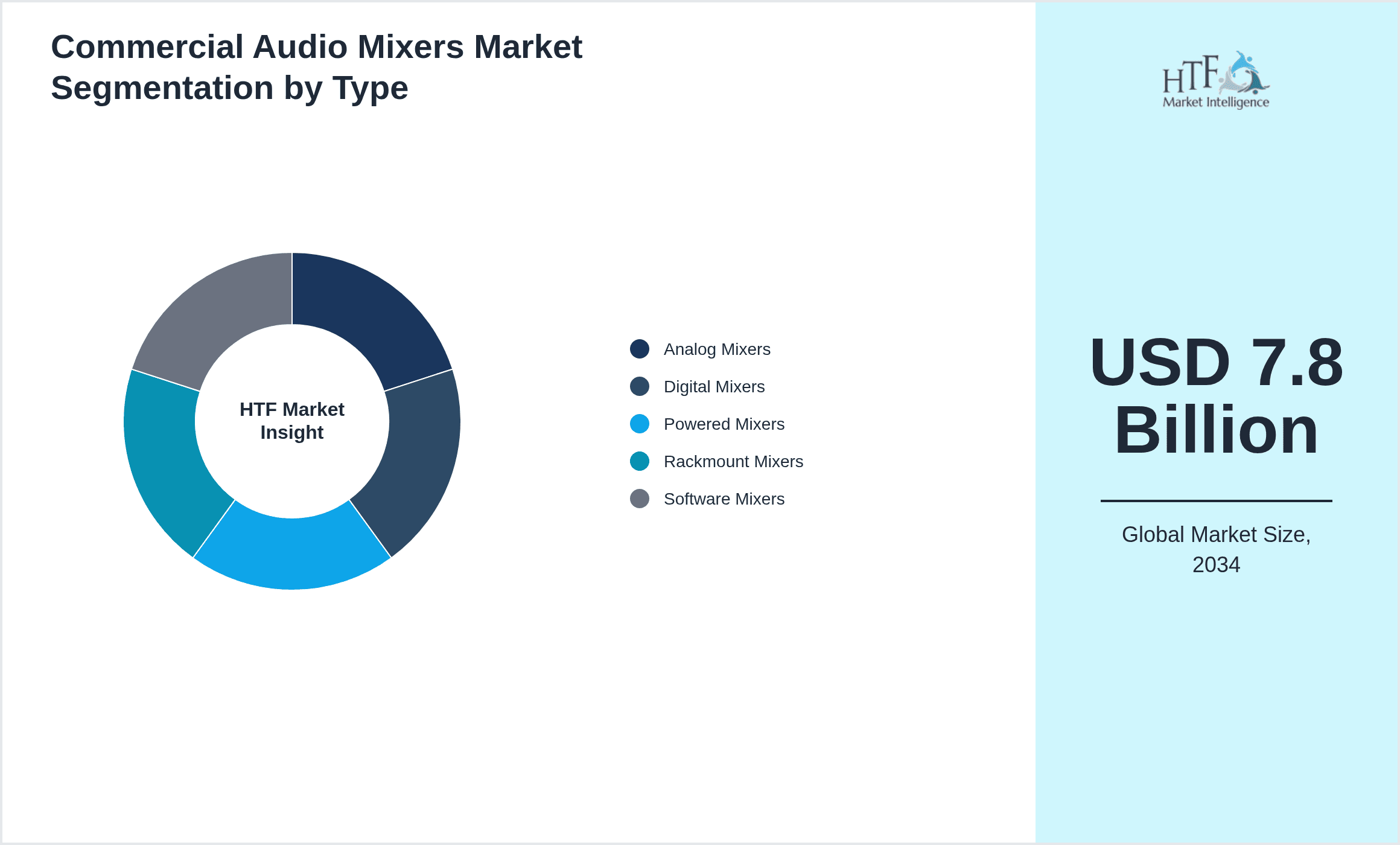
- •By Product Type
- ◦Analog Mixers
- ◦Digital Mixers
- ◦Powered Mixers
- ◦Rackmount Mixers
- ◦Software Mixers
- •By Application
- ◦Live Events
- ◦Broadcast Studios
- ◦Recording Studios
- ◦Public Address Systems
- ◦Installation
- •By End-Use Industry
- ◦Entertainment & Media
- ◦Corporate & Education
- ◦Government & Public Safety
- ◦Hospitality & Retail
- •By Distribution Channel
- ◦Direct Sales
- ◦Distributors & Dealers
- ◦Online Retail
Growth Dynamics
- •The global commercial audio mixers market is propelled by rapid advancements in digital audio technology, enabling more precise control and enhanced sound quality. The increasing demand for immersive audio experiences in live events and broadcasting fuels adoption of advanced digital and software mixers. Growth is also driven by the rising number of concerts, festivals, and corporate events globally, necessitating reliable and scalable audio solutions. Additionally, expansion in the media and entertainment sector, particularly in emerging markets, supports market momentum. Integration of networked audio and remote mixing capabilities further enhances operational efficiency and user convenience, attracting new users. The proliferation of content creation platforms and virtual events creates fresh demand for compact, versatile mixers. Lastly, substantial investments in infrastructure modernization and audio system upgrades in commercial establishments contribute significantly to market growth.
- •A key trend shaping the commercial audio mixers market is the shift towards digital and software-based mixing solutions that provide enhanced flexibility, remote control, and integration with digital audio workstations. Manufacturers are increasingly incorporating artificial intelligence and machine learning for automated sound adjustments and noise reduction. The rise of networked audio protocols such as Dante and AVB facilitates seamless connectivity across devices, promoting system scalability. Furthermore, there is a growing emphasis on compact and portable mixers suitable for mobile and outdoor applications. Sustainability is gaining traction, with companies adopting energy-efficient designs and recyclable materials. Cloud-based audio mixing platforms are emerging, enabling real-time collaboration among geographically dispersed teams. This digital transformation is redefining user experiences and expanding the market's reach across diverse sectors.
- •Market restraints include the high initial cost of advanced digital and software mixers, which can limit adoption among small-scale users and emerging markets. Complex user interfaces of sophisticated mixers may require specialized training, posing a barrier to widespread use. Additionally, the presence of counterfeit and low-quality products in certain regions undermines consumer confidence. Market growth is also challenged by the rapid pace of technological change, which can lead to product obsolescence and increased replacement costs. Supply chain disruptions, particularly for electronic components, can delay product availability and increase costs. Furthermore, regulatory compliance related to electromagnetic interference and safety standards can add complexity and cost to product development and deployment.
- •Opportunities in the commercial audio mixers market are abundant with the rise of virtual and hybrid events necessitating sophisticated remote mixing solutions. The expansion of e-sports and online streaming platforms opens new application areas for compact and software-based mixers. Emerging economies are investing heavily in entertainment infrastructure, creating untapped markets for audio equipment providers. Integration of audio mixers with IoT and smart building systems offers potential for innovative product offerings. Collaborations between audio equipment manufacturers and content creators can foster customized solutions. Additionally, the growing trend of home studios and independent music production presents a lucrative segment for entry-level and mid-range mixers. Strategic partnerships and acquisitions can accelerate technological development and market access.
- •Challenges facing the market include intense competition leading to pricing pressures and margin erosion for manufacturers. Rapid technological evolution demands continuous R&D investment, which may strain smaller companies. Fragmentation of end-user requirements across different applications complicates product standardization. Variability in regional regulations and standards requires tailored compliance efforts, increasing operational complexity. Additionally, the COVID-19 pandemic caused temporary disruptions in live event activities, affecting demand. Although recovery is underway, future uncertainties in event scheduling and budget allocations remain risks. Moreover, the need for skilled personnel to operate advanced mixers poses a challenge, especially in emerging markets with limited training infrastructure.
Market Trends
- •One prominent trend in the commercial audio mixers market is the increasing adoption of digital mixers equipped with touchscreen interfaces and customizable presets, enhancing user experience and operational efficiency. Companies are leveraging AI-driven features to optimize sound quality automatically, reducing manual intervention. The integration of wireless connectivity and mobile app controls is becoming standard, facilitating remote operation and monitoring. Furthermore, hybrid analog-digital mixers are gaining popularity by combining the warmth of analog sound with digital flexibility. The shift towards compact, portable mixers supports the growing demand from mobile event setups and small studios. Sustainability initiatives are influencing product designs, with manufacturers focusing on energy-efficient components and eco-friendly materials. These trends collectively contribute to expanding the market and diversifying product offerings.
- •The rise of cloud-based audio mixing platforms represents an emerging trend, enabling real-time collaboration among sound engineers across different locations. This development supports the increasing prevalence of virtual events and remote productions, where seamless integration and low latency are critical. Additionally, the proliferation of network audio protocols such as Dante ensures interoperability between devices from different manufacturers, promoting ecosystem development. The growing demand for high-resolution audio and immersive sound formats is pushing manufacturers to enhance mixer capabilities. Subscription-based models for software mixers are gaining traction, providing flexible pricing and continuous feature updates. Collaborations between audio equipment providers and software developers are fostering innovation and expanding market reach.
- •Strategic partnerships and acquisitions have become a trend to bolster technological capabilities and expand geographic presence. Companies are investing in R&D to integrate emerging technologies such as machine learning for adaptive audio mixing. The growing importance of user-friendly interfaces has prompted manufacturers to redesign control surfaces and software to cater to both novice and professional users. Enhanced focus on cybersecurity for networked audio equipment is driving innovation to protect against data breaches and unauthorized access. Additionally, the market is witnessing an increase in customized solutions tailored to specific industry needs, including education, corporate events, and public safety. These trends reflect the market’s responsiveness to evolving customer demands and technological advancements.
- •Digital transformation is a key trend influencing operational efficiency and scalability in commercial audio mixing. Adoption of software mixers integrated with digital audio workstations allows seamless workflow integration for content creators. The emergence of AI-powered noise cancellation and echo reduction technologies improves audio clarity in complex environments. Furthermore, manufacturers are incorporating eco-design principles to minimize environmental impact. The expansion of e-sports and online gaming events is driving demand for specialized audio mixing solutions tailored to interactive media. The trend towards miniaturization and lightweight designs facilitates portability without compromising sound quality. Overall, these trends are reshaping market dynamics and opening new avenues for growth.
- •Consumer preferences toward personalized audio experiences are influencing product development, with mixers offering customizable sound profiles and integrated effects. The increasing use of augmented reality (AR) and virtual reality (VR) in entertainment is creating demand for mixers capable of handling spatial audio formats. There is a growing focus on interoperability and seamless integration with video and lighting systems for synchronized event production. The market is also seeing enhanced after-sales services including remote diagnostics and software updates. Regional diversification strategies by key players are expanding market footprints, especially in Asia-Pacific and Latin America. These trends highlight the evolving expectations of end-users and the market’s adaptive strategies.
Market Opportunities
- •The expanding virtual and hybrid events sector presents significant opportunities for commercial audio mixer manufacturers to develop remote mixing and cloud-based solutions that cater to geographically dispersed production teams. This shift is accelerating demand for software mixers with collaborative functionalities, enabling real-time audio management from multiple locations. Emerging markets in Asia-Pacific and Latin America offer growth potential due to increasing investments in entertainment infrastructure and rising consumer spending on audio equipment. There is also an opportunity to innovate in IoT-enabled mixers that integrate with smart venue management systems, enhancing operational control and user experience. Additionally, the rise of home studios and independent content creators creates a lucrative segment for affordable, compact mixers with professional features. Collaborations with streaming platforms and event organizers can further enhance product adoption and market reach.
- •Technological integration presents opportunities for introducing AI-powered audio mixers capable of automatic sound optimization, thereby reducing reliance on expert operators and appealing to a broader user base. Expansion of subscription-based software mixer models provides recurring revenue streams and continuous customer engagement. Strategic partnerships with telecom and IT companies can facilitate development of mixers optimized for 5G and cloud computing environments. Geographical expansion into underserved regions through localized products and tailored marketing strategies can drive market penetration. Furthermore, the development of environmentally sustainable products aligns with increasing regulatory and consumer emphasis on sustainability, opening new market segments. These opportunities enable companies to capitalize on evolving industry demands and differentiate their offerings.
- •Investment in R&D to create modular and scalable mixers that can adapt to diverse application needs offers promising avenues for growth. The growing demand for immersive audio experiences in entertainment, gaming, and education sectors encourages innovation in spatial audio processing capabilities. Integration with virtual and augmented reality platforms provides opportunities to capture emerging markets linked to next-generation content consumption. Expansion of distribution channels through e-commerce and digital platforms facilitates wider reach and customer accessibility. Additionally, collaboration with educational institutions to provide training and certification programs can address skill shortage challenges and boost product adoption. These strategic moves can enhance competitive positioning and unlock new revenue streams.
- •The rise of smart cities and intelligent building projects presents opportunities for commercial audio mixers to integrate with public address and emergency communication systems. Development of mixers with enhanced cybersecurity features caters to growing concerns over network vulnerabilities. Entering niche markets such as houses of worship, healthcare, and government facilities with customized solutions can diversify revenue sources. Leveraging data analytics and user feedback to refine product design and functionality improves customer satisfaction and retention. Opportunities also exist in offering bundled solutions combining mixers with complementary audio equipment, providing value-added packages to end-users. These approaches support sustained growth and market expansion.
- •Emerging trends in personalized audio experiences and demand for multi-channel audio mixing create avenues for product innovation. Collaborations with content creators and influencers can boost brand visibility and product acceptance. Adoption of green manufacturing practices and attainment of environmental certifications can differentiate brands in the marketplace. Furthermore, leveraging advances in artificial intelligence and machine learning to develop predictive maintenance and self-diagnostic features enhances product reliability. Expanding after-sales services and technical support networks globally improves customer loyalty and competitive advantage. Together, these opportunities position companies to meet future market demands effectively.
Market Challenges
- •One of the primary challenges in the commercial audio mixers market is the high cost associated with advanced digital and software mixers, which can limit accessibility for small-scale users and emerging markets. This cost barrier restricts widespread adoption and slows market penetration in price-sensitive regions. Additionally, the complexity of sophisticated mixers necessitates technical expertise for effective operation, presenting a training and usability challenge, particularly in markets with limited access to skilled professionals. The rapid pace of technological innovation results in shorter product life cycles, pressuring manufacturers to continuously invest in research and development to remain competitive. Supply chain disruptions, exacerbated by global events such as the COVID-19 pandemic, have caused delays and increased component costs, affecting production schedules and profit margins.
- •Market fragmentation due to diverse end-user requirements complicates product standardization and increases manufacturing complexity. The presence of counterfeit and low-quality products in certain regions undermines brand reputation and consumer trust. Regulatory compliance with varying international standards regarding electromagnetic interference, safety, and environmental impact adds to operational challenges and costs. Intense competition leads to pricing pressures and margin erosion, especially for companies targeting mass-market segments. Furthermore, fluctuating demand cycles in the live events industry, influenced by economic conditions and external disruptions, create revenue unpredictability. Lastly, the shortage of trained audio professionals in emerging markets limits product adoption and optimal usage.
- •Integration challenges with existing audio and video systems can hinder seamless adoption of new mixing technologies. The evolving cybersecurity landscape necessitates robust protection measures for networked mixers to prevent unauthorized access and data breaches. Environmental concerns and regulatory pressures require companies to adopt sustainable manufacturing processes, which may increase costs. Additionally, market education is needed to communicate the benefits of advanced digital and software mixers to traditional analog users. Resistance to change among established users can slow transition to newer technologies. Lastly, logistical complexities in global distribution and after-sales support affect customer satisfaction and brand loyalty.
- •Economic uncertainties and geopolitical tensions can impact investment in entertainment infrastructure and corporate events, affecting market demand. Intellectual property challenges, including patent disputes, may constrain innovation and market entry. Managing product recalls or quality issues in a highly competitive environment poses reputational risks. The dependence on rare earth materials and electronic components subjects manufacturers to supply volatility and price fluctuations. Finally, balancing feature-rich product development with cost optimization remains a persistent challenge for sustaining profitability.
- •The fast-evolving consumer expectations for seamless, high-quality audio experiences require continuous innovation and agility. Companies face the challenge of aligning product development cycles with rapidly changing technological standards and user preferences. Additionally, the necessity to cater to diverse regional market needs and regulatory environments demands flexible manufacturing and marketing strategies. Ensuring cybersecurity and data privacy in increasingly networked and cloud-based audio mixers adds complexity. Moreover, the competition from emerging low-cost manufacturers exerts pressure on established players to maintain differentiation and value proposition.
Regulatory Framework
- •Between 2020 and 2024, several key regulations have influenced the global commercial audio mixers market. The adoption of stricter electromagnetic compatibility (EMC) standards across North America, Europe, and Asia-Pacific has required manufacturers to enhance product testing and certification processes, ensuring minimal interference with other electronic devices. Environmental regulations such as the Restriction of Hazardous Substances (RoHS) directive in Europe have mandated limitations on hazardous materials in electronic components, driving manufacturers towards greener materials and sustainable production methods. Safety standards related to electrical and fire hazards, including UL certification in North America and CE marking in Europe, have become more rigorous, ensuring user protection and product reliability. Additionally, data privacy and cybersecurity regulations impacting networked audio equipment have emerged, compelling companies to implement robust security features to safeguard against unauthorized access. Government initiatives promoting digital infrastructure and smart city development have also indirectly supported market growth by encouraging integration of advanced audio systems in public venues.
- •Regulatory developments in China and other Asia-Pacific countries have focused on compliance with international safety and environmental standards, facilitating global market access for regional manufacturers. Updates to wireless communication standards affecting Bluetooth and Wi-Fi enabled mixers have necessitated adherence to new protocols. Trade policies and import-export regulations have influenced supply chain dynamics and pricing strategies. Furthermore, intellectual property enforcement has been strengthened to protect innovation in audio technologies. These regulatory frameworks collectively shape product design, manufacturing, distribution, and end-user adoption, requiring companies to maintain agile compliance strategies to succeed in the global commercial audio mixers market.
- •In summary, the regulatory landscape from 2020 to 2024 emphasizes product safety, environmental sustainability, electromagnetic compatibility, and cybersecurity, impacting all stages of the commercial audio mixers value chain. Companies investing in compliance and proactive engagement with regulatory bodies are better positioned to capitalize on market opportunities while mitigating risks associated with non-compliance.
- •Government incentives in regions such as Europe and North America encouraging sustainable electronics manufacturing have further influenced market operations. Additionally, regulations promoting accessibility in public address systems ensure inclusivity, expanding application scope. The ongoing evolution of standards related to digital audio networking and interoperability continues to drive innovation and market harmonization.
- •Overall, a comprehensive understanding of regional and international regulations is critical for manufacturers and distributors to navigate the complex compliance environment and maintain competitive advantage in the global commercial audio mixers market.
Market Intelligence
- •15th January 2024, Yamaha Corporation launched its latest line of digital audio mixers featuring integrated AI-driven sound optimization and enhanced network connectivity. This innovative product targets live event production and broadcast studios, offering real-time remote control capabilities through mobile applications. The mixers support multiple audio formats and provide seamless integration with cloud-based audio workflows, enabling collaborative mixing across dispersed teams. Yamaha's strategic focus on digital transformation and user-friendly interfaces aims to capture growing demand in the hybrid events and content creation sectors. The launch reflects the company's commitment to innovation and leadership in professional audio solutions, expected to strengthen its market position globally.
- •22nd September 2023, Shure Incorporated introduced an advanced powered mixer series designed for portable live sound applications. These mixers incorporate Bluetooth connectivity, onboard effects processing, and customizable presets accessible via companion software. Shure's product targets small venues, mobile DJs, and corporate events, emphasizing ease of use and high audio fidelity. The launch complements Shure’s portfolio by addressing the growing demand for compact, versatile mixing solutions in emerging markets. This strategic move is anticipated to enhance the company’s competitiveness and expand its customer base in both developed and developing regions.
- •5th March 2024, Allen & Heath announced a strategic partnership with a leading cloud audio platform to develop integrated software mixer solutions supporting remote collaboration and live streaming. This initiative focuses on combining Allen & Heath’s hardware expertise with cloud-based audio processing to enable scalable, flexible audio mixing workflows. The partnership targets content creators, broadcasters, and event producers adapting to virtual and hybrid event formats. This collaborative effort reflects industry trends toward digital convergence and is expected to drive innovation and market expansion for both companies.
- •10th November 2023, Behringer completed the acquisition of a boutique software mixer developer specializing in AI-powered audio tools. This acquisition aims to accelerate Behringer’s software mixer product development and strengthen its position in the digital audio segment. The integration of AI technologies is expected to improve automatic sound balancing and noise reduction features in upcoming products. This strategic acquisition supports Behringer’s growth objectives in the competitive commercial audio market and aligns with the broader industry shift towards intelligent audio solutions.
- •Source: Official press releases from Yamaha Corporation, Shure Incorporated, Allen & Heath, Behringer
Regional Outlook
The North America currently holds a significant share of the market, primarily due to several key factors: increasing consumption rates, a burgeoning population, and robust economic momentum. These elements collectively drive demand, positioning this region as a leader in the market. On the other hand, Asia-Pacific is rapidly emerging as the fastest-growing area within the industry. This remarkable growth can be attributed to swift infrastructure development, the expansion of various industrial sectors, and a marked increase in consumer demand. These dynamics make this region a crucial player in shaping future market growth.
In our report, we cover a comprehensive analysis of the following regions and countries:
- North America
- LATAM
- West Europe
- Central & Eastern Europe
- Northern Europe
- Southern Europe
- East Asia
- Southeast Asia
- South Asia
- Central Asia
- Oceania
- MEA
| Feature | Details |
|---|---|
| Base Year Market Size | USD 3.5 Billion |
| Forecast Year Market Size | USD 7.8 Billion |
| CAGR | 7.8% |
| Forecast Period | 2026 to 2033 |
| YoY Growth | 7.5% |
| Scope of Report | Market is segmented by Product Type (Analog Mixers, Digital Mixers, Powered Mixers, Rackmount Mixers, Software Mixers), Application (Live Events, Broadcast Studios, Recording Studios, Public Address Systems, Installation), End-Use Industry (Entertainment & Media, Corporate & Education, Government & Public Safety, Hospitality & Retail), Distribution Channel (Direct Sales, Distributors & Dealers, Online Retail) |
| Regions Covered | North America, LATAM, West Europe, Central & Eastern Europe, Northern Europe, Southern Europe, East Asia, Southeast Asia, South Asia, Central Asia, Oceania, MEA |
| Key Companies | Yamaha Corporation (Japan), Shure Incorporated (United States), Bosch Security Systems (Germany), Behringer (Germany), Allen & Heath (United Kingdom) |
Global Commercial Audio Mixers Market Size, Growth & Revenue 2024-2034 - Table of Contents
Frequently Asked Questions (FAQ):
The Compact Track Loaders market is expected to see value worth 5.3 Billion in 2025.
North America currently leads the market with approximately 45% market share, followed by Europe at 28% and Asia-Pacific at 22%. The remaining regions account for 5% of the global market.
Key growth drivers include increasing construction activities, rising demand for versatile equipment in agriculture, technological advancements in track loader design, and growing preference for compact equipment in urban construction projects.