
Global Liquid Bottles Market Size, Growth & Revenue 2025-2034
Global Liquid Bottles Market is segmented by Product Type (Plastic Bottles, Glass Bottles, Metal Bottles, Biodegradable Bottles, Refillable Bottles), Application (Beverages, Pharmaceuticals, Personal Care, Food, Chemicals), End-Use Industry (Food & Beverage Industry, Healthcare Industry, Cosmetics & Personal Care Industry, Chemical Industry), Distribution Channel (Direct Sales, Distributors & Wholesalers, Online Retail), and Geography (North America, LATAM, West Europe, Central & Eastern Europe, Northern Europe, Southern Europe, East Asia, Southeast Asia, South Asia, Central Asia, Oceania, MEA)
Pricing
Report Overview
Executive Summary
- •The global liquid bottles market represents a multifaceted sector that serves as a critical component for various end-use industries by providing safe, durable, and innovative packaging solutions for liquid products. This market includes a broad spectrum of bottle types based on material composition such as plastic, glass, metal, biodegradable, and refillable bottles. These containers are essential across applications including beverages, pharmaceuticals, personal care, food, and chemicals. The market is strongly influenced by rising consumer demand for convenience, safety, and sustainability, as well as stringent regulations promoting eco-friendly packaging. Technological advancements in manufacturing processes, such as lightweight designs, improved barrier properties, and customization capabilities, are enhancing product performance and consumer appeal. Regional dynamics reflect North America’s dominance due to established supply chains and high consumption rates, while Asia-Pacific exhibits the fastest growth driven by expanding industrialization and population. The market is poised for robust expansion through 2034, propelled by trends in sustainable packaging, increasing health consciousness, and innovation in materials. Strategic investments and partnerships among key players further underscore the market’s evolving landscape and competitive momentum.
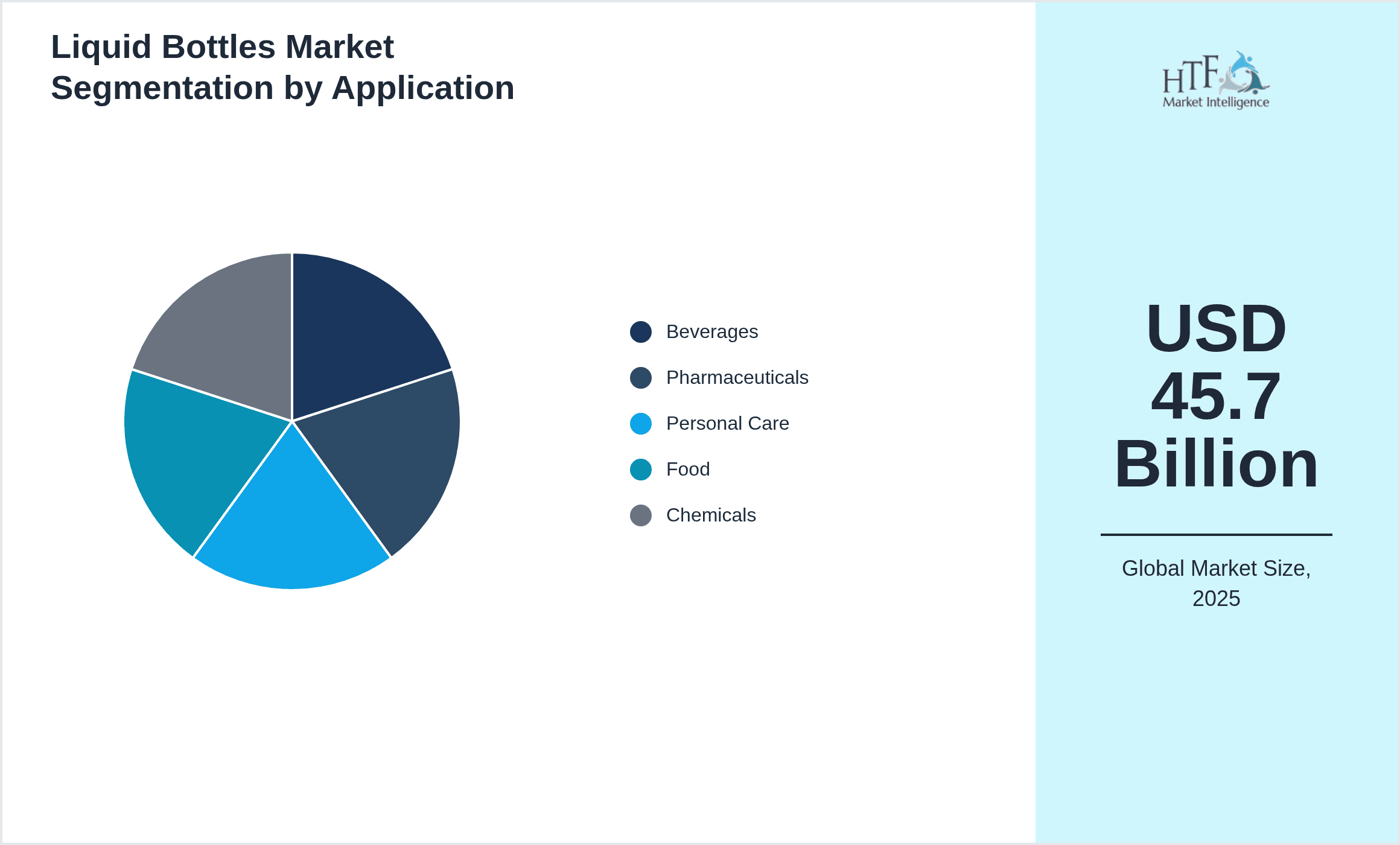
- •Key market highlights include a base market size of USD 45.7 Billion in 2025, projected to grow to USD 78.4 Billion by 2034, registering a CAGR of 6.3%. The increasing shift towards biodegradable and refillable bottles is reshaping product portfolios. The beverage and pharmaceutical sectors remain primary demand drivers, reflecting global consumer trends towards convenience and health safety. The Asia-Pacific region is emerging rapidly, supported by expanding manufacturing hubs and rising disposable incomes, representing a critical growth frontier. Innovations in materials and packaging technology, coupled with stringent environmental regulations, are defining competitive advantages and market entry strategies.
- •The value proposition of the liquid bottles market lies in its ability to offer versatile packaging solutions that meet diverse industry needs while aligning with sustainability objectives. For manufacturers, these products represent opportunities to innovate in material science and design to capture consumer preference and regulatory compliance. For end-users spanning beverages to chemicals, liquid bottles provide critical functionality in product safety, shelf life, and brand differentiation. The market’s strategic importance is underscored by its role in global supply chains, environmental impact mitigation, and adapting to evolving consumer lifestyles, making it a focal point for investment and technological advancement.

Competitive Landscape
The competitive landscape of the global liquid bottles market is characterized by a dynamic interplay of established multinational corporations and innovative regional players striving to enhance market share through product differentiation, technological innovation, and strategic collaborations. Market leaders focus on leveraging advanced manufacturing techniques such as automation and sustainable material integration to meet evolving consumer expectations and regulatory mandates. Key competitive strategies include expansion of product portfolios with biodegradable and refillable options, aggressive pricing tactics to address cost-sensitive markets, and investment in R&D to pioneer novel packaging solutions. Partnerships and joint ventures are prevalent to facilitate geographic expansion and technological synergies. Additionally, mergers and acquisitions have served as pivotal mechanisms for market consolidation, enabling companies to diversify capabilities and enhance global footprint. Distribution channels are optimized for wider reach and efficiency, while digital marketing and branding efforts increasingly influence consumer engagement. Regional competition is intensified by local regulations and consumer preferences, requiring agile adaptation by players to maintain competitive advantages. Looking forward, innovation in smart packaging and circular economy initiatives are expected to shape future competitive dynamics, driving sustainability and functionality in liquid bottle offerings.
Leading Companies in Liquid Bottles Market
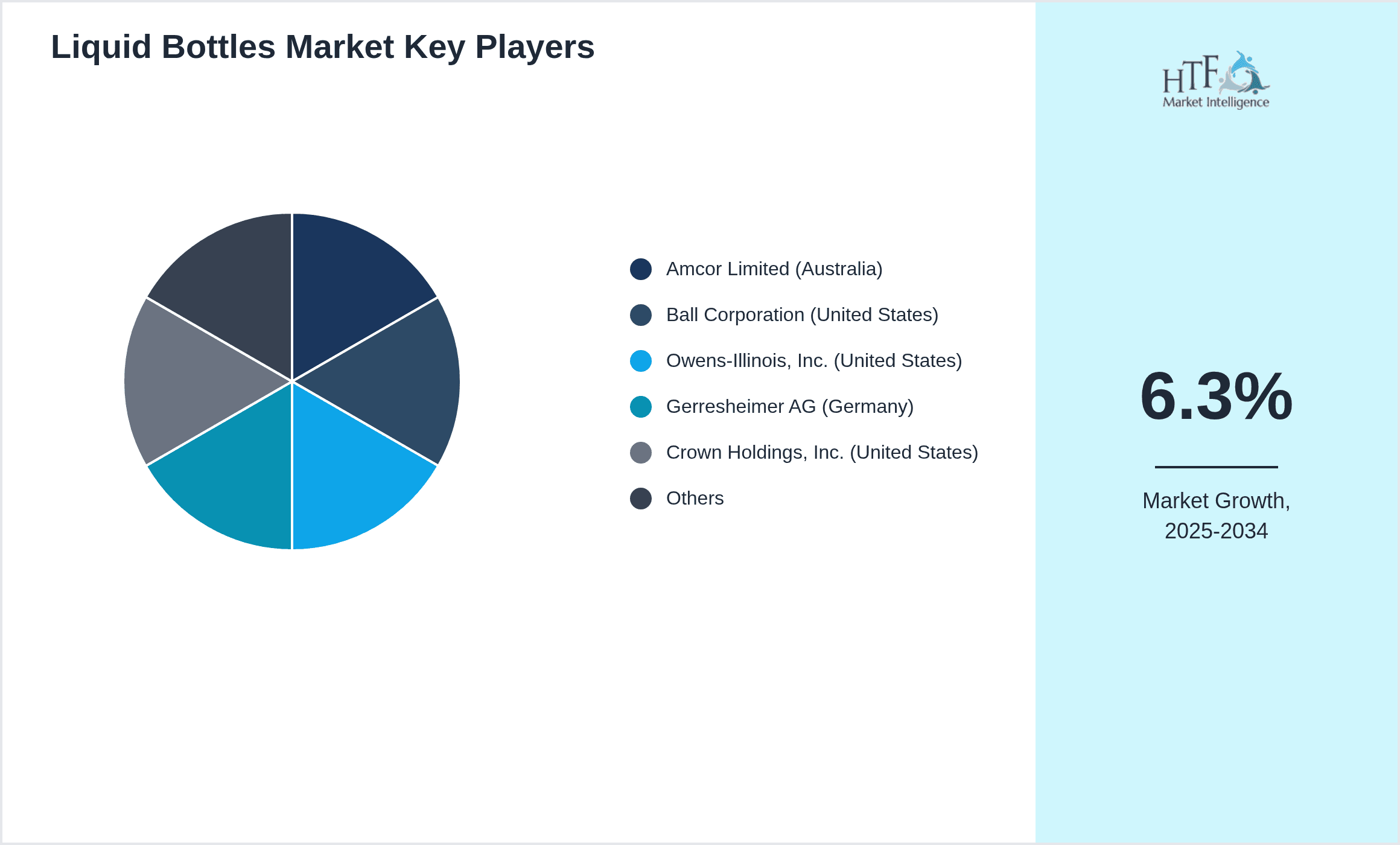
- •Amcor Limited (Australia)
- •Ball Corporation (United States)
- •Owens-Illinois, Inc. (United States)
- •Gerresheimer AG (Germany)
- •Crown Holdings, Inc. (United States)
- •Plastipak Holdings, Inc. (United States)
- •Tetra Laval International S.A. (Switzerland)
- •Berry Global, Inc. (United States)
- •Silgan Holdings Inc. (United States)
- •MJS Packaging (United States)
- •Alpha Packaging (United States)
- •Nampak Limited (South Africa)
- •Gerresheimer Regensburg GmbH (Germany)
- •KHS GmbH (Germany)
- •Resilux NV (Belgium)
- •Zhejiang Jiahua Special Plastic Packaging Co., Ltd. (China)
- •Mondi Group (United Kingdom)
- •Silicon Packaging (Japan)
- •Graham Packaging Company (United States)
- •Trivium Packaging (United States)
- •Sidel Group (France)
- •Quadpack Industries S.A. (Spain)
- •ALPLA Werke Alwin Lehner GmbH & Co KG (Austria)
- •Gerresheimer Bünde GmbH (Germany)
- •RPC Group Plc (United Kingdom)
Market Breakdown
- •By Product Type
- ◦Plastic Bottles
- ◦Glass Bottles
- ◦Metal Bottles
- ◦Biodegradable Bottles
- ◦Refillable Bottles
- •By Application
- ◦Beverages
- ◦Pharmaceuticals
- ◦Personal Care
- ◦Food
- ◦Chemicals
- •By End-Use Industry
- ◦Food & Beverage Industry
- ◦Healthcare Industry
- ◦Cosmetics & Personal Care Industry
- ◦Chemical Industry
- •By Distribution Channel
- ◦Direct Sales
- ◦Distributors & Wholesalers
- ◦Online Retail
Growth Dynamics
The global liquid bottles market is driven by increasing demand for sustainable packaging solutions as consumers and governments worldwide intensify focus on environmental conservation. The shift towards biodegradable and refillable bottles is supported by regulatory policies and rising eco-consciousness. Technological advancements in material science enable the production of lightweight, durable bottles that reduce transportation costs and carbon footprint. The expanding beverage and pharmaceutical sectors globally contribute significantly to market growth, propelled by rising health awareness and consumption patterns. Moreover, innovations in smart packaging and customization cater to evolving consumer preferences, enhancing brand differentiation and user experience. Investment in supply chain optimization and digital marketing also accelerates market penetration, while emerging economies in Asia-Pacific and Latin America offer substantial growth opportunities due to increasing urbanization and disposable incomes. These dynamics collectively create a robust growth environment for liquid bottle manufacturers and stakeholders.

Market Trends
Sustainability remains a dominant trend in the liquid bottles market, with companies adopting biodegradable materials and refillable bottle designs to reduce environmental impact. The integration of smart technology such as QR codes and NFC tags on bottles enhances consumer engagement and product traceability, reflecting increasing digitalization. There is a growing preference for lightweight bottles that lower shipping costs and carbon emissions. Regional shifts show rapid adoption of eco-friendly packaging in Asia-Pacific driven by consumer awareness and regulatory frameworks. Additionally, personalization of packaging to improve brand loyalty and differentiation is gaining traction across end-use industries. Collaborations between material scientists and packaging companies are fostering innovation in barrier properties and recyclability, further shaping market evolution.
Market Opportunities
The liquid bottles market offers significant opportunities in the development of biodegradable and compostable materials that fulfill sustainability mandates without compromising product safety. Emerging markets in Asia-Pacific and Latin America present expansion possibilities due to growing industrialization and consumer base. Innovations in refillable bottle systems align with circular economy principles, creating avenues for brand differentiation and customer engagement. The pharmaceutical industry's increasing demand for tamper-evident, child-resistant bottles provides niche growth segments. Additionally, digital printing and smart packaging technologies enable customization and enhanced consumer interaction, opening new revenue streams. Strategic partnerships and acquisitions focusing on sustainable technologies can accelerate market penetration and innovation adoption.
Market Challenges
The liquid bottles market faces challenges related to the high cost and scalability of biodegradable and sustainable materials, which can limit adoption in cost-sensitive regions. Regulatory complexities and varying standards across countries create compliance difficulties for manufacturers operating globally. Additionally, competition from alternative packaging formats such as pouches and cartons poses a threat to traditional bottle usage. Supply chain disruptions, particularly in raw material availability, affect production continuity and cost structures. Consumer skepticism regarding the effectiveness and safety of new materials may impede market acceptance. Furthermore, the need for advanced recycling infrastructure to support circular economy models remains a significant barrier in many regions.
Regulatory Framework
- •Between 2020 and 2025, regulatory bodies worldwide have introduced stringent standards aimed at enhancing sustainability and safety in liquid bottle manufacturing and usage. The European Union implemented the Single-Use Plastics Directive in 2021, mandating reduction and recycling targets for plastic packaging, significantly impacting manufacturers’ material choices and production processes. The United States Food and Drug Administration (FDA) updated guidelines on pharmaceutical container safety and material compatibility to ensure consumer health protection. In Asia-Pacific, countries like Japan and South Korea have enforced regulations promoting biodegradable materials and extended producer responsibility schemes. Environmental regulations focused on carbon footprint reduction and waste management have compelled companies to innovate eco-friendly packaging solutions. Additionally, mandatory labeling requirements for recyclability and material composition have increased transparency and consumer awareness. These regulatory developments shape market strategies, driving investment in sustainable technologies and compliance efforts across global supply chains.
- •Policy frameworks such as the Circular Economy Action Plan by the European Commission encourage design for reuse and recyclability, influencing product design and lifecycle management globally. Governments in Latin America and the Middle East & Africa are gradually adopting similar standards, fostering regional alignment with global sustainability goals. The integration of safety standards in pharmaceuticals and food-grade packaging ensures that liquid bottles meet rigorous quality benchmarks, facilitating international trade compliance. These regulations necessitate ongoing adaptation by manufacturers and stimulate innovation in materials and production technologies, positioning the market for sustainable long-term growth.
Market Intelligence
- •15th January 2025, Amcor Limited announced the launch of a new line of fully biodegradable plastic bottles aimed at the beverage and personal care sectors. These bottles utilize advanced compostable polymers designed to degrade within 12 months under industrial composting conditions, significantly reducing environmental impact. The product launch is part of Amcor’s strategic initiative to align with global sustainability targets and regulatory mandates. The new bottles feature enhanced durability and barrier properties, ensuring product safety and shelf life are uncompromised. This innovation positions Amcor competitively in markets with stringent environmental regulations and growing consumer demand for eco-friendly packaging. Source: Amcor Official Press Release.
- •22nd March 2025, Ball Corporation introduced a smart glass bottle embedded with NFC technology targeted at the premium beverage industry. This innovation allows consumers to interact digitally with the product for authentication, product information, and promotional engagement. The smart bottle enhances brand transparency and combats counterfeiting in luxury segments. Ball Corporation's initiative reflects the broader market trend towards digitalization and consumer experience enhancement in packaging. This development is expected to open new marketing channels and foster customer loyalty. Source: Ball Corporation Corporate News.
- •10th May 2025, Owens-Illinois, Inc. completed the acquisition of a regional biodegradable bottle manufacturer in Asia-Pacific to strengthen its sustainable product portfolio and regional presence. The acquisition aligns with Owens-Illinois’ strategic growth plan focusing on sustainability and expanding footprint in emerging markets with high growth potential. This move is anticipated to accelerate product development capabilities and distribution reach, enhancing competitive positioning globally. The integration supports the growing demand for eco-friendly packaging solutions in the pharmaceutical and beverage sectors across Asia-Pacific. Source: Owens-Illinois, Inc. Investor Relations.
- •Recent market developments and strategic initiatives are continuously tracked through industry publications, company announcements, and regulatory filings. For the most current information, stakeholders are advised to monitor official corporate communications and recognized market intelligence platforms.
Regional Outlook
The North America currently holds a significant share of the market, primarily due to several key factors: increasing consumption rates, a burgeoning population, and robust economic momentum. These elements collectively drive demand, positioning this region as a leader in the market. On the other hand, Asia-Pacific is rapidly emerging as the fastest-growing area within the industry. This remarkable growth can be attributed to swift infrastructure development, the expansion of various industrial sectors, and a marked increase in consumer demand. These dynamics make this region a crucial player in shaping future market growth.
In our report, we cover a comprehensive analysis of the following regions and countries:
- North America
- LATAM
- West Europe
- Central & Eastern Europe
- Northern Europe
- Southern Europe
- East Asia
- Southeast Asia
- South Asia
- Central Asia
- Oceania
- MEA
| Feature | Details |
|---|---|
| Base Year Market Size | USD 45.7 Billion |
| Forecast Year Market Size | USD 78.4 Billion |
| CAGR | 6.3% |
| Forecast Period | 2026 to 2033 |
| YoY Growth | 6.1% |
| Scope of Report | Market is segmented by Product Type (Plastic Bottles, Glass Bottles, Metal Bottles, Biodegradable Bottles, Refillable Bottles), Application (Beverages, Pharmaceuticals, Personal Care, Food, Chemicals), End-Use Industry (Food & Beverage Industry, Healthcare Industry, Cosmetics & Personal Care Industry, Chemical Industry), Distribution Channel (Direct Sales, Distributors & Wholesalers, Online Retail) |
| Regions Covered | North America, LATAM, West Europe, Central & Eastern Europe, Northern Europe, Southern Europe, East Asia, Southeast Asia, South Asia, Central Asia, Oceania, MEA |
| Key Companies | Amcor Limited (Australia), Ball Corporation (United States), Owens-Illinois, Inc. (United States), Gerresheimer AG (Germany), Crown Holdings, Inc. (United States), Plastipak Holdings, Inc. (United States), Tetra Laval International S.A. (Switzerland), Berry Global, Inc. (United States), Silgan Holdings Inc. (United States), MJS Packaging (United States), Alpha Packaging (United States), Nampak Limited (South Africa), Gerresheimer Regensburg GmbH (Germany), KHS GmbH (Germany), Resilux NV (Belgium), Zhejiang Jiahua Special Plastic Packaging Co., Ltd. (China), Mondi Group (United Kingdom), Silicon Packaging (Japan), Graham Packaging Company (United States), Trivium Packaging (United States), Sidel Group (France), Quadpack Industries S.A. (Spain), ALPLA Werke Alwin Lehner GmbH & Co KG (Austria), Gerresheimer Bünde GmbH (Germany), RPC Group Plc (United Kingdom) |
Global Liquid Bottles Market Size, Growth & Revenue 2025-2034 - Table of Contents
Frequently Asked Questions (FAQ):
The Compact Track Loaders market is expected to see value worth 5.3 Billion in 2025.
North America currently leads the market with approximately 45% market share, followed by Europe at 28% and Asia-Pacific at 22%. The remaining regions account for 5% of the global market.
Key growth drivers include increasing construction activities, rising demand for versatile equipment in agriculture, technological advancements in track loader design, and growing preference for compact equipment in urban construction projects.