
Global Dance Pads Market Size, Growth & Revenue 2025-2034
Global Dance Pads Market is segmented by Product Type (Soft Dance Pads, Hard Dance Pads, Wireless Dance Pads, Portable Dance Pads, LED Dance Pads), Application (Home Entertainment, Arcade Centers, Fitness & Dance Studios, Educational Institutions, Event & Competitions), End-Use Industry (Gaming Industry, Fitness Industry, Education Sector, Entertainment & Events), Distribution Channel (Online Retail, Specialty Stores, Direct Sales), and Geography (North America, LATAM, West Europe, Central & Eastern Europe, Northern Europe, Southern Europe, East Asia, Southeast Asia, South Asia, Central Asia, Oceania, MEA)
Pricing
Report Overview
Executive Summary
- •The Global Dance Pads Market represents a dynamic segment within the interactive gaming and fitness industry, characterized by devices that enable users to engage in dance-based gameplay and exercise by stepping on sensitive panels. These devices have evolved from simple gaming peripherals to sophisticated platforms integrating wireless technology, LED lighting, and enhanced sensor accuracy, catering to a broad spectrum of users from casual gamers to professional dancers and fitness enthusiasts. Applications span across home entertainment, arcade venues, fitness and dance studios, educational sectors, and competitive events, reflecting the diverse use cases and growing consumer demand. The market is driven by increasing health consciousness, the popularity of dance-centric fitness programs, and the surge in interactive gaming culture worldwide. Technological innovations, including mobile connectivity and virtual reality integration, have further expanded the scope and appeal of dance pads, providing immersive user experiences. Regional growth is propelled by factors such as rising disposable incomes, urbanization, and government initiatives promoting physical activity, with North America currently dominating market share and Asia-Pacific emerging as the fastest-growing region. Despite challenges like high device costs and limited awareness in emerging markets, the market outlook remains positive, with forecasts indicating a robust CAGR of over 12% through 2034. Strategic partnerships, product innovations, and expanding application domains offer significant opportunities for stakeholders. This report provides a comprehensive analysis encompassing market definitions, segmentation, competitive landscape, growth dynamics, trends, challenges, opportunities, and regional insights, enabling informed decision-making and strategic planning for investors, manufacturers, and service providers in the dance pads ecosystem.
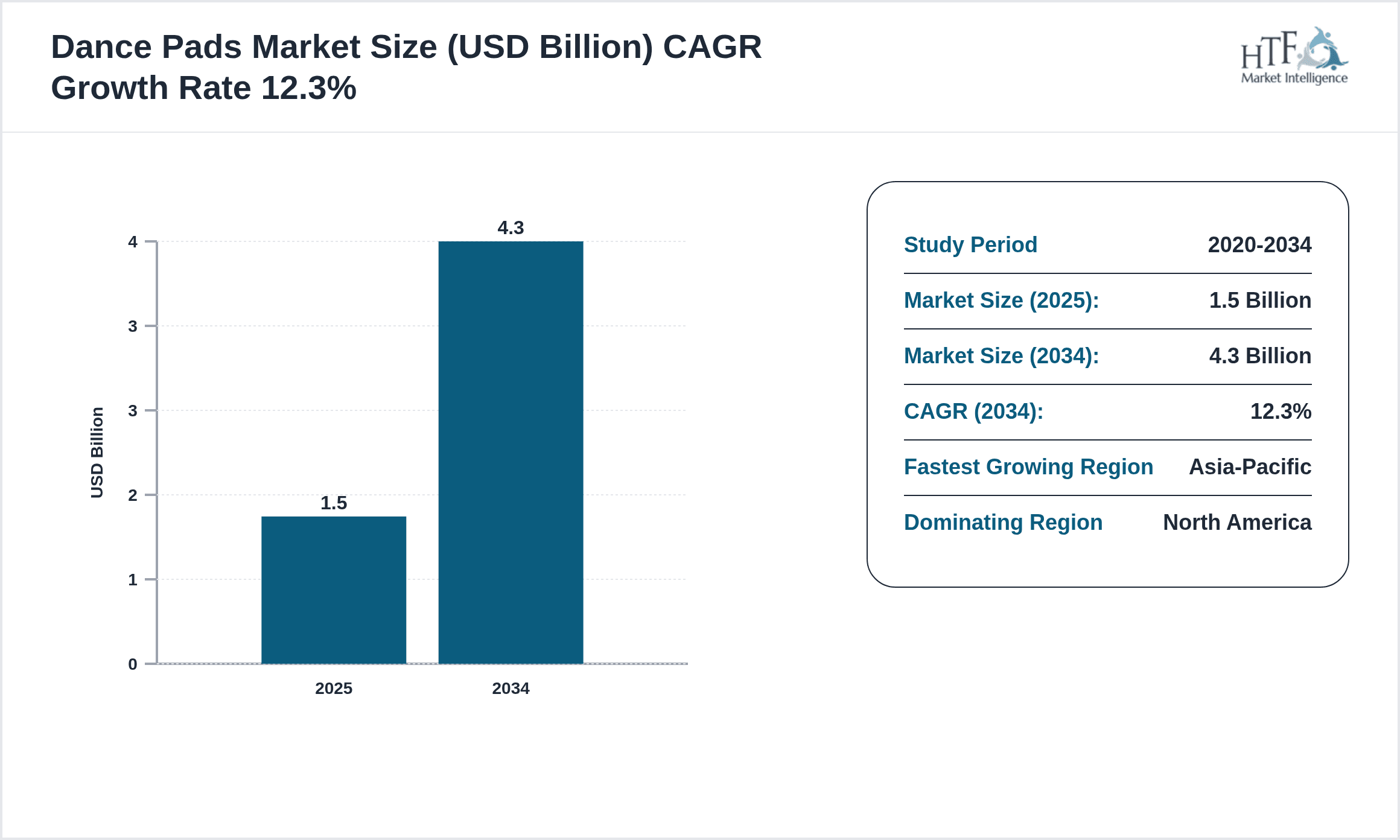
- •Key market highlights reveal the Global Dance Pads Market valued at USD 1.5 Billion in 2025, projected to reach USD 4.3 Billion by 2034, registering a CAGR of approximately 12.3%. Growth is driven by increasing adoption in fitness regimes and entertainment sectors, technological advancements including wireless and LED-enabled pads, and expanding presence in educational and competitive domains. The market demonstrates consistent year-on-year growth, with emerging regions like Asia-Pacific contributing significantly to demand due to rising youth population and gaming culture proliferation.
- •The market's value proposition lies in its ability to merge entertainment with fitness, appealing to diverse consumer bases and promoting active lifestyles. Its strategic importance spans gaming companies, fitness equipment manufacturers, educational institutions, and event organizers, offering avenues for innovation, customer engagement, and revenue growth. The integration of advanced technologies enhances user experience and expands market reach, underscoring the sector’s potential as a key contributor to interactive entertainment and wellness industries globally.
Competitive Landscape
The competitive environment of the Global Dance Pads Market is characterized by a diverse array of players ranging from specialized peripheral manufacturers to large-scale gaming and fitness technology firms. Market dynamics are influenced by rapid technological innovation, including advancements in wireless connectivity, sensor precision, and integration with augmented and virtual reality platforms. Companies employ various competitive strategies such as product differentiation through enhanced design and features, strategic alliances to expand distribution networks, and aggressive pricing to capture emerging markets. Innovation approaches focus on improving user engagement and device portability, while strategic partnerships with game developers and fitness applications enhance ecosystem connectivity. Mergers and acquisitions, although limited recently, offer potential for consolidation and expansion of product portfolios. Market positioning varies regionally, with North America and Europe hosting established players focusing on premium products, while Asia-Pacific is witnessing the rise of cost-effective alternatives catering to a rapidly growing user base. Pricing strategies balance between affordability and technological sophistication, supported by diverse distribution channels including e-commerce, specialty retailers, and direct-to-consumer models. Technology adoption is a critical competitive advantage, with leaders investing heavily in R&D to maintain market share. Barriers to entry include high development costs, intellectual property challenges, and the need for extensive consumer education. Future trends point towards increased customization, integration with fitness tracking devices, and expansion into new application segments, shaping a highly competitive and innovative market landscape.
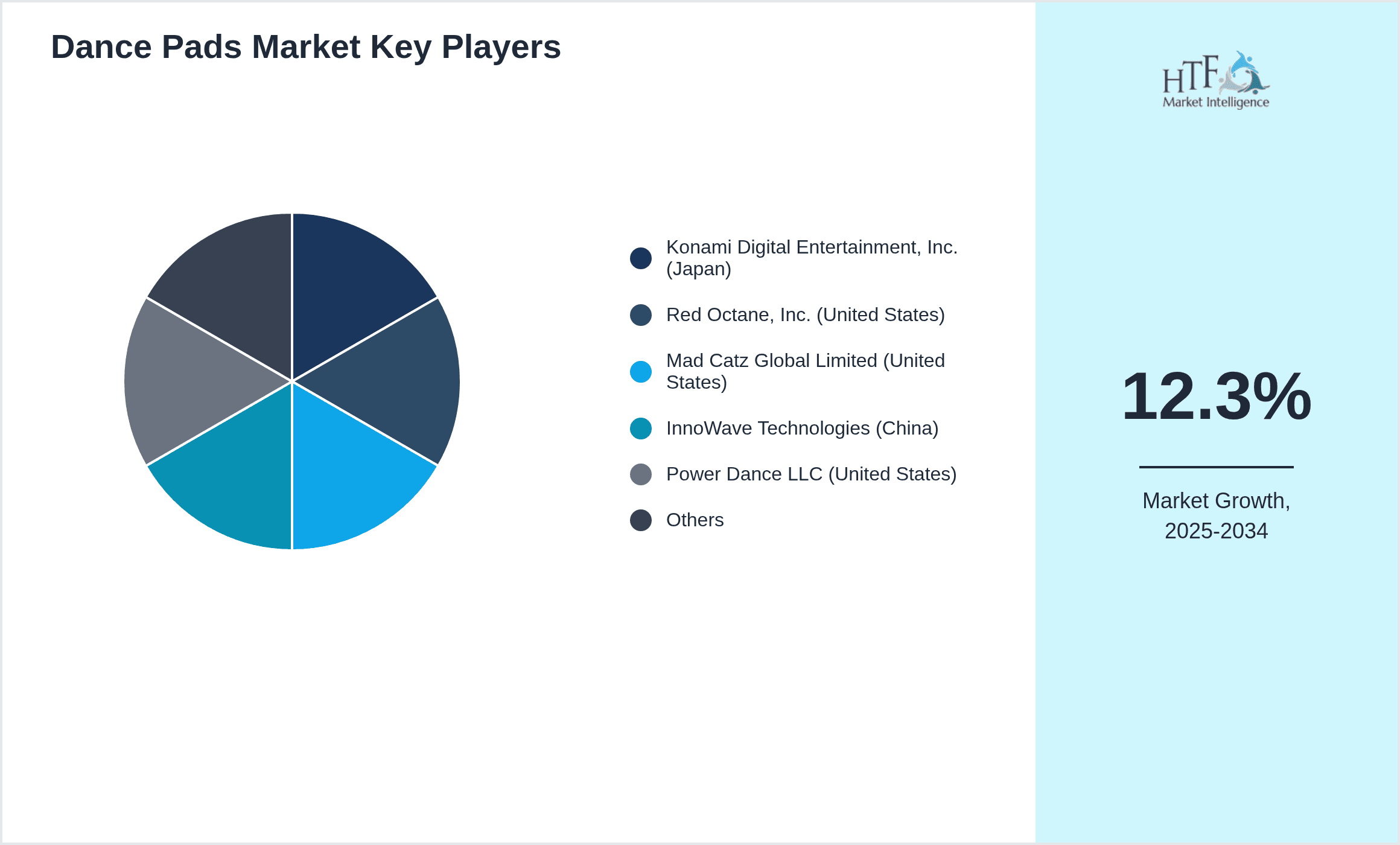
Prominent Players in Dance Pads Market
- •Konami Digital Entertainment, Inc. (Japan)
- •Red Octane, Inc. (United States)
- •Mad Catz Global Limited (United States)
- •InnoWave Technologies (China)
- •Power Dance LLC (United States)
- •Fun Generation Inc. (United States)
- •Step Revolution (United Kingdom)
- •iDance LLC (United States)
- •WiiDance Corporation (Japan)
- •DanceMaster Technologies (South Korea)
- •GameTech Innovations (Germany)
- •BeatStep Solutions (Canada)
- •Pulse Interactive (Australia)
- •Leap Gaming (France)
- •RhythmPlay Inc. (United States)
- •NextMove Entertainment (China)
- •FlexStep Technologies (Netherlands)
- •Urban Grooves Ltd. (United Kingdom)
- •TapDance Interactive (Singapore)
- •MoveBeat Corp. (South Korea)
- •VibeStep LLC (United States)
- •StepZone Gaming (Brazil)
- •DanceTech Solutions (Italy)
- •GroovePad Inc. (United States)
- •RhythmSense Corporation (Japan)
Market Breakdown
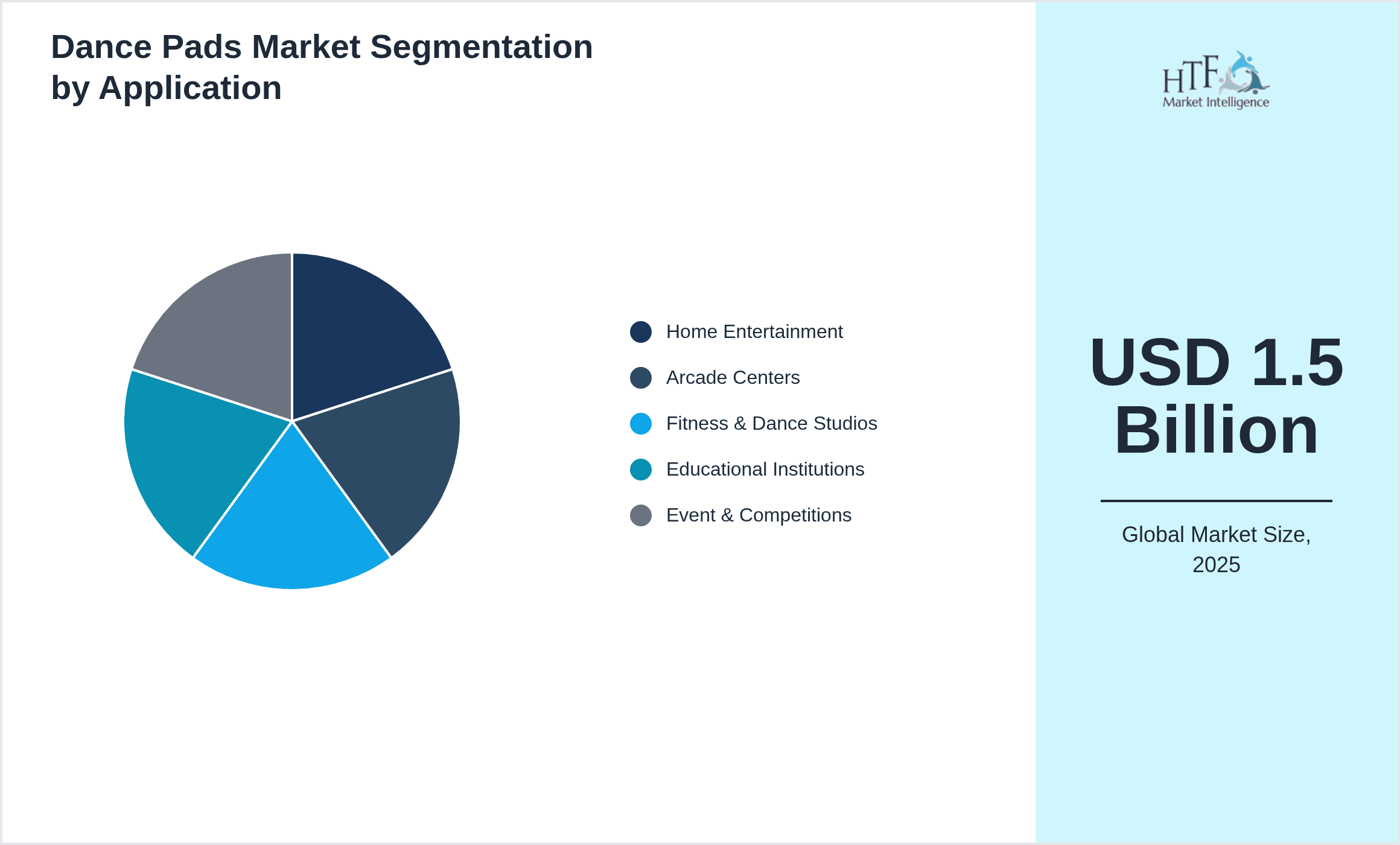
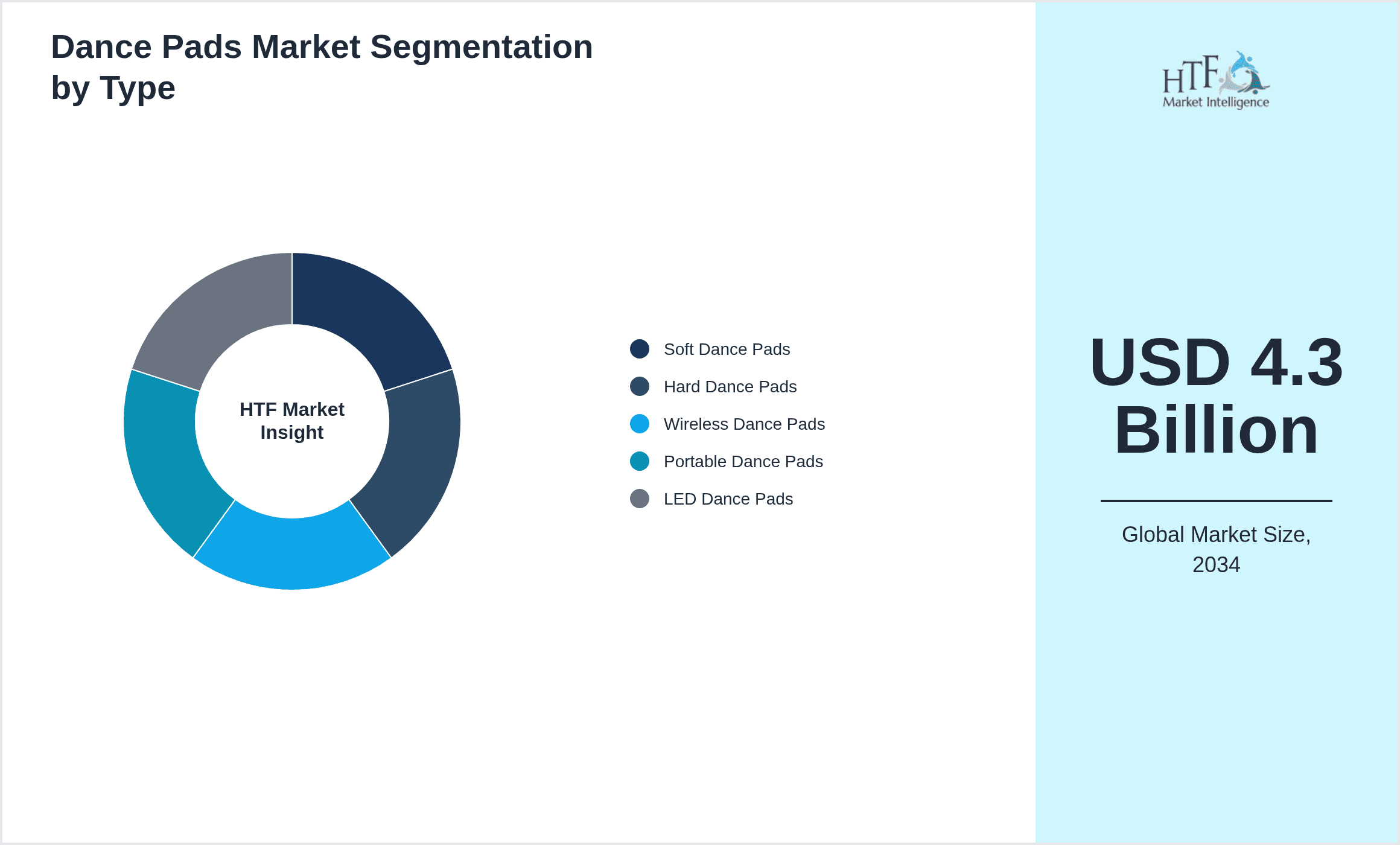
- •By Product Type
- ◦Soft Dance Pads
- ◦Hard Dance Pads
- ◦Wireless Dance Pads
- ◦Portable Dance Pads
- ◦LED Dance Pads
- •By Application
- ◦Home Entertainment
- ◦Arcade Centers
- ◦Fitness & Dance Studios
- ◦Educational Institutions
- ◦Event & Competitions
- •By End-Use Industry
- ◦Gaming Industry
- ◦Fitness Industry
- ◦Education Sector
- ◦Entertainment & Events
- •By Distribution Channel
- ◦Online Retail
- ◦Specialty Stores
- ◦Direct Sales
Growth Dynamics
The Global Dance Pads Market experiences robust growth driven by increasing consumer interest in interactive fitness and entertainment solutions. Technological advancements such as wireless connectivity and LED integration have enhanced user experience, broadening appeal across age groups and geographies. Rising health awareness and government initiatives promoting physical activity contribute to expanding adoption in fitness and educational sectors. The convergence of gaming and fitness industries has created hybrid applications fueling market expansion. Furthermore, the proliferation of mobile and VR platforms enables seamless integration of dance pads, promoting immersive experiences and sustained user engagement. Market players leverage innovation and strategic partnerships to cater to evolving consumer preferences, thereby maintaining competitive advantage and fostering market resilience amid dynamic industry trends.
Market Trends
A prominent trend in the Global Dance Pads Market is the increasing incorporation of smart technology, including IoT connectivity and app integration, allowing personalized fitness tracking and social sharing. LED-enhanced dance pads are gaining traction, offering visual feedback and gamification elements that boost user motivation. Additionally, the rise of e-sports and competitive dance gaming has expanded the market's appeal beyond casual users. Sustainability considerations are influencing product design, with eco-friendly materials and energy-efficient components becoming more prevalent. The growing popularity of hybrid fitness programs blending dance, gaming, and wellness reflects evolving consumer lifestyles and preferences, driving innovation and market differentiation.
Market Opportunities
Significant opportunities exist in emerging markets where rising disposable incomes and growing awareness of interactive fitness solutions are creating new demand. Expanding applications in education and rehabilitation sectors present untapped potential for customized dance pad solutions. Advancements in VR and AR technologies offer avenues for product innovation and enhanced user engagement. Collaborations with fitness app developers and gaming companies can facilitate ecosystem expansion. Additionally, the growing trend of home-based fitness post-pandemic underscores prospects for portable and wireless dance pads catering to convenience and flexibility, fostering market growth and diversification.
Market Challenges
Challenges confronting the Global Dance Pads Market include high product costs limiting accessibility in price-sensitive regions. Technical complexities related to sensor accuracy and durability affect user satisfaction and brand reputation. Limited consumer awareness and cultural acceptance in certain regions impede market penetration. Furthermore, competition from alternative fitness and gaming devices creates pressure on market players to continuously innovate. Regulatory variations across regions can complicate compliance and slow product launches. Supply chain disruptions and material shortages also pose risks to timely production and distribution, necessitating strategic management by manufacturers and distributors.
Regulatory Framework
- •Between 2020 and 2025, various regulations have shaped the Global Dance Pads Market by enforcing safety, quality, and environmental standards. Key regulations include the Consumer Product Safety Improvement Act (CPSIA) in North America, mandating strict safety compliance for electronic gaming peripherals. The European Union’s Restriction of Hazardous Substances Directive (RoHS) has required manufacturers to limit hazardous materials, influencing material selection and manufacturing processes. Additionally, data protection regulations like GDPR impact software-integrated dance pads with connectivity features, ensuring user privacy and data security. Country-specific regulations on electronic waste disposal promote sustainable product lifecycle management. These regulatory frameworks have driven manufacturers to innovate responsibly while maintaining compliance, fostering consumer trust and market stability. Industry-wide adherence to certification standards such as CE and FCC further ensures product reliability and market acceptance across regions.
- •The enforcement mechanisms involve mandatory testing, certification, and periodic audits by regulatory bodies, affecting product design and market entry timelines. Stakeholders have adapted by incorporating compliance teams and investing in quality assurance technologies. The evolving regulatory landscape necessitates continuous monitoring and agile responses from market participants to mitigate risks and leverage compliance as a competitive advantage. Government initiatives promoting physical activity and digital entertainment also provide supportive policy environments, encouraging innovation and adoption of dance pad technologies globally.
- •Safety standards focus on electrical and mechanical safety to prevent consumer harm during device use. Environmental norms mandate energy efficiency and reduction of carbon footprint, aligning with global sustainability goals. Operational guidelines stipulate labeling, user instructions, and warranty provisions to enhance consumer awareness and satisfaction. Country-specific mandates often require localized certifications and adherence to import-export regulations, influencing supply chain strategies. These comprehensive regulatory measures collectively contribute to a safer, more sustainable, and consumer-friendly market ecosystem.
- •Regulatory developments have also included mandates on accessibility features to accommodate users with disabilities, expanding market inclusivity. Timelines for implementation vary by region, with some markets enforcing phased compliance schedules to ease transition. Ongoing consultations between industry stakeholders and regulators facilitate balanced policies that support innovation while protecting consumer interests. This collaborative approach is expected to continue shaping the regulatory framework in the coming years.
- •Government programs offering incentives and grants for digital health and fitness innovations have positively impacted the dance pads market. Such support facilitates research and development, pilot projects, and market introduction of advanced dance pad technologies. Policy frameworks promoting public-private partnerships enable collaborative ecosystem development, further accelerating market growth and technology diffusion. These initiatives reflect the strategic importance of interactive fitness devices in public health agendas globally.
Market Intelligence
- •15th January 2025, Konami Digital Entertainment, Inc. launched an advanced wireless LED dance pad designed to integrate seamlessly with its popular dance gaming platform. Featuring enhanced sensor precision, customizable LED patterns, and Bluetooth connectivity, the product targets both home users and arcade operators seeking immersive interactive experiences. This launch aims to capitalize on growing demand for portable and visually engaging dance pads, reinforcing Konami’s leadership in the dance gaming segment. The device also supports mobile app integration for personalized fitness tracking and social sharing, expanding its appeal across fitness and entertainment markets. Strategic marketing campaigns in North America and Asia-Pacific accompany the rollout, highlighting user convenience and technological innovation. Source: Official Konami Press Release
- •20th March 2025, Red Octane, Inc. introduced a new generation of hard dance pads incorporating sustainable materials and modular design for easy maintenance and upgradeability. Targeted at arcade centers and competitive gaming venues, the product offers improved durability, reduced environmental impact, and compatibility with existing game platforms. The innovation addresses operator demands for cost-effective, eco-friendly solutions while enhancing player experience through responsive sensors and robust construction. Red Octane’s initiative aligns with growing industry trends towards sustainability and long-term value creation. The company plans phased global distribution with initial focus on Europe and North America. Source: Red Octane Corporate Announcement
- •12th June 2025, iDance LLC announced a strategic partnership with a leading fitness app developer to integrate dance pad functionalities with personalized workout programs. This collaboration enables real-time feedback, customized coaching, and interactive challenges, bridging gaming and fitness ecosystems. The initiative targets fitness studios and home users seeking engaging exercise alternatives, leveraging data analytics to enhance user motivation and retention. The partnership exemplifies market convergence and innovation, expected to drive broader adoption and create new revenue streams. Joint marketing efforts and co-branded products are planned for launch in late 2025, focusing on North America and Asia-Pacific markets. Source: iDance LLC Official Website
- •5th September 2025, Mad Catz Global Limited completed the acquisition of Pulse Interactive, aiming to expand its portfolio in interactive fitness devices including dance pads. The deal enhances Mad Catz’s technological capabilities and market reach, particularly in wireless and LED-enabled products. Synergies from the acquisition are expected to accelerate product development cycles and strengthen distribution channels in Europe and Latin America. This strategic move positions Mad Catz as a more diversified player capable of capitalizing on emerging trends in fitness gaming. The transaction reflects ongoing consolidation in the dance pads market, driven by innovation and competitive pressures. Source: Mad Catz Investor Relations
- •Source: Official Konami Press Release, Red Octane Corporate Announcement, iDance LLC Official Website, Mad Catz Investor Relations
Regional Outlook
The North America currently holds a significant share of the market, primarily due to several key factors: increasing consumption rates, a burgeoning population, and robust economic momentum. These elements collectively drive demand, positioning this region as a leader in the market. On the other hand, Asia-Pacific is rapidly emerging as the fastest-growing area within the industry. This remarkable growth can be attributed to swift infrastructure development, the expansion of various industrial sectors, and a marked increase in consumer demand. These dynamics make this region a crucial player in shaping future market growth.
In our report, we cover a comprehensive analysis of the following regions and countries:
- North America
- LATAM
- West Europe
- Central & Eastern Europe
- Northern Europe
- Southern Europe
- East Asia
- Southeast Asia
- South Asia
- Central Asia
- Oceania
- MEA
| Feature | Details |
|---|---|
| Base Year Market Size | USD 1.5 Billion |
| Forecast Year Market Size | USD 4.3 Billion |
| CAGR | 12.3% |
| Forecast Period | 2026 to 2033 |
| YoY Growth | 12.4% |
| Scope of Report | Market is segmented by Product Type (Soft Dance Pads, Hard Dance Pads, Wireless Dance Pads, Portable Dance Pads, LED Dance Pads), Application (Home Entertainment, Arcade Centers, Fitness & Dance Studios, Educational Institutions, Event & Competitions), End-Use Industry (Gaming Industry, Fitness Industry, Education Sector, Entertainment & Events), Distribution Channel (Online Retail, Specialty Stores, Direct Sales) |
| Regions Covered | North America, LATAM, West Europe, Central & Eastern Europe, Northern Europe, Southern Europe, East Asia, Southeast Asia, South Asia, Central Asia, Oceania, MEA |
| Key Companies | Konami Digital Entertainment, Inc. (Japan), Red Octane, Inc. (United States), Mad Catz Global Limited (United States), InnoWave Technologies (China), Power Dance LLC (United States), Fun Generation Inc. (United States), Step Revolution (United Kingdom), iDance LLC (United States), WiiDance Corporation (Japan), DanceMaster Technologies (South Korea), GameTech Innovations (Germany), BeatStep Solutions (Canada), Pulse Interactive (Australia), Leap Gaming (France), RhythmPlay Inc. (United States), NextMove Entertainment (China), FlexStep Technologies (Netherlands), Urban Grooves Ltd. (United Kingdom), TapDance Interactive (Singapore), MoveBeat Corp. (South Korea), VibeStep LLC (United States), StepZone Gaming (Brazil), DanceTech Solutions (Italy), GroovePad Inc. (United States), RhythmSense Corporation (Japan) |
Global Dance Pads Market Size, Growth & Revenue 2025-2034 - Table of Contents
Research enthusiast focused on transforming data uncovering into actionable insights through data-driven decision-making.
Frequently Asked Questions (FAQ):
The Compact Track Loaders market is expected to see value worth 5.3 Billion in 2025.
North America currently leads the market with approximately 45% market share, followed by Europe at 28% and Asia-Pacific at 22%. The remaining regions account for 5% of the global market.
Key growth drivers include increasing construction activities, rising demand for versatile equipment in agriculture, technological advancements in track loader design, and growing preference for compact equipment in urban construction projects.