
Global Skipping Rope Market Size, Growth & Revenue 2025-2034
Global Skipping Rope Market is segmented by Type (PVC Rope, Leather Rope, Steel Wire Rope, Beaded Rope, Speed Rope), Application (Fitness, Sports Training, Rehabilitation, Competitive Jump Rope, Recreational Use), End-Use Industry (Gyms & Fitness Centers, Professional Sports, Home Users, Physical Therapy Centers), Distribution Channel (Online Retail, Specialty Sports Stores, Mass Merchandisers), and Geography (North America, LATAM, West Europe, Central & Eastern Europe, Northern Europe, Southern Europe, East Asia, Southeast Asia, South Asia, Central Asia, Oceania, MEA)
Pricing
Report Overview
Executive Summary
- •The global skipping rope market includes a variety of jump ropes utilized across fitness, sports training, rehabilitation, competitive jump rope, and recreational segments. It features diverse product types such as PVC ropes, leather ropes, steel wire ropes, beaded ropes, and speed ropes. Skipping ropes serve as affordable, portable fitness tools that improve cardiovascular health, coordination, and muscle endurance, making them highly popular worldwide. Recent technological improvements incorporate ergonomic designs, adjustable lengths, and digital counters that enhance user experience. The market caters to professional athletes, fitness enthusiasts, and rehabilitation centers, supporting various training and health regimes. Increasing health consciousness and the rise of home-based workouts drive demand globally. The market's scope covers manufacturing, distribution, and sales in both developed and emerging economies, reflecting evolving fitness trends and lifestyle changes. Growing adoption in Asia-Pacific and Latin America due to expanding middle-class populations and awareness further strengthens market growth potential.
- •Key highlights reveal the skipping rope market size at USD 1.8 Billion in 2025, forecasted to reach USD 4.35 Billion by 2034, reflecting a CAGR of 10.05%. North America dominates with a 34% market share, closely followed by Europe at 27%, while Asia-Pacific is the fastest growing region driven by rising fitness adoption and urbanization. PVC ropes lead as the dominant product type owing to their affordability and durability, whereas speed ropes exhibit the highest growth rate due to their popularity in competitive training. Fitness and sports training applications constitute the largest end-use segments, reflecting increased consumer engagement and professional usage. Market growth is bolstered by the integration of digital technologies in skipping ropes and expansion in emerging markets.
- •Skipping ropes offer strategic value as versatile fitness equipment that supports cardiovascular health, weight management, and athletic training. Their affordability and portability make them accessible across socio-economic groups globally, fostering widespread adoption. Manufacturers and distributors benefit from expanding consumer bases driven by health awareness and fitness trends. The market's growth aligns with increasing home workouts, rehabilitation programs, and competitive jump rope sports. Continued innovation in materials and digital features enhances product appeal and user engagement. The market also presents opportunities for partnerships, regional expansions, and product portfolio diversification, providing stakeholders with avenues to capture emerging demand and sustain long-term growth.

Competitive Landscape
Companies in the global skipping rope market adopt multifaceted strategies to maintain and expand their market presence. Innovation drives product differentiation through ergonomic designs, lightweight materials, and integration of digital tracking features that provide users with performance metrics. Global expansion efforts focus on penetrating emerging markets, particularly in Asia-Pacific and Latin America, where increasing health awareness and disposable incomes fuel demand. Strategic partnerships with fitness centers, sports organizations, and e-commerce platforms enhance brand visibility and distribution channels. Mergers and acquisitions facilitate portfolio diversification and technological advancements, enabling companies to offer comprehensive fitness solutions. Pricing strategies balance affordability with premium product offerings to cater to diverse consumer segments. Emphasis on sustainability through eco-friendly materials and manufacturing processes aligns with evolving consumer preferences. Companies also invest in marketing campaigns leveraging social media and influencer endorsements to engage younger demographics. Overall, competitive dynamics revolve around innovation, regional growth, digital integration, and customer-centric approaches to capitalize on the expanding skipping rope market.
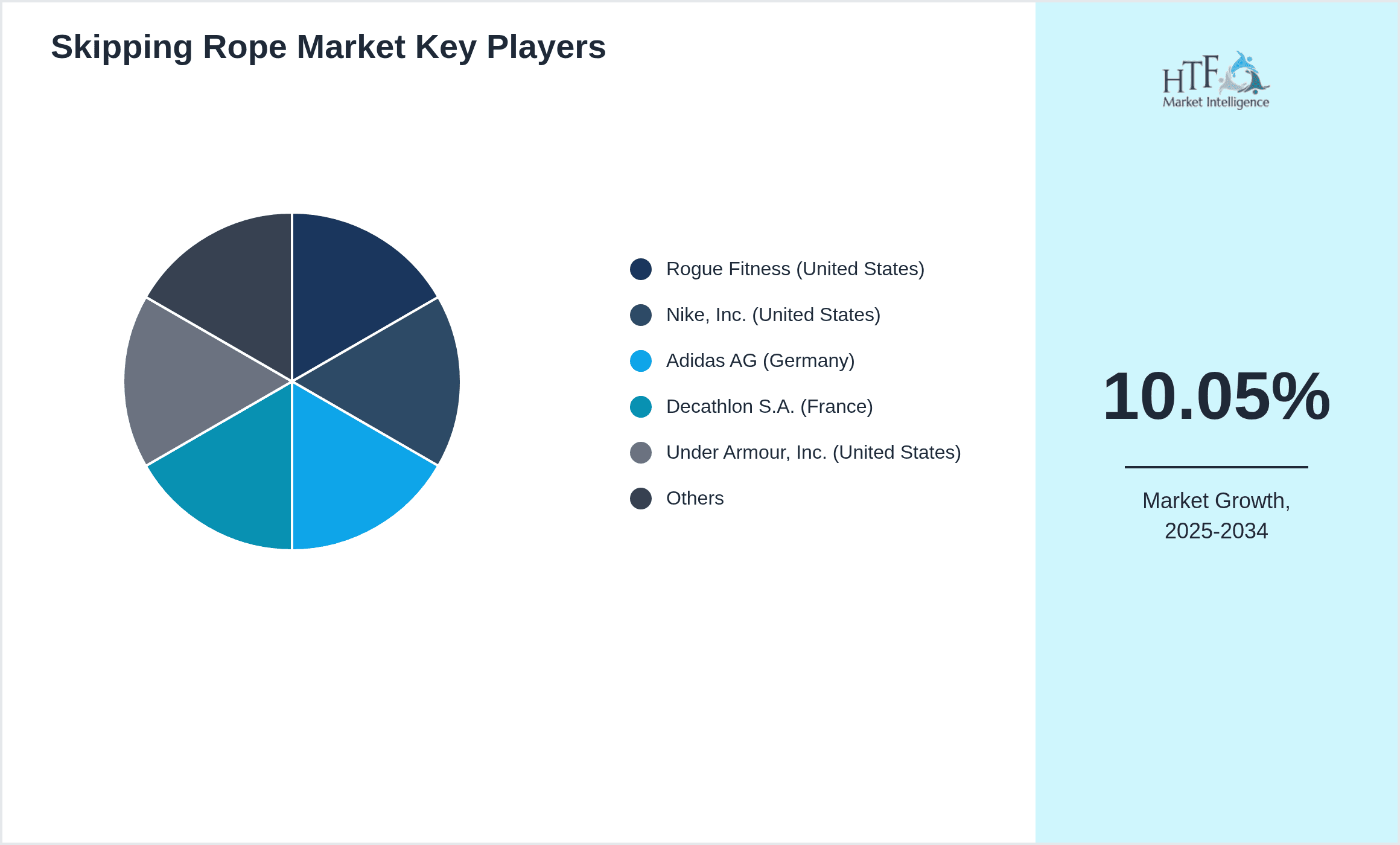
Key Players in Skipping Rope Market
- •Rogue Fitness (United States)
- •Nike, Inc. (United States)
- •Adidas AG (Germany)
- •Decathlon S.A. (France)
- •Under Armour, Inc. (United States)
- •Lululemon Athletica Inc. (Canada)
- •JumpSport, Inc. (United States)
- •Speed Rope (United States)
- •BeMaxx Fitness (United States)
- •Crossrope, LLC (United States)
- •WOD Nation (United States)
- •FitKit (India)
- •SKLZ (United States)
- •ProForm (United States)
- •Everlast Worldwide, Inc. (United States)
- •Gaiam (United States)
- •TRX Training (United States)
- •Jump King (United Kingdom)
- •Aduro Sport (United States)
- •Titan Fitness (United States)

Market Breakdown
- •By Type
- ◦PVC Rope
- ◦Leather Rope
- ◦Steel Wire Rope
- ◦Beaded Rope
- ◦Speed Rope
- •By Application
- ◦Fitness
- ◦Sports Training
- ◦Rehabilitation
- ◦Competitive Jump Rope
- ◦Recreational Use
- •By End-Use Industry
- ◦Gyms & Fitness Centers
- ◦Professional Sports
- ◦Home Users
- ◦Physical Therapy Centers
- •By Distribution Channel
- ◦Online Retail
- ◦Specialty Sports Stores
- ◦Mass Merchandisers
Growth Dynamics
The global skipping rope market expands due to rising health consciousness and the proliferation of fitness trends such as High-Intensity Interval Training that incorporate skipping ropes for cardio and endurance enhancement. Digital integration in skipping ropes with calorie counters and performance tracking increases consumer engagement and product appeal. Urbanization and increased disposable income in emerging markets like Asia-Pacific stimulate demand for affordable fitness equipment. Collaborations between sports brands and fitness influencers boost market visibility and user adoption. Government initiatives promoting physical activity and wellness programs further drive growth. The advent of home-based workouts accelerated by recent global health crises has made skipping ropes essential, portable exercise tools. Additionally, innovation in materials enhances durability and user comfort, broadening the target demographic. These factors collectively sustain robust growth, positioning skipping ropes as a staple in personal fitness and professional training worldwide.

Market Trends
Emerging trends in the skipping rope market include the incorporation of smart technology such as Bluetooth connectivity and mobile app synchronization, enabling users to monitor workout intensity and progress in real time. Sustainable manufacturing practices using eco-friendly materials address growing environmental concerns among consumers. The popularity of competitive jump rope as a sport fosters demand for advanced speed ropes designed for agility and precision. Customizable ropes with adjustable lengths and handle weights cater to personalized fitness needs. Expansion of e-commerce platforms facilitates broader product accessibility and consumer reach. Fitness studios and rehabilitation centers increasingly integrate skipping ropes into training regimes, reflecting versatility. The convergence of fitness and entertainment via virtual competitions and social media challenges also propels market engagement. These trends highlight innovation and digitalization as key drivers shaping the future landscape of the skipping rope industry.
Market Opportunities
Opportunities in the global skipping rope market stem from expanding fitness awareness and the rising popularity of home workouts that necessitate compact and affordable equipment. Untapped markets in Latin America and Middle East & Africa present significant growth potential due to increasing urbanization and health initiatives. Product innovation focusing on smart rope technologies with integrated sensors and data analytics offers avenues for differentiation and premiumization. Collaborations with fitness applications and digital platforms enable enhanced consumer engagement and brand loyalty. The rehabilitation segment offers growth prospects as skipping ropes become integral in physical therapy programs for cardiovascular and motor skill improvements. Moreover, sustainability-driven product lines using recycled or biodegradable materials align with consumer preferences, opening niche markets. Strategic partnerships with gyms, sports academies, and wellness centers facilitate market penetration and diversification. These opportunities collectively position the skipping rope market for accelerated expansion and innovation-driven success.
Market Challenges
Challenges in the skipping rope market include intense competition from alternative fitness equipment like treadmills and stationary bikes that offer broader exercise options, potentially limiting skipping rope demand. Price sensitivity in emerging markets demands cost-effective production without compromising quality, posing manufacturing challenges. Supply chain disruptions impact timely delivery and inventory management, especially amid global uncertainties. Limited consumer knowledge about the benefits and proper usage of skipping ropes restricts market penetration in certain regions. Technological adoption requires significant investment in R&D, which may be prohibitive for smaller players. Additionally, counterfeit products and low-quality imports affect brand reputation and consumer trust. Regulatory compliance related to product safety and material standards varies across regions, complicating global distribution. Addressing these challenges necessitates strategic innovation, effective marketing, and robust quality assurance to sustain competitiveness and growth.
Regulatory Framework
In the last five years, the global skipping rope market has experienced the implementation of stringent safety and material compliance regulations aimed at ensuring consumer protection. Key regulations include the European Union’s REACH directive, which restricts harmful chemicals in materials used for manufacturing fitness equipment, including skipping ropes. The United States Consumer Product Safety Commission enforces standards related to mechanical safety and durability. Additionally, environmental regulations promote the use of sustainable and recyclable materials, aligning with global sustainability goals. Companies must adhere to labeling and certification requirements to facilitate international trade and market access. The evolving regulatory landscape encourages manufacturers to innovate with safer, eco-friendly products while maintaining compliance across regional markets. Adherence to these regulations is critical for market players to maintain brand reputation and avoid legal penalties in global operations.
Market Intelligence
- •Recent market developments and strategic initiatives are continuously tracked through industry publications, company announcements, and regulatory filings. For the most current information, stakeholders are advised to monitor official corporate communications and recognized market intelligence platforms.
- •Recent market developments and strategic initiatives are continuously tracked through industry publications, company announcements, and regulatory filings. For the most current information, stakeholders are advised to monitor official corporate communications and recognized market intelligence platforms.
- •Recent market developments and strategic initiatives are continuously tracked through industry publications, company announcements, and regulatory filings. For the most current information, stakeholders are advised to monitor official corporate communications and recognized market intelligence platforms.
- •Recent market developments and strategic initiatives are continuously tracked through industry publications, company announcements, and regulatory filings. For the most current information, stakeholders are advised to monitor official corporate communications and recognized market intelligence platforms.
- •Source: Industry Publications, Company Websites, Regulatory Agencies
Regional Outlook
The North America currently holds a significant share of the market, primarily due to several key factors: increasing consumption rates, a burgeoning population, and robust economic momentum. These elements collectively drive demand, positioning this region as a leader in the market. On the other hand, Asia-Pacific is rapidly emerging as the fastest-growing area within the industry. This remarkable growth can be attributed to swift infrastructure development, the expansion of various industrial sectors, and a marked increase in consumer demand. These dynamics make this region a crucial player in shaping future market growth.
In our report, we cover a comprehensive analysis of the following regions and countries:
- North America
- LATAM
- West Europe
- Central & Eastern Europe
- Northern Europe
- Southern Europe
- East Asia
- Southeast Asia
- South Asia
- Central Asia
- Oceania
- MEA
| Feature | Details |
|---|---|
| Base Year Market Size | USD 1.8 Billion |
| Forecast Year Market Size | USD 4.35 Billion |
| CAGR | 10.05% |
| Forecast Period | 2026 to 2033 |
| YoY Growth | 10.05% |
| Scope of Report | Market is segmented by Type (PVC Rope, Leather Rope, Steel Wire Rope, Beaded Rope, Speed Rope), Application (Fitness, Sports Training, Rehabilitation, Competitive Jump Rope, Recreational Use), End-Use Industry (Gyms & Fitness Centers, Professional Sports, Home Users, Physical Therapy Centers), Distribution Channel (Online Retail, Specialty Sports Stores, Mass Merchandisers) |
| Regions Covered | North America, LATAM, West Europe, Central & Eastern Europe, Northern Europe, Southern Europe, East Asia, Southeast Asia, South Asia, Central Asia, Oceania, MEA |
| Key Companies | Rogue Fitness (United States), Nike, Inc. (United States), Adidas AG (Germany), Decathlon S.A. (France), Under Armour, Inc. (United States), Lululemon Athletica Inc. (Canada), JumpSport, Inc. (United States), Speed Rope (United States), BeMaxx Fitness (United States), Crossrope, LLC (United States), WOD Nation (United States), FitKit (India), SKLZ (United States), ProForm (United States), Everlast Worldwide, Inc. (United States), Gaiam (United States), TRX Training (United States), Jump King (United Kingdom), Aduro Sport (United States), Titan Fitness (United States) |
Global Skipping Rope Market Size, Growth & Revenue 2025-2034 - Table of Contents
Research enthusiast focused on transforming data uncovering into actionable insights through data-driven decision-making.
Frequently Asked Questions (FAQ):
The Market market is projected to grow at a steady CAGR from 2025 to 2030, driven by increasing demand and expansion in various applications.
North America currently leads the market, followed by Europe and Asia-Pacific.
Key growth drivers include increasing activities, rising demand for innovative solutions, technological advancements, and growing preference for efficient products.