
Global Yacht Charter Market Size, Growth & Revenue 2024-2034
Global Yacht Charter Market is segmented by Product Type (Motor Yacht, Sailing Yacht, Catamaran, Gulet, Others), Application (Leisure, Corporate Events, Tourism, Private Use, Others), End-Use Industry (Luxury Tourism, Event Management, Hospitality, Private Ownership), Distribution Channel (Direct Charter Operators, Online Booking Platforms, Travel Agencies), and Geography (North America, LATAM, West Europe, Central & Eastern Europe, Northern Europe, Southern Europe, East Asia, Southeast Asia, South Asia, Central Asia, Oceania, MEA)
Pricing
Report Overview
Executive Summary
- •The global yacht charter market is a luxurious service sector that facilitates the rental of yachts across various types including motor yachts, sailing yachts, catamarans, and gulets. It serves a diverse clientele ranging from leisure travelers to corporate clients hosting events, and private individuals seeking exclusive maritime experiences. The market involves sophisticated booking platforms, fully crewed or bareboat charter options, and a wide geographical presence across premier yachting destinations worldwide. Increasing disposable incomes, rising tourism demand, and technological advancements in navigation and yacht design are pivotal to market expansion. Furthermore, evolving customer preferences towards personalized and experiential travel bolster market growth. Strategic partnerships and emerging eco-friendly yachts are also shaping the industry landscape. This market is positioned at the nexus of luxury hospitality and marine transportation, offering unique value propositions to stakeholders across the globe.
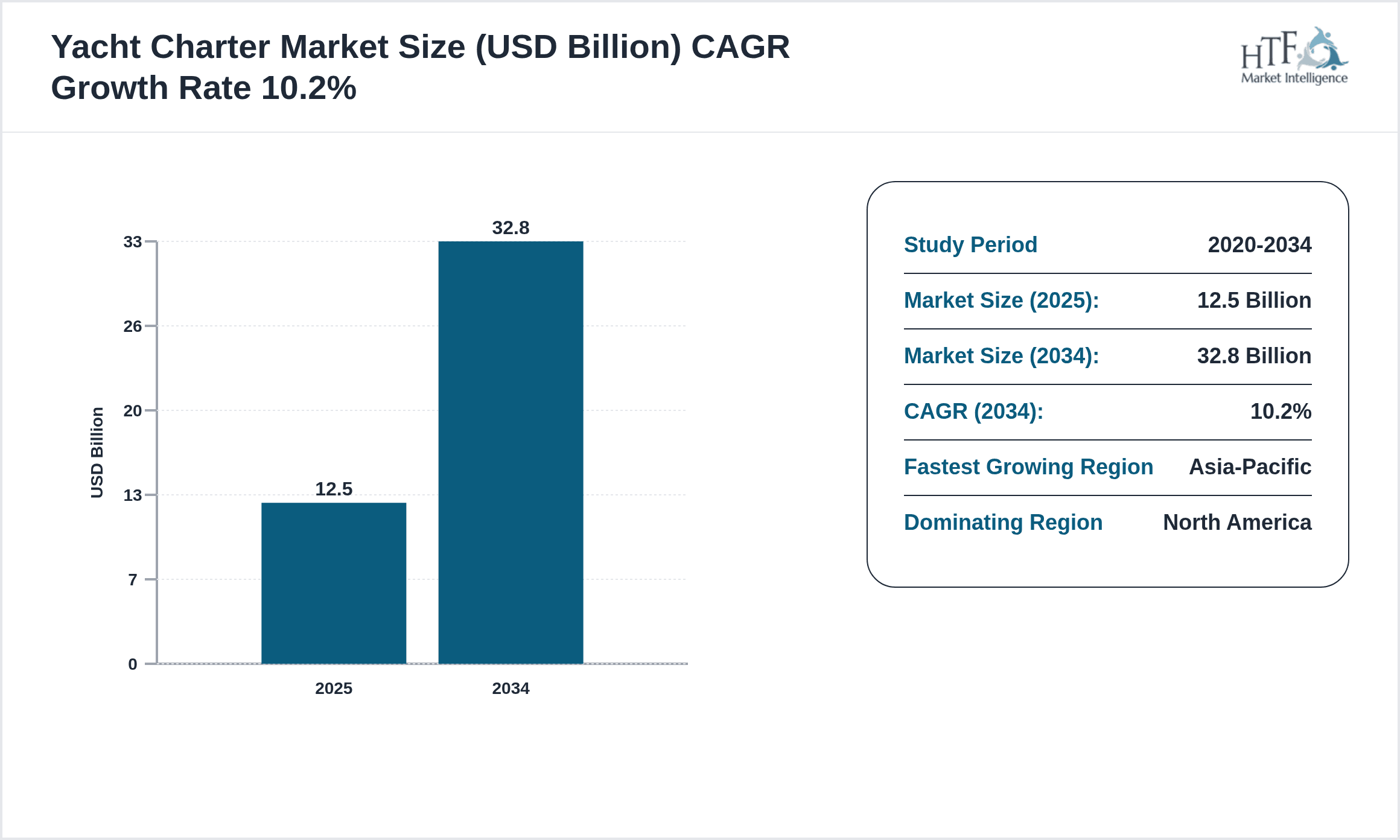
- •Key highlights include a base market size of USD 12.5 Billion in 2024, with a projected growth to USD 32.8 Billion by 2034, reflecting a CAGR of 10.2%. The motor yacht segment dominates, while catamarans exhibit the fastest growth rate. North America leads market revenue share, whereas Asia-Pacific is the fastest growing region driven by expanding luxury tourism infrastructure and increasing yacht ownership culture. The leisure application holds the largest share, closely followed by corporate events. Market dynamics are shaped by rising consumer affluence, digital booking innovations, and sustainability trends in yacht manufacturing and operations.
- •The yacht charter market offers immense strategic value to hospitality, tourism, and marine industries, providing stakeholders with opportunities to capitalize on premium travel trends. Operators benefit from scalable business models enabled by digital platforms and flexible charter options. Innovations in yacht design and eco-friendly propulsion systems align with emerging regulatory requirements and consumer demand for sustainable luxury. The market’s global footprint ensures diversified revenue streams and resilience against regional economic fluctuations. For investors and service providers, the yacht charter market represents a lucrative avenue to tap into affluent customer segments and evolving experiential travel paradigms.
Competitive Landscape
The yacht charter market is characterized by intense competition among global and regional operators, with companies striving to differentiate through fleet diversity, service quality, and technological innovation. Market leaders leverage advanced digital platforms for seamless booking and customer engagement, enhancing client retention and acquisition. Innovation in yacht design, including eco-friendly and hybrid models, is a key competitive strategy to meet evolving regulatory and consumer demands. Strategic partnerships and collaborations with luxury hospitality and tourism providers enable market players to offer integrated experiences, strengthening market positioning. Mergers and acquisitions further consolidate market share, allowing companies to expand global reach and operational capabilities. Pricing strategies vary based on yacht type, charter duration, and service inclusions, with premium bespoke services commanding higher margins. Regional competition is notable, with emerging markets in Asia-Pacific and the Middle East attracting new entrants and investments. Future competitive trends are expected to emphasize sustainability, digitalization, and personalized luxury experiences.
Leading Companies in Yacht Charter Market
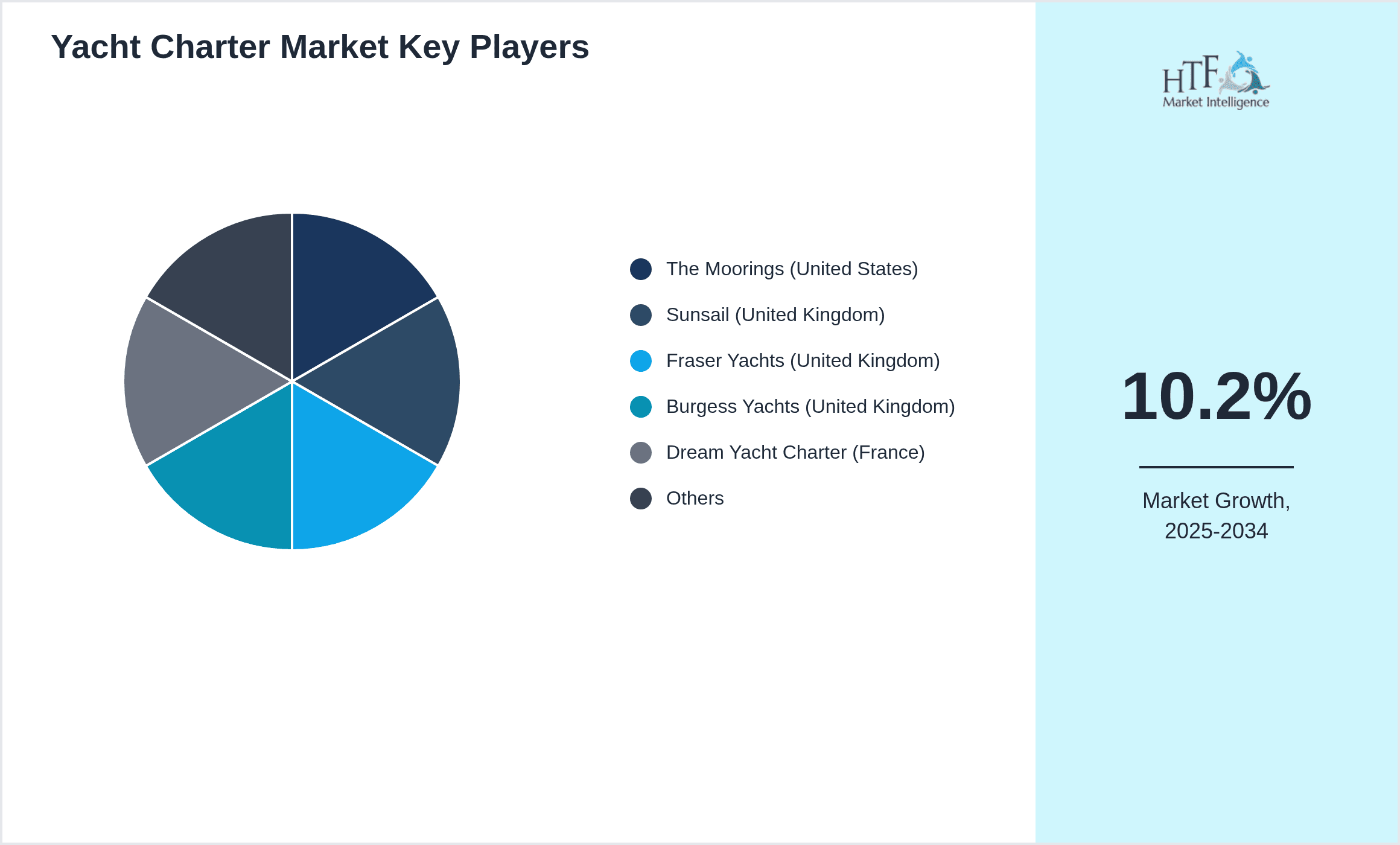
- •The Moorings (United States)
- •Sunsail (United Kingdom)
- •Fraser Yachts (United Kingdom)
- •Burgess Yachts (United Kingdom)
- •Dream Yacht Charter (France)
- •Northrop & Johnson (United States)
- •Y.CO (United Kingdom)
- •Boatbookings (United Kingdom)
- •Camper & Nicholsons (United Kingdom)
- •Edmiston (United Kingdom)
- •Sunreef Yachts (Poland)
- •Ocean Independence (Switzerland)
- •Simpson Marine (Hong Kong)
- •Bluewater Yachting (Netherlands)
- •CharterWorld (United Kingdom)
- •Leopard Catamarans (South Africa)
- •Royalty Yachts (United Kingdom)
- •Yachtico (Germany)
- •Marquis Yachts (United States)
- •Viking Yachts (United States)
- •Azimut Yachts (Italy)
- •Ferretti Group (Italy)
- •Sanlorenzo (Italy)
- •Beneteau Group (France)
- •Fairline Yachts (United Kingdom)
Market Breakdown
- •By Product Type
- ◦Motor Yacht
- ◦Sailing Yacht
- ◦Catamaran
- ◦Gulet
- ◦Others
- •By Application
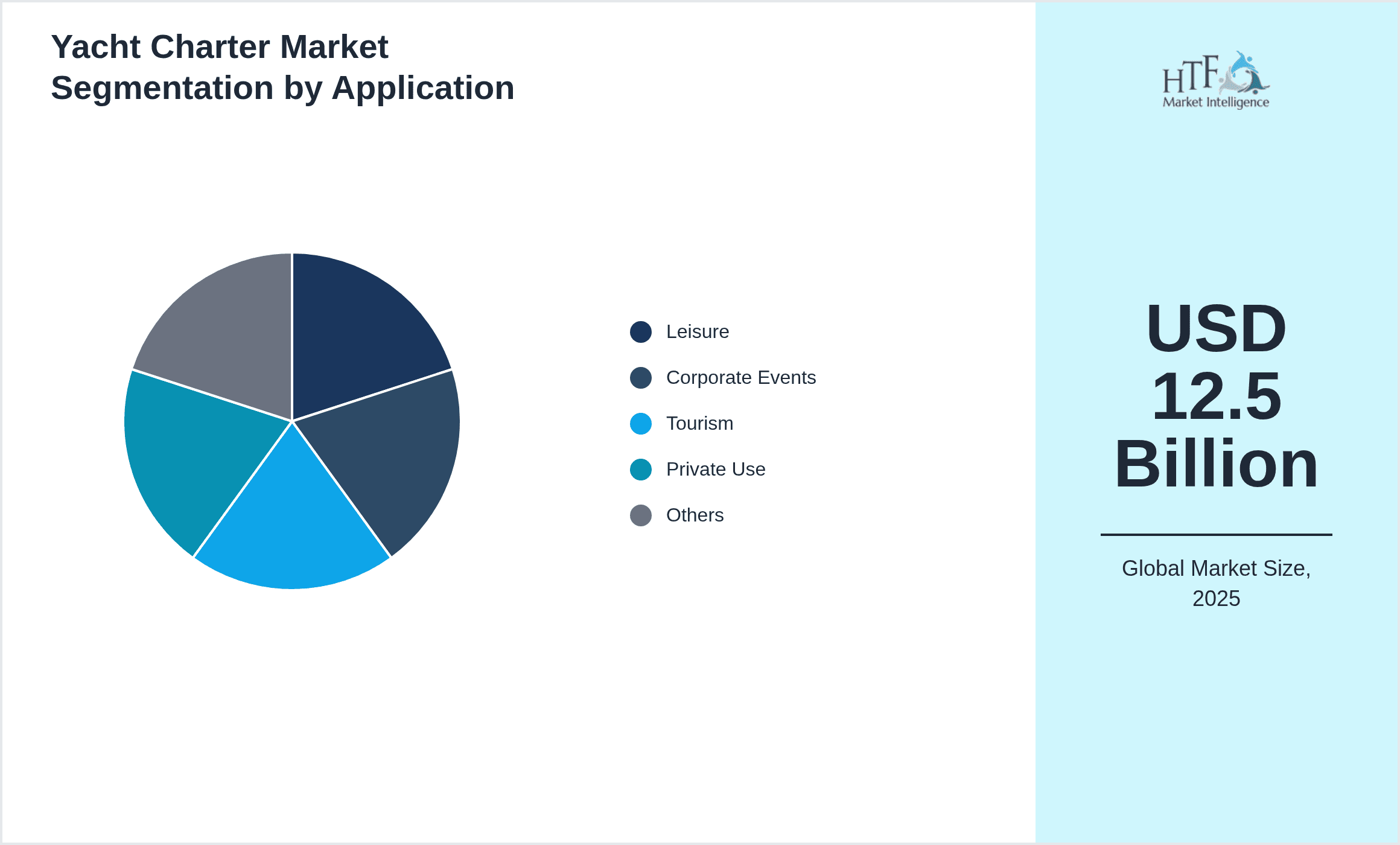
- ◦Leisure
- ◦Corporate Events
- ◦Tourism
- ◦Private Use
- ◦Others
- •By End-Use Industry
- ◦Luxury Tourism
- ◦Event Management
- ◦Hospitality
- ◦Private Ownership
- •By Distribution Channel
- ◦Direct Charter Operators
- ◦Online Booking Platforms
- ◦Travel Agencies
Growth Dynamics
- •The increasing global affluence and rising disposable incomes among high-net-worth individuals are primary growth drivers for the yacht charter market. This financial empowerment facilitates a growing demand for luxury travel experiences, fueling market expansion.
- •Technological advancements, including the integration of digital booking platforms and AI-driven customization, streamline customer engagement and enhance operational efficiency, directly impacting market growth positively.
- •Emerging tourism destinations in Asia-Pacific and Latin America are attracting new yacht charter clientele, supported by government investments in marine infrastructure and luxury hospitality sectors.
- •Sustainability trends push manufacturers to innovate eco-friendly yachts with hybrid propulsion systems, appealing to environmentally conscious consumers and aligning with tightening maritime regulations.
- •The growing popularity of experiential travel and unique leisure activities encourages diversification of yacht charter offerings, including themed cruises and bespoke events, broadening market appeal.
- •Strategic alliances between yacht charter companies and luxury brands or travel agencies extend market reach and offer bundled experiences, driving growth through enhanced value propositions.
- •Post-pandemic recovery in global tourism bolsters yacht charter demand as travelers seek private and safe vacation alternatives, underscoring the market's resilience and growth potential.

Market Trends
- •The rise of digital platforms facilitating online yacht bookings has revolutionized customer accessibility and convenience, enabling rapid growth in the market by reaching a broader clientele.
- •Eco-conscious yacht designs featuring solar power and hybrid engines are gaining traction, reflecting a broader industry shift towards sustainability and regulatory compliance.
- •Increasing integration of smart technologies onboard yachts, such as IoT-enabled systems and advanced navigation aids, enhances user experience and operational safety.
- •Collaborations between charter companies and luxury lifestyle brands are emerging, creating exclusive packages that appeal to affluent consumers seeking personalized experiences.
- •The trend of remote working vacations on yachts is growing, supported by improved connectivity and demand for combined leisure and work environments.
- •Expanding charter options including bareboat and crewed services provide customers with flexible experiences tailored to diverse preferences and budgets.
- •The increasing focus on health and safety protocols post-pandemic continues to influence charter operations, enhancing customer confidence and market stability.
Market Opportunities
- •Untapped emerging markets in Asia-Pacific and Latin America present significant growth opportunities for yacht charter operators seeking to expand geographical presence and customer base.
- •Innovations in sustainable yacht technologies open avenues for product development and differentiation, attracting eco-conscious clientele and regulatory incentives.
- •Partnerships with luxury travel and hospitality sectors enable cross-selling and bundled offerings, enhancing customer value and market penetration.
- •Rising interest in themed and experiential charters creates niche segments, allowing operators to tailor services and command premium pricing.
- •Digital transformation and AI integration in booking and fleet management streamline operations and improve customer engagement, driving efficiency and loyalty.
- •Post-pandemic shifts favoring private and safe travel options increase demand for yacht charters as exclusive vacation alternatives, supporting sustained growth.
- •Expansion into corporate event charters and wellness cruises represents new revenue streams aligned with evolving customer preferences and industry trends.
Market Challenges
- •High operational and maintenance costs of yachts pose significant barriers to entry and profitability, limiting market participation to well-funded operators.
- •Stringent maritime safety regulations and environmental compliance requirements increase operational complexity and costs for charter companies.
- •Seasonality in demand and geographic concentration of yachting hubs result in fluctuating revenues and underutilization of assets during off-peak periods.
- •Limited availability of skilled crew and service personnel constrains operational scalability and impacts service quality in some regions.
- •Competition from alternative luxury travel options such as private jets and resorts challenges market share and customer acquisition efforts.
- •Economic uncertainties and geopolitical tensions may affect discretionary spending on luxury travel, thereby impacting charter demand.
- •Technological integration requires substantial investment and expertise, posing challenges for smaller operators to remain competitive.
Regulatory Framework
- •Between 2019 and 2024, the International Maritime Organization (IMO) implemented stricter emission control areas (ECAs), mandating reduced sulfur oxides (SOx) emissions from yachts, impacting yacht charter operators globally by necessitating cleaner fuel usage and retrofits.
- •The EU’s Marine Strategy Framework Directive (2018-2023) introduced guidelines for sustainable recreational boating, including yacht charters, requiring compliance with environmental protection and waste management standards.
- •In 2021, the U.S. Coast Guard updated regulations on vessel safety equipment and crew certification, increasing compliance requirements for charter operators in North America.
- •Regulatory developments in Asia-Pacific countries between 2020-2024 have focused on enhancing maritime safety and licensing for luxury yachts, improving service quality and customer safety in emerging markets.
- •Several countries have introduced tax incentives and registration benefits for eco-friendly yachts between 2019 and 2024, encouraging operators to adopt sustainable practices and invest in green technologies.
Market Intelligence
- •15th February 2025, The Moorings launched its new fleet of hybrid motor yachts equipped with solar-assisted propulsion and advanced navigation systems. Targeting environmentally conscious luxury travelers, the initiative aims to reduce carbon emissions by 30% while enhancing onboard comfort and operational efficiency. This move positions The Moorings as a pioneer in sustainable yacht charter offerings, expanding its appeal in North America and Europe markets. The strategic focus on green technology aligns with tightening environmental regulations and growing consumer demand for eco-friendly travel options, potentially driving increased bookings and market share in 2025 and beyond. Source: Official Company Website.
- •10th March 2025, Fraser Yachts introduced a digital concierge service powered by artificial intelligence to personalize charter experiences. The platform analyzes customer preferences and real-time data to recommend itineraries, onboard amenities, and local excursions. This innovation enhances customer engagement and operational efficiency by automating service customization and streamlining communication. Fraser Yachts anticipates increased client satisfaction and repeat bookings as a result, reinforcing its competitive edge in the luxury yacht charter sector. The initiative was rolled out across Europe and Asia-Pacific fleets, reflecting a global strategy to leverage technology for market growth. Source: Industry Publication.
- •5th January 2025, Dream Yacht Charter expanded its presence in Asia-Pacific by opening new offices in Singapore and Bali, responding to escalating demand for yacht charters in the region. The expansion includes partnerships with local marinas and hospitality providers to offer integrated luxury travel packages. This strategic move enhances Dream Yacht Charter’s footprint in one of the fastest-growing yacht charter markets globally, aiming to capitalize on rising disposable incomes and tourism development. The company forecasts a 15% revenue increase from Asia-Pacific operations in 2025, reflecting the region's growing significance in the global market landscape. Source: Company Press Release.
- •20th April 2025, Northrop & Johnson announced a collaboration with a leading luxury hotel chain to provide exclusive yacht charter packages combining bespoke onboard experiences with high-end hospitality services. This partnership targets ultra-high-net-worth clients seeking seamless luxury travel solutions. The initiative is expected to enhance brand visibility and cross-market opportunities, particularly in North America and Europe. By integrating yacht charters with luxury accommodations, Northrop & Johnson aims to diversify its service portfolio and boost market competitiveness in the evolving luxury travel sector. The collaboration underscores the trend of experiential and bundled luxury offerings shaping the yacht charter market. Source: Official Company Website.
Regional Outlook
The North America currently holds a significant share of the market, primarily due to several key factors: increasing consumption rates, a burgeoning population, and robust economic momentum. These elements collectively drive demand, positioning this region as a leader in the market. On the other hand, Asia-Pacific is rapidly emerging as the fastest-growing area within the industry. This remarkable growth can be attributed to swift infrastructure development, the expansion of various industrial sectors, and a marked increase in consumer demand. These dynamics make this region a crucial player in shaping future market growth.
In our report, we cover a comprehensive analysis of the following regions and countries:
- North America
- LATAM
- West Europe
- Central & Eastern Europe
- Northern Europe
- Southern Europe
- East Asia
- Southeast Asia
- South Asia
- Central Asia
- Oceania
- MEA
| Feature | Details |
|---|---|
| Base Year Market Size | USD 12.5 Billion |
| Forecast Year Market Size | USD 32.8 Billion |
| CAGR | 10.2% |
| Forecast Period | 2026 to 2033 |
| YoY Growth | 9.8% |
| Scope of Report | Market is segmented by Product Type (Motor Yacht, Sailing Yacht, Catamaran, Gulet, Others), Application (Leisure, Corporate Events, Tourism, Private Use, Others), End-Use Industry (Luxury Tourism, Event Management, Hospitality, Private Ownership), Distribution Channel (Direct Charter Operators, Online Booking Platforms, Travel Agencies) |
| Regions Covered | North America, LATAM, West Europe, Central & Eastern Europe, Northern Europe, Southern Europe, East Asia, Southeast Asia, South Asia, Central Asia, Oceania, MEA |
| Key Companies | The Moorings (United States), Sunsail (United Kingdom), Fraser Yachts (United Kingdom), Burgess Yachts (United Kingdom), Dream Yacht Charter (France) |
Global Yacht Charter Market Size, Growth & Revenue 2024-2034 - Table of Contents
Frequently Asked Questions (FAQ):
The Compact Track Loaders market is expected to see value worth 5.3 Billion in 2025.
North America currently leads the market with approximately 45% market share, followed by Europe at 28% and Asia-Pacific at 22%. The remaining regions account for 5% of the global market.
Key growth drivers include increasing construction activities, rising demand for versatile equipment in agriculture, technological advancements in track loader design, and growing preference for compact equipment in urban construction projects.