
Global Instant Mashed Potatoes Market Scope & Changing Dynamics 2025-2034
Global Instant Mashed Potatoes Market is segmented by Product Type (Potato Flakes, Potato Granules, Potato Powder, Dehydrated Potato Cubes, Other Instant Potato Products), Application (Food Service, Retail Packaged Foods, Convenience Foods, Institutional Catering, Household Use), End-Use Industry (Household Consumers, Restaurants and Hotels, Ready-to-Eat Meal Manufacturers, Institutional Foodservice), Distribution Channel (Supermarkets and Hypermarkets, Convenience Stores, Online Retail, Food Service Distributors), and Geography (North America, LATAM, West Europe, Central & Eastern Europe, Northern Europe, Southern Europe, East Asia, Southeast Asia, South Asia, Central Asia, Oceania, MEA)
Pricing
Report Overview
Executive Summary
- •The Global Instant Mashed Potatoes Market is defined by the production and commercialization of dehydrated potato products that provide convenience and versatility across food preparation sectors. This market spans various product forms including flakes, granules, powders, and dehydrated cubes, serving applications ranging from retail packaged foods, household meal preparation, institutional catering, food service outlets, to convenience food manufacturers. The market's value chain integrates activities from the agricultural stage of potato cultivation, through processing technologies such as drying and flavoring, to packaging and distribution across global retail and foodservice channels. Key characteristics include product convenience, extended shelf life, and consistent quality, which cater to the growing consumer demand for time-saving and easy-to-prepare food options. The market also benefits from advances in dehydration techniques, flavor innovation, and increasing adaptation of clean label and organic ingredients. The end users are diverse, encompassing households seeking quick meal solutions, large-scale food service providers requiring standardized products, and manufacturers integrating instant mashed potatoes into prepared meals and snacks. The market's growth is supported by urbanization, rising disposable incomes, and changing eating habits worldwide. Regions such as North America and Europe have established market maturity, while Asia-Pacific exhibits rapid growth due to increasing consumer awareness and expanding foodservice infrastructure. The market faces challenges such as supply chain complexities and raw material price fluctuations, but opportunities arise from product innovation and emerging markets.
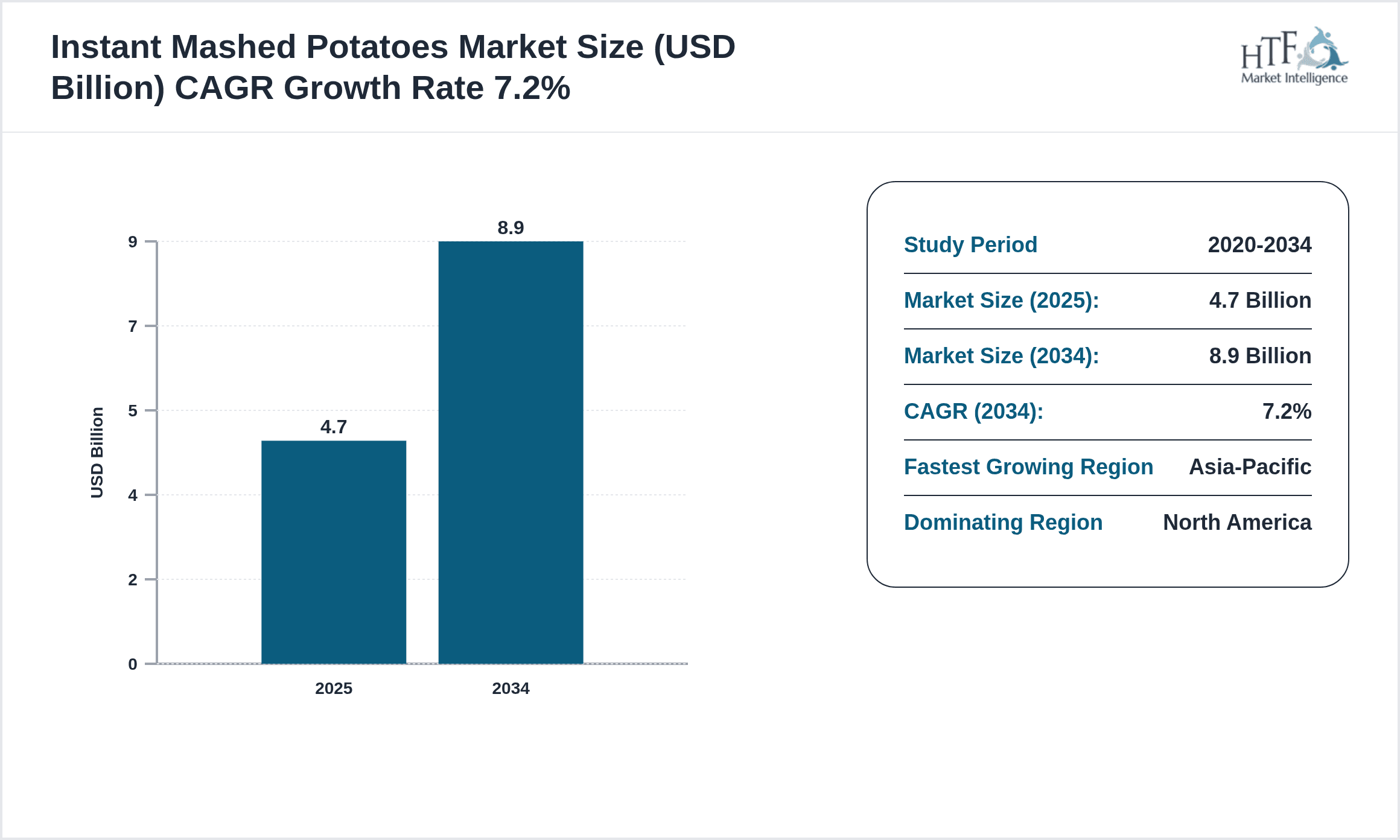
- •Key highlights of the Global Instant Mashed Potatoes Market include a base market size of USD 4.7 Billion in 2025, with a forecast to reach USD 8.9 Billion by 2034, reflecting a CAGR of 7.2%. The market demonstrates a steady year-on-year growth of approximately 7.0%, driven primarily by rising demand in North America and rapid adoption in Asia-Pacific. Innovation in dehydrated cube products is expected to outpace other product types, contributing to market expansion. Consumer trends towards convenience and clean-label products further stimulate growth across various applications including retail and institutional sectors.
- •The value proposition of the instant mashed potatoes market lies in delivering convenience, quality, and versatility to food manufacturers, service providers, and consumers. Its strategic importance is underscored by the increasing demand for ready-to-eat and quick-prepare food products in both developed and emerging economies. Stakeholders benefit from streamlined supply chains, consistent product quality, and scalable production capabilities. Additionally, the market supports sustainability initiatives through improved packaging and resource-efficient processing technologies, aligning with global environmental goals while meeting consumer expectations.
Competitive Landscape
The Global Instant Mashed Potatoes Market is characterized by a competitive environment featuring a mix of multinational corporations and regional players focusing on innovation, strategic partnerships, and global expansion. Market dynamics are shaped by the need to balance cost efficiency with product quality and consumer preferences for natural and organic ingredients. Competitive strategies include product diversification, brand strengthening, and enhanced distribution networks to capture growing demand in emerging markets. Companies invest in advanced dehydration technologies and sustainable packaging solutions to differentiate their offerings. Market positioning relies heavily on supply chain agility, responsiveness to consumer trends, and the ability to customize products for various applications. Strategic collaborations and mergers and acquisitions are common to expand geographical reach and consolidate market share. Pricing strategies are adapted based on regional market maturity and competitive intensity. The competitive landscape also reflects increasing emphasis on health-consciousness, prompting innovation in low sodium, non-GMO, and allergen-free instant potato products. Barriers to entry are moderate, influenced by capital investment requirements and access to raw materials. Regional competition varies, with North America and Europe exhibiting mature, highly competitive markets, while Asia-Pacific presents opportunities for new entrants and innovation-driven growth. Future trends point towards digitalization of supply chains and enhanced consumer engagement through e-commerce platforms.
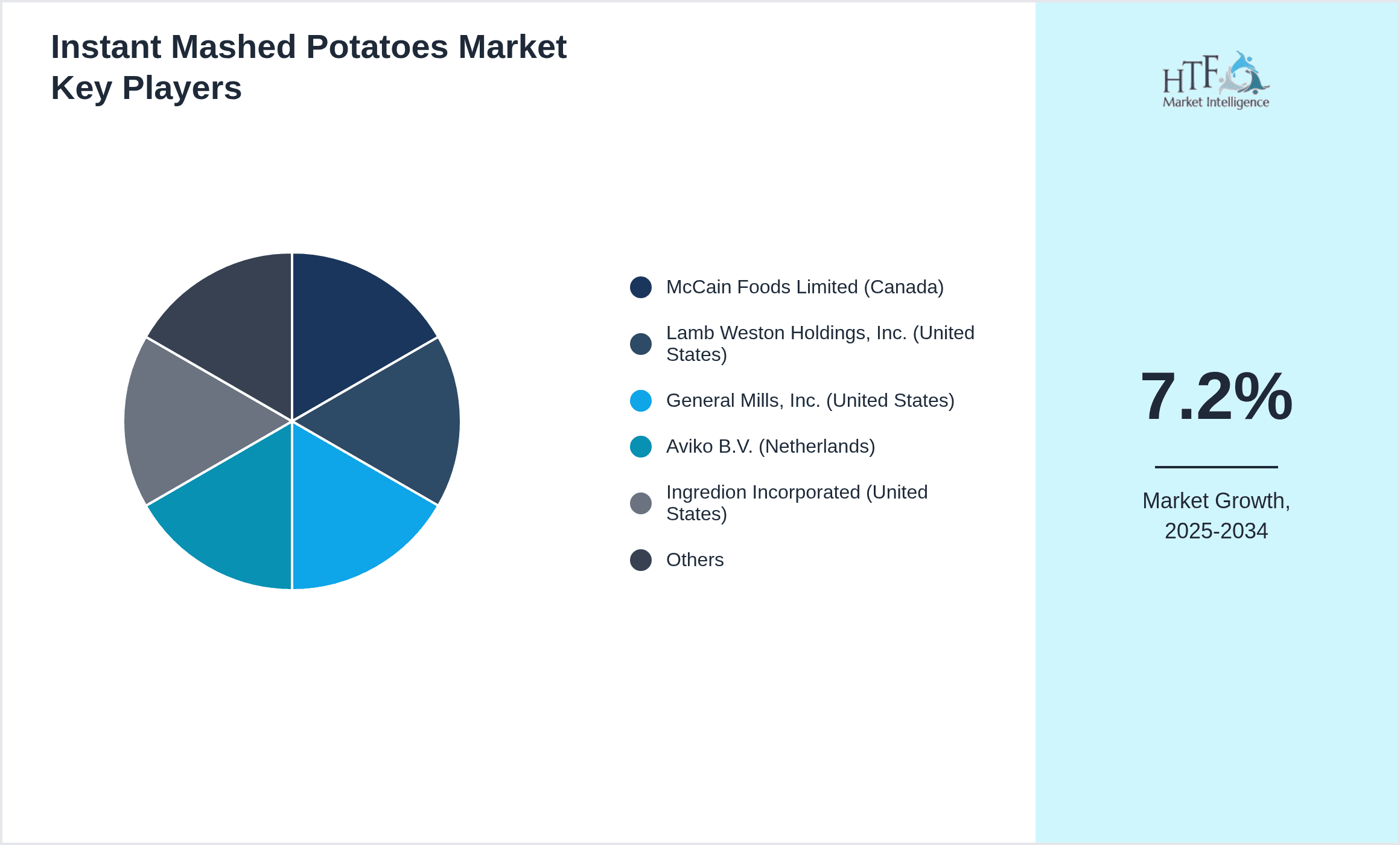
Leading Companies in Instant Mashed Potatoes Market
- •McCain Foods Limited (Canada)
- •Lamb Weston Holdings, Inc. (United States)
- •General Mills, Inc. (United States)
- •Aviko B.V. (Netherlands)
- •Ingredion Incorporated (United States)
- •Simplot Company (United States)
- •Agrarfrost GmbH & Co. KG (Germany)
- •J.R. Simplot Company (United States)
- •Farm Frites International B.V. (Netherlands)
- •ConAgra Foods, Inc. (United States)
- •Borden Dairy Company (United States)
- •The Kraft Heinz Company (United States)
- •Orkla ASA (Norway)
- •Agrana Beteiligungs-AG (Austria)
- •McCain Foods (Australia) Pty Ltd (Australia)
- •Pinnacle Foods Inc. (United States)
- •Calbee, Inc. (Japan)
- •Simplot Australia Pty Ltd (Australia)
- •Loders Croklaan (Netherlands)
- •Ingredion UK Limited (United Kingdom)
- •McCain Foods (UK) Limited (United Kingdom)
- •Lamb Weston / Meijer B.V. (Netherlands)
- •J.R. Simplot Company Australia (Australia)
- •Aviko Asia Pacific (Singapore)
- •Farm Frites USA (United States)
Market Breakdown
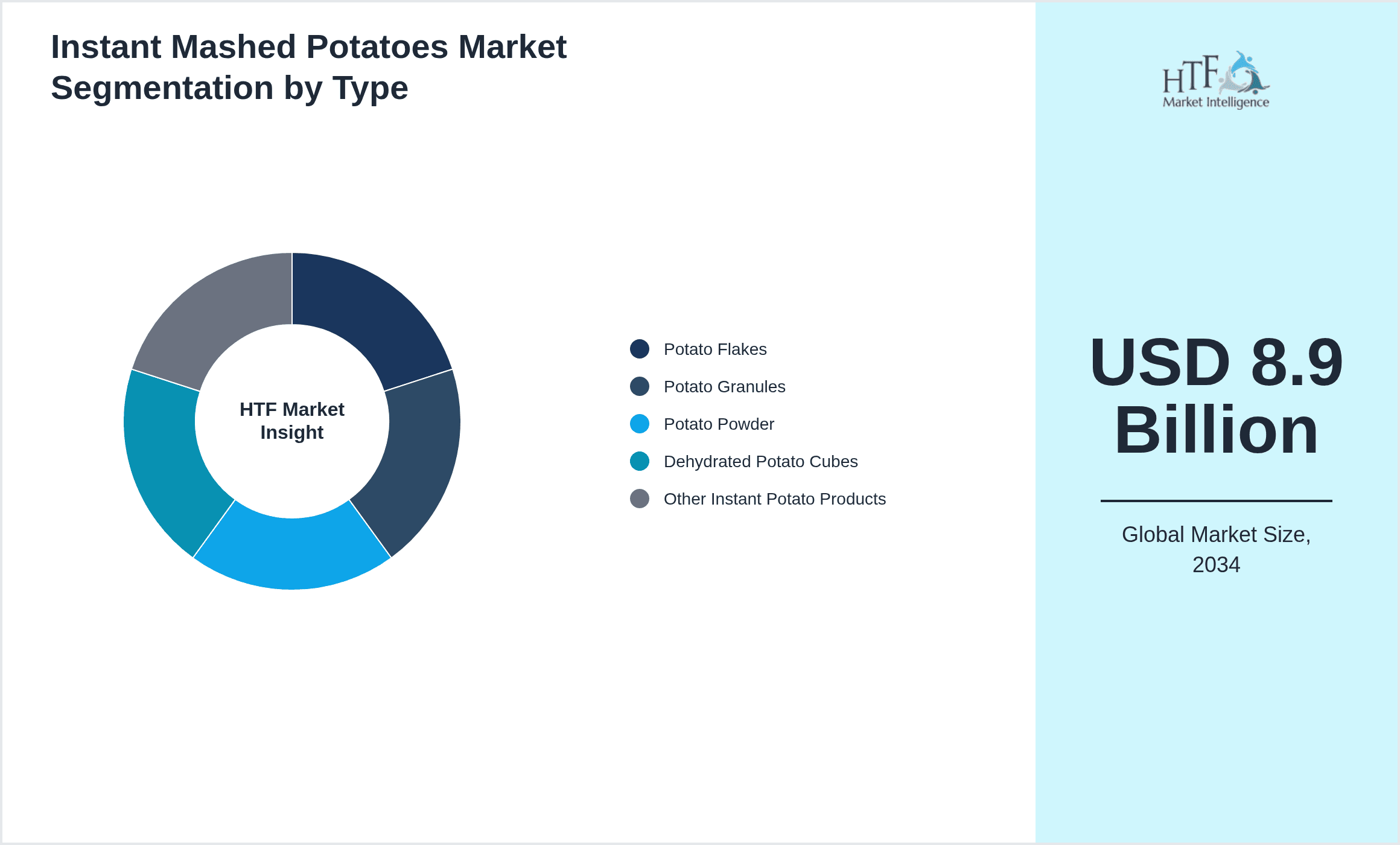
- •By Product Type
- ◦Potato Flakes
- ◦Potato Granules
- ◦Potato Powder
- ◦Dehydrated Potato Cubes
- ◦Other Instant Potato Products
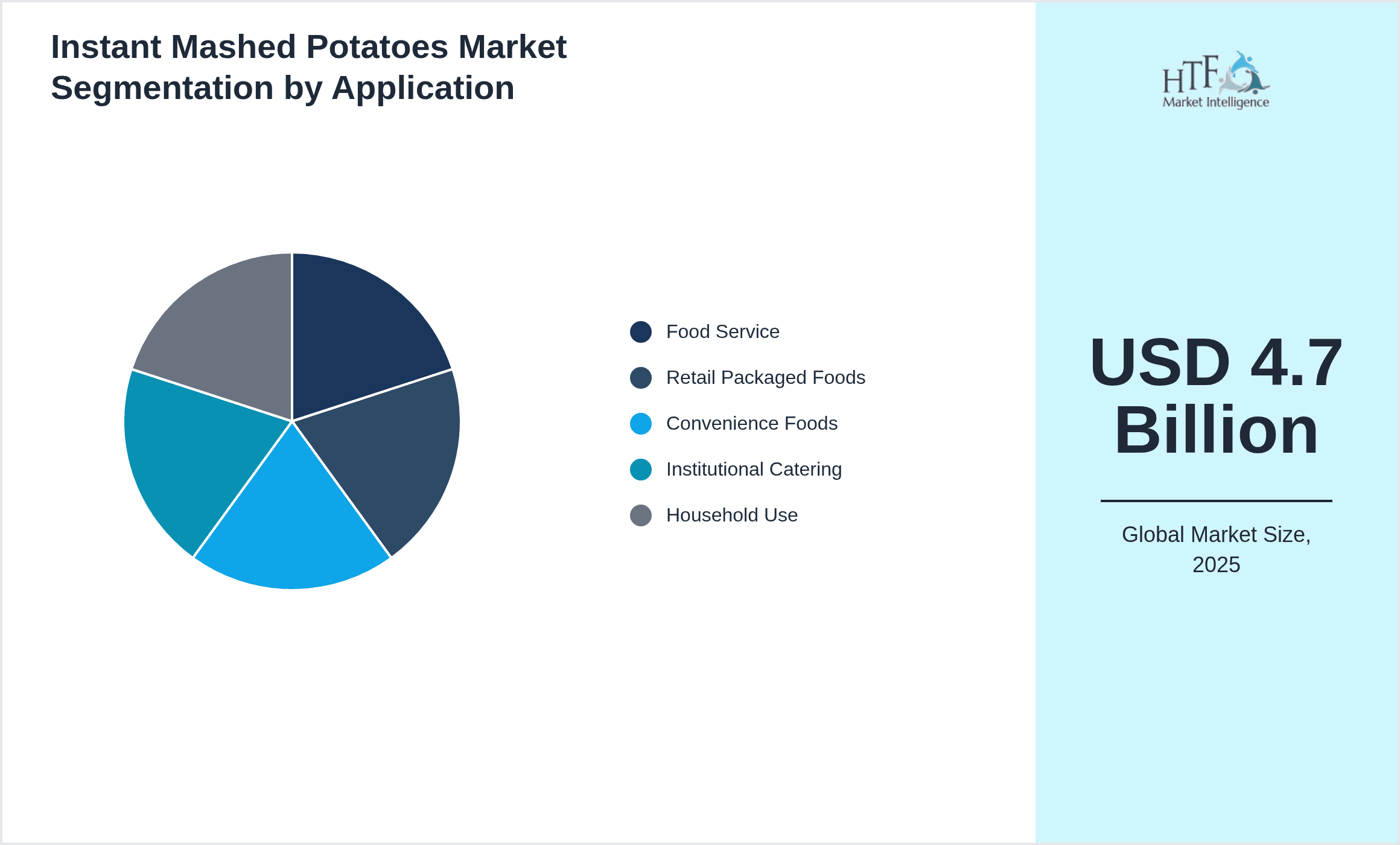
- •By Application
- ◦Food Service
- ◦Retail Packaged Foods
- ◦Convenience Foods
- ◦Institutional Catering
- ◦Household Use
- •By End-Use Industry
- ◦Household Consumers
- ◦Restaurants and Hotels
- ◦Ready-to-Eat Meal Manufacturers
- ◦Institutional Foodservice
- •By Distribution Channel
- ◦Supermarkets and Hypermarkets
- ◦Convenience Stores
- ◦Online Retail
- ◦Food Service Distributors
Growth Dynamics
- •Rising consumer preference for convenience foods, driven by fast-paced lifestyles and increasing urbanization, significantly fuels demand for instant mashed potatoes globally. This trend is especially prominent in North America and Asia-Pacific where busy consumers seek quick meal solutions without compromising on taste and nutrition.
- •Technological advancements in dehydration and flavor enhancement processes enable manufacturers to offer superior quality products with better texture and taste, thereby expanding application opportunities in foodservice and retail sectors.
- •The growing foodservice industry, including quick-service restaurants and institutional catering, adopts instant mashed potatoes for their ease of preparation, consistent quality, and cost-effectiveness, which drives volume growth in these segments.
- •Increasing consumer awareness and demand for organic and clean-label products encourage manufacturers to innovate with natural ingredients and sustainable sourcing, creating new growth avenues within the market.
- •Expansion of modern retail and e-commerce platforms globally facilitates wider product availability and consumer access, supporting market growth by reaching diverse customer segments effectively.
- •Government initiatives promoting food security and sustainable agriculture indirectly support the instant mashed potatoes market by stabilizing raw material supply and encouraging value-added processing technologies.
- •The introduction of flavored and fortified instant mashed potatoes appeals to health-conscious consumers, driving product diversification and incremental demand in both developed and emerging markets.
Market Trends
- •The market witnesses a strong trend towards clean-label and organic instant mashed potatoes, reflecting consumer demand for transparent ingredient sourcing and healthier food options. This shift influences product formulations and marketing strategies across regions.
- •Innovations in packaging such as resealable pouches and eco-friendly materials are gaining traction to enhance product convenience and sustainability, aligning with global environmental concerns and consumer preferences.
- •Integration of instant mashed potatoes in ready-to-eat and ready-to-cook meal kits is increasing, driven by the rise in home meal replacements and demand for quick, nutritious food solutions during and post-pandemic periods.
- •The growth of e-commerce channels facilitates direct-to-consumer sales and personalized marketing, enabling brands to engage consumers with customized product offerings and subscription models.
- •Emerging markets in Asia-Pacific and Latin America are witnessing increasing adoption due to rising disposable incomes, urbanization, and expanding modern retail infrastructure, which are reshaping regional consumption patterns.
- •Sustainability initiatives focusing on reduction of food waste and carbon footprint are influencing production and sourcing practices, with companies investing in more efficient supply chains and renewable energy sources.
- •Collaborations between ingredient suppliers and food manufacturers to develop fortified and functional instant mashed potato products are becoming more common, catering to health-focused consumers and specialized dietary needs.
Market Opportunities
- •The increasing demand for convenience foods in emerging economies presents a significant growth opportunity, as urban populations seek quick and affordable meal solutions supported by expanding retail networks.
- •Development of innovative product variants such as gluten-free, low-sodium, and high-protein instant mashed potatoes caters to niche consumer segments, unlocking new market potential.
- •Expansion into foodservice sectors including healthcare, education, and hospitality offers opportunities for bulk supply contracts and long-term partnerships, driving volume growth.
- •Investment in sustainable and eco-friendly packaging solutions can enhance brand reputation and meet regulatory requirements, providing competitive advantages in environmentally conscious markets.
- •Leveraging digital marketing and e-commerce platforms to reach younger demographics and health-conscious consumers enables targeted product launches and direct consumer engagement.
- •Collaborations with potato growers and technology providers for supply chain optimization and product innovation can improve cost efficiency and product quality, strengthening market position.
- •Rising demand for fortified and functional foods offers scope for incorporating vitamins, minerals, and dietary fibers into instant mashed potatoes, addressing health and wellness trends.
Market Challenges
- •Volatility in raw material prices due to climatic conditions and supply chain disruptions poses significant challenges for cost management and pricing stability in the instant mashed potatoes market.
- •Stringent regulatory standards across different regions require compliance investments and can delay product launches, impacting market agility and innovation pace.
- •Competition from fresh and frozen potato products, as well as alternative carbohydrate sources, limits market penetration and necessitates continuous product differentiation.
- •Consumer concerns about processed foods and additives may restrict demand growth, requiring manufacturers to enhance transparency and reformulate products accordingly.
- •Distribution challenges in developing regions, including inadequate cold chain infrastructure and fragmented retail systems, hinder market expansion efforts.
- •High capital expenditure for advanced dehydration and packaging technologies can be a barrier for small and medium-sized enterprises seeking to enter or expand in this market.
- •Maintaining product quality and consistency across diverse geographic markets with varying consumer preferences requires robust quality control and localized strategies.
Regulatory Framework
- •The Food Safety Modernization Act (FSMA) implemented between 2010 and 2025 in the United States mandates rigorous preventive controls and supply chain safety measures, significantly impacting instant mashed potato manufacturers by enforcing higher standards for food processing and traceability.
- •European Union Regulation (EC) No 178/2002 establishes the general principles and requirements of food law, including traceability and risk analysis, which have been progressively enforced to ensure food safety and consumer protection within the EU market.
- •Codex Alimentarius standards on dehydrated potato products provide international guidelines on quality, labeling, and permissible additives, facilitating harmonization and export opportunities for global manufacturers.
- •The implementation of labeling regulations such as the Nutrition Labeling and Education Act (NLEA) and mandatory allergen labeling across various regions enhances transparency and informs consumer choices, influencing product formulation and marketing.
- •Environmental regulations targeting packaging waste and carbon emissions encourage manufacturers to adopt sustainable packaging solutions and reduce environmental impact throughout the product lifecycle.
Market Intelligence
- •12th January 2025, McCain Foods Limited launched a new line of organic instant mashed potatoes made from sustainably farmed potatoes, targeting health-conscious consumers in North America and Europe. The product features improved flavor profiles and a reduced sodium content, aligning with clean-label trends. This launch aims to strengthen McCain's position in the premium segment and capitalize on growing demand for organic convenience foods globally. The company expects the new product line to contribute significantly to its revenue growth by 2030. Source: McCain Foods Official Press Release.
- •5th March 2025, Lamb Weston Holdings, Inc. introduced a dehydrated potato cube product designed specifically for foodservice operators seeking quick preparation and portion control benefits. The innovative product reduces preparation time by 30% and enhances texture retention compared to traditional flakes. The launch is part of Lamb Weston's strategy to expand its presence in institutional catering markets worldwide, particularly in Asia-Pacific and Latin America. This product leverages advanced dehydration technology developed in partnership with leading agricultural research centers. Source: Lamb Weston Corporate Announcement.
- •20th May 2025, General Mills, Inc. announced a strategic partnership with an agricultural cooperative to source non-GMO potatoes for its instant mashed potato range. The collaboration focuses on sustainable farming practices and supply chain transparency to meet increasing consumer demand for traceability and natural ingredients. This initiative supports General Mills' commitment to sustainability and product innovation, enhancing its competitive edge in global markets. The partnership is expected to reduce supply chain risks and improve product quality consistency. Source: General Mills Investor Relations.
- •15th August 2024, Aviko B.V. completed the acquisition of a specialty dehydrated ingredients producer to diversify its instant mashed potatoes portfolio with fortified and functional food offerings. The acquisition enhances Aviko’s capabilities in product innovation and expands its footprint in European health-focused consumer segments. The move aligns with Aviko’s strategy to address growing demand for value-added convenience foods and strengthen its market position. The combined entity plans to invest in R&D for further product development. Source: Aviko Official Press Release.
Regional Outlook
The North America currently holds a significant share of the market, primarily due to several key factors: increasing consumption rates, a burgeoning population, and robust economic momentum. These elements collectively drive demand, positioning this region as a leader in the market. On the other hand, Asia-Pacific is rapidly emerging as the fastest-growing area within the industry. This remarkable growth can be attributed to swift infrastructure development, the expansion of various industrial sectors, and a marked increase in consumer demand. These dynamics make this region a crucial player in shaping future market growth.
In our report, we cover a comprehensive analysis of the following regions and countries:
- North America
- LATAM
- West Europe
- Central & Eastern Europe
- Northern Europe
- Southern Europe
- East Asia
- Southeast Asia
- South Asia
- Central Asia
- Oceania
- MEA
| Feature | Details |
|---|---|
| Base Year Market Size | USD 4.7 Billion |
| Forecast Year Market Size | USD 8.9 Billion |
| CAGR | 7.2% |
| Forecast Period | 2026 to 2033 |
| YoY Growth | 7% |
| Scope of Report | Market is segmented by Product Type (Potato Flakes, Potato Granules, Potato Powder, Dehydrated Potato Cubes, Other Instant Potato Products), Application (Food Service, Retail Packaged Foods, Convenience Foods, Institutional Catering, Household Use), End-Use Industry (Household Consumers, Restaurants and Hotels, Ready-to-Eat Meal Manufacturers, Institutional Foodservice), Distribution Channel (Supermarkets and Hypermarkets, Convenience Stores, Online Retail, Food Service Distributors) |
| Regions Covered | North America, LATAM, West Europe, Central & Eastern Europe, Northern Europe, Southern Europe, East Asia, Southeast Asia, South Asia, Central Asia, Oceania, MEA |
| Key Companies | McCain Foods Limited (Canada), Lamb Weston Holdings, Inc. (United States), General Mills, Inc. (United States), Aviko B.V. (Netherlands), Ingredion Incorporated (United States) |
Global Instant Mashed Potatoes Market Scope & Changing Dynamics 2025-2034 - Table of Contents
Research enthusiast focused on transforming data uncovering into actionable insights through data-driven decision-making.
Frequently Asked Questions (FAQ):
The Market market is projected to grow at a steady CAGR from 2025 to 2030, driven by increasing demand and expansion in various applications.
North America currently leads the market, followed by Europe and Asia-Pacific.
Key growth drivers include increasing activities, rising demand for innovative solutions, technological advancements, and growing preference for efficient products.