
Global Clothes Folding Machine Market Size, Growth & Revenue 2024-2034
Global Clothes Folding Machine Market is segmented by Product Type (Automatic Clothes Folding Machines, Semi-Automatic Clothes Folding Machines, Manual Clothes Folding Machines, Robotic Clothes Folding Machines, Conveyor-Based Clothes Folding Machines), Application (Residential, Commercial, Industrial, Hospitality, Healthcare), End-Use Industry (Laundry Services, Hotels and Resorts, Hospitals and Healthcare Facilities, Manufacturing and Industrial Units), Distribution Channel (Direct Sales, Online Retail, Distributors and Dealers), and Geography (North America, LATAM, West Europe, Central & Eastern Europe, Northern Europe, Southern Europe, East Asia, Southeast Asia, South Asia, Central Asia, Oceania, MEA)
Pricing
Report Overview
Executive Summary
- •The global clothes folding machine market comprises a spectrum of mechanical and automated solutions aimed at efficiently folding garments in various settings, including residential, commercial, industrial, hospitality, and healthcare sectors. The market is delineated by product types such as automatic, semi-automatic, manual, robotic, and conveyor-based machines, each catering to distinct user needs and operational scales. These machines significantly reduce manual labor, enhance folding consistency, and improve productivity. The scope extends worldwide, with increasing integration of robotics and automation technologies driven by rising urbanization, labor cost concerns, and the demand for efficient laundry management. The market also addresses diverse geographic requirements, balancing innovation with regional user preferences and regulations. Key use cases include residential convenience, commercial laundry efficiency, hospitality linen handling, and industrial garment processing, making the market critical for businesses and consumers alike. Technological advancements and evolving consumer behavior are catalyzing market growth globally.
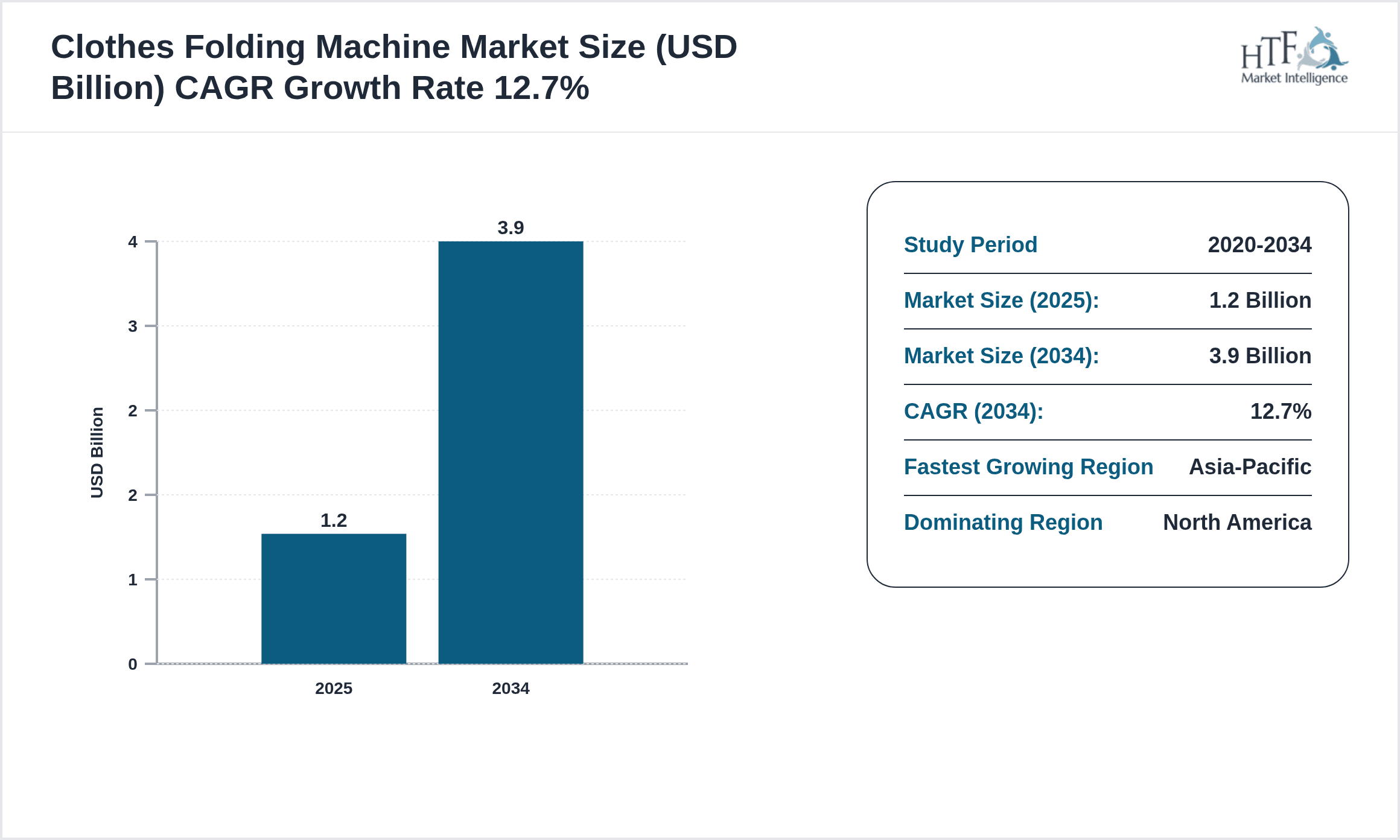
- •The market exhibits robust growth with a projected CAGR of 12.7% from 2024 to 2034, expanding from a base market size of USD 1.2 billion in 2024 to an estimated USD 3.9 billion by 2034. North America currently dominates market share due to high adoption of automated laundry solutions, while Asia-Pacific is the fastest-growing region driven by industrialization and increasing commercial laundries. Automatic machines lead product type sales, but robotic machines show the fastest growth trajectory. Residential and commercial applications maintain significant shares, with industrial and hospitality sectors gaining traction. Market drivers include rising labor costs, technological innovation, and increasing demand for automation. Challenges such as high upfront costs and technical complexity persist. Opportunities emerge in emerging markets and through integration with smart home and industrial IoT technologies.
- •The clothes folding machine market offers substantial strategic value to stakeholders including manufacturers, distributors, and end-users by enabling labor cost reduction, operational efficiency, and enhanced garment care. For industries such as hospitality and healthcare, these machines ensure hygiene compliance and consistent linen presentation. Technological advancements in robotics and AI provide avenues for differentiation and competitive advantage. The market presents profitable growth opportunities for companies investing in innovation and geographic expansion. Furthermore, increasing consumer preference for automation in household chores propels market demand. Strategic collaborations and acquisitions are shaping the competitive landscape, while regulatory frameworks guide product safety and environmental compliance. Overall, the market represents a critical intersection of technology, convenience, and industry-specific needs worldwide.
Competitive Landscape
The global clothes folding machine market is characterized by intense competition among established multinational corporations and emerging regional players. Competitive strategies focus on continuous innovation, product differentiation through advanced automation and robotics, and expanding distribution networks. Companies invest heavily in R&D to develop machines that offer higher speed, precision, and user-friendliness to meet diverse customer requirements. Strategic partnerships and mergers and acquisitions are common as firms seek to consolidate market share and enhance technological capabilities. Pricing strategies balance affordability with feature-rich products to cater to various segments from residential to industrial users. Additionally, companies emphasize sustainability and energy efficiency to align with regulatory mandates and consumer preferences. The competitive environment is also shaped by rapid technological adoption, increasing consumer awareness, and regional preferences, requiring companies to maintain agility and strategic foresight to sustain leadership and capitalize on emerging growth opportunities globally.
Major Clothes Folding Machine Industry Players
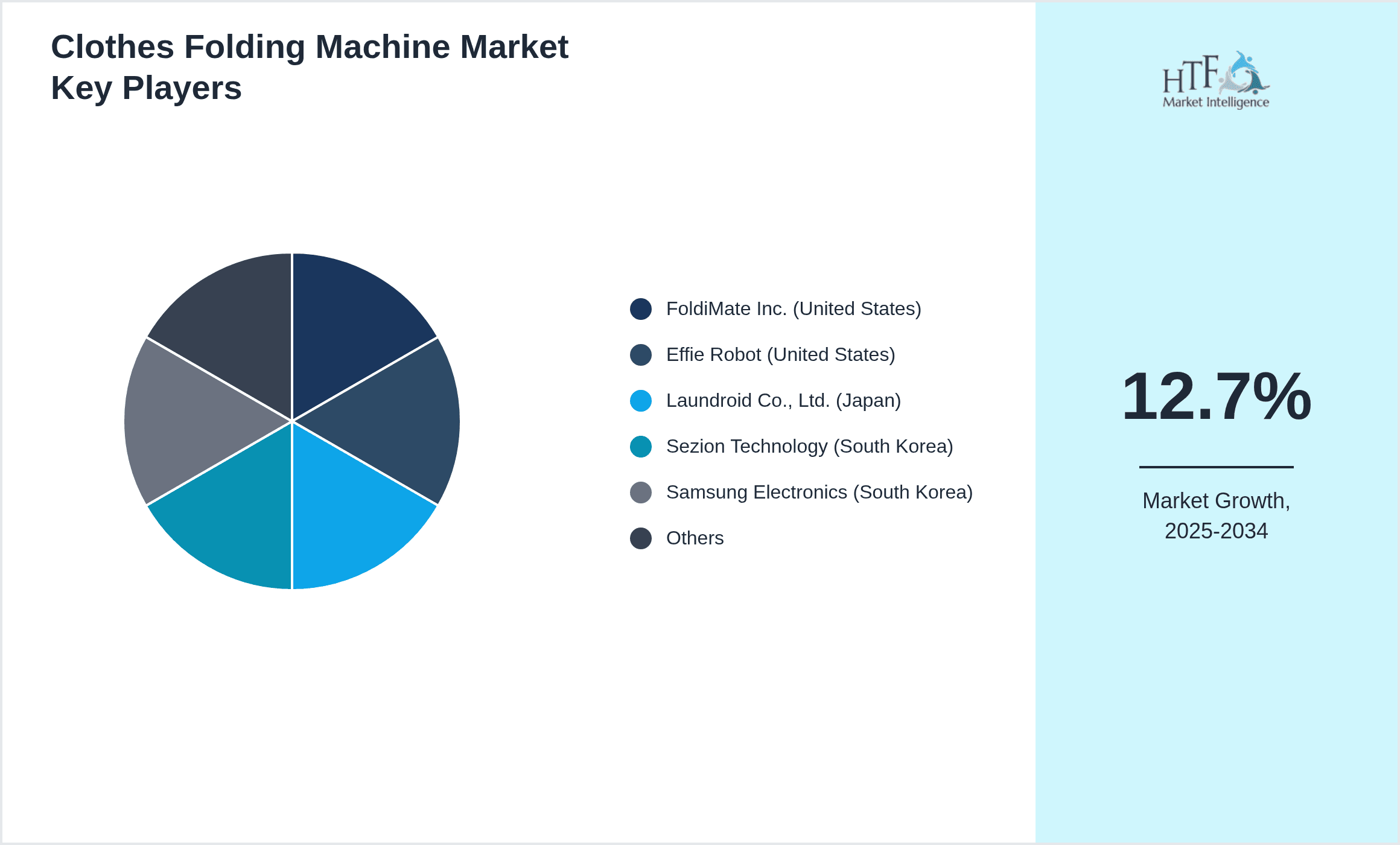
- •FoldiMate Inc. (United States)
- •Effie Robot (United States)
- •Laundroid Co., Ltd. (Japan)
- •Sezion Technology (South Korea)
- •Samsung Electronics (South Korea)
- •Whirlpool Corporation (United States)
- •LG Electronics (South Korea)
- •Electrolux AB (Sweden)
- •Miele & Cie. KG (Germany)
- •Fagor Automation (Spain)
- •Speed Queen (United States)
- •Primus Laundry Equipment (Belgium)
- •Girbau Group (Spain)
- •Alliance Laundry Systems (United States)
- •Huebsch (United States)
- •Sankosha Co. Ltd. (Japan)
- •Toshiba Corporation (Japan)
- •Daewoo Electronics (South Korea)
- •Haier Group Corporation (China)
- •Bosch Home Appliances (Germany)
- •Sharp Corporation (Japan)
- •Panasonic Corporation (Japan)
- •Beko (Turkey)
- •Arçelik A.Ş. (Turkey)
- •Speed Queen Europe (United Kingdom)
Market Breakdown
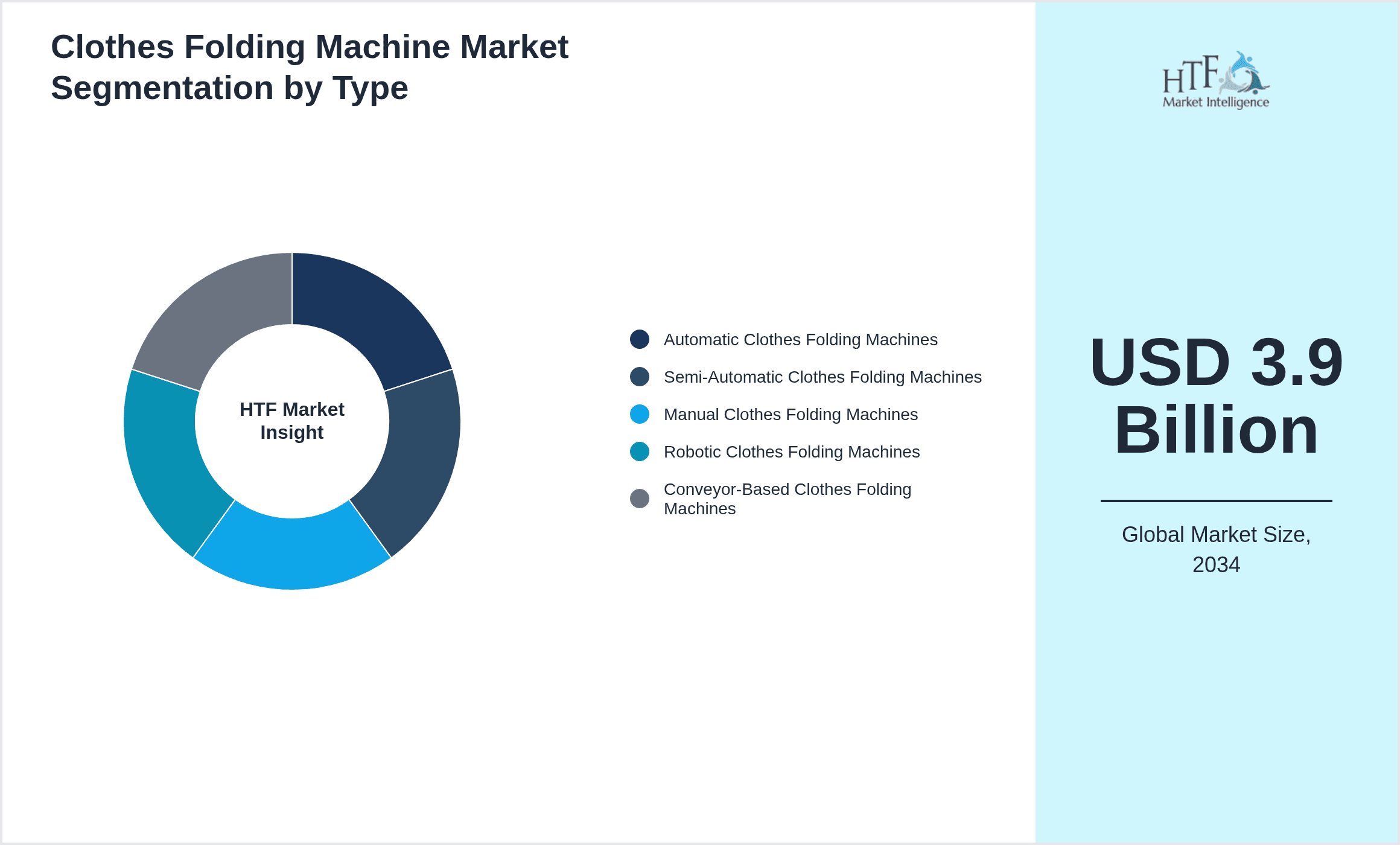
- •By Product Type
- ◦Automatic Clothes Folding Machines
- ◦Semi-Automatic Clothes Folding Machines
- ◦Manual Clothes Folding Machines
- ◦Robotic Clothes Folding Machines
- ◦Conveyor-Based Clothes Folding Machines
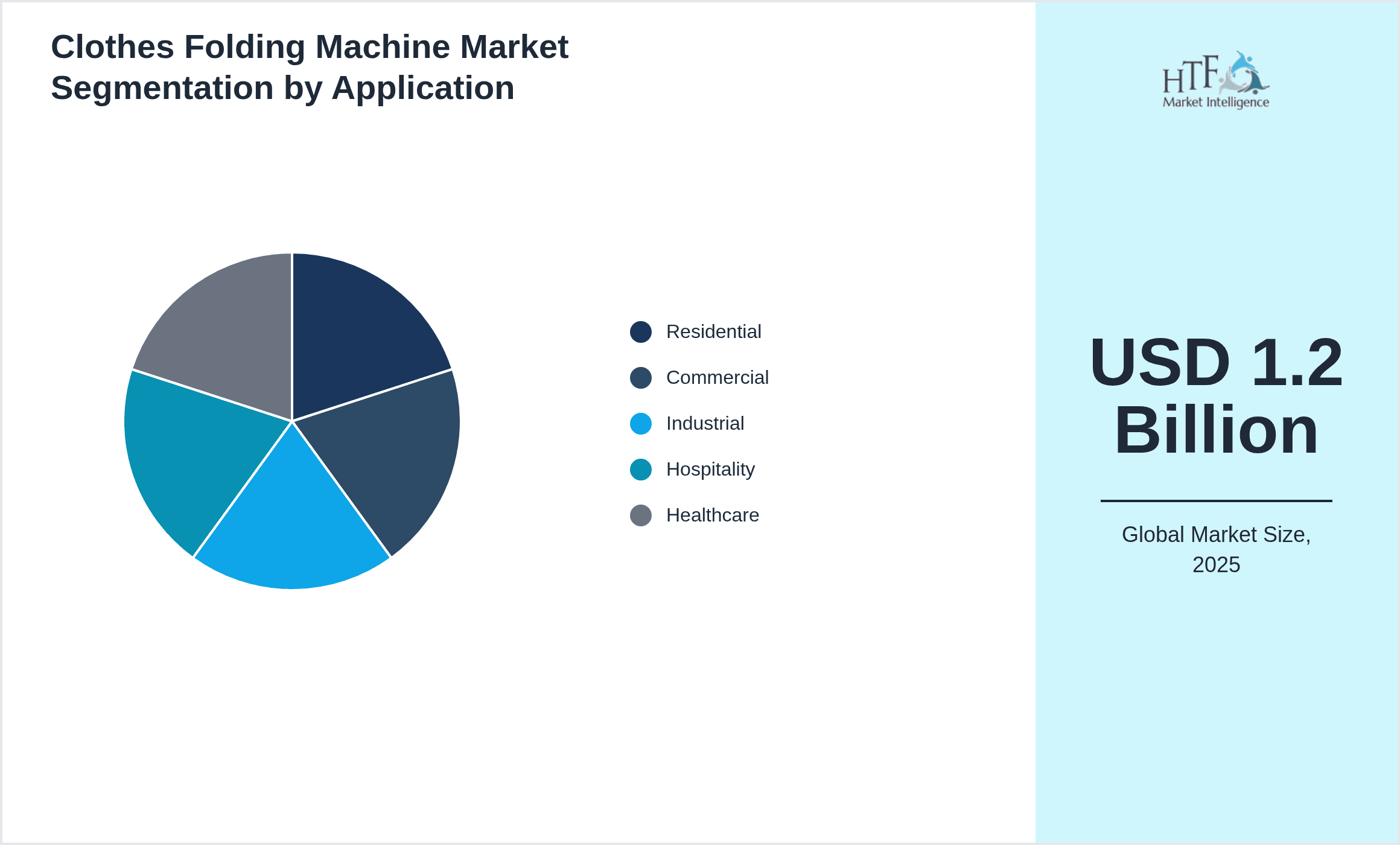
- •By Application
- ◦Residential
- ◦Commercial
- ◦Industrial
- ◦Hospitality
- ◦Healthcare
- •By End-Use Industry
- ◦Laundry Services
- ◦Hotels and Resorts
- ◦Hospitals and Healthcare Facilities
- ◦Manufacturing and Industrial Units
- •By Distribution Channel
- ◦Direct Sales
- ◦Online Retail
- ◦Distributors and Dealers
Growth Dynamics
- •The global clothes folding machine market growth is primarily driven by rising labor costs and increasing demand for automation to improve laundry operation efficiency. Advances in robotics and AI have enabled development of sophisticated machines that reduce manual intervention, appealing to both commercial laundries and residential consumers. Expanding hospitality and healthcare sectors require consistent and hygienic linen handling, further fueling demand. Urbanization and rising disposable incomes in emerging economies contribute to adoption of automated solutions. Additionally, the integration of smart home technologies is enhancing consumer convenience, supporting market expansion. Government initiatives promoting manufacturing automation and energy efficiency also encourage market growth, alongside growing environmental awareness leading to demand for sustainable, energy-saving machines.
- •Technological innovation is a significant growth driver, with companies investing in robotic folding technologies and AI-enhanced systems that increase folding speed and accuracy. The market has witnessed a shift towards fully automated and robotic machines that can handle diverse garment types, reducing errors and increasing throughput. Growing consumer inclination towards smart home appliances incorporating IoT connectivity is fostering adoption. Commercial laundries seek machines with higher capacity and integration capabilities, driving customization and modularity trends. Enhanced user interfaces and maintenance-friendly designs are improving customer satisfaction. These technological trends are reshaping the market landscape, enabling new business models and expanding the addressable market globally.
- •Despite positive growth, high initial capital investment and complexity of automated and robotic clothes folding machines act as growth restraints. Small-scale laundries and residential users may hesitate due to upfront costs and maintenance requirements. Limited awareness and skepticism towards novel technologies in developing regions also slow adoption. Technical challenges related to handling diverse fabric types and sizes affect machine reliability. Moreover, competition from manual labor in low-wage regions dampens demand. Regulatory compliance related to safety and energy use may impose additional costs. These factors present barriers that manufacturers and distributors must strategically address to achieve deeper market penetration.
- •Expanding into emerging markets presents lucrative opportunities due to increasing industrial laundry demand and urbanization. The growing hospitality and healthcare industries in Asia-Pacific and Latin America require efficient linen management, creating new customer segments. Innovation in compact, affordable machines tailored for residential users can capture untapped markets. Collaborations with smart home technology providers offer avenues for differentiated product offerings. Additionally, sustainability-focused product development addressing energy efficiency and waste reduction aligns with evolving regulatory standards and consumer preferences. Strategic partnerships and M&A activities can accelerate market entry and technology acquisition. Overall, the market holds significant potential for growth through innovation, geographic expansion, and value-added services.
- •Challenges include managing supply chain complexities exacerbated by global disruptions affecting component availability and costs. Rapid technological change demands continuous R&D investment, posing risks for smaller players. Ensuring user-friendly interfaces and minimizing machine downtime are critical for customer retention. Intense competition pressures pricing and margins, requiring differentiation. Meeting diverse regulatory requirements across regions complicates product design and certification. Furthermore, educating end-users about benefits and operation of automated folding machines is essential to overcome resistance, especially in developing countries. Addressing these challenges requires strategic planning, investment in innovation, and robust customer support frameworks.
Market Trends
- •Increasing adoption of AI-powered robotic folding machines represents a key market trend, enabling higher precision, adaptability, and integration with smart home ecosystems. Leading manufacturers are introducing machines capable of handling varied fabric types with minimal human intervention, driving industry-wide digital transformation. This trend enhances operational efficiency and user convenience across residential and commercial segments, setting new performance benchmarks.
- •Sustainability and energy efficiency have emerged as critical considerations, with manufacturers designing machines to reduce power consumption and environmental impact. Compliance with stringent energy regulations and growing consumer environmental awareness are encouraging adoption of eco-friendly models, influencing purchasing decisions and product development strategies.
- •The rise of online retail channels has transformed market dynamics, enabling manufacturers to reach residential customers directly with personalized offerings and after-sales support. This shift facilitates rapid product launches and enhances customer engagement, broadening the market reach beyond traditional B2B channels.
- •Collaborative innovation between appliance manufacturers and technology firms is fostering development of integrated laundry solutions combining washing, drying, and folding functionalities. Such ecosystem approaches improve user experience and operational workflow, appealing to tech-savvy consumers and commercial operators.
- •Customization and modular design trends allow users to tailor folding machines to specific garment types and volumes, increasing versatility. This trend supports adoption in specialized industries such as healthcare and hospitality, where diverse linen handling requirements are common.
- •Emerging markets are witnessing rapid growth driven by urbanization, rising incomes, and increasing awareness of automation benefits. Local manufacturers are entering the market with cost-effective solutions, intensifying competition and accelerating market penetration in these regions.
- •Integration of IoT and cloud-based analytics is enabling predictive maintenance and remote monitoring, reducing downtime and enhancing service quality. This trend is gaining traction among commercial users focused on operational efficiency and cost control.
Market Opportunities
- •Emerging economies offer significant growth potential due to expanding commercial laundry services and rising urban populations. Targeting these markets with affordable, scalable folding machines can unlock new revenue streams and market share expansion opportunities for manufacturers.
- •Development of compact, user-friendly machines tailored for residential use presents an untapped market segment. Innovations focusing on ease of use, aesthetics, and integration with existing home appliances can drive consumer adoption and brand differentiation.
- •Strategic partnerships between folding machine manufacturers and smart home technology providers can create integrated solutions, enhancing product appeal through connectivity and automation features. Such collaborations can accelerate innovation and market penetration.
- •Advancements in AI and machine learning offer opportunities to develop adaptive folding algorithms that improve performance over time, catering to diverse garment types and user preferences, thus enhancing customer satisfaction and retention.
- •Expanding into healthcare and hospitality sectors with customized solutions addressing hygiene and operational efficiency requirements can open substantial new markets. These sectors prioritize consistent linen handling and compliance, making automated folding machines valuable assets.
- •Government incentives and subsidies promoting automation and energy efficiency can be leveraged to reduce costs and encourage adoption among commercial users, facilitating faster market growth.
- •Investment in after-sales services, including maintenance contracts and remote assistance, can enhance customer loyalty and create recurring revenue streams, differentiating providers in a competitive market.
Market Challenges
- •High upfront costs of advanced automatic and robotic folding machines limit adoption, especially among small-scale and residential users who may prefer manual alternatives due to budget constraints. This financial barrier necessitates flexible financing and cost-reduction strategies.
- •Technical complexity and maintenance requirements of sophisticated folding machines pose operational challenges, requiring skilled personnel and reliable service networks, which may be lacking in developing regions, constraining market reach.
- •Variability in garment sizes, materials, and folding preferences complicates the design of universally effective folding machines, leading to potential performance issues and customer dissatisfaction if not adequately addressed through adaptable technology.
- •Intense competition and price sensitivity in the market pressure manufacturers to continuously innovate while maintaining profitability, increasing R&D and marketing expenditure and challenging smaller players’ sustainability.
- •Regulatory compliance across diverse global markets requires manufacturers to meet varying safety, energy efficiency, and environmental standards, complicating product development and increasing time-to-market and costs.
- •Consumer skepticism and lack of awareness about automated folding machines’ benefits, particularly in emerging markets, hinder rapid adoption and necessitate focused education and marketing initiatives.
- •Supply chain disruptions affecting component availability and rising raw material costs can delay production schedules and increase prices, impacting market growth and profitability.
Regulatory Framework
- •Between 2019 and 2024, multiple regions have adopted energy efficiency regulations targeting household and commercial appliances, including clothes folding machines. These regulations mandate minimum energy performance standards and labeling requirements, compelling manufacturers to innovate for compliance. For example, the European Union’s Ecodesign Directive enforces strict energy consumption limits and environmental impact criteria, significantly influencing product design and market offerings.
- •Safety standards have been updated globally to address electrical and mechanical hazards associated with automated folding machines. Regulatory bodies require rigorous testing and certification to ensure user protection and machine reliability. Compliance with standards like UL in North America and CE marking in Europe is mandatory, affecting market entry and operational costs.
- •Environmental regulations focusing on recyclability and reduction of hazardous substances in appliance manufacturing have gained prominence. Manufacturers are required to adopt eco-friendly materials and processes, aligning with global sustainability goals and consumer expectations, which influences sourcing and production strategies.
- •Region-specific mandates, such as China’s energy conservation law and the U.S. Department of Energy’s appliance standards, impose additional compliance requirements, affecting product features and pricing. Timely adaptation to these regulations is critical for maintaining competitive positioning.
- •Government initiatives promoting automation and smart manufacturing offer incentives and subsidies, enhancing investment appeal in the clothes folding machine market. These policy frameworks support innovation, market expansion, and adoption of energy-efficient technologies, shaping industry dynamics positively.
Market Intelligence
- •15th March 2024, FoldiMate Inc. unveiled its latest Automatic Clothes Folding Machine model featuring enhanced AI-driven garment recognition and folding precision designed for residential and small commercial users. The new model integrates IoT connectivity, enabling remote operation and predictive maintenance. This launch aims to expand FoldiMate’s market share by addressing usability and efficiency improvements, targeting tech-savvy consumers seeking convenience. The product also supports multiple fabric types and sizes, addressing previous limitations. FoldiMate’s strategic focus on innovation and user experience positions it strongly against competitors in the growing automated folding segment. Source: Official FoldiMate Press Release
- •10th November 2023, Samsung Electronics introduced an industrial-grade Robotic Clothes Folding Machine tailored for large-scale laundries and hospitality businesses. Equipped with advanced robotic arms and machine learning algorithms, the device ensures faster processing speeds and consistent folding quality. Samsung’s product development emphasizes energy efficiency and integration with existing laundry management systems. This innovation responds to increasing demand in Asia-Pacific and North America for automation in commercial laundry operations. Samsung’s entry into this niche is expected to intensify competition and accelerate adoption of robotic solutions globally. Source: Samsung Newsroom
- •22nd July 2023, Whirlpool Corporation announced a strategic partnership with a leading smart home technology firm to develop integrated laundry solutions combining washing, drying, and folding functionalities. This collaboration aims to deliver seamless automation and user-friendly interfaces, enhancing consumer convenience and energy efficiency. The initiative also includes cloud-based analytics for maintenance and performance optimization. Whirlpool’s focus on smart home integration is expected to drive growth in the residential segment and set new industry standards. Source: Whirlpool Corporate Announcement
- •5th January 2024, Electrolux AB expanded its commercial laundry equipment portfolio by launching a Semi-Automatic Clothes Folding Machine designed for mid-sized laundries and healthcare facilities. The machine balances cost-effectiveness with automation, improving folding speed and reducing labor requirements. Electrolux’s innovation targets markets with budget-conscious customers seeking operational efficiency gains. The company’s expansion strategy focuses on emerging markets where demand for commercial laundry automation is rising. Source: Electrolux Press Release
Regional Outlook
The North America currently holds a significant share of the market, primarily due to several key factors: increasing consumption rates, a burgeoning population, and robust economic momentum. These elements collectively drive demand, positioning this region as a leader in the market. On the other hand, Asia-Pacific is rapidly emerging as the fastest-growing area within the industry. This remarkable growth can be attributed to swift infrastructure development, the expansion of various industrial sectors, and a marked increase in consumer demand. These dynamics make this region a crucial player in shaping future market growth.
In our report, we cover a comprehensive analysis of the following regions and countries:
- North America
- LATAM
- West Europe
- Central & Eastern Europe
- Northern Europe
- Southern Europe
- East Asia
- Southeast Asia
- South Asia
- Central Asia
- Oceania
- MEA
| Feature | Details |
|---|---|
| Base Year Market Size | USD 1.2 Billion |
| Forecast Year Market Size | USD 3.9 Billion |
| CAGR | 12.7% |
| Forecast Period | 2026 to 2033 |
| YoY Growth | 12% |
| Scope of Report | Market is segmented by Product Type (Automatic Clothes Folding Machines, Semi-Automatic Clothes Folding Machines, Manual Clothes Folding Machines, Robotic Clothes Folding Machines, Conveyor-Based Clothes Folding Machines), Application (Residential, Commercial, Industrial, Hospitality, Healthcare), End-Use Industry (Laundry Services, Hotels and Resorts, Hospitals and Healthcare Facilities, Manufacturing and Industrial Units), Distribution Channel (Direct Sales, Online Retail, Distributors and Dealers) |
| Regions Covered | North America, LATAM, West Europe, Central & Eastern Europe, Northern Europe, Southern Europe, East Asia, Southeast Asia, South Asia, Central Asia, Oceania, MEA |
| Key Companies | FoldiMate Inc. (United States), Effie Robot (United States), Laundroid Co., Ltd. (Japan), Sezion Technology (South Korea), Samsung Electronics (South Korea), Whirlpool Corporation (United States), LG Electronics (South Korea), Electrolux AB (Sweden), Miele & Cie. KG (Germany), Fagor Automation (Spain), Speed Queen (United States), Primus Laundry Equipment (Belgium), Girbau Group (Spain), Alliance Laundry Systems (United States), Huebsch (United States), Sankosha Co. Ltd. (Japan), Toshiba Corporation (Japan), Daewoo Electronics (South Korea), Haier Group Corporation (China), Bosch Home Appliances (Germany), Sharp Corporation (Japan), Panasonic Corporation (Japan), Beko (Turkey), Arçelik A.Ş. (Turkey), Speed Queen Europe (United Kingdom) |
Global Clothes Folding Machine Market Size, Growth & Revenue 2024-2034 - Table of Contents
Multidisciplinary researcher with 10+ years of experience uncovering insights across diverse domains focused on uncovering insights that drive informed decisions.
Frequently Asked Questions (FAQ):
The Market market is expected to see significant growth and value in 2025.
North America currently leads the market, followed by Europe and Asia-Pacific.
Key growth drivers include increasing activities, rising demand for innovative solutions, technological advancements, and growing preference for efficient products.