
Global Rice Biscuits Market Size, Growth & Revenue 2024-2034
Global Rice Biscuits Market is segmented by Product Type (Gluten-Free Rice Biscuits, Organic Rice Biscuits, Fortified Rice Biscuits, Flavored Rice Biscuits, Plain Rice Biscuits), Application (Snack Food, Breakfast, Confectionery, Baby Food, Health Food), End-Use Industry (Retail, Foodservice, Online Retail, Specialty Stores), Distribution Channel (Supermarkets/Hypermarkets, Convenience Stores, E-commerce), and Geography (North America, LATAM, West Europe, Central & Eastern Europe, Northern Europe, Southern Europe, East Asia, Southeast Asia, South Asia, Central Asia, Oceania, MEA)
Pricing
Report Overview
Executive Summary
- •The global rice biscuits market is an expanding sector within the broader snack and health food industry, characterized by its wide variety of product types including gluten-free, organic, fortified, flavored, and plain biscuits. These products cater to a growing consumer base looking for nutritious and convenient food options suitable for snacks, breakfast, confectionery, baby food, and health-conscious diets. Market growth is driven by increasing awareness of gluten intolerance, rising demand for organic food, and innovation in flavor profiles and health fortification. The market spans multiple geographies including North America, Europe, Asia-Pacific, Latin America, and the Middle East & Africa, each contributing unique demand drivers and challenges. Established players and new entrants compete intensively on product innovation, quality standards, and distribution reach. Technological advancements in production and packaging further enhance product shelf life and consumer appeal. Regulatory compliance and sustainability trends also shape market dynamics, making it a strategically important segment for food manufacturers globally.
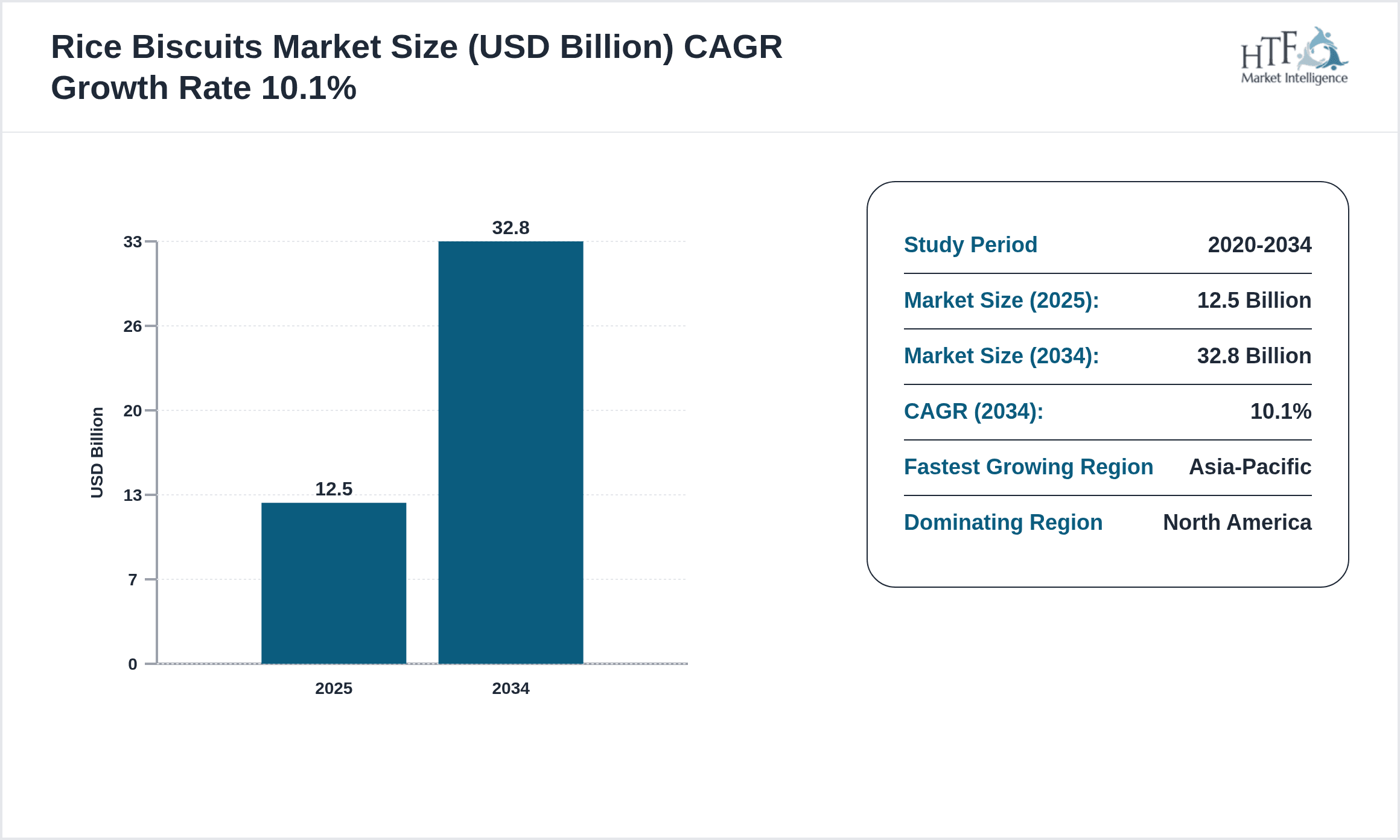
- •Key highlights of the market include a base valuation of USD 12.5 Billion in 2024, with projections indicating growth to USD 32.8 Billion by 2034 at a CAGR of 10.1%, reflecting robust demand and expanding consumer awareness. The market exhibits a year-over-year growth rate of 9.7%, underscoring sustained momentum. North America leads the market in terms of size, while Asia-Pacific is the fastest-growing region, driven by rising urbanization and health trends. Gluten-free rice biscuits dominate product segments, but organic variants are rapidly gaining traction due to increased consumer preference for natural and chemical-free foods. Snack food applications constitute the largest usage category, followed by breakfast and confectionery uses, highlighting the product’s versatility. These factors collectively underscore the market’s growth potential and strategic relevance.
- •From a strategic perspective, the rice biscuits market offers significant value to food manufacturers, retailers, and ingredient suppliers by meeting evolving consumer preferences for healthier, allergen-free, and convenient food products. The integration of advanced processing technologies, innovative packaging, and sustainable sourcing enhances competitive positioning. Furthermore, the market serves as a crucial segment for investors and stakeholders seeking growth opportunities in the global health food and snack sectors. As consumer demand continues to pivot toward wellness and functional foods, rice biscuits present a compelling proposition due to their gluten-free nature and nutritional adaptations. This dynamic landscape encourages continuous innovation and market expansion, making the rice biscuits market a vital contributor to the global food industry’s future.
Competitive Landscape
The global rice biscuits market is characterized by intense competition among a mix of multinational corporations and regional manufacturers striving to capture market share through product innovation, brand differentiation, and expansive distribution networks. Companies are focusing on developing gluten-free and organic product lines to address health-conscious consumers and those with dietary restrictions. Innovation in flavor, texture, and nutritional enhancement plays a critical role in establishing competitive advantages. Strategic partnerships, collaborations, and mergers contribute to market consolidation, while companies invest in sustainable sourcing and eco-friendly packaging to meet regulatory and consumer demands. Pricing strategies vary across regions, with premium pricing in developed markets balanced by cost competitiveness in emerging markets. Distribution channels are diversified, including supermarkets, online retail, and specialty stores, enhancing accessibility. The competitive environment is further shaped by evolving consumer preferences, regulatory frameworks, and technological advancements, fostering continuous improvement and market penetration strategies.
Leading Companies in Rice Biscuits Market
- •Mondelez International, Inc. (United States)
- •Kellogg Company (United States)
- •General Mills, Inc. (United States)
- •Britannia Industries Limited (India)
- •Nestlé S.A. (Switzerland)
- •PepsiCo, Inc. (United States)
- •Groupe Danone S.A. (France)
- •Parle Products Pvt. Ltd. (India)
- •Ferrero Group (Italy)
- •Campbell Soup Company (United States)
- •Bimbo Bakeries USA (Mexico)
- •Ajinomoto Co., Inc. (Japan)
- •Orkla ASA (Norway)
- •Meiji Holdings Co., Ltd. (Japan)
- •Grupo Bimbo, S.A.B. de C.V. (Mexico)
- •Yili Group Co., Ltd. (China)
- •Lotte Confectionery Co., Ltd. (South Korea)
- •United Biscuits (United Kingdom)
- •Rich Products Corporation (United States)
- •Haldiram's (India)
- •Fonterra Co-operative Group Limited (New Zealand)
- •Britvic plc (United Kingdom)
- •Calbee, Inc. (Japan)
- •Munchy Food Industries Sdn Bhd (Malaysia)
- •Parle Agro Pvt. Ltd. (India)

Market Breakdown
- •By Product Type
- ◦Gluten-Free Rice Biscuits
- ◦Organic Rice Biscuits
- ◦Fortified Rice Biscuits
- ◦Flavored Rice Biscuits
- ◦Plain Rice Biscuits
- •By Application
- ◦Snack Food
- ◦Breakfast
- ◦Confectionery
- ◦Baby Food
- ◦Health Food
- •By End-Use Industry
- ◦Retail
- ◦Foodservice
- ◦Online Retail
- ◦Specialty Stores
- •By Distribution Channel
- ◦Supermarkets/Hypermarkets
- ◦Convenience Stores
- ◦E-commerce
Growth Dynamics
The global rice biscuits market is propelled by an increasing consumer preference for gluten-free and organic food products, driven by rising health consciousness and awareness of gluten intolerance globally. The expanding middle-class population, especially in emerging economies, is fueling demand for convenient and nutritious snack alternatives. Technological advancements in processing and packaging have improved product shelf life and sensory attributes, enhancing consumer acceptance. Additionally, the rising trend of on-the-go consumption supports market growth, with manufacturers focusing on innovative flavors and fortified variants to address nutritional gaps. Government initiatives promoting healthy eating habits and clean-label products further stimulate market expansion. These drivers collectively contribute to a robust CAGR of 10.1% over the forecast period.

Market Trends
The rice biscuits market is witnessing a significant shift towards natural and organic ingredients, with consumers increasingly seeking clean-label and chemical-free products. Innovations in flavor development, such as the incorporation of superfoods and exotic spices, cater to evolving taste preferences. Digital transformation and e-commerce adoption facilitate broader market reach and personalized consumer engagement. Additionally, sustainability trends encourage manufacturers to adopt eco-friendly packaging and ethical sourcing practices, thereby enhancing brand value. The rise of plant-based diets and allergen-free food trends also drive product diversification, positioning rice biscuits as a preferred choice among health-conscious demographics globally. These trends reshape competitive strategies and product portfolios across regions.

Market Opportunities
Emerging markets in Asia-Pacific and Latin America present substantial opportunities for rice biscuits manufacturers due to rising disposable incomes and growing urbanization. Expanding distribution through online retail channels allows for targeted marketing and direct consumer access, reducing costs and enhancing profitability. Product innovation focused on fortified and functional rice biscuits can meet increasing demands for dietary supplements and wellness foods. Collaborations with health and wellness brands offer avenues for co-branding and increased market penetration. Furthermore, expanding the product range to include ethnic flavors and catering to regional taste profiles can unlock new customer segments. These opportunities align with global health trends and evolving consumer lifestyles, fostering sustainable market growth.
Market Challenges
The rice biscuits market faces several challenges including high raw material costs, particularly for organic and gluten-free rice varieties, which can impact pricing competitiveness. Regulatory complexities across different regions regarding labeling, health claims, and food safety standards pose compliance challenges to manufacturers and exporters. Intense competition from alternative snack products such as wheat-based biscuits and other gluten-free snacks limits market share expansion. Additionally, consumer skepticism regarding product authenticity and nutritional benefits may restrain market growth. Supply chain disruptions and fluctuations in rice availability due to climatic conditions further contribute to operational risks. Addressing these challenges requires strategic management, innovation, and adherence to stringent quality controls.
Regulatory Framework
Between 2019 and 2024, several key regulations have shaped the rice biscuits market landscape globally. The FDA's updated gluten-free labeling rule (2020) mandates strict testing and certification, ensuring product safety and consumer trust. The European Union's Novel Food Regulation (2019) impacts ingredient approval and product introductions, requiring comprehensive safety assessments. Food safety modernization acts in North America and Asia-Pacific emphasize traceability and contamination control, directly influencing manufacturing practices. Environmental regulations encourage sustainable packaging, with mandates on biodegradable materials increasing. Additionally, government incentives for organic and health food production support market growth, while regional food standards bodies enforce compliance to maintain consistent product quality and consumer protection.
Market Intelligence
- •15th January 2025, Mondelez International, Inc. launched a new line of organic rice biscuits targeting health-conscious consumers seeking gluten-free snack options. These products incorporate fortified nutrients and utilize sustainable packaging to reduce environmental impact. The launch aligns with growing demand in North America and Europe for clean-label and organic food products, reinforcing Mondelez’s commitment to innovation and sustainability in the snack segment. The product rollout includes digital marketing campaigns to engage younger consumers and expands the company’s presence in e-commerce channels globally. This strategic move enhances Mondelez’s portfolio and competitive positioning within the rice biscuits market. Source: Official Mondelez International Press Release
- •10th March 2025, Britannia Industries Limited introduced a premium range of flavored rice biscuits enriched with natural superfoods such as chia seeds and flaxseeds. The product targets the breakfast and health food segments, addressing consumer trends towards nutritious and convenient meal options. Britannia’s innovation leverages advanced baking technologies to maintain flavor integrity and texture while enhancing nutritional value. The launch has received positive market feedback in Asia-Pacific and is expected to drive incremental revenue growth through retail and online channels. This initiative underscores Britannia’s focus on product differentiation and meeting evolving consumer preferences. Source: Britannia Corporate Announcement
- •Recent market developments and strategic initiatives are continuously tracked through industry publications, company announcements, and regulatory filings. For the most current information, stakeholders are advised to monitor official corporate communications and recognized market intelligence platforms.
- •Recent market developments and strategic initiatives are continuously tracked through industry publications, company announcements, and regulatory filings. For the most current information, stakeholders are advised to monitor official corporate communications and recognized market intelligence platforms.
Regional Outlook
The North America currently holds a significant share of the market, primarily due to several key factors: increasing consumption rates, a burgeoning population, and robust economic momentum. These elements collectively drive demand, positioning this region as a leader in the market. On the other hand, Asia-Pacific is rapidly emerging as the fastest-growing area within the industry. This remarkable growth can be attributed to swift infrastructure development, the expansion of various industrial sectors, and a marked increase in consumer demand. These dynamics make this region a crucial player in shaping future market growth.
In our report, we cover a comprehensive analysis of the following regions and countries:
- North America
- LATAM
- West Europe
- Central & Eastern Europe
- Northern Europe
- Southern Europe
- East Asia
- Southeast Asia
- South Asia
- Central Asia
- Oceania
- MEA
| Feature | Details |
|---|---|
| Base Year Market Size | USD 12.5 Billion |
| Forecast Year Market Size | USD 32.8 Billion |
| CAGR | 10.1% |
| Forecast Period | 2026 to 2033 |
| YoY Growth | 9.7% |
| Scope of Report | Market is segmented by Product Type (Gluten-Free Rice Biscuits, Organic Rice Biscuits, Fortified Rice Biscuits, Flavored Rice Biscuits, Plain Rice Biscuits), Application (Snack Food, Breakfast, Confectionery, Baby Food, Health Food), End-Use Industry (Retail, Foodservice, Online Retail, Specialty Stores), Distribution Channel (Supermarkets/Hypermarkets, Convenience Stores, E-commerce) |
| Regions Covered | North America, LATAM, West Europe, Central & Eastern Europe, Northern Europe, Southern Europe, East Asia, Southeast Asia, South Asia, Central Asia, Oceania, MEA |
| Key Companies | Mondelez International, Inc. (United States), Kellogg Company (United States), General Mills, Inc. (United States), Britannia Industries Limited (India), Nestlé S.A. (Switzerland), PepsiCo, Inc. (United States), Groupe Danone S.A. (France), Parle Products Pvt. Ltd. (India), Ferrero Group (Italy), Campbell Soup Company (United States), Bimbo Bakeries USA (Mexico), Ajinomoto Co., Inc. (Japan), Orkla ASA (Norway), Meiji Holdings Co., Ltd. (Japan), Grupo Bimbo, S.A.B. de C.V. (Mexico), Yili Group Co., Ltd. (China), Lotte Confectionery Co., Ltd. (South Korea), United Biscuits (United Kingdom), Rich Products Corporation (United States), Haldiram's (India), Fonterra Co-operative Group Limited (New Zealand), Britvic plc (United Kingdom), Calbee, Inc. (Japan), Munchy Food Industries Sdn Bhd (Malaysia), Parle Agro Pvt. Ltd. (India) |
Global Rice Biscuits Market Size, Growth & Revenue 2024-2034 - Table of Contents
Multidisciplinary researcher with 10+ years of experience uncovering insights across diverse domains focused on uncovering insights that drive informed decisions.
Frequently Asked Questions (FAQ):
The Compact Track Loaders market is expected to see value worth 5.3 Billion in 2025.
North America currently leads the market with approximately 45% market share, followed by Europe at 28% and Asia-Pacific at 22%. The remaining regions account for 5% of the global market.
Key growth drivers include increasing construction activities, rising demand for versatile equipment in agriculture, technological advancements in track loader design, and growing preference for compact equipment in urban construction projects.