
Global Commercial Dough Machines Market Size, Growth & Revenue 2024-2034
Global Commercial Dough Machines Market is segmented by Product Type (Spiral Mixers, Planetary Mixers, Horizontal Mixers, Vertical Mixers, Others), Application (Bakery, Food Service, Industrial Production, Retail, Others), End-Use Industry (Commercial Bakeries, Restaurants and Cafes, Food Manufacturing Units, Retail Bakeries), Distribution Channel (Direct Sales, Distributors and Dealers, Online Sales), and Geography (North America, LATAM, West Europe, Central & Eastern Europe, Northern Europe, Southern Europe, East Asia, Southeast Asia, South Asia, Central Asia, Oceania, MEA)
Pricing
Report Overview
Executive Summary
- •The global Commercial Dough Machines market comprises industrial-grade equipment designed for efficient dough mixing in bakeries, food service, industrial production, retail, and other applications. Its scope includes different mixer types such as spiral, planetary, horizontal, and vertical mixers, each tailored to specific dough processing needs. The market supports the food industry by improving productivity, consistency, and hygiene in dough preparation, essential for large-scale baking and food manufacturing. Technological enhancements like automation, energy efficiency, and smart controls are increasingly integrated to meet evolving industry demands. This market is driven by rising bakery consumption, expanding foodservice sectors, and the growing preference for ready-to-eat baked goods globally. The competitive landscape features innovation, strategic partnerships, and regional expansion as key factors shaping market growth over the forecast period.
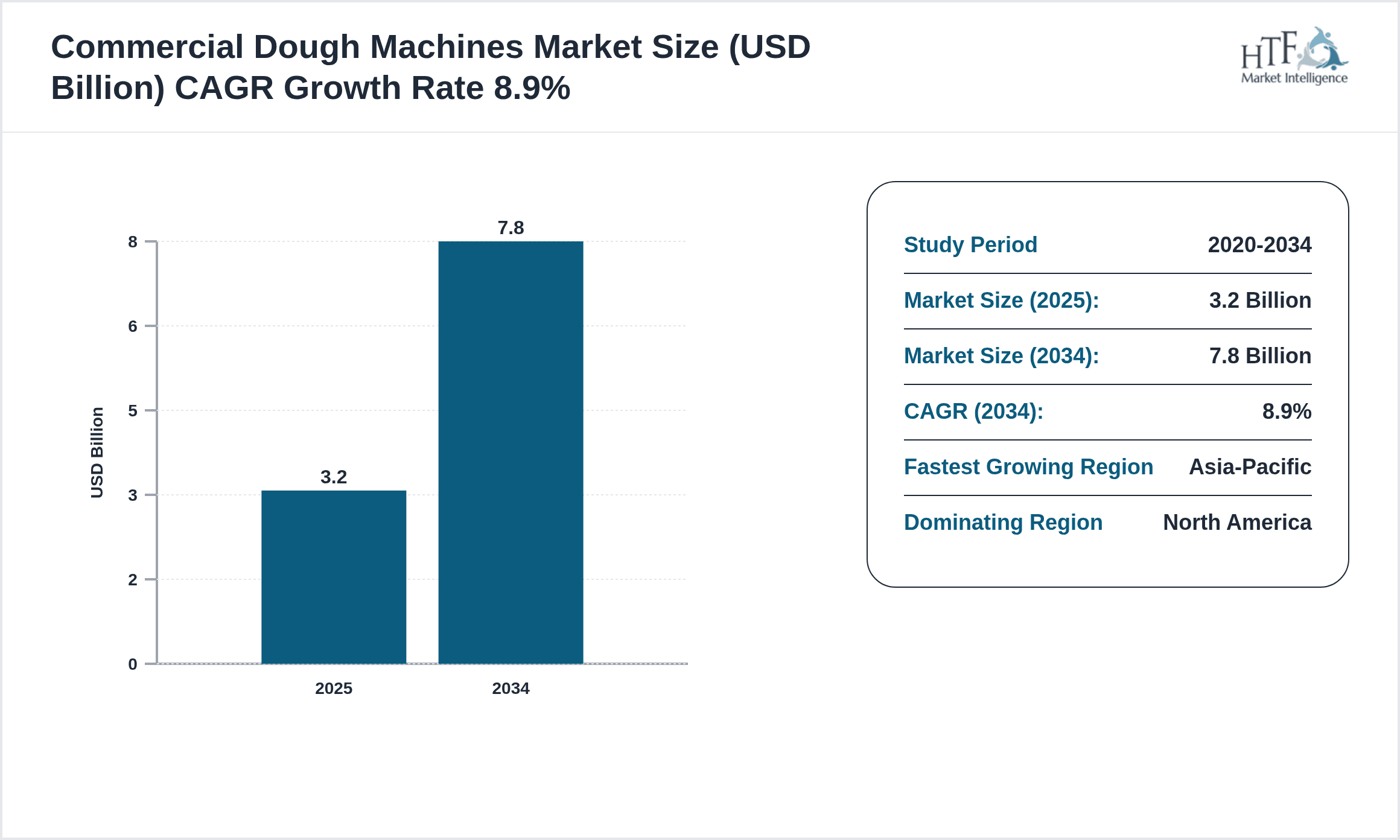
- •Key market highlights include a base market size of USD 3.2 Billion in 2024, projected to reach USD 7.8 Billion by 2034, reflecting a CAGR of 8.9%. North America currently dominates the market due to established bakery industries and advanced food processing technologies, while Asia-Pacific is the fastest-growing region fueled by urbanization and increasing demand for convenience foods. Spiral mixers lead the product segment due to their efficiency and versatility, with horizontal mixers expected to grow rapidly owing to industrial-scale adoption. Applications in bakery and food service sectors represent the largest revenue contributors. The market sees continuous innovation with an emphasis on automation and energy efficiency to meet stringent food safety regulations and operational efficiency goals.
- •The market offers significant value propositions by enabling food manufacturers and bakeries to scale operations while ensuring product uniformity and compliance with hygiene standards. Commercial dough machines reduce manual labor, increase throughput, and optimize ingredient usage, thereby lowering operational costs. Strategic importance extends to equipment manufacturers, distributors, and end-users by fostering innovation-led growth and expanding market reach across emerging economies. The integration of IoT and smart technology enhances predictive maintenance and operational control, providing stakeholders with actionable insights to improve productivity. Overall, the market's growth trajectory aligns with evolving consumer preferences for quality bakery products and the modernization of food processing infrastructure globally.
Competitive Landscape
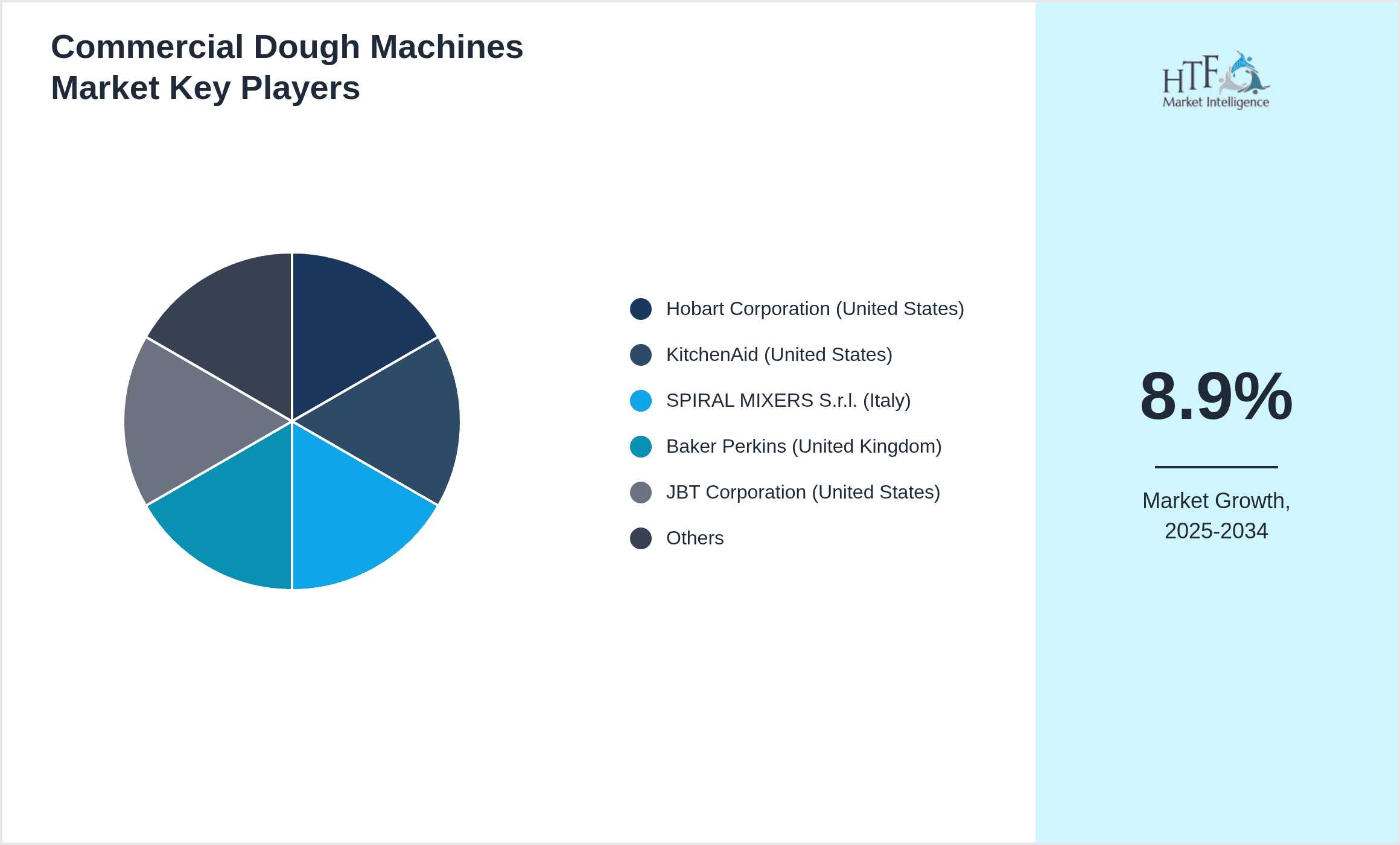
The global Commercial Dough Machines market exhibits a competitive environment characterized by a blend of established multinational corporations and dynamic regional players striving for market share through innovation, strategic partnerships, and enhanced product portfolios. Companies focus on developing advanced technologies such as automated mixers with energy-efficient designs and IoT-enabled features to differentiate their offerings. Market rivalry is intensified by pricing strategies, distribution network expansion, and customization capabilities tailored to diverse customer requirements. Strategic mergers and acquisitions are common to consolidate market presence and access new geographies. Innovation in product design and after-sales services also plays a critical role in maintaining competitive advantage. The evolving regulatory landscape and quality standards compel manufacturers to continuously upgrade technologies, adding layers of complexity to competition. Regional competition varies, with North America and Europe emphasizing technological sophistication, while Asia-Pacific players leverage cost advantages and local market knowledge. Future trends suggest increasing collaboration between technology providers and equipment manufacturers to foster smart kitchen ecosystems.
Leading Companies in Commercial Dough Machines Market
- •Hobart Corporation (United States)
- •KitchenAid (United States)
- •SPIRAL MIXERS S.r.l. (Italy)
- •Baker Perkins (United Kingdom)
- •JBT Corporation (United States)
- •GEA Group AG (Germany)
- •The Middleby Corporation (United States)
- •Sammic (Spain)
- •Diosna Dierks & Söhne GmbH (Germany)
- •Famag GmbH (Germany)
- •Univex Corporation (United States)
- •Varimixer (Denmark)
- •Frain Industries, Inc. (United States)
- •Azkoyen Group (Spain)
- •American Dough Tools (United States)
- •Winkler und Dünnebier Süßwarenmaschinen GmbH (Germany)
- •Rheon Automatic Machinery Co., Ltd. (Japan)
- •Omcan (Canada)
- •Varimixer Ltd. (Denmark)
- •Escher Group AG (Switzerland)
- •VMI Group (Netherlands)
- •Sottoriva (Italy)
- •Tefcold (Denmark)
- •L. A. Jackson Company (United States)
- •AMF Bakery Systems (United States)

Market Breakdown
- •By Product Type
- ◦Spiral Mixers
- ◦Planetary Mixers
- ◦Horizontal Mixers
- ◦Vertical Mixers
- ◦Others
- •By Application
- ◦Bakery
- ◦Food Service
- ◦Industrial Production
- ◦Retail
- ◦Others
- •By End-Use Industry
- ◦Commercial Bakeries
- ◦Restaurants and Cafes
- ◦Food Manufacturing Units
- ◦Retail Bakeries
- •By Distribution Channel
- ◦Direct Sales
- ◦Distributors and Dealers
- ◦Online Sales
Growth Dynamics
- •Rising demand for baked goods globally, driven by increasing urbanization and changing dietary habits, propels the market growth for commercial dough machines. Key players are innovating to develop machines that offer higher efficiency and lower energy consumption, meeting the demands of large-scale bakeries and food service providers.
- •Technological advancements such as automation and integration of IoT in dough machines enhance operational control and predictive maintenance, reducing downtime and improving productivity. This trend attracts investments from bakery chains and industrial manufacturers aiming to optimize production processes.
- •Expanding foodservice industry and rising number of retail bakeries worldwide create a substantial demand for versatile dough mixing equipment that can handle diverse dough types and batch sizes, thereby driving market expansion.
- •Government initiatives promoting food safety and hygiene standards globally compel manufacturers to adopt machines with advanced sanitation features and compliance certifications, augmenting market adoption.
- •Increasing consumer preference for ready-to-eat and convenience bakery products fuels investments in industrial dough machines, supporting mass production and consistency, which is essential for meeting quality standards.

Market Trends
- •The adoption of energy-efficient and eco-friendly commercial dough machines is gaining momentum as manufacturers respond to global sustainability goals and reduce operational costs for end-users. This shift encourages innovation in machine design and materials.
- •Integration of smart technology, including IoT-enabled monitoring systems, allows real-time data analytics and remote control of dough machines, enabling predictive maintenance and enhanced process automation.
- •Customization of dough machines tailored to specific bakery needs, such as adjustable mixing speeds and capacities, is becoming a key differentiator, allowing businesses to optimize production according to product variety.
- •Rising demand for multifunctional machines that can perform mixing, kneading, and dough dividing helps bakeries minimize equipment footprint and capital expenditure, driving market preference.
- •Collaborations between equipment manufacturers and food technology companies foster innovation in machine capabilities, enhancing dough quality and process efficiency through joint R&D efforts.
- •Market segmentation is evolving with increased focus on compact and portable dough machines suitable for small-scale bakeries and retail outlets, expanding accessibility and adoption.
- •Emerging markets in Asia-Pacific and Latin America are witnessing rapid growth due to rising disposable incomes and expanding foodservice sectors, attracting global players to increase presence through local partnerships.
Market Opportunities
- •Emerging economies present significant opportunities for market expansion, driven by urban population growth and increasing demand for bakery products requiring efficient dough processing equipment.
- •Innovation in automation and smart technologies offers potential to develop next-generation dough machines that reduce labor costs and improve operational accuracy, appealing to large-scale manufacturers.
- •Expansion into niche applications such as gluten-free and specialty dough preparation enables manufacturers to cater to health-conscious consumers and diversify product offerings.
- •Strategic partnerships and collaborations with foodservice chains and industrial bakeries can facilitate customized solutions and long-term supply contracts, enhancing market penetration.
- •Growing online sales channels provide opportunities for manufacturers to reach small and medium-sized bakeries and retailers, expanding market access beyond traditional distribution networks.
- •Sustainability trends encourage development of eco-friendly materials and energy-saving technologies in dough machines, creating competitive advantages for early adopters.
- •Investments in after-sales services, including maintenance and training, offer additional revenue streams and strengthen customer relationships, supporting brand loyalty.
Market Challenges
- •High initial capital investment required for advanced commercial dough machines limits adoption among small and medium-sized bakeries, restricting market penetration in emerging regions.
- •Technical complexities and maintenance requirements of sophisticated dough machines pose operational challenges and may increase downtime if adequate support infrastructure is lacking.
- •Stringent regulatory compliance related to food safety and hygiene standards necessitates continuous product upgrades and certifications, increasing development costs for manufacturers.
- •Intense competition and price pressures from regional players offering low-cost alternatives affect profit margins of established global manufacturers.
- •Supply chain disruptions and raw material price volatility impact manufacturing costs and delivery timelines, posing risks to market stability.
- •Limited skilled labor availability for operating and maintaining complex dough machines hampers efficient utilization, especially in developing markets.
- •Rapid technological changes require continuous innovation investment, which may strain smaller manufacturers and slow product development cycles.
Regulatory Framework
- •Between 2019 and 2024, global food safety regulations such as HACCP and ISO 22000 have become more stringent, mandating enhanced sanitation and hygiene features in commercial dough machines to prevent contamination risks.
- •Recent enforcement of energy efficiency standards in regions like North America and Europe requires manufacturers to design dough machines that comply with eco-design directives, promoting sustainability.
- •Safety standards including electrical certifications and machine guarding regulations have been updated to ensure operator safety, influencing design and manufacturing processes across all markets.
- •Regional mandates on emissions and noise levels affect commercial kitchen equipment, prompting manufacturers to innovate quieter and cleaner operating dough machines.
- •Government incentives and subsidies in emerging markets encourage adoption of modern commercial kitchen equipment, including dough machines, facilitating market growth through financial support.
Market Intelligence
- •15th January 2025, Hobart Corporation launched its new series of automated spiral mixers featuring IoT connectivity and energy-saving technology designed for large-scale bakeries. This product aims to optimize dough mixing efficiency while reducing operational costs and downtime through real-time monitoring and predictive maintenance capabilities, targeting global bakery chains and industrial manufacturers.
- •22nd March 2025, GEA Group AG introduced a horizontally-oriented dough mixer with advanced digital controls and modular design to cater to customizable bakery applications. This innovation enhances batch consistency and reduces cleaning time, positioning the company as a technology leader in industrial dough processing equipment worldwide.
- •10th February 2025, KitchenAid expanded its commercial mixer portfolio by launching a compact planetary mixer designed for small to medium bakeries with enhanced safety features and user-friendly interfaces. This strategic move targets the growing demand in emerging markets and foodservice sectors, leveraging KitchenAid’s brand reputation for quality.
- •5th April 2025, JBT Corporation announced a strategic partnership with a leading food technology firm to co-develop smart dough machines integrating AI-based process controls for optimized mixing cycles. This collaboration aims to accelerate innovation and adoption of Industry 4.0 solutions in commercial baking operations globally.
- •Source: Official company press releases and industry publications
Regional Outlook
The North America currently holds a significant share of the market, primarily due to several key factors: increasing consumption rates, a burgeoning population, and robust economic momentum. These elements collectively drive demand, positioning this region as a leader in the market. On the other hand, Asia-Pacific is rapidly emerging as the fastest-growing area within the industry. This remarkable growth can be attributed to swift infrastructure development, the expansion of various industrial sectors, and a marked increase in consumer demand. These dynamics make this region a crucial player in shaping future market growth.
In our report, we cover a comprehensive analysis of the following regions and countries:
- North America
- LATAM
- West Europe
- Central & Eastern Europe
- Northern Europe
- Southern Europe
- East Asia
- Southeast Asia
- South Asia
- Central Asia
- Oceania
- MEA
| Feature | Details |
|---|---|
| Base Year Market Size | USD 3.2 Billion |
| Forecast Year Market Size | USD 7.8 Billion |
| CAGR | 8.9% |
| Forecast Period | 2026 to 2033 |
| YoY Growth | 8.6% |
| Scope of Report | Market is segmented by Product Type (Spiral Mixers, Planetary Mixers, Horizontal Mixers, Vertical Mixers, Others), Application (Bakery, Food Service, Industrial Production, Retail, Others), End-Use Industry (Commercial Bakeries, Restaurants and Cafes, Food Manufacturing Units, Retail Bakeries), Distribution Channel (Direct Sales, Distributors and Dealers, Online Sales) |
| Regions Covered | North America, LATAM, West Europe, Central & Eastern Europe, Northern Europe, Southern Europe, East Asia, Southeast Asia, South Asia, Central Asia, Oceania, MEA |
| Key Companies | Hobart Corporation (United States), KitchenAid (United States), SPIRAL MIXERS S.r.l. (Italy), Baker Perkins (United Kingdom), JBT Corporation (United States), GEA Group AG (Germany), The Middleby Corporation (United States), Sammic (Spain), Diosna Dierks & Söhne GmbH (Germany), Famag GmbH (Germany), Univex Corporation (United States), Varimixer (Denmark), Frain Industries, Inc. (United States), Azkoyen Group (Spain), American Dough Tools (United States), Winkler und Dünnebier Süßwarenmaschinen GmbH (Germany), Rheon Automatic Machinery Co., Ltd. (Japan), Omcan (Canada), Varimixer Ltd. (Denmark), Escher Group AG (Switzerland), VMI Group (Netherlands), Sottoriva (Italy), Tefcold (Denmark), L. A. Jackson Company (United States), AMF Bakery Systems (United States) |
Global Commercial Dough Machines Market Size, Growth & Revenue 2024-2034 - Table of Contents
Frequently Asked Questions (FAQ):
The Compact Track Loaders market is projected to grow at a CAGR of 6.8% from 2025 to 2030, driven by increasing demand in construction and agricultural sectors.
North America currently leads the market with approximately 45% market share, followed by Europe at 28% and Asia-Pacific at 22%. The remaining regions account for 5% of the global market.
Key growth drivers include increasing construction activities, rising demand for versatile equipment in agriculture, technological advancements in track loader design, and growing preference for compact equipment in urban construction projects.