
Global Smart Tailgate Market Size, Growth & Revenue 2025-2034
Global Smart Tailgate Market is segmented by Product Type (Power Tailgate, Hands-Free Tailgate, Sensor-Activated Tailgate, Remote Control Tailgate, Manual Tailgate), Application (Passenger Vehicles, Commercial Vehicles, Electric Vehicles, Luxury Vehicles, Aftermarket), End-Use Industry (Automotive OEMs, Aftermarket Services, Logistics and Cargo Handling, Electric Vehicle Manufacturers), Distribution Channel (OEM Direct Sales, Aftermarket Retailers, Online Sales Platforms), and Geography (North America, LATAM, West Europe, Central & Eastern Europe, Northern Europe, Southern Europe, East Asia, Southeast Asia, South Asia, Central Asia, Oceania, MEA)
Pricing
Report Overview
Executive Summary
- •The Global Smart Tailgate Market offers a technologically advanced solution designed to automate and simplify the operation of vehicle tailgates across multiple vehicle segments including passenger, commercial, electric, and luxury vehicles. Incorporating power-assisted mechanisms, sensor-based hands-free activation, and remote control functionality, smart tailgates enhance vehicle user experience by providing convenience, safety, and security. This market segment caters to both OEMs and aftermarket providers, addressing increasing consumer preferences for seamless vehicle access and integration with connected vehicle systems. The rising penetration of electric and smart vehicles, along with growing demand for automotive comfort features, drives significant adoption of smart tailgate technologies worldwide. The market is characterized by rapid innovation, including integration with vehicle infotainment and security systems, and expanding applications in logistics and cargo handling industries. The competitive landscape includes global automotive suppliers and technology innovators focusing on product development, strategic partnerships, and expanding geographic reach. Key market drivers include technological advancements, increasing vehicle production, consumer demand for premium features, and regulatory emphasis on vehicle safety. Challenges such as high costs and integration complexities remain but are offset by growth opportunities in emerging markets and aftermarket segments. This comprehensive analysis spans market dynamics, segmentation, regional insights, and competitive strategies to provide stakeholders with actionable intelligence for informed decision-making.
- •Key market highlights indicate the Global Smart Tailgate Market was valued at USD 2.9 Billion in 2020 and estimated at USD 4.8 Billion in 2025, with a forecast to reach USD 14.2 Billion by 2034, reflecting a compound annual growth rate (CAGR) of approximately 12.5%. North America leads the market in terms of revenue contribution due to high vehicle ownership, advanced automotive industry, and consumer preference for convenience features. Asia-Pacific is projected as the fastest-growing region driven by increasing vehicle production, rising disposable incomes, and expanding automotive aftermarket industries. Power Tailgate remains the leading product type given its widespread adoption in premium and commercial vehicles, while sensor-activated tailgates are poised for rapid growth due to rising demand for hands-free convenience. The market exhibits robust year-on-year growth, underpinned by technological advancements and expanding applications across vehicle segments.
- •The value proposition of smart tailgate systems lies in enhancing vehicle functionality, improving user convenience, and increasing safety by reducing manual effort and enabling secure access. These solutions are strategically important to automotive manufacturers, suppliers, and aftermarket service providers, offering differentiation through innovation and added value. Integration with vehicle electronics and connectivity platforms further strengthens their role in the evolving automotive ecosystem, supporting the transition toward smart and autonomous vehicles. For consumers, smart tailgates represent a tangible upgrade in vehicle usability, especially for families, commercial users, and individuals with mobility challenges. The strategic importance extends to sustainability goals by facilitating efficient cargo handling and vehicle operation, contributing to overall vehicle lifecycle efficiency.
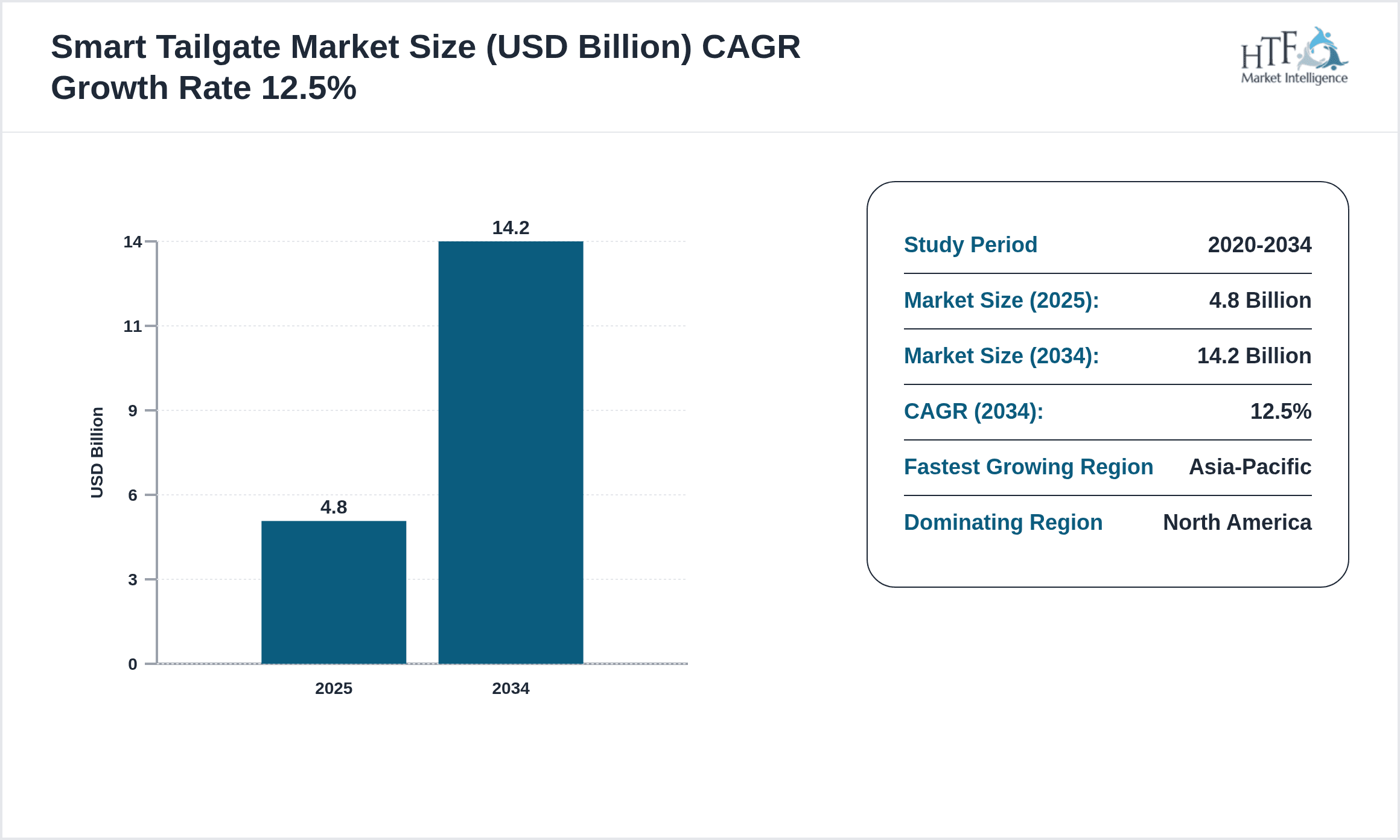
Competitive Landscape
The competitive environment of the Global Smart Tailgate Market is marked by intense rivalry among leading automotive component manufacturers, technology providers, and aftermarket specialists. Market players employ diverse strategies including innovation in sensor technology, power mechanisms, and integration with vehicle electronic systems to differentiate their offerings. Strategic partnerships with automotive OEMs, mergers and acquisitions, and geographic expansion are prevalent tactics to consolidate market position and enhance product portfolios. Companies focus on enhancing product reliability, safety compliance, and user experience through continuous R&D efforts. Pricing strategies balance cost with technological sophistication to maintain competitive advantage, while distribution channel diversification facilitates global market penetration. Regional competition varies, with North America and Europe emphasizing premium and technologically advanced solutions, whereas Asia-Pacific is characterized by rapid adoption and cost-competitive innovations. Future competitive trends involve leveraging digital connectivity, IoT integration, and AI-driven functionalities in smart tailgate systems to capture growing market demand and foster long-term customer loyalty.
Prominent Players in Smart Tailgate Market
- •Gentex Corporation (United States)
- •Huf Hülsbeck & Fürst GmbH & Co. KG (Germany)
- •Valeo SA (France)
- •Brose Fahrzeugteile GmbH & Co. KG (Germany)
- •Magna International Inc. (Canada)
- •Yachiyo Industry Co., Ltd. (Japan)
- •SMR Automotive Systems AG (Germany)
- •Ficosa International S.A. (Spain)
- •Denso Corporation (Japan)
- •Faurecia SE (France)
- •Motherson Sumi Systems Limited (India)
- •Continental AG (Germany)
- •Johnson Electric Holdings Limited (Hong Kong)
- •Brose Group (Germany)
- •Lear Corporation (United States)
- •Adient plc (United States)
- •TI Automotive (United Kingdom)
- •Sumitomo Electric Industries, Ltd. (Japan)
- •Aisin Seiki Co., Ltd. (Japan)
- •Kiekert AG (Germany)
- •Magneti Marelli S.p.A. (Italy)
- •Tokai Rika Co., Ltd. (Japan)
- •Valeo Siemens eAutomotive Germany GmbH (Germany)
- •Eberspaecher Gruppe GmbH & Co. KG (Germany)
- •ZF Friedrichshafen AG (Germany)

Market Breakdown
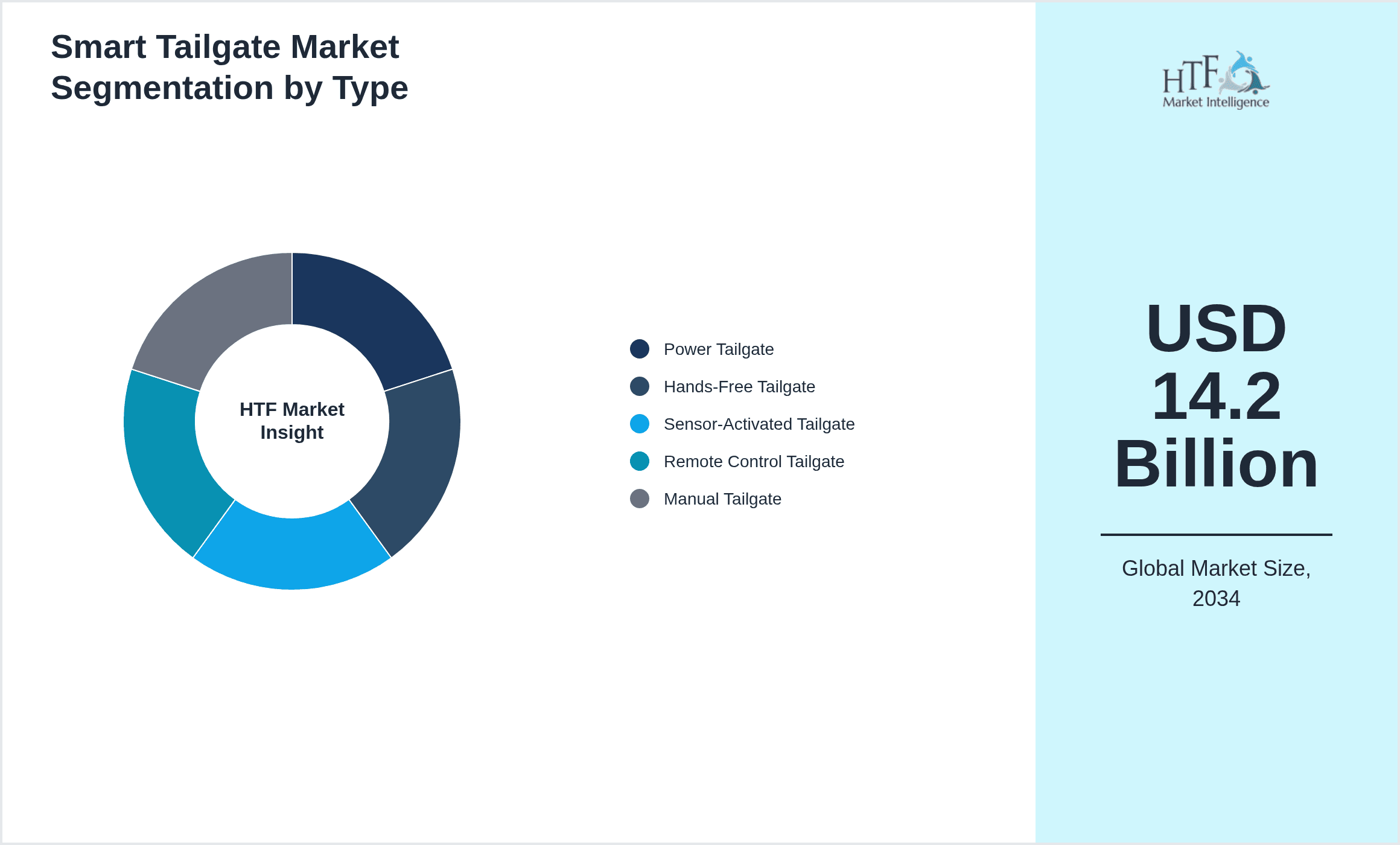
- •By Product Type
- ◦Power Tailgate
- ◦Hands-Free Tailgate
- ◦Sensor-Activated Tailgate
- ◦Remote Control Tailgate
- ◦Manual Tailgate
- •By Application
- ◦Passenger Vehicles
- ◦Commercial Vehicles
- ◦Electric Vehicles
- ◦Luxury Vehicles
- ◦Aftermarket
- •By End-Use Industry
- ◦Automotive OEMs
- ◦Aftermarket Services
- ◦Logistics and Cargo Handling
- ◦Electric Vehicle Manufacturers
- •By Distribution Channel
- ◦OEM Direct Sales
- ◦Aftermarket Retailers
- ◦Online Sales Platforms
Growth Dynamics
The Global Smart Tailgate Market is propelled by rapid advancements in automotive electronics and increasing consumer demand for enhanced vehicle convenience and safety features. Technological innovations such as sensor-activated hands-free tailgates and remote control integration via smartphones have significantly improved user experience. The growth is also driven by the rising production of electric vehicles and luxury vehicles where smart tailgates are becoming standard features. Additionally, stringent vehicle safety regulations globally encourage adoption of automated tailgate systems to reduce injuries related to manual operation. The expanding aftermarket for retrofit smart tailgate kits in developing regions further fuels market expansion. Investment in R&D by leading automotive suppliers and collaborations with OEMs enable continuous product enhancements and market penetration. Furthermore, increasing urbanization and e-commerce growth boost logistics sector demand for automated cargo access solutions, indirectly supporting smart tailgate market growth.
Market Trends
The smart tailgate market is witnessing a notable trend toward incorporating IoT and connectivity features enabling tailgate operation through mobile applications and voice commands, enhancing vehicle integration. The adoption of AI-driven sensors and gesture recognition technologies is gaining traction, offering more intuitive and safer tailgate control. Sustainability trends push manufacturers to develop energy-efficient power tailgate systems to reduce vehicle power consumption. Additionally, modular smart tailgate designs allowing easy customization and repair are becoming popular among OEMs and consumers. The rise of electric and autonomous vehicles is also influencing tailgate system innovations, with seamless integration into automated vehicle control systems becoming a key focus area.

Market Opportunities
Emerging economies present significant growth opportunities for smart tailgate manufacturers due to increasing vehicle production and rising consumer purchasing power. The aftermarket segment offers expansion potential through retrofit kits for older vehicles lacking smart tailgate features. Integration of smart tailgates with vehicle security and telematics systems creates opportunities for product differentiation and upselling. Collaborations with electric vehicle manufacturers to design tailored smart tailgate solutions can open new market avenues. Additionally, expanding applications in commercial logistics to improve cargo handling efficiency represent untapped segments with high growth prospects.
Market Challenges
High initial costs associated with smart tailgate systems and integration complexities with diverse vehicle platforms pose significant challenges to widespread adoption. Compatibility issues with existing vehicle electrical architectures and concerns over long-term reliability affect consumer confidence. Stringent regulatory compliance requirements across different regions increase development costs and time-to-market. Additionally, intense competition and price sensitivity in emerging markets restrict profit margins for manufacturers. Supply chain disruptions and raw material price volatility also hamper consistent product availability and cost control.
Regulatory Framework
Between 2020 and 2025, several key regulations have influenced the Global Smart Tailgate Market. The European Union’s General Safety Regulation mandated advanced safety features in vehicles, encouraging adoption of automated tailgate systems to reduce manual handling injuries. The United States’ Federal Motor Vehicle Safety Standards (FMVSS) introduced guidelines for power-operated tailgate safety, requiring manufacturers to incorporate anti-pinch sensors and emergency stop functions. China implemented new automotive safety standards emphasizing electronic control systems integration, fostering smart tailgate adoption. Additionally, regulations related to electromagnetic compatibility and environmental directives such as RoHS and REACH affected component selection and manufacturing processes. Government incentives promoting electric and connected vehicles indirectly boosted market demand, while regional certification requirements necessitated extensive compliance testing for smart tailgate products.
Market Intelligence
- •15th January 2025, Gentex Corporation announced the launch of its next-generation sensor-activated smart tailgate system designed for integration with electric vehicles. The product features advanced proximity sensors enabling hands-free tailgate operation with enhanced safety measures including obstacle detection and adaptive speed control. Targeted at premium OEMs, the system supports seamless smartphone connectivity and integrates with vehicle security platforms to prevent unauthorized access. Gentex aims to capitalize on rising electric vehicle production and consumer demand for smart convenience features through this innovation, positioning itself as a leader in automotive smart access solutions. Source: Gentex Official Press Release
- •3rd March 2025, Valeo SA introduced a modular power tailgate solution featuring customizable opening angles and integrated LED lighting for improved user experience and safety. The system is engineered to reduce energy consumption and offers compatibility with multiple vehicle models, facilitating adoption among OEMs and aftermarket players. Valeo’s innovation also incorporates AI-driven gesture recognition technology, enabling intuitive tailgate control without physical contact. This launch reflects Valeo’s strategic focus on smart mobility and sustainability, aiming to enhance vehicle automation and passenger convenience. Source: Valeo Corporate News
- •22nd May 2025, Magna International Inc. announced a strategic partnership with a leading electric vehicle manufacturer to co-develop smart tailgate systems optimized for electric powertrains. The collaboration focuses on integrating smart tailgate functionalities with vehicle battery management and telemetry systems to maximize efficiency and safety. This initiative is expected to expand Magna’s footprint in the growing electric vehicle segment and accelerate smart tailgate adoption globally. The partnership also plans to explore aftermarket retrofit solutions for existing electric vehicle fleets. Source: Magna International Press Release
- •30th August 2025, Brose Fahrzeugteile GmbH & Co. KG completed the acquisition of a smart tailgate sensor technology startup to enhance its portfolio of automated vehicle access solutions. The acquisition enables Brose to leverage advanced sensor fusion and AI technologies to improve tailgate system responsiveness and safety. This move strengthens Brose’s competitive position in the global smart tailgate market and supports its strategy to deliver integrated smart vehicle solutions. The transaction is expected to drive innovation and expand Brose’s customer base among automotive OEMs worldwide. Source: Brose Official Announcement
Regional Outlook
The North America currently holds a significant share of the market, primarily due to several key factors: increasing consumption rates, a burgeoning population, and robust economic momentum. These elements collectively drive demand, positioning this region as a leader in the market. On the other hand, Asia-Pacific is rapidly emerging as the fastest-growing area within the industry. This remarkable growth can be attributed to swift infrastructure development, the expansion of various industrial sectors, and a marked increase in consumer demand. These dynamics make this region a crucial player in shaping future market growth.
In our report, we cover a comprehensive analysis of the following regions and countries:
- North America
- LATAM
- West Europe
- Central & Eastern Europe
- Northern Europe
- Southern Europe
- East Asia
- Southeast Asia
- South Asia
- Central Asia
- Oceania
- MEA
| Feature | Details |
|---|---|
| Base Year Market Size | USD 4.8 Billion |
| Forecast Year Market Size | USD 14.2 Billion |
| CAGR | 12.5% |
| Forecast Period | 2026 to 2033 |
| YoY Growth | 12.3% |
| Scope of Report | Market is segmented by Product Type (Power Tailgate, Hands-Free Tailgate, Sensor-Activated Tailgate, Remote Control Tailgate, Manual Tailgate), Application (Passenger Vehicles, Commercial Vehicles, Electric Vehicles, Luxury Vehicles, Aftermarket), End-Use Industry (Automotive OEMs, Aftermarket Services, Logistics and Cargo Handling, Electric Vehicle Manufacturers), Distribution Channel (OEM Direct Sales, Aftermarket Retailers, Online Sales Platforms) |
| Regions Covered | North America, LATAM, West Europe, Central & Eastern Europe, Northern Europe, Southern Europe, East Asia, Southeast Asia, South Asia, Central Asia, Oceania, MEA |
| Key Companies | Gentex Corporation (United States), Huf Hülsbeck & Fürst GmbH & Co. KG (Germany), Valeo SA (France), Brose Fahrzeugteile GmbH & Co. KG (Germany), Magna International Inc. (Canada), Yachiyo Industry Co., Ltd. (Japan), SMR Automotive Systems AG (Germany), Ficosa International S.A. (Spain), Denso Corporation (Japan), Faurecia SE (France), Motherson Sumi Systems Limited (India), Continental AG (Germany), Johnson Electric Holdings Limited (Hong Kong), Brose Group (Germany), Lear Corporation (United States), Adient plc (United States), TI Automotive (United Kingdom), Sumitomo Electric Industries, Ltd. (Japan), Aisin Seiki Co., Ltd. (Japan), Kiekert AG (Germany), Magneti Marelli S.p.A. (Italy), Tokai Rika Co., Ltd. (Japan), Valeo Siemens eAutomotive Germany GmbH (Germany), Eberspaecher Gruppe GmbH & Co. KG (Germany), ZF Friedrichshafen AG (Germany) |
Global Smart Tailgate Market Size, Growth & Revenue 2025-2034 - Table of Contents
Frequently Asked Questions (FAQ):
The Compact Track Loaders market is projected to grow at a CAGR of 6.8% from 2025 to 2030, driven by increasing demand in construction and agricultural sectors.
North America currently leads the market with approximately 45% market share, followed by Europe at 28% and Asia-Pacific at 22%. The remaining regions account for 5% of the global market.
Key growth drivers include increasing construction activities, rising demand for versatile equipment in agriculture, technological advancements in track loader design, and growing preference for compact equipment in urban construction projects.