
Global Milk Tofu Market Size, Growth & Revenue 2025-2034
Global Milk Tofu Market is segmented by Product Type (Silken Milk Tofu, Firm Milk Tofu, Extra Firm Milk Tofu, Smoked Milk Tofu, Flavored Milk Tofu), Application (Food Service, Retail, Food Processing, Home Cooking, Nutritional Supplements), End-Use Industry (Food & Beverage, Health & Wellness, Nutraceuticals, Retail Chains), Distribution Channel (Supermarkets/Hypermarkets, Specialty Stores, Online Retail), and Geography (North America, LATAM, West Europe, Central & Eastern Europe, Northern Europe, Southern Europe, East Asia, Southeast Asia, South Asia, Central Asia, Oceania, MEA)
Pricing
Report Overview
Executive Summary
- •The global Milk Tofu market is defined by the production and commercialization of various forms of tofu derived primarily from milk and soy ingredients. This market spans a broad spectrum of product types including silken, firm, extra firm, smoked, and flavored milk tofu, which are consumed across multiple applications such as retail sales, food service, food processing, home cooking, and nutritional supplements. The value chain integrates raw material sourcing from dairy and soy producers, tofu manufacturing involving coagulation and pressing processes, packaging innovations, and distribution networks that deliver products to consumers worldwide. Milk tofu is increasingly recognized for its nutritional benefits, including high protein content and suitability as a dairy alternative, driving consumer demand in health-conscious and vegan segments. Technological advances in product development enable flavor diversification and textural enhancements, broadening market appeal. Regional consumption patterns vary, with North America dominating due to established health trends, while Asia-Pacific exhibits rapid growth propelled by traditional consumption and rising urbanization. This report provides an in-depth analysis of market size, growth trajectories, key drivers such as shifting consumer preferences and innovation, challenges including raw material price volatility and regulatory compliance, and emerging opportunities in new product segments and untapped regions. Stakeholders including manufacturers, distributors, and investors can utilize these insights for strategic decision-making and market positioning.
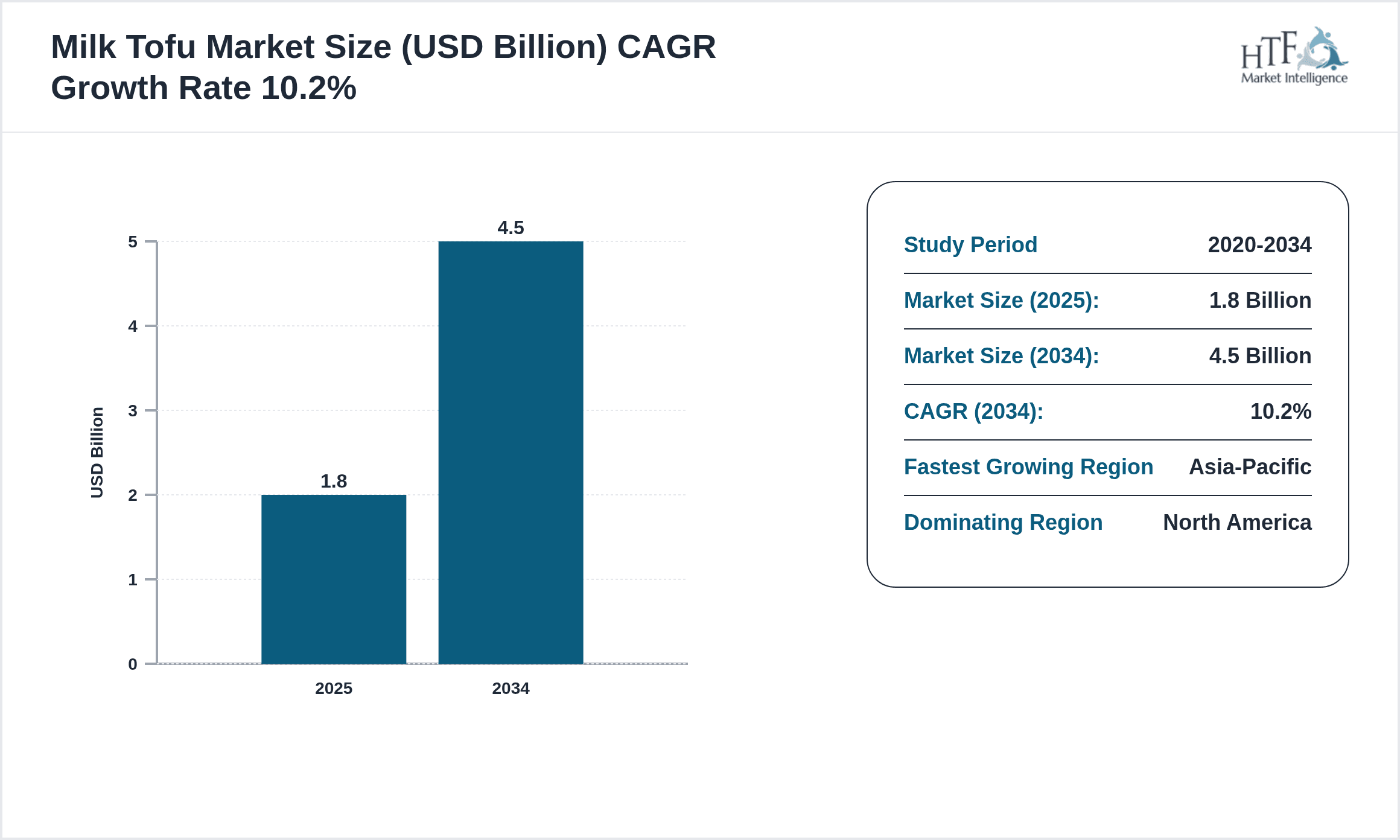
- •The global Milk Tofu market was valued at USD 1.2 Billion in 2020 and expanded to USD 1.8 Billion in 2025, forecasted to reach USD 4.5 Billion by 2034, exhibiting a compound annual growth rate (CAGR) of 10.2%. Year-on-year growth remains robust at approximately 9.8%, driven by rising consumer health awareness and increasing plant-based diet adoption. North America holds a dominant market share due to advanced retail infrastructure and health trends, while Asia-Pacific leads in growth rate because of traditional consumption and expanding urban populations. Product innovation, including flavored and smoked milk tofu variants, is reshaping consumer preferences and creating new market segments. These dynamics are fueling competitive activity and investment interest across regions.
- •Milk tofu represents a strategic product within the global alternative protein and dairy substitute markets, offering unique value propositions to food manufacturers, retailers, and consumers. Its nutritional profile, versatility in culinary uses, and alignment with sustainability goals position it as a growth catalyst in the evolving food industry. The market's expansion supports diversified dietary needs including vegan, lactose-intolerant, and health-conscious populations. For stakeholders, investing in product innovation, supply chain efficiency, and regional market penetration presents lucrative opportunities for long-term value creation and brand differentiation.
Competitive Landscape
The competitive landscape of the global Milk Tofu market is characterized by a mix of multinational food corporations and regional producers vying for market share through product innovation, quality enhancement, and strategic partnerships. Companies focus on diversifying their product portfolio with new flavors, organic options, and convenient packaging formats to capture evolving consumer demands. Market players employ competitive pricing strategies and leverage extensive distribution channels to strengthen their market presence globally. Innovation in processing technologies and sustainable sourcing of raw materials are key differentiators that enable firms to reduce costs and improve product consistency. Strategic collaborations and mergers enhance capabilities, expand geographic reach, and facilitate entry into emerging markets. Regional competition varies, with Asia-Pacific producers capitalizing on traditional consumption patterns, while North American and European players emphasize health and wellness trends. The market sees continuous investment in R&D to develop fortified and functional milk tofu variants, addressing niche consumer needs. Barriers to entry include regulatory compliance, supply chain complexities, and the high cost of innovation. Future competitive dynamics will likely be shaped by digital marketing, e-commerce adoption, and sustainability-driven product development.
Leading Companies in Milk Tofu Market
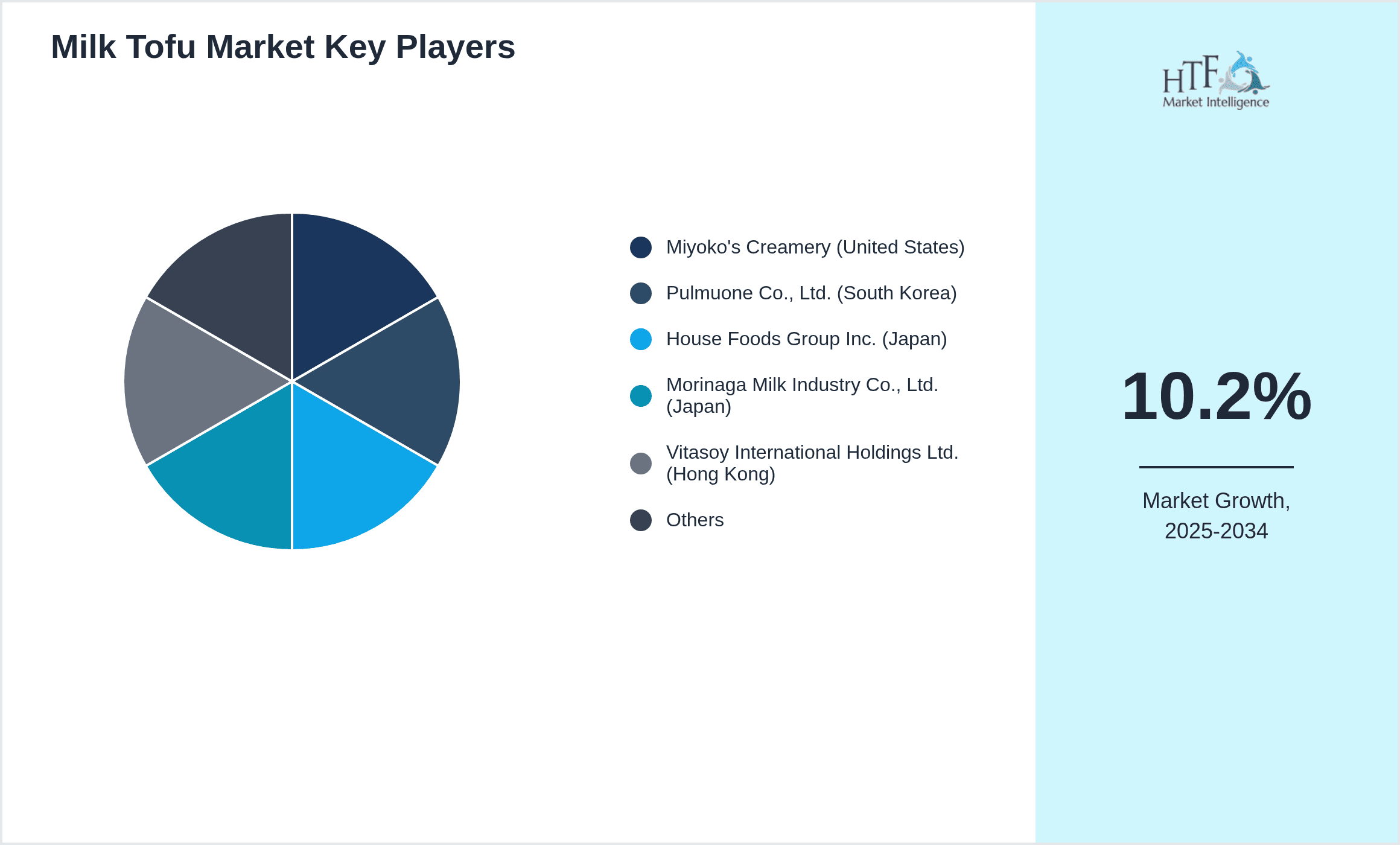
- •Miyoko's Creamery (United States)
- •Pulmuone Co., Ltd. (South Korea)
- •House Foods Group Inc. (Japan)
- •Morinaga Milk Industry Co., Ltd. (Japan)
- •Vitasoy International Holdings Ltd. (Hong Kong)
- •The Hain Celestial Group, Inc. (United States)
- •Nasoya Foods, Inc. (United States)
- •Sunshine Biopharma, Inc. (United States)
- •Fujicco Co., Ltd. (Japan)
- •Beijing Sanyuan Foods Co., Ltd. (China)
- •Greenleaf Foods LP (Canada)
- •Tofutti Brands Inc. (United States)
- •Better Nature Ltd. (United Kingdom)
- •Plant-Based Foods Association (United States)
- •DONGWON F&B Co., Ltd. (South Korea)
- •Eden Foods Inc. (United States)
- •Blue Diamond Growers (United States)
- •Alpro (Belgium)
- •Nasoya LLC (United States)
- •Hodo Foods (United States)
- •SoyDream (United States)
- •Ittipol Foods Co., Ltd. (Thailand)
- •Green Common Holdings Limited (Hong Kong)
- •The Vegetarian Butcher (Netherlands)
- •Otsuka Foods Co., Ltd. (Japan)
Market Breakdown
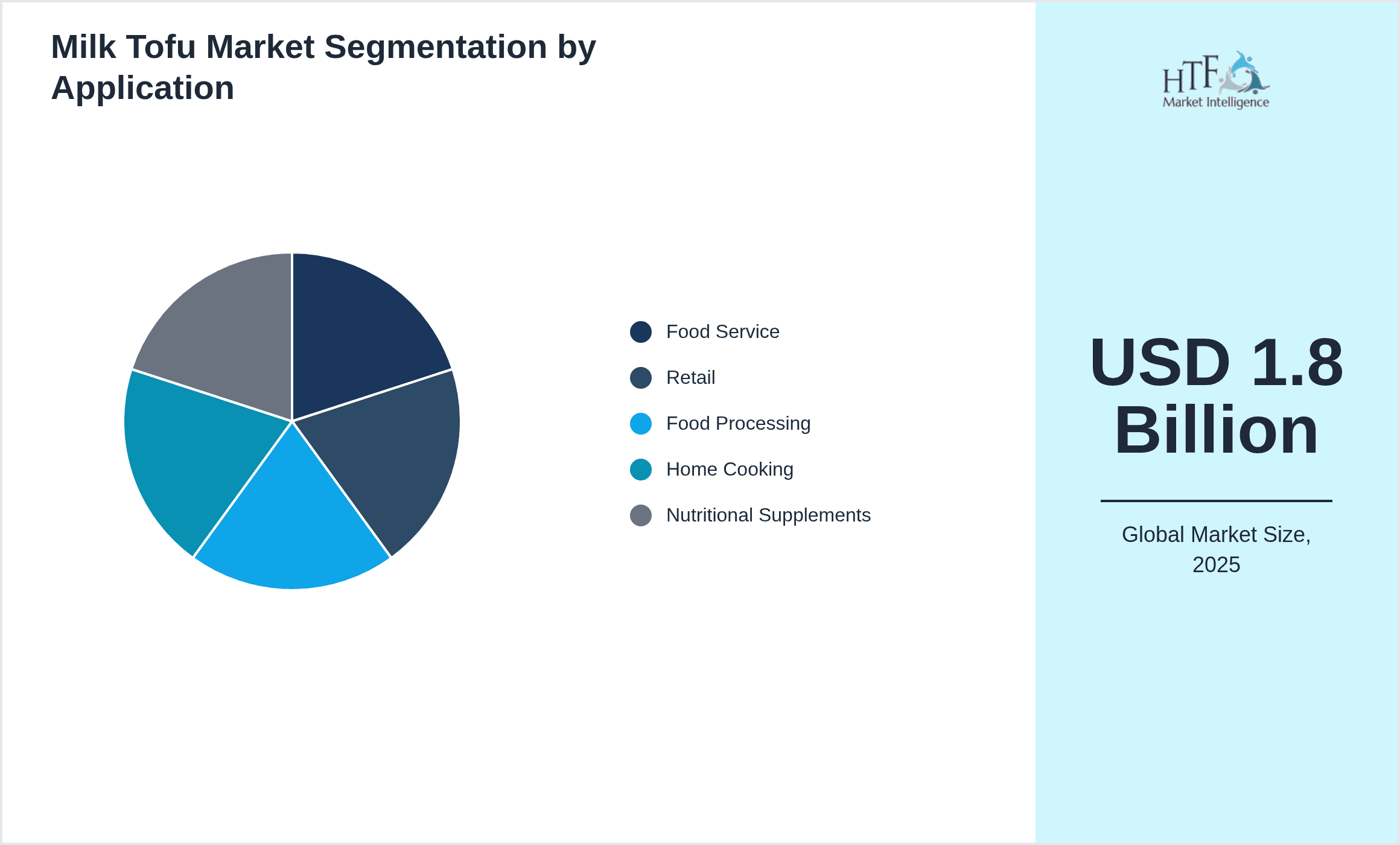
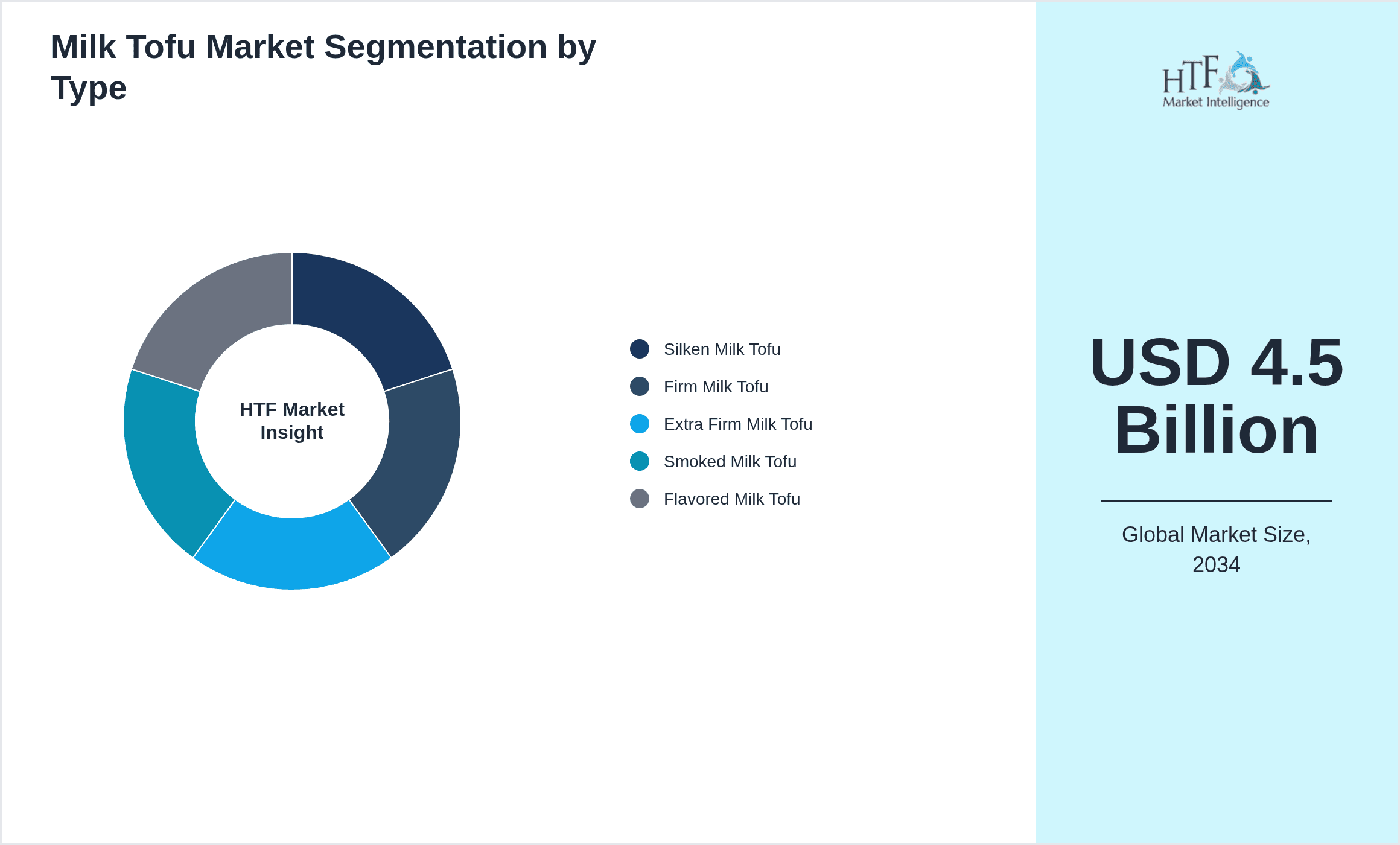
- •By Product Type
- ◦Silken Milk Tofu
- ◦Firm Milk Tofu
- ◦Extra Firm Milk Tofu
- ◦Smoked Milk Tofu
- ◦Flavored Milk Tofu
- •By Application
- ◦Food Service
- ◦Retail
- ◦Food Processing
- ◦Home Cooking
- ◦Nutritional Supplements
- •By End-Use Industry
- ◦Food & Beverage
- ◦Health & Wellness
- ◦Nutraceuticals
- ◦Retail Chains
- •By Distribution Channel
- ◦Supermarkets/Hypermarkets
- ◦Specialty Stores
- ◦Online Retail
Growth Dynamics
- •Increasing consumer preference for plant-based and dairy-alternative protein sources is a primary driver boosting milk tofu demand globally. Health-conscious consumers are shifting towards tofu products for their low-fat, cholesterol-free, and high-protein benefits, fostering market growth especially in developed regions.
- •Technological advancements in tofu processing and packaging are enhancing product shelf life and texture, enabling manufacturers to offer diverse product varieties such as flavored and smoked milk tofu, directly impacting market expansion and consumer acceptance.
- •Rising urbanization and disposable incomes in emerging economies, particularly in Asia-Pacific and Latin America, are enlarging the consumer base for milk tofu, creating new revenue streams and stimulating regional market penetration.
- •Growing awareness of sustainable and eco-friendly food products encourages adoption of milk tofu as a resource-efficient alternative to traditional dairy, aligning with global environmental goals and supporting market demand.
- •Expansion of retail and online distribution channels has improved milk tofu accessibility worldwide, facilitating easier consumer reach and contributing to steady year-on-year market growth.
- •Collaborations between food manufacturers and health organizations to promote plant-based diets are fostering positive market sentiment and increasing product visibility, thereby driving sales.
- •Government initiatives promoting nutritional health and subsidizing alternative protein sources are providing financial incentives to producers, accelerating market development globally.
Market Trends
- •The growing trend of personalized nutrition has led to the development of fortified milk tofu variants enriched with vitamins, minerals, and probiotics to cater to specific dietary requirements, enhancing consumer engagement.
- •Sustainability is becoming a major market trend, with manufacturers adopting eco-friendly packaging and sourcing non-GMO and organic soybeans to meet consumer demand for green products.
- •Integration of digital technologies such as e-commerce platforms and social media marketing is transforming distribution and brand awareness strategies in the milk tofu sector, expanding consumer reach.
- •Innovative flavor profiles including ethnic and fusion-inspired varieties are emerging to attract younger consumers and diversify product offerings beyond traditional tastes.
- •Collaborative efforts between dairy and plant-based food producers to develop hybrid products are gaining traction, appealing to flexitarian consumers seeking novel taste experiences.
- •Increasing consumer preference for clean-label and minimally processed foods is impacting product formulation, with companies emphasizing natural ingredients and transparent sourcing.
- •Rising adoption of milk tofu in food service sectors such as restaurants and cafes is accelerating due to growing vegan and vegetarian dining trends, bolstering market visibility.
Market Opportunities
- •The expanding vegan and flexitarian consumer base globally presents significant growth potential for milk tofu manufacturers to develop innovative, plant-based protein products tailored to this segment.
- •Emerging markets in Latin America and the Middle East & Africa offer untapped demand for milk tofu due to increasing health awareness and dietary diversification, representing lucrative expansion opportunities.
- •Development of functional milk tofu products enriched with health-promoting ingredients such as antioxidants and fiber can capture growing demand in the nutraceutical and wellness sectors.
- •Strategic partnerships with food service providers and retail chains can facilitate wider distribution and consumer penetration, creating scalable sales channels for milk tofu products.
- •Investment in sustainable production technologies and eco-friendly packaging can differentiate brands, align with regulatory trends, and attract environmentally conscious consumers.
- •Expansion of online retail platforms enables direct-to-consumer sales, personalized marketing, and subscription models, enhancing customer loyalty and revenue streams.
- •Product diversification into ready-to-eat and convenience milk tofu formats can meet the needs of busy consumers, increasing market share in fast-growing urban areas.
Market Challenges
- •Raw material price volatility, especially fluctuations in soy and dairy milk costs, poses significant challenges to maintaining consistent product pricing and profit margins across regions.
- •Stringent regulatory requirements related to food safety, labeling, and quality standards across different countries complicate market entry and operational scalability for manufacturers.
- •Consumer skepticism regarding plant-based dairy alternatives, including taste and texture concerns, limits adoption in certain traditional markets despite growing health awareness.
- •Intense competition from alternative protein products such as almond milk, oat milk, and pea protein-based foods creates pressure on milk tofu market share and pricing strategies.
- •Supply chain disruptions caused by geopolitical tensions, natural disasters, or pandemics can affect raw material availability and distribution logistics, impacting market stability.
- •Limited consumer education about the health benefits and culinary versatility of milk tofu restricts market expansion in certain developing regions.
- •High production costs associated with specialty tofu types, such as flavored or smoked variants, can deter small-scale manufacturers and limit product availability.
Regulatory Framework
- •The Food Safety Modernization Act (FSMA) implemented in the United States between 2015 and 2025 mandates stringent preventive controls and hazard analysis for food manufacturers, impacting milk tofu production by requiring comprehensive safety protocols and traceability systems.
- •European Union Regulation (EU) No 1169/2011 on food information to consumers enforced enhanced labeling standards, including allergen declarations and nutritional information, affecting packaging and marketing of milk tofu products across member states.
- •China’s Food Safety Law revisions in 2015-2025 emphasized stricter quality control and certification requirements for dairy and soy-based products, imposing compliance burdens on domestic and international milk tofu manufacturers.
- •Japan’s Food Sanitation Act updates between 2018 and 2025 introduced mandatory hygiene management guidelines for tofu production facilities, ensuring product safety and boosting consumer confidence in milk tofu offerings.
- •The Codex Alimentarius Commission established global standards for soy-based food products including tofu, guiding international trade and regulatory harmonization efforts between 2020 and 2025 to facilitate market access and consumer protection.
Market Intelligence
- •15th January 2025, Miyoko's Creamery announced the launch of its innovative line of flavored milk tofu products targeting health-conscious consumers seeking plant-based alternatives with enhanced taste profiles. These products feature natural ingredients, non-GMO certification, and extended shelf life achieved through advanced packaging technology. The launch aims to capture growing demand in North America and Europe, supported by strategic marketing partnerships and online distribution channels. Miyoko’s focus on sustainability and clean-label ingredients positions the new line competitively in the expanding alternative protein market. Source: Official Miyoko's Creamery press release.
- •28th March 2025, Pulmuone Co., Ltd. introduced a fortified silken milk tofu enriched with probiotics and vitamins designed to support digestive health and immunity. This product leverages proprietary fermentation technology and targets aging populations in Asia-Pacific regions. The company anticipates broad adoption across retail and food service sectors, leveraging its extensive distribution network. This innovation aligns with rising consumer trends favoring functional foods and personalized nutrition. Source: Pulmuone official website.
- •10th June 2025, House Foods Group Inc. announced a strategic partnership with a major European retailer to expand its milk tofu product range into new markets. The collaboration includes co-branded marketing campaigns and supply chain integration to enhance product availability. House Foods aims to leverage European demand for plant-based proteins and sustainable food products, driving revenue growth and brand recognition internationally. This initiative underscores growing global interest in milk tofu as a versatile protein source. Source: Industry publication Food Business News.
- •22nd September 2025, Vitasoy International Holdings Ltd. completed the acquisition of a regional tofu manufacturer to strengthen its foothold in the Asia-Pacific milk tofu market. The acquisition facilitates access to localized product formulations and expands Vitasoy’s manufacturing capacity. This strategic move enhances competitive positioning amid increasing consumer demand and intensifying market competition. Synergies from combined distribution channels and R&D capabilities are expected to accelerate innovation and market penetration. Source: Vitasoy official announcement.
Regional Outlook
The North America currently holds a significant share of the market, primarily due to several key factors: increasing consumption rates, a burgeoning population, and robust economic momentum. These elements collectively drive demand, positioning this region as a leader in the market. On the other hand, Asia-Pacific is rapidly emerging as the fastest-growing area within the industry. This remarkable growth can be attributed to swift infrastructure development, the expansion of various industrial sectors, and a marked increase in consumer demand. These dynamics make this region a crucial player in shaping future market growth.
In our report, we cover a comprehensive analysis of the following regions and countries:
- North America
- LATAM
- West Europe
- Central & Eastern Europe
- Northern Europe
- Southern Europe
- East Asia
- Southeast Asia
- South Asia
- Central Asia
- Oceania
- MEA
| Feature | Details |
|---|---|
| Base Year Market Size | USD 1.8 Billion |
| Forecast Year Market Size | USD 4.5 Billion |
| CAGR | 10.2% |
| Forecast Period | 2026 to 2033 |
| YoY Growth | 9.8% |
| Scope of Report | Market is segmented by Product Type (Silken Milk Tofu, Firm Milk Tofu, Extra Firm Milk Tofu, Smoked Milk Tofu, Flavored Milk Tofu), Application (Food Service, Retail, Food Processing, Home Cooking, Nutritional Supplements), End-Use Industry (Food & Beverage, Health & Wellness, Nutraceuticals, Retail Chains), Distribution Channel (Supermarkets/Hypermarkets, Specialty Stores, Online Retail) |
| Regions Covered | North America, LATAM, West Europe, Central & Eastern Europe, Northern Europe, Southern Europe, East Asia, Southeast Asia, South Asia, Central Asia, Oceania, MEA |
| Key Companies | Miyoko's Creamery (United States), Pulmuone Co., Ltd. (South Korea), House Foods Group Inc. (Japan), Morinaga Milk Industry Co., Ltd. (Japan), Vitasoy International Holdings Ltd. (Hong Kong), The Hain Celestial Group, Inc. (United States), Nasoya Foods, Inc. (United States), Sunshine Biopharma, Inc. (United States), Fujicco Co., Ltd. (Japan), Beijing Sanyuan Foods Co., Ltd. (China), Greenleaf Foods LP (Canada), Tofutti Brands Inc. (United States), Better Nature Ltd. (United Kingdom), Plant-Based Foods Association (United States), DONGWON F&B Co., Ltd. (South Korea), Eden Foods Inc. (United States), Blue Diamond Growers (United States), Alpro (Belgium), Nasoya LLC (United States), Hodo Foods (United States), SoyDream (United States), Ittipol Foods Co., Ltd. (Thailand), Green Common Holdings Limited (Hong Kong), The Vegetarian Butcher (Netherlands), Otsuka Foods Co., Ltd. (Japan) |
Global Milk Tofu Market Size, Growth & Revenue 2025-2034 - Table of Contents
Research enthusiast focused on transforming data uncovering into actionable insights through data-driven decision-making.
Frequently Asked Questions (FAQ):
The Compact Track Loaders market is expected to see value worth 5.3 Billion in 2025.
North America currently leads the market with approximately 45% market share, followed by Europe at 28% and Asia-Pacific at 22%. The remaining regions account for 5% of the global market.
Key growth drivers include increasing construction activities, rising demand for versatile equipment in agriculture, technological advancements in track loader design, and growing preference for compact equipment in urban construction projects.