
Global Gasoline Injection System Market Size, Growth & Revenue 2025-2034
Global Gasoline Injection System Market is segmented by Product Type (Direct Injection, Port Fuel Injection, Multi-Point Injection, Single-Point Injection, Sequential Fuel Injection), Application (Passenger Cars, Light Commercial Vehicles, Heavy Commercial Vehicles, Motorcycles, Others), End-Use Industry (Automotive, Industrial Machinery, Agricultural Equipment, Marine), Distribution Channel (Original Equipment Manufacturer (OEM), Aftermarket, Replacement and Service), and Geography (North America, LATAM, West Europe, Central & Eastern Europe, Northern Europe, Southern Europe, East Asia, Southeast Asia, South Asia, Central Asia, Oceania, MEA)
Pricing
Report Overview
Executive Summary
- •The global Gasoline Injection System market is a vital segment of the automotive industry, focusing on fuel delivery technologies that enhance engine efficiency, reduce emissions, and meet evolving regulatory standards. This market includes a range of injection technologies such as direct injection, port fuel injection, multi-point injection, single-point injection, and sequential fuel injection, each providing distinct benefits in fuel atomization and combustion control. The systems are widely used across passenger cars, light and heavy commercial vehicles, motorcycles, and other transportation modes. Driven by increasing environmental regulations, rising demand for fuel-efficient vehicles, and innovations in electronic fuel control, the market has witnessed steady growth. The integration of advanced sensors and electronic control units (ECUs) enables precise fuel metering, improving overall vehicle performance while reducing carbon footprints. Key market players are investing heavily in research and development to innovate next-generation gasoline injection technologies that align with global trends toward sustainability and enhanced vehicle performance. The market’s growth trajectory is influenced by regional automotive production trends, government policies on emission reductions, and consumer demand for cleaner and more efficient engines. This comprehensive report provides insights into market segmentation, competitive landscape, growth drivers, market challenges, and future opportunities, supported by robust data from 2020, with projections extending to 2034.
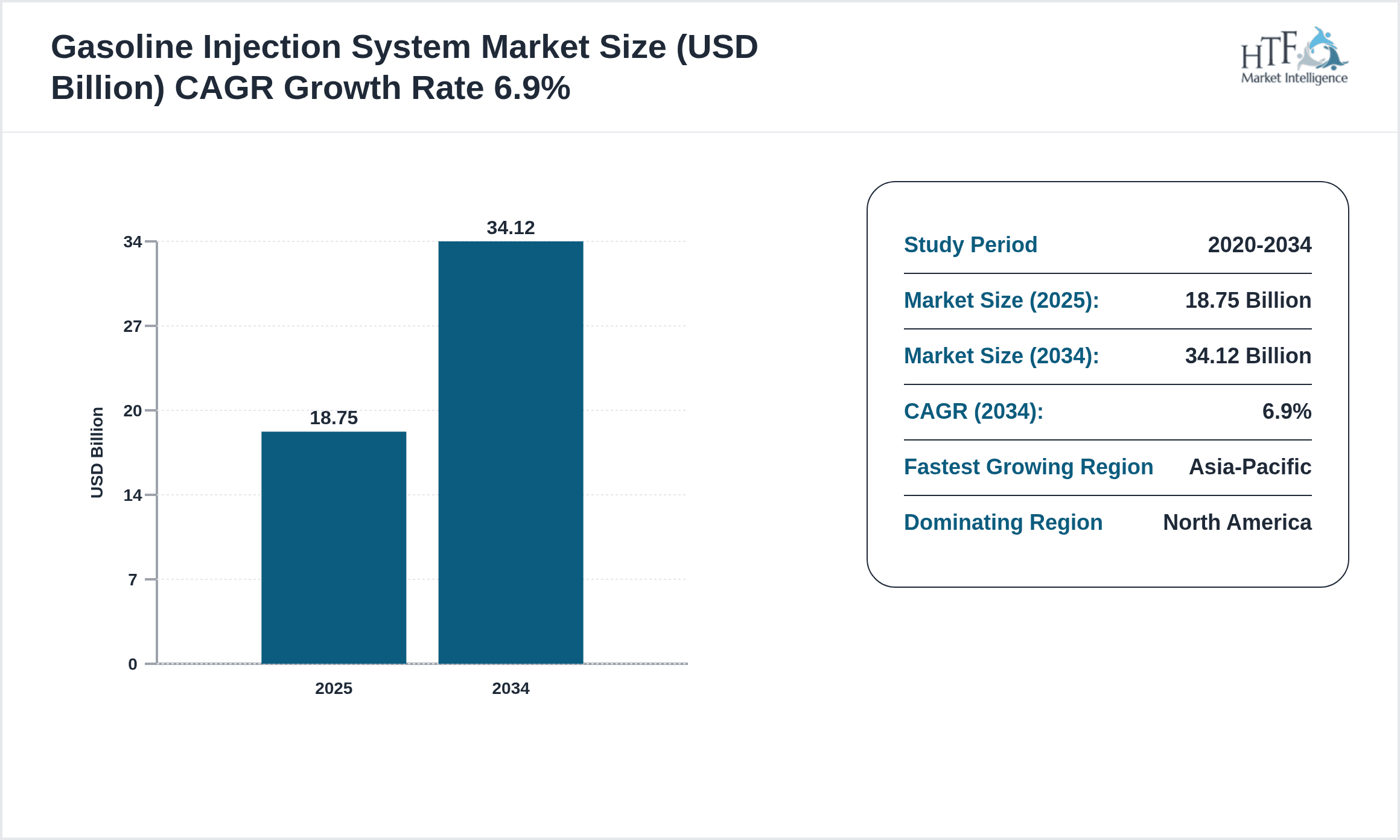
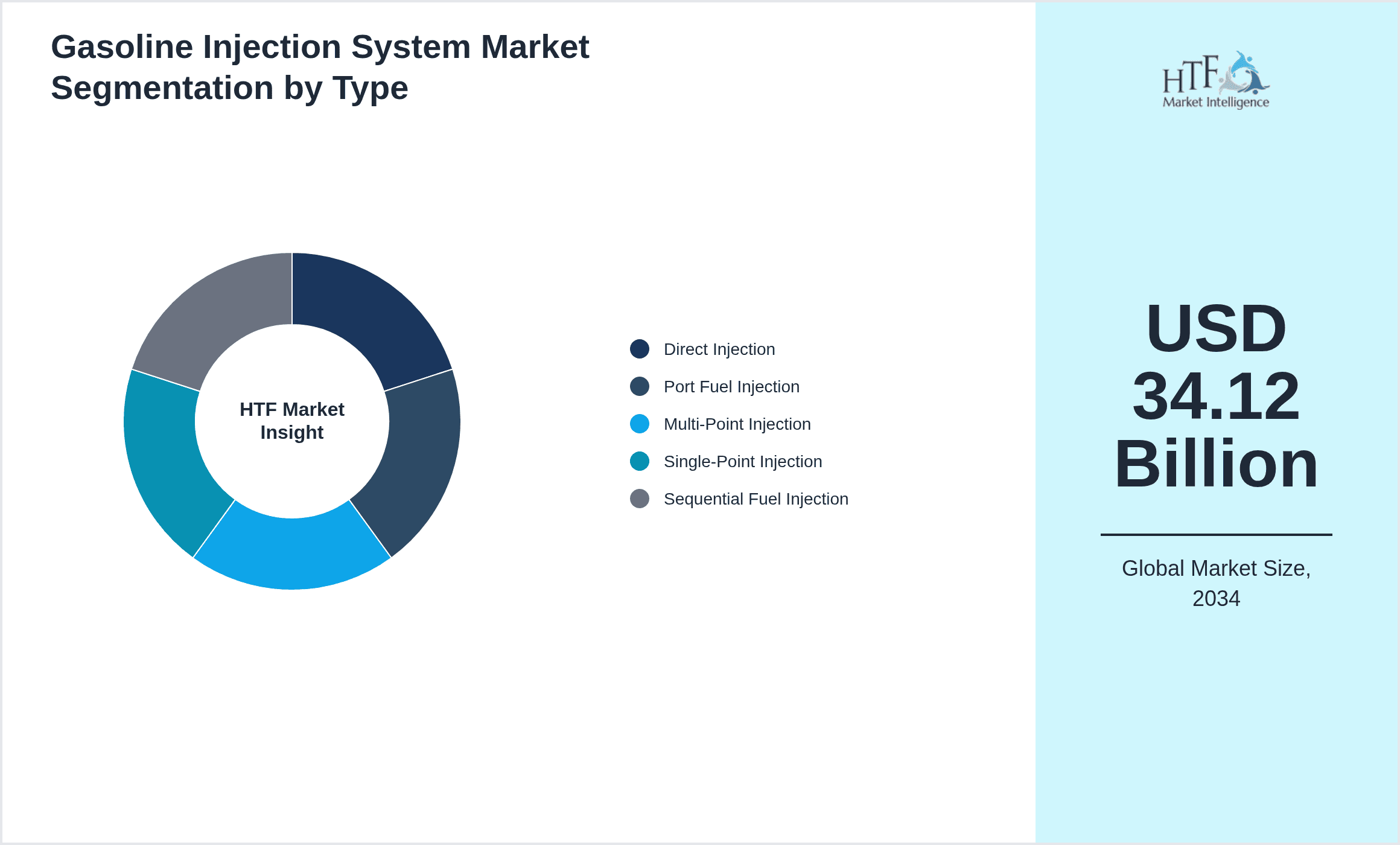
- •Market highlights include a base market size of USD 18.75 Billion in 2025, forecasted to reach USD 34.12 Billion by 2034, representing a compound annual growth rate (CAGR) of 6.9%. The market is dominated by North America, driven by stringent emission regulations and technological advancements. Asia-Pacific is identified as the fastest growing region due to rapid automotive production growth and rising environmental concerns. Direct injection remains the leading product type, while port fuel injection is the fastest growing segment due to its cost-effectiveness and efficiency improvements. These factors reflect strong market momentum supported by innovation, regulatory compliance, and expanding vehicle production globally.
- •The Gasoline Injection System market holds strategic importance for automakers, suppliers, and stakeholders involved in automotive fuel technologies. It enables manufacturers to meet emission norms, improve fuel efficiency, and deliver enhanced driving experiences. Investors and industry players benefit from understanding evolving trends, regulatory frameworks, and technological breakthroughs shaping market dynamics. This market forms a cornerstone of sustainable transportation initiatives, contributing significantly to the reduction of greenhouse gas emissions while supporting the transition to hybrid and advanced internal combustion engines. The report equips decision-makers with actionable insights to capitalize on growth opportunities and address challenges in a competitive landscape.
Competitive Landscape
The global Gasoline Injection System market is characterized by intense competition among established automotive component manufacturers and technology innovators. Market dynamics are influenced by continuous investments in research and development, strategic partnerships, and mergers & acquisitions aimed at technology enhancement and geographic expansion. Leading companies focus on product differentiation through advancements in fuel injection precision, integration with electronic control units, and compliance with increasingly stringent emission standards. Pricing strategies are calibrated to balance cost pressures with the value offered by innovative technologies. Distribution channels include direct OEM supplies, aftermarket operations, and specialized service providers. Barriers to entry are significant due to the high capital requirements and technological expertise needed to develop advanced injection systems. Regional competition varies, with North America and Europe showcasing mature markets focused on incremental innovation, while Asia-Pacific exhibits rapid growth fueled by increasing vehicle production and regulatory tightening. Future competitive trends suggest a shift toward hybrid-compatible injection systems and digitalization of fuel control, positioning market participants to capitalize on emerging automotive propulsion technologies.
Prominent Players in Gasoline Injection System Market
- •Bosch GmbH (Germany)
- •Denso Corporation (Japan)
- •Delphi Technologies (United Kingdom)
- •Continental AG (Germany)
- •Magneti Marelli S.p.A. (Italy)
- •Hitachi Automotive Systems, Ltd. (Japan)
- •Keihin Corporation (Japan)
- •Valeo SA (France)
- •BorgWarner Inc. (United States)
- •Marelli Holdings Co., Ltd. (Italy)
- •Robert Bosch Automotive Steering GmbH (Germany)
- •Autoliv Inc. (Sweden)
- •Stanadyne LLC (United States)
- •Keihin Corporation (Japan)
- •Tenneco Inc. (United States)
- •Motorpal s.r.o. (Czech Republic)
- •Gates Corporation (United States)
- •Mitsubishi Electric Corporation (Japan)
- •Robert Bosch Engineering and Business Solutions (India)
- •Cummins Inc. (United States)
- •Mahle GmbH (Germany)
- •BASF SE (Germany)
- •NGK Spark Plug Co., Ltd. (Japan)
- •Faurecia SE (France)
- •Magneti Marelli Powertrain S.p.A. (Italy)

Market Breakdown
- •By Product Type
- ◦Direct Injection
- ◦Port Fuel Injection
- ◦Multi-Point Injection
- ◦Single-Point Injection
- ◦Sequential Fuel Injection
- •By Application
- ◦Passenger Cars
- ◦Light Commercial Vehicles
- ◦Heavy Commercial Vehicles
- ◦Motorcycles
- ◦Others
- •By End-Use Industry
- ◦Automotive
- ◦Industrial Machinery
- ◦Agricultural Equipment
- ◦Marine
- •By Distribution Channel
- ◦Original Equipment Manufacturer (OEM)
- ◦Aftermarket
- ◦Replacement and Service
Growth Dynamics
The global Gasoline Injection System market is propelled by increasing regulatory emphasis on reducing vehicle emissions and improving fuel economy. Technological advancements such as electronic fuel injection and integration with engine control units have enhanced system efficiency and precision. Rapid urbanization and rising vehicle ownership, particularly in Asia-Pacific, stimulate demand for efficient fuel injection systems. Additionally, consumer preference for vehicles offering better mileage and performance drives innovation and adoption. Investment in research focused on developing eco-friendly and hybrid-compatible injection systems further accelerates growth, while collaborations between automotive OEMs and component manufacturers facilitate the rapid deployment of advanced technologies worldwide.
Market Trends
The market is witnessing a rising trend of adopting direct injection systems due to their superior fuel atomization and combustion efficiency, which reduce emissions and improve power output. Integration of IoT and sensor technologies allows for real-time monitoring and adaptive fuel delivery, optimizing engine performance across varying conditions. Additionally, there is a growing emphasis on developing systems compatible with hybrid powertrains, blending traditional fuel injection with electrification. Sustainability initiatives are pushing manufacturers toward low-emission technologies, while aftermarket solutions for fuel injection system upgrades are gaining traction. Furthermore, regional trends such as stringent emission regulations in Europe and North America are shaping product development and market strategies.

Market Opportunities
Emerging economies with expanding automotive sectors, particularly in Asia-Pacific and Latin America, present significant growth opportunities for gasoline injection system manufacturers. The increasing demand for fuel-efficient and low-emission vehicles encourages OEMs to integrate advanced injection technologies. Opportunities also exist in aftermarket services, including system upgrades and maintenance. Furthermore, technological advancements enabling compatibility with hybrid and flex-fuel vehicles open avenues for innovation and market expansion. Strategic collaborations and investments in R&D can help companies capitalize on these opportunities by developing cost-effective, high-performance injection systems tailored to diverse regional needs.
Market Challenges
The market faces challenges such as high development and manufacturing costs associated with advanced fuel injection systems. Stringent emission regulations require continuous innovation, posing technical and financial hurdles for manufacturers. Additionally, the growing shift toward electric vehicles threatens the long-term demand for traditional gasoline injection systems. Supply chain disruptions and raw material price volatility also impact production efficiency and profitability. Moreover, intense competition and price sensitivity in emerging markets compel companies to optimize cost structures without compromising quality and performance.
Regulatory Framework
Between 2020 and 2025, governments worldwide have implemented stringent regulations to reduce vehicular emissions and improve fuel efficiency, directly impacting the Gasoline Injection System market. The Euro 6 standards in Europe, Corporate Average Fuel Economy (CAFE) regulations in North America, and China VI emission norms exemplify regulatory frameworks mandating advanced fuel injection technologies. These regulations require manufacturers to adopt precise fuel delivery systems that comply with limits on NOx, CO2, and particulate matter emissions. Additionally, regulatory incentives and subsidies for low-emission vehicle technologies have accelerated the adoption of direct injection and port fuel injection systems. Compliance with safety standards and quality certifications also governs system design and manufacturing processes. Ongoing policy developments focus on promoting hybridization and alternative fuels, influencing future injection system innovations and market dynamics.
Market Intelligence
- •15th February 2024, Bosch GmbH announced the launch of its next-generation direct gasoline injection system designed to improve fuel atomization and reduce emissions by 15%. The system integrates advanced piezoelectric injectors controlled by sophisticated electronic control units to optimize combustion across diverse engine operating conditions. Targeting passenger cars and light commercial vehicles, this innovation supports compliance with upcoming global emission standards while enhancing fuel efficiency and engine responsiveness. Bosch plans to collaborate with major automotive OEMs to facilitate early adoption and scalability of the new system. Source: Bosch Official Press Release
- •10th April 2024, Denso Corporation introduced an innovative port fuel injection system featuring IoT-enabled sensors for real-time fuel flow monitoring and adaptive control. This system aims to optimize fuel delivery in heavy commercial vehicles, reducing fuel consumption and maintenance costs significantly. The product leverages machine learning algorithms to continuously adjust injection parameters based on driving patterns and environmental conditions, thus improving overall engine performance. Denso's strategic focus on integrating digital technologies into fuel injection solutions positions it to capture growing demand in emerging markets. Source: Denso Corporate News
- •22nd May 2024, Continental AG announced a strategic partnership with a leading semiconductor manufacturer to develop next-generation electronic control units for gasoline injection systems. This collaboration aims to enhance system precision and reliability while reducing production costs. The partnership reflects the increasing convergence of automotive hardware and software, enabling smarter fuel management solutions. Continental also outlined plans to expand its presence in Asia-Pacific through localized manufacturing and R&D centers to better serve the fast-growing regional market. Source: Continental AG Press Release
- •Recent market developments and strategic initiatives are continuously tracked through industry publications, company announcements, and regulatory filings. For the most current information, stakeholders are advised to monitor official corporate communications and recognized market intelligence platforms.
Regional Outlook
The North America currently holds a significant share of the market, primarily due to several key factors: increasing consumption rates, a burgeoning population, and robust economic momentum. These elements collectively drive demand, positioning this region as a leader in the market. On the other hand, Asia-Pacific is rapidly emerging as the fastest-growing area within the industry. This remarkable growth can be attributed to swift infrastructure development, the expansion of various industrial sectors, and a marked increase in consumer demand. These dynamics make this region a crucial player in shaping future market growth.
In our report, we cover a comprehensive analysis of the following regions and countries:
- North America
- LATAM
- West Europe
- Central & Eastern Europe
- Northern Europe
- Southern Europe
- East Asia
- Southeast Asia
- South Asia
- Central Asia
- Oceania
- MEA
| Feature | Details |
|---|---|
| Base Year Market Size | USD 18.75 Billion |
| Forecast Year Market Size | USD 34.12 Billion |
| CAGR | 6.9% |
| Forecast Period | 2026 to 2033 |
| YoY Growth | 6.7% |
| Scope of Report | Market is segmented by Product Type (Direct Injection, Port Fuel Injection, Multi-Point Injection, Single-Point Injection, Sequential Fuel Injection), Application (Passenger Cars, Light Commercial Vehicles, Heavy Commercial Vehicles, Motorcycles, Others), End-Use Industry (Automotive, Industrial Machinery, Agricultural Equipment, Marine), Distribution Channel (Original Equipment Manufacturer (OEM), Aftermarket, Replacement and Service) |
| Regions Covered | North America, LATAM, West Europe, Central & Eastern Europe, Northern Europe, Southern Europe, East Asia, Southeast Asia, South Asia, Central Asia, Oceania, MEA |
| Key Companies | Bosch GmbH (Germany), Denso Corporation (Japan), Delphi Technologies (United Kingdom), Continental AG (Germany), Magneti Marelli S.p.A. (Italy), Hitachi Automotive Systems, Ltd. (Japan), Keihin Corporation (Japan), Valeo SA (France), BorgWarner Inc. (United States), Marelli Holdings Co., Ltd. (Italy), Robert Bosch Automotive Steering GmbH (Germany), Autoliv Inc. (Sweden), Stanadyne LLC (United States), Keihin Corporation (Japan), Tenneco Inc. (United States), Motorpal s.r.o. (Czech Republic), Gates Corporation (United States), Mitsubishi Electric Corporation (Japan), Robert Bosch Engineering and Business Solutions (India), Cummins Inc. (United States), Mahle GmbH (Germany), BASF SE (Germany), NGK Spark Plug Co., Ltd. (Japan), Faurecia SE (France), Magneti Marelli Powertrain S.p.A. (Italy) |
Global Gasoline Injection System Market Size, Growth & Revenue 2025-2034 - Table of Contents
Research enthusiast focused on transforming data uncovering into actionable insights through data-driven decision-making.
Frequently Asked Questions (FAQ):
The Compact Track Loaders market is expected to see value worth 5.3 Billion in 2025.
North America currently leads the market with approximately 45% market share, followed by Europe at 28% and Asia-Pacific at 22%. The remaining regions account for 5% of the global market.
Key growth drivers include increasing construction activities, rising demand for versatile equipment in agriculture, technological advancements in track loader design, and growing preference for compact equipment in urban construction projects.