
Global Table Tennis Racquets Market Size, Growth & Revenue 2025-2034
Global Table Tennis Racquets Market is segmented by Product Type (Shakehand Table Tennis Racquets, Penhold Table Tennis Racquets, Defensive Table Tennis Racquets, Offensive Table Tennis Racquets, All-round Table Tennis Racquets), Application (Professional, Recreational, Competitive, Training, Others), End-Use Industry (Sports Clubs & Academies, Educational Institutions, Recreational Centers, Professional Sports Teams), Distribution Channel (Specialty Sports Stores, Online Retailers, Direct Sales), and Geography (North America, LATAM, West Europe, Central & Eastern Europe, Northern Europe, Southern Europe, East Asia, Southeast Asia, South Asia, Central Asia, Oceania, MEA)
Pricing
Report Overview
Executive Summary
- •The global table tennis racquets market is a dynamic and evolving segment of the sports equipment industry, characterized by diverse product types and broad application scopes. This market includes an array of racquets such as shakehand, penhold, defensive, offensive, and all-round, each designed to meet specific player preferences and styles. Table tennis racquets are utilized across professional competitions, recreational playing, competitive leagues, and training environments, serving a wide demographic of players from beginners to elite athletes. Technological advancements in material science have led to innovations in blade composition, rubber surfaces, and ergonomic handles, enhancing performance attributes like speed, control, and spin. The market’s growth is driven by rising global interest in table tennis as both a recreational activity and a competitive sport, supported by increasing investments in sports infrastructure and government initiatives to promote physical fitness. Asia-Pacific dominates the market due to high participation rates and cultural affinity towards table tennis, while emerging regions such as Latin America present promising growth opportunities fueled by improving sports facilities and growing awareness. Market players focus on product differentiation, strategic partnerships, and expanding distribution channels including e-commerce platforms to capture broader consumer bases. Despite challenges such as fluctuating raw material costs and stringent regulatory standards, the market outlook remains positive with anticipated steady CAGR through 2034, reflecting robust demand and continuous innovation.
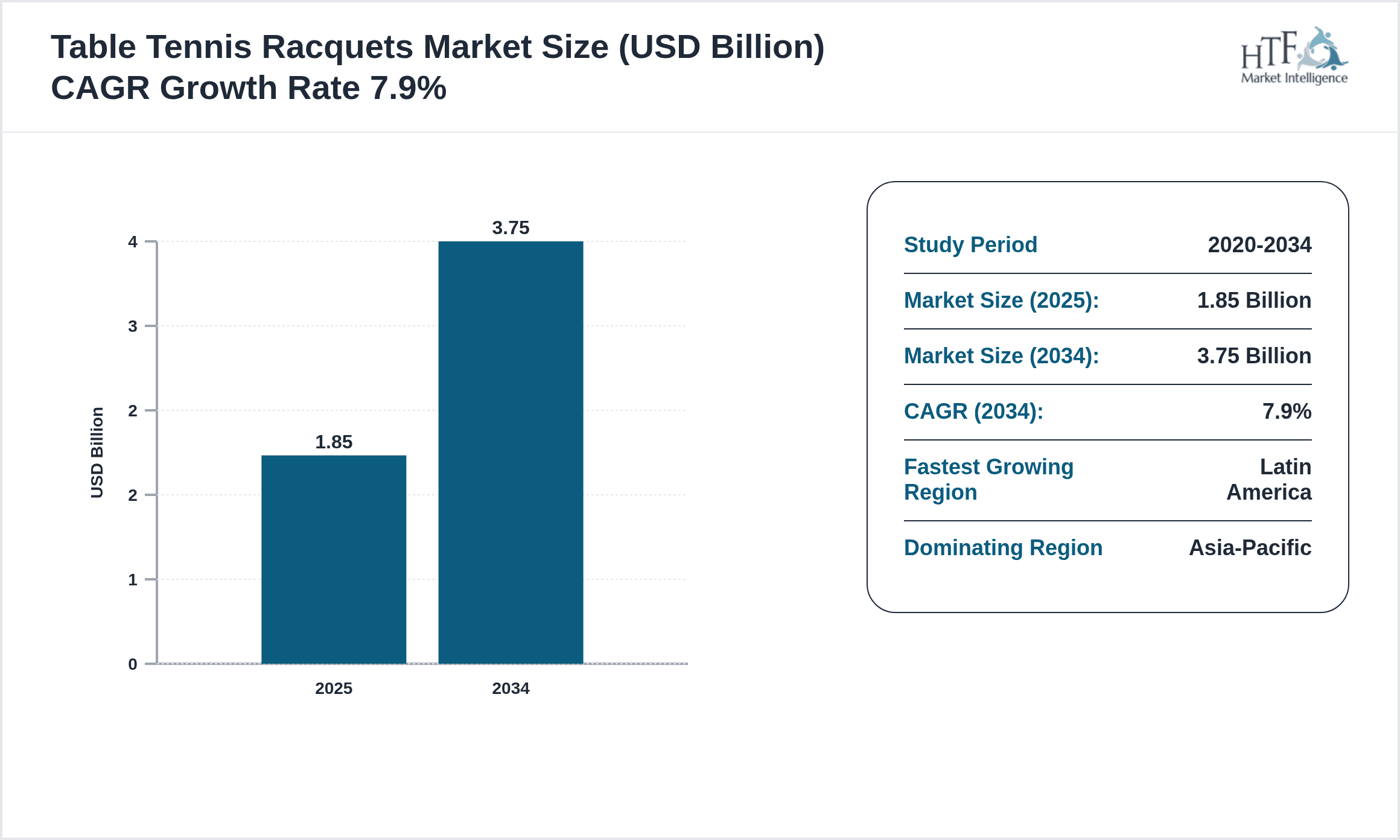
- •Market highlights reveal that the global table tennis racquets market size reached USD 1.85 billion in 2025 and is forecasted to grow to USD 3.75 billion by 2034, exhibiting a CAGR of approximately 7.9%. The shakehand racquet type leads product segments, favored for its versatility and widespread adoption among players worldwide. Asia-Pacific holds the dominant regional market share at 42.7%, driven by major table tennis hubs such as China and Japan, whereas Latin America is identified as the fastest growing region due to increasing sports participation and favorable economic conditions. Innovations in racquet technology, such as enhanced rubber grips and lightweight composite blades, are key trends shaping market dynamics. Additionally, the proliferation of online retailing and digital marketing strategies has expanded consumer reach, facilitating growth in both mature and developing markets.
- •The market’s strategic importance lies in its contribution to the global sports industry, fostering physical activity, competitive sportsmanship, and cultural engagement. Stakeholders including manufacturers, distributors, sports associations, and retailers benefit from insights into consumer preferences, technological trends, and regulatory frameworks. This market supports employment and innovation while promoting health and wellness across demographics. The evolving landscape requires continuous adaptation to emerging materials, sustainability practices, and digital transformation in sales channels. Consequently, understanding market forces, competitive positioning, and regional nuances is critical for capitalizing on growth prospects and addressing challenges in the global table tennis racquets market.
Competitive Landscape
The global table tennis racquets market exhibits a highly competitive environment characterized by numerous players ranging from established multinational corporations to specialized niche manufacturers. Competition is driven by the ability to innovate technologically, develop high-performance products, and effectively penetrate diverse geographic markets. Leading companies engage in product differentiation through the use of advanced materials such as carbon fiber blades, proprietary rubber compounds, and ergonomic handle designs to enhance player experience and meet specific playing styles. Strategic partnerships with sports federations, sponsorships of professional players, and investments in research and development are common competitive strategies to build brand loyalty and expand market presence. Pricing strategies vary according to product positioning, targeting both premium professional segments and cost-sensitive recreational consumers. Distribution networks are increasingly digitalized, with e-commerce platforms gaining prominence, enabling rapid market access and direct consumer engagement. Market entry barriers include stringent quality standards, intellectual property protection, and complex supply chain logistics. Regional competition is influenced by cultural affinity for table tennis, with Asia-Pacific companies often leading innovation and volume, while European and North American players focus on premium and niche segments. The future competitive landscape is expected to trend towards sustainability, customization, and integration of smart technologies in racquets, providing new avenues for differentiation and growth.
Leading Companies in Table Tennis Racquets Market
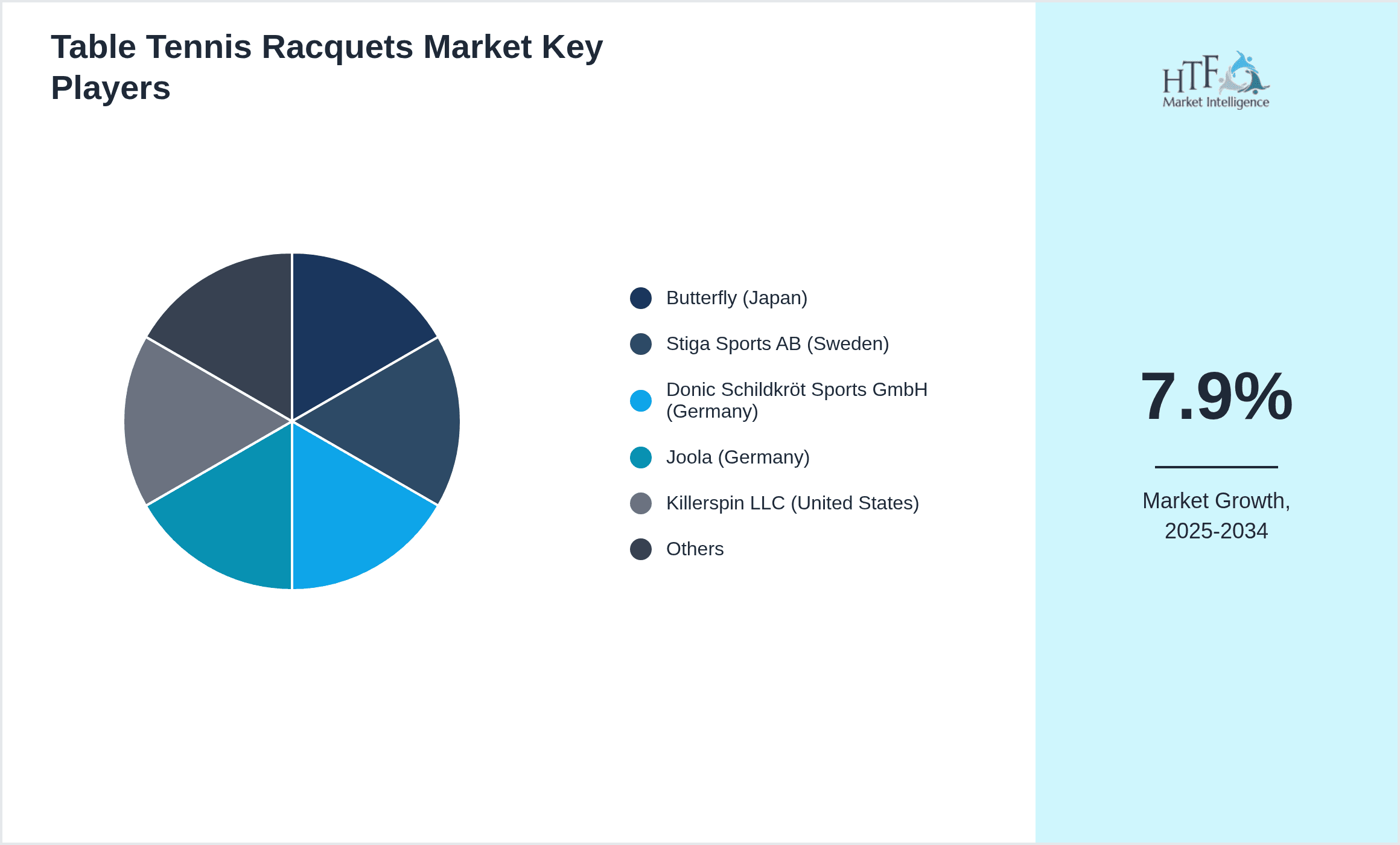
- •Butterfly (Japan)
- •Stiga Sports AB (Sweden)
- •Donic Schildkröt Sports GmbH (Germany)
- •Joola (Germany)
- •Killerspin LLC (United States)
- •Tibhar GmbH (Germany)
- •Yasaka (Japan)
- •Nittaku Sports Co., Ltd. (Japan)
- •Xiom (South Korea)
- •Cornilleau (France)
- •Andro (Germany)
- •Double Happiness (DHS) (China)
- •Palio (China)
- •Sanwei (China)
- •Killerspin (United States)
- •Prospin (United States)
- •Victas (Japan)
- •TSP (Japan)
- •Yinhe (China)
- •Darker (China)
- •Palio (China)
- •Yasaka (Japan)
- •Butterfly (Japan)
- •Stiga Sports AB (Sweden)
- •Donic Schildkröt Sports GmbH (Germany)
Market Breakdown
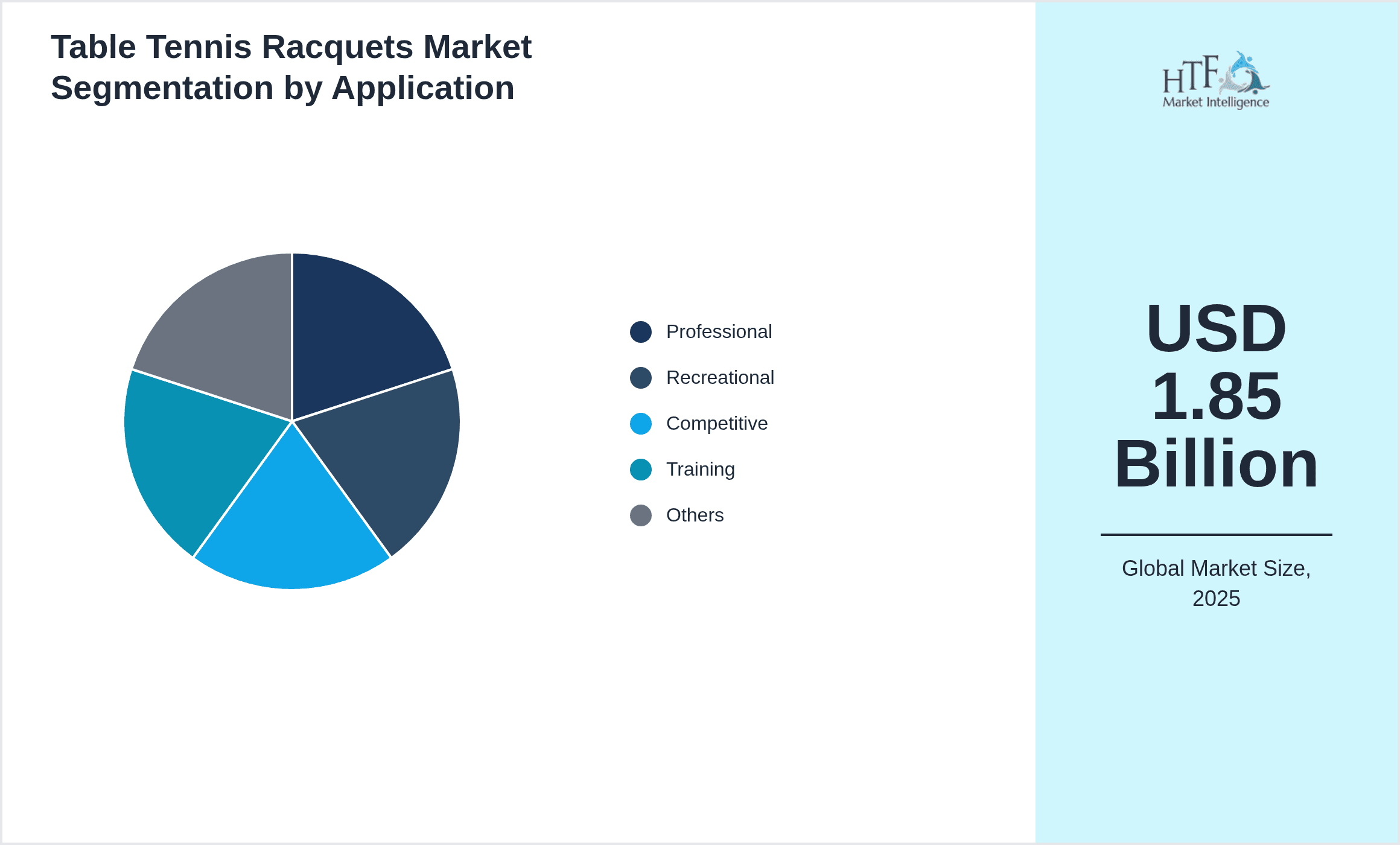
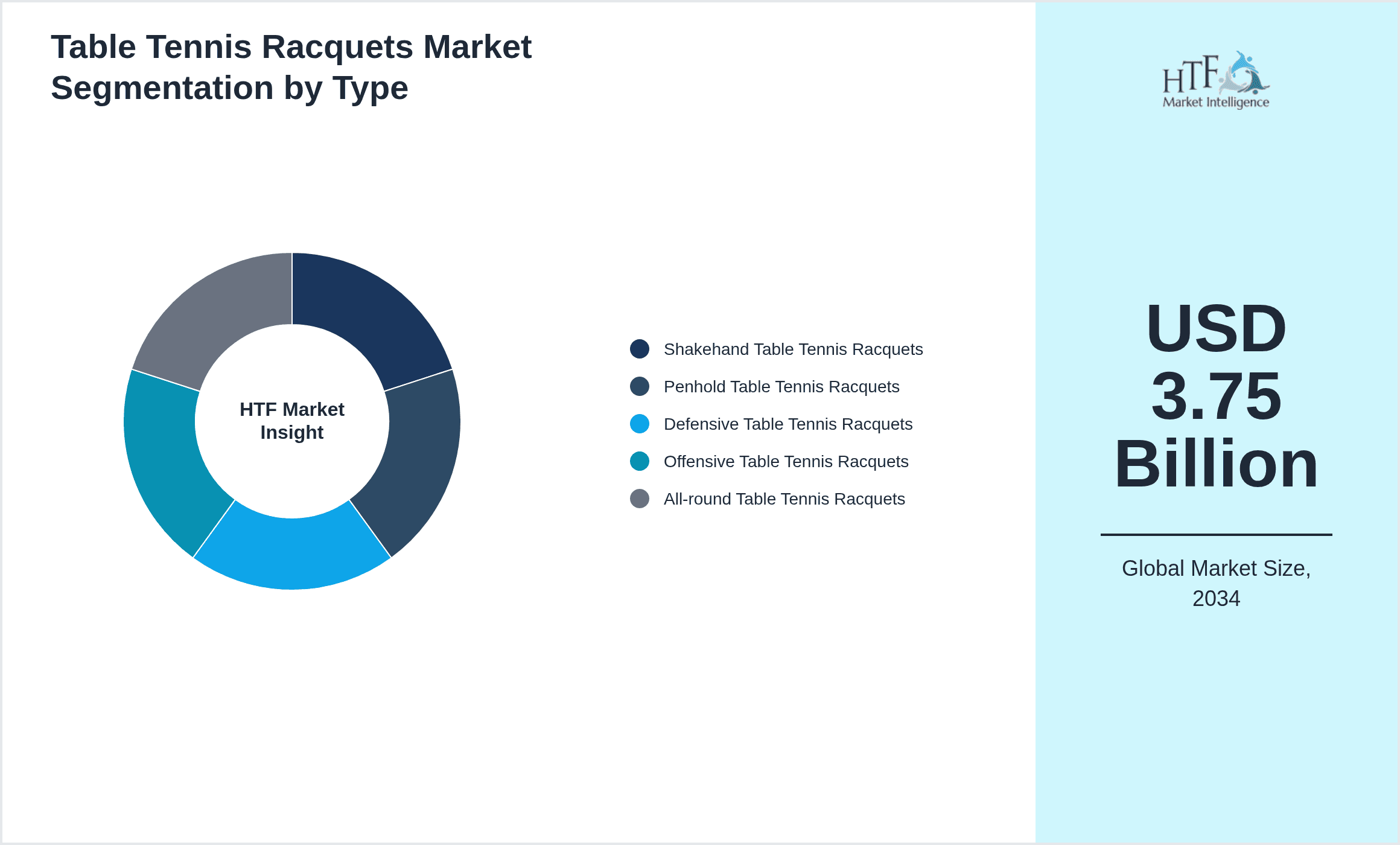
- •By Product Type
- ◦Shakehand Table Tennis Racquets
- ◦Penhold Table Tennis Racquets
- ◦Defensive Table Tennis Racquets
- ◦Offensive Table Tennis Racquets
- ◦All-round Table Tennis Racquets
- •By Application
- ◦Professional
- ◦Recreational
- ◦Competitive
- ◦Training
- ◦Others
- •By End-Use Industry
- ◦Sports Clubs & Academies
- ◦Educational Institutions
- ◦Recreational Centers
- ◦Professional Sports Teams
- •By Distribution Channel
- ◦Specialty Sports Stores
- ◦Online Retailers
- ◦Direct Sales
Growth Dynamics
The global table tennis racquets market benefits from multiple growth drivers that collectively fuel its expansion. Increased global participation in table tennis, driven by the sport’s inclusion in international competitions and rising recreational interest, is a fundamental growth catalyst. The advancement of racquet technology, including the use of carbon fiber and high-grade rubber surfaces, enhances player performance and attracts a broader consumer base. Government sports development programs and initiatives encourage youth engagement and infrastructure development, particularly in Asia-Pacific and Latin America, fostering market penetration. Additionally, the rise of e-commerce platforms enables easier access to diverse racquet options, expanding reach beyond traditional retail. Growing health consciousness and the promotion of physical activity worldwide also support sustained demand, while manufacturers’ focus on product customization and ergonomics addresses evolving consumer preferences. Investment in professional leagues and table tennis events further drives market visibility and product sales, underpinning robust CAGR projections.
Market Trends
Current trends in the table tennis racquets market emphasize technological innovation and consumer-centric approaches. Manufacturers are increasingly adopting eco-friendly materials to align with sustainability goals, reducing environmental impact. The integration of smart sensors in racquets to monitor stroke speed, spin, and impact force is emerging, offering players data-driven performance insights. Customized racquet designs tailored to individual playing styles and ergonomic preferences are gaining traction, enhancing user experience. Digital marketing and influencer partnerships are becoming vital in reaching younger demographics. Additionally, there is a growing trend toward premiumization with high-end racquets that offer superior control and speed, catering to professional and semi-professional players. These trends collectively contribute to market differentiation and competitive advantage while responding to evolving consumer demands.
Market Opportunities
Expanding into emerging markets such as Latin America and Middle East & Africa presents significant growth opportunities due to increasing sports infrastructure investments and rising disposable incomes. The growing popularity of table tennis as a fitness activity and competitive sport in these regions creates demand for quality racquets. Innovation in smart racquet technology integrating IoT capabilities offers potential for new product lines that combine performance with data analytics. Collaboration with sports academies and professional leagues to develop co-branded racquets can enhance brand recognition and market penetration. Moreover, online retail expansion enables manufacturers to reach untapped customer segments globally. Focus on sustainable materials and manufacturing processes aligns with increasing environmental awareness among consumers, offering differentiation in a crowded market.
Market Challenges
The table tennis racquets market faces challenges including volatility in raw material prices, particularly for high-quality rubber and carbon composites, which affects manufacturing costs and pricing strategies. Intense competition among players leads to price wars, impacting profitability. Regulatory compliance related to material safety and environmental standards varies across regions, complicating market entry and product approvals. Counterfeit products and low-quality replicas in emerging markets undermine brand reputation and consumer trust. Additionally, shifts in consumer preferences and the rapid pace of technological advancements require continuous R&D investment, posing financial and operational challenges for smaller manufacturers. Supply chain disruptions and logistic complexities, especially in the post-pandemic landscape, also hinder timely product availability.
Regulatory Framework
Between 2020 and 2025, key regulations impacting the global table tennis racquets market have focused on product safety, environmental compliance, and material standards. The European Union’s REACH regulation mandates rigorous chemical safety assessments for materials used in racquet manufacturing, affecting suppliers and manufacturers worldwide. In North America, the Consumer Product Safety Improvement Act (CPSIA) enforces stringent limits on hazardous substances, requiring thorough testing and certification. Asia-Pacific countries have adopted varied regulatory frameworks emphasizing quality certifications and environmental controls to curtail unsafe imports and promote local manufacturing standards. Additionally, increasing emphasis on sustainable manufacturing practices has led to voluntary industry standards encouraging use of eco-friendly materials and waste reduction. Compliance with these evolving regulations necessitates robust quality management systems and transparent supply chains. Governments also support sports equipment standardization through national sports federations, ensuring uniformity in competitive play. These regulatory developments shape market dynamics by influencing product design, cost structures, and market accessibility.
Market Intelligence
- •15th February 2025, Butterfly (Japan) launched its latest series of professional-grade table tennis racquets featuring carbon fiber blade technology and enhanced rubber surfaces designed to improve spin and speed for elite players. This product line targets competitive athletes and training institutions, aiming to strengthen Butterfly’s market leadership in Asia-Pacific and Europe. The launch includes an integrated digital platform providing performance analytics and personalized coaching support, reflecting the company’s commitment to innovation and customer engagement. This strategic move is expected to boost Butterfly’s revenue streams by expanding its premium product portfolio and enhancing brand loyalty among professional players. Source: Official Butterfly Press Release
- •10th July 2025, Stiga Sports AB (Sweden) introduced an eco-friendly table tennis racquet collection utilizing sustainable wood composites and recyclable rubber materials. This initiative aligns with growing environmental consciousness among consumers and regulatory pressures in Europe and North America. The product line combines performance with sustainability, targeting environmentally aware recreational and professional players. Stiga’s adoption of green manufacturing processes and transparent supply chain practices aims to set a benchmark in responsible sports equipment production. Market analysts anticipate this launch will enhance Stiga’s competitive differentiation and open new customer segments focused on sustainability. Source: Stiga Corporate Website
- •5th November 2024, Donic Schildkröt Sports GmbH (Germany) announced a strategic partnership with a leading e-commerce platform to enhance its digital sales and marketing capabilities worldwide. This collaboration seeks to capitalize on growing online sales trends, especially in Latin America and Asia-Pacific, by offering exclusive product bundles and personalized shopping experiences. Donic’s initiative includes virtual try-before-you-buy tools and interactive content to educate consumers on racquet selection and maintenance. This digital transformation effort is positioned to increase Donic’s market penetration, customer base, and brand visibility in competitive markets. Analysts view this move as a critical step towards embracing omnichannel sales strategies and driving growth. Source: Donic Official Announcement
- •20th March 2024, Joola (Germany) completed the acquisition of a niche racquet technology startup specializing in smart sensor integration for table tennis equipment. This acquisition enables Joola to pioneer racquets embedded with real-time stroke analytics and performance tracking, catering to the growing demand for data-driven training tools. The synergy is expected to accelerate Joola’s innovation pipeline and expand its product offerings in professional and training segments. Market experts suggest this move will intensify competition in the smart racquet category and enhance user engagement through technology. Joola plans global rollout of these smart racquets by late 2025, targeting key markets including North America and Asia-Pacific. Source: Joola Press Release
Regional Outlook
The Asia-Pacific currently holds a significant share of the market, primarily due to several key factors: increasing consumption rates, a burgeoning population, and robust economic momentum. These elements collectively drive demand, positioning this region as a leader in the market. On the other hand, Latin America is rapidly emerging as the fastest-growing area within the industry. This remarkable growth can be attributed to swift infrastructure development, the expansion of various industrial sectors, and a marked increase in consumer demand. These dynamics make this region a crucial player in shaping future market growth.
In our report, we cover a comprehensive analysis of the following regions and countries:
- North America
- LATAM
- West Europe
- Central & Eastern Europe
- Northern Europe
- Southern Europe
- East Asia
- Southeast Asia
- South Asia
- Central Asia
- Oceania
- MEA
| Feature | Details |
|---|---|
| Base Year Market Size | USD 1.85 Billion |
| Forecast Year Market Size | USD 3.75 Billion |
| CAGR | 7.9% |
| Forecast Period | 2026 to 2033 |
| YoY Growth | 7.6% |
| Scope of Report | Market is segmented by Product Type (Shakehand Table Tennis Racquets, Penhold Table Tennis Racquets, Defensive Table Tennis Racquets, Offensive Table Tennis Racquets, All-round Table Tennis Racquets), Application (Professional, Recreational, Competitive, Training, Others), End-Use Industry (Sports Clubs & Academies, Educational Institutions, Recreational Centers, Professional Sports Teams), Distribution Channel (Specialty Sports Stores, Online Retailers, Direct Sales) |
| Regions Covered | North America, LATAM, West Europe, Central & Eastern Europe, Northern Europe, Southern Europe, East Asia, Southeast Asia, South Asia, Central Asia, Oceania, MEA |
| Key Companies | Butterfly (Japan), Stiga Sports AB (Sweden), Donic Schildkröt Sports GmbH (Germany), Joola (Germany), Killerspin LLC (United States) |
Global Table Tennis Racquets Market Size, Growth & Revenue 2025-2034 - Table of Contents
Frequently Asked Questions (FAQ):
The Compact Track Loaders market is expected to see value worth 5.3 Billion in 2025.
North America currently leads the market with approximately 45% market share, followed by Europe at 28% and Asia-Pacific at 22%. The remaining regions account for 5% of the global market.
Key growth drivers include increasing construction activities, rising demand for versatile equipment in agriculture, technological advancements in track loader design, and growing preference for compact equipment in urban construction projects.