
Global Baby Complementary Food Market Size, Growth & Revenue 2025-2034
Global Baby Complementary Food Market is segmented by Product Type (Organic Baby Complementary Food, Conventional Baby Complementary Food, Fortified Baby Complementary Food, Gluten-Free Baby Complementary Food, Non-GMO Baby Complementary Food), Application (Ready-to-Eat Cereals, Pureed Fruits & Vegetables, Snacks & Biscuits, Dairy-Based Products, Infant Juices), End-Use Industry (Healthcare & Nutrition, Retail & Supermarkets, E-commerce, Specialty Baby Food Stores), Distribution Channel (Supermarkets & Hypermarkets, Specialty Stores, Online Retail), and Geography (North America, LATAM, West Europe, Central & Eastern Europe, Northern Europe, Southern Europe, East Asia, Southeast Asia, South Asia, Central Asia, Oceania, MEA)
Pricing
Report Overview
Executive Summary
- •The global baby complementary food market is defined as the sector focused on providing nutritional products formulated for infants transitioning from milk-based diets to solid foods, typically between 6 and 24 months of age. This market includes diverse product categories such as ready-to-eat cereals, pureed fruits and vegetables, snacks and biscuits, dairy-based products, and infant juices. The market serves key applications including enhanced nutrition, allergy management, organic dietary preferences, and convenience-based feeding solutions. The value chain integrates raw material procurement, formulation, processing, packaging, and distribution through various channels such as retail stores, specialty baby food outlets, and e-commerce platforms. Key end users include caregivers, healthcare providers, and nutrition specialists, with the market driven by increasing awareness of infant health, rising disposable incomes, and demand for premium and organic products. Moreover, regulatory frameworks and quality standards play a critical role in shaping product development and market accessibility worldwide.
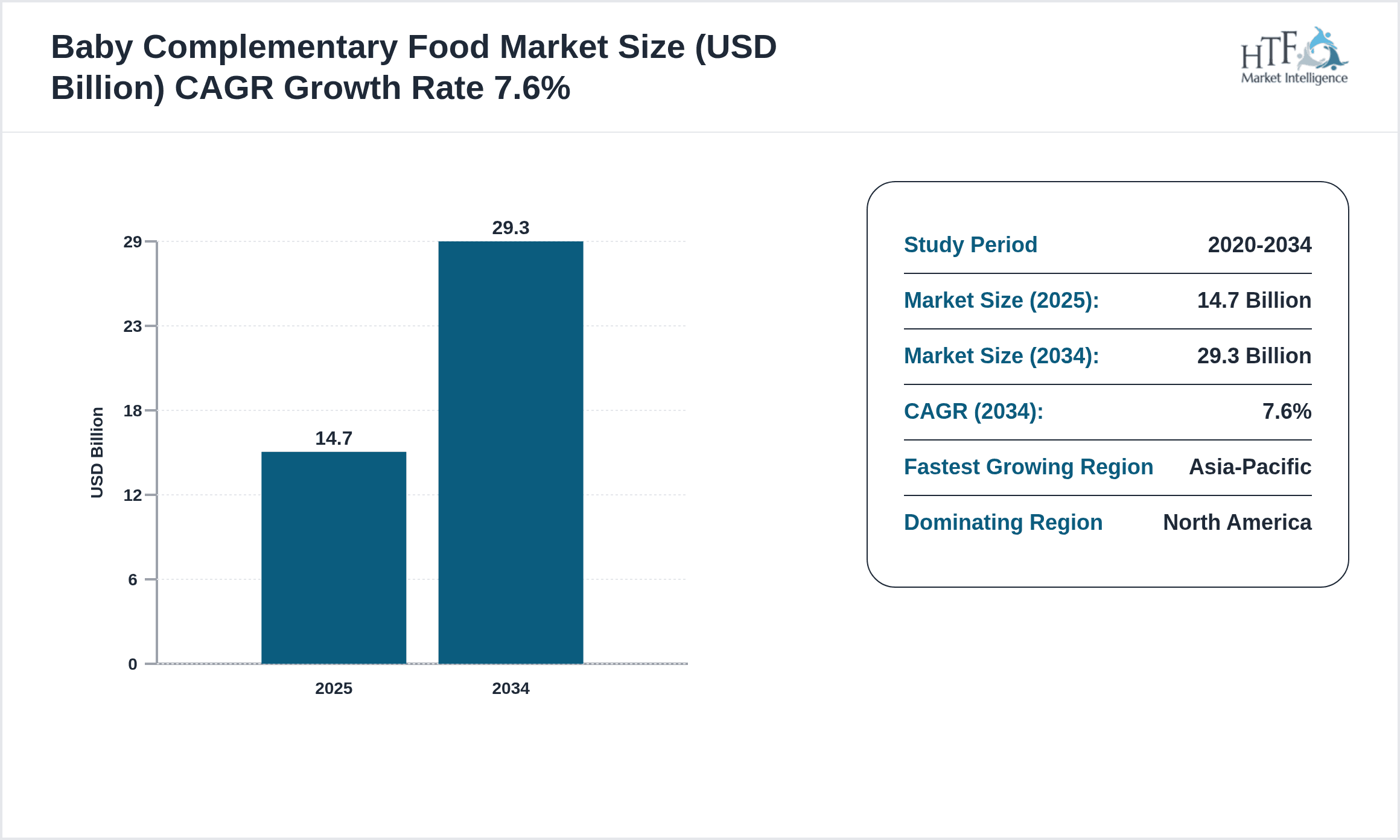
- •Market highlights indicate a robust growth trajectory with the global baby complementary food market valued at USD 14.7 billion in 2025, expected to reach USD 29.3 billion by 2034, reflecting a compound annual growth rate (CAGR) of 7.6%. The Asia-Pacific region emerges as the fastest-growing market, driven by rising birth rates, urbanization, and increased penetration of premium baby food products. North America maintains dominance due to its established distribution networks, high consumer awareness, and strong regulatory oversight. Trends such as the increasing preference for organic and gluten-free products are shaping product innovation and diversification. Key drivers include technological advancements in processing, growing e-commerce adoption, and expanding health-conscious consumer bases.
- •The baby complementary food market offers significant value propositions by addressing critical nutritional requirements during infancy, supporting healthy growth and development. It is strategically important to healthcare providers, manufacturers, and retailers as it combines nutritional science, consumer convenience, and regulatory compliance. Stakeholders leverage this market to innovate product formulations that cater to allergen sensitivities, organic food demand, and evolving consumer lifestyles. The strategic emphasis on product safety, quality certifications, and sustainable sourcing further enhances market appeal and consumer trust globally.
Competitive Landscape
The global baby complementary food market is characterized by intense competition among multinational corporations, regional manufacturers, and emerging startups focusing on innovation and product differentiation. Market leaders employ diverse competitive strategies including mergers and acquisitions, product portfolio expansion, and strategic alliances to enhance geographic reach and consumer engagement. Innovation is driven by consumer demand for organic, allergen-free, and fortified products, leading to continuous improvements in formulation and packaging technologies. Pricing strategies balance premium product positioning with affordability to capture a broad consumer base. Distribution channel optimization through e-commerce and modern retail formats enhances market penetration. Companies also invest significantly in marketing and educational initiatives to raise awareness about infant nutrition. Regulatory compliance and quality assurance serve as competitive barriers, ensuring product safety and fostering consumer confidence. Regional competition varies with North America and Europe featuring well-established players, while Asia-Pacific witnesses growth fueled by local brands adapting to regional taste preferences and affordability. Future trends suggest increasing collaboration between food technology firms and healthcare providers to develop scientifically backed complementary foods, alongside digital transformation in supply chains and customer interaction.
Leading Companies in Baby Complementary Food Market
- •Nestlé S.A. (Switzerland)
- •Danone S.A. (France)
- •Abbott Laboratories (United States)
- •Mead Johnson Nutrition (United States)
- •Hero Group (Switzerland)
- •Hain Celestial Group (United States)
- •Pigeon Corporation (Japan)
- •Hero Baby (Switzerland)
- •Heinz (United States)
- •Gerber Products Company (United States)
- •Fonterra Co-operative Group (New Zealand)
- •Danone Nutricia (Netherlands)
- •Bellamy's Organic (Australia)
- •Munchkin, Inc. (United States)
- •Kraft Heinz Company (United States)
- •Hero Group (Switzerland)
- •Biostime International Holdings (China)
- •Meiji Holdings Co., Ltd. (Japan)
- •Abbott Nutrition (United States)
- •Bayer AG (Germany)
- •Nestlé Health Science (Switzerland)
- •Plum Organics (United States)
- •Danone Early Life Nutrition (France)
- •Hero Baby Food (Switzerland)
- •Holle Baby Food (Switzerland)
Market Breakdown
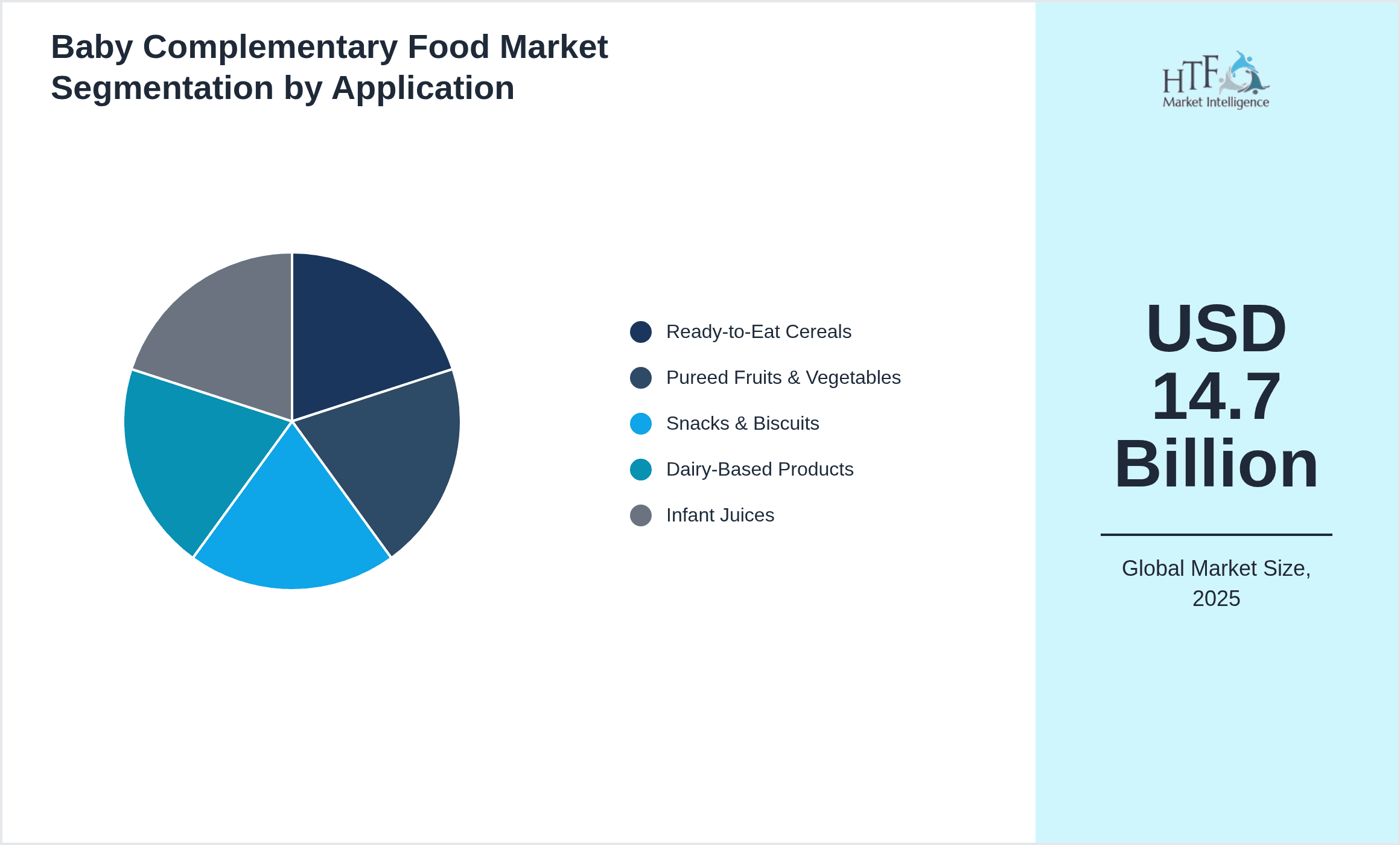
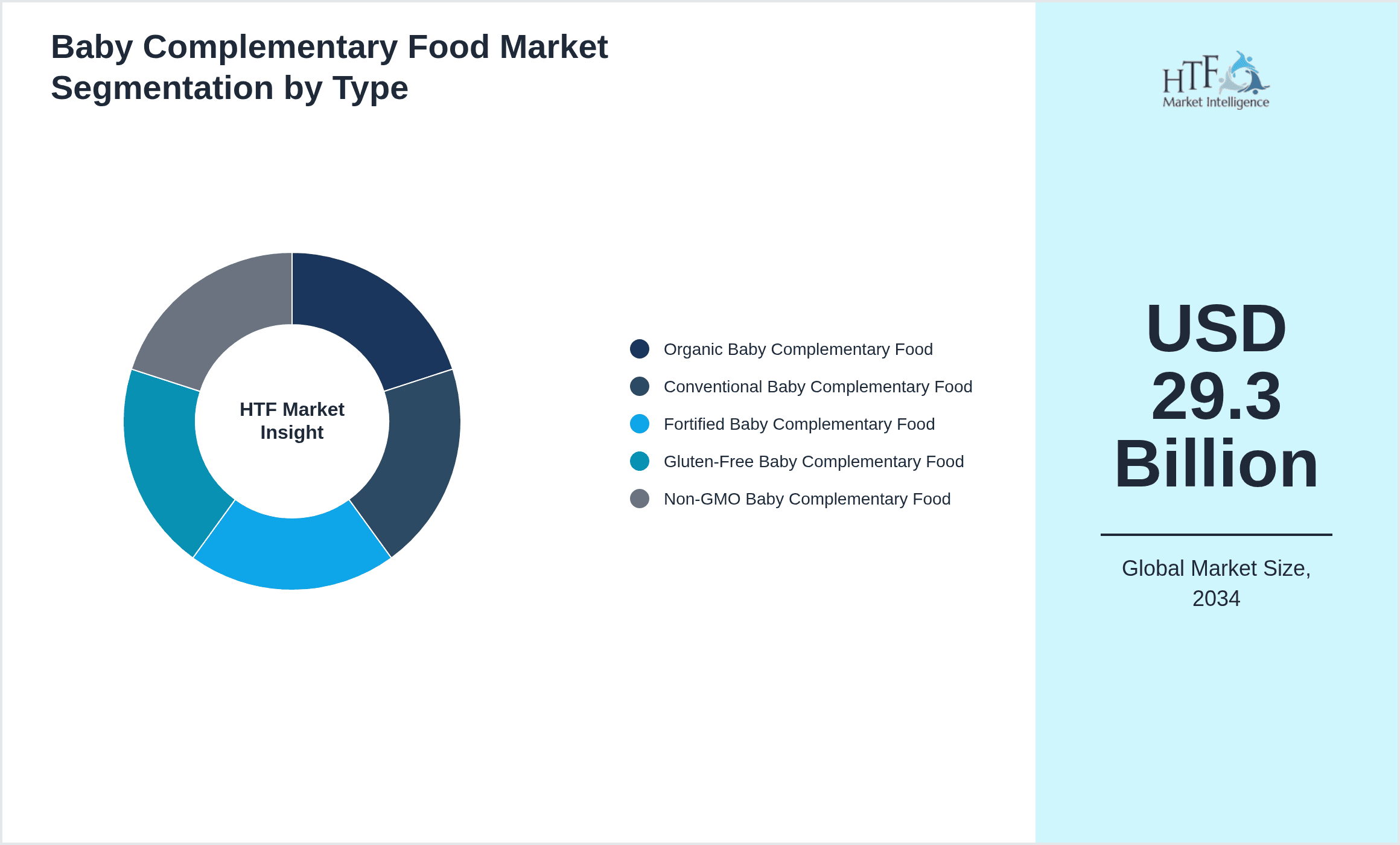
- •By Product Type
- ◦Organic Baby Complementary Food
- ◦Conventional Baby Complementary Food
- ◦Fortified Baby Complementary Food
- ◦Gluten-Free Baby Complementary Food
- ◦Non-GMO Baby Complementary Food
- •By Application
- ◦Ready-to-Eat Cereals
- ◦Pureed Fruits & Vegetables
- ◦Snacks & Biscuits
- ◦Dairy-Based Products
- ◦Infant Juices
- •By End-Use Industry
- ◦Healthcare & Nutrition
- ◦Retail & Supermarkets
- ◦E-commerce
- ◦Specialty Baby Food Stores
- •By Distribution Channel
- ◦Supermarkets & Hypermarkets
- ◦Specialty Stores
- ◦Online Retail
Growth Dynamics
- •Increasing parental awareness regarding infant nutrition and health benefits is a primary driver, encouraging demand for high-quality baby complementary foods. Educational campaigns and healthcare professional recommendations have boosted market growth globally.
- •The rising preference for organic and natural baby food products is fueling market expansion, as parents seek safer, chemical-free options for their infants. This trend aligns with global shifts toward healthier lifestyles and sustainable food production.
- •Technological advancements in food processing and packaging enhance product shelf life, safety, and convenience, supporting market growth. Innovations such as vacuum packaging and aseptic processing are widely adopted by manufacturers.
- •Expanding e-commerce platforms and digital marketing strategies have increased accessibility and awareness, enabling consumers to purchase a broader range of baby complementary foods, including niche and premium products.
- •Government initiatives promoting infant health and nutrition, including subsidies and awareness programs, contribute significantly to market growth, particularly in emerging regions with growing infant populations.
- •Investment in product diversification to accommodate allergen-free and specialized dietary needs supports broader consumer base targeting and sustained market momentum.
- •Global urbanization and increasing disposable incomes in developing markets drive demand for convenience-oriented baby complementary foods, contributing to overall market growth.
Market Trends
- •There is a significant shift toward organic and clean-label baby complementary food products, with manufacturers emphasizing transparency in sourcing and ingredient quality to meet consumer demands.
- •Innovations in packaging, such as resealable pouches and eco-friendly materials, are gaining traction to enhance convenience and sustainability in baby food consumption.
- •The integration of superfoods and functional ingredients such as probiotics, vitamins, and minerals in baby complementary foods is a growing trend aimed at boosting infant immunity and development.
- •Digital marketing and e-commerce platforms are increasingly used to target millennial parents, driving personalized marketing strategies and direct-to-consumer sales models.
- •Collaborations between baby food manufacturers and healthcare professionals are rising to develop scientifically backed products, enhancing trust and product efficacy perception.
- •Regional flavor adaptations and culturally relevant formulations are emerging as companies tailor products to local tastes and dietary practices to expand market reach.
- •Sustainability initiatives, including responsible sourcing and reduced carbon footprints in production, are becoming integral to brand positioning in the baby complementary food market.
Market Opportunities
- •The growing demand for organic and allergen-free baby complementary foods presents significant growth opportunities for manufacturers to innovate and differentiate offerings.
- •Emerging markets in Asia-Pacific and Latin America offer untapped potential due to increasing birth rates, urbanization, and rising health awareness among consumers.
- •Expanding e-commerce penetration enables businesses to reach a broader customer base, including remote and underserved regions, facilitating market expansion.
- •Developing fortified and functional complementary foods that address specific nutritional deficiencies can capture niche segments and increase market share.
- •Collaborations with healthcare providers and pediatricians to endorse products can enhance credibility and consumer trust, driving sales growth.
- •Investment in sustainable packaging and environmentally friendly production methods aligns with consumer preferences and regulatory trends, opening new market avenues.
- •Innovative product formats such as snack bars and on-the-go options cater to busy parents, offering convenience and driving incremental revenue streams.
Market Challenges
- •Stringent regulatory standards and complex compliance requirements across different regions increase product development costs and time to market, posing challenges for manufacturers.
- •High cost of organic and specialty baby complementary food products limits accessibility for price-sensitive consumers, restricting market penetration in developing economies.
- •Concerns regarding product safety, contamination, and adulteration require robust quality control measures, increasing operational complexities and costs.
- •Intense competition from local and global players results in pricing pressures and necessitates continuous innovation to maintain market share.
- •Supply chain disruptions, particularly in sourcing natural and organic raw materials, can affect product availability and increase costs.
- •Consumer skepticism regarding health claims and nutritional benefits requires transparent communication and scientific validation to build trust.
- •Rapidly changing consumer preferences demand agile product development and marketing strategies, challenging traditional production cycles.
Regulatory Framework
- •Between 2020 and 2025, the Codex Alimentarius Commission updated guidelines for infant complementary foods, emphasizing safety, nutritional adequacy, and labeling standards to harmonize international trade and consumer protection.
- •The European Union implemented Regulation (EU) 2016/127, effective during this period, specifying compositional and information requirements for processed cereal-based foods and baby foods, ensuring enhanced infant safety and nutrition.
- •In the United States, the FDA strengthened regulations under the Infant Formula Act and introduced new labeling requirements to improve transparency and consumer information on complementary food products.
- •China's National Health Commission introduced stricter quality control protocols and registration mandates for infant complementary foods, reflecting growing consumer safety concerns and market growth.
- •Government initiatives in India, including the Food Safety and Standards Authority of India (FSSAI) regulations, enhanced monitoring and quality standards for baby complementary foods to support infant health programs.
Market Intelligence
- •15th January 2025, Nestlé S.A. launched a new line of organic, gluten-free baby cereals aimed at the growing segment of health-conscious parents globally. The product features clean-label ingredients, enhanced vitamin fortification, and eco-friendly packaging, positioning Nestlé to capture increasing demand in North America and Asia-Pacific markets. This launch aligns with the company's strategic focus on sustainability and innovation in infant nutrition. Source: Nestlé Official Press Release.
- •10th March 2025, Danone S.A. introduced a fortified infant juice product enriched with probiotics and essential minerals targeting infants aged 6 to 12 months. The innovation aims to support digestive health and immunity, leveraging Danone's R&D capabilities. Market analysts predict strong uptake in Europe and Latin America due to rising consumer interest in functional baby foods. Source: Danone Corporate News.
- •22nd May 2025, Abbott Laboratories announced a strategic partnership with a leading e-commerce platform to expand distribution of its baby complementary food products across Asia-Pacific. The collaboration focuses on enhancing digital sales channels, personalized marketing, and consumer education about infant nutrition benefits. This initiative is expected to accelerate market penetration in emerging markets with growing online retail adoption. Source: Abbott Investor Relations.
- •30th August 2025, Hero Group completed the acquisition of a regional organic baby food manufacturer to strengthen its portfolio and presence in the Asia-Pacific region. The acquisition enables Hero Group to leverage local expertise, expand product offerings, and cater to rising demand for organic infant nutrition. Market experts view this move as a strategic consolidation to enhance competitive positioning globally. Source: Hero Group Press Release.
Regional Outlook
The North America currently holds a significant share of the market, primarily due to several key factors: increasing consumption rates, a burgeoning population, and robust economic momentum. These elements collectively drive demand, positioning this region as a leader in the market. On the other hand, Asia-Pacific is rapidly emerging as the fastest-growing area within the industry. This remarkable growth can be attributed to swift infrastructure development, the expansion of various industrial sectors, and a marked increase in consumer demand. These dynamics make this region a crucial player in shaping future market growth.
In our report, we cover a comprehensive analysis of the following regions and countries:
- North America
- LATAM
- West Europe
- Central & Eastern Europe
- Northern Europe
- Southern Europe
- East Asia
- Southeast Asia
- South Asia
- Central Asia
- Oceania
- MEA
| Feature | Details |
|---|---|
| Base Year Market Size | USD 14.7 Billion |
| Forecast Year Market Size | USD 29.3 Billion |
| CAGR | 7.6% |
| Forecast Period | 2026 to 2033 |
| YoY Growth | 7.2% |
| Scope of Report | Market is segmented by Product Type (Organic Baby Complementary Food, Conventional Baby Complementary Food, Fortified Baby Complementary Food, Gluten-Free Baby Complementary Food, Non-GMO Baby Complementary Food), Application (Ready-to-Eat Cereals, Pureed Fruits & Vegetables, Snacks & Biscuits, Dairy-Based Products, Infant Juices), End-Use Industry (Healthcare & Nutrition, Retail & Supermarkets, E-commerce, Specialty Baby Food Stores), Distribution Channel (Supermarkets & Hypermarkets, Specialty Stores, Online Retail) |
| Regions Covered | North America, LATAM, West Europe, Central & Eastern Europe, Northern Europe, Southern Europe, East Asia, Southeast Asia, South Asia, Central Asia, Oceania, MEA |
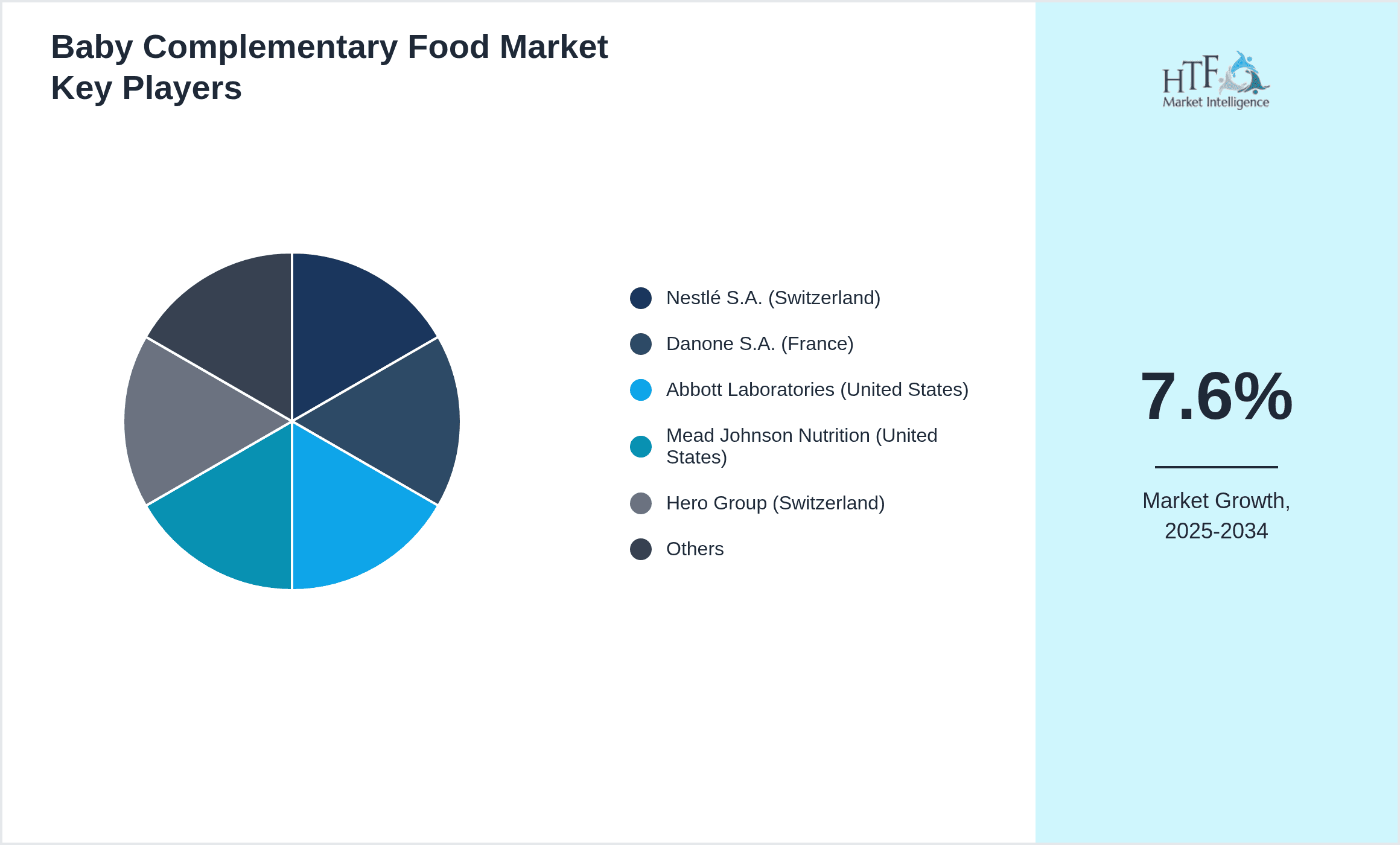
| Key Companies | Nestlé S.A. (Switzerland), Danone S.A. (France), Abbott Laboratories (United States), Mead Johnson Nutrition (United States), Hero Group (Switzerland) |
Global Baby Complementary Food Market Size, Growth & Revenue 2025-2034 - Table of Contents
Frequently Asked Questions (FAQ):
The Compact Track Loaders market is projected to grow at a CAGR of 6.8% from 2025 to 2030, driven by increasing demand in construction and agricultural sectors.
North America currently leads the market with approximately 45% market share, followed by Europe at 28% and Asia-Pacific at 22%. The remaining regions account for 5% of the global market.
Key growth drivers include increasing construction activities, rising demand for versatile equipment in agriculture, technological advancements in track loader design, and growing preference for compact equipment in urban construction projects.