
Global Tile Laying Robot Market Size, Growth & Revenue 2025-2034
Global Tile Laying Robot Market is segmented by Product Type (Automated Tile Laying Robots, Semi-Automated Tile Laying Robots, Specialized Tile Laying Robots, Robotic Arms for Tile Installation, AI-Enabled Tile Robots), Application (Residential Construction, Commercial Construction, Renovation, Infrastructure Projects, Industrial Flooring), End-Use Industry (Construction, Real Estate Development, Industrial Manufacturing, Public Infrastructure), Distribution Channel (Direct Sales, Distributor Partnerships, Online Platforms), and Geography (North America, LATAM, West Europe, Central & Eastern Europe, Northern Europe, Southern Europe, East Asia, Southeast Asia, South Asia, Central Asia, Oceania, MEA)
Pricing
Report Overview
Executive Summary
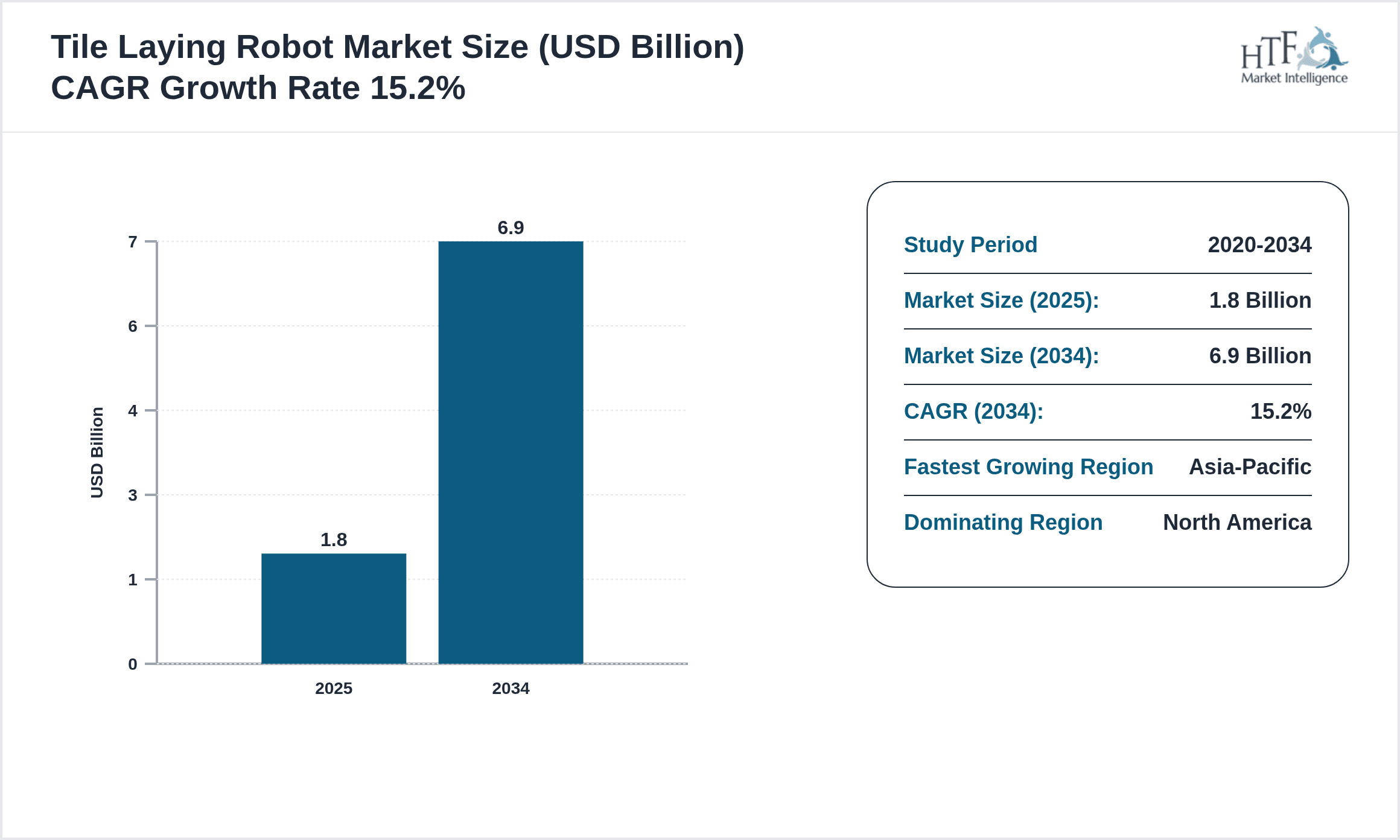
- •The global Tile Laying Robot market represents a rapidly evolving segment of construction automation that focuses on the deployment of robotic systems for precise and efficient tile installation. This market includes a variety of robotic solutions ranging from fully automated machines to semi-automated and AI-integrated devices, serving applications such as residential and commercial construction, infrastructure projects, renovation works, and industrial flooring installations. The value chain incorporates robot manufacturers, software providers, construction firms, and end-users, facilitating seamless integration from design to deployment and maintenance. Technological advancements in AI, machine learning, and sensor integration have enhanced the capabilities of these robots, enabling adaptive tile placement, quality assurance, and reduced labor dependency. The market's growth is propelled by the construction industry's increasing focus on automation to improve productivity, reduce human error, and address labor shortages globally. Furthermore, the adoption of eco-friendly and sustainable building practices elevates the demand for precise material usage, which tile laying robots facilitate by minimizing waste. The global scope covers diverse geographic regions with North America leading in market share due to advanced construction technology adoption, while the Asia-Pacific region is the fastest growing, driven by expanding construction activities and infrastructure development. This report provides an in-depth analysis of market drivers, trends, challenges, and opportunities, supported by historical data and future forecasts from 2020 to 2034.
- •Key highlights include a base market size of USD 1.8 Billion in 2025, projected to reach USD 6.9 Billion by 2034, with a compounded annual growth rate (CAGR) of 15.2%. The year-on-year growth rate stands at approximately 15.3%, reflecting strong market momentum. Leading product types include automated tile laying robots, with AI-enabled robots identified as the fastest growing segment due to their enhanced precision and adaptability. North America dominates the market, supported by technological maturity and strong construction automation adoption. Meanwhile, Asia-Pacific exhibits the highest growth potential fueled by urbanization and infrastructure investments. These factors underpin the promising outlook for manufacturers, investors, and end-users in the tile laying robotic technology space.
- •The strategic importance of tile laying robots spans multiple industries including construction, real estate development, and industrial manufacturing, offering significant value propositions such as labor cost reduction, enhanced accuracy, faster project completion, and improved workplace safety. Stakeholders benefit from increased operational efficiency and the ability to meet stringent quality standards in tile installation. As the market evolves, continuous innovation and integration with digital construction management platforms are anticipated to further drive adoption, opening avenues for new market entrants and technology providers.
Competitive Landscape
The global Tile Laying Robot market is characterized by intense competition among established robotics manufacturers, emerging technology startups, and construction equipment providers. Market participants adopt diverse competitive strategies including innovation in AI and machine learning integration, enhancement of robot dexterity and speed, and expansion of service and maintenance offerings to differentiate themselves. Strategic partnerships with construction firms and technology companies are common to enable seamless integration of robotic solutions into existing workflows. Mergers and acquisitions serve as a consolidation mechanism to expand product portfolios and geographic reach. Pricing strategies balance technology sophistication with affordability to capture wider market segments. Distribution channels encompass direct sales, partnerships with construction equipment distributors, and digital platforms for software updates and remote diagnostics. Regional competition varies, with North America focusing on high-tech innovation and Europe emphasizing sustainability and precision, while Asia-Pacific markets prioritize cost-effective and scalable solutions. Barriers to entry include high R&D costs, regulatory compliance, and the need for domain-specific expertise. Looking ahead, competitive dynamics will likely intensify with advancements in robotics, increasing customization, and the emergence of AI-powered autonomous tile laying solutions.
Top Companies Profiled in Tile Laying Robot Market
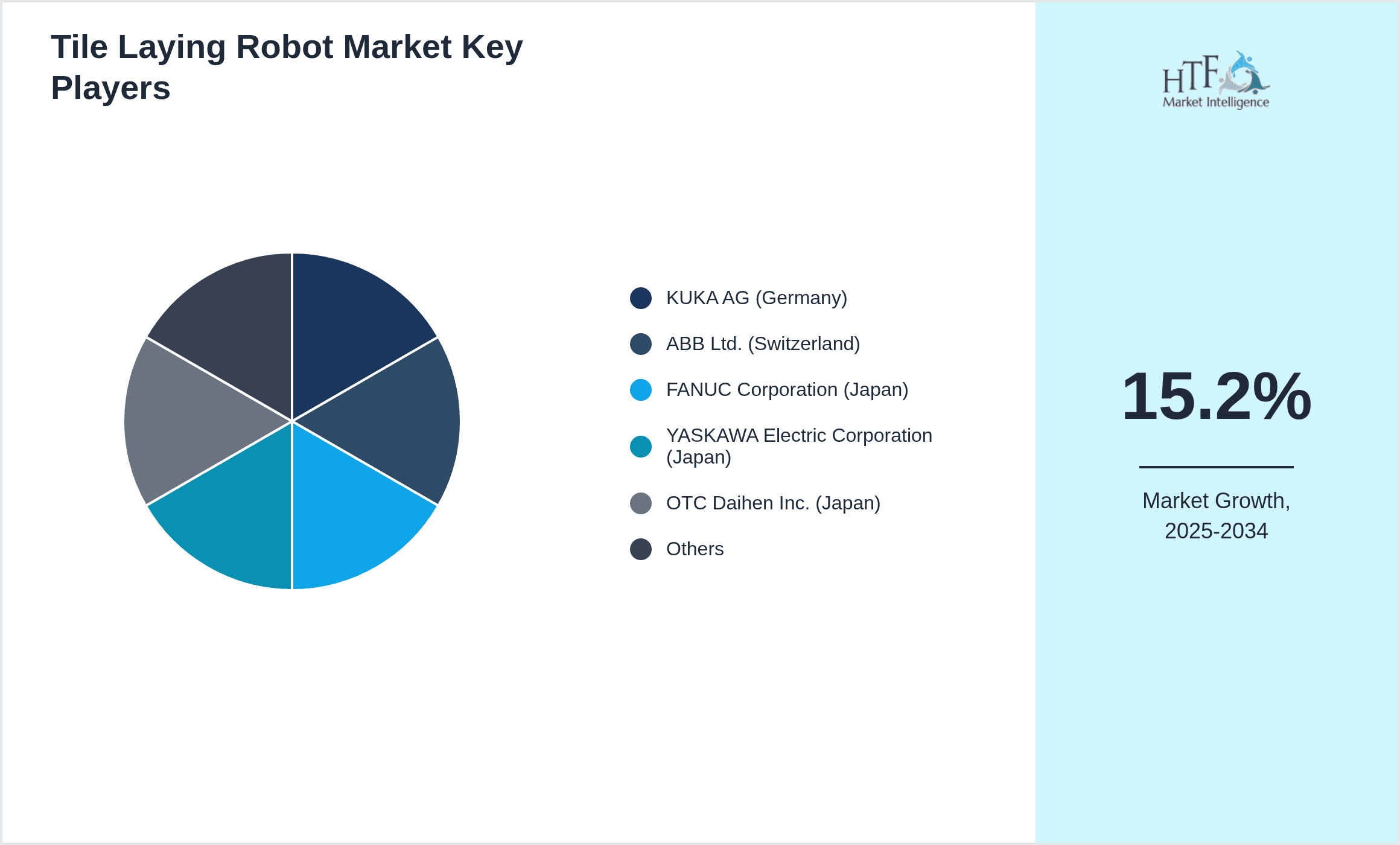
- •KUKA AG (Germany)
- •ABB Ltd. (Switzerland)
- •FANUC Corporation (Japan)
- •YASKAWA Electric Corporation (Japan)
- •OTC Daihen Inc. (Japan)
- •Mitsubishi Electric Corporation (Japan)
- •Universal Robots A/S (Denmark)
- •Boston Dynamics, Inc. (United States)
- •Robotics Plus Limited (New Zealand)
- •Teradyne, Inc. (United States)
- •Comau S.p.A. (Italy)
- •Dürr AG (Germany)
- •Epson Robots (Japan)
- •Stäubli International AG (Switzerland)
- •Kawasaki Heavy Industries, Ltd. (Japan)
- •Harmonic Drive AG (Germany)
- •Techman Robot Inc. (Taiwan)
- •Robotiq Inc. (Canada)
- •Adept Technology, Inc. (United States)
- •Siasun Robot & Automation Co., Ltd. (China)
- •Keenon Robotics (China)
- •Inovance Technology Co., Ltd. (China)
- •Universal Robots (Denmark)
- •Boston Dynamics (United States)
- •PAL Robotics (Spain)
Market Breakdown
- •By Product Type
- ◦Automated Tile Laying Robots
- ◦Semi-Automated Tile Laying Robots
- ◦Specialized Tile Laying Robots
- ◦Robotic Arms for Tile Installation
- ◦AI-Enabled Tile Robots
- •By Application
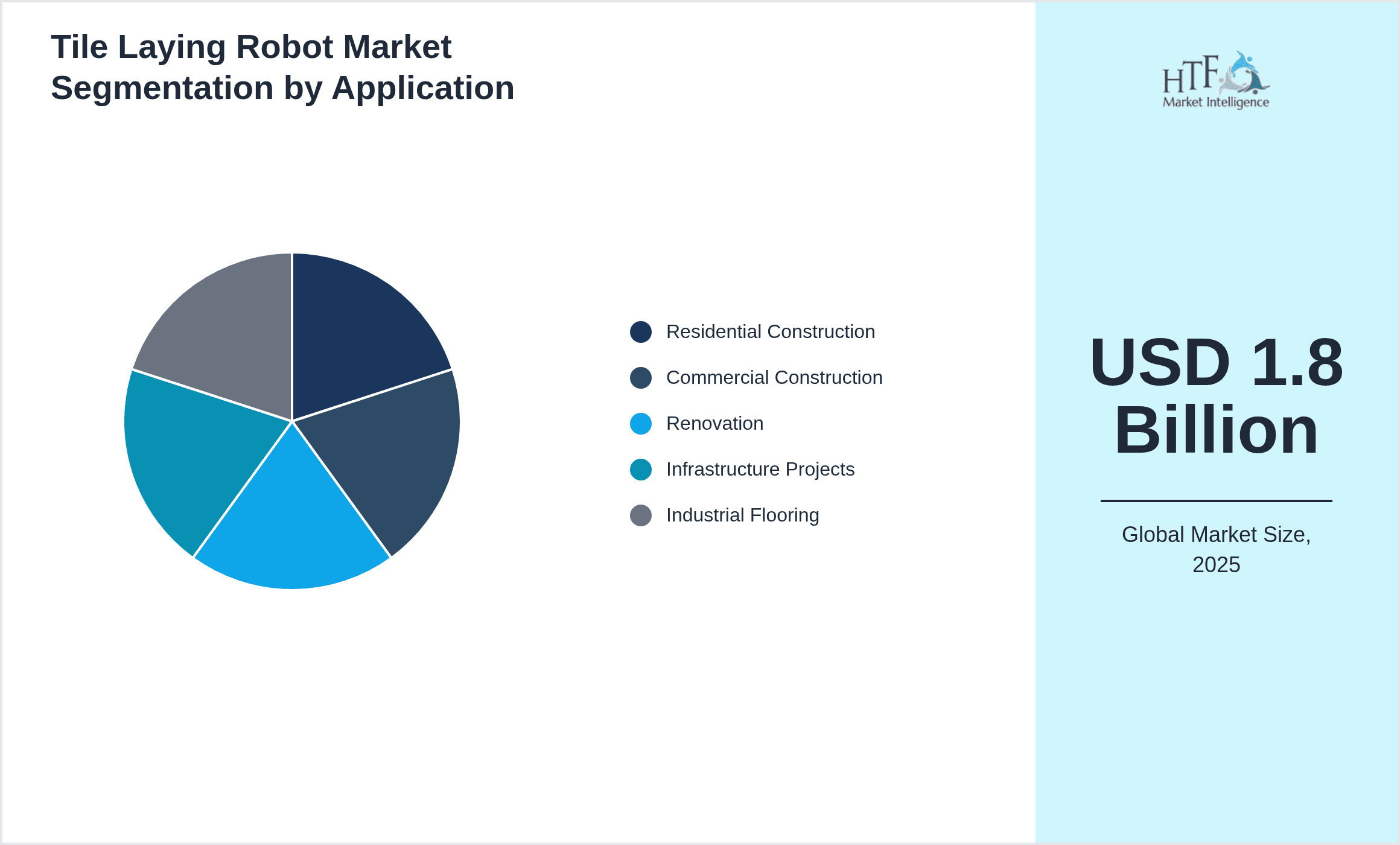
- ◦Residential Construction
- ◦Commercial Construction
- ◦Renovation
- ◦Infrastructure Projects
- ◦Industrial Flooring
- •By End-Use Industry
- ◦Construction
- ◦Real Estate Development
- ◦Industrial Manufacturing
- ◦Public Infrastructure
- •By Distribution Channel
- ◦Direct Sales
- ◦Distributor Partnerships
- ◦Online Platforms
Growth Dynamics
- •The increasing shortage of skilled labor in the construction industry globally has accelerated the adoption of tile laying robots, which improve productivity and reduce dependency on manual labor. These robots enable faster tile installation with consistent quality, addressing labor constraints particularly in developed and emerging markets.
- •Technological advancements such as AI and machine learning integration in tile laying robots allow for adaptive tile placement, pattern recognition, and real-time quality control, which significantly enhance operational efficiency and reduce rework costs for construction projects.
- •Growing urbanization and infrastructure development, especially in Asia-Pacific and Latin America, create strong demand for automated construction solutions including tile laying robots, which can handle large-scale projects with precision and speed, supporting sustainable building practices.
- •Government initiatives promoting smart cities and sustainable construction techniques are incentivizing the adoption of advanced robotic technologies, including tile laying robots, to improve construction quality and reduce environmental impact across multiple regions.
- •Increasing investment in research and development by leading robotics manufacturers is driving innovation in tile laying robots, resulting in more versatile, cost-effective, and user-friendly solutions that cater to diverse construction environments and tile materials.
- •The integration of IoT and cloud-based monitoring systems with tile laying robots enables remote diagnostics, predictive maintenance, and enhanced operational safety, which appeals to large construction firms aiming to optimize asset management and reduce downtime.
- •Rising awareness of workplace safety and efforts to minimize human exposure to hazardous construction environments encourage the adoption of robotic tile laying solutions, which can operate in challenging conditions while maintaining high precision.

Market Trends
- •The adoption of AI-enabled tile laying robots is a key trend, enabling robots to learn from the environment, adapt to tile variations, and optimize placement patterns autonomously, thus reducing human intervention and improving installation quality.
- •Collaborative robots (cobots) designed to work alongside human operators in tile installation tasks are gaining traction, combining human dexterity with robotic precision to enhance productivity and flexibility on construction sites.
- •Sustainability-focused construction practices are driving demand for tile laying robots that minimize material waste through precise cutting and placement, aligning with global efforts to reduce environmental footprints in building projects.
- •Integration of tile laying robots with Building Information Modeling (BIM) systems facilitates real-time data exchange and automated adjustments during tile installation, streamlining construction workflows and increasing overall efficiency.
- •Emerging business models such as robotics-as-a-service (RaaS) enable small and medium-sized construction companies to access advanced tile laying robots without high upfront investments, broadening market accessibility.
- •The rise of modular and prefabricated construction techniques incorporates tile laying robots to ensure consistent quality and rapid installation in factory-controlled environments, enhancing throughput and reducing onsite labor needs.
- •Developments in sensor and vision technologies allow tile laying robots to perform real-time surface assessments, ensuring optimal adhesion and alignment, thus improving durability and aesthetic quality of tile installations.
Market Opportunities
- •Expanding infrastructure development projects in emerging economies present significant opportunities for tile laying robot manufacturers to supply scalable, cost-efficient robotic solutions tailored to large-scale construction needs.
- •Integration of AI and robotics with digital construction management platforms offers a lucrative opportunity for creating end-to-end automated tile installation systems with enhanced monitoring and control features.
- •The rising trend of home automation and smart building development opens new avenues for tile laying robots to be integrated into automated renovation and customization services, catering to personalized construction demands.
- •Collaborations with tile manufacturers to develop robots optimized for specific tile materials and sizes can unlock niche market segments and improve overall product acceptance in the market.
- •Offering robotics-as-a-service (RaaS) models can address capital expenditure concerns among small construction firms, driving wider adoption and recurring revenue streams for robot manufacturers and service providers.
- •Geographic expansion into underpenetrated regions such as Latin America and Middle East & Africa, where construction automation is nascent, represents a promising growth frontier for tile laying robot companies.
- •Advancements in modular construction and prefabrication techniques provide opportunities for specialized tile laying robots designed for factory settings, enhancing production efficiency and quality control.
Market Challenges
- •High initial investment costs and maintenance expenses of advanced tile laying robots limit adoption among small and medium-sized construction enterprises, posing a significant barrier to market penetration.
- •The need for skilled operators and technicians to program, deploy, and maintain tile laying robots creates workforce challenges, particularly in regions with limited technical expertise and training infrastructure.
- •Compatibility issues with diverse tile materials, sizes, and complex architectural designs may restrict the versatility of certain robotic systems, necessitating ongoing R&D to address these limitations.
- •Regulatory uncertainties and lack of standardized guidelines for robotic applications in construction can delay project approvals and increase compliance costs for manufacturers and end-users.
- •Resistance to change and traditional construction practices can slow the adoption rate of tile laying robots, especially in regions where manual labor is abundant and cost-effective.
- •Supply chain disruptions affecting critical components such as sensors, actuators, and AI chips may hinder production timelines and escalate costs in the tile laying robot market.
- •Data security and privacy concerns related to cloud-based monitoring and IoT integration in tile laying robots require robust cybersecurity measures, posing technical and regulatory challenges.
Regulatory Framework
- •Between 2020 and 2025, several countries introduced safety standards specifically addressing the use of autonomous and semi-autonomous robots on construction sites, requiring manufacturers to comply with operational safety protocols and emergency stop functionalities to protect human workers.
- •Data protection and cybersecurity regulations enacted during 2021-2025 mandate stringent controls on the collection, storage, and transmission of operational data generated by tile laying robots, especially when integrated with cloud and IoT platforms, impacting software design and deployment.
- •Environmental regulations promoting sustainable construction practices have incentivized the use of precision robotic systems like tile laying robots to minimize material waste, with several regional directives encouraging automation adoption through subsidies and tax benefits.
- •The European Union and North American regulatory bodies have implemented compliance requirements for electromagnetic compatibility (EMC) and radio frequency (RF) emissions for robotic devices, ensuring safe operation without interference with other construction equipment.
- •Government policies supporting Industry 4.0 and smart construction initiatives globally have facilitated the integration of robotics in construction through grants, pilot programs, and public-private partnerships, accelerating market growth and innovation.
Market Intelligence
- •15th March 2025, KUKA AG launched its latest AI-enabled tile laying robot model featuring enhanced adaptive algorithms for complex tile patterns and real-time surface adjustment capabilities. This product targets large-scale commercial and infrastructure projects, promising up to 30% reduction in installation time and improved material utilization. The launch included a strategic partnership with a leading construction firm to pilot the system in Europe and North America, aiming to demonstrate scalability and operational efficiency. Source: KUKA AG Official Press Release
- •10th June 2025, ABB Ltd. introduced a semi-automated tile laying robot equipped with advanced vision systems and user-friendly programming interfaces designed for mid-sized construction enterprises. This innovation reduces the technical barrier for robot deployment and lowers upfront costs, expanding market accessibility across Asia-Pacific and Latin America. The company also announced plans for a global training program to support operator skill development. Source: ABB Ltd. Corporate Announcement
- •22nd September 2025, FANUC Corporation announced a strategic initiative to integrate its tile laying robots with IoT-enabled construction management platforms, enhancing remote monitoring and predictive maintenance capabilities. The initiative includes collaborations with software providers and construction companies to create a comprehensive smart construction ecosystem. This move is expected to drive adoption in North America and Europe by improving operational transparency and reducing downtime. Source: FANUC Corporation Industry News
- •5th December 2025, Teradyne, Inc. completed the acquisition of a robotics startup specializing in AI-powered tile laying robots, aiming to broaden its automation portfolio and accelerate technological innovation. The acquisition is expected to enhance Teradyne’s market position in Asia-Pacific and support rapid expansion into emerging markets. Synergies include combining Teradyne’s existing automation expertise with advanced AI capabilities for construction robotics. Source: Teradyne, Inc. Official Press Release
Regional Outlook
The North America currently holds a significant share of the market, primarily due to several key factors: increasing consumption rates, a burgeoning population, and robust economic momentum. These elements collectively drive demand, positioning this region as a leader in the market. On the other hand, Asia-Pacific is rapidly emerging as the fastest-growing area within the industry. This remarkable growth can be attributed to swift infrastructure development, the expansion of various industrial sectors, and a marked increase in consumer demand. These dynamics make this region a crucial player in shaping future market growth.
In our report, we cover a comprehensive analysis of the following regions and countries:
- North America
- LATAM
- West Europe
- Central & Eastern Europe
- Northern Europe
- Southern Europe
- East Asia
- Southeast Asia
- South Asia
- Central Asia
- Oceania
- MEA
| Feature | Details |
|---|---|
| Base Year Market Size | USD 1.8 Billion |
| Forecast Year Market Size | USD 6.9 Billion |
| CAGR | 15.2% |
| Forecast Period | 2026 to 2033 |
| YoY Growth | 15.3% |
| Scope of Report | Market is segmented by Product Type (Automated Tile Laying Robots, Semi-Automated Tile Laying Robots, Specialized Tile Laying Robots, Robotic Arms for Tile Installation, AI-Enabled Tile Robots), Application (Residential Construction, Commercial Construction, Renovation, Infrastructure Projects, Industrial Flooring), End-Use Industry (Construction, Real Estate Development, Industrial Manufacturing, Public Infrastructure), Distribution Channel (Direct Sales, Distributor Partnerships, Online Platforms) |
| Regions Covered | North America, LATAM, West Europe, Central & Eastern Europe, Northern Europe, Southern Europe, East Asia, Southeast Asia, South Asia, Central Asia, Oceania, MEA |
| Key Companies | KUKA AG (Germany), ABB Ltd. (Switzerland), FANUC Corporation (Japan), YASKAWA Electric Corporation (Japan), OTC Daihen Inc. (Japan) |
Global Tile Laying Robot Market Size, Growth & Revenue 2025-2034 - Table of Contents
Multidisciplinary researcher with 10+ years of experience uncovering insights across diverse domains focused on uncovering insights that drive informed decisions.
Frequently Asked Questions (FAQ):
The Market market is projected to grow at a steady CAGR from 2025 to 2030, driven by increasing demand and expansion in various applications.
North America currently leads the market, followed by Europe and Asia-Pacific.
Key growth drivers include increasing activities, rising demand for innovative solutions, technological advancements, and growing preference for efficient products.