
Global Portable Camp Toilets Market Size, Growth & Revenue 2025-2034
Global Portable Camp Toilets Market is segmented by Product Type (Chemical Toilets, Composting Toilets, Waterless Toilets, Portable Flush Toilets, Cabin Toilets), Application (Camping, Construction Sites, Outdoor Events, Emergency Relief, Military Use), End-Use Industry (Recreational & Tourism, Construction & Infrastructure, Disaster Management, Defense & Military), Distribution Channel (Direct Sales, Online Retail, Distributors & Dealers), and Geography (North America, LATAM, West Europe, Central & Eastern Europe, Northern Europe, Southern Europe, East Asia, Southeast Asia, South Asia, Central Asia, Oceania, MEA)
Pricing
Report Overview
Executive Summary
- •The Global Portable Camp Toilets Market is defined by the production and distribution of mobile sanitation units designed for temporary and outdoor use across various industries. These products include chemical, composting, waterless, portable flush, and cabin toilets, catering to applications such as camping, construction sites, outdoor events, emergency relief, and military operations. The market value chain integrates raw material sourcing, manufacturing, distribution, and end-user deployment, emphasizing hygiene, environmental compliance, and user convenience. Increasing outdoor recreational activities, amplified construction and infrastructure projects, frequent disaster response needs, and military field operations globally drive demand for portable sanitation solutions. Innovation in eco-friendly and water-efficient technologies further propels market expansion. End users such as camping enthusiasts, construction workers, event organizers, emergency responders, and defense personnel represent critical demand segments, fostering market growth worldwide.
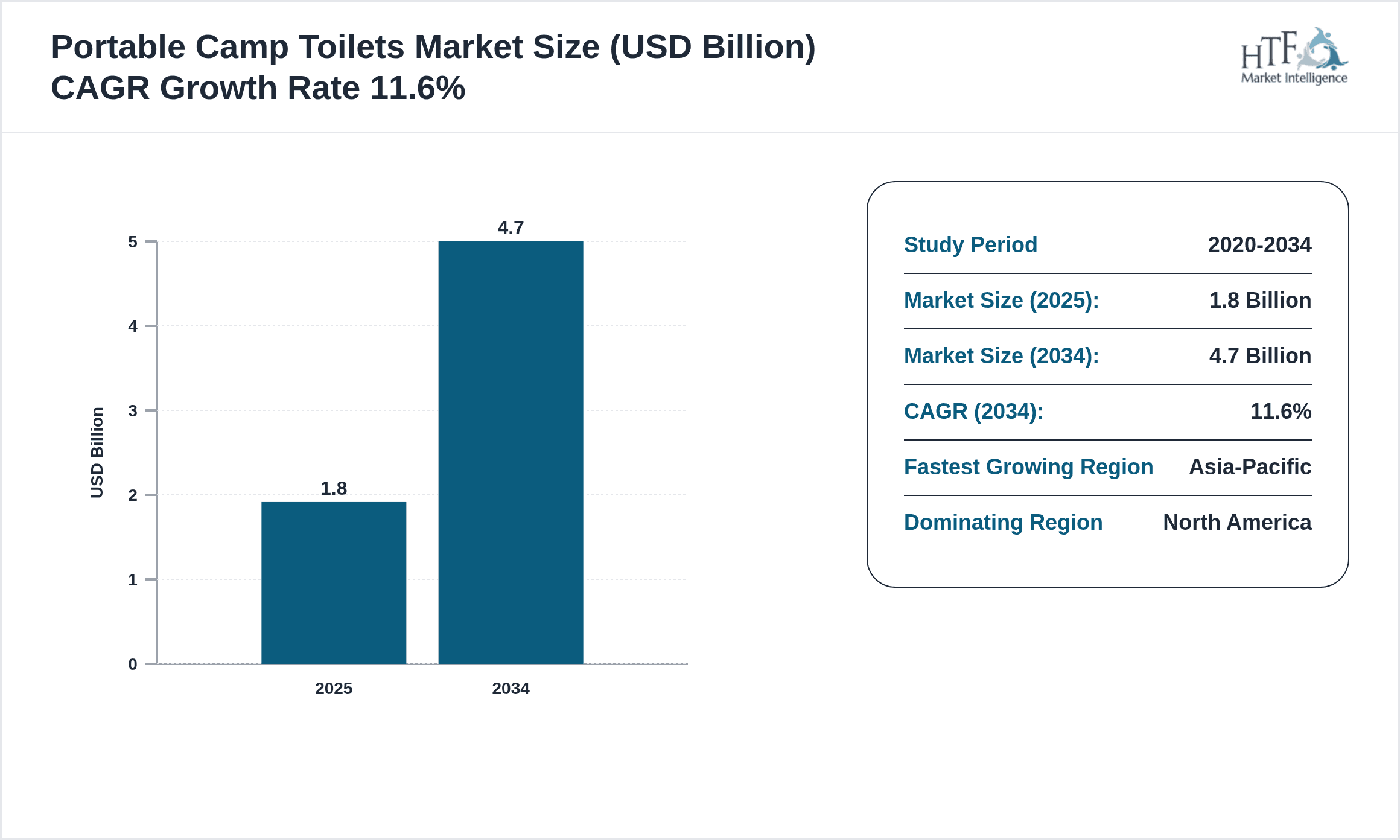
- •Key market highlights include a base market size of USD 1.8 Billion in 2025, projected to reach USD 4.7 Billion by 2034, exhibiting a compound annual growth rate (CAGR) of 11.6%. The global market is dominated by North America, with Asia-Pacific emerging as the fastest-growing region, driven by rapid urbanization and increasing outdoor tourism. Chemical toilets maintain the leading product type share, while composting toilets show the fastest growth due to rising environmental concerns and sustainable sanitation initiatives. Year-on-year growth averages approximately 11.0%, underscoring robust market expansion fueled by rising demand across multiple sectors.
- •The Global Portable Camp Toilets Market offers significant strategic value to stakeholders including manufacturers, distributors, event managers, construction companies, and public safety agencies. Its importance lies in fulfilling sanitation needs where permanent infrastructure is lacking, ensuring public health, environmental protection, and regulatory compliance. The market's evolving technologies and expanding applications present lucrative opportunities for innovation, investment, and geographic expansion, supporting sustainable growth and improved quality of life in outdoor and temporary environments.
Competitive Landscape
The global portable camp toilets market is characterized by intense competition with numerous multinational corporations and regional players vying for market share. Market leaders focus on innovation, product differentiation, and strategic partnerships to strengthen their positions. Key competitive strategies include expanding product portfolios with eco-friendly and water-efficient technologies, enhancing distribution networks, and entering emerging markets through joint ventures and acquisitions. Companies invest heavily in research and development to introduce advanced features such as odor control, ease of maintenance, and user comfort. Pricing strategies vary across regions to balance cost competitiveness and quality assurance. The market also faces entry barriers related to regulatory compliance and technological expertise. Regional competition is pronounced with North America and Europe hosting established players, while Asia-Pacific presents growth opportunities for new entrants. Future trends indicate consolidation through mergers and acquisitions, increased focus on sustainability, and integration of smart technologies, shaping the competitive dynamics over the forecast period.
Leading Companies in Portable Camp Toilets Market
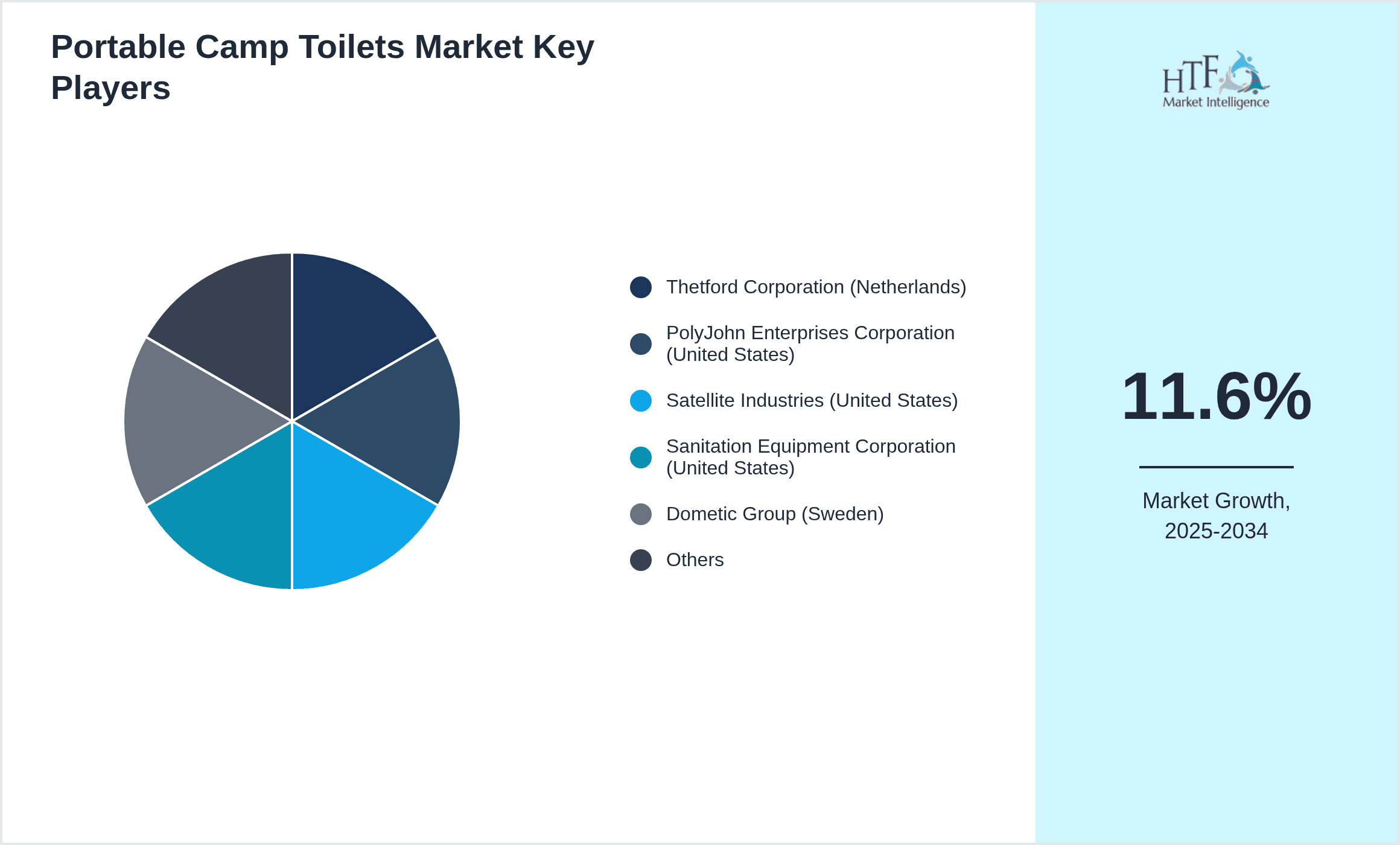
- •Thetford Corporation (Netherlands)
- •PolyJohn Enterprises Corporation (United States)
- •Satellite Industries (United States)
- •Sanitation Equipment Corporation (United States)
- •Dometic Group (Sweden)
- •Nature's Head (United States)
- •Separett AB (Sweden)
- •BioLet (Sweden)
- •Porta-Potty International (United States)
- •Caroma Industries (Australia)
- •Cramaro Tarpaulin Systems (United States)
- •INOXPA (Spain)
- •Sanivation (United States)
- •Enviro Loo (South Africa)
- •PolyPortables (United States)
- •Tuffcare (United Kingdom)
- •Laveo (Poland)
- •Ecosan Services (Kenya)
- •Toi Toi & Dixi Group (Austria)
- •SaniMark (United States)
- •Portable Sanitation Systems (United States)
- •Wildeboer Bauteile GmbH (Germany)
- •Natures Toilet (Canada)
- •Wostman Group (Netherlands)
- •Jungle John (Australia)
Market Breakdown
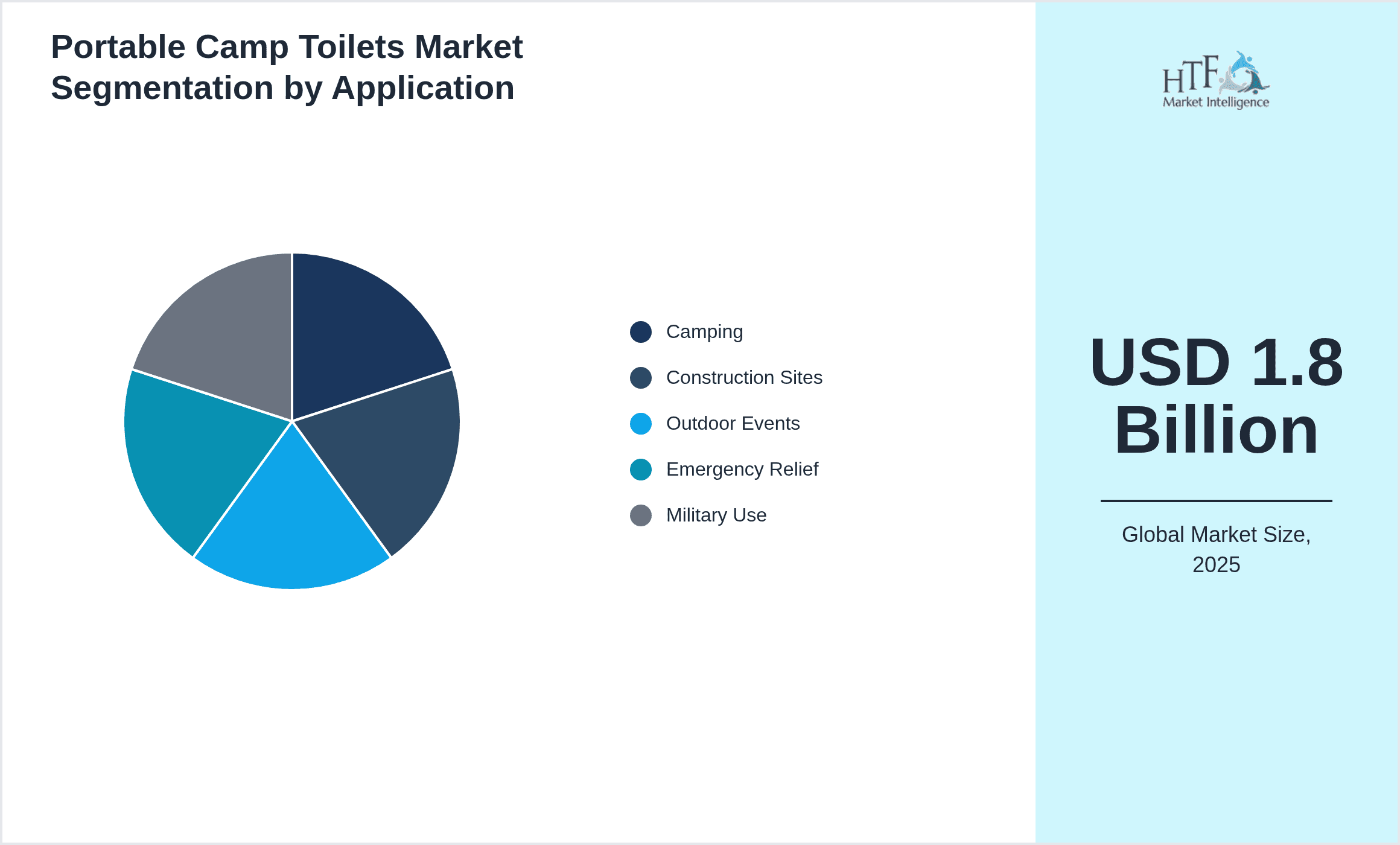
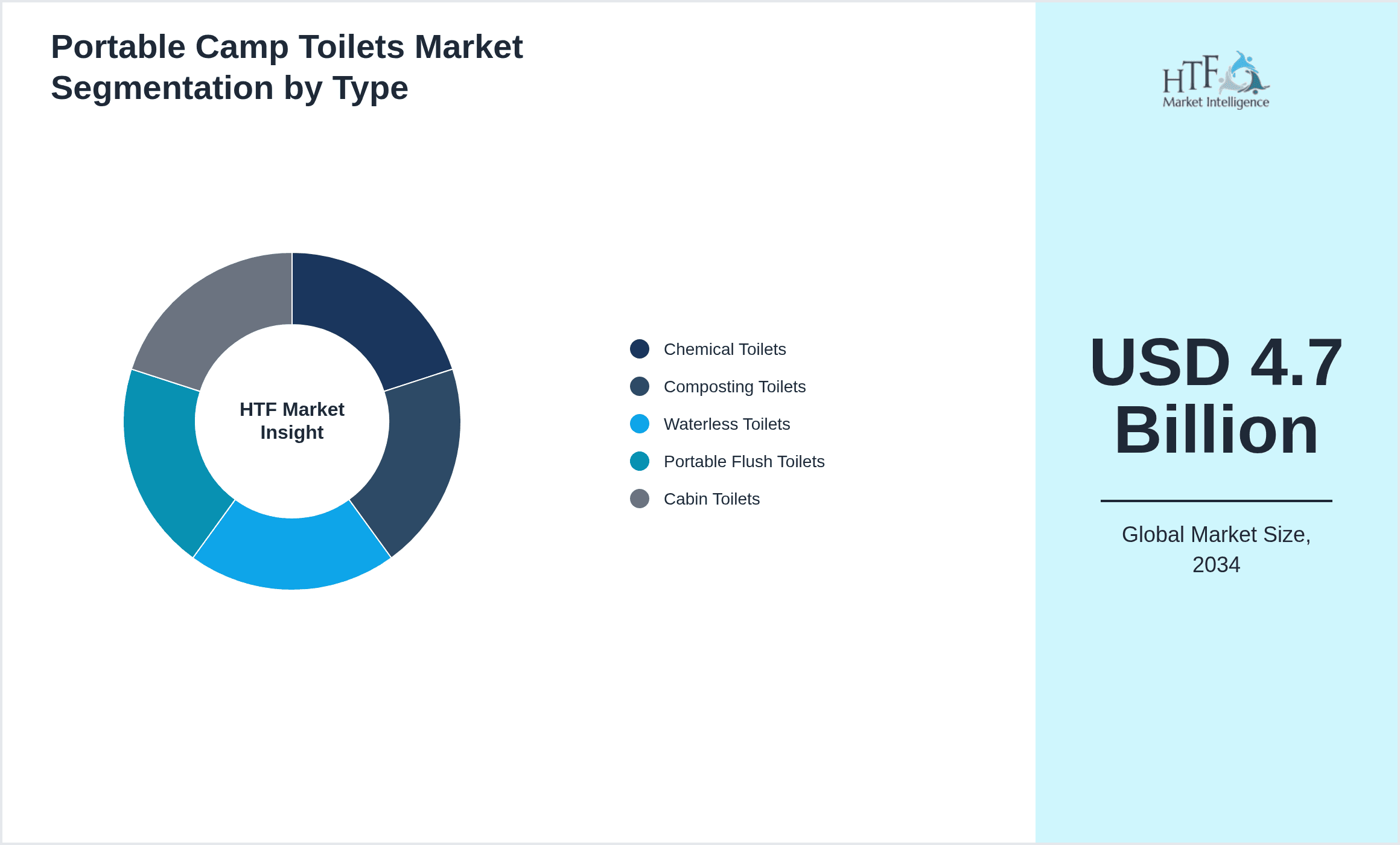
- •By Product Type
- ◦Chemical Toilets
- ◦Composting Toilets
- ◦Waterless Toilets
- ◦Portable Flush Toilets
- ◦Cabin Toilets
- •By Application
- ◦Camping
- ◦Construction Sites
- ◦Outdoor Events
- ◦Emergency Relief
- ◦Military Use
- •By End-Use Industry
- ◦Recreational & Tourism
- ◦Construction & Infrastructure
- ◦Disaster Management
- ◦Defense & Military
- •By Distribution Channel
- ◦Direct Sales
- ◦Online Retail
- ◦Distributors & Dealers
Growth Dynamics
- •Rising outdoor recreational activities and adventure tourism globally have significantly increased demand for portable camp toilets, as consumers seek hygienic, convenient sanitation solutions in remote locations. For example, the growth of camping and music festivals in North America and Europe is driving volume sales and innovation in lightweight, odor-control units.
- •Expansion of construction and infrastructure projects in emerging economies, particularly in Asia-Pacific and Latin America, necessitates temporary sanitation facilities, which boosts demand for robust portable toilets designed to withstand harsh environments and heavy usage.
- •Government initiatives and disaster management programs worldwide emphasize the importance of sanitation in emergency relief efforts, increasing procurement of portable camp toilets for rapid deployment in disaster zones, refugee camps, and humanitarian aid missions.
- •Technological advancements in sustainable sanitation, including eco-friendly composting toilets and waterless designs, address environmental concerns and regulatory pressures, attracting environmentally conscious consumers and institutions focused on reducing water consumption and waste.
- •Increasing military and defense operations in diverse terrains require portable, durable, and easy-to-maintain sanitation units, creating steady demand for specialized portable camp toilets tailored to field conditions and personnel needs.
- •Rising investments in research and development by key market players to enhance product portability, hygiene features, and user comfort are accelerating market growth and expanding application scopes.
- •Growing awareness and adoption of smart sanitation solutions integrating IoT sensors for maintenance and usage monitoring are creating new growth avenues within the portable camp toilets market.
Market Trends
- •Increasing incorporation of sustainable materials and green technologies in portable camp toilets reflects a growing trend toward environmental responsibility, as companies develop biodegradable chemicals and energy-efficient composting systems to reduce ecological impact.
- •The rise of digital marketing and e-commerce platforms has transformed distribution channels, allowing manufacturers to reach broader customer bases, especially individual consumers and small-scale event organizers seeking convenient purchase options.
- •Customization and modularity are becoming key trends, with manufacturers offering configurable units tailored for specific applications such as luxury camping or high-traffic construction sites, enhancing user experience and operational efficiency.
- •Collaborations between sanitation product companies and outdoor event organizers are increasingly common to co-develop solutions addressing large-scale event sanitation challenges, emphasizing hygiene, accessibility, and environmental compliance.
- •Regional shifts toward stricter sanitation regulations and public health mandates are prompting innovation in portable toilets to meet enhanced standards, particularly in Europe and North America.
- •Integration of IoT and smart sensors for real-time monitoring of usage, maintenance scheduling, and resource optimization is gaining traction, improving operational management and user satisfaction.
- •Emergence of new markets in Asia-Pacific and Latin America driven by rising disposable incomes and infrastructure development is reshaping the competitive landscape and market focus.
Market Opportunities
- •Expanding eco-tourism and sustainable outdoor recreational activities worldwide provide significant opportunities for portable camp toilet manufacturers to introduce environmentally friendly and biodegradable product lines tailored to this niche.
- •Untapped markets in developing countries with growing construction sectors and disaster-prone regions present substantial potential for portable sanitation solutions, especially waterless and composting toilets requiring minimal infrastructure.
- •Technological integration opportunities exist with IoT-enabled sanitation units offering predictive maintenance and usage analytics, creating value-added services for facility managers and event organizers.
- •Strategic partnerships with governments and NGOs for emergency relief and humanitarian aid programs can secure long-term contracts and expand market reach in disaster response scenarios.
- •Product innovation focusing on compact, lightweight designs and enhanced comfort features can attract camping enthusiasts and high-end outdoor event segments seeking premium portable toilet solutions.
- •Growth in military deployments and peacekeeping missions worldwide provides opportunities to develop specialized portable toilets designed for rugged environments and rapid mobility.
- •Expansion of online retail channels enables manufacturers to directly engage with consumers, reducing distribution costs and enhancing brand recognition in diverse global markets.
Market Challenges
- •High initial costs and maintenance expenses associated with advanced portable camp toilets, especially composting and flush models, may deter price-sensitive buyers and limit market penetration in developing regions.
- •Stringent and varying sanitation regulations across countries create compliance complexities for manufacturers, requiring continuous adaptation and certification efforts to access multiple markets.
- •Limited consumer awareness in certain regions about the benefits and availability of portable camp toilets hampers adoption, necessitating increased marketing and educational initiatives.
- •Supply chain disruptions and raw material price volatility impact manufacturing costs and delivery timelines, affecting profitability and customer satisfaction.
- •Competition from low-cost local manufacturers offering inferior quality products challenges global players to maintain market share without compromising on standards.
- •Technical challenges in designing portable toilets that balance portability, durability, hygiene, and environmental compliance require continuous innovation and investment.
- •Resistance to adopting new sanitation technologies, especially in rural or traditional markets, limits growth of innovative product types like composting toilets.
Regulatory Framework
- •The International Organization for Standardization (ISO) implemented ISO 30500 in 2020 which sets non-sewered sanitation system requirements, influencing portable camp toilet designs to meet hygiene and environmental safety standards globally. Manufacturers must ensure compliance to access international markets, impacting product development and certification costs.
- •The US Environmental Protection Agency (EPA) enforced regulations between 2020 and 2025 concerning chemical toilet waste disposal, mandating strict treatment and containment protocols to prevent environmental contamination, compelling manufacturers to innovate safer chemical formulations and waste management solutions.
- •European Union directives such as the Urban Wastewater Treatment Directive (91/271/EEC) have been updated recently to include guidelines for portable sanitation waste, requiring adherence to stringent discharge and recycling practices, influencing market operations particularly in Europe.
- •In 2023, several countries in Asia-Pacific introduced sanitation policies promoting eco-friendly composting toilets for outdoor and rural applications, providing subsidies and incentives to encourage adoption, thus shaping market demand and product offerings.
- •Global disaster relief protocols established by the United Nations and WHO emphasize portable sanitation hygiene standards, leading to mandatory compliance requirements for portable toilet suppliers involved in humanitarian missions to ensure public health safety.
Market Intelligence
- •15th January 2025, Thetford Corporation announced the launch of its next-generation chemical toilet model featuring enhanced odor control and reduced chemical usage designed for camping and outdoor event applications. This innovation aims to meet rising consumer demand for environmentally responsible sanitation solutions while improving user comfort. The new product incorporates biodegradable chemicals and a compact design that simplifies transport and maintenance. Thetford targets expansion in North America and Europe with this launch, positioning itself strongly against competitors. Source: Thetford Corporation Official Press Release
- •3rd March 2025, Dometic Group introduced an advanced composting toilet system equipped with smart sensors and IoT connectivity enabling real-time monitoring of usage and maintenance needs. This system targets military and emergency relief sectors requiring reliable, self-sustaining sanitation solutions in remote locations. The technology reduces water consumption and waste management costs while enhancing operational efficiency. Market analysts expect this innovation to drive growth in the Asia-Pacific region, reflecting increasing adoption of smart sanitation technologies globally. Source: Dometic Group Corporate Website
- •28th June 2025, PolyJohn Enterprises Corporation announced a strategic partnership with a leading outdoor event management company to supply portable toilets with premium hygiene features for large-scale music festivals across Europe and North America. This collaboration includes co-development of customized sanitation units that prioritize user experience and environmental sustainability. The initiative supports PolyJohn’s market penetration goals and aligns with rising regulatory demands for eco-friendly event sanitation solutions. Industry experts consider this a key move to enhance brand visibility and market share. Source: PolyJohn Enterprises Press Release
- •2nd September 2025, Satellite Industries completed the acquisition of a regional portable sanitation equipment manufacturer in Asia-Pacific, aiming to consolidate its market presence and expand product offerings with locally adapted solutions. The acquisition enables Satellite Industries to leverage the partner’s distribution network and technical expertise to cater to growing demand in emerging markets. This strategic move reflects increasing M&A activity in the sector as companies focus on geographic expansion and portfolio diversification to maintain competitive advantage. Source: Satellite Industries Official Announcement
Regional Outlook
The North America currently holds a significant share of the market, primarily due to several key factors: increasing consumption rates, a burgeoning population, and robust economic momentum. These elements collectively drive demand, positioning this region as a leader in the market. On the other hand, Asia-Pacific is rapidly emerging as the fastest-growing area within the industry. This remarkable growth can be attributed to swift infrastructure development, the expansion of various industrial sectors, and a marked increase in consumer demand. These dynamics make this region a crucial player in shaping future market growth.
In our report, we cover a comprehensive analysis of the following regions and countries:
- North America
- LATAM
- West Europe
- Central & Eastern Europe
- Northern Europe
- Southern Europe
- East Asia
- Southeast Asia
- South Asia
- Central Asia
- Oceania
- MEA
| Feature | Details |
|---|---|
| Base Year Market Size | USD 1.8 Billion |
| Forecast Year Market Size | USD 4.7 Billion |
| CAGR | 11.6% |
| Forecast Period | 2026 to 2033 |
| YoY Growth | 11% |
| Scope of Report | Market is segmented by Product Type (Chemical Toilets, Composting Toilets, Waterless Toilets, Portable Flush Toilets, Cabin Toilets), Application (Camping, Construction Sites, Outdoor Events, Emergency Relief, Military Use), End-Use Industry (Recreational & Tourism, Construction & Infrastructure, Disaster Management, Defense & Military), Distribution Channel (Direct Sales, Online Retail, Distributors & Dealers) |
| Regions Covered | North America, LATAM, West Europe, Central & Eastern Europe, Northern Europe, Southern Europe, East Asia, Southeast Asia, South Asia, Central Asia, Oceania, MEA |
| Key Companies | Thetford Corporation (Netherlands), PolyJohn Enterprises Corporation (United States), Satellite Industries (United States), Sanitation Equipment Corporation (United States), Dometic Group (Sweden) |
Global Portable Camp Toilets Market Size, Growth & Revenue 2025-2034 - Table of Contents
Research enthusiast focused on transforming data uncovering into actionable insights through data-driven decision-making.
Frequently Asked Questions (FAQ):
The Compact Track Loaders market is expected to see value worth 5.3 Billion in 2025.
North America currently leads the market with approximately 45% market share, followed by Europe at 28% and Asia-Pacific at 22%. The remaining regions account for 5% of the global market.
Key growth drivers include increasing construction activities, rising demand for versatile equipment in agriculture, technological advancements in track loader design, and growing preference for compact equipment in urban construction projects.