
Global Bar Fridges Market Size, Growth & Revenue 2024-2034
Global Bar Fridges Market is segmented by Product Type (Built-in Bar Fridges, Freestanding Bar Fridges, Portable Bar Fridges, Retro Bar Fridges, Mini Bar Fridges), Application (Home Use, Commercial Use, Outdoor Use, Hospitality, Others), End-Use Industry (Residential, Hospitality & Tourism, Food & Beverage, Retail & Commercial), Distribution Channel (Online Retail, Offline Retail, Specialty Stores), and Geography (North America, LATAM, West Europe, Central & Eastern Europe, Northern Europe, Southern Europe, East Asia, Southeast Asia, South Asia, Central Asia, Oceania, MEA)
Pricing
Report Overview
Executive Summary
- •The Global Bar Fridges Market is a dynamic sector within the refrigeration industry that focuses on compact cooling units designed for beverage and small food storage across multiple settings, including residential homes, commercial venues, and hospitality establishments. It comprises several product types such as built-in, freestanding, portable, retro, and mini bar fridges, each tailored to specific consumer needs and space limitations. The market's scope extends to applications like home use, outdoor settings, commercial bars, restaurants, and hotels, reflecting its broad utility and evolving consumer lifestyle trends. Technological innovations like energy-efficient compressors, smart temperature controls, and enhanced design aesthetics have significantly propelled market growth. Regional demand varies with North America leading due to high disposable incomes and lifestyle preferences, while Asia-Pacific is witnessing rapid adoption driven by urbanization and hospitality sector expansion. Industry growth is further driven by increasing consumer inclination towards premium and multifunctional appliances, along with rising urban dwelling constraints necessitating space-efficient solutions. This comprehensive market overview highlights the critical importance of innovation, regional dynamics, and consumer behavior in shaping the future landscape of the global bar fridges market.
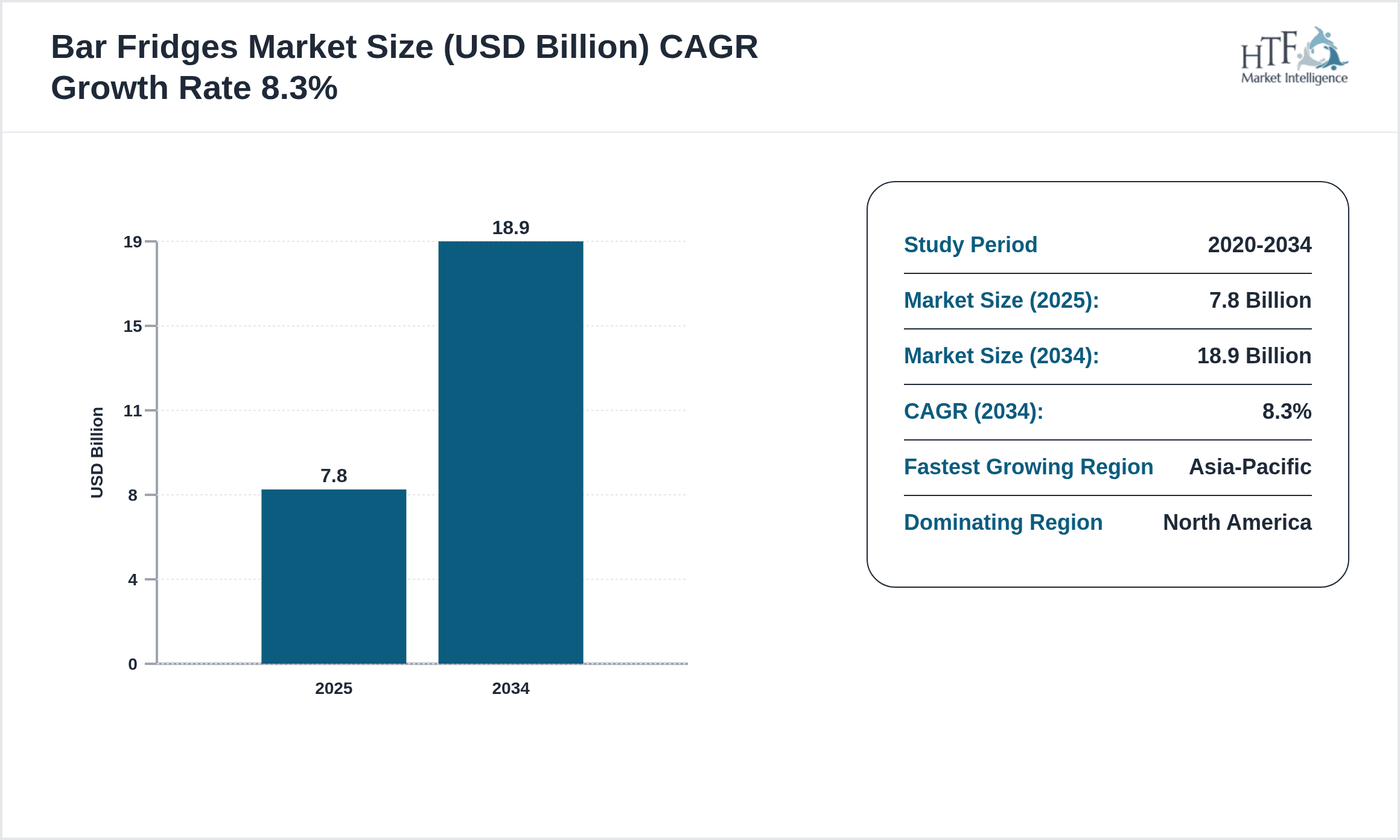
- •Key market highlights include a robust CAGR of 8.3% projected from 2024 to 2034, with the global market size expected to surge from USD 7.8 Billion in 2024 to USD 18.9 Billion by 2034. Freestanding bar fridges dominate the product segment, favored for their versatility and ease of installation, while portable bar fridges are the fastest-growing type due to increasing mobility and outdoor usage trends. Home use remains the leading application sector, closely followed by commercial and hospitality uses, reflecting the expanding demand in both residential and business contexts. North America holds the largest market share due to high consumer purchasing power and advanced retail infrastructure. Simultaneously, Asia-Pacific is anticipated to be the fastest-growing region, attributed to rapid urbanization, an expanding middle class, and growth in the hospitality industry. These growth drivers underscore a market environment ripe for innovation and competitive expansion across regions.
- •The strategic importance of the bar fridges market lies in its role as a facilitator of lifestyle convenience and its appeal to diverse consumer segments seeking compact cooling solutions. It offers significant value propositions for appliance manufacturers, retailers, and hospitality operators by providing multifunctional, energy-efficient, and aesthetically appealing products. The market’s evolution is closely linked to changing consumer preferences toward premiumization and smart home integration, fostering opportunities for product differentiation and technological advancements. Moreover, the market supports sustainable development goals through energy-saving innovations and recyclable materials, aligning with global environmental initiatives. Stakeholders can leverage these trends to enhance market penetration, capitalize on emerging regional demands, and foster long-term growth, making the bar fridges market a critical segment within the broader home and commercial appliance industry.
Competitive Landscape
The competitive environment in the global bar fridges market is characterized by intense rivalry among established multinational corporations and emerging regional players striving to capture market share through innovation, strategic partnerships, and expanded distribution networks. Market leaders focus heavily on product differentiation by investing in advanced cooling technologies, smart features such as Wi-Fi connectivity and app-based controls, and unique design aesthetics that cater to evolving consumer preferences. Pricing strategies vary widely, with premium segment players emphasizing quality and features, while value-oriented competitors compete on affordability and accessibility. Consolidation through mergers and acquisitions has become a prevalent strategy to enhance technological capabilities and broaden geographic reach. Distribution channels are diversified, including online platforms, specialty retailers, and large appliance chains, ensuring broad product availability. Regional competition is shaped by local consumer trends and regulatory environments, with Asia-Pacific emerging as a competitive hotspot due to rapid industrialization and increasing consumer spending. Future trends indicate a focus on sustainable manufacturing practices, customization, and integration with smart home ecosystems to maintain competitive advantages.
Leading Companies in Bar Fridges Market
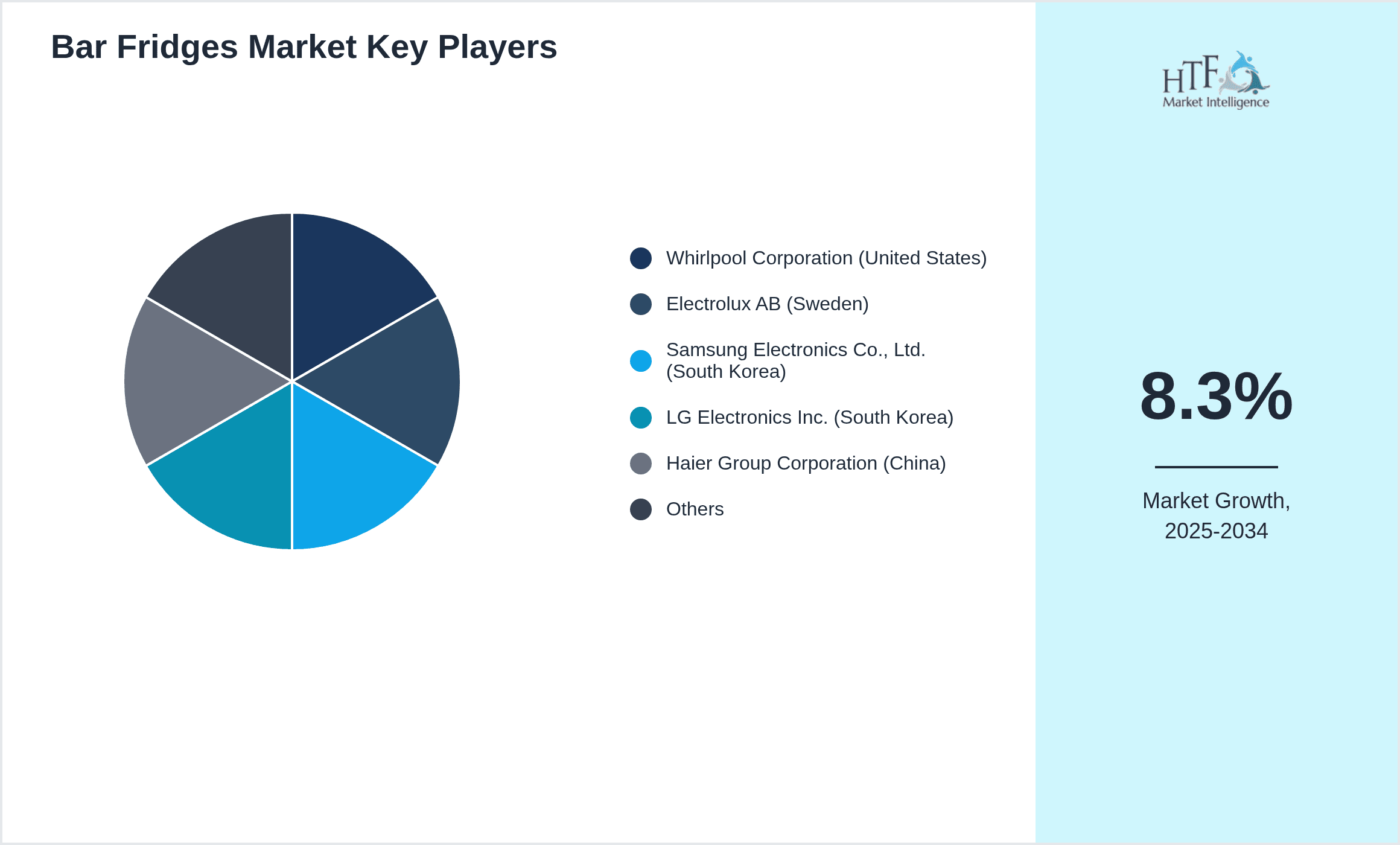
- •Whirlpool Corporation (United States)
- •Electrolux AB (Sweden)
- •Samsung Electronics Co., Ltd. (South Korea)
- •LG Electronics Inc. (South Korea)
- •Haier Group Corporation (China)
- •Bosch Siemens Hausgeräte (BSH) (Germany)
- •GE Appliances (United States)
- •Miele & Cie. KG (Germany)
- •Panasonic Corporation (Japan)
- •Fisher & Paykel Appliances Holdings (New Zealand)
- •Viking Range, LLC (United States)
- •Smeg S.p.A. (Italy)
- •Danby Products Ltd. (Canada)
- •Beko (Turkey)
- •Hisense Group (China)
- •Sharp Corporation (Japan)
- •Indesit Company (Italy)
- •Fujidenzo (Japan)
- •Kelvinator (United States)
- •Blomberg (Germany)
- •Arcelik A.S. (Turkey)
- •Midea Group Co., Ltd. (China)
- •GEA Group (Germany)
- •Sub-Zero Group, Inc. (United States)
- •BlueStar (United States)

Market Breakdown
- •By Product Type
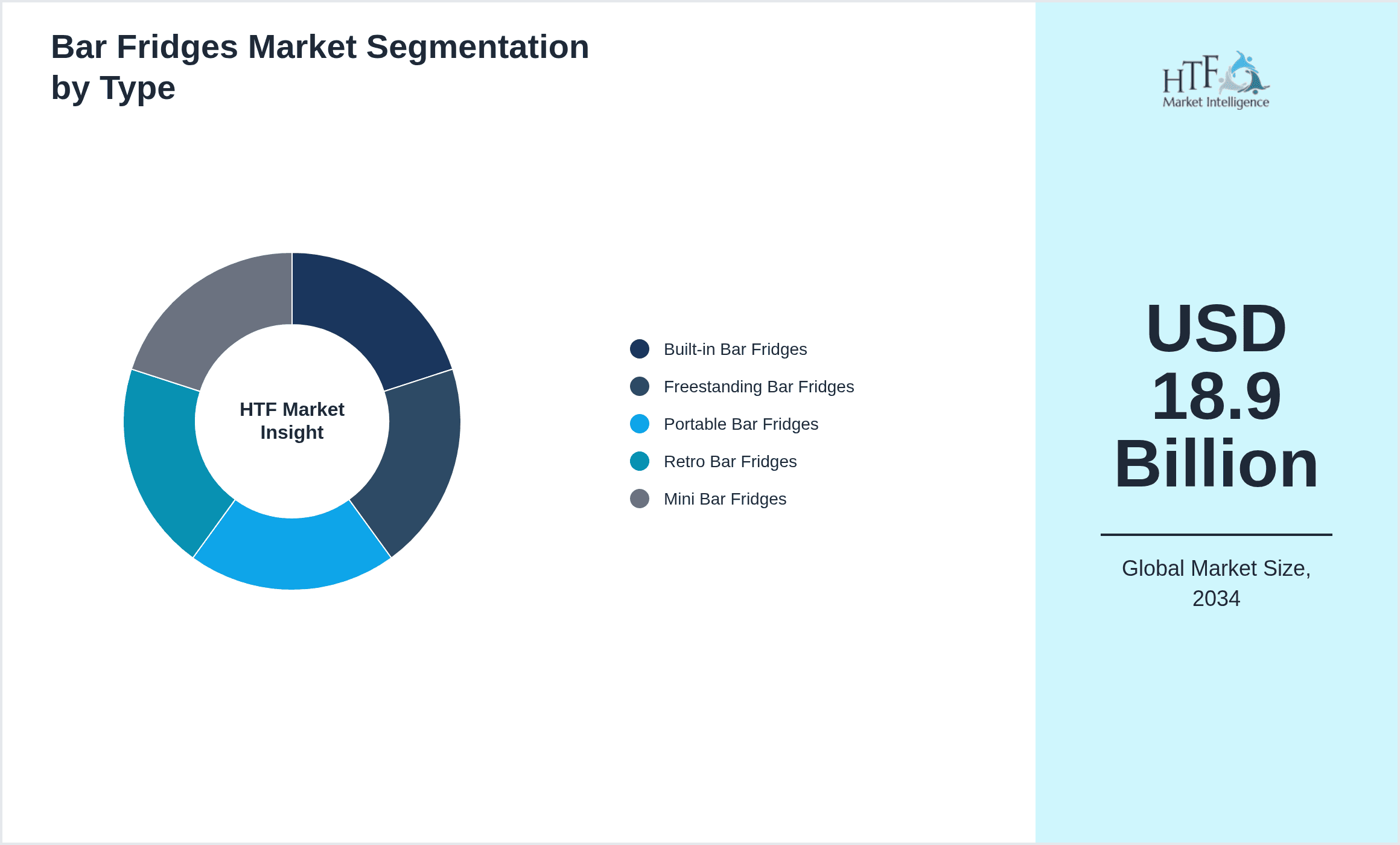
- ◦Built-in Bar Fridges
- ◦Freestanding Bar Fridges
- ◦Portable Bar Fridges
- ◦Retro Bar Fridges
- ◦Mini Bar Fridges
- •By Application
- ◦Home Use
- ◦Commercial Use
- ◦Outdoor Use
- ◦Hospitality
- ◦Others
- •By End-Use Industry
- ◦Residential
- ◦Hospitality & Tourism
- ◦Food & Beverage
- ◦Retail & Commercial
- •By Distribution Channel
- ◦Online Retail
- ◦Offline Retail
- ◦Specialty Stores
Growth Dynamics
The global bar fridges market is witnessing robust growth driven by increasing urbanization and evolving consumer lifestyles that demand compact and stylish refrigeration solutions. The surge in home remodeling and premium kitchen appliances fuels demand for built-in and freestanding bar fridges. Additionally, the hospitality sector's expansion, including bars and boutique hotels, is stimulating the need for versatile and efficient cooling units. Technological advancements such as energy-efficient compressors, smart controls, and eco-friendly refrigerants align with sustainability goals, attracting environmentally conscious customers. Moreover, the rising popularity of outdoor recreational activities and portable fridge options is creating new market segments. The combination of aesthetic appeal and functionality makes bar fridges an essential appliance, driving steady revenue growth globally. However, the market must continuously innovate to cater to changing consumer preferences and regulatory requirements, ensuring long-term demand sustainability.
Market Trends
One notable trend in the bar fridges market is the integration of smart technologies that enable remote temperature control, energy consumption monitoring, and maintenance alerts via mobile applications. This digital transformation enhances user convenience and appliance efficiency. Another emerging trend is the adoption of sustainable materials and natural refrigerants to reduce environmental impact, responding to stringent global regulations. The retro and vintage-style bar fridges are gaining popularity among consumers seeking nostalgic aesthetics combined with modern functionalities. Additionally, manufacturers are increasingly offering customizable options, allowing consumers to personalize colors and finishes to complement interior decor. The surge in e-commerce platforms has also shifted purchasing behavior, enabling wider accessibility and comparison shopping for bar fridges worldwide. Together, these trends indicate a market leaning towards innovation, sustainability, and personalization to meet diverse consumer demands.
Market Opportunities
The bar fridges market presents significant opportunities for expansion in emerging economies where rising disposable incomes and urban lifestyle adoption are fueling demand for premium home appliances. Innovations in energy-efficient and eco-friendly technologies offer manufacturers avenues to differentiate products and comply with evolving environmental standards. The growing trend of outdoor living spaces and recreational activities opens new potential for portable and weather-resistant bar fridge models. Collaborations between appliance companies and hospitality providers can lead to customized solutions tailored to commercial needs, enhancing market penetration. Additionally, leveraging digital marketing and e-commerce can increase brand visibility and customer reach globally. Addressing the demand for smart, connected appliances through IoT integration represents a strategic opportunity to capture tech-savvy consumers. These factors combined provide a fertile ground for sustained growth and competitive advantage.
Market Challenges
The global bar fridges market faces challenges including high production costs associated with advanced technologies and sustainable materials, which can limit affordability in price-sensitive regions. Supply chain disruptions and raw material price volatility further complicate manufacturing and distribution processes. Regulatory compliance with diverse environmental standards across regions requires continuous investment in research and development, posing financial and operational burdens. Intense competition from low-cost manufacturers offering basic models challenges premium brands to maintain market share. Additionally, consumer awareness gaps about product features and energy efficiency can hinder adoption of innovative models. The need to balance aesthetic appeal with functional performance demands ongoing design evolution, which increases development complexity. Addressing these challenges requires strategic planning, efficient resource management, and effective market communication to sustain growth.
Regulatory Framework
Between 2019 and 2024, regulatory updates affecting the bar fridges market have focused predominantly on energy efficiency and environmental sustainability. Key regulations such as the EU’s Ecodesign Directive and the U.S. Department of Energy’s minimum efficiency standards have mandated reduced energy consumption and the phasing out of harmful refrigerants. Compliance requirements include the adoption of natural refrigerants like isobutane and the implementation of rigorous testing and certification processes to ensure appliance efficiency. Additionally, regulations promoting the use of recyclable materials and reducing manufacturing waste have gained traction globally. These policies have driven manufacturers to innovate in design and technology to meet stringent criteria while maintaining product performance. Regulatory frameworks also emphasize consumer awareness through energy labeling programs, enabling informed purchase decisions. Overall, the landscape mandates continuous adaptation by industry players to align with evolving environmental objectives and to sustain market viability.
Market Intelligence
- •15th January 2025, Whirlpool Corporation launched a new line of smart portable bar fridges featuring Wi-Fi connectivity, app-based temperature control, and enhanced energy efficiency. Targeted at the outdoor and hospitality segments, these models incorporate eco-friendly refrigerants and customizable interiors to suit diverse needs. The launch aims to capitalize on growing demand for connected, sustainable appliances in both residential and commercial applications. Whirlpool's strategic focus on innovation and sustainability positions it to strengthen its market share globally and meet evolving consumer expectations. Source: Official Whirlpool Press Release.
- •10th March 2025, Electrolux AB introduced an advanced retro-style bar fridge equipped with inverter compressors and smart energy management systems, blending classic aesthetics with modern technology. This product targets niche markets seeking vintage design without compromising on performance or environmental compliance. The launch reflects Electrolux’s commitment to product diversification and sustainable innovation, addressing consumer trends towards personalization and energy efficiency. The initiative is expected to enhance Electrolux’s competitive positioning in Europe and North America. Source: Electrolux Corporate News.
- •5th June 2024, Samsung Electronics Co., Ltd. announced a strategic partnership with a leading hospitality chain to supply built-in bar fridges featuring IoT-enabled monitoring and maintenance systems. This collaboration aims to streamline appliance management, reduce operational costs, and improve guest experiences across multiple locations. Samsung’s integration of smart technology into commercial refrigeration solutions demonstrates the expanding role of connected devices in the hospitality industry, driving market growth and technology adoption. Source: Samsung Newsroom.
- •20th September 2024, LG Electronics Inc. completed the expansion of its manufacturing facility dedicated to portable bar fridges in Southeast Asia, increasing production capacity by 30%. This expansion supports rising demand in the Asia-Pacific region fueled by urbanization and outdoor lifestyle trends. LG’s investment underlines its strategic focus on regional growth and responsiveness to market dynamics. The enhanced capacity is expected to improve supply chain efficiency and reduce lead times. Source: LG Electronics Press Release.
Regional Outlook
The North America currently holds a significant share of the market, primarily due to several key factors: increasing consumption rates, a burgeoning population, and robust economic momentum. These elements collectively drive demand, positioning this region as a leader in the market. On the other hand, Asia-Pacific is rapidly emerging as the fastest-growing area within the industry. This remarkable growth can be attributed to swift infrastructure development, the expansion of various industrial sectors, and a marked increase in consumer demand. These dynamics make this region a crucial player in shaping future market growth.
In our report, we cover a comprehensive analysis of the following regions and countries:
- North America
- LATAM
- West Europe
- Central & Eastern Europe
- Northern Europe
- Southern Europe
- East Asia
- Southeast Asia
- South Asia
- Central Asia
- Oceania
- MEA
| Feature | Details |
|---|---|
| Base Year Market Size | USD 7.8 Billion |
| Forecast Year Market Size | USD 18.9 Billion |
| CAGR | 8.3% |
| Forecast Period | 2026 to 2033 |
| YoY Growth | 7.98% |
| Scope of Report | Market is segmented by Product Type (Built-in Bar Fridges, Freestanding Bar Fridges, Portable Bar Fridges, Retro Bar Fridges, Mini Bar Fridges), Application (Home Use, Commercial Use, Outdoor Use, Hospitality, Others), End-Use Industry (Residential, Hospitality & Tourism, Food & Beverage, Retail & Commercial), Distribution Channel (Online Retail, Offline Retail, Specialty Stores) |
| Regions Covered | North America, LATAM, West Europe, Central & Eastern Europe, Northern Europe, Southern Europe, East Asia, Southeast Asia, South Asia, Central Asia, Oceania, MEA |
| Key Companies | Whirlpool Corporation (United States), Electrolux AB (Sweden), Samsung Electronics Co., Ltd. (South Korea), LG Electronics Inc. (South Korea), Haier Group Corporation (China), Bosch Siemens Hausgeräte (BSH) (Germany), GE Appliances (United States), Miele & Cie. KG (Germany), Panasonic Corporation (Japan), Fisher & Paykel Appliances Holdings (New Zealand), Viking Range, LLC (United States), Smeg S.p.A. (Italy), Danby Products Ltd. (Canada), Beko (Turkey), Hisense Group (China), Sharp Corporation (Japan), Indesit Company (Italy), Fujidenzo (Japan), Kelvinator (United States), Blomberg (Germany), Arcelik A.S. (Turkey), Midea Group Co., Ltd. (China), GEA Group (Germany), Sub-Zero Group, Inc. (United States), BlueStar (United States) |
Global Bar Fridges Market Size, Growth & Revenue 2024-2034 - Table of Contents
Research enthusiast focused on transforming data uncovering into actionable insights through data-driven decision-making.
Frequently Asked Questions (FAQ):
The Market market is projected to grow at a steady CAGR from 2025 to 2030, driven by increasing demand and expansion in various applications.
North America currently leads the market, followed by Europe and Asia-Pacific.
Key growth drivers include increasing activities, rising demand for innovative solutions, technological advancements, and growing preference for efficient products.