
Global Camera Rolling Bag Market Size, Growth & Revenue 2024-2034
Global Camera Rolling Bag Market is segmented by Product Type (Hard Case, Soft Case, Hybrid Case, Waterproof Case, Lightweight Case), Application (Professional Photography, Amateur Photography, Videography, Travel, Wildlife), End-User (Professional Photographers, Hobbyists, Content Creators, Travel Enthusiasts), Distribution Channel (Retail Stores, E-commerce, Specialty Photography Stores), and Geography (North America, LATAM, West Europe, Central & Eastern Europe, Northern Europe, Southern Europe, East Asia, Southeast Asia, South Asia, Central Asia, Oceania, MEA)
Pricing
Report Overview
Executive Summary
- •The global Camera Rolling Bag market includes the production and distribution of rolling bags specifically designed to carry and protect camera equipment for professional photographers, hobbyists, and videographers. These bags are engineered to provide easy mobility, enhanced protection, and ergonomic comfort, with various types such as hard cases, soft cases, hybrids, waterproof and lightweight models tailored to diverse user needs and environments. Applications cover professional photography, amateur photography, videography, travel, and wildlife photography, reflecting the broad scope of users requiring reliable transport solutions. The market is influenced by technological innovations in materials and design, growing content creation globally, and expanding travel and tourism sectors. Distribution channels span brick-and-mortar retail, e-commerce platforms, and specialty photography stores, ensuring widespread accessibility. As the photography and videography sectors evolve with digitalization and social media proliferation, demand for durable, functional camera rolling bags continues to increase, positioning this market as a vital accessory segment within the global imaging industry.
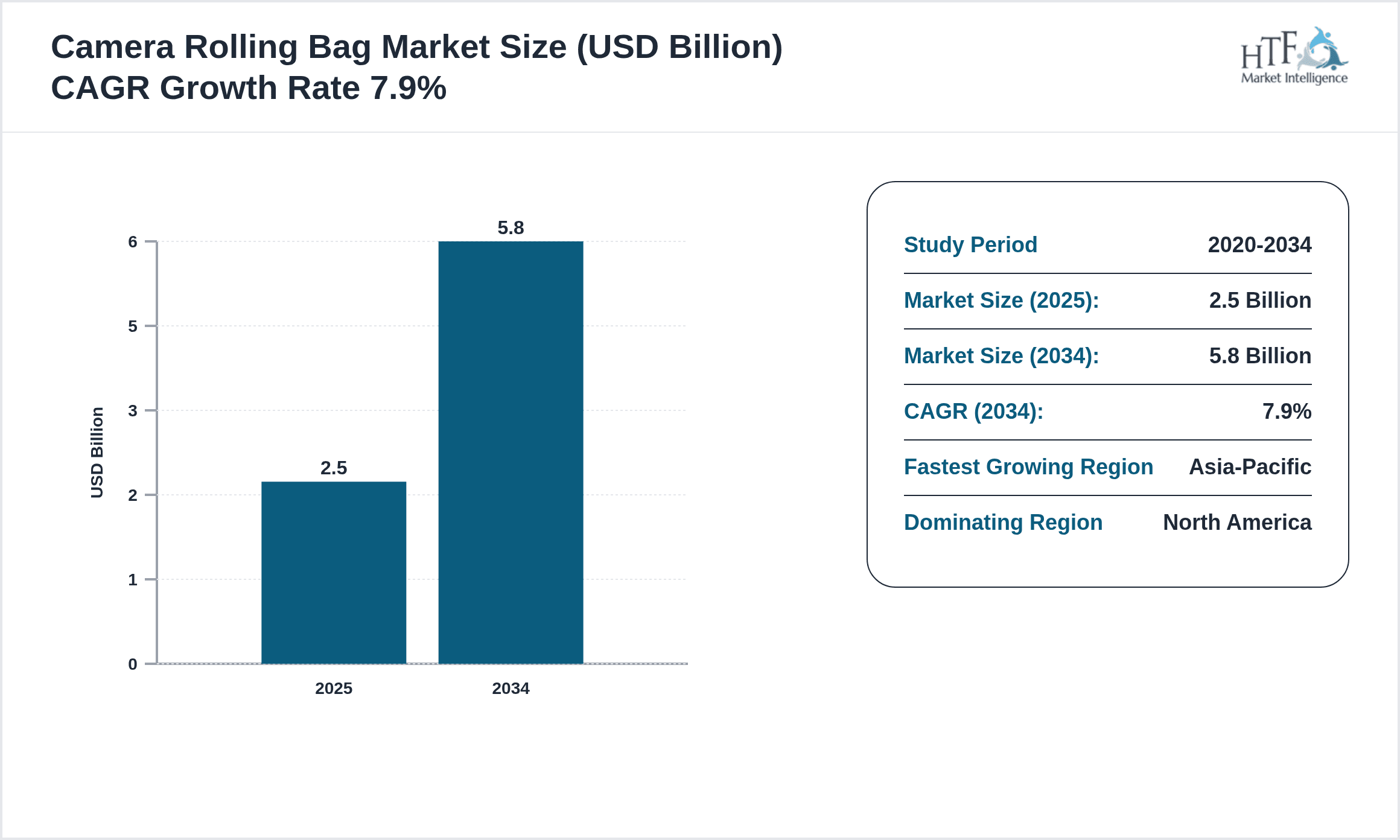
- •Key market highlights reveal a base market size of USD 2.5 Billion in 2024, with projections indicating growth to USD 5.8 Billion by 2034 at a CAGR of 7.9%. The North American region currently dominates the market, driven by high consumer spending and professional photography demand, while Asia-Pacific is the fastest-growing region due to rising content creators and increasing travel activities. Hard cases remain the leading product type, offering superior protection, whereas waterproof cases are witnessing rapid adoption. Applications in professional and amateur photography collectively represent the largest market share, reflecting broad user engagement. The market exhibits steady year-over-year growth fueled by technological advancements and expanding e-commerce channels.
- •The value proposition of the Camera Rolling Bag market lies in its strategic importance to photographers, videographers, travelers, and wildlife enthusiasts who require reliable, durable, and ergonomic solutions for camera transport. The market supports the imaging industry's growth by providing essential accessories that enhance equipment safety and mobility. Stakeholders including manufacturers, retailers, and distributors benefit from expanding content creation trends, increasing outdoor activities, and rising consumer awareness about gear protection. Moreover, innovations in materials and design continue to drive product differentiation, fostering competitive advantages and expanding market reach globally.
Competitive Landscape
The competitive landscape of the global Camera Rolling Bag market is characterized by intense rivalry among established global and regional manufacturers focusing on innovation, quality, and brand differentiation. Market players compete through advanced material integration, ergonomic design improvements, and incorporation of features such as waterproofing and modular compartments. Strategic partnerships with camera manufacturers and e-commerce platforms enhance distribution reach and customer engagement. Pricing strategies vary from premium offerings with high durability to cost-effective solutions targeting amateur users. Additionally, mergers and acquisitions foster market consolidation, enabling companies to expand product portfolios and geographic coverage. Regional competition is influenced by consumer preferences and local manufacturing capabilities, with Asia-Pacific emerging as a battleground for innovation-driven growth. The market’s competitive dynamics are further shaped by evolving consumer trends, digital marketing strategies, and sustainability initiatives, positioning innovation and customer-centric approaches as key success factors.
Key Participants in Camera Rolling Bag Market
- •Case Logic (United States)
- •Lowepro (United States)
- •Manfrotto (Italy)
- •Vanguard (Hong Kong)
- •Think Tank Photo (United States)
- •Tamrac (United States)
- •Pelican Products (United States)
- •AmazonBasics (United States)
- •Godox (China)
- •Tamron (Japan)
- •Benro (China)
- •Crumpler (Australia)
- •Gura Gear (United States)
- •Kelly Moore (United States)
- •F-Stop Gear (United States)
- •Shimoda Designs (United States)
- •Billingham (United Kingdom)
- •Peak Design (United States)
- •Tenba (United States)
- •Porta Brace (United States)
- •Pelican-Hardigg (United States)
- •G-Technology (United States)
- •Domke (United States)
- •ONA Bags (United States)
- •Shimoda (United States)
Market Breakdown
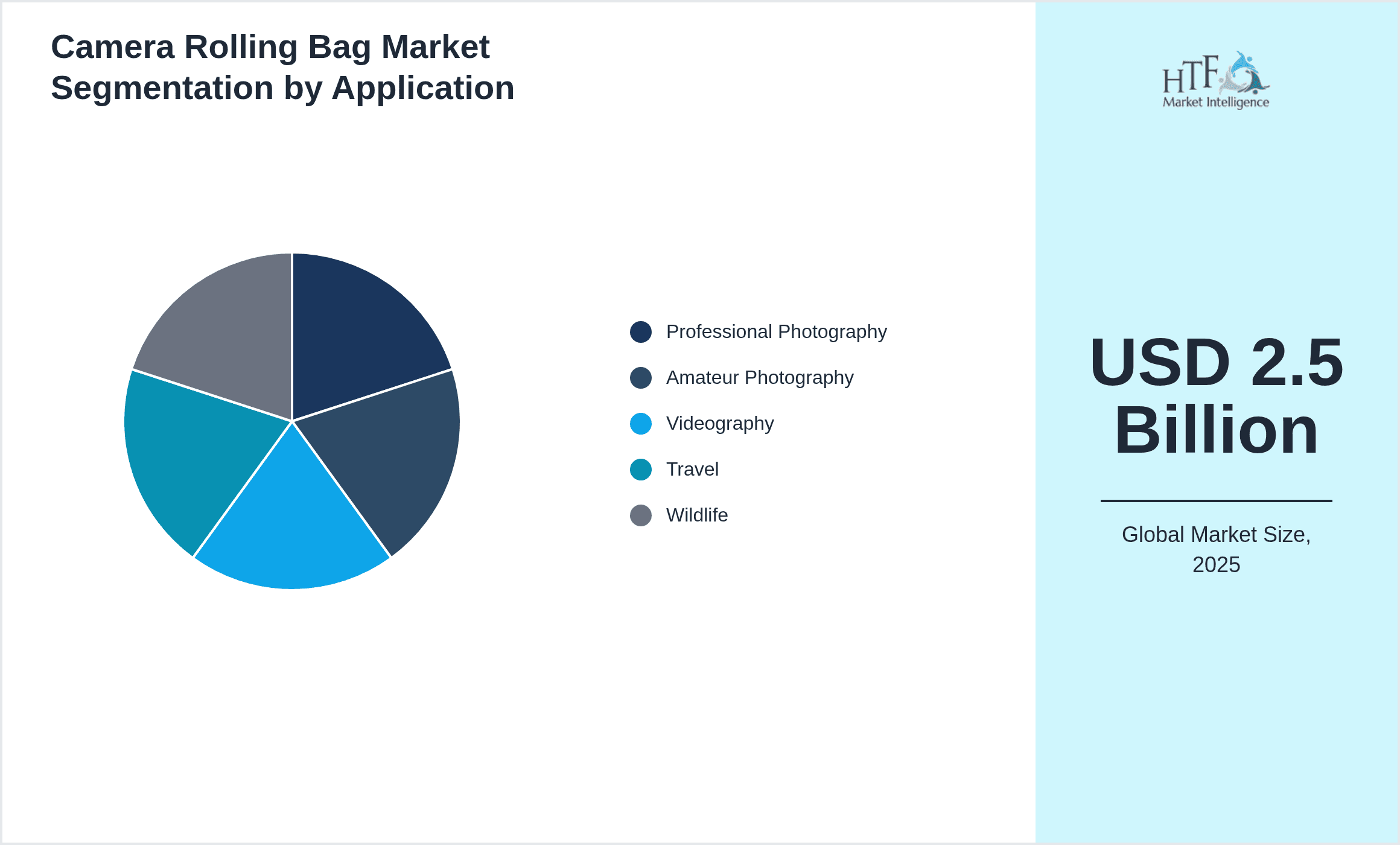
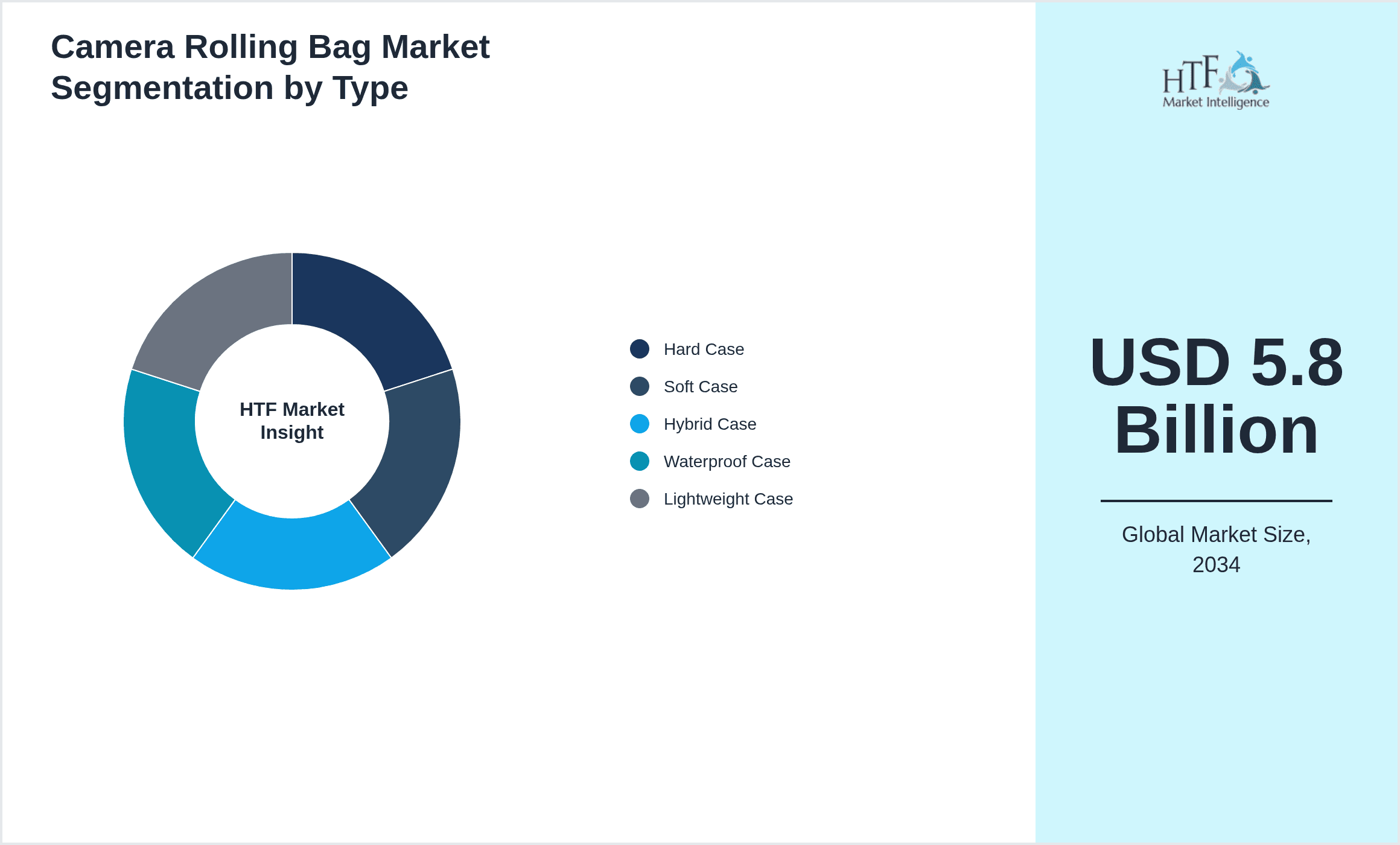
- •By Product Type
- ◦Hard Case
- ◦Soft Case
- ◦Hybrid Case
- ◦Waterproof Case
- ◦Lightweight Case
- •By Application
- ◦Professional Photography
- ◦Amateur Photography
- ◦Videography
- ◦Travel
- ◦Wildlife
- •By End-User
- ◦Professional Photographers
- ◦Hobbyists
- ◦Content Creators
- ◦Travel Enthusiasts
- •By Distribution Channel
- ◦Retail Stores
- ◦E-commerce
- ◦Specialty Photography Stores
Growth Dynamics
- •Rising global content creation and social media usage have spurred demand for durable and portable camera rolling bags, especially among professional and amateur photographers who require mobility combined with equipment protection.
- •Technological advancements in lightweight, waterproof, and impact-resistant materials have enhanced product features, attracting users seeking reliable protection under diverse environmental conditions.
- •Expansion of e-commerce platforms has broadened market access, enabling manufacturers to reach wider audiences with customized offerings and competitive pricing strategies.
- •Increasing travel and adventure tourism globally have driven demand for versatile camera rolling bags suitable for rugged terrains and long-distance transport.
- •Growing professional photography sectors in emerging markets, supported by rising disposable incomes, have created new growth avenues for premium and specialized camera rolling bags.
- •Sustainability trends have encouraged manufacturers to adopt eco-friendly materials, appealing to environmentally conscious consumers and enhancing brand value.
- •Collaborations between camera equipment manufacturers and bag producers have fostered innovation and product bundling, enhancing customer convenience and loyalty.
Market Trends
- •Integration of smart features such as GPS tracking and USB charging ports in camera rolling bags is gaining traction, improving user convenience and security during transport.
- •Customization and modular design trends enable photographers to adapt bag interiors according to specific equipment needs, driving consumer preference for personalized solutions.
- •Sustainability-focused materials like recycled fabrics and biodegradable components are becoming standard, aligning with global environmental goals and consumer demand.
- •Collaborative marketing campaigns between camera bag brands and professional photographers help drive brand awareness and validate product performance claims.
- •Increasing demand for compact and lightweight rolling bags suitable for urban photography and travel is shaping product development pipelines.
- •Expansion of online communities and influencer partnerships accelerates product adoption by engaging niche consumer segments and fostering brand loyalty.
- •Emerging markets show growing preference for mid-range priced rolling bags, balancing quality and affordability, thus expanding the customer base.
Market Opportunities
- •Untapped emerging markets in Asia-Pacific and Latin America present significant growth potential due to increasing photography activities and rising disposable incomes.
- •Development of smart rolling bags with integrated technology offers innovation opportunities to differentiate products and address evolving consumer demands.
- •Collaborations with camera manufacturers for co-branded products can enhance market penetration and consumer trust in product quality and compatibility.
- •Expansion into niche applications such as wildlife and adventure photography with specialized rugged rolling bags can capture high-value market segments.
- •Growth in e-commerce and direct-to-consumer sales channels allows for personalized marketing and reduced distribution costs, improving profitability.
- •Adoption of eco-friendly and sustainable materials aligns with consumer preferences and regulatory trends, offering competitive advantages.
- •Product diversification through modular and customizable designs can increase customer satisfaction and repeat purchases.
Market Challenges
- •High production costs associated with premium materials and advanced features can limit affordability and restrict market penetration in price-sensitive regions.
- •Intense competition from established brands and low-cost regional manufacturers creates pricing pressure and challenges differentiation efforts.
- •Supply chain disruptions and raw material price volatility impact manufacturing timelines and increase operational costs.
- •Rapid technological changes require continuous innovation investments, posing challenges for smaller players with limited R&D budgets.
- •Regulatory compliance related to environmental standards and product safety varies by region, complicating international market entry and operations.
- •Consumer preference shifts towards digital storage and lightweight gear may reduce demand for traditional bulky rolling bags.
- •Limited awareness in emerging markets about specialized camera rolling bags reduces adoption rates despite growing photography activities.
Regulatory Framework
- •Between 2019 and 2024, global environmental regulations increasingly mandated the use of recyclable and sustainable materials in consumer goods manufacturing, compelling camera rolling bag producers to adopt eco-friendly fabrics and reduce plastic usage.
- •Product safety standards introduced in key markets require rigorous testing for durability, impact resistance, and chemical safety, influencing design and material selection in camera rolling bags.
- •Region-specific regulations, such as the EU’s REACH and RoHS directives, have imposed restrictions on hazardous substances, necessitating compliance for market access within Europe.
- •In North America, labeling and consumer information laws have been strengthened, requiring transparent disclosure of material composition and manufacturing processes.
- •Government incentives for sustainable manufacturing practices have encouraged investment in green technologies, enabling manufacturers to innovate while meeting regulatory demands.
Market Intelligence
- •15th January 2025, Peak Design launched the ‘Travel Line Rolling Camera Bag’ featuring modular interior dividers, weatherproof materials, and seamless integration with their camera straps and accessories. Targeted at professional photographers and travel enthusiasts, this product enhances gear protection and portability while maintaining style and functionality. The launch included a global marketing campaign emphasizing durability and ergonomic design, positioning the product competitively in premium segments. This strategic move aims to capture growing demand in adventure and travel photography markets. Source: Peak Design Official Website
- •7th March 2025, Lowepro introduced the ‘Pro Roller X300 AW II’, a waterproof and impact-resistant rolling camera bag designed for high-performance videographers and photographers. Incorporating advanced materials such as thermoplastic elastomers and enhanced wheel suspension systems, it offers superior mobility and protection on rugged terrains. The launch supports Lowepro’s expansion strategy in Asia-Pacific with targeted promotions through e-commerce channels, responding to increasing regional demand. This product innovation strengthens Lowepro’s leadership in the professional segment. Source: Lowepro Press Release
- •22nd May 2024, Manfrotto announced a strategic partnership with a leading outdoor equipment retailer to co-develop a new line of hybrid rolling camera bags combining lightweight design with rugged durability. This collaboration aims to leverage both companies’ strengths to capture the growing market of outdoor and wildlife photographers seeking versatile gear solutions. The products are expected to launch in late 2025 across North America and Europe, enhancing Manfrotto’s market presence and customer reach. Source: Manfrotto Corporate Announcement
- •30th November 2024, AmazonBasics expanded its product portfolio by launching an affordable rolling camera bag targeting amateur photographers and content creators. Featuring customizable padded compartments and durable wheels, the product is positioned to increase accessibility for price-sensitive consumers globally. This launch coincides with Amazon’s investment in logistics and marketing to solidify its position in the camera accessories market via e-commerce dominance. Source: Amazon Corporate Blog
Regional Outlook
The North America currently holds a significant share of the market, primarily due to several key factors: increasing consumption rates, a burgeoning population, and robust economic momentum. These elements collectively drive demand, positioning this region as a leader in the market. On the other hand, Asia-Pacific is rapidly emerging as the fastest-growing area within the industry. This remarkable growth can be attributed to swift infrastructure development, the expansion of various industrial sectors, and a marked increase in consumer demand. These dynamics make this region a crucial player in shaping future market growth.
In our report, we cover a comprehensive analysis of the following regions and countries:
- North America
- LATAM
- West Europe
- Central & Eastern Europe
- Northern Europe
- Southern Europe
- East Asia
- Southeast Asia
- South Asia
- Central Asia
- Oceania
- MEA
| Feature | Details |
|---|---|
| Base Year Market Size | USD 2.5 Billion |
| Forecast Year Market Size | USD 5.8 Billion |
| CAGR | 7.9% |
| Forecast Period | 2026 to 2033 |
| YoY Growth | 7.6% |
| Scope of Report | Market is segmented by Product Type (Hard Case, Soft Case, Hybrid Case, Waterproof Case, Lightweight Case), Application (Professional Photography, Amateur Photography, Videography, Travel, Wildlife), End-User (Professional Photographers, Hobbyists, Content Creators, Travel Enthusiasts), Distribution Channel (Retail Stores, E-commerce, Specialty Photography Stores) |
| Regions Covered | North America, LATAM, West Europe, Central & Eastern Europe, Northern Europe, Southern Europe, East Asia, Southeast Asia, South Asia, Central Asia, Oceania, MEA |
| Key Companies | Untapped emerging markets in Asia-Pacific and Latin America present significant growth potential due to increasing photography activities and rising disposable incomes., Development of smart rolling bags with integrated technology offers innovation opportunities to differentiate products and address evolving consumer demands., Collaborations with camera manufacturers for co-branded products can enhance market penetration and consumer trust in product quality and compatibility., Expansion into niche applications such as wildlife and adventure photography with specialized rugged rolling bags can capture high-value market segments., Growth in e-commerce and direct-to-consumer sales channels allows for personalized marketing and reduced distribution costs, improving profitability., Adoption of eco-friendly and sustainable materials aligns with consumer preferences and regulatory trends, offering competitive advantages., Product diversification through modular and customizable designs can increase customer satisfaction and repeat purchases. |
Global Camera Rolling Bag Market Size, Growth & Revenue 2024-2034 - Table of Contents
Multidisciplinary researcher with 10+ years of experience uncovering insights across diverse domains focused on uncovering insights that drive informed decisions.
Frequently Asked Questions (FAQ):
The Compact Track Loaders market is projected to grow at a CAGR of 6.8% from 2025 to 2030, driven by increasing demand in construction and agricultural sectors.
North America currently leads the market with approximately 45% market share, followed by Europe at 28% and Asia-Pacific at 22%. The remaining regions account for 5% of the global market.
Key growth drivers include increasing construction activities, rising demand for versatile equipment in agriculture, technological advancements in track loader design, and growing preference for compact equipment in urban construction projects.