
Global Fireplace Fans Market Size, Growth & Revenue 2024-2034
Global Fireplace Fans Market is segmented by Product Type (Electric Fireplace Fans, Battery Operated Fireplace Fans, Manual Fireplace Fans, Solar Fireplace Fans, Hybrid Fireplace Fans), Application (Residential, Commercial, Industrial, Outdoor, Decorative), End-Use Industry (Home Heating, Hospitality, Retail, Manufacturing), Distribution Channel (Specialty Retailers, E-commerce, Direct Sales), and Geography (North America, LATAM, West Europe, Central & Eastern Europe, Northern Europe, Southern Europe, East Asia, Southeast Asia, South Asia, Central Asia, Oceania, MEA)
Pricing
Report Overview
Executive Summary
- •The Global Fireplace Fans Market is defined by the production and distribution of devices that improve the heat circulation efficiency of fireplaces, optimizing warmth dispersal in various indoor and outdoor environments. These fans operate through multiple power sources including electric, battery-operated, manual, solar, and hybrid mechanisms, serving residential, commercial, industrial, outdoor, and decorative applications. The market's boundaries span product innovation, material quality, energy efficiency, and user convenience, with increasing integration of smart technologies to meet evolving consumer demands. Advancements in sustainable power options such as solar and hybrid fans reflect the industry's response to heightened environmental awareness and regulatory pressures. Distribution channels encompass specialty retailers, online platforms, and direct sales, ensuring product accessibility worldwide. The market's primary use cases involve enhancing fireplace efficiency, reducing energy consumption, and improving indoor air quality, making fireplace fans a critical accessory for modern heating systems globally. This comprehensive market analysis covers segmentation, competitive landscape, growth dynamics, trends, challenges, opportunities, and regulatory frameworks shaping the industry's trajectory through 2034.
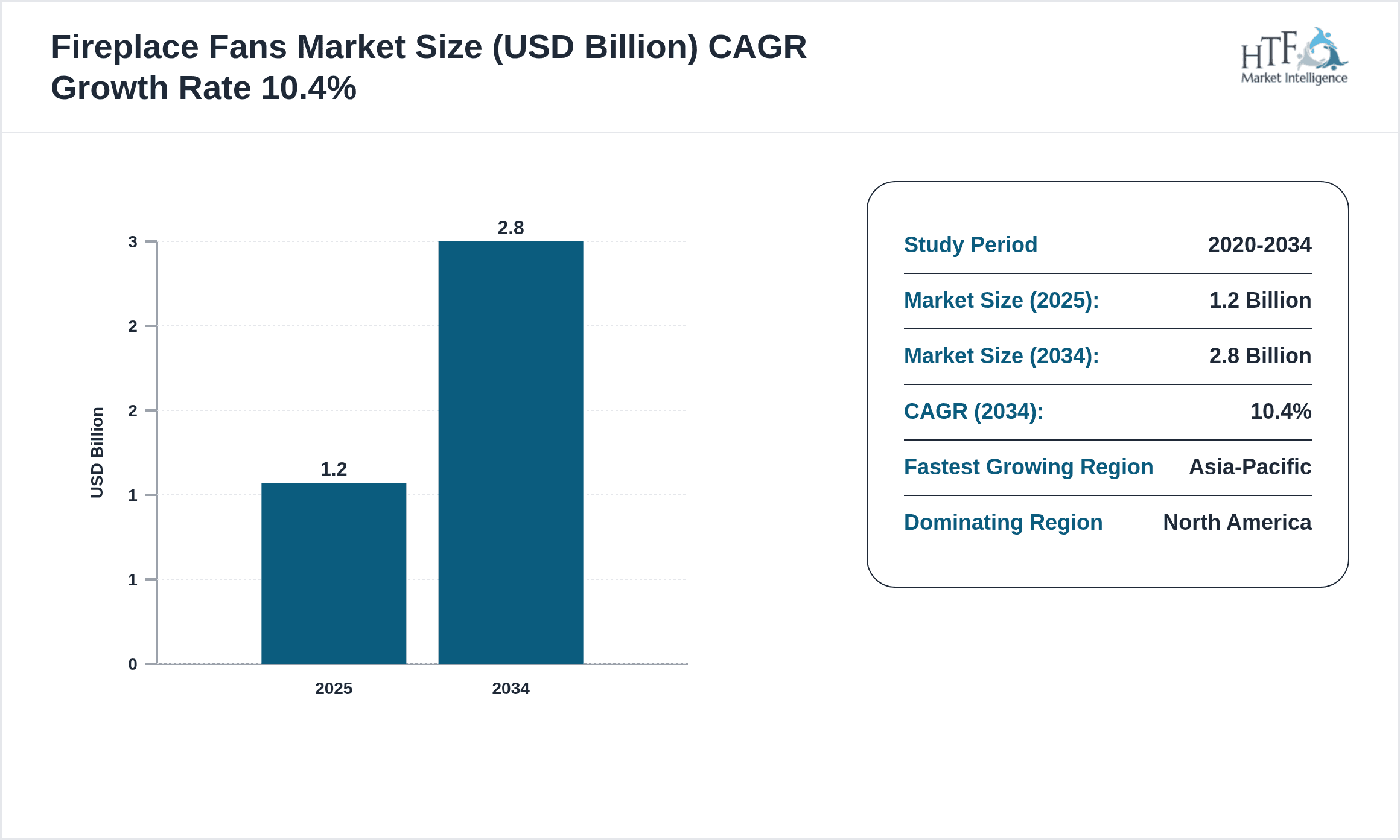
- •Market highlights reveal a robust growth trajectory with an expected CAGR of 10.4% between 2025 and 2034, driven largely by the increasing adoption of electric and solar-powered fireplace fans. The base market valuation of USD 1.2 billion in 2025 is forecasted to more than double, reaching USD 2.8 billion by 2034, reflecting widespread consumer and commercial acceptance. North America currently dominates the market, supported by high disposable incomes and advanced technological adoption, whereas Asia-Pacific emerges as the fastest-growing region, fueled by rapid urbanization and rising environmental consciousness. Key growth indicators include enhanced energy efficiency standards, technological innovation, and expanding distribution networks. The market also benefits from a rising trend toward sustainable heating solutions, contributing to increased demand for solar and hybrid fans. These data points underscore significant market potential and highlight strategic opportunities for stakeholders aiming to capitalize on evolving consumer preferences and regulatory environments worldwide.
- •The value proposition of the Global Fireplace Fans Market lies in its capacity to provide efficient heat distribution, reduce energy consumption, and enhance user comfort across diverse applications. Stakeholders including manufacturers, distributors, and end-users benefit from advancements in fan technology that combine functionality with sustainability. The market holds strategic importance for industries focused on home heating, commercial facility management, and energy-efficient product development. Innovations such as smart fan controls and renewable energy integration position fireplace fans as key contributors to reducing carbon footprints and operational costs. Additionally, the expanding global awareness of indoor air quality and thermal comfort propels demand, creating new avenues for product differentiation and market penetration. These factors collectively emphasize the market’s relevance in advancing energy-efficient heating solutions and fostering sustainable living environments internationally.
Competitive Landscape
The Global Fireplace Fans Market is characterized by intense competition among established multinational corporations and emerging regional players, each striving to enhance market share through innovation, strategic partnerships, and diversified product portfolios. Market leaders focus on developing energy-efficient, low-noise, and smart-enabled fans to meet evolving customer demands and regulatory standards. Competitive strategies include investing in R&D for advanced materials and sustainable energy sources, aggressive marketing campaigns, and expanding distribution networks to penetrate emerging markets. Rivalry is further intensified by price competitiveness and the introduction of differentiated designs catering to residential and commercial segments. Mergers and acquisitions have played a pivotal role in consolidating market presence and enhancing technological capabilities, enabling companies to offer comprehensive solutions. The competitive environment also reflects regional dynamics, with North American and European firms leading in innovation, while Asia-Pacific players leverage cost advantages and growing domestic demand. Future trends indicate increasing collaboration across the value chain, emphasizing sustainability and digital transformation as key competitive differentiators.
Prominent Players in Fireplace Fans Market
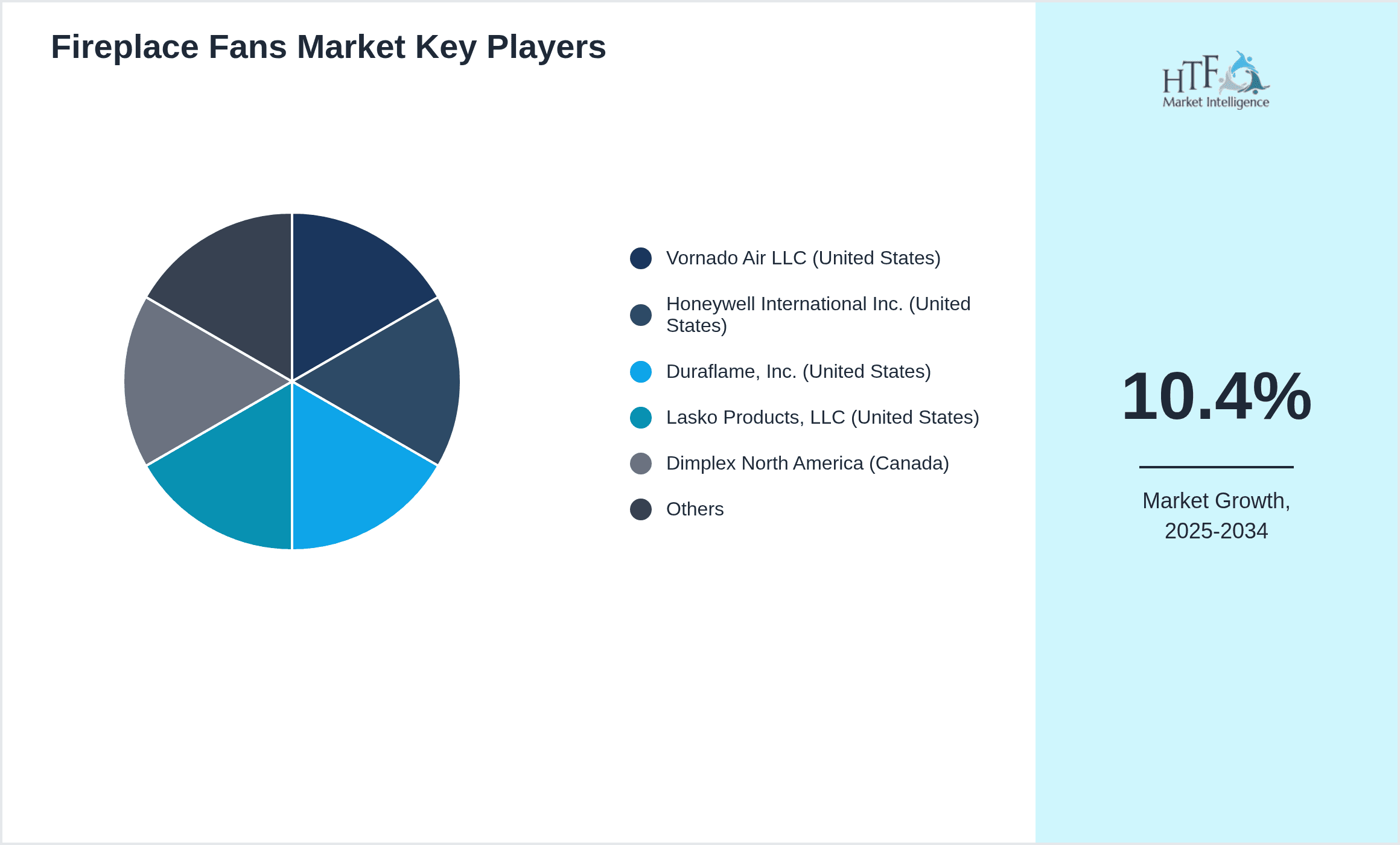
- •Vornado Air LLC (United States)
- •Honeywell International Inc. (United States)
- •Duraflame, Inc. (United States)
- •Lasko Products, LLC (United States)
- •Dimplex North America (Canada)
- •Hunter Fan Company (United States)
- •Fanimation Inc. (United States)
- •Dyson Ltd. (United Kingdom)
- •Westinghouse Electric Corporation (United States)
- •Meadow Creek Manufacturing, Inc. (United States)
- •Ecofan (Canada)
- •Harman Stove Company (United States)
- •Minka Group (United States)
- •Stovax Heating Group (United Kingdom)
- •Emberglow Products, LLC (United States)
- •Faber Fireplaces (Netherlands)
- •Flame Sense Technologies (United States)
- •Vogelzang Company (United States)
- •Pleasant Hearth (United States)
- •Duravent Inc. (United States)
- •Morso A/S (Denmark)
- •Breeo Stove Company (United States)
- •ABX Feuer Design GmbH (Germany)
- •Solartigo GmbH (Germany)
- •Hudson Reed Group (United Kingdom)
Market Breakdown
- •By Product Type
- ◦Electric Fireplace Fans
- ◦Battery Operated Fireplace Fans
- ◦Manual Fireplace Fans
- ◦Solar Fireplace Fans
- ◦Hybrid Fireplace Fans
- •By Application
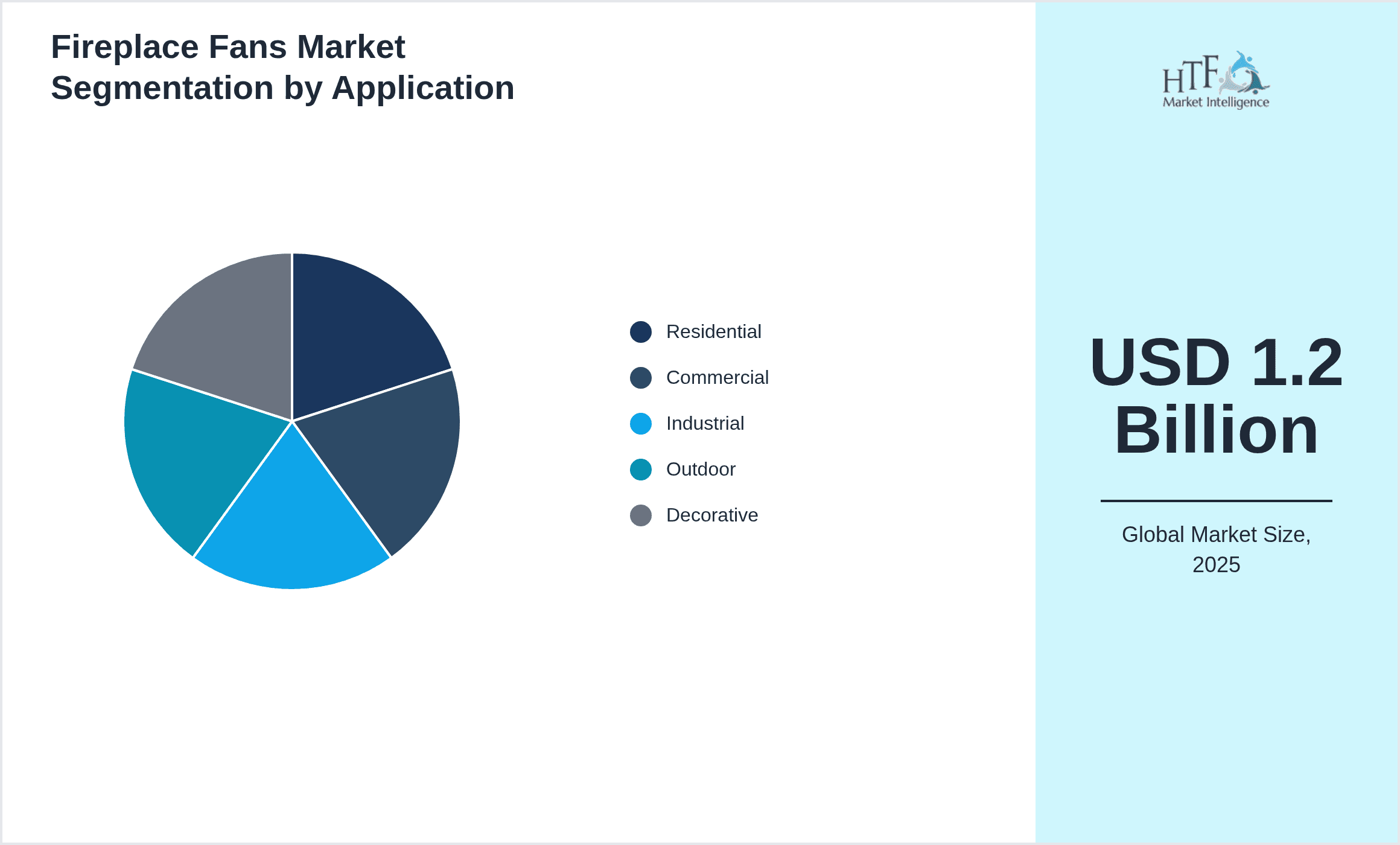
- ◦Residential
- ◦Commercial
- ◦Industrial
- ◦Outdoor
- ◦Decorative
- •By End-Use Industry
- ◦Home Heating
- ◦Hospitality
- ◦Retail
- ◦Manufacturing
- •By Distribution Channel
- ◦Specialty Retailers
- ◦E-commerce
- ◦Direct Sales
Growth Dynamics
- •The global fireplace fans market growth is propelled by heightened consumer awareness regarding energy efficiency and indoor air quality, driving demand for advanced fans that optimize heat distribution while reducing energy consumption. Innovations in electric and solar-powered fans have facilitated adoption across residential and commercial segments, enabling year-round usage and enhanced thermal comfort. Additionally, rising urbanization and construction activities in emerging markets contribute to expanding the user base, particularly in Asia-Pacific and Latin America. Government initiatives promoting sustainable heating solutions further incentivize market growth, supported by favorable regulations and subsidies for eco-friendly appliances. The integration of smart home technologies also spurs demand for connected fireplace fans capable of remote operation and energy monitoring. This complex interplay of technological advancement, regulatory support, and consumer preference signals a robust growth trajectory, positioning the market for significant expansion through 2034.
- •Environmental consciousness among consumers and businesses fuels the increasing trend towards adopting renewable energy-powered fireplace fans, with solar and hybrid models gaining traction due to their sustainability and cost-effectiveness. Market players are investing in research to enhance fan efficiency, reduce noise levels, and incorporate smart features such as automated speed control and integration with home automation systems. The growing preference for aesthetically pleasing and multifunctional designs also shapes product development strategies. Digital sales channels have expanded accessibility, enabling manufacturers to reach wider audiences globally. Moreover, collaborations between technology providers and appliance manufacturers foster innovation, creating differentiated offerings that appeal to environmentally conscious and tech-savvy consumers. These trends collectively indicate a dynamic market landscape driven by sustainability, innovation, and evolving consumer lifestyles.
- •Despite positive growth prospects, the fireplace fans market faces restraints including relatively high initial costs for advanced solar and hybrid models, which may limit adoption in price-sensitive markets. Additionally, competition from alternative heating technologies such as heat pumps and central heating systems poses challenges to market expansion. Technical limitations related to fan durability under extreme weather conditions and maintenance requirements affect user experience. Regulatory constraints and varying standards across regions complicate product certification and market entry. Furthermore, supply chain disruptions and raw material cost fluctuations impact production and pricing stability. These factors collectively restrain market growth, necessitating strategic adaptations by manufacturers to address cost efficiency, technology reliability, and regulatory compliance to sustain competitiveness.
- •Emerging opportunities in the fireplace fans market include expanding penetration in developing economies where increasing construction activities and rising disposable incomes create demand for energy-efficient heating solutions. The rising trend of smart homes presents avenues for integrating fireplace fans with IoT-enabled systems, enhancing user convenience and energy management. Innovations in renewable energy integration, especially solar-powered fans, offer significant growth potential aligned with global sustainability goals. Collaborations between manufacturers and technology firms can accelerate product innovation and market reach. Additionally, the growing popularity of outdoor living spaces and decorative fireplaces opens new application segments. Strategic geographic expansion into untapped markets and diversification of product portfolios to include multi-functional fans can provide competitive advantages and revenue growth.
- •Key challenges hindering the fireplace fans market include the fragmented competitive landscape with many small-scale manufacturers limiting economies of scale and innovation capacity. Consumer hesitance due to lack of awareness about the benefits of fireplace fans restricts market penetration, especially in emerging markets. Technical challenges such as noise generation and limited battery life in portable models affect user satisfaction. Regulatory uncertainties and delays in certification processes create barriers to timely product launches. Additionally, the market contends with the seasonal nature of fireplace use, impacting sales consistency. Addressing these challenges requires focused marketing efforts, technological advancements to improve product reliability, and streamlined regulatory pathways to foster market growth.

Market Trends
- •The global fireplace fans market is witnessing a significant trend towards the adoption of solar-powered and hybrid fans, driven by increasing environmental awareness and government incentives promoting renewable energy solutions. These fans offer cost savings and reduced carbon emissions, making them attractive options for eco-conscious consumers and businesses.
- •Smart technology integration is reshaping the market, with manufacturers introducing fireplace fans equipped with IoT-enabled controls, remote operation capabilities, and energy consumption monitoring. This trend enhances user convenience and aligns with the broader smart home ecosystem development.
- •Product design innovation focusing on aesthetics and multifunctionality is gaining momentum, as consumers seek fireplace fans that complement interior decor while providing efficient heat circulation. This has led to the development of customizable fan blades, finishes, and silent operation features.
- •E-commerce platforms are becoming dominant distribution channels, expanding market reach and providing consumers with greater product variety and competitive pricing. This digital shift also facilitates direct manufacturer-to-consumer sales, enhancing profit margins and customer engagement.
- •Collaborations between technology firms and traditional fireplace fan manufacturers are increasing, fostering innovation and accelerating the introduction of advanced, energy-efficient products. Such partnerships enable access to cutting-edge technologies and enhance product differentiation.
- •Consumer preference is increasingly shifting towards energy-efficient and environmentally friendly heating accessories, prompting manufacturers to prioritize sustainability in product development. This trend is supported by rising regulatory standards and public awareness campaigns.
- •Future market directions indicate a growing emphasis on integrating fireplace fans with renewable energy systems and smart home automation, potentially disrupting traditional heating accessory markets and creating new value propositions for consumers.
Market Opportunities
- •Expanding into emerging markets presents strategic opportunities due to rapid urbanization, increasing construction activities, and growing middle-class populations seeking efficient heating solutions. These regions offer untapped demand for fireplace fans, particularly solar and hybrid variants.
- •Developing smart fireplace fans integrated with IoT and home automation systems can capture the growing tech-savvy consumer segment, offering enhanced convenience and energy management capabilities that differentiate products in a competitive market.
- •Investment in R&D focusing on noise reduction and energy efficiency technologies can lead to superior product offerings, addressing key customer pain points and boosting market acceptance across residential and commercial applications.
- •Geographical expansion through partnerships with regional distributors and e-commerce platforms can increase market penetration and brand visibility, facilitating access to diverse consumer bases and reducing entry barriers.
- •Innovations in renewable energy integration, especially affordable solar-powered fans, align with global sustainability trends and regulatory incentives, offering significant growth potential and enhanced environmental credentials for manufacturers.
- •Enhancing product portfolios with multifunctional features such as air purification and decorative elements can attract broader customer segments and increase average selling prices, contributing to higher revenue streams.
- •Strategic acquisitions and collaborations with technology innovators can accelerate time-to-market for advanced fireplace fan models, strengthening competitive positioning and expanding intellectual property assets.
Market Challenges
- •High initial costs for advanced electric and solar fireplace fans limit adoption in price-sensitive regions, posing a significant barrier to market growth. Manufacturers must balance innovation with affordability to expand their customer base effectively.
- •Competition from alternative heating technologies such as heat pumps and centralized heating systems reduces demand for standalone fireplace fans, challenging market players to highlight distinct advantages and value propositions.
- •Technical challenges including fan durability under varying climatic conditions and maintenance requirements impact consumer satisfaction and product lifecycle, necessitating continuous improvements in design and materials.
- •Regulatory complexities and inconsistent standards across regions complicate compliance processes, delaying product launches and increasing operational costs for manufacturers targeting global markets.
- •Seasonal demand fluctuations linked to fireplace usage affect sales stability, requiring manufacturers and distributors to develop flexible production and inventory management strategies to mitigate financial risks.
- •Lack of consumer awareness regarding the benefits and functionalities of fireplace fans, particularly in emerging markets, restricts market penetration and necessitates increased educational and marketing efforts.
- •Supply chain disruptions and raw material price volatility impact manufacturing costs and product pricing, challenging companies to maintain profitability while delivering competitive offerings.
Regulatory Framework
- •Between 2018 and 2025, multiple regions implemented energy efficiency standards specifically targeting heating appliances, including fireplace fans, mandating minimum performance requirements and eco-labeling to reduce environmental impact. These regulations have driven manufacturers to innovate and improve product energy consumption profiles.
- •In North America, recent regulations have introduced stricter emission controls and product safety certifications, requiring compliance with updated electrical safety standards and eco-design directives to ensure consumer protection and environmental sustainability.
- •European Union directives between 2019 and 2025 enforced eco-design and energy labeling requirements for heating devices, including fireplace fans, enhancing transparency and encouraging consumer preference for energy-efficient products.
- •Asia-Pacific countries have begun adopting voluntary standards and incentives promoting renewable energy integration in heating appliances, such as solar-powered fans, fostering market growth and aligning with national climate goals.
- •Government initiatives globally have introduced subsidies, tax rebates, and public awareness campaigns supporting energy-efficient heating solutions, positively impacting fireplace fan adoption rates and market expansion.
Market Intelligence
- •15th February 2025, Vornado Air LLC launched a new line of smart electric fireplace fans featuring integrated Wi-Fi connectivity, allowing remote operation via smartphone applications. These fans incorporate advanced thermal sensors and adaptive speed control to optimize heat distribution and energy efficiency. Targeted at the residential segment, this product aims to enhance user convenience and reduce electricity consumption. Vornado’s strategic focus on smart home integration positions it competitively within the rapidly growing market for connected heating accessories. The launch reflects the company’s commitment to innovation and sustainability, leveraging IoT technology to meet evolving consumer preferences and regulatory requirements. This development is expected to strengthen Vornado’s market share globally and drive growth in smart fireplace fans adoption.
- •30th September 2024, Ecofan introduced an advanced solar-powered fireplace fan designed with enhanced photovoltaic cells and quieter operation technology. The product targets eco-conscious consumers seeking renewable energy heating solutions, featuring a durable build suitable for diverse climatic conditions. This innovation aligns with global trends toward sustainable living and energy efficiency, providing a cost-effective alternative to traditional electric fans. Ecofan’s expansion into hybrid fan models further diversifies its portfolio and supports broader market penetration in emerging regions. The company’s strategic investment in R&D underpins its competitive advantage, addressing both environmental concerns and consumer demand for reliable, green heating products.
- •Recent market developments and strategic initiatives are continuously tracked through industry publications, company announcements, and regulatory filings. For the most current information, stakeholders are advised to monitor official corporate communications and recognized market intelligence platforms.
- •Recent market developments and strategic initiatives are continuously tracked through industry publications, company announcements, and regulatory filings. For the most current information, stakeholders are advised to monitor official corporate communications and recognized market intelligence platforms.
Regional Outlook
The North America currently holds a significant share of the market, primarily due to several key factors: increasing consumption rates, a burgeoning population, and robust economic momentum. These elements collectively drive demand, positioning this region as a leader in the market. On the other hand, Asia-Pacific is rapidly emerging as the fastest-growing area within the industry. This remarkable growth can be attributed to swift infrastructure development, the expansion of various industrial sectors, and a marked increase in consumer demand. These dynamics make this region a crucial player in shaping future market growth.
In our report, we cover a comprehensive analysis of the following regions and countries:
- North America
- LATAM
- West Europe
- Central & Eastern Europe
- Northern Europe
- Southern Europe
- East Asia
- Southeast Asia
- South Asia
- Central Asia
- Oceania
- MEA
| Feature | Details |
|---|---|
| Base Year Market Size | USD 1.2 Billion |
| Forecast Year Market Size | USD 2.8 Billion |
| CAGR | 10.4% |
| Forecast Period | 2026 to 2033 |
| YoY Growth | 10% |
| Scope of Report | Market is segmented by Product Type (Electric Fireplace Fans, Battery Operated Fireplace Fans, Manual Fireplace Fans, Solar Fireplace Fans, Hybrid Fireplace Fans), Application (Residential, Commercial, Industrial, Outdoor, Decorative), End-Use Industry (Home Heating, Hospitality, Retail, Manufacturing), Distribution Channel (Specialty Retailers, E-commerce, Direct Sales) |
| Regions Covered | North America, LATAM, West Europe, Central & Eastern Europe, Northern Europe, Southern Europe, East Asia, Southeast Asia, South Asia, Central Asia, Oceania, MEA |
| Key Companies | Vornado Air LLC (United States), Honeywell International Inc. (United States), Duraflame, Inc. (United States), Lasko Products, LLC (United States), Dimplex North America (Canada) |
Global Fireplace Fans Market Size, Growth & Revenue 2024-2034 - Table of Contents
Research enthusiast focused on transforming data uncovering into actionable insights through data-driven decision-making.
Frequently Asked Questions (FAQ):
The Compact Track Loaders market is projected to grow at a CAGR of 6.8% from 2025 to 2030, driven by increasing demand in construction and agricultural sectors.
North America currently leads the market with approximately 45% market share, followed by Europe at 28% and Asia-Pacific at 22%. The remaining regions account for 5% of the global market.
Key growth drivers include increasing construction activities, rising demand for versatile equipment in agriculture, technological advancements in track loader design, and growing preference for compact equipment in urban construction projects.