
Global Wearable Exoskeleton Market Size, Growth & Revenue 2025-2034
Global Wearable Exoskeleton Market is segmented by Product Type (Soft Exoskeleton, Rigid Exoskeleton, Hybrid Exoskeleton, Upper Limb Exoskeleton, Lower Limb Exoskeleton), Application (Industrial, Healthcare, Military, Sports & Fitness, Rehabilitation), End-Use Industry (Manufacturing, Healthcare Facilities, Defense, Sports & Recreation), Distribution Channel (Direct Sales, Medical Device Distributors, Industrial Equipment Suppliers), and Geography (North America, LATAM, West Europe, Central & Eastern Europe, Northern Europe, Southern Europe, East Asia, Southeast Asia, South Asia, Central Asia, Oceania, MEA)
Pricing
Report Overview
Executive Summary
- •The global wearable exoskeleton market represents a transformative segment within robotics and human augmentation technologies, offering devices that enhance physical capabilities for a wide spectrum of applications. These exoskeletons are wearable mechanical structures designed to support or enhance human motion and strength. Their use spans across industrial operations where they reduce worker fatigue and injury risk, healthcare settings for assisting mobility-impaired patients, military operations for soldier endurance, sports and fitness for performance enhancement, and rehabilitation for restoring motor functions after injury or illness. Technological integration includes advanced sensors, real-time data processing, AI-driven adaptive control, and ergonomic design, which collectively improve user comfort and device effectiveness. The market has witnessed rapid innovation driven by advancements in lightweight materials such as carbon fiber composites and improved battery technologies enabling longer operational times. Increasing awareness of workplace safety, the rise of an aging global population requiring mobility assistance, and the growing adoption of automation in manufacturing plants contribute to the expanding market landscape. This report provides a detailed overview of market segmentation by type and application, regional performance, competitive environment, and regulatory frameworks influencing the wearable exoskeleton industry globally. It also explores growth dynamics including drivers, challenges, and emerging opportunities shaping market trajectory through 2034, with a focus on strategic implications for stakeholders and investors.
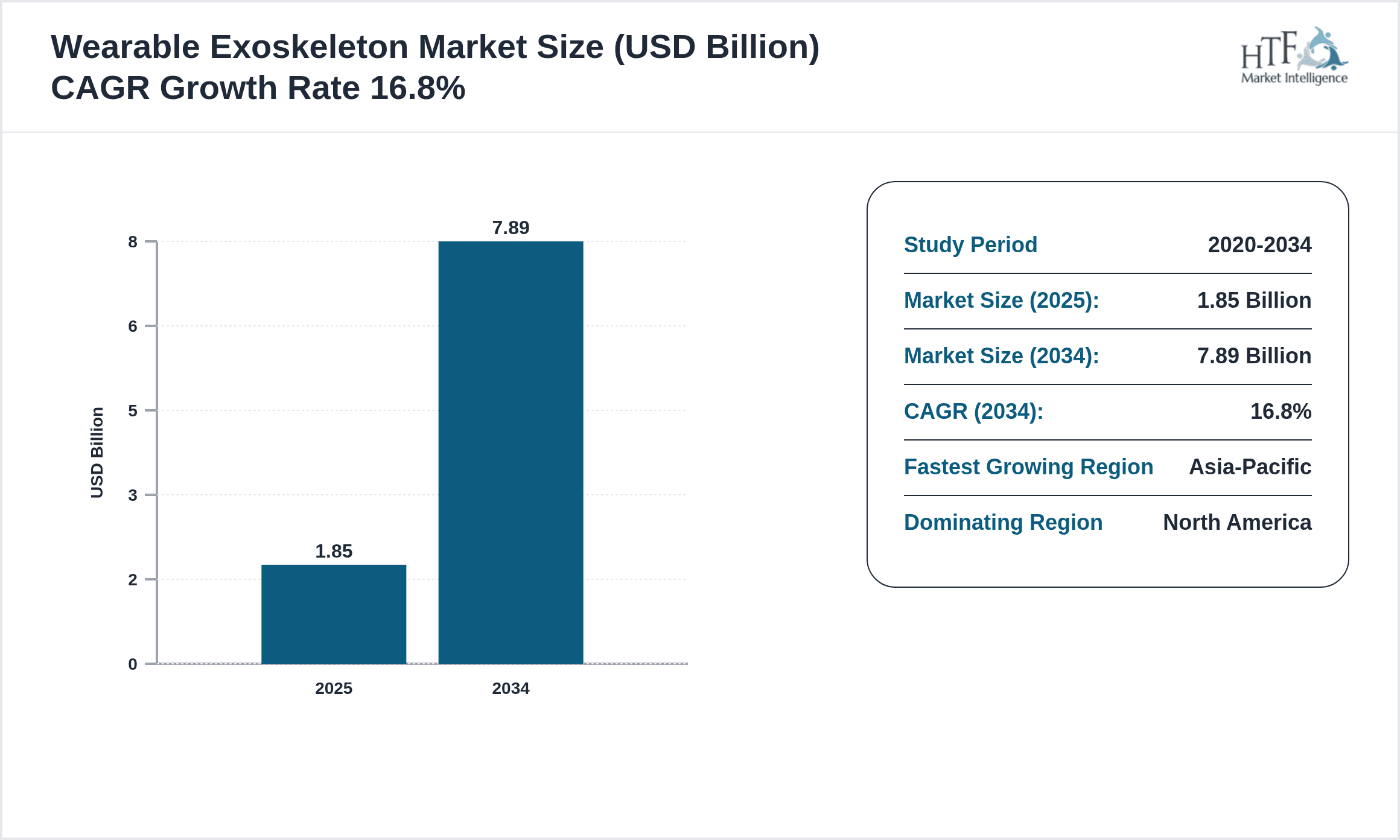
- •Key market highlights include a base market size of USD 1.85 Billion in 2025, projected to grow to USD 7.89 Billion by 2034, reflecting a robust compound annual growth rate (CAGR) of 16.8%. The North America region currently dominates the market due to early adoption, advanced healthcare infrastructure, and significant industrial automation investment. Meanwhile, Asia-Pacific is identified as the fastest growing region, driven by expanding manufacturing sectors, increased government funding, and rising awareness of occupational health. Rigid exoskeletons lead the product segment, favored for their structural support in heavy-duty applications, whereas soft exoskeletons are the fastest growing type owing to their flexibility and comfort in healthcare and rehabilitation. Market growth is further supported by increasing research and development activities, strategic partnerships, and rising consumer acceptance across diverse applications.
- •The wearable exoskeleton market offers significant value propositions to various stakeholders including manufacturers, healthcare providers, industrial enterprises, and military organizations. For manufacturers, it presents opportunities to innovate and capture new markets with customizable and scalable solutions. Healthcare providers benefit from enhanced patient outcomes through improved mobility aids and rehabilitation technologies. Industrial companies realize higher productivity and reduced injury-related costs by deploying supportive exoskeletons for manual laborers. Furthermore, military applications aim to increase soldier endurance and reduce fatigue in demanding environments. This multifaceted strategic importance underscores the market’s potential to revolutionize human-machine interaction, improve quality of life, and foster sustainable industrial growth globally.
Competitive Landscape
The global wearable exoskeleton market is characterized by a competitive environment with diverse players ranging from established robotics firms to specialized startups. Market participants employ varied competitive strategies including technological innovation, strategic partnerships, product portfolio expansion, and geographic market penetration. Technological differentiation is achieved through advances in lightweight materials, battery efficiency, AI-enabled adaptive control systems, and ergonomic designs tailored to specific applications. Companies also focus on strategic collaborations with healthcare institutions, industrial corporations, and military agencies to accelerate product development and market access. Pricing strategies vary based on application complexity and customization levels, often influenced by reimbursement policies and funding availability in healthcare sectors. Distribution channels encompass direct sales, partnerships with medical device suppliers, and industrial equipment distributors. Barriers to entry include high R&D costs, regulatory compliance complexity, and user acceptance challenges. Regional competition is notable, with North America leading in innovation and Europe focusing on regulatory standards and safety, while Asia-Pacific exhibits rapid market expansion driven by industrial growth. Future trends indicate increasing consolidation through M&A activities and growing emphasis on software integration and data analytics to enhance device functionality and user experience.
Key Players in Wearable Exoskeleton Market
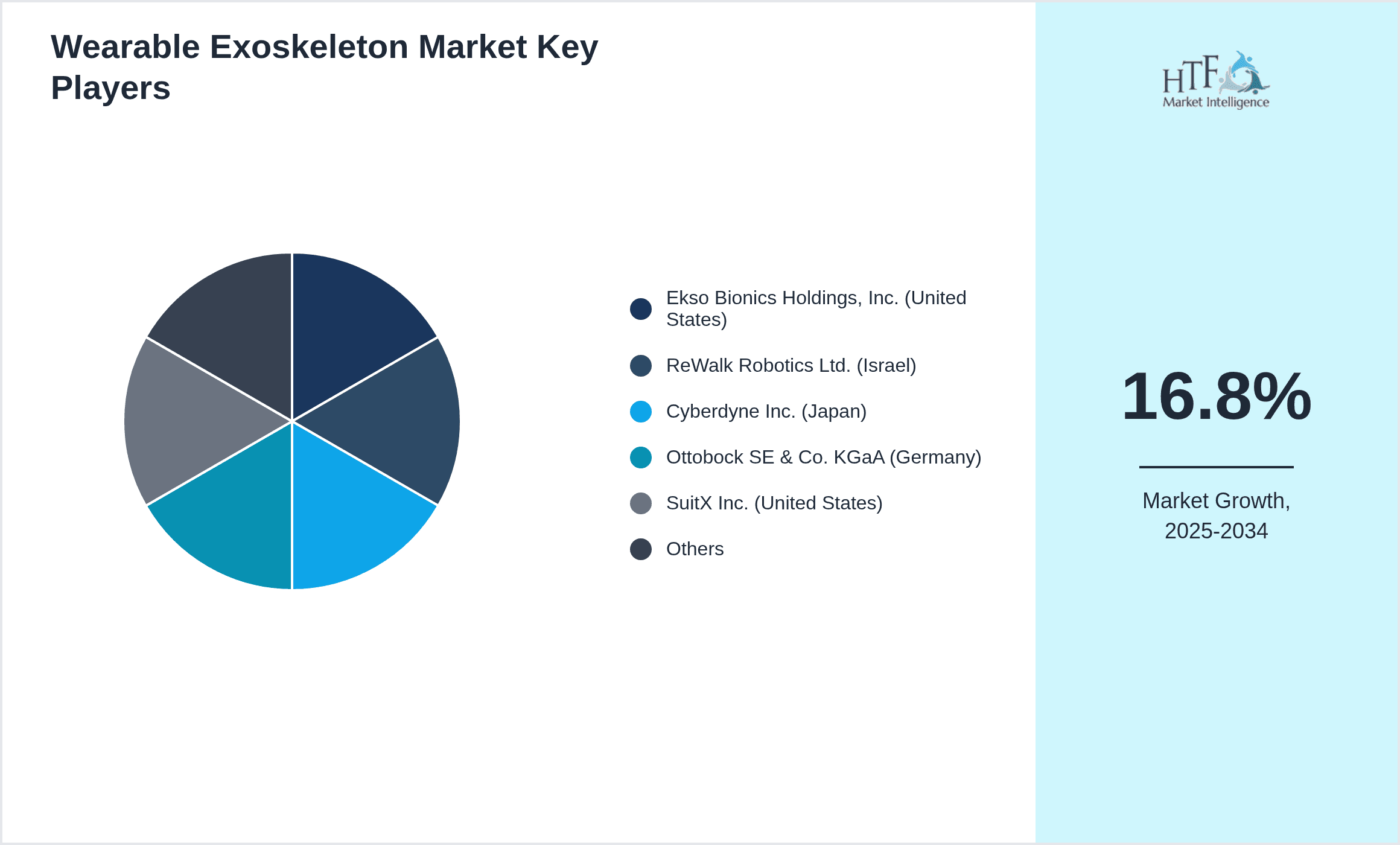
- •Ekso Bionics Holdings, Inc. (United States)
- •ReWalk Robotics Ltd. (Israel)
- •Cyberdyne Inc. (Japan)
- •Ottobock SE & Co. KGaA (Germany)
- •SuitX Inc. (United States)
- •Bionik Laboratories Corp. (Canada)
- •Honda Motor Co., Ltd. (Japan)
- •Technaid S.L. (Spain)
- •Laevo B.V. (Netherlands)
- •Rex Bionics Ltd. (New Zealand)
- •Hyundai Robotics (South Korea)
- •SRI International (United States)
- •B-Temia Inc. (Canada)
- •Fourier Intelligence (Singapore)
- •Lockheed Martin Corporation (United States)
- •Cybernetic Technologies LLC (Russia)
- •Rivian Robotics (United States)
- •MedTech Innovators (United States)
- •Hankook Mirae Technology (South Korea)
- •Bioservo Technologies AB (Sweden)
- •Focal Meditech (Taiwan)
- •SuitX Robotics (United States)
- •ExoAtlet (Russia)
- •Ottobock Healthcare GmbH (Germany)
- •Cyberdyne Medical (Japan)
Market Breakdown
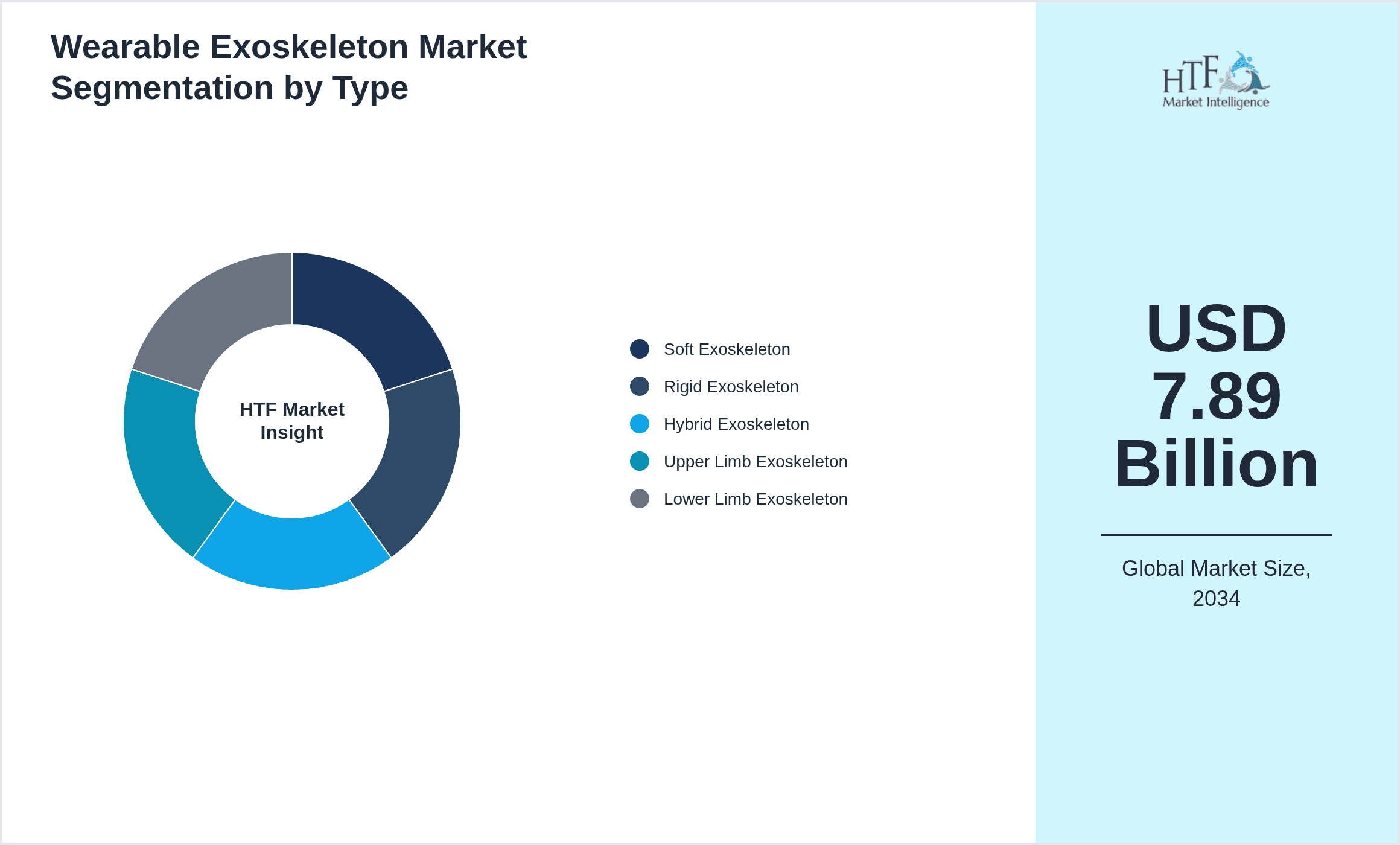
- •By Product Type
- ◦Soft Exoskeleton
- ◦Rigid Exoskeleton
- ◦Hybrid Exoskeleton
- ◦Upper Limb Exoskeleton
- ◦Lower Limb Exoskeleton
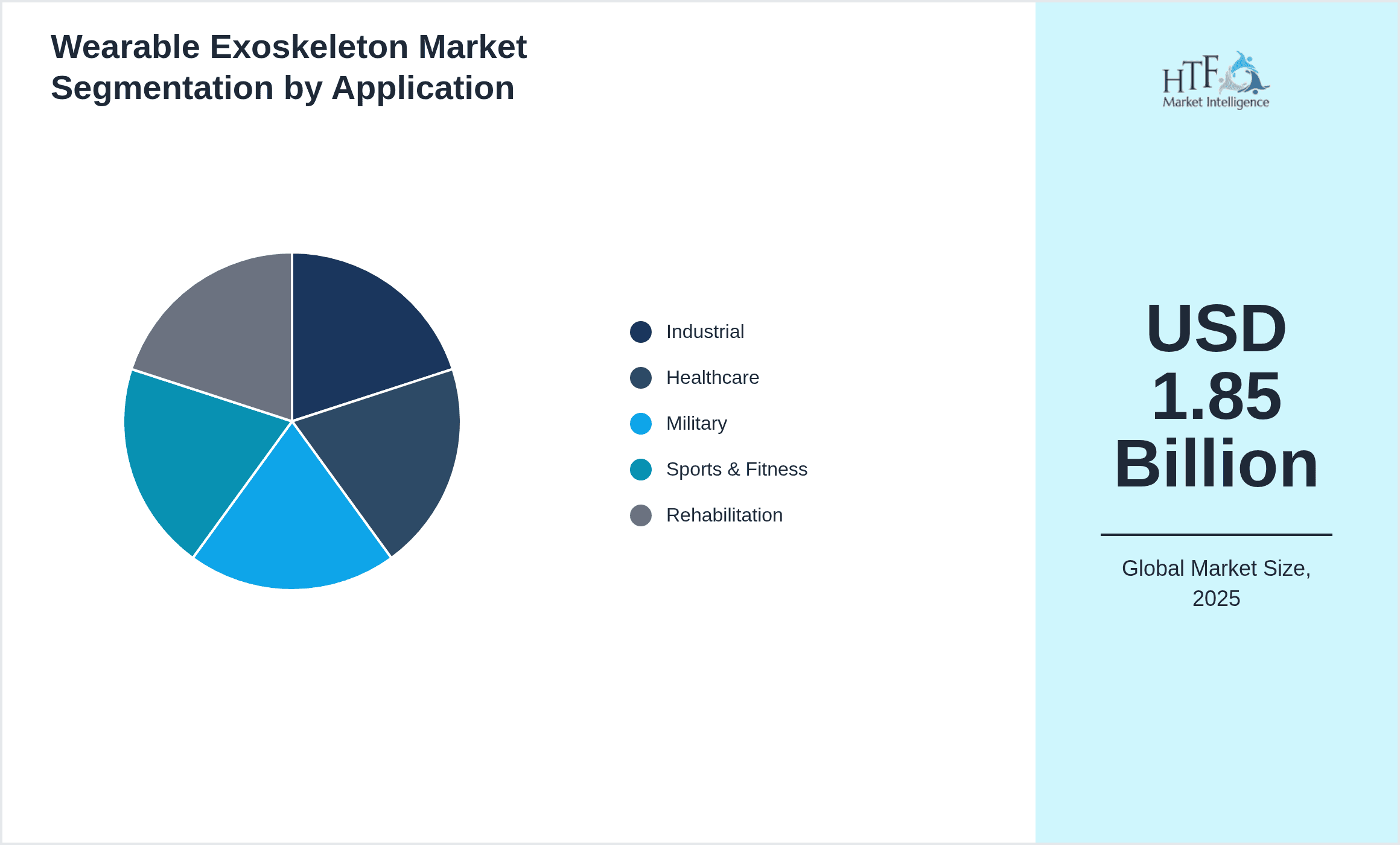
- •By Application
- ◦Industrial
- ◦Healthcare
- ◦Military
- ◦Sports & Fitness
- ◦Rehabilitation
- •By End-Use Industry
- ◦Manufacturing
- ◦Healthcare Facilities
- ◦Defense
- ◦Sports & Recreation
- •By Distribution Channel
- ◦Direct Sales
- ◦Medical Device Distributors
- ◦Industrial Equipment Suppliers
Growth Dynamics
The global wearable exoskeleton market is propelled by several growth drivers including increasing demand for ergonomic solutions in industrial sectors to reduce musculoskeletal injuries. Aging demographics worldwide elevate the need for mobility assistance devices within healthcare and rehabilitation settings. Technological innovations such as AI-powered adaptive control systems and improved lightweight materials enhance device usability and effectiveness, attracting broader adoption. Rising government and private funding for assistive technologies and industrial automation initiatives further stimulate market expansion. Additionally, growing awareness of occupational health and safety regulations compels industries to deploy exoskeletons to comply with safety standards, improving workforce productivity and reducing injury-related costs. These factors collectively underpin sustained market growth through the forecast period.
Market Trends
Current trends in the wearable exoskeleton market include the integration of soft robotics and smart textiles, enhancing wearer comfort and device flexibility for healthcare and rehabilitation applications. Increasing adoption of data analytics and IoT connectivity enables real-time monitoring and customization of exoskeleton performance, improving outcomes and user experience. Strategic collaborations between robotics firms and medical institutions are fostering innovation and accelerating clinical validations. There is also a notable shift towards modular and lightweight designs to cater to diverse user needs across industrial and military sectors. Sustainability considerations are driving manufacturers to develop energy-efficient and recyclable components, aligning with global environmental goals.
Market Opportunities
The wearable exoskeleton market presents significant opportunities in expanding into emerging economies where industrial automation and healthcare infrastructure are rapidly developing. Untapped applications such as elderly care and personal mobility assistance in home settings offer new growth avenues. Technological convergence with AI, machine learning, and sensor fusion can create smarter, more intuitive devices enhancing user acceptance. Increasing investments in research for soft exoskeletons and hybrid models open avenues for diversified product portfolios. Moreover, partnerships with insurance providers and healthcare systems could facilitate reimbursement frameworks, boosting adoption rates. The market also benefits from growing interest in military modernization programs focused on soldier augmentation and injury prevention.
Market Challenges
Challenges confronting the wearable exoskeleton market include high development and manufacturing costs that limit affordability and widespread adoption. Complex regulatory approval processes across different countries create barriers and prolong time-to-market. User acceptance issues related to comfort, device weight, and adaptability remain key obstacles, especially in healthcare and personal use applications. Limited standardization and interoperability between devices impede integration with existing systems. Furthermore, battery life constraints restrict operational duration, affecting industrial and military usability. Addressing these challenges requires coordinated efforts in R&D, regulatory harmonization, and user-centric design enhancements.
Regulatory Framework
Between 2020 and 2025, regulatory frameworks for wearable exoskeletons have evolved significantly to address safety, efficacy, and quality standards. In the United States, the FDA has issued guidance on medical device classification and premarket approval processes specifically tailored for exoskeletons used in healthcare. The European Union implemented the Medical Device Regulation (MDR) in 2021, imposing stricter requirements on clinical evaluation and post-market surveillance impacting exoskeleton manufacturers. Asia-Pacific countries including Japan and South Korea have introduced standards for industrial exoskeleton safety, emphasizing ergonomic risk reduction and user training protocols. Globally, there is increasing alignment towards harmonized standards through organizations like ISO and IEC, focusing on performance testing, electrical safety, and software validation. These regulatory developments ensure market players comply with rigorous quality and safety benchmarks, facilitating user trust and market growth. Additionally, data privacy regulations affect connected exoskeleton devices, mandating secure handling of user health and operational data.
Market Intelligence
- •15th February 2025, Ekso Bionics Holdings, Inc. announced the launch of its next-generation rigid exoskeleton designed for industrial workers, featuring AI-driven adaptive support and improved battery life enabling up to 12 hours of continuous operation. The device incorporates lightweight carbon fiber components and enhanced sensor arrays for real-time ergonomic feedback. This innovation targets manufacturing and logistics sectors aiming to reduce workplace injuries and improve productivity. Ekso Bionics also revealed plans for global distribution expansion and strategic partnerships with major industrial conglomerates to accelerate adoption. This launch positions Ekso Bionics as a market leader in industrial wearable robotics and underscores the growing demand for advanced exoskeleton solutions worldwide. Source: Ekso Bionics official press release
- •20th June 2025, Cyberdyne Inc. introduced HAL-X, a hybrid wearable exoskeleton integrating soft robotics with rigid frame support aimed at medical rehabilitation. The device offers customized assistive modes controlled via neural interface technology and cloud-based analytics to optimize patient recovery programs. Cyberdyne’s innovation reflects a paradigm shift in assistive technology, facilitating enhanced mobility for patients with neurological and musculoskeletal disorders. The company also announced collaborative clinical trials with leading healthcare institutions across Asia and Europe to validate efficacy and safety. This strategic development enhances Cyberdyne’s position in the healthcare segment and demonstrates the growing intersection of robotics and AI in medical applications. Source: Cyberdyne Inc. corporate announcement
- •5th September 2025, Ottobock SE & Co. KGaA completed the acquisition of Bionik Laboratories Corp., expanding its portfolio in upper limb exoskeletons for rehabilitation and industrial use. This merger combines Ottobock’s engineering expertise with Bionik’s innovative soft exoskeleton technologies, enabling accelerated product development and market penetration. The acquisition strengthens Ottobock’s global footprint, particularly in North America and Asia-Pacific, where demand for wearable assistive devices is rapidly increasing. The companies plan to leverage combined R&D capabilities to advance AI integration and sensor-based performance monitoring across their product lines. This strategic move signals ongoing consolidation in the wearable exoskeleton market as firms seek competitive advantages through scale and innovation. Source: Ottobock official press release
- •10th December 2025, ReWalk Robotics Ltd. announced a strategic partnership with a leading Asian healthcare provider to deploy its lower limb exoskeleton systems in rehabilitation centers across Southeast Asia. The partnership includes comprehensive training programs for clinicians and integration of tele-rehabilitation services supported by remote monitoring technologies. This initiative aims to increase accessibility to advanced mobility aids in emerging markets and drive adoption through localized expertise and support infrastructure. ReWalk Robotics also unveiled plans for product customization tailored to regional patient demographics and regulatory requirements. This collaboration highlights the growing focus on expanding geographic reach and enhancing service offerings within the wearable exoskeleton market. Source: ReWalk Robotics press release
Regional Outlook
The North America currently holds a significant share of the market, primarily due to several key factors: increasing consumption rates, a burgeoning population, and robust economic momentum. These elements collectively drive demand, positioning this region as a leader in the market. On the other hand, Asia-Pacific is rapidly emerging as the fastest-growing area within the industry. This remarkable growth can be attributed to swift infrastructure development, the expansion of various industrial sectors, and a marked increase in consumer demand. These dynamics make this region a crucial player in shaping future market growth.
In our report, we cover a comprehensive analysis of the following regions and countries:
- North America
- LATAM
- West Europe
- Central & Eastern Europe
- Northern Europe
- Southern Europe
- East Asia
- Southeast Asia
- South Asia
- Central Asia
- Oceania
- MEA
| Feature | Details |
|---|---|
| Base Year Market Size | USD 1.85 Billion |
| Forecast Year Market Size | USD 7.89 Billion |
| CAGR | 16.8% |
| Forecast Period | 2026 to 2033 |
| YoY Growth | 16.3% |
| Scope of Report | Market is segmented by Product Type (Soft Exoskeleton, Rigid Exoskeleton, Hybrid Exoskeleton, Upper Limb Exoskeleton, Lower Limb Exoskeleton), Application (Industrial, Healthcare, Military, Sports & Fitness, Rehabilitation), End-Use Industry (Manufacturing, Healthcare Facilities, Defense, Sports & Recreation), Distribution Channel (Direct Sales, Medical Device Distributors, Industrial Equipment Suppliers) |
| Regions Covered | North America, LATAM, West Europe, Central & Eastern Europe, Northern Europe, Southern Europe, East Asia, Southeast Asia, South Asia, Central Asia, Oceania, MEA |
| Key Companies | Ekso Bionics Holdings, Inc. (United States), ReWalk Robotics Ltd. (Israel), Cyberdyne Inc. (Japan), Ottobock SE & Co. KGaA (Germany), SuitX Inc. (United States), Bionik Laboratories Corp. (Canada), Honda Motor Co., Ltd. (Japan), Technaid S.L. (Spain), Laevo B.V. (Netherlands), Rex Bionics Ltd. (New Zealand), Hyundai Robotics (South Korea), SRI International (United States), B-Temia Inc. (Canada), Fourier Intelligence (Singapore), Lockheed Martin Corporation (United States), Cybernetic Technologies LLC (Russia), Rivian Robotics (United States), MedTech Innovators (United States), Hankook Mirae Technology (South Korea), Bioservo Technologies AB (Sweden), Focal Meditech (Taiwan), SuitX Robotics (United States), ExoAtlet (Russia), Ottobock Healthcare GmbH (Germany), Cyberdyne Medical (Japan) |
Global Wearable Exoskeleton Market Size, Growth & Revenue 2025-2034 - Table of Contents
Multidisciplinary researcher with 10+ years of experience uncovering insights across diverse domains focused on uncovering insights that drive informed decisions.
Frequently Asked Questions (FAQ):
The Compact Track Loaders market is expected to see value worth 5.3 Billion in 2025.
North America currently leads the market with approximately 45% market share, followed by Europe at 28% and Asia-Pacific at 22%. The remaining regions account for 5% of the global market.
Key growth drivers include increasing construction activities, rising demand for versatile equipment in agriculture, technological advancements in track loader design, and growing preference for compact equipment in urban construction projects.