
Global Hydrogen Peroxide Market Size, Growth & Revenue 2024-2034
Global Hydrogen Peroxide (Cas 7722-84-1) Market is segmented by Product Type (Liquid Hydrogen Peroxide, Solid Hydrogen Peroxide, Other Types), Application (Bleaching, Disinfection, Chemical Synthesis, Environmental Treatment, Electronics), End-Use Industry (Paper & Pulp, Healthcare, Textile, Water Treatment), Distribution Channel (Direct Sales, Distributors, Online Channels), and Geography (North America, LATAM, West Europe, Central & Eastern Europe, Northern Europe, Southern Europe, East Asia, Southeast Asia, South Asia, Central Asia, Oceania, MEA)
Pricing
Report Overview
Executive Summary
- •The global hydrogen peroxide market is defined by the production and utilization of hydrogen peroxide (CAS 7722-84-1), a chemical compound extensively used for its oxidizing and bleaching properties. This market spans diverse applications including disinfection, chemical synthesis, environmental treatment, and electronics manufacturing, making it a critical chemical across multiple industries. The market boundaries include various physical forms such as liquid and solid hydrogen peroxide, with product grades tailored to end-use requirements. Industrial sectors such as paper & pulp rely heavily on hydrogen peroxide for bleaching, while healthcare applications focus on its antiseptic and sterilizing capabilities. The market’s scope also covers distribution channels ranging from direct industrial sales to online platforms. Increasing environmental regulations have propelled the adoption of hydrogen peroxide as a green alternative to traditional chemicals. The market is also shaped by advancements in production technology enhancing concentration and stability. Globally, demand growth is fueled by expanding end-use sectors and heightened emphasis on sustainable, non-toxic chemical solutions.
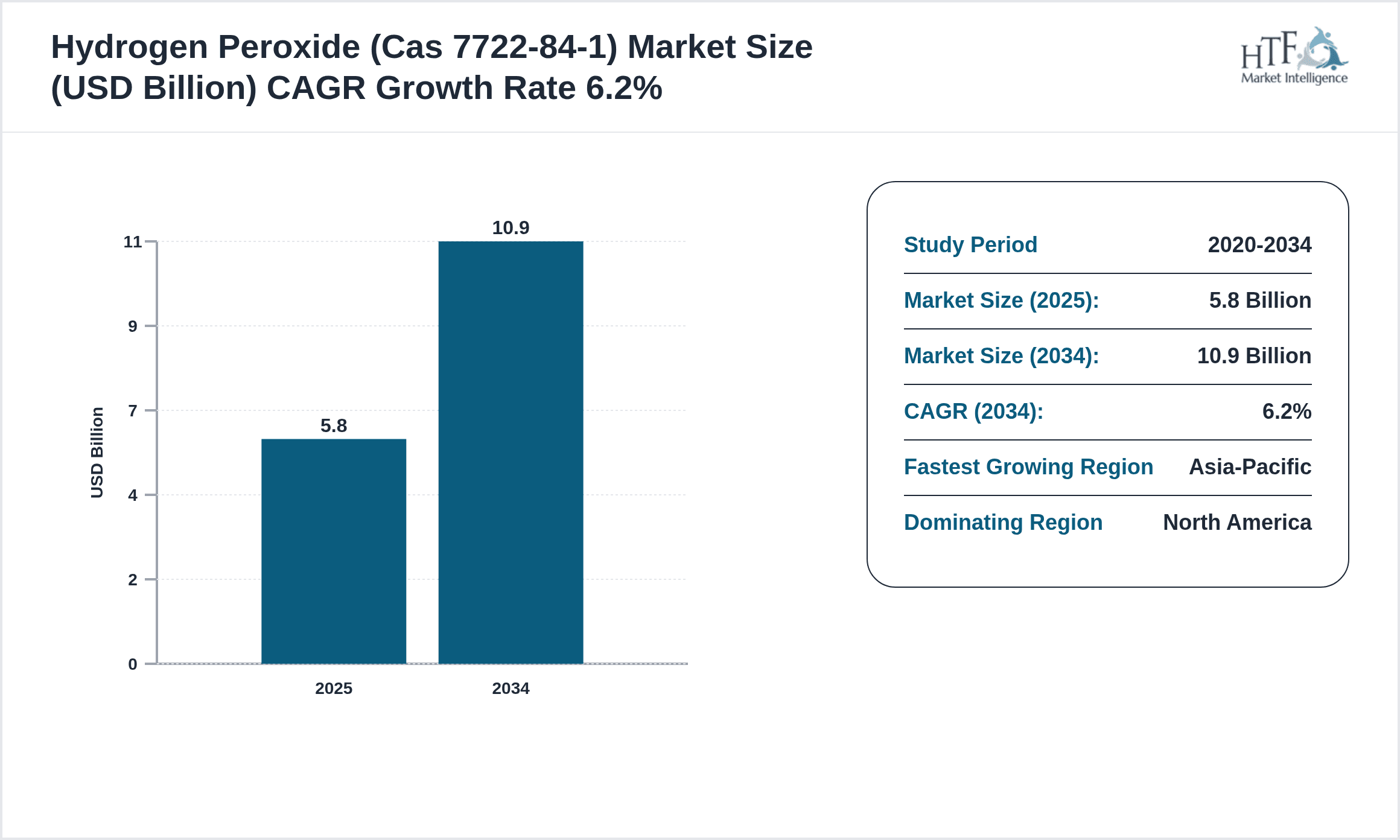
- •Key highlights of the hydrogen peroxide market include a base market size of USD 5.8 billion in 2024, forecasted to reach USD 10.9 billion by 2034, registering a CAGR of 6.2%. North America dominates the market, driven by advanced chemical manufacturing infrastructure and stringent regulatory frameworks favoring eco-friendly oxidizers. Asia-Pacific is identified as the fastest-growing region due to rapid industrialization and expanding healthcare and electronics sectors. Liquid hydrogen peroxide holds the largest market share by product type, while solid hydrogen peroxide is gaining traction for specialized applications. Bleaching remains the dominant application, closely followed by disinfection. The market exhibits steady year-over-year growth, reflecting increasing industrial demand and technological innovation.
- •The strategic importance of the hydrogen peroxide market lies in its broad industrial relevance and environmental benefits. It serves as a sustainable alternative to chlorine-based oxidants, aligning with global trends toward green chemistry. For stakeholders including manufacturers, distributors, and end-users, the market offers opportunities linked to expanding emerging economies and technological advancements in production and application processes. The market's versatility supports multiple sectors, underscoring its value proposition as a key chemical input. Additionally, regulatory compliance and environmental sustainability are critical drivers that enhance the market’s growth potential and encourage innovation. Overall, the hydrogen peroxide market holds significant promise for long-term growth and cross-sector impact.
Competitive Landscape
The global hydrogen peroxide market is characterized by intense competition among a mix of global chemical giants and regional specialized producers. Market players compete on innovation, product quality, production capacity, and geographic reach. Continuous investment in advanced manufacturing technologies to improve purity and concentration levels is a key competitive strategy. Companies are leveraging strategic partnerships and supply chain optimizations to enhance distribution efficacy and cost efficiency. Innovation in application-specific formulations, such as stabilized hydrogen peroxide for electronics, adds differentiation. The rivalry is intensified by the need to comply with evolving environmental regulations and sustainability standards, pushing firms toward eco-friendly production methods. Pricing strategies are influenced by raw material costs and regional demand dynamics. Market entry barriers include capital-intensive production facilities and stringent quality certifications. The competitive environment is dynamic, with firms focusing on mergers and acquisitions to consolidate market position and expand global footprint. Overall, market competition drives continuous technological advancement and diversification of product offerings.
Prominent Players in Hydrogen Peroxide Market
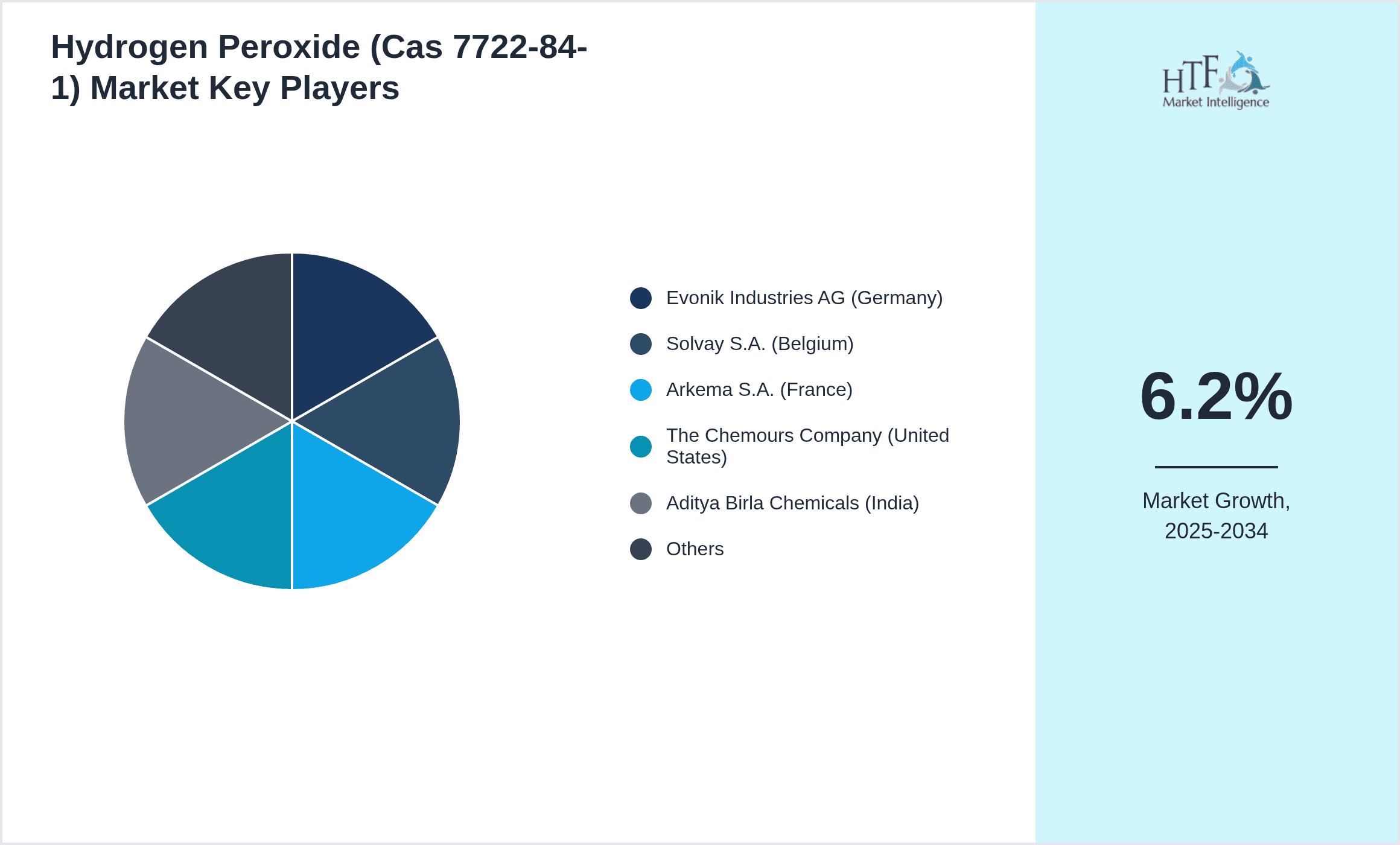
- •Evonik Industries AG (Germany)
- •Solvay S.A. (Belgium)
- •Arkema S.A. (France)
- •The Chemours Company (United States)
- •Aditya Birla Chemicals (India)
- •Kao Corporation (Japan)
- •Mitsubishi Gas Chemical Company, Inc. (Japan)
- •Kemira Oyj (Finland)
- •Solvay Peroxides (Germany)
- •PeroxyChem (United States)
- •Toyo Gosei Co., Ltd. (Japan)
- •United Initiators GmbH & Co. KG (Germany)
- •Nouryon (Netherlands)
- •GreenOx (United Kingdom)
- •MGC Pure Chemicals Co., Ltd. (Japan)
- •Shanghai Chlor-Alkali Chemical Co., Ltd. (China)
- •BASF SE (Germany)
- •OxyChem (United States)
- •Hydrogen Peroxide Australia Pty Ltd (Australia)
- •Xuzhou Huatian Chemical Industry Co., Ltd. (China)
- •PeroxyChem Europe GmbH (Germany)
- •Yingkou Tianrun Chemical Co., Ltd. (China)
- •Sanjiang Chemical Co., Ltd. (China)
- •Linde plc (Ireland)
- •Nippon Soda Co., Ltd. (Japan)
Market Breakdown
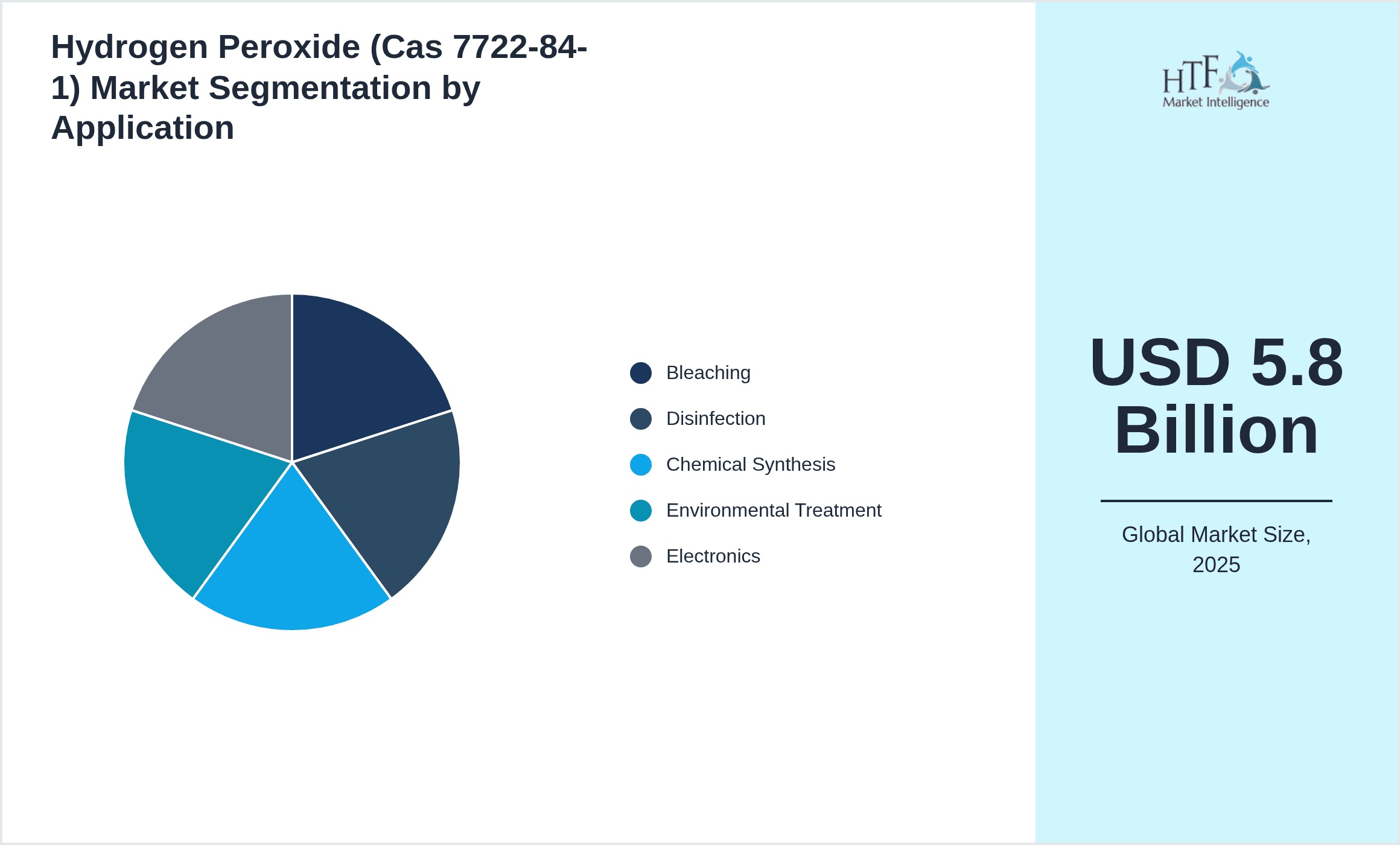
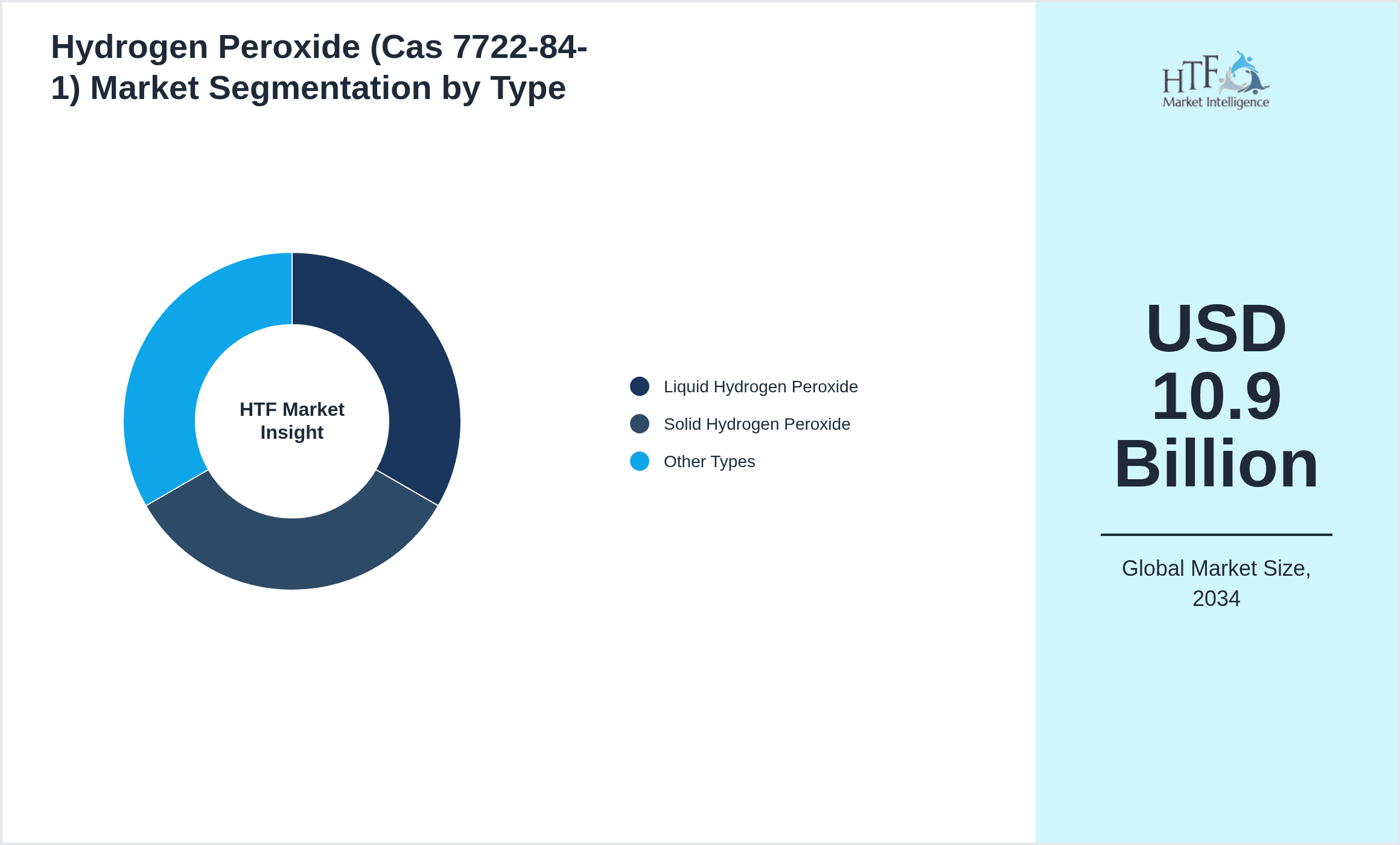
- •By Product Type
- ◦Liquid Hydrogen Peroxide
- ◦Solid Hydrogen Peroxide
- ◦Other Types
- •By Application
- ◦Bleaching
- ◦Disinfection
- ◦Chemical Synthesis
- ◦Environmental Treatment
- ◦Electronics
- •By End-Use Industry
- ◦Paper & Pulp
- ◦Healthcare
- ◦Textile
- ◦Water Treatment
- •By Distribution Channel
- ◦Direct Sales
- ◦Distributors
- ◦Online Channels
Growth Dynamics
- •Increasing demand for eco-friendly bleaching agents in the paper & pulp and textile industries drives hydrogen peroxide market growth, as it offers an effective and chlorine-free alternative that meets stringent environmental regulations globally.
- •Rising healthcare awareness and the need for effective disinfectants and sterilizing agents in hospitals and clinics fuel demand, especially liquid hydrogen peroxide formulations with enhanced purity and stability.
- •Technological advancements in production, such as improved catalytic processes and stabilization techniques, have increased supply efficiency and product quality, enabling broader industrial adoption and new applications.
- •Expansion of the electronics industry, particularly semiconductor manufacturing, creates demand for high-purity hydrogen peroxide grades, supporting the market’s growth in Asia-Pacific and developed economies.
- •Government initiatives promoting green chemicals and sustainable manufacturing practices encourage industries to replace hazardous oxidants with hydrogen peroxide, further stimulating market expansion.
- •Rising investments in water and wastewater treatment infrastructure globally enhance the use of hydrogen peroxide as an oxidizing agent, supporting environmental remediation efforts and market growth.
- •Strategic collaborations between chemical manufacturers and end-users facilitate innovation and customized solutions, accelerating market penetration and adoption across diverse sectors.
Market Trends
- •Adoption of stabilized hydrogen peroxide formulations that enhance shelf life and safety is becoming prevalent, reshaping product portfolios and customer preferences across the chemical industry.
- •Integration of digital monitoring and control systems in hydrogen peroxide production plants improves operational efficiency, reduces costs, and supports stringent quality assurance standards.
- •Growing focus on bio-based and renewable raw materials in hydrogen peroxide synthesis aligns with sustainability goals, influencing research and development priorities among market leaders.
- •Rising demand for high-purity hydrogen peroxide in emerging applications such as advanced oxidation processes for water treatment and electronics manufacturing drives specialized product development.
- •Expansion of e-commerce and digital distribution channels enhances accessibility for smaller industrial users, diversifying market reach and customer bases globally.
- •Increasing collaborations between chemical producers and technology firms foster innovation in application techniques, enhancing hydrogen peroxide’s efficacy and safety profiles.
- •Sustainability-driven product labeling and certifications are becoming important market differentiators, influencing procurement decisions and competitive positioning.
Market Opportunities
- •Expanding healthcare infrastructure in developing regions offers substantial growth potential for hydrogen peroxide-based disinfectants and sterilization products, addressing rising infection control needs.
- •Emerging applications in environmental remediation, such as advanced oxidation processes for pollutant degradation, present untapped market segments for specialized hydrogen peroxide formulations.
- •Growth in the semiconductor and electronics sectors, particularly in Asia-Pacific, opens opportunities for high-purity hydrogen peroxide products tailored to stringent industry requirements.
- •Innovations in solid hydrogen peroxide products for controlled release and safer handling can capture niche markets requiring enhanced operational safety and convenience.
- •Strategic geographic expansion into Latin America and Middle East & Africa, where industrialization and infrastructure development are accelerating, offers new revenue streams.
- •Collaborations with water treatment companies to develop integrated oxidizing solutions can create value-added offerings and strengthen market positioning.
- •Development of green synthesis methods utilizing renewable feedstocks can attract environmentally conscious customers and comply with evolving regulatory frameworks.
Market Challenges
- •Fluctuating raw material prices, particularly for hydrogen and oxygen feedstocks, create cost uncertainties that pressure profit margins and pricing strategies across the market.
- •Stringent safety and transportation regulations due to hydrogen peroxide’s reactive nature increase compliance costs and logistical complexities for manufacturers and distributors.
- •Competition from alternative bleaching and disinfecting agents, such as chlorine dioxide and ozone, challenges market share, requiring continuous innovation and differentiation.
- •High capital investment requirements for modern production facilities limit entry for new players and constrain capacity expansion among existing manufacturers.
- •Environmental concerns related to by-products and effluent treatment necessitate advanced waste management systems, increasing operational expenses.
- •Regional trade restrictions and tariffs can disrupt global supply chains, impacting availability and pricing dynamics in certain markets.
- •Skilled labor shortages and technical expertise gaps pose challenges to maintaining high-quality production and innovation capabilities.
Regulatory Framework
- •Between 2019 and 2024, multiple countries implemented stricter regulations on hydrogen peroxide production and handling, including mandatory safety certifications and environmental impact assessments to minimize risk exposure.
- •New directives introduced stringent limits on emissions and effluents from hydrogen peroxide manufacturing plants, requiring companies to invest in advanced pollution control technologies.
- •Safety standards for transportation of hydrogen peroxide were enhanced globally, mandating specialized packaging and handling protocols to prevent accidents and spills during transit.
- •Several regions enacted regulations promoting the use of green chemicals, encouraging hydrogen peroxide adoption as an alternative to chlorine-based oxidants in industrial processes.
- •Government incentives and subsidies for environmentally sustainable chemical production were introduced in key markets such as North America and Europe, fostering innovation and market growth.
Market Intelligence
- •15th January 2025, Evonik Industries AG launched a new stabilized liquid hydrogen peroxide product designed for enhanced safety and extended shelf life. This innovation targets the textile and paper industries by improving bleaching efficiency while reducing environmental impact. The product incorporates proprietary stabilization technology that minimizes decomposition during storage and transport, allowing for broader geographic distribution. Evonik’s strategic objective includes expanding its market share in Asia-Pacific and Europe by offering tailored solutions that meet stringent regulatory standards and customer demands for sustainable chemicals. This launch reflects Evonik’s commitment to innovation and sustainability leadership in the hydrogen peroxide market. Source: Evonik official press release
- •10th March 2025, Solvay S.A. introduced an advanced high-purity hydrogen peroxide grade aimed at semiconductor manufacturing applications. The product features ultra-low metal and organic impurities, meeting the exacting requirements of the electronics industry. Solvay’s technology enhances process yields and device reliability, positioning the company as a preferred supplier in the growing semiconductor sector, particularly in Asia-Pacific. The launch accompanies a capacity expansion at its European facility to cater to increasing global demand. This move underscores Solvay’s strategy of targeting niche applications with high-value products to drive sustainable growth. Source: Solvay corporate announcement
- •22nd May 2025, Arkema S.A. announced a strategic partnership with a leading water treatment company to co-develop hydrogen peroxide-based advanced oxidation solutions. The collaboration focuses on enhancing the efficiency of pollutant removal in wastewater treatment plants while reducing chemical consumption. Arkema will leverage its expertise in hydrogen peroxide formulation and delivery systems to create integrated offerings tailored to diverse municipal and industrial clients. This initiative aims to strengthen Arkema’s position in the environmental treatment segment and capitalize on global infrastructure investments. The partnership reflects a growing trend of cross-industry collaborations fostering innovation and sustainability. Source: Arkema press release
- •8th November 2024, The Chemours Company completed the acquisition of a specialty hydrogen peroxide producer to expand its product portfolio and geographic reach. The acquisition adds advanced liquid and solid hydrogen peroxide products with applications in healthcare and electronics. This strategic move enhances Chemours’ manufacturing capacity and broadens its customer base across North America and Asia-Pacific. The integration is expected to deliver operational synergies and accelerate innovation pipelines. Chemours’ acquisition aligns with its growth strategy focused on high-margin specialty chemicals and sustainability-driven products. Source: Chemours official news
Regional Outlook
The North America currently holds a significant share of the market, primarily due to several key factors: increasing consumption rates, a burgeoning population, and robust economic momentum. These elements collectively drive demand, positioning this region as a leader in the market. On the other hand, Asia-Pacific is rapidly emerging as the fastest-growing area within the industry. This remarkable growth can be attributed to swift infrastructure development, the expansion of various industrial sectors, and a marked increase in consumer demand. These dynamics make this region a crucial player in shaping future market growth.
In our report, we cover a comprehensive analysis of the following regions and countries:
- North America
- LATAM
- West Europe
- Central & Eastern Europe
- Northern Europe
- Southern Europe
- East Asia
- Southeast Asia
- South Asia
- Central Asia
- Oceania
- MEA
| Feature | Details |
|---|---|
| Base Year Market Size | USD 5.8 Billion |
| Forecast Year Market Size | USD 10.9 Billion |
| CAGR | 6.2% |
| Forecast Period | 2026 to 2033 |
| YoY Growth | 6% |
| Scope of Report | Market is segmented by Product Type (Liquid Hydrogen Peroxide, Solid Hydrogen Peroxide, Other Types), Application (Bleaching, Disinfection, Chemical Synthesis, Environmental Treatment, Electronics), End-Use Industry (Paper & Pulp, Healthcare, Textile, Water Treatment), Distribution Channel (Direct Sales, Distributors, Online Channels) |
| Regions Covered | North America, LATAM, West Europe, Central & Eastern Europe, Northern Europe, Southern Europe, East Asia, Southeast Asia, South Asia, Central Asia, Oceania, MEA |
| Key Companies | Evonik Industries AG (Germany), Solvay S.A. (Belgium), Arkema S.A. (France), The Chemours Company (United States), Aditya Birla Chemicals (India), Kao Corporation (Japan), Mitsubishi Gas Chemical Company, Inc. (Japan), Kemira Oyj (Finland), Solvay Peroxides (Germany), PeroxyChem (United States), Toyo Gosei Co., Ltd. (Japan), United Initiators GmbH & Co. KG (Germany), Nouryon (Netherlands), GreenOx (United Kingdom), MGC Pure Chemicals Co., Ltd. (Japan), Shanghai Chlor-Alkali Chemical Co., Ltd. (China), BASF SE (Germany), OxyChem (United States), Hydrogen Peroxide Australia Pty Ltd (Australia), Xuzhou Huatian Chemical Industry Co., Ltd. (China), PeroxyChem Europe GmbH (Germany), Yingkou Tianrun Chemical Co., Ltd. (China), Sanjiang Chemical Co., Ltd. (China), Linde plc (Ireland), Nippon Soda Co., Ltd. (Japan) |
Global Hydrogen Peroxide Market Size, Growth & Revenue 2024-2034 - Table of Contents
Frequently Asked Questions (FAQ):
The Compact Track Loaders market is expected to see value worth 5.3 Billion in 2025.
North America currently leads the market with approximately 45% market share, followed by Europe at 28% and Asia-Pacific at 22%. The remaining regions account for 5% of the global market.
Key growth drivers include increasing construction activities, rising demand for versatile equipment in agriculture, technological advancements in track loader design, and growing preference for compact equipment in urban construction projects.