
Europe Latex Foam Mattress Market - Europe Size & Outlook 2025-2034
Europe Latex Foam Mattress Market is segmented by Type (Natural Latex Foam, Synthetic Latex Foam, Blended Latex Foam, Talalay Latex Foam, Dunlop Latex Foam), Application (Residential, Hospitality, Healthcare, Commercial, Others), End-Use Industry (Homeowners, Hotels & Resorts, Hospitals & Clinics, Office & Commercial Space), Distribution Channel (Specialty Mattress Retailers, E-commerce Platforms, Direct Sales), and Geography (Germany, France, The United Kingdom, BeNeLux, Spain, Italy, NORDIC, CEE, Others)
Pricing
Report Overview
Executive Summary
- •The Europe Latex Foam Mattress market comprises a wide range of mattresses made from natural, synthetic, and blended latex foams, designed to meet the comfort, durability, and health requirements of consumers across multiple applications. The market is defined by its focus on sustainable and hypoallergenic products, which have gained significant traction due to growing health consciousness and environmental awareness among European consumers. The industry includes manufacturers and distributors operating across Germany, France, the UK, BeNeLux, Spain, Italy, Nordic countries, Central and Eastern Europe, and other regions. Key applications span residential households, hospitality sectors like hotels, healthcare facilities requiring specialized mattresses, and commercial establishments. The market is influenced by advances in latex foam technology, including Talalay and Dunlop processes, which enhance mattress performance. Increasing urbanization, rising disposable incomes, and changing consumer preferences towards eco-friendly products further expand the market scope. Moreover, stringent regulations on chemical safety and fire retardancy shape product development and market entry requirements. The Europe Latex Foam Mattress market is expected to witness robust growth driven by demand for premium and sustainable bedding solutions.
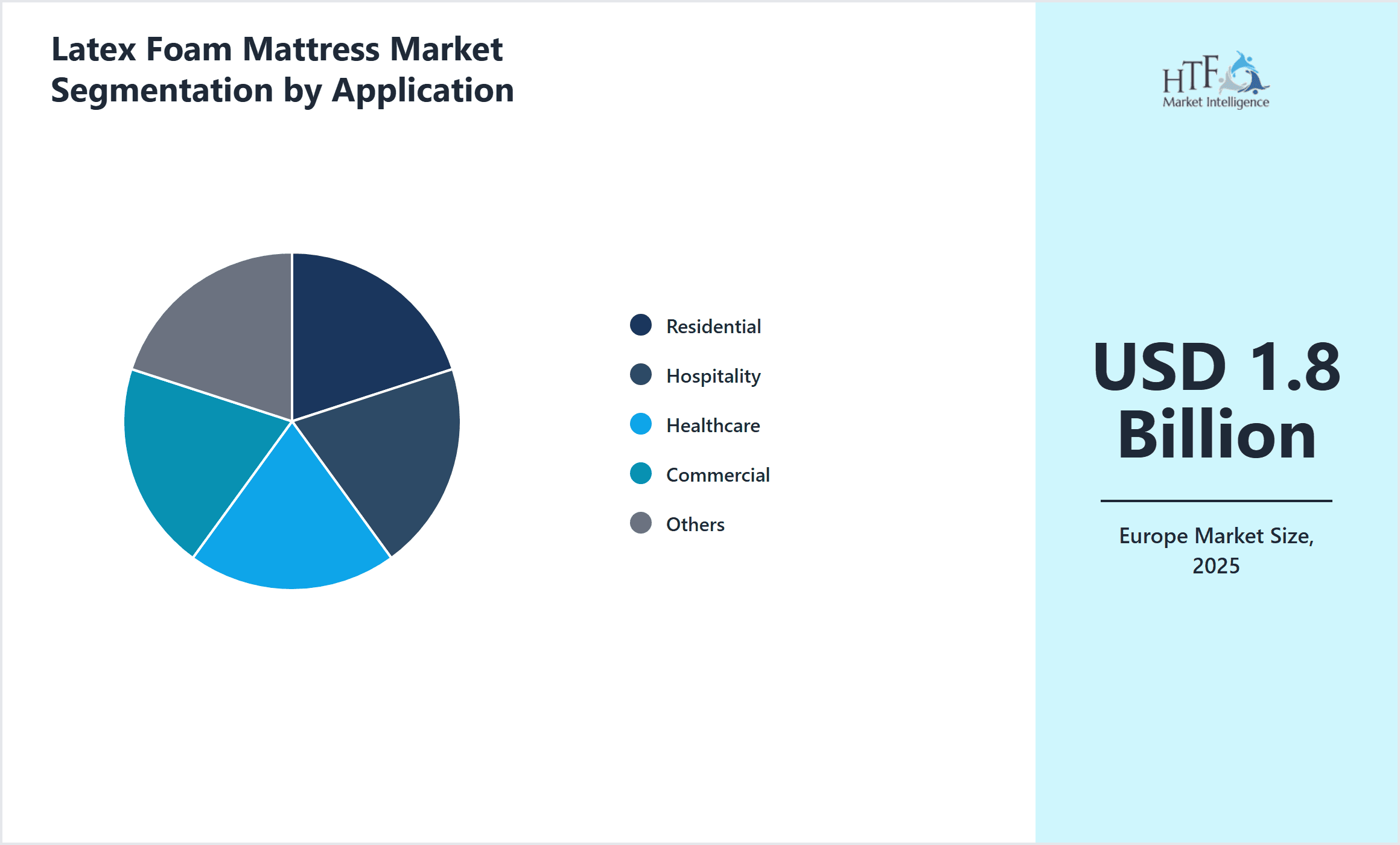
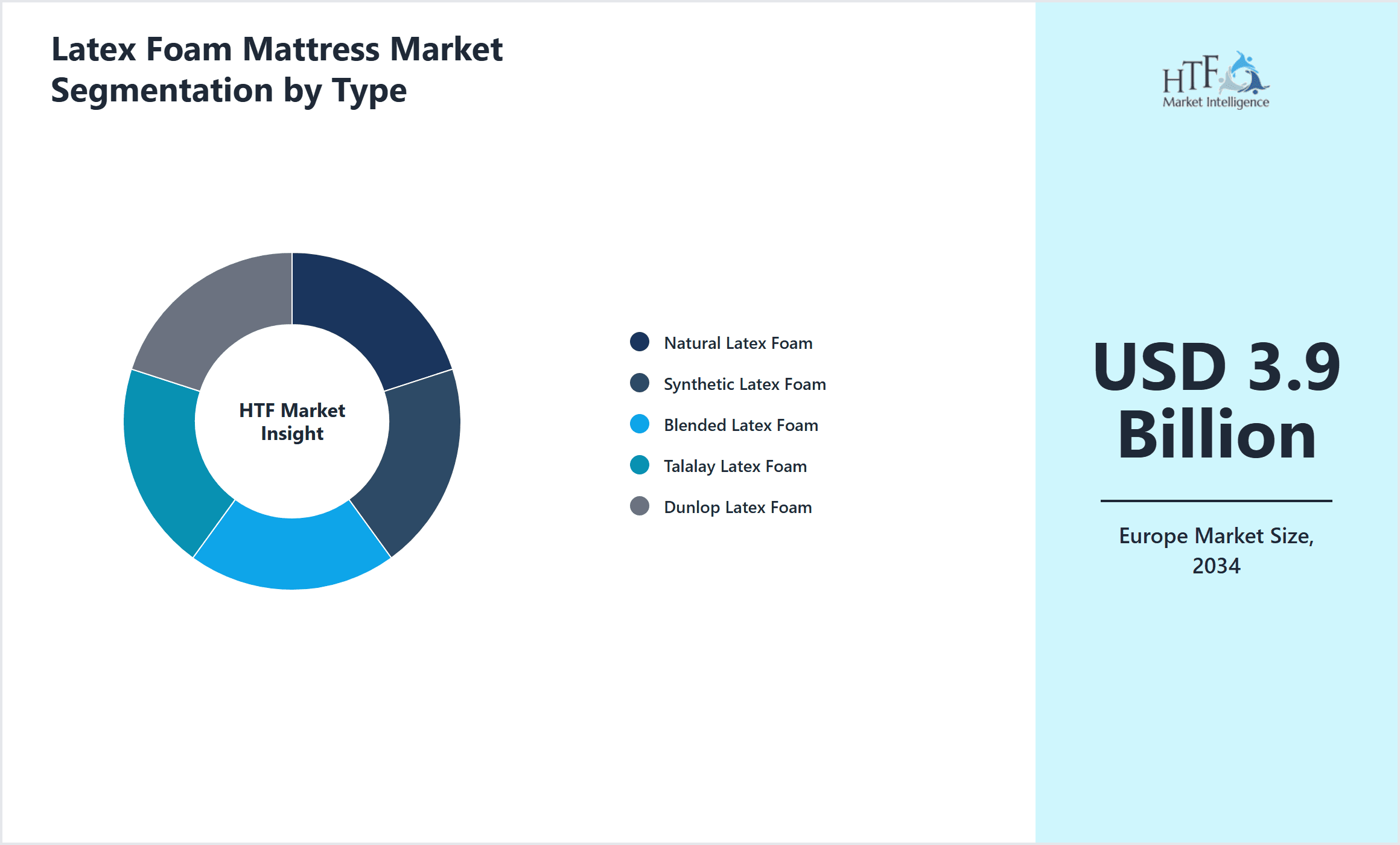
- •Market highlights include a base market size of USD 1.8 Billion in 2025, projected to nearly double to USD 3.9 Billion by 2034, reflecting a CAGR of approximately 8.9%. Germany dominates the market in terms of size and consumption, while France is anticipated to record the fastest growth rate owing to increasing hospitality and residential demand. Natural latex foam remains the leading product type due to its eco-friendly profile and comfort benefits, with blended latex foam emerging as the fastest-growing segment driven by cost-effectiveness and enhanced material properties. Residential applications hold the majority share, complemented by robust growth in hospitality and healthcare sectors. The market’s growth is propelled by rising awareness about mattress ergonomics and sustainability, along with technological advancements in production techniques.
- •The Europe Latex Foam Mattress market holds strategic importance for industries including furniture manufacturing, hospitality, healthcare, and retail. It offers value through enhanced consumer health, sustainability, and comfort, aligning with evolving regulatory standards and green initiatives. Stakeholders ranging from raw material suppliers to mattress producers and retailers benefit from market expansion opportunities, while end-users gain access to superior sleep solutions. The growing inclination towards organic and natural products supports innovation and premiumization within this sector, fostering competitive differentiation and long-term industry resilience.

Competitive Landscape
The Europe Latex Foam Mattress market is characterized by intense competition among established mattress manufacturers and emerging niche players focusing on sustainable and innovative products. Market players emphasize product differentiation through the development of advanced latex foam technologies such as Talalay and Dunlop processing, which improve mattress comfort, durability, and environmental footprint. Strategic investments in R&D, coupled with collaborations with material suppliers, enable companies to enhance proprietary formulations and meet stringent European regulatory standards. Competitive strategies include expanding distribution networks across both offline retail and e-commerce platforms, leveraging brand reputation, and offering customized solutions tailored to specific applications such as healthcare or hospitality. Price competition remains moderate due to the premium nature of latex foam mattresses, with manufacturers balancing cost optimization and quality assurance. Market rivalry fosters innovation in natural latex sourcing and blended foam technologies, while regional players focus on localized product adaptations to address diverse consumer preferences across Europe. Future competition is expected to intensify with the entry of new eco-conscious brands and ongoing consolidation to gain market share.
Leading Companies in Europe Latex Foam Mattress Market
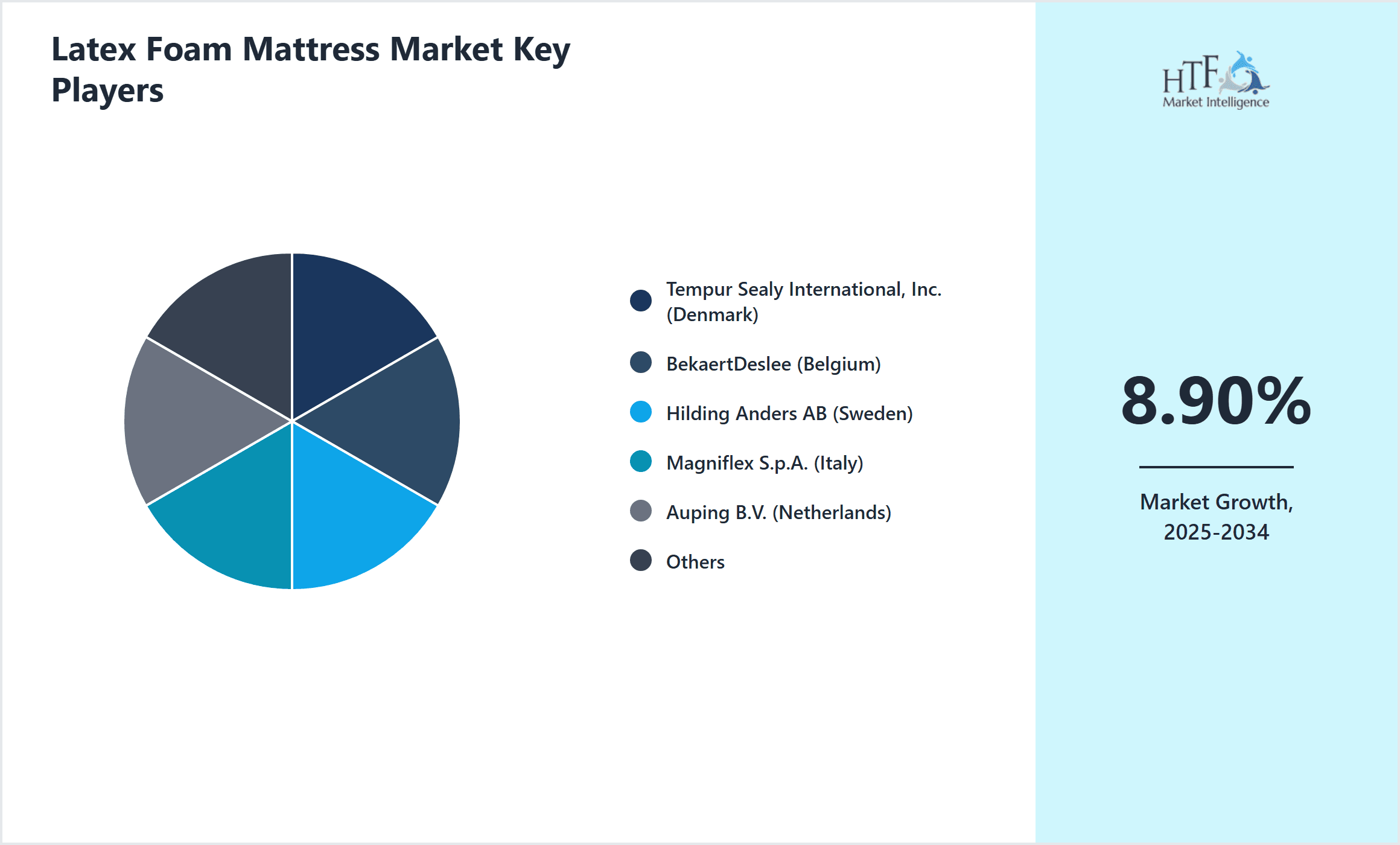
- •Tempur Sealy International, Inc. (Denmark)
- •BekaertDeslee (Belgium)
- •Hilding Anders AB (Sweden)
- •Magniflex S.p.A. (Italy)
- •Auping B.V. (Netherlands)
- •Latexco (Belgium)
- •Dunlopillo International (France)
- •Emma-Matratzen GmbH (Germany)
- •Hypnos Limited (United Kingdom)
- •Eve Sleep Plc (United Kingdom)
- •WinkBeds Europe (Germany)
- •Hästens Sängar AB (Sweden)
- •Sealy Europe (United Kingdom)
- •Ravensberger Matratzen GmbH (Germany)
- •Colgate Mattress Company Europe (France)
- •Velda NV (Belgium)
- •Hästens of Sweden AB (Sweden)
- •Relyon Beds Ltd. (United Kingdom)
- •Morfeus Mattress (Poland)
- •Swissflex AG (Switzerland)
- •Ligne Roset (France)
- •Winkler Matratzen (Germany)
- •Permaflex S.p.A. (Italy)
- •Billerbeck Schlafkomfort GmbH (Germany)
- •Naturalmat Ltd. (United Kingdom)
Market Breakdown
- •By Type
- ◦Natural Latex Foam
- ◦Synthetic Latex Foam
- ◦Blended Latex Foam
- ◦Talalay Latex Foam
- ◦Dunlop Latex Foam
- •By Application
- ◦Residential
- ◦Hospitality
- ◦Healthcare
- ◦Commercial
- ◦Others
- •By End-Use Industry
- ◦Homeowners
- ◦Hotels & Resorts
- ◦Hospitals & Clinics
- ◦Office & Commercial Space
- •By Distribution Channel
- ◦Specialty Mattress Retailers
- ◦E-commerce Platforms
- ◦Direct Sales
Growth Dynamics
- •Rising consumer preference for eco-friendly and sustainable products is a key driver, with natural latex foam mattresses gaining traction due to their biodegradability and health benefits. This trend is amplified by increasing environmental awareness and stricter regulations on chemical usage in bedding products across Europe.
- •The hospitality industry’s demand for high-quality, durable mattresses that enhance guest comfort is fueling growth, especially in luxury hotels and resorts. This sector values latex foam mattresses for their resilience and hygienic properties, which positively impact customer satisfaction and brand reputation.
- •Technological innovations in latex foam processing, such as the Talalay method, improve mattress breathability, pressure relief, and longevity, appealing to premium market segments. Manufacturers investing in R&D to develop hybrid and blended latex mattresses are capturing new consumer bases.
- •Increasing healthcare awareness related to sleep quality drives demand in medical facilities where latex foam mattresses provide therapeutic benefits including pressure ulcer prevention and hypoallergenic features for patients.
- •Growth in e-commerce and omni-channel distribution enhances accessibility and consumer reach, allowing mattress brands to expand their market presence beyond traditional retail outlets. Online platforms offer customization options and direct-to-consumer sales models.
- •Government initiatives promoting sustainable manufacturing and use of renewable materials support market expansion by incentivizing producers and consumers to adopt natural latex foam mattresses.
- •Demographic shifts such as urbanization and increasing disposable incomes in Eastern and Southern Europe are expanding the consumer base for premium bedding products, including latex foam mattresses.
Market Trends
- •Sustainability remains at the forefront, with manufacturers increasingly sourcing organic natural latex and adopting eco-friendly production processes to reduce carbon footprint and appeal to environmentally conscious consumers.
- •Customization and personalization in mattress firmness, size, and layering are becoming more prevalent, enabled by advances in latex foam technology and digital retail platforms.
- •Hybrid mattresses combining latex foam with memory foam or pocket springs are gaining popularity, offering enhanced comfort and support tailored to diverse sleep preferences.
- •Integration of antimicrobial and anti-dust mite treatments caters to health-conscious consumers, particularly in the healthcare and hospitality sectors.
- •The rise of sleep wellness and smart bedroom concepts is influencing mattress design, with companies exploring sensor integration and adjustable latex foam layers.
- •Shift towards direct-to-consumer sales models via e-commerce channels accelerates market penetration while enabling competitive pricing and enhanced customer engagement.
- •Increasing collaborations between mattress manufacturers and textile companies focus on developing sustainable and breathable mattress covers complementing latex foam cores.
Market Opportunities
- •Expanding demand in emerging European markets such as Poland, Czech Republic, and Hungary presents significant growth potential for latex foam mattress manufacturers targeting new consumer segments.
- •Innovations in blended latex foam formulations can offer cost-effective alternatives to pure natural latex, increasing accessibility for middle-income consumers and broadening market reach.
- •Developing specialized healthcare mattresses addressing pressure relief and hygiene standards opens avenues in hospitals and elderly care facilities across Europe.
- •Strategic partnerships with hospitality chains enable co-branded mattress solutions that enhance brand visibility and secure bulk procurement contracts.
- •Investment in sustainable supply chains and certifications such as OEKO-TEX and GOLS can differentiate products in a competitive market increasingly focused on transparency and eco-credentials.
- •Enhancing online retail infrastructure with augmented reality and virtual showroom technologies can improve buyer confidence and conversion rates in the digital marketplace.
- •Growth in premium residential real estate developments creates demand for high-end bedding solutions, including luxury latex foam mattresses with advanced ergonomic features.
Market Challenges
- •High production costs of natural latex foam mattresses limit price competitiveness, making it challenging to attract cost-sensitive consumer segments across Europe.
- •Fluctuations in raw material availability and prices, particularly natural latex sourced from Southeast Asia, pose supply chain risks impacting manufacturing continuity and margins.
- •Stringent European regulations related to chemical safety, fire retardancy, and environmental compliance increase product development timelines and compliance costs for manufacturers.
- •Consumer skepticism regarding durability and maintenance of latex foam mattresses compared to traditional spring mattresses hampers wider adoption in some markets.
- •Intense competition from alternative mattress technologies such as memory foam and hybrid models pressures latex foam mattress manufacturers to continuously innovate and justify premium pricing.
- •Limited consumer awareness and education about the benefits of latex foam mattresses restrict market penetration in lower-tier markets and among older demographics.
- •Logistics and distribution complexities across diverse European countries with varying regulations and consumer preferences increase operational challenges for market players.
Regulatory Framework
- •Between 2020 and 2025, the EU implemented the REACH regulation updates mandating stricter chemical safety standards for mattress materials, including limits on volatile organic compounds (VOCs) and flame retardants, enhancing consumer safety and environmental protection.
- •The EU’s Eco-design Directive introduced requirements for energy efficiency and material sustainability in mattress manufacturing, encouraging the use of natural and recycled materials across member states.
- •Fire safety regulations, such as the UK Furniture and Furnishings (Fire) (Safety) Regulations 1988 with recent amendments, require mattresses sold in Europe to meet rigorous flammability standards, influencing material selection and treatment processes.
- •The introduction of the EU Taxonomy for Sustainable Activities incentivizes manufacturers to align production methods with recognized sustainability criteria to access green financing and public procurement opportunities.
- •Country-specific mandates, such as Germany’s Packaging Act (VerpackG), require mattress producers to implement recycling and waste management programs, promoting circular economy principles within the industry.
Market Intelligence
- •15th January 2025, Tempur Sealy International, Inc. launched a new range of sustainable natural latex foam mattresses across Europe, incorporating organic certified latex sourced from renewable plantations. The product line focuses on enhanced breathability, pressure relief, and eco-certifications, targeting environmentally conscious consumers and luxury hospitality sectors. This launch aims to strengthen Tempur Sealy's market presence in Germany, France, and the UK while supporting EU green manufacturing goals. Source: Official Tempur Sealy press release
- •10th March 2025, Hilding Anders AB introduced an innovative blended latex foam mattress featuring a proprietary blend of natural and synthetic latex designed to balance durability and price competitiveness. The product includes antimicrobial treatments and adjustable firmness layers, catering to residential and healthcare applications. This strategic innovation is expected to capture market share in France and Nordic countries, leveraging digital sales channels and direct consumer engagement. Source: Hilding Anders corporate announcement
- •20th June 2025, Emma-Matratzen GmbH announced the expansion of its manufacturing facility in Germany to increase production capacity of Talalay latex foam mattresses by 35%. This move responds to growing demand from the hospitality industry and premium residential customers across Europe. The investment includes incorporation of automated quality control systems and sustainable energy use, aligning with European environmental directives. Source: Emma-Matratzen official news
- •5th September 2025, Dunlopillo International unveiled a partnership with a leading hotel chain to supply customized Dunlop latex foam mattresses tailored for enhanced guest comfort and durability. This collaboration includes co-branding and joint marketing efforts focused on eco-friendly bedding solutions, aiming to strengthen Dunlopillo’s footprint in Southern Europe and the UK hospitality markets. Source: Dunlopillo press statement
Regional Outlook
The Germany currently holds a significant share of the market, primarily due to several key factors: increasing consumption rates, a burgeoning population, and robust economic momentum. These elements collectively drive demand, positioning this region as a leader in the market. On the other hand, France is rapidly emerging as the fastest-growing area within the industry. This remarkable growth can be attributed to swift infrastructure development, the expansion of various industrial sectors, and a marked increase in consumer demand. These dynamics make this region a crucial player in shaping future market growth.
In our report, we cover a comprehensive analysis of the following regions and countries:
- Germany
- France
- The United Kingdom
- BeNeLux
- Spain
- Italy
- NORDIC
- CEE
- Others
| Feature | Details |
|---|---|
| Base Year Market Size | USD 1.8 Billion |
| Forecast Year Market Size | USD 3.9 Billion |
| CAGR | 8.9% |
| Forecast Period | 2026 to 2033 |
| YoY Growth | 8.5% |
| Scope of Report | Market is segmented by Type (Natural Latex Foam, Synthetic Latex Foam, Blended Latex Foam, Talalay Latex Foam, Dunlop Latex Foam), Application (Residential, Hospitality, Healthcare, Commercial, Others), End-Use Industry (Homeowners, Hotels & Resorts, Hospitals & Clinics, Office & Commercial Space), Distribution Channel (Specialty Mattress Retailers, E-commerce Platforms, Direct Sales) |
| Regions Covered | Germany, France, The United Kingdom, BeNeLux, Spain, Italy, NORDIC, CEE, Others |
| Key Companies | Tempur Sealy International, Inc. (Denmark), BekaertDeslee (Belgium), Hilding Anders AB (Sweden), Magniflex S.p.A. (Italy), Auping B.V. (Netherlands), Latexco (Belgium), Dunlopillo International (France), Emma-Matratzen GmbH (Germany), Hypnos Limited (United Kingdom), Eve Sleep Plc (United Kingdom), WinkBeds Europe (Germany), Hästens Sängar AB (Sweden), Sealy Europe (United Kingdom), Ravensberger Matratzen GmbH (Germany), Colgate Mattress Company Europe (France), Velda NV (Belgium), Hästens of Sweden AB (Sweden), Relyon Beds Ltd. (United Kingdom), Morfeus Mattress (Poland), Swissflex AG (Switzerland), Ligne Roset (France), Winkler Matratzen (Germany), Permaflex S.p.A. (Italy), Billerbeck Schlafkomfort GmbH (Germany), Naturalmat Ltd. (United Kingdom) |
Europe Latex Foam Mattress Market - Europe Size & Outlook 2025-2034 - Table of Contents
Multidisciplinary researcher with 10+ years of experience uncovering insights across diverse domains focused on uncovering insights that drive informed decisions.
Frequently Asked Questions (FAQ):
The Compact Track Loaders market is expected to see value worth 5.3 Billion in 2025.
North America currently leads the market with approximately 45% market share, followed by Europe at 28% and Asia-Pacific at 22%. The remaining regions account for 5% of the global market.
Key growth drivers include increasing construction activities, rising demand for versatile equipment in agriculture, technological advancements in track loader design, and growing preference for compact equipment in urban construction projects.