
Global Prefabricated Bathroom Pods Market Size, Growth & Revenue 2025-2034
Global Prefabricated Bathroom Pods Market is segmented by Product Type (Modular Pods, Semi-modular Pods, Fully Integrated Pods, Custom Pods, Standard Pods), Application (Residential, Commercial, Hospitality, Healthcare, Education), End-Use Industry (Real Estate Development, Hotel & Resorts, Hospitals & Clinics, Educational Institutions), Distribution Channel (Direct Sales, Construction Partnerships, Distributors and Dealers), and Geography (North America, LATAM, West Europe, Central & Eastern Europe, Northern Europe, Southern Europe, East Asia, Southeast Asia, South Asia, Central Asia, Oceania, MEA)
Pricing
Report Overview
Executive Summary
- •The global prefabricated bathroom pods market revolves around the manufacture and supply of preassembled modular bathroom units, designed to optimize construction processes across multiple sectors. These pods are predominantly utilized in residential, commercial, hospitality, healthcare, and educational buildings, offering solutions that reduce on-site construction time, labor costs, and material waste. The market's scope covers a broad product range, from standard modular pods to fully integrated and custom-designed units that meet specific architectural demands. Prefabrication enhances quality control due to the controlled factory environment and accelerates project timelines, making it a preferred choice in regions experiencing rapid urban development. The end-user industries benefit from reduced disruptions during construction and enhanced sustainability through efficient resource utilization. The value chain includes raw material suppliers, pod manufacturers, logistics providers, and installation contractors, creating a comprehensive ecosystem focused on innovation and efficiency. As demand for modular construction grows globally, prefabricated bathroom pods represent a critical component in the broader construction and real estate development market, contributing significantly to building modernization and cost optimization.
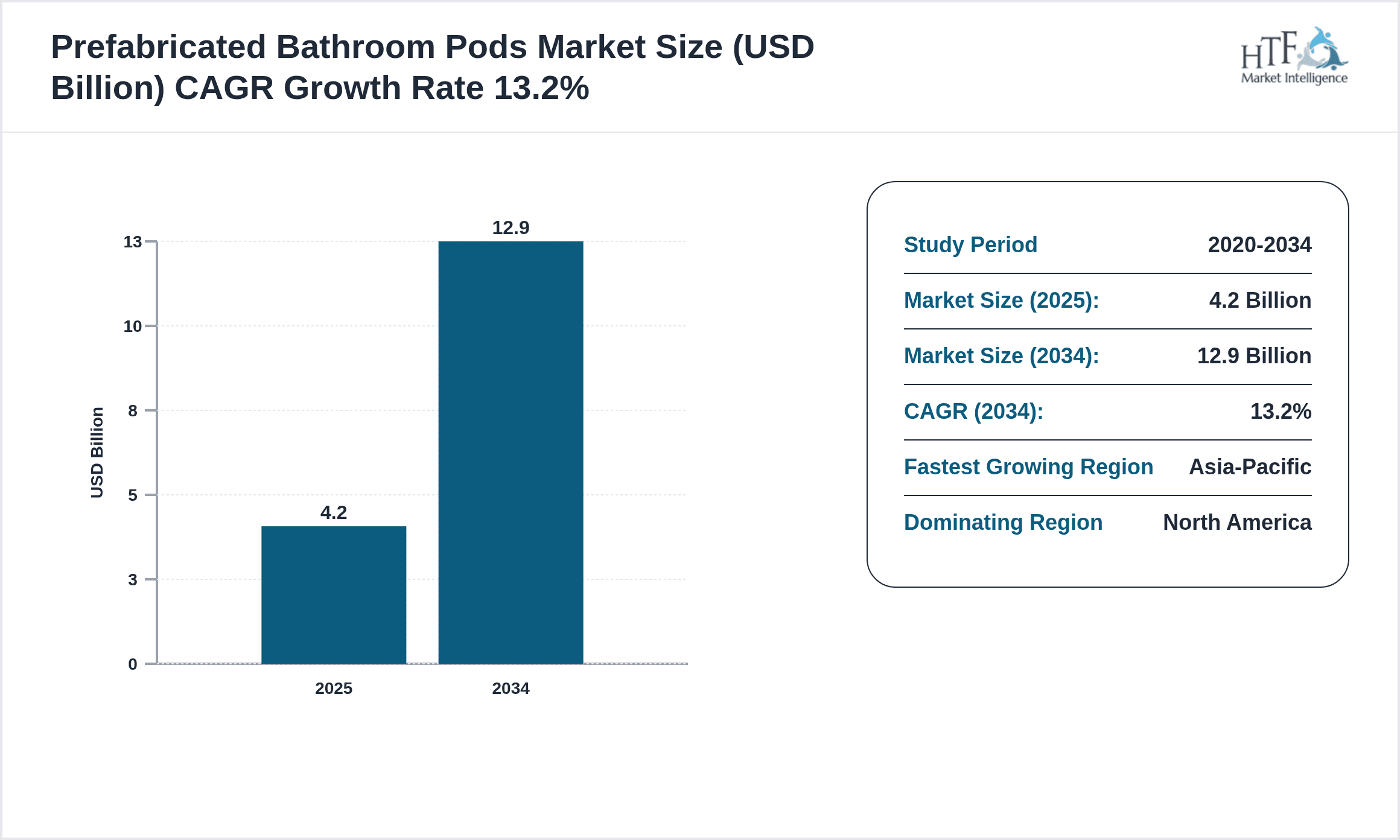
- •Key market highlights include a compound annual growth rate of 13.2% projected from 2025 to 2034, with the market size expected to expand from USD 4.2 billion in 2025 to USD 12.9 billion by 2034. The Asia-Pacific region is anticipated to exhibit the fastest growth due to escalating infrastructure investments and urbanization, while North America currently dominates the market with established modular construction adoption. Fully integrated pods remain the leading product type owing to their comprehensive assembly and easy installation, whereas custom pods are emerging rapidly to cater to specialized project requirements. Year-on-year growth is calculated at approximately 12.5%, reflecting strong market momentum driven by technological advancements and increasing stakeholder awareness.
- •The value proposition of prefabricated bathroom pods lies in their ability to streamline construction schedules, enhance quality consistency, and reduce labor dependencies, making them strategically important for developers, contractors, and end-users aiming to optimize building projects. Their adoption supports sustainability goals by minimizing waste and energy consumption during construction. Stakeholders across the construction, hospitality, healthcare, and residential sectors leverage these pods to improve project delivery times and cost efficiency, aligning with evolving industry standards and regulatory frameworks promoting modular and off-site construction methods.
Competitive Landscape
The global prefabricated bathroom pods market is characterized by intense competition among established multinational manufacturers and emerging regional players striving to innovate and expand their geographic footprint. Market dynamics are shaped by strategic partnerships, technology integration, and capacity enhancements aimed at meeting rising demand. Companies employ diverse competitive strategies including product differentiation through customization capabilities, cost leadership by optimizing manufacturing processes, and geographic expansion targeting fast-growing markets such as Asia-Pacific and Latin America. Innovation in materials, modular designs, and sustainable manufacturing practices serve as key competitive advantages. Mergers and acquisitions, albeit limited in recent years, remain a strategic tool to consolidate market share and enhance technological expertise. Distribution channels vary from direct sales to collaborations with construction firms and real estate developers, strengthening market presence. Market entry barriers include high capital investment requirements, stringent quality standards, and the need for skilled labor to manage complex assembly processes. Future competitive trends likely involve increased digitalization, adoption of Industry 4.0 technologies, and expanding service portfolios encompassing installation and maintenance support.
Prominent Players in Prefabricated Bathroom Pods Market
- •Roca Sanitario, S.A. (Spain)
- •Triton Showers Limited (United Kingdom)
- •CIMC Modular Building Systems Limited (China)
- •BMarko Structures LLC (United States)
- •Dirtt Environmental Solutions Ltd. (Canada)
- •Portakabin Limited (United Kingdom)
- •Hufcor, Inc. (United States)
- •Modulaire Group (France)
- •Sanghvi Movers Ltd. (India)
- •Delos Living LLC (United States)
- •Katerra, Inc. (United States)
- •Aker Solutions ASA (Norway)
- •Algeco Scotsman (France)
- •Lendlease Group (Australia)
- •Kingspan Group plc (Ireland)
- •Wernick Group (United Kingdom)
- •Honomobo Inc. (Canada)
- •Prescient Modular Construction (United States)
- •Vancouver Modular (Canada)
- •WeberHaus GmbH & Co. KG (Germany)
- •Champion Modular (United States)
- •Skanska AB (Sweden)
- •Red Sea Housing Services Company (Saudi Arabia)
- •Modular Building Systems, Inc. (United States)
- •Sekisui House, Ltd. (Japan)
Market Breakdown
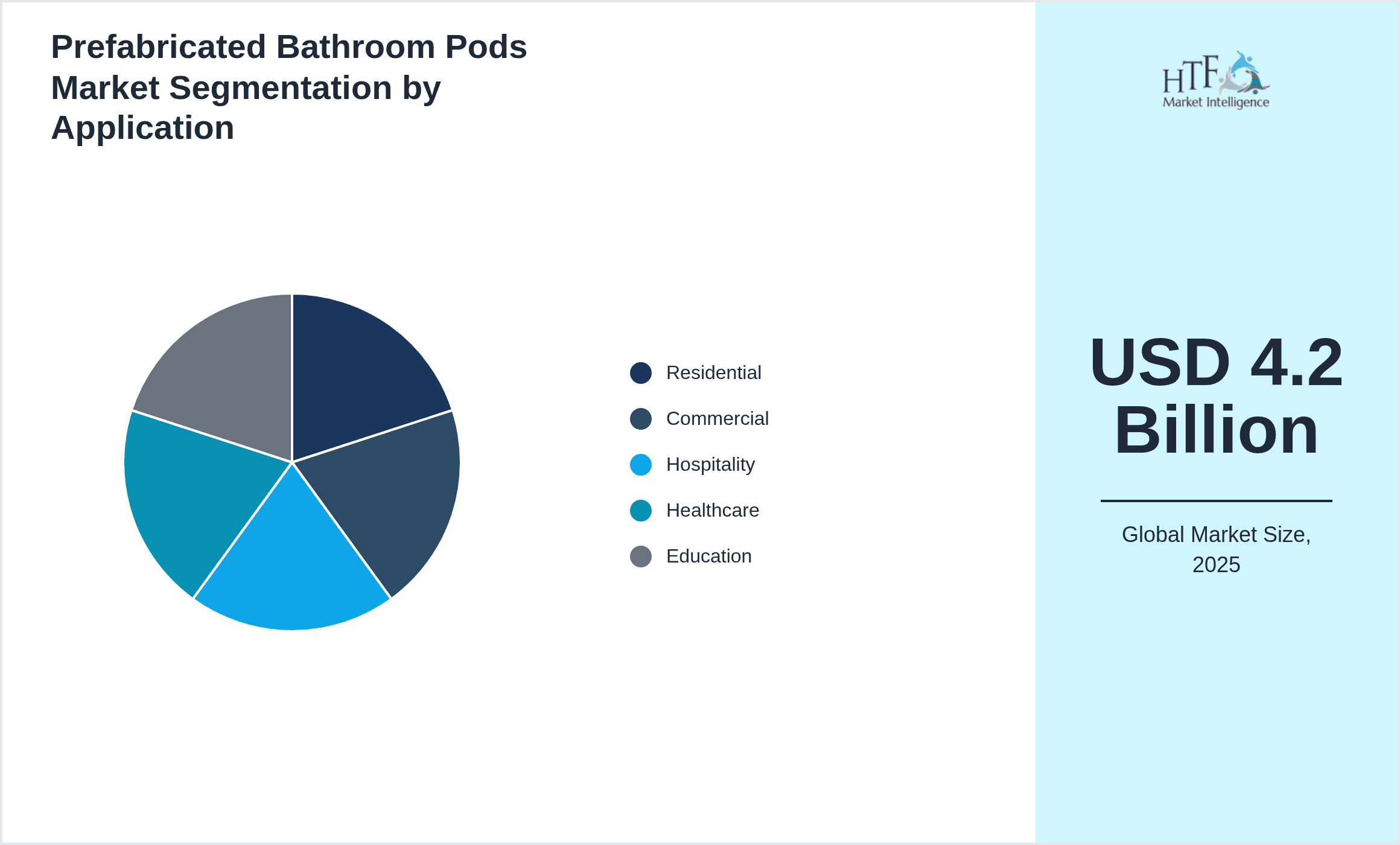
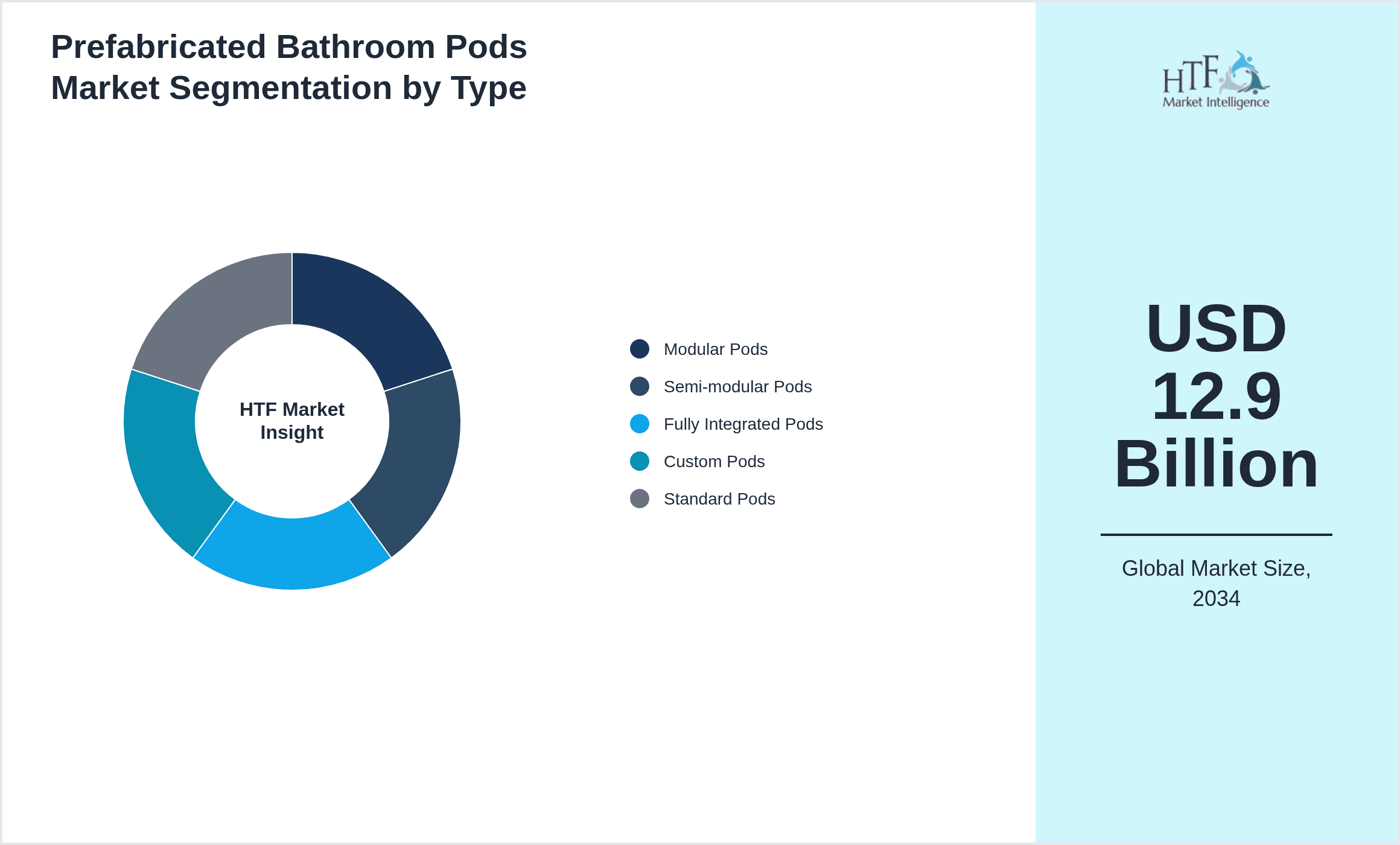
- •By Product Type
- ◦Modular Pods
- ◦Semi-modular Pods
- ◦Fully Integrated Pods
- ◦Custom Pods
- ◦Standard Pods
- •By Application
- ◦Residential
- ◦Commercial
- ◦Hospitality
- ◦Healthcare
- ◦Education
- •By End-Use Industry
- ◦Real Estate Development
- ◦Hotel & Resorts
- ◦Hospitals & Clinics
- ◦Educational Institutions
- •By Distribution Channel
- ◦Direct Sales
- ◦Construction Partnerships
- ◦Distributors and Dealers
Growth Dynamics
- •The growing urbanization and rapid infrastructure expansion in emerging economies are primary drivers accelerating the adoption of prefabricated bathroom pods. These developments create significant demand for quick, cost-effective, and high-quality construction solutions, which prefabricated pods effectively address.
- •Increasing labor shortages and rising labor costs in developed markets incentivize builders to adopt off-site modular construction techniques, thereby fueling market growth. Prefabricated bathroom pods reduce on-site labor dependency and improve project timelines, offering a strategic advantage.
- •Technological advancements such as automation, building information modeling (BIM), and improved materials contribute to enhanced product quality and customization capabilities, attracting a wider clientele and expanding use cases across sectors.
- •Sustainability initiatives and regulatory support promoting waste reduction and energy-efficient building practices encourage the integration of prefabricated bathroom pods into green building projects worldwide, further driving adoption.
- •Rising demand in the hospitality and healthcare sectors, particularly for rapid deployment of facilities with standardized quality and hygiene requirements, supports sustained market expansion globally.
- •Investment in smart building technologies and integration of IoT within modular units enhance functionality and market appeal, stimulating growth opportunities for manufacturers.
- •The trend towards urban regeneration and redevelopment projects in established cities creates continuous demand for modular bathroom solutions to minimize disruption and accelerate construction timelines.
Market Trends
- •Adoption of digital twin and BIM technologies in the design and manufacturing of prefabricated bathroom pods is increasing, enabling precise customization and reducing errors during installation, thereby enhancing project efficiency and customer satisfaction.
- •Sustainability is a leading trend as manufacturers incorporate eco-friendly materials and energy-efficient processes, aligning with global green building certification standards and attracting environmentally conscious clients.
- •Collaborations between modular manufacturers and real estate developers are becoming more frequent, fostering integrated project delivery models that streamline construction and improve cost predictability.
- •The rise of smart bathrooms equipped with sensor technologies and IoT connectivity within prefabricated pods reflects growing consumer preferences for enhanced convenience and hygiene, especially in hospitality and healthcare sectors.
- •Customization trends allow end-users to specify unique design features, finishes, and layouts, supported by flexible manufacturing setups, which is expanding market reach into luxury and niche segments.
- •Increasing regulatory emphasis on construction safety and quality assurance is encouraging the shift from traditional on-site bathroom construction to prefabricated solutions that ensure consistent standards.
- •Emerging markets are witnessing a surge in modular construction awareness, supported by government incentives and infrastructure investments, positioning prefabricated bathroom pods as a viable growth avenue.
Market Opportunities
- •Expanding infrastructure development in Asia-Pacific offers substantial opportunities for prefabricated bathroom pod manufacturers to capture growing demand from residential and commercial construction projects.
- •The increasing need for rapid hospital and healthcare facility expansions, particularly in response to global health crises, creates opportunities for modular bathroom pods designed for quick installation and high hygiene standards.
- •Technological integration in pods, including smart features and IoT connectivity, opens new market segments focused on intelligent and automated building solutions, enhancing value propositions.
- •Sustainability-focused building projects seeking LEED and other green certifications represent growth areas for eco-friendly prefabricated bathroom pods with recyclable materials and energy-efficient designs.
- •Geographic expansion into emerging economies with rising urban populations presents untapped markets for modular bathroom pods, supported by increased foreign direct investment and infrastructure funding.
- •Partnerships with real estate developers and construction firms enable manufacturers to offer end-to-end solutions, improving market penetration and customer retention.
- •Customization capabilities allow targeting of premium segments including luxury hotels and high-end residential projects, facilitating higher margins and brand differentiation.
Market Challenges
- •High initial capital investment required for advanced manufacturing facilities and automation technologies poses a significant barrier for new entrants and small manufacturers.
- •Logistical complexities related to transportation and on-site installation of bulky prefabricated pods can increase project costs and require specialized handling expertise.
- •Resistance from traditional construction contractors and stakeholders accustomed to conventional building methods slows the widespread adoption of prefabricated bathroom pods in some markets.
- •Regulatory heterogeneity across global regions complicates compliance efforts, with varying building codes and certification requirements impacting market entry and product standardization.
- •Limited customization in standardized pods may restrict appeal for clients seeking unique design aesthetics or specific functional features, limiting market reach in niche segments.
- •Supply chain disruptions affecting raw materials and components can delay manufacturing and delivery schedules, impacting project timelines and client satisfaction.
- •Skilled labor shortages in modular construction techniques hinder effective installation and integration of bathroom pods in complex building projects.
Regulatory Framework
- •Between 2020 and 2025, several countries implemented stricter building codes mandating the use of quality-tested prefabricated components to enhance safety and durability in modular construction projects, driving market demand for compliant bathroom pods.
- •Regulations focusing on sustainable building practices, such as LEED certification and Energy Star standards, have been increasingly enforced across North America and Europe, encouraging manufacturers to develop eco-friendly prefabricated bathroom pods with energy-efficient materials.
- •Safety standards related to fire resistance, water-tightness, and hygiene compliance have been standardized in the hospitality and healthcare sectors, influencing product design and manufacturing protocols for bathroom pods globally.
- •The European Union's Construction Products Regulation (CPR) imposed mandatory certification requirements for modular building units between 2021 and 2025, affecting market participants seeking access to European markets.
- •Government initiatives providing incentives and tax benefits for off-site and modular construction adoption have been introduced in Asia-Pacific countries, such as Singapore and Australia, fostering market growth and innovation in prefabricated bathroom pods.
Market Intelligence
- •12th January 2025, Roca Sanitario, S.A. launched a new line of eco-friendly fully integrated prefabricated bathroom pods featuring advanced water-saving technologies and recycled materials. Targeted primarily at the European hospitality sector, this product aims to reduce environmental impact while maintaining high standards of comfort and design. The pods incorporate smart sensor technology to optimize water usage and are manufactured in a zero-waste facility, reflecting Roca's commitment to sustainability and innovation. This launch is expected to enhance the company's market position in green modular construction solutions and meet increasing demand for sustainable building components globally. Source: Roca Sanitario Official Press Release.
- •5th March 2025, CIMC Modular Building Systems Limited announced the expansion of its manufacturing capacity in China with the introduction of automated assembly lines for custom prefabricated bathroom pods. This strategic investment aims to boost production efficiency, reduce lead times, and cater to rising demand from residential and healthcare projects in Asia-Pacific. The new facility integrates Industry 4.0 technologies including robotics and real-time quality monitoring, ensuring higher precision and consistency. CIMC's move strengthens its competitive edge and supports its growth trajectory in the rapidly expanding modular construction market. Source: CIMC Modular Building Systems Corporate Report.
- •20th May 2025, Portakabin Limited announced a partnership with a leading real estate developer in the United Kingdom to supply modular bathroom pods for a large-scale mixed-use development project. This collaboration leverages Portakabin’s expertise in off-site construction and aims to accelerate project timelines while minimizing environmental impact. The partnership includes joint innovation efforts to customize pods with smart features and energy-efficient fixtures tailored to client specifications. This strategic alliance is expected to enhance market penetration and set new standards for integrated modular solutions in urban construction projects. Source: Portakabin Official Website.
- •15th August 2025, Kingspan Group plc completed the acquisition of a specialized modular bathroom pod manufacturer to broaden its product portfolio and enhance manufacturing capabilities in Europe. This acquisition supports Kingspan’s strategy to expand its footprint in the modular construction sector and capitalize on growing demand for sustainable building solutions. The integration enables cross-leveraging of technology and distribution networks, facilitating innovation in pod design and faster market access. The move signals increasing consolidation trends within the industry aimed at strengthening competitive positioning and delivering comprehensive solutions to clients. Source: Kingspan Group Investor Relations.
Regional Outlook
The North America currently holds a significant share of the market, primarily due to several key factors: increasing consumption rates, a burgeoning population, and robust economic momentum. These elements collectively drive demand, positioning this region as a leader in the market. On the other hand, Asia-Pacific is rapidly emerging as the fastest-growing area within the industry. This remarkable growth can be attributed to swift infrastructure development, the expansion of various industrial sectors, and a marked increase in consumer demand. These dynamics make this region a crucial player in shaping future market growth.
In our report, we cover a comprehensive analysis of the following regions and countries:
- North America
- LATAM
- West Europe
- Central & Eastern Europe
- Northern Europe
- Southern Europe
- East Asia
- Southeast Asia
- South Asia
- Central Asia
- Oceania
- MEA
| Feature | Details |
|---|---|
| Base Year Market Size | USD 4.2 Billion |
| Forecast Year Market Size | USD 12.9 Billion |
| CAGR | 13.2% |
| Forecast Period | 2026 to 2033 |
| YoY Growth | 12.5% |
| Scope of Report | Market is segmented by Product Type (Modular Pods, Semi-modular Pods, Fully Integrated Pods, Custom Pods, Standard Pods), Application (Residential, Commercial, Hospitality, Healthcare, Education), End-Use Industry (Real Estate Development, Hotel & Resorts, Hospitals & Clinics, Educational Institutions), Distribution Channel (Direct Sales, Construction Partnerships, Distributors and Dealers) |
| Regions Covered | North America, LATAM, West Europe, Central & Eastern Europe, Northern Europe, Southern Europe, East Asia, Southeast Asia, South Asia, Central Asia, Oceania, MEA |
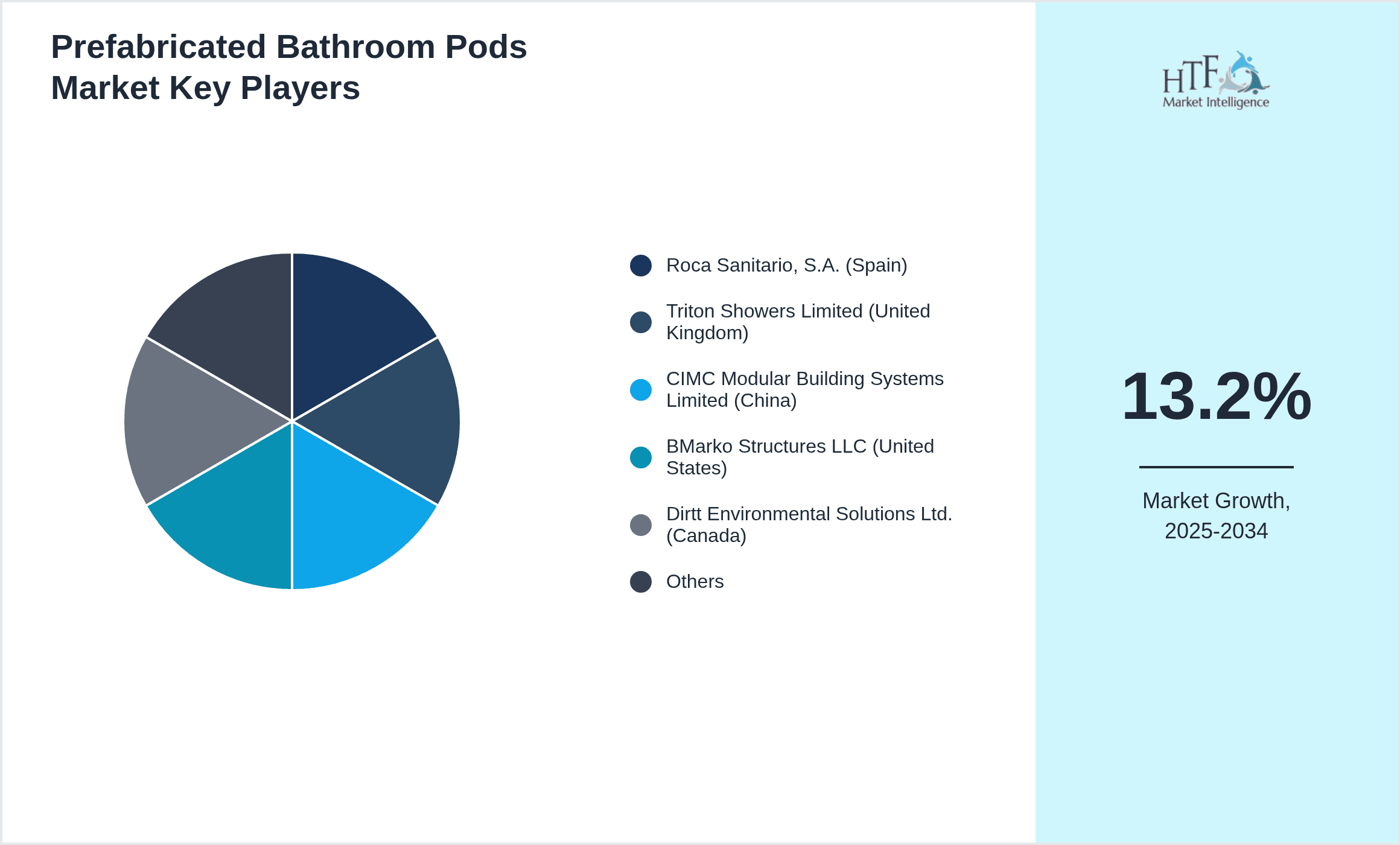
| Key Companies | Roca Sanitario, S.A. (Spain), Triton Showers Limited (United Kingdom), CIMC Modular Building Systems Limited (China), BMarko Structures LLC (United States), Dirtt Environmental Solutions Ltd. (Canada) |
Global Prefabricated Bathroom Pods Market Size, Growth & Revenue 2025-2034 - Table of Contents
Research enthusiast focused on transforming data uncovering into actionable insights through data-driven decision-making.
Frequently Asked Questions (FAQ):
The Compact Track Loaders market is expected to see value worth 5.3 Billion in 2025.
North America currently leads the market with approximately 45% market share, followed by Europe at 28% and Asia-Pacific at 22%. The remaining regions account for 5% of the global market.
Key growth drivers include increasing construction activities, rising demand for versatile equipment in agriculture, technological advancements in track loader design, and growing preference for compact equipment in urban construction projects.