
Global Sliding Watertight Doors Market Size, Growth & Revenue 2024-2034
Global Sliding Watertight Doors Market is segmented by Product Type (Electric Sliding Doors, Hydraulic Sliding Doors, Manual Sliding Doors, Pneumatic Sliding Doors, Hybrid Sliding Doors), Application (Commercial Ships, Naval Vessels, Offshore Platforms, Submarines, Industrial Facilities), End-Use Industry (Maritime Shipping, Defense and Naval, Oil and Gas Offshore, Industrial Manufacturing), Distribution Channel (Direct Sales, Distributors and Dealers, Online Platforms), and Geography (North America, LATAM, West Europe, Central & Eastern Europe, Northern Europe, Southern Europe, East Asia, Southeast Asia, South Asia, Central Asia, Oceania, MEA)
Pricing
Report Overview
Executive Summary
- •The global Sliding Watertight Doors Market is a critical segment within marine safety and industrial infrastructure, focusing on the deployment of advanced sliding watertight door systems that prevent water ingress, ensure compartmentalization, and enhance the safety of vessels and offshore platforms. This market covers a wide spectrum of door technologies including electric, hydraulic, manual, pneumatic, and hybrid systems, each designed to meet specific operational and environmental challenges. The primary applications span commercial shipping, naval vessels, offshore oil and gas platforms, submarines, and industrial facilities requiring watertight integrity. Increasing global maritime trade, stringent safety regulations, and rising offshore exploration activities drive demand. The market is characterized by continuous innovation, emphasizing automation, material durability, and quick-response mechanisms to comply with international maritime safety standards. Strategic importance lies in safeguarding lives, assets, and the environment, making these doors indispensable in the maritime and offshore sectors worldwide.
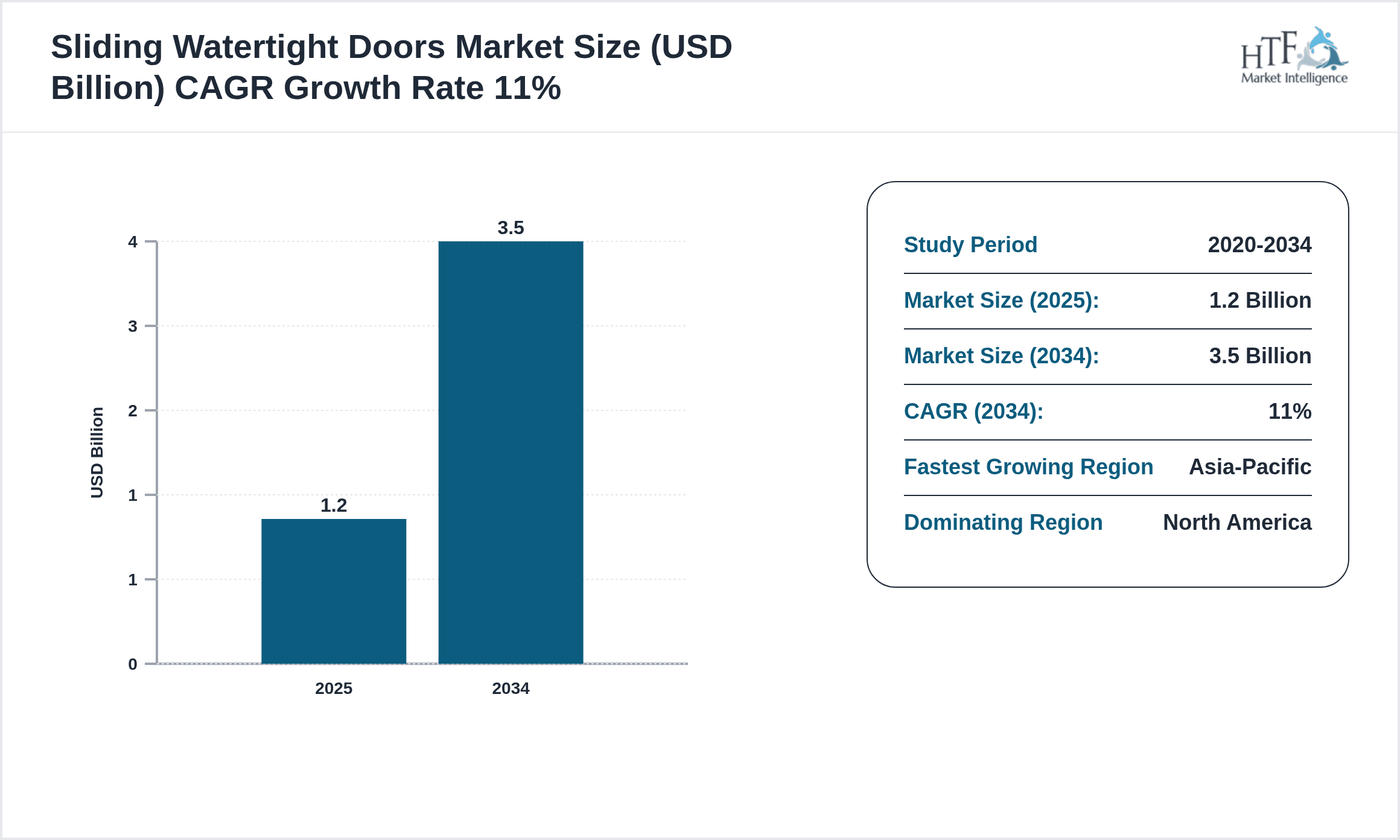
- •Key market highlights include a base market size of USD 1.2 Billion in 2024 with a projected CAGR of 11.0% leading to a forecasted market value of USD 3.5 Billion by 2034. North America currently dominates the market due to its advanced shipbuilding industry and stringent regulatory environment, while Asia-Pacific is the fastest-growing region driven by expanding maritime trade and offshore infrastructure development. Electric sliding doors lead the product segment owing to their automation capabilities and reliability, with hybrid sliding doors emerging rapidly due to their combined operational advantages. Commercial ships and naval vessels represent the largest application segments, reflecting ongoing fleet modernization and naval defense upgrades globally.
- •The sliding watertight doors market holds significant strategic value for shipbuilders, offshore operators, naval defense agencies, and safety regulators. Its growth ensures enhanced marine safety, compliance with international conventions, and operational efficiency. Technological advancements improve automation, reduce manual intervention, and increase door responsiveness during emergencies. Industry players benefit from expanding new vessel construction, retrofit projects, and rising demand in emerging maritime economies. Overall, the market contributes to safeguarding maritime infrastructure against flooding risks, supporting global trade and offshore energy production.
Competitive Landscape
The global Sliding Watertight Doors Market exhibits a highly competitive environment characterized by the presence of established multinational corporations alongside specialized regional players. Market competition is driven by continuous innovation in door technology, including automation, material advancements, and integration with vessel management systems. Leading companies focus on product differentiation through enhanced safety features, faster operation, and compliance with evolving maritime regulations. Strategic partnerships and collaborations with shipbuilders and offshore operators are common to ensure customized solutions. Pricing strategies balance between premium quality and cost-effectiveness to capture diverse market segments. Mergers and acquisitions have been pivotal in consolidating technological expertise and expanding geographic reach. The competitive landscape emphasizes robust R&D investments, extensive after-sales services, and adherence to international safety certifications, creating high entry barriers for new entrants and fostering long-term industry growth.
Leading Companies in Sliding Watertight Doors Market
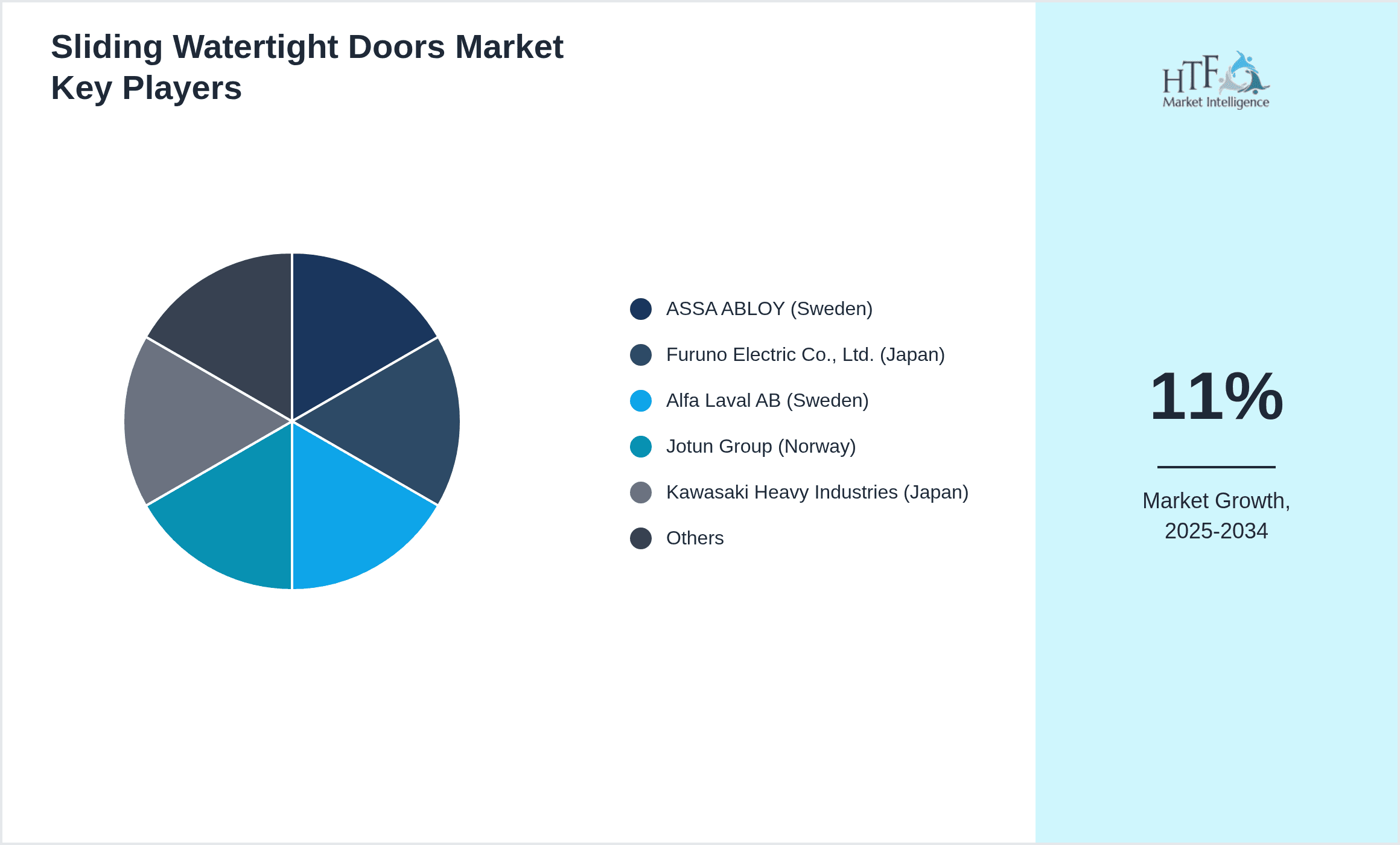
- •ASSA ABLOY (Sweden)
- •Furuno Electric Co., Ltd. (Japan)
- •Alfa Laval AB (Sweden)
- •Jotun Group (Norway)
- •Kawasaki Heavy Industries (Japan)
- •Lloyd's Register Group Limited (United Kingdom)
- •Saint-Gobain S.A. (France)
- •C.R. Laurence Co., Inc. (United States)
- •Hansen Protection AS (Norway)
- •Siemens AG (Germany)
- •Rolls-Royce Holdings plc (United Kingdom)
- •Mitsubishi Heavy Industries, Ltd. (Japan)
- •Bosch Rexroth AG (Germany)
- •Velux A/S (Denmark)
- •Hydraquip Limited (United Kingdom)
- •Wartsila Corporation (Finland)
- •Alutek (United States)
- •Dongguan Huayu Hardware Products Co., Ltd. (China)
- •Wichard SAS (France)
- •Hubbell Incorporated (United States)
- •Rollon S.p.A. (Italy)
- •INDEVA (Italy)
- •Norsafe AS (Norway)
- •Pettit Marine Paint Company (United States)
- •Dometic Group AB (Sweden)
Market Breakdown
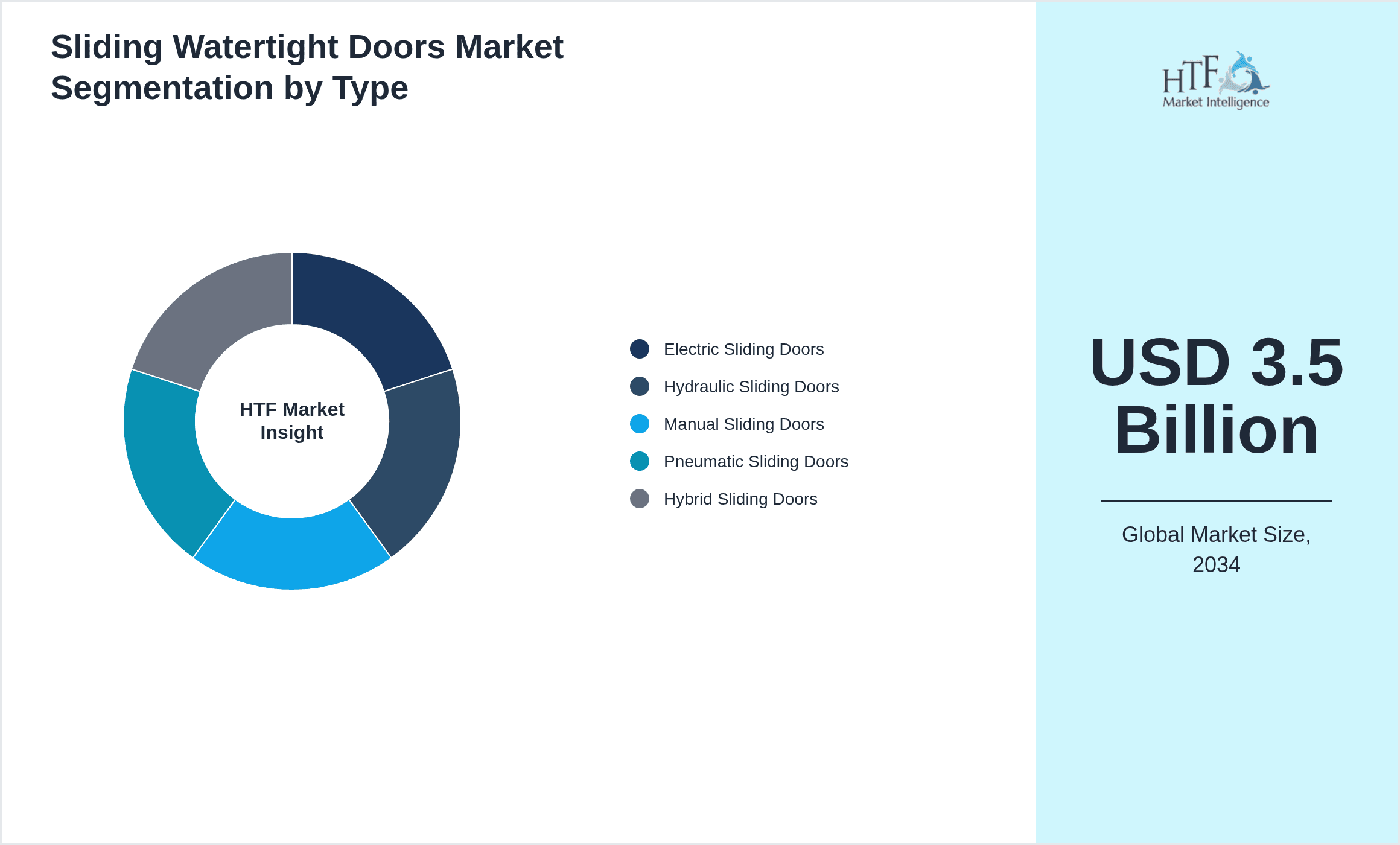
- •By Product Type
- ◦Electric Sliding Doors
- ◦Hydraulic Sliding Doors
- ◦Manual Sliding Doors
- ◦Pneumatic Sliding Doors
- ◦Hybrid Sliding Doors
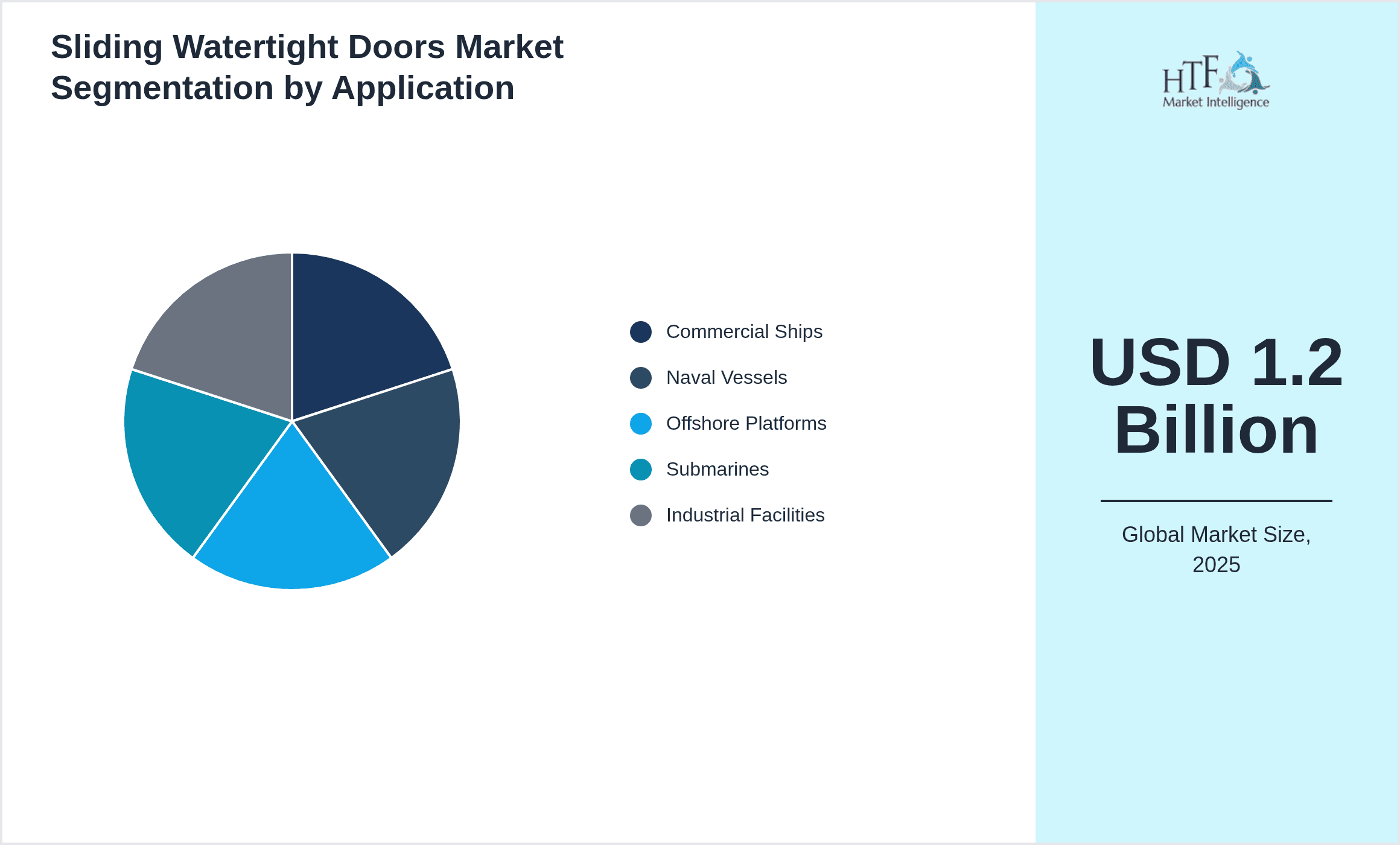
- •By Application
- ◦Commercial Ships
- ◦Naval Vessels
- ◦Offshore Platforms
- ◦Submarines
- ◦Industrial Facilities
- •By End-Use Industry
- ◦Maritime Shipping
- ◦Defense and Naval
- ◦Oil and Gas Offshore
- ◦Industrial Manufacturing
- •By Distribution Channel
- ◦Direct Sales
- ◦Distributors and Dealers
- ◦Online Platforms
Growth Dynamics
- •Rising global maritime trade and increasing fleet modernization efforts have significantly propelled demand for sliding watertight doors, as safety and regulatory compliance become paramount in shipbuilding and offshore construction sectors.
- •Technological advancements in automation and materials have enhanced door reliability and operational efficiency, attracting investments and adoption across commercial and defense maritime applications.
- •Stringent international maritime safety regulations, including SOLAS and IMO standards, have compelled shipbuilders and offshore operators to upgrade watertight door systems to comply with enhanced safety protocols.
- •Growth in offshore oil and gas exploration activities, especially in Asia-Pacific and Middle East regions, has spurred demand for durable and efficient sliding watertight doors tailored for harsh marine environments.
- •Increasing naval defense budgets globally have driven the incorporation of advanced watertight door technologies to improve compartmentalization and survivability of naval vessels.
- •Emerging markets in Latin America and Africa are investing in port infrastructure and shipbuilding capabilities, presenting new growth avenues for sliding watertight door manufacturers.
- •Environmental concerns and the need for sustainable maritime operations have encouraged the development of energy-efficient door systems with reduced power consumption and enhanced lifecycle performance.
Market Trends
- •Increasing integration of IoT and smart sensor technologies into sliding watertight doors enables real-time monitoring and remote operation, improving safety management aboard vessels and offshore platforms.
- •Hybrid sliding doors combining electric and hydraulic mechanisms are gaining traction due to their balanced performance, reliability, and adaptability in diverse marine environments.
- •Major shipbuilders are incorporating modular door designs to facilitate easier installation, maintenance, and retrofitting, reducing downtime and operational costs.
- •Sustainability trends are driving the use of corrosion-resistant and lightweight materials such as aluminum alloys and composites to enhance door durability and vessel fuel efficiency.
- •Collaborations between door manufacturers and maritime classification societies are establishing new standards for watertight door testing and certification, fostering market confidence.
- •Growing demand for customization based on vessel type and operational environment is prompting manufacturers to offer tailored sliding door solutions with advanced safety features.
- •Digital twin technology is being explored for predictive maintenance of sliding watertight doors, enabling proactive servicing and minimizing unexpected failures.
Market Opportunities
- •Expansion into emerging maritime markets, particularly in Asia-Pacific and Latin America, offers substantial growth potential due to increasing shipbuilding activities and offshore exploration.
- •Development of smart sliding watertight doors with integrated IoT capabilities provides an opportunity to lead in the evolving digital marine safety landscape.
- •Retrofitting aging fleets and offshore platforms with advanced watertight door systems represents a lucrative market segment driven by regulatory pressure and safety upgrades.
- •Collaborations with naval defense agencies to develop specialized watertight doors for military vessels can open new strategic business channels.
- •Innovations in eco-friendly materials and energy-efficient door operations can attract environmentally conscious customers and comply with future sustainability mandates.
- •Leveraging digital twin and predictive maintenance technologies to offer value-added services enhances customer retention and creates recurring revenue streams.
- •Expansion of distribution networks and e-commerce platforms can increase market penetration and accessibility, especially in underserved regions.
Market Challenges
- •High initial installation and maintenance costs of advanced sliding watertight doors may deter smaller shipbuilders and offshore operators from immediate adoption.
- •Complexity in integrating new door systems with legacy vessel infrastructure can pose technical challenges and increase retrofit timelines.
- •Stringent and varying international maritime regulations require continuous product adaptation, increasing compliance costs and time to market.
- •Supply chain disruptions for specialized materials and components can delay production and delivery, impacting market growth.
- •Competition from low-cost regional manufacturers may pressure pricing and profitability for established global players.
- •Skilled labor shortages in marine engineering and maintenance sectors can hinder efficient deployment and servicing of sliding watertight doors.
- •Technological obsolescence risk due to rapid innovation cycles necessitates continuous R&D investment, challenging smaller market participants.
Regulatory Framework
- •The International Maritime Organization (IMO) has enforced amendments to the SOLAS Convention between 2019 and 2024, mandating enhanced watertight integrity standards for new and existing vessels, requiring manufacturers to comply with stricter door sealing and operational reliability criteria.
- •Between 2020 and 2024, the European Union implemented the Marine Equipment Directive (MED) 2014/90/EU updates, establishing uniform certification and testing procedures for sliding watertight doors used on EU-flagged ships, enhancing safety compliance across member states.
- •The United States Coast Guard (USCG) updated its regulations from 2019 to 2023, emphasizing the need for automatic closure mechanisms and remote monitoring capabilities in watertight doors to improve emergency response effectiveness on commercial vessels.
- •Japan's Ministry of Land, Infrastructure, Transport and Tourism introduced safety guidelines for watertight doors on domestic commercial ships in 2019, focusing on durability under seismic activity and corrosion resistance, influencing design standards regionally.
- •Governmental support programs in major maritime nations have incentivized the retrofit of sliding watertight doors with smart automation features since 2021, aimed at enhancing maritime safety and operational efficiency while reducing human error.
Market Intelligence
- •15th January 2025, ASSA ABLOY unveiled its latest range of hybrid sliding watertight doors featuring integrated IoT sensors for real-time status monitoring and predictive maintenance, targeting commercial shipbuilders and offshore platforms. This launch aims to reduce downtime and enhance safety through continuous door performance analytics, positioning ASSA ABLOY as a leader in smart maritime safety solutions. The product is designed to meet the latest SOLAS and IMO regulations, with modular installation capabilities to facilitate retrofits. Source: ASSA ABLOY Official Press Release
- •22nd March 2025, Mitsubishi Heavy Industries announced a strategic partnership with Wartsila Corporation to co-develop energy-efficient electric sliding watertight doors tailored for naval vessels. This collaboration combines Mitsubishi's engineering expertise with Wartsila's advanced automation systems to deliver doors with reduced power consumption and enhanced operational reliability under combat conditions. The partnership is expected to accelerate innovation and market penetration in defense maritime sectors. Source: Industry Newswire
- •10th May 2025, Furuno Electric Co., Ltd. expanded its product portfolio by launching pneumatic sliding watertight doors integrated with smart control units, optimized for offshore oil rigs exposed to corrosive marine environments. These doors offer rapid deployment and fail-safe operation, addressing critical safety requirements for offshore workers. The launch strengthens Furuno's position in the offshore market with a focus on durability and automation. Source: Furuno Corporate Announcement
- •5th August 2025, Saint-Gobain S.A. completed the acquisition of a specialized sliding door manufacturer, enhancing its capabilities in corrosion-resistant materials for marine applications. This acquisition enables Saint-Gobain to offer comprehensive door solutions with advanced material science innovations, targeting the growing demand in Asia-Pacific offshore projects. The strategic move is aligned with Saint-Gobain’s sustainability goals and market expansion plans. Source: Saint-Gobain Press Release
Regional Outlook
The North America currently holds a significant share of the market, primarily due to several key factors: increasing consumption rates, a burgeoning population, and robust economic momentum. These elements collectively drive demand, positioning this region as a leader in the market. On the other hand, Asia-Pacific is rapidly emerging as the fastest-growing area within the industry. This remarkable growth can be attributed to swift infrastructure development, the expansion of various industrial sectors, and a marked increase in consumer demand. These dynamics make this region a crucial player in shaping future market growth.
In our report, we cover a comprehensive analysis of the following regions and countries:
- North America
- LATAM
- West Europe
- Central & Eastern Europe
- Northern Europe
- Southern Europe
- East Asia
- Southeast Asia
- South Asia
- Central Asia
- Oceania
- MEA
| Feature | Details |
|---|---|
| Base Year Market Size | USD 1.2 Billion |
| Forecast Year Market Size | USD 3.5 Billion |
| CAGR | 11% |
| Forecast Period | 2026 to 2033 |
| YoY Growth | 11% |
| Scope of Report | Market is segmented by Product Type (Electric Sliding Doors, Hydraulic Sliding Doors, Manual Sliding Doors, Pneumatic Sliding Doors, Hybrid Sliding Doors), Application (Commercial Ships, Naval Vessels, Offshore Platforms, Submarines, Industrial Facilities), End-Use Industry (Maritime Shipping, Defense and Naval, Oil and Gas Offshore, Industrial Manufacturing), Distribution Channel (Direct Sales, Distributors and Dealers, Online Platforms) |
| Regions Covered | North America, LATAM, West Europe, Central & Eastern Europe, Northern Europe, Southern Europe, East Asia, Southeast Asia, South Asia, Central Asia, Oceania, MEA |
| Key Companies | ASSA ABLOY (Sweden), Furuno Electric Co., Ltd. (Japan), Alfa Laval AB (Sweden), Jotun Group (Norway), Kawasaki Heavy Industries (Japan), Lloyd's Register Group Limited (United Kingdom), Saint-Gobain S.A. (France), C.R. Laurence Co., Inc. (United States), Hansen Protection AS (Norway), Siemens AG (Germany), Rolls-Royce Holdings plc (United Kingdom), Mitsubishi Heavy Industries, Ltd. (Japan), Bosch Rexroth AG (Germany), Velux A/S (Denmark), Hydraquip Limited (United Kingdom), Wartsila Corporation (Finland), Alutek (United States), Dongguan Huayu Hardware Products Co., Ltd. (China), Wichard SAS (France), Hubbell Incorporated (United States), Rollon S.p.A. (Italy), INDEVA (Italy), Norsafe AS (Norway), Pettit Marine Paint Company (United States), Dometic Group AB (Sweden) |
Global Sliding Watertight Doors Market Size, Growth & Revenue 2024-2034 - Table of Contents
Multidisciplinary researcher with 10+ years of experience uncovering insights across diverse domains focused on uncovering insights that drive informed decisions.
Frequently Asked Questions (FAQ):
The Compact Track Loaders market is projected to grow at a CAGR of 6.8% from 2025 to 2030, driven by increasing demand in construction and agricultural sectors.
North America currently leads the market with approximately 45% market share, followed by Europe at 28% and Asia-Pacific at 22%. The remaining regions account for 5% of the global market.
Key growth drivers include increasing construction activities, rising demand for versatile equipment in agriculture, technological advancements in track loader design, and growing preference for compact equipment in urban construction projects.