
North America Sensor Bearing Market Size, Growth & Revenue 2025-2034
North America Sensor Bearing Market is segmented by Product Type (Magnetic Sensor Bearings, Optical Sensor Bearings, Capacitive Sensor Bearings, Inductive Sensor Bearings, Resistive Sensor Bearings), Application (Automotive, Industrial Machinery, Aerospace, Consumer Electronics, Healthcare), End-Use Industry (Automotive Manufacturing, Aerospace & Defense, Industrial Automation, Healthcare Equipment), Distribution Channel (Direct Sales, OEM Partnerships, Distributors & Dealers), and Geography (United States, Canada, Mexico)
Pricing
Report Overview
Executive Summary
- •The North America Sensor Bearing market represents a critical segment within the industrial and automotive sectors, integrating sensor technologies with traditional bearing systems to provide real-time monitoring and predictive maintenance capabilities. This market includes a variety of sensor bearing types such as magnetic, optical, capacitive, inductive, and resistive sensors, which are embedded within mechanical bearings to measure parameters like speed, position, temperature, and vibration. These advanced sensor bearings enable enhanced operational efficiency, safety, and reliability by facilitating condition-based maintenance and reducing unexpected equipment failures. Primary applications encompass automotive systems, aerospace components, industrial machinery, consumer electronics, and healthcare devices, reflecting the broad adoption of sensor bearings across key industries in North America. The market’s growth is driven by increasing automation, the rising demand for smart manufacturing solutions aligned with Industry 4.0, and stringent regulatory requirements mandating advanced safety and monitoring systems. Technological advancements in sensor miniaturization, wireless communication, and integration with IoT platforms further propel market expansion. The strategic importance of sensor bearings is underscored by their ability to optimize asset performance, reduce operational costs, and support sustainable industrial practices, making them indispensable across various sectors. With rising investments in research and development, coupled with growing adoption in emerging applications, the North America sensor bearing market is poised for significant growth through 2034, driven by innovation and evolving customer requirements.
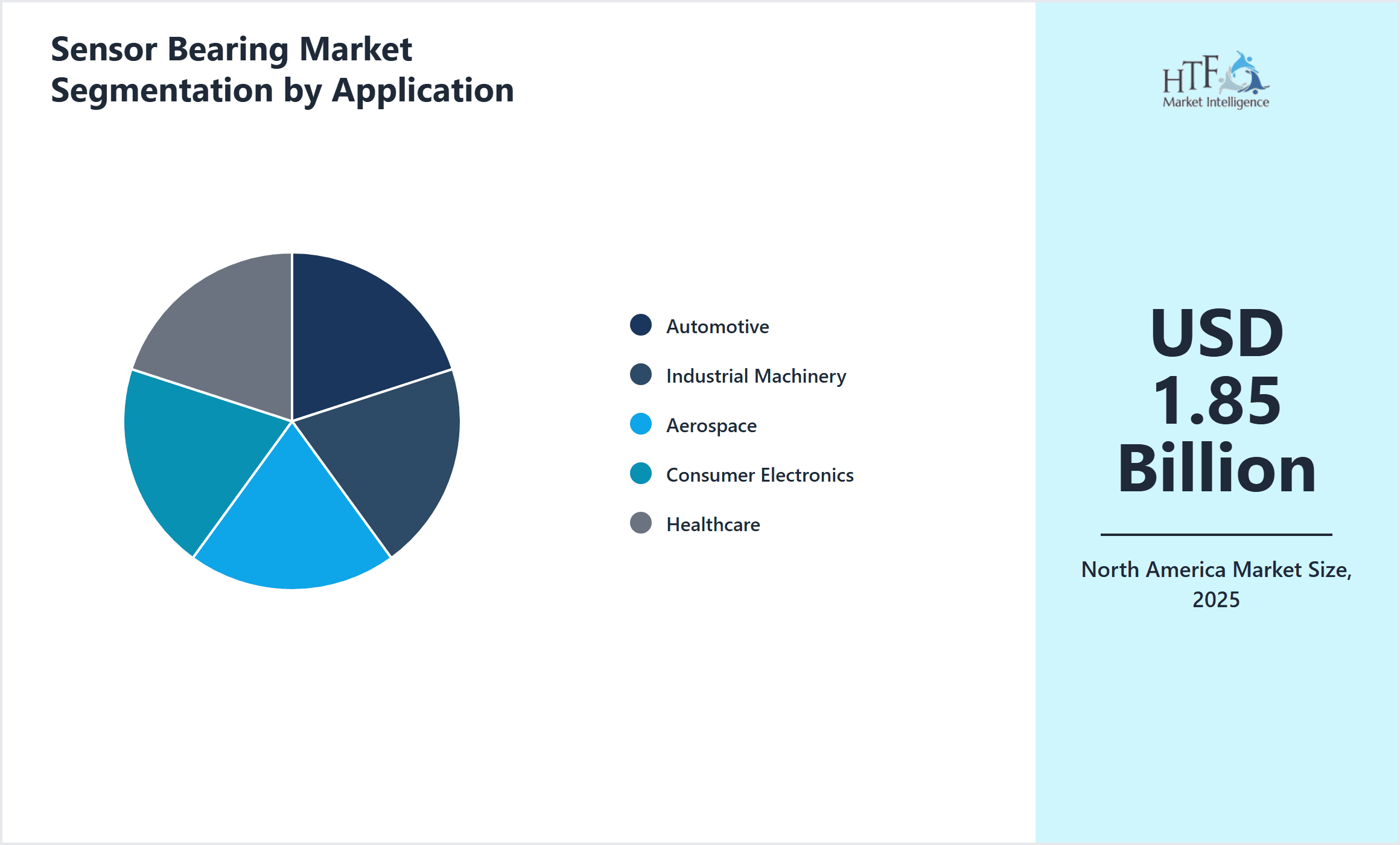
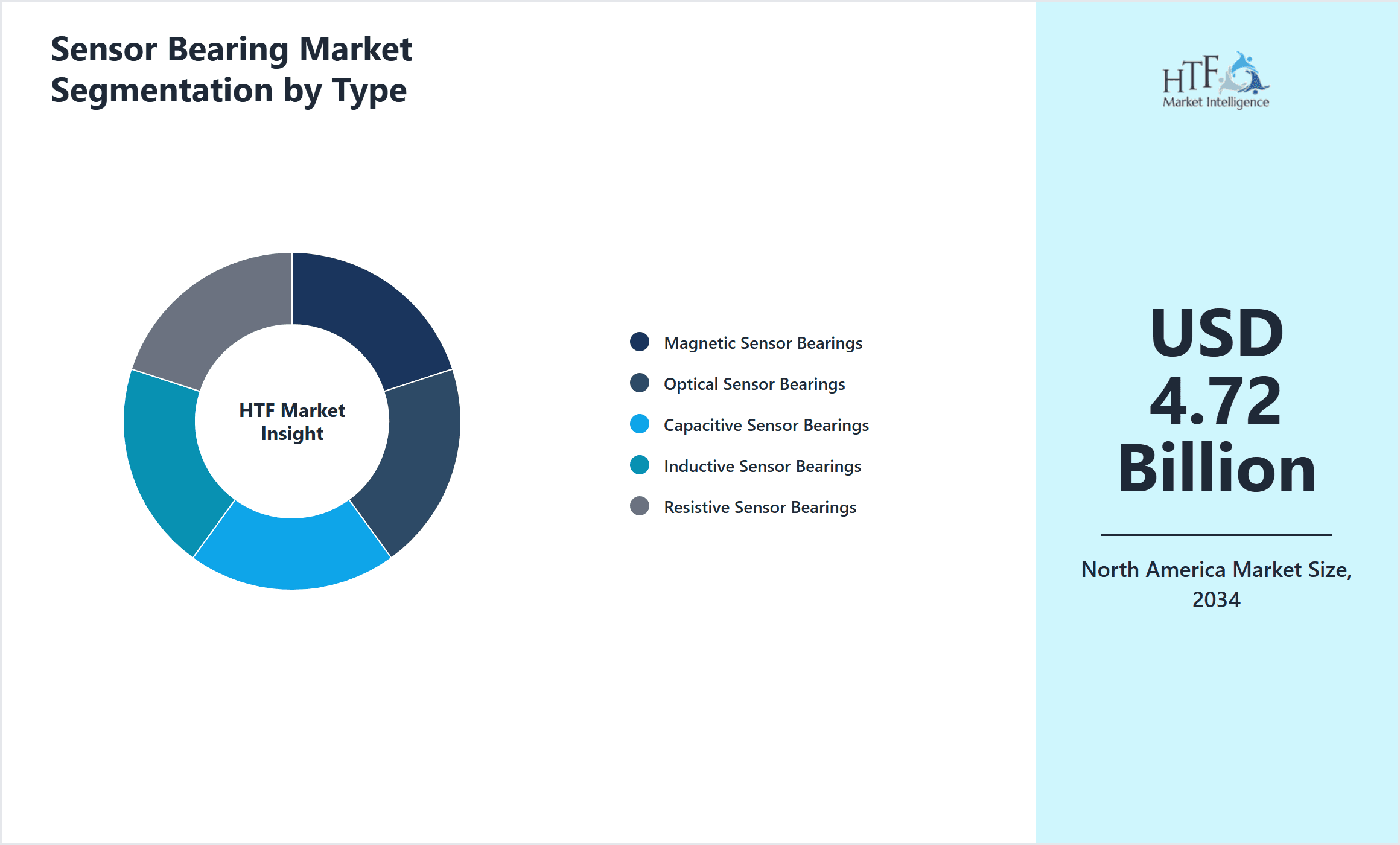
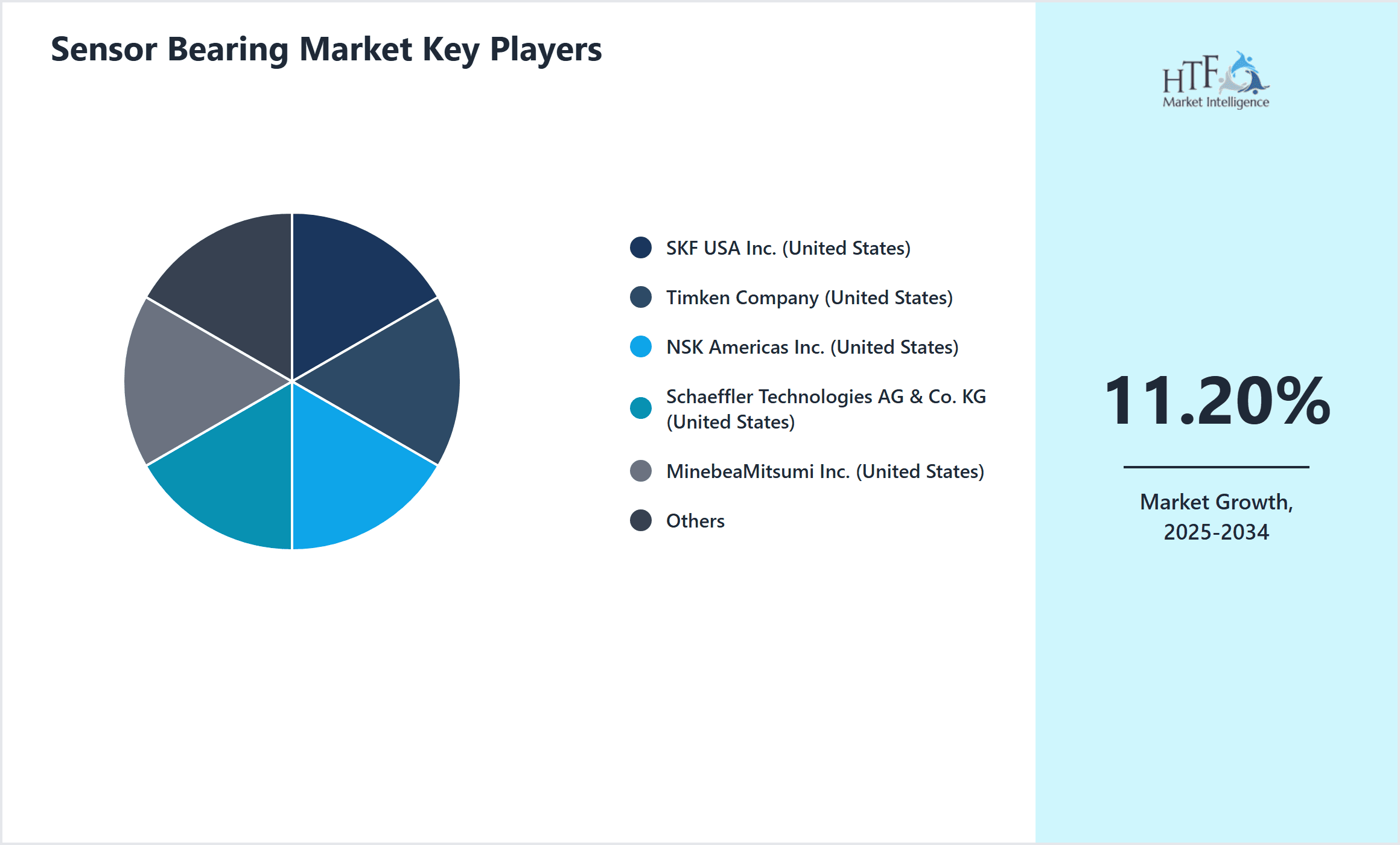
- •Key market highlights include a base market size of USD 1.85 billion in 2025, projected to reach USD 4.72 billion by 2034, exhibiting a robust CAGR of 11.2%. The automotive segment remains the largest application area, supported by the United States as the dominating country within the region, reflecting high adoption rates in vehicle safety and monitoring systems. Canada is identified as the fastest growing country due to accelerating industrial automation and increasing aerospace manufacturing activities. Magnetic sensor bearings are currently the leading product type, favored for their reliability and accuracy, while optical sensor bearings demonstrate the fastest growth trajectory driven by advancements in precision sensing and miniaturization technologies. The market also benefits from evolving regulatory frameworks emphasizing safety and environmental compliance, which stimulate demand for sensor-integrated bearings across industries.
- •This market offers strategic value to manufacturers, automotive OEMs, aerospace companies, industrial automation providers, and end-users by delivering enhanced equipment reliability, reduced downtime, and data-rich insights for operational optimization. It enables predictive maintenance practices, facilitating cost savings and improved safety standards. The integration of sensor bearings supports the digital transformation of industries in North America, aligning with smart factory initiatives and sustainability goals. For investors and stakeholders, the market represents a fertile landscape with opportunities for innovation, partnerships, and expansion in emerging applications, reinforcing its significance in the evolving industrial ecosystem.

Competitive Landscape
The North America Sensor Bearing market is characterized by intense competition among global and regional players focusing on technological innovation, strategic partnerships, and expanding product portfolios to address diverse industry needs. Companies are investing heavily in R&D to develop sensor bearings with enhanced accuracy, durability, and wireless communication capabilities, thereby gaining competitive advantages. Market dynamics include aggressive pricing strategies, customization of solutions for end-user segments, and expansion through mergers and acquisitions to consolidate market share. Distribution channels are evolving to include direct sales, OEM partnerships, and digital platforms that facilitate faster adoption. Regional competition is influenced by proximity to automotive manufacturing hubs and industrial centers, with the United States leading in innovation and production capacity. The competitive environment is also shaped by regulatory compliance requirements, pushing companies to innovate products that meet stringent safety standards. Future trends suggest increased collaboration between sensor technology developers and bearing manufacturers to deliver integrated smart solutions, enabling market leaders to establish strong footholds. The emergence of new entrants with specialized sensor technologies may disrupt traditional approaches, intensifying competition and driving the market toward higher performance standards and cost efficiencies.
Prominent Players in Sensor Bearing Market
- •SKF USA Inc. (United States)
- •Timken Company (United States)
- •NSK Americas Inc. (United States)
- •Schaeffler Technologies AG & Co. KG (United States)
- •MinebeaMitsumi Inc. (United States)
- •Honeywell International Inc. (United States)
- •Baldor Electric Company (United States)
- •Schneider Electric USA (United States)
- •ABB Inc. (United States)
- •Altra Industrial Motion Corp. (United States)
- •Motion Industries Inc. (United States)
- •Nidec Corporation (United States)
- •Rockwell Automation Inc. (United States)
- •Moog Inc. (United States)
- •GE Aviation (United States)
- •Texas Instruments Incorporated (United States)
- •Analog Devices, Inc. (United States)
- •Maxon Precision Motors, Inc. (United States)
- •Sensata Technologies Holding plc (United States)
- •TE Connectivity Ltd. (United States)
- •Honeywell Sensing and IoT (United States)
- •Bosch Rexroth Corporation (United States)
- •Curtiss-Wright Corporation (United States)
- •Parker Hannifin Corporation (United States)
- •Mannesmann Rexroth AG (United States)
Market Breakdown
- •By Product Type
- ◦Magnetic Sensor Bearings
- ◦Optical Sensor Bearings
- ◦Capacitive Sensor Bearings
- ◦Inductive Sensor Bearings
- ◦Resistive Sensor Bearings
- •By Application
- ◦Automotive
- ◦Industrial Machinery
- ◦Aerospace
- ◦Consumer Electronics
- ◦Healthcare
- •By End-Use Industry
- ◦Automotive Manufacturing
- ◦Aerospace & Defense
- ◦Industrial Automation
- ◦Healthcare Equipment
- •By Distribution Channel
- ◦Direct Sales
- ◦OEM Partnerships
- ◦Distributors & Dealers
Growth Dynamics
The North America Sensor Bearing market growth is primarily driven by the increasing integration of IoT and Industry 4.0 technologies in manufacturing and automotive sectors, enabling real-time equipment monitoring and predictive maintenance that reduce operational costs and downtime. Rising demand for advanced safety systems in vehicles and aerospace applications further fuels market expansion as regulatory bodies mandate stringent monitoring standards. Technological advancements in sensor accuracy, miniaturization, and wireless data transmission enhance product capabilities, making sensor bearings more attractive to end-users. Additionally, growing adoption in emerging sectors such as healthcare devices and consumer electronics reflects the market’s broadening scope. Investments in smart factory initiatives and government support for digital transformation also play a significant role in accelerating market penetration. The convergence of these factors creates a dynamic environment conducive to sustained double-digit growth throughout the forecast period.
Market Trends
One prominent trend in the North America Sensor Bearing market is the shift towards wireless sensor integration, facilitating easier installation and flexible deployment in complex machinery and vehicles. This trend is supported by advancements in low-power communication technologies such as Bluetooth Low Energy and Zigbee, enhancing data accessibility and analytics capabilities. Another emerging trend is the incorporation of artificial intelligence and machine learning algorithms with sensor data to enable predictive maintenance and automated fault detection, increasing operational efficiency. Increased focus on sustainability has led to the development of sensor bearings designed for energy-efficient applications, aligning with industry-wide environmental goals. Additionally, collaborations between sensor manufacturers and bearing producers to develop customized solutions tailored to specific industry needs are becoming increasingly common, creating competitive differentiation.
Market Opportunities
The North America Sensor Bearing market presents significant opportunities in expanding applications within electric and autonomous vehicles, where precise sensor bearings are critical for safety and performance monitoring. Growth prospects also exist in the aerospace sector, driven by increasing aircraft production and modernization programs requiring advanced sensing solutions. Industrial automation and smart manufacturing offer vast potential as companies seek to optimize processes with condition monitoring and predictive analytics integrated with sensor bearings. The healthcare sector provides emerging opportunities for sensor bearings in medical devices requiring precise motion control and reliability. Furthermore, technological advancements such as edge computing and 5G connectivity open avenues for enhanced sensor data processing and real-time decision-making, expanding market reach.
Market Challenges
Despite promising growth, the North America Sensor Bearing market faces challenges including high costs associated with advanced sensor integration and the complexity of retrofitting existing equipment. Technical limitations such as sensor durability under harsh industrial conditions and interference affecting sensor accuracy pose barriers to widespread adoption. Additionally, stringent regulatory compliance and certification requirements increase the time and cost of product development. Market fragmentation with numerous specialized players creates competitive pressures and complicates standardization efforts. Supply chain disruptions and shortages of critical electronic components also impact production timelines. These challenges necessitate continuous innovation, strategic collaborations, and investments to address technical and commercial barriers effectively.
Regulatory Framework
From 2020 to 2025, North America has seen the implementation of several key regulations affecting the sensor bearing market. The National Highway Traffic Safety Administration (NHTSA) has introduced stricter vehicle safety standards requiring advanced monitoring systems, thereby boosting demand for sensor bearings in automotive applications. The Occupational Safety and Health Administration (OSHA) has updated industrial safety guidelines mandating condition monitoring of critical machinery, promoting sensor integration. Environmental regulations such as the EPA’s energy efficiency mandates encourage the adoption of energy-saving sensor-bearing solutions. The Federal Aviation Administration (FAA) has set forth enhanced aerospace component monitoring requirements, increasing the need for reliable sensor bearings. Additionally, state-level incentives for smart manufacturing and IoT adoption provide a supportive policy framework encouraging investment in advanced sensor technologies. These regulations collectively elevate safety, reliability, and environmental performance expectations, shaping market growth trajectories.
Market Intelligence
- •15th March 2025, SKF USA Inc. launched an innovative Magnetic Sensor Bearing designed for electric vehicles that integrates wireless data transmission and enhanced durability features. Targeting the rapidly growing EV market in North America, this product aims to improve real-time wheel speed monitoring and predictive maintenance. The new bearing system is engineered to withstand harsh operating environments and reduce maintenance intervals, aligning with industry demands for reliability and efficiency. SKF's strategic objective is to strengthen its position in the automotive sector by addressing the specific needs of electric and autonomous vehicles. This launch marks a significant advancement in sensor bearing technology, reinforcing SKF’s commitment to innovation and sustainability. Source: SKF Official Press Release
- •22nd July 2024, Honeywell International Inc. introduced a next-generation Optical Sensor Bearing featuring miniaturized sensors with AI-enabled fault detection capabilities. Designed for aerospace and industrial machinery applications, the product enhances precision monitoring and reduces false alarm rates. Honeywell’s innovation leverages machine learning algorithms to analyze sensor data in real time, enabling early detection of potential failures and optimizing maintenance schedules. Positioned to meet stringent aerospace regulatory standards, this sensor bearing supports enhanced safety and operational efficiency. The launch reflects Honeywell’s strategic focus on integrating AI and IoT technologies into traditional bearing products to capture new market segments. Source: Honeywell Investor Relations
- •10th January 2025, Timken Company announced a strategic partnership with a leading IoT platform provider to develop smart sensor bearing solutions for industrial automation. This collaboration aims to integrate advanced sensor data analytics with Timken’s bearing portfolio to deliver comprehensive condition monitoring services. The partnership focuses on leveraging cloud computing and edge analytics to provide customers with actionable insights, reducing downtime and maintenance costs. Timken plans to expand its digital offerings across North American manufacturing hubs, enhancing its competitive positioning. This initiative aligns with the broader Industry 4.0 adoption trends and reflects the company’s commitment to innovation-led growth. Source: Timken Press Release
- •5th September 2024, Rockwell Automation Inc. completed the acquisition of a sensor technology startup specializing in capacitive sensor bearings for healthcare and consumer electronics sectors. The acquisition aims to strengthen Rockwell’s product offerings in precision sensor bearings and accelerate innovation pipelines. By combining Rockwell’s manufacturing expertise with the startup’s cutting-edge sensor designs, the company expects to enhance its market share in high-growth verticals. This consolidation supports Rockwell’s strategic goal to diversify its portfolio and address emerging application areas requiring advanced sensing and reliability. The deal is anticipated to provide synergies in R&D and expand geographic reach in North America. Source: Rockwell Automation Corporate Communications
Regional Outlook
The United States currently holds a significant share of the market, primarily due to several key factors: increasing consumption rates, a burgeoning population, and robust economic momentum. These elements collectively drive demand, positioning this region as a leader in the market. On the other hand, Canada is rapidly emerging as the fastest-growing area within the industry. This remarkable growth can be attributed to swift infrastructure development, the expansion of various industrial sectors, and a marked increase in consumer demand. These dynamics make this region a crucial player in shaping future market growth.
In our report, we cover a comprehensive analysis of the following regions and countries:
- United States
- Canada
- Mexico
| Feature | Details |
|---|---|
| Base Year Market Size | USD 1.85 Billion |
| Forecast Year Market Size | USD 4.72 Billion |
| CAGR | 11.2% |
| Forecast Period | 2026 to 2033 |
| YoY Growth | 11% |
| Scope of Report | Market is segmented by Product Type (Magnetic Sensor Bearings, Optical Sensor Bearings, Capacitive Sensor Bearings, Inductive Sensor Bearings, Resistive Sensor Bearings), Application (Automotive, Industrial Machinery, Aerospace, Consumer Electronics, Healthcare), End-Use Industry (Automotive Manufacturing, Aerospace & Defense, Industrial Automation, Healthcare Equipment), Distribution Channel (Direct Sales, OEM Partnerships, Distributors & Dealers) |
| Regions Covered | United States, Canada, Mexico |
| Key Companies | SKF USA Inc. (United States), Timken Company (United States), NSK Americas Inc. (United States), Schaeffler Technologies AG & Co. KG (United States), MinebeaMitsumi Inc. (United States), Honeywell International Inc. (United States), Baldor Electric Company (United States), Schneider Electric USA (United States), ABB Inc. (United States), Altra Industrial Motion Corp. (United States), Motion Industries Inc. (United States), Nidec Corporation (United States), Rockwell Automation Inc. (United States), Moog Inc. (United States), GE Aviation (United States), Texas Instruments Incorporated (United States), Analog Devices, Inc. (United States), Maxon Precision Motors, Inc. (United States), Sensata Technologies Holding plc (United States), TE Connectivity Ltd. (United States), Honeywell Sensing and IoT (United States), Bosch Rexroth Corporation (United States), Curtiss-Wright Corporation (United States), Parker Hannifin Corporation (United States), Mannesmann Rexroth AG (United States) |
North America Sensor Bearing Market Size, Growth & Revenue 2025-2034 - Table of Contents
Multidisciplinary researcher with 10+ years of experience uncovering insights across diverse domains focused on uncovering insights that drive informed decisions.
Frequently Asked Questions (FAQ):
The Compact Track Loaders market is projected to grow at a CAGR of 6.8% from 2025 to 2030, driven by increasing demand in construction and agricultural sectors.
North America currently leads the market with approximately 45% market share, followed by Europe at 28% and Asia-Pacific at 22%. The remaining regions account for 5% of the global market.
Key growth drivers include increasing construction activities, rising demand for versatile equipment in agriculture, technological advancements in track loader design, and growing preference for compact equipment in urban construction projects.