
North America Lawn Mower Engines Market Size, Growth & Revenue 2024-2034
North America Lawn Mower Engines Market is segmented by Product Type (Gasoline Engines, Electric Engines, Diesel Engines, Hybrid Engines, Battery-Powered Engines), Application (Residential, Commercial, Industrial, Agricultural, Landscaping), End-Use Industry (Homeowners, Professional Lawn Care Services, Agricultural Enterprises, Municipalities and Government Agencies), Distribution Channel (Direct Sales, Retail Stores, Online Platforms), and Geography (United States, Canada, Mexico)
Pricing
Report Overview
Executive Summary
- •The North America Lawn Mower Engines market comprises propulsion units designed specifically for lawn mowing equipment, including gasoline, diesel, electric, hybrid, and battery-powered engines. This market serves diverse applications such as residential, commercial, industrial, agricultural, and landscaping sectors. It is characterized by technological innovation focusing on engine efficiency, emissions reduction, and noise control to meet stringent environmental regulations. The market scope covers engine manufacturing, distribution, and sales primarily across the United States, Canada, and Mexico. Increasing consumer demand for sustainable and low-emission lawn care solutions, coupled with the rising adoption of electric and hybrid engines, is reshaping market dynamics. Key drivers include urbanization, enhanced consumer awareness about environmental impact, and government incentives for cleaner technologies. The market also faces challenges including high costs of advanced engine technologies and regulatory compliance complexities. Overall, the North America Lawn Mower Engines market exhibits promising growth potential, driven by innovation, regulatory frameworks, and evolving consumer preferences within a competitive landscape.
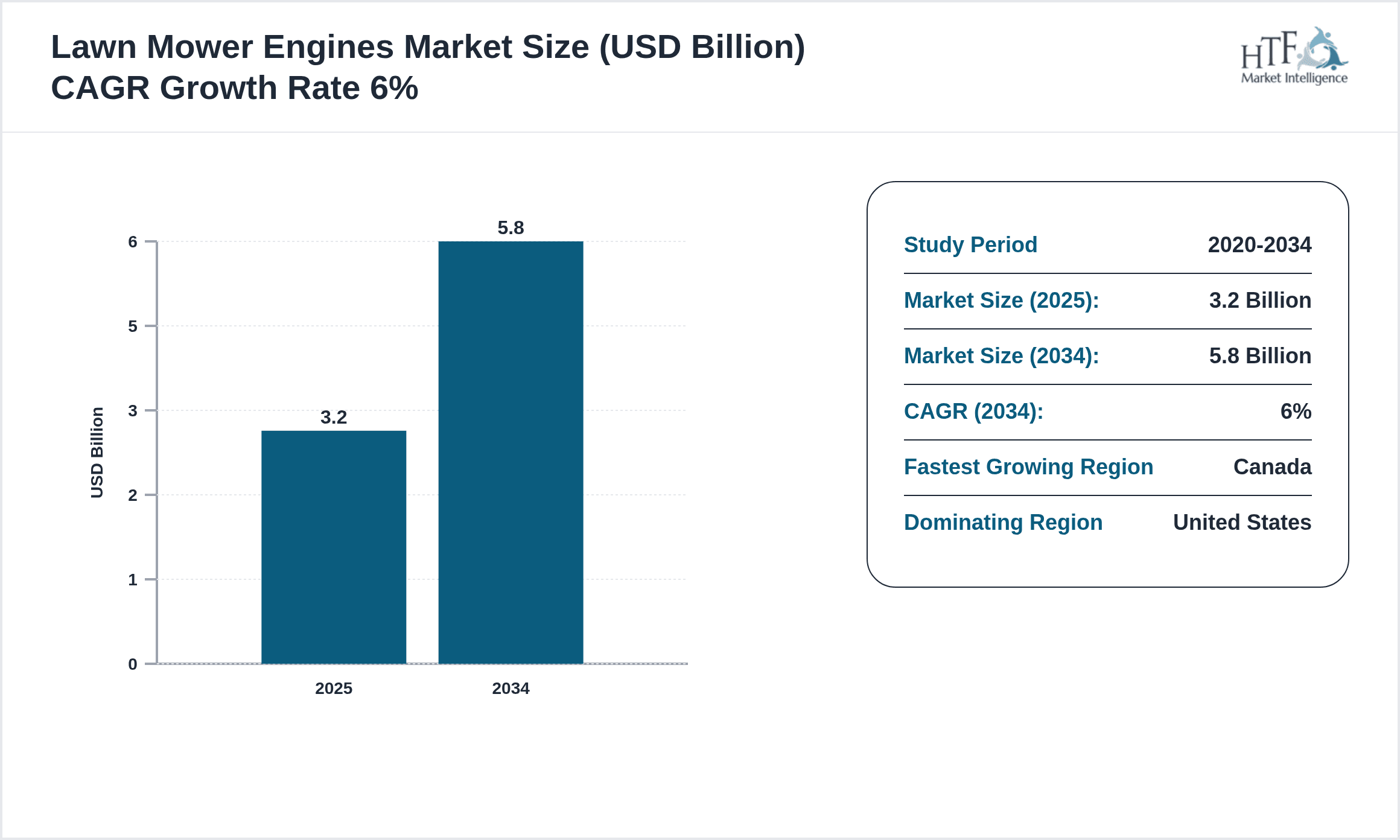
- •Key market highlights include a base market size of USD 3.2 Billion in 2024 with a forecast to reach USD 5.8 Billion by 2034, reflecting a CAGR of 6.0%. Gasoline engines currently dominate the market owing to their widespread use and established technology, while electric engines are the fastest growing segment driven by demand for eco-friendly alternatives. The residential sector holds the largest application share, yet commercial and landscaping applications are gaining traction due to increasing professional lawn maintenance services. The United States leads the market in size and adoption, with Canada emerging as the fastest growing country within the region. Market growth is underpinned by regulatory initiatives targeting emissions reductions and increasing consumer inclination towards battery-powered lawn mower engines. Year-over-year growth rates mirror steady market expansion, supported by innovation and shifting industry standards.
- •The market holds strategic importance for manufacturers, distributors, and end-users across the lawn care industry. Engine producers leverage advancements in fuel efficiency, emission controls, and electric propulsion to differentiate their product portfolios. For stakeholders, understanding market segmentation, competitive dynamics, and regulatory frameworks is essential for capitalizing on growth opportunities. The shift towards sustainable and technologically advanced lawn mower engines provides avenues for investment and innovation. Additionally, the market's growth contributes significantly to the outdoor power equipment industry, impacting employment and technological development. The evolving consumer demand for quieter, cleaner, and more efficient lawn mower engines creates a value proposition that aligns with environmental goals and operational performance. Consequently, this market remains a critical focus area for strategic planning within North America's outdoor machinery sector.
Competitive Landscape
The North America Lawn Mower Engines market is characterized by intense competition among established manufacturers and emerging players focusing on innovation and market share expansion. Companies compete primarily through technological advancements such as enhanced fuel efficiency, emission reduction technologies, and integration of electric and hybrid engine systems. Strategic partnerships and collaborations are common to leverage R&D capabilities and broaden product offerings. Market leaders emphasize product differentiation by developing quieter, more durable, and environmentally compliant engines to meet regulatory requirements and consumer preferences. Pricing strategies are balanced against the cost of advanced technology adoption, with some players targeting premium segments while others focus on cost-effective solutions for mass-market penetration. Distribution network strength and after-sales service quality also serve as competitive factors. The landscape is further shaped by mergers and acquisitions that consolidate market presence and expand geographic reach. Overall, competition drives continuous innovation, improved performance, and diverse product availability in the North America lawn mower engine sector.
Leading Companies in Lawn Mower Engines Market
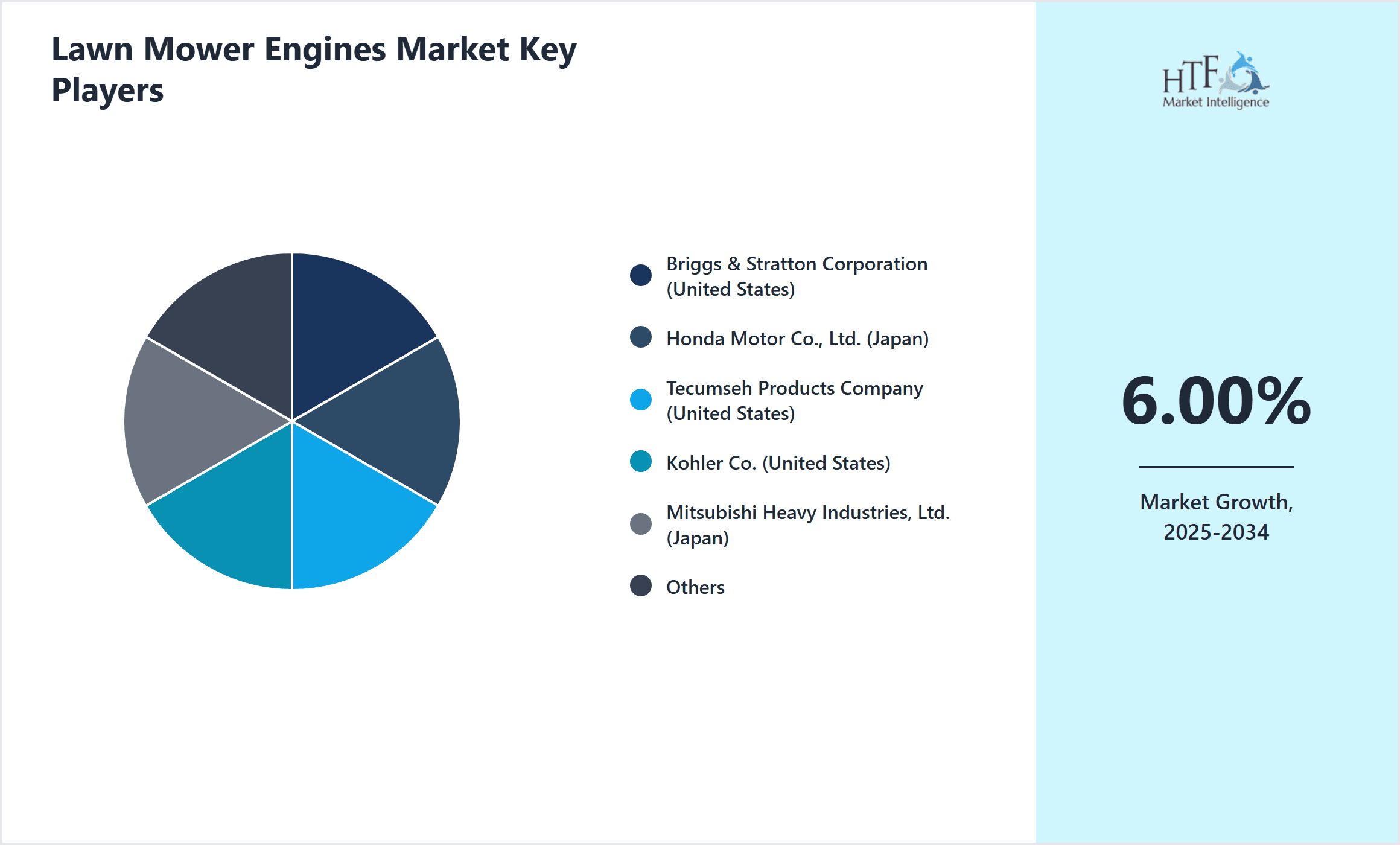
- •Briggs & Stratton Corporation (United States)
- •Honda Motor Co., Ltd. (Japan)
- •Tecumseh Products Company (United States)
- •Kohler Co. (United States)
- •Mitsubishi Heavy Industries, Ltd. (Japan)
- •Yamaha Motor Co., Ltd. (Japan)
- •Suzuki Motor Corporation (Japan)
- •Lawn-Boy (United States)
- •Toro Company (United States)
- •Echo Incorporated (Japan)
- •Greenworks Tools (United States)
- •Stihl Inc. (Germany)
- •Robert Bosch GmbH (Germany)
- •Honda Power Equipment (United States)
- •Cub Cadet (United States)
- •Ariens Company (United States)
- •Husqvarna Group (Sweden)
- •MTD Products Inc. (United States)
- •Snapper (United States)
- •Poulan Pro (United States)
- •John Deere (United States)
- •Champion Power Equipment (United States)
- •Black & Decker (United States)
- •Makita Corporation (Japan)
- •DeWalt (United States)
Market Breakdown
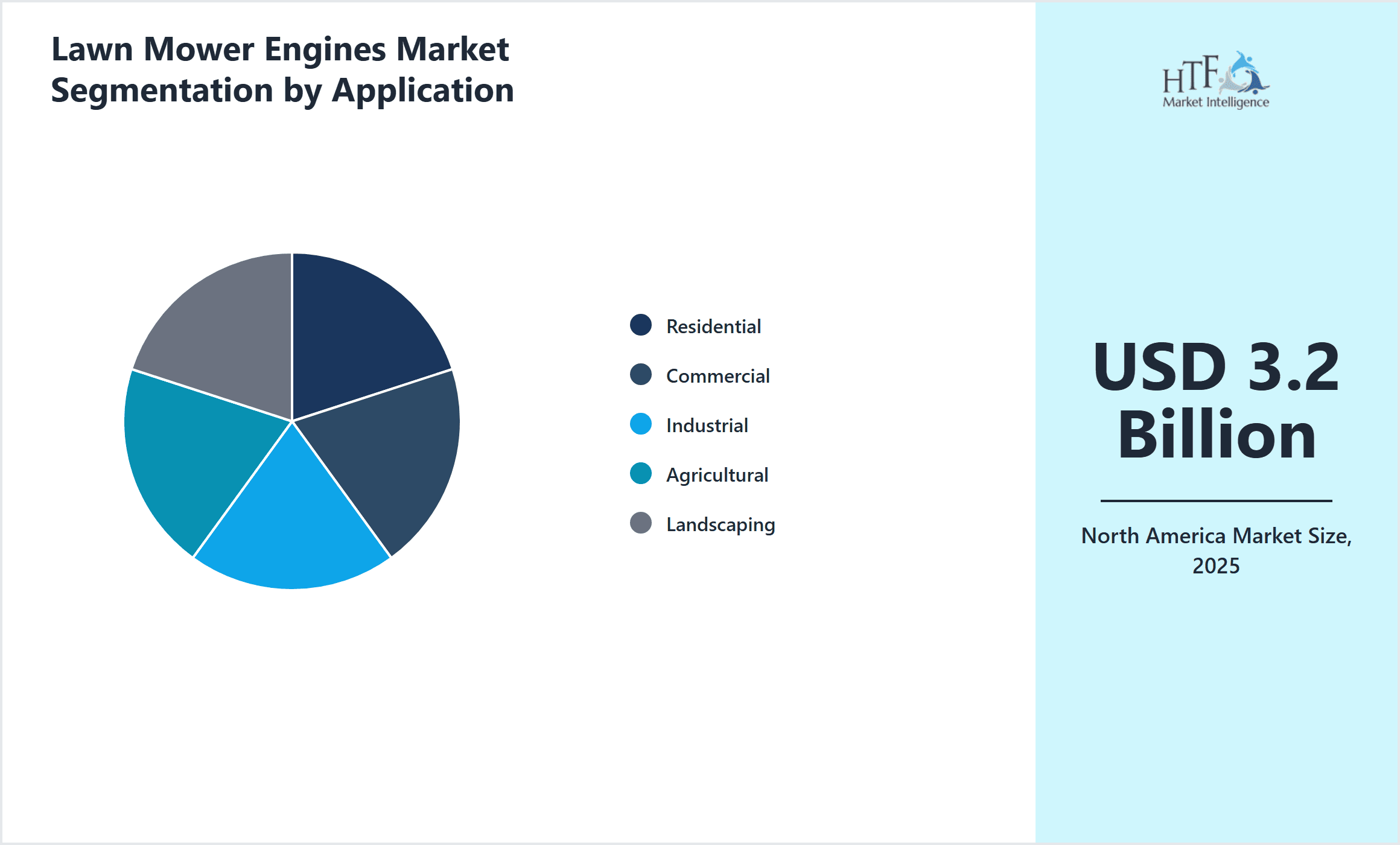
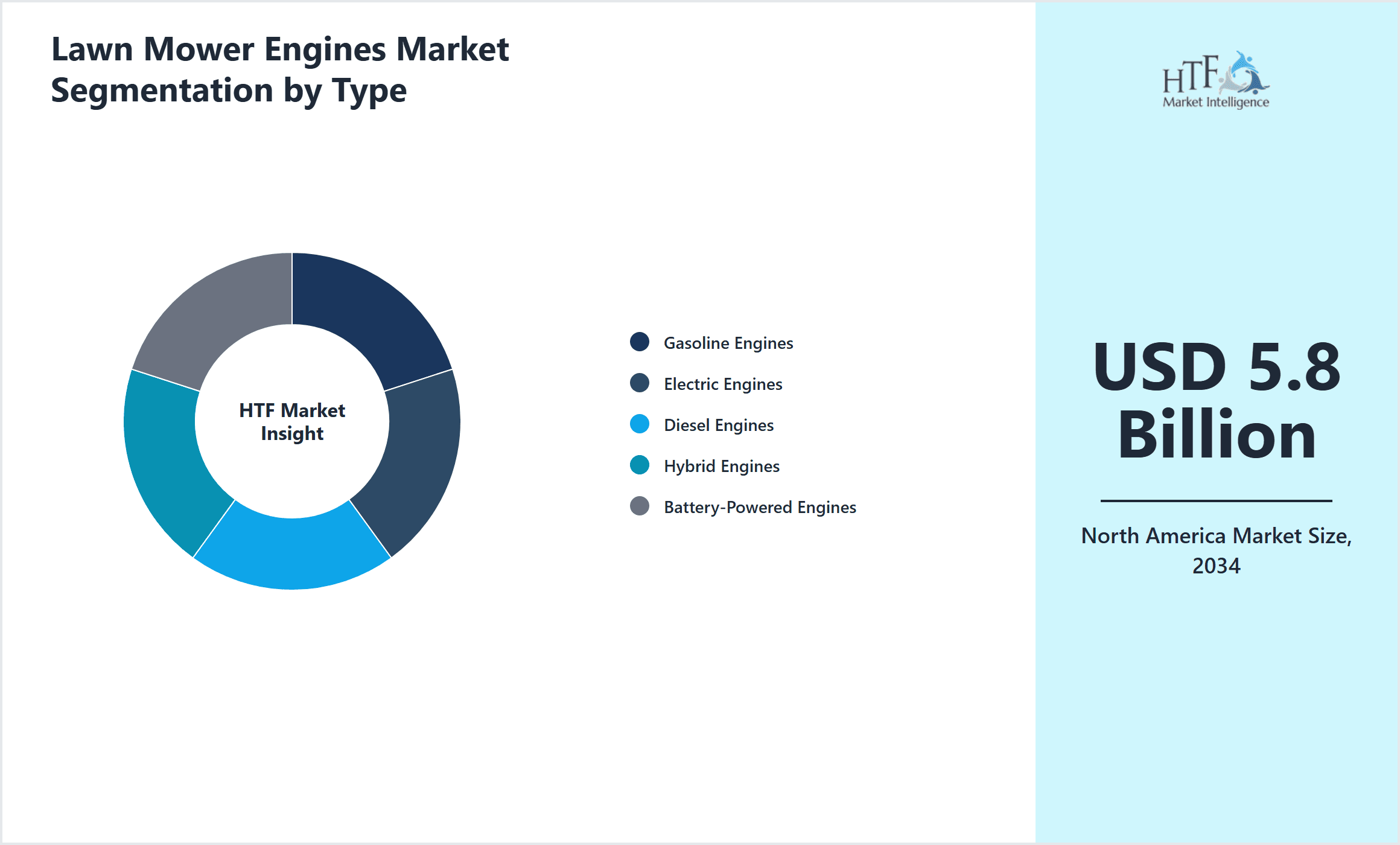
- •By Product Type
- ◦Gasoline Engines
- ◦Electric Engines
- ◦Diesel Engines
- ◦Hybrid Engines
- ◦Battery-Powered Engines
- •By Application
- ◦Residential
- ◦Commercial
- ◦Industrial
- ◦Agricultural
- ◦Landscaping
- •By End-Use Industry
- ◦Homeowners
- ◦Professional Lawn Care Services
- ◦Agricultural Enterprises
- ◦Municipalities and Government Agencies
- •By Distribution Channel
- ◦Direct Sales
- ◦Retail Stores
- ◦Online Platforms
Growth Dynamics
- •The North America Lawn Mower Engines market is propelled by increasing urbanization and a rising number of residential properties requiring lawn maintenance equipment. The expanding landscaping and professional lawn care services sector fuels demand for commercial-grade engines. Environmental regulations targeting emission reductions have accelerated adoption of electric and hybrid engines, driving innovation and market growth. Consumer preference is shifting towards quieter, fuel-efficient, and eco-friendly engines, promoting battery-powered and electric engine segments. Additionally, government incentives for clean energy equipment encourage manufacturers to develop advanced propulsion technologies, thereby enhancing the market’s growth trajectory significantly over the forecast period.
- •Technological advancements, such as improved battery capacities and efficient combustion engine designs, are reshaping market dynamics. Market players are investing in R&D to develop engines with lower emissions and higher power-to-weight ratios. The integration of smart technology for engine performance monitoring is gaining traction, enabling predictive maintenance and enhanced user experience. The trend toward sustainable landscaping practices and increased awareness of environmental impact among consumers further supports the shift from traditional gasoline engines to electric and hybrid variants. This evolution in technology and consumer behavior is a prominent growth driver within the market.
- •Despite growth opportunities, the market faces restraints such as the high initial cost of electric and hybrid engines compared to conventional gasoline models. Limited battery life and longer charging times can deter some end-users. The complexity of meeting stringent emission norms adds to manufacturing costs and supply chain challenges. Additionally, fluctuating fuel prices and economic uncertainties may impact consumer spending on lawn care equipment. The existing dominance of gasoline engines also presents a barrier to rapid adoption of newer technologies, requiring sustained innovation and consumer education to overcome these hurdles effectively.
- •Opportunities abound in expanding the electric and battery-powered engine segments fueled by advancements in lithium-ion battery technologies and charging infrastructure development. There is potential for market expansion through increased adoption in commercial and industrial applications, where fuel efficiency and emission compliance are critical. Emerging trends in smart engine technology and IoT-enabled lawn care equipment offer avenues for differentiation and value addition. Collaborations between engine manufacturers and technology firms can accelerate innovation. Geographic expansion into underpenetrated regions within North America, such as Mexico, presents untapped growth prospects. Additionally, retrofitting existing lawn mowers with advanced engines offers a niche opportunity to extend market reach.
- •Challenges include navigating complex and evolving regulatory frameworks across different North American countries and states, which can increase compliance costs and slow product launches. Supply chain disruptions and raw material price volatility pose risks to production continuity and profitability. The competitive landscape demands continuous innovation to maintain market share, pressuring margins. Consumer resistance to transitioning from familiar gasoline engines to electric alternatives requires targeted marketing and education. Furthermore, technical challenges such as battery disposal, engine durability under varying climatic conditions, and maintaining performance standards must be addressed. Successfully managing these challenges is critical for sustained market growth and competitive advantage.
Market Trends
- •The North America Lawn Mower Engines market is witnessing accelerated adoption of electric and battery-powered engines due to growing environmental awareness and regulations. Industry players are increasingly focusing on developing high-efficiency, low-emission engines that comply with stringent EPA and CARB standards. There is a discernible trend towards incorporating smart technology for enhanced engine diagnostics and maintenance scheduling. Additionally, the rising popularity of cordless electric lawn mowers is influencing engine design priorities. Manufacturers are also exploring hybrid engine models that combine the benefits of electric power with the reliability of gasoline. These trends collectively drive the market toward cleaner, smarter, and more sustainable solutions.
- •Innovation in battery technology, including improvements in lithium-ion and solid-state batteries, is reshaping the electric engine segment by offering longer runtimes and faster charging. This facilitates greater consumer acceptance and broader application in both residential and commercial lawn care. The integration of IoT and connectivity features allows users to monitor engine performance remotely, enhancing operational efficiency. Additionally, collaborations between OEMs and technology companies to offer integrated lawn care solutions are becoming more prevalent, signaling a shift toward comprehensive ecosystem development. This trend supports the transition to digital and sustainable lawn maintenance tools.
- •Strategic partnerships and acquisitions are prominent, enabling manufacturers to consolidate technological expertise and expand product portfolios rapidly. For example, collaborations between battery manufacturers and engine producers have accelerated innovation cycles. The market also observes increasing consumer demand for quiet operation, prompting the development of noise-reduction technologies in engine design. Seasonal demand fluctuations are being managed through diversified product lines catering to different customer segments. Furthermore, rental and leasing models for lawn care equipment are emerging, influencing engine durability and maintenance considerations. These strategic shifts enhance market responsiveness and customer engagement.
- •Sustainability is a core trend influencing product development, with companies investing in eco-friendly materials and recycling programs for batteries and engine components. Regulatory pressure and consumer expectations drive manufacturers to reduce carbon footprints across the product lifecycle. Digitalization is also impacting supply chain management and customer service, facilitating faster response times and improved aftermarket support. The rise of e-commerce platforms for lawn mower engines is altering traditional distribution channels, increasing market accessibility. Collectively, these trends are transforming the North American market towards more efficient, transparent, and customer-centric practices.
- •Looking ahead, the market is expected to witness increased adoption of AI and machine learning for predictive maintenance and performance optimization of lawn mower engines. Innovations in alternative fuels such as biofuels and hydrogen-powered engines are gaining exploratory interest. The evolving landscape sees a convergence of hardware and software solutions, enabling smarter lawn care ecosystems. These advancements are poised to disrupt traditional engine technologies and create new market segments. Companies investing in R&D and strategic alliances will likely gain competitive advantages as consumer preferences and regulatory frameworks continue to evolve rapidly.
Market Opportunities
- •The growing demand for electric and hybrid lawn mower engines presents significant opportunities for manufacturers to expand product portfolios and capture environmentally conscious consumers. Advances in battery technology reduce cost and improve performance, enabling broader adoption in residential and commercial segments. Additionally, retrofitting services for upgrading existing gasoline-powered mowers with electric engines open a new revenue stream. The professional landscaping industry offers potential for specialized engine solutions tailored to high-performance requirements. Moreover, geographic expansion into emerging markets within North America, particularly Mexico, where lawn care services are increasing, represents a promising avenue. Strategic partnerships with technology firms to integrate smart features enhance product differentiation and consumer appeal.
- •Innovations in IoT and connectivity allow manufacturers to offer value-added services such as remote diagnostics and preventive maintenance, creating recurring revenue opportunities. The trend towards sustainability incentivizes investment in recyclable materials and eco-friendly manufacturing processes, which can improve brand reputation and compliance. Expansion of online sales channels and digital marketing enhances market reach and consumer engagement. Furthermore, government incentives and subsidies for clean energy equipment adoption reduce barriers for entry and stimulate demand. These factors collectively create a conducive environment for growth and diversification in the North America lawn mower engines market.
- •Investment in R&D to develop alternative fuel engines, including biofuel and hydrogen-powered models, offers potential for future market leadership as environmental regulations tighten. Collaborations with academic institutions and research organizations can accelerate innovation cycles. The integration of advanced noise reduction and emission control technologies meets evolving regulatory and consumer demands, creating competitive advantages. Additionally, addressing underserved segments such as small-scale agricultural users with customized engine solutions can unlock niche markets. Expanding service and maintenance offerings further enhances customer loyalty and market penetration. These strategic approaches provide multiple pathways for sustained growth and profitability.
- •The rising popularity of shared economy models and equipment rental services creates opportunities for engine manufacturers to design durable and low-maintenance products optimized for high utilization rates. Developing lightweight and portable engine systems caters to urban consumers with limited storage space, expanding market demographics. Enhanced focus on user-friendly interfaces and safety features can differentiate products in a crowded marketplace. Regional expansion within North America, including increased penetration in Canada and Mexico, leverages growing demand for professional lawn care services. These opportunities, combined with technological advancements, position the market for robust growth over the coming decade.
- •Emerging trends in smart city initiatives and green urban planning support the adoption of low-emission lawn care equipment in public spaces, offering a stable demand base for commercial lawn mower engines. Partnerships with municipal governments and landscaping contractors facilitate product adoption and brand visibility. Additionally, advances in supply chain digitization and logistics optimization reduce operational costs and improve market responsiveness. Capitalizing on these opportunities requires strategic investment, innovation, and customer-centric approaches to meet the dynamic needs of the North America market effectively.
Market Challenges
- •One of the primary challenges in the North America Lawn Mower Engines market is navigating the complex regulatory landscape, which varies significantly among the United States, Canada, and Mexico. Compliance with stringent emission and noise standards requires continuous technological upgrades, increasing production costs. Additionally, the high initial investment for electric and hybrid engines limits adoption among cost-sensitive consumers and small businesses. Supply chain disruptions, including raw material shortages and price volatility, further strain manufacturing operations. The entrenched consumer preference for traditional gasoline engines slows market transition towards cleaner alternatives, necessitating substantial marketing and education efforts. These factors collectively pose significant barriers to rapid growth and innovation within the industry.
- •Technological limitations, such as battery life constraints and longer recharge times, present hurdles for widespread acceptance of electric and battery-powered engines. Durability concerns under varied climatic conditions and intensive usage also affect consumer confidence. Competitive pressure forces manufacturers to balance cost, performance, and compliance, challenging profitability. Furthermore, the fragmented distribution channels and varying retail dynamics across North America complicate market penetration strategies. The need for skilled technical support and maintenance facilities for advanced engine types adds operational complexity. Addressing these multifaceted challenges is critical for sustaining growth and maintaining competitive advantage in the evolving market landscape.
- •Intense rivalry among established players and new entrants leads to pricing pressures and margin erosion. The pace of innovation requires significant R&D investment, which may be prohibitive for smaller manufacturers. Limited consumer awareness about the benefits of electric and hybrid engines hinders market expansion. Additionally, environmental concerns regarding battery disposal and recyclability pose sustainability challenges that must be managed proactively. The COVID-19 pandemic and related economic uncertainties disrupted supply chains and affected consumer spending patterns, creating temporary setbacks. Successfully overcoming these challenges demands strategic agility, investment in technology, and effective stakeholder engagement.
- •The diversity of end-user requirements across residential, commercial, and agricultural segments necessitates tailored product offerings, complicating manufacturing and inventory management. Regional climatic variations within North America impact engine performance expectations and regulatory compliance, requiring localized strategies. Furthermore, integration of digital and IoT technologies introduces cybersecurity risks and data privacy considerations. Maintaining product quality and safety standards amid rapid innovation cycles is essential to prevent reputational damage. These operational and strategic challenges must be addressed to capitalize fully on market potential while ensuring sustainability and customer satisfaction.
- •Finally, the transition towards electrification and sustainable technologies requires collaboration across the value chain including suppliers, manufacturers, distributors, and end-users. Resistance to change among traditional stakeholders and limited infrastructure for battery charging stations pose adoption barriers. Competitive pressures from alternative outdoor power equipment also influence market dynamics. Balancing innovation with cost-effectiveness and regulatory compliance remains a delicate challenge. Proactively managing these issues through strategic partnerships, education, and investment will be key to unlocking long-term growth and leadership in the North America Lawn Mower Engines market.
Regulatory Framework
- •Between 2019 and 2024, North America has seen the implementation of rigorous emission standards affecting lawn mower engines, notably by the U.S. Environmental Protection Agency (EPA) and California Air Resources Board (CARB). These regulations mandate significant reductions in hydrocarbon and nitrogen oxide emissions from small spark-ignition engines, compelling manufacturers to innovate cleaner technologies. Compliance requires adoption of advanced catalytic converters, improved fuel injection systems, and transition to electric propulsion in some cases. In Canada, provincial emissions regulations align closely with U.S. standards, ensuring regional consistency. Mexico has begun phasing in similar standards, promoting cross-border environmental objectives. Additionally, noise pollution limits have been established in various states and municipalities, influencing engine design. Government incentives and rebates for electric equipment adoption further encourage compliance. These regulatory developments have reshaped market dynamics, prioritizing sustainability and driving the evolution of lawn mower engine technologies in the region.
- •Enforcement mechanisms include mandatory certification and testing protocols before market entry, with penalties for non-compliance. Stakeholders have responded by investing in R&D and collaborating with regulatory bodies to ensure timely adherence. The regulatory framework also emphasizes consumer safety and environmental impact assessment during product lifecycle management. Future policy directions indicate stricter standards and expansion of clean energy equipment mandates. Manufacturers are encouraged to engage in proactive dialogue with regulators to anticipate changes. Overall, the regulatory environment fosters innovation while safeguarding environmental and public health interests across North America’s lawn mower engine market.
- •Safety standards related to fuel storage, handling, and engine operation have been updated to minimize risks associated with gasoline and battery-powered engines. Environmental norms now require responsible disposal and recycling protocols for batteries and engine components. Some jurisdictions have introduced incentives for replacing older, high-emission equipment with newer, compliant models. These policies support market transformation toward sustainable technologies. Industry stakeholders are increasingly adopting voluntary standards and certifications to demonstrate environmental stewardship and enhance product credibility. The regulatory landscape remains dynamic, requiring continuous monitoring and adaptability by all market participants.
- •Regional mandates occasionally differ, necessitating customized compliance strategies. For example, California’s CARB regulations are typically more stringent than federal EPA standards, influencing product launch timelines and market segmentation. Cross-border trade within North America is facilitated through harmonized standards, yet companies must navigate local requirements effectively. Government programs promoting clean energy adoption, including tax credits and grants, bolster market growth. Regulatory agencies continue to update guidelines to reflect technological advances and environmental goals, underscoring the importance of regulatory intelligence in strategic planning within the lawn mower engines market.
- •The policy framework encourages collaboration between manufacturers, industry associations, and governmental bodies to align innovation with regulatory expectations. Incentives for research in alternative fuels and electric propulsion are gaining prominence. Consumer awareness campaigns and labeling requirements support informed purchasing decisions. These regulatory efforts collectively advance the transition towards cleaner, more efficient lawn mower engine technologies, shaping the future trajectory of the North America market.
Market Intelligence
- •15th March 2024, Briggs & Stratton Corporation launched a new line of battery-powered lawn mower engines designed for enhanced runtime and rapid charging capabilities targeting residential users in North America. The engines feature integrated smart technology for real-time performance monitoring and predictive maintenance alerts accessible via mobile applications. This launch aims to capitalize on the growing demand for eco-friendly lawn care solutions and aligns with regulatory emission standards. Briggs & Stratton’s strategic objective includes expanding their electric engine portfolio to compete with emerging battery-powered engine manufacturers and capture market share in commercial and residential segments. The product is expected to reduce noise and emissions significantly while offering comparable power to traditional gasoline engines, positioning the company as a leader in sustainable outdoor power equipment. Source: Official Briggs & Stratton press release.
- •22nd August 2023, Honda Motor Co., Ltd. introduced an innovative hybrid lawn mower engine integrating gasoline and electric power to optimize fuel efficiency and reduce emissions. The engine incorporates regenerative braking technology to recharge batteries during operation, enhancing overall energy utilization. Targeting commercial landscaping firms, this product emphasizes durability, extended runtime, and compliance with stringent North American environmental regulations. Honda’s market positioning focuses on bridging the gap between traditional combustion engines and fully electric alternatives, appealing to users seeking performance without sacrificing sustainability. This initiative reflects Honda’s commitment to innovation and environmental responsibility, potentially setting new industry benchmarks for hybrid engine technology in lawn care equipment. Source: Honda corporate news.
- •10th November 2023, Kohler Co. announced a strategic partnership with a leading battery technology firm to co-develop high-capacity lithium-ion batteries tailored for lawn mower engines. The collaboration aims to enhance the performance, recharge speed, and lifecycle of electric lawn mower engines, addressing key adoption barriers. Kohler plans to integrate these batteries into upcoming engine models targeting commercial and residential segments within North America. This partnership is part of Kohler’s broader strategy to accelerate electrification and sustainability goals, leveraging combined expertise to innovate rapidly. The initiative is expected to strengthen Kohler’s competitive positioning and support regulatory compliance efforts. Source: Kohler official announcement.
- •5th May 2024, Greenworks Tools expanded its North American manufacturing capacity to meet rising demand for electric lawn mower engines. The expansion includes a new production line equipped with advanced automation and quality control systems to enhance output and reduce lead times. This strategic move addresses supply chain challenges and supports Greenworks’ ambition to become a market leader in battery-powered lawn mower engine segments. The company’s focus on sustainable products aligns with increasing consumer preference for eco-friendly equipment and tightening environmental regulations. The expansion is projected to create local employment opportunities and strengthen Greenworks’ distribution network across the United States, Canada, and Mexico. Source: Greenworks corporate press release.
- •Recent market developments and strategic initiatives are continuously tracked through industry publications, company announcements, and regulatory filings. For the most current information, stakeholders are advised to monitor official corporate communications and recognized market intelligence platforms.
Regional Outlook
The United States currently holds a significant share of the market, primarily due to several key factors: increasing consumption rates, a burgeoning population, and robust economic momentum. These elements collectively drive demand, positioning this region as a leader in the market. On the other hand, Canada is rapidly emerging as the fastest-growing area within the industry. This remarkable growth can be attributed to swift infrastructure development, the expansion of various industrial sectors, and a marked increase in consumer demand. These dynamics make this region a crucial player in shaping future market growth.
In our report, we cover a comprehensive analysis of the following regions and countries:
- United States
- Canada
- Mexico
| Feature | Details |
|---|---|
| Base Year Market Size | USD 3.2 Billion |
| Forecast Year Market Size | USD 5.8 Billion |
| CAGR | 6% |
| Forecast Period | 2026 to 2033 |
| YoY Growth | 5.8% |
| Scope of Report | Market is segmented by Product Type (Gasoline Engines, Electric Engines, Diesel Engines, Hybrid Engines, Battery-Powered Engines), Application (Residential, Commercial, Industrial, Agricultural, Landscaping), End-Use Industry (Homeowners, Professional Lawn Care Services, Agricultural Enterprises, Municipalities and Government Agencies), Distribution Channel (Direct Sales, Retail Stores, Online Platforms) |
| Regions Covered | United States, Canada, Mexico |
| Key Companies | Briggs & Stratton Corporation (United States), Honda Motor Co., Ltd. (Japan), Tecumseh Products Company (United States), Kohler Co. (United States), Mitsubishi Heavy Industries, Ltd. (Japan), Yamaha Motor Co., Ltd. (Japan), Suzuki Motor Corporation (Japan), Lawn-Boy (United States), Toro Company (United States), Echo Incorporated (Japan), Greenworks Tools (United States), Stihl Inc. (Germany), Robert Bosch GmbH (Germany), Honda Power Equipment (United States), Cub Cadet (United States), Ariens Company (United States), Husqvarna Group (Sweden), MTD Products Inc. (United States), Snapper (United States), Poulan Pro (United States), John Deere (United States), Champion Power Equipment (United States), Black & Decker (United States), Makita Corporation (Japan), DeWalt (United States) |
North America Lawn Mower Engines Market Size, Growth & Revenue 2024-2034 - Table of Contents
Research enthusiast focused on transforming data uncovering into actionable insights through data-driven decision-making.
Frequently Asked Questions (FAQ):
The Market market is projected to grow at a steady CAGR from 2025 to 2030, driven by increasing demand and expansion in various applications.
North America currently leads the market, followed by Europe and Asia-Pacific.
Key growth drivers include increasing activities, rising demand for innovative solutions, technological advancements, and growing preference for efficient products.