
Global Two-wheel Wheelbarrows Market Size, Growth & Revenue 2024-2034
Global Two-wheel Wheelbarrows Market is segmented by Product Type (Steel Frame Two-wheel Wheelbarrows, Aluminum Frame Two-wheel Wheelbarrows, Plastic Frame Two-wheel Wheelbarrows, Wooden Frame Two-wheel Wheelbarrows, Composite Frame Two-wheel Wheelbarrows), Application (Construction, Agriculture, Landscaping, Gardening, Industrial), End-Use Industry (Construction Industry, Agricultural Sector, Landscaping Services, Industrial Manufacturing), Distribution Channel (Retail Stores, Online Retail, Wholesale Distributors), and Geography (North America, LATAM, West Europe, Central & Eastern Europe, Northern Europe, Southern Europe, East Asia, Southeast Asia, South Asia, Central Asia, Oceania, MEA)
Pricing
Report Overview
Executive Summary
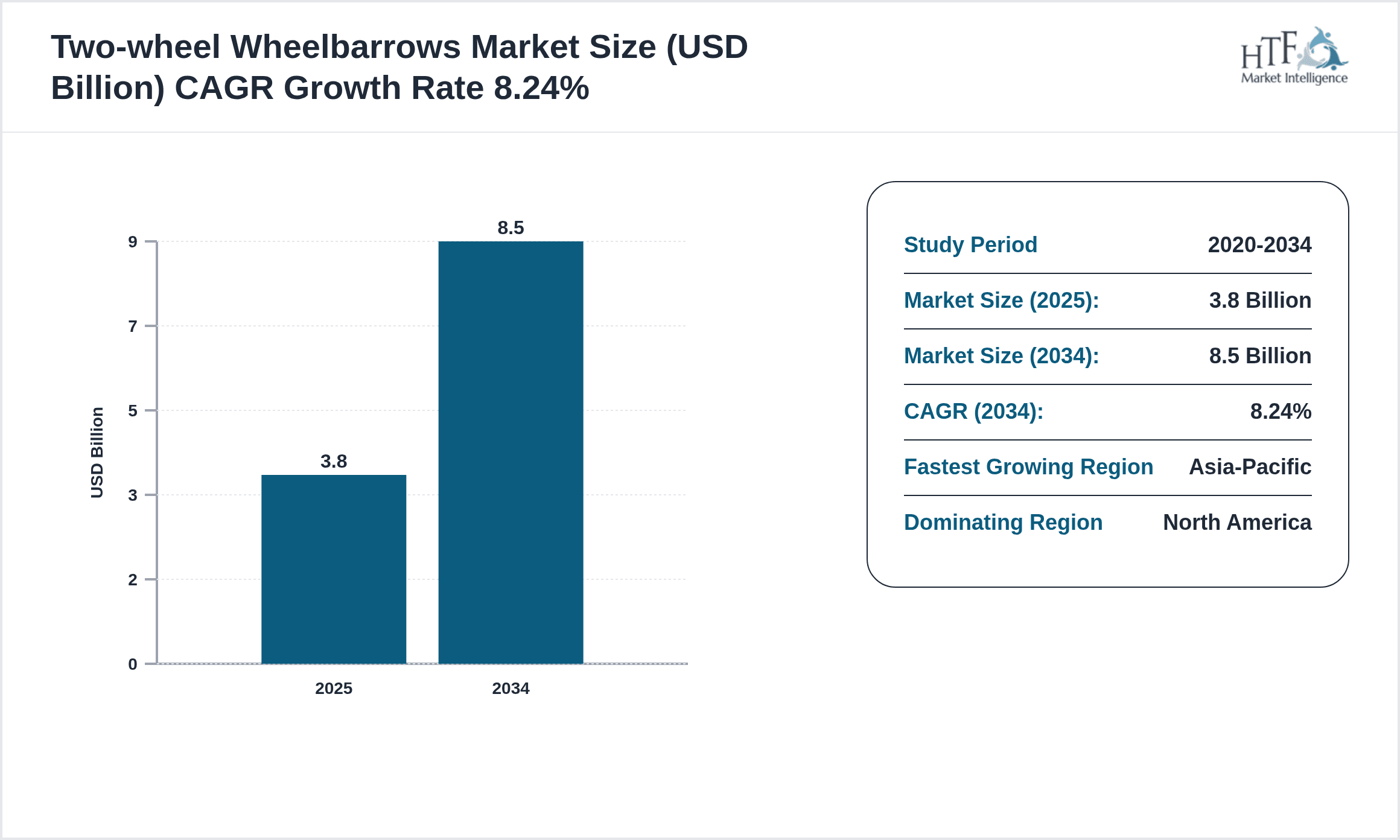
- •The global Two-wheel Wheelbarrows market represents a vital segment within the manual and mechanized material handling equipment industry, focusing on wheelbarrows that feature two wheels for enhanced stability and load balance. These products are widely utilized across construction, agriculture, landscaping, gardening, and industrial sectors, offering improved ergonomics and operational efficiency compared to single-wheel variants. The market scope covers multiple frame types including steel, aluminum, plastic, wood, and composite materials, each catering to specific performance and cost requirements. Technological innovations such as lightweight composite materials and ergonomic handle designs have expanded application possibilities and user comfort. Geographically, this market spans North America, Europe, Asia-Pacific, Latin America, and the Middle East & Africa, reflecting diverse demand drivers and regulatory environments. Growth is propelled by infrastructure development, agricultural mechanization, and increasing landscaping activities globally. Key market highlights include a forecast CAGR of 8.24% from 2024 to 2034, with Asia-Pacific emerging as the fastest-growing region and North America dominating in market size and innovation adoption. Strategic importance lies in the role of two-wheel wheelbarrows as essential tools facilitating productivity and safety across multiple industries, underscoring their enduring relevance in material transportation and handling.
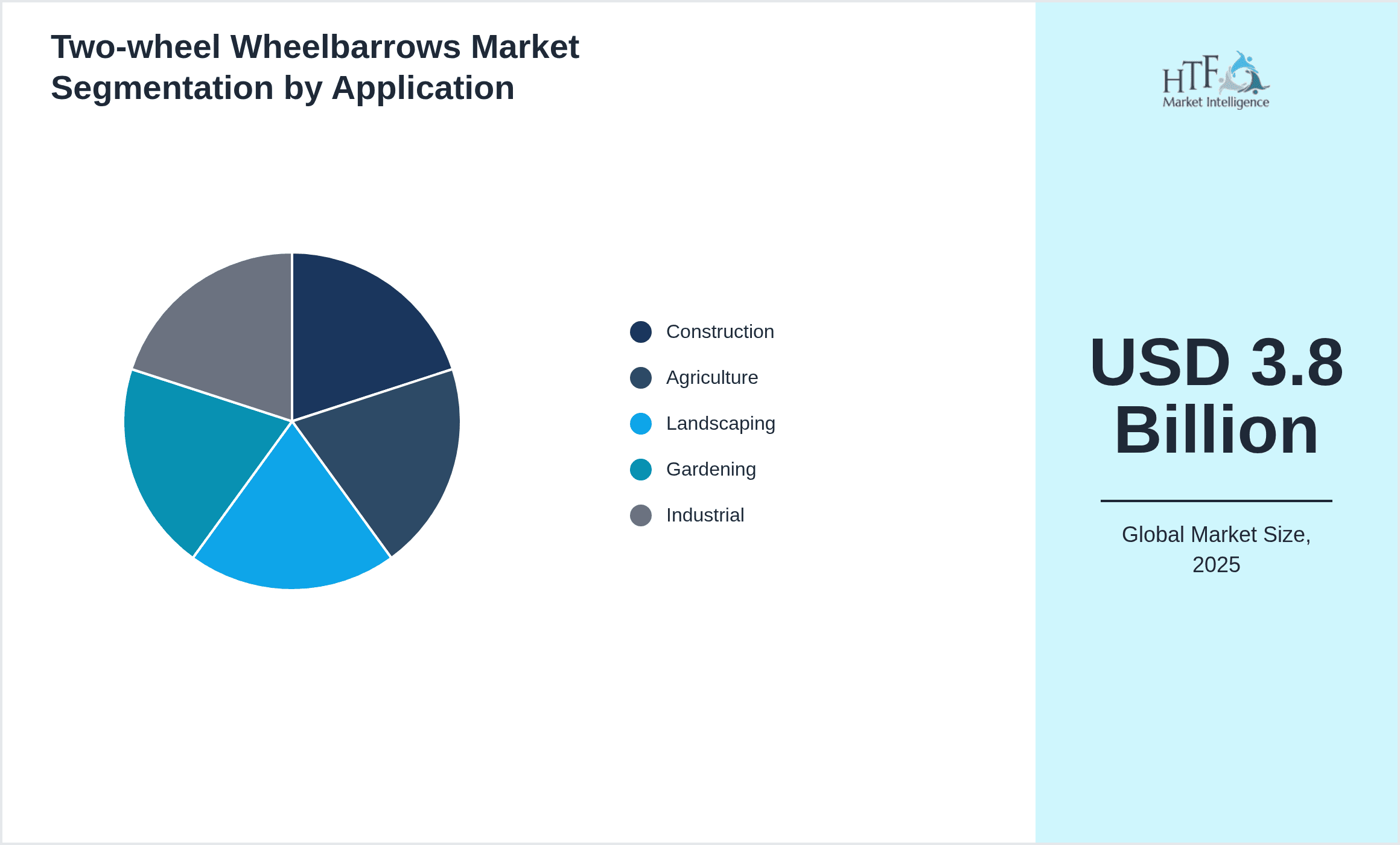
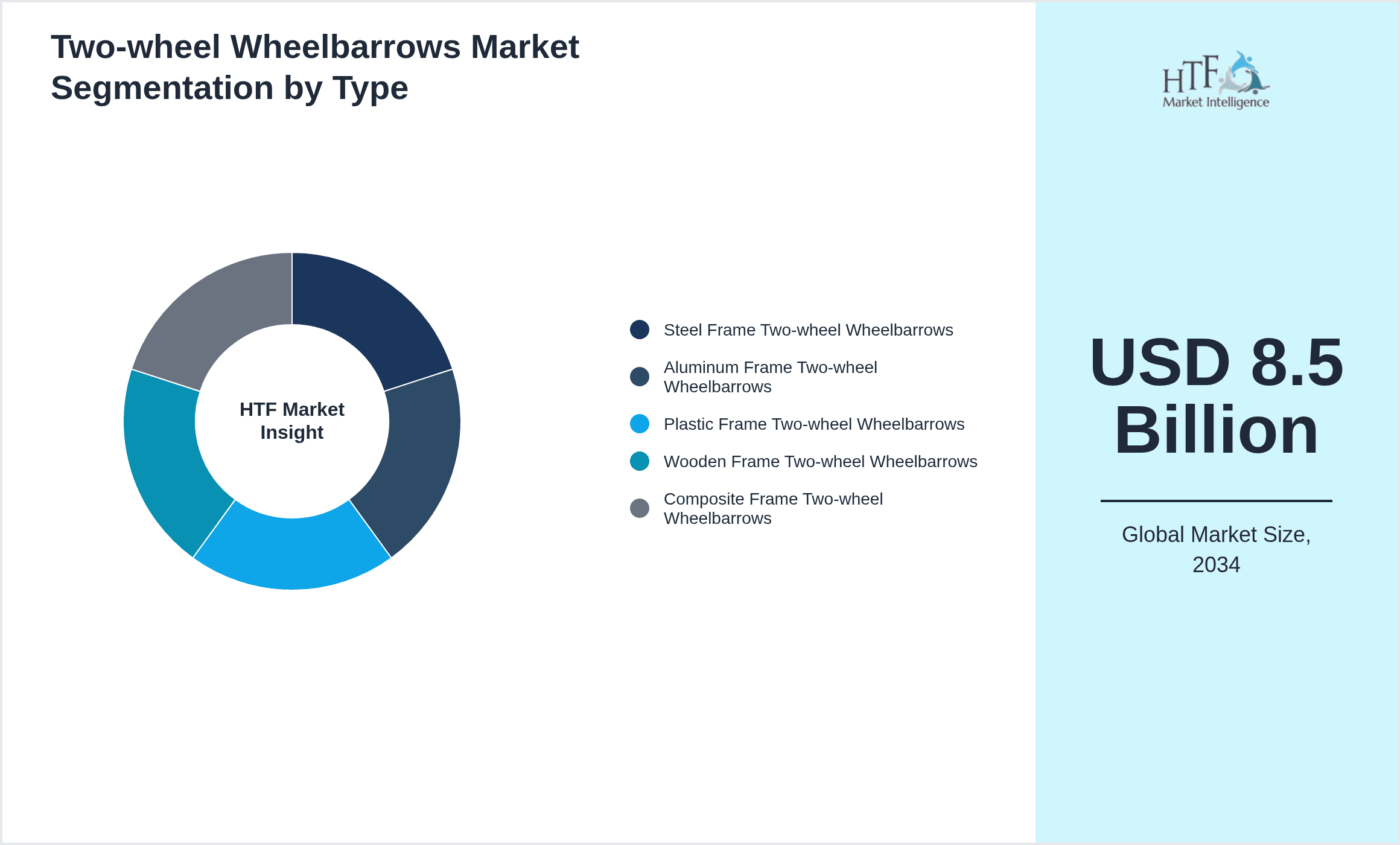
- •The Two-wheel Wheelbarrows market is witnessing significant growth driven by construction sector expansions, agricultural modernization, and increased urban landscaping initiatives. Market size valued at USD 3.8 Billion in 2024 is projected to reach USD 8.5 Billion by 2034, reflecting strong demand and technological improvements. The steel frame segment currently dominates due to its durability, while composite frame types are gaining traction for their lightweight and corrosion-resistant properties. Application-wise, construction remains the largest segment, followed by agriculture, landscaping, gardening, and industrial uses. Key growth indicators include rising infrastructure investments in emerging economies and a shift toward ergonomic designs enhancing worker safety and efficiency. The competitive landscape is characterized by innovation, strategic partnerships, and regional expansion efforts.
- •Two-wheel wheelbarrows offer significant value propositions by improving load stability and reducing operator fatigue, thereby enhancing operational productivity in various sectors. Their strategic importance extends to enabling safer material handling in construction sites, farms, and landscaping projects, directly impacting project timelines and cost efficiencies. Manufacturers benefit from evolving material technologies and design innovations, which help differentiate products and penetrate new markets. Stakeholders including distributors, contractors, and end-users leverage these advancements to meet increasing demands for durable, efficient, and user-friendly equipment, positioning the market for sustained growth and diversification.
Competitive Landscape
The global Two-wheel Wheelbarrows market exhibits a competitive environment driven by product innovation, cost efficiency, and strategic geographical presence. Leading players compete by enhancing product durability, incorporating lightweight materials, and improving ergonomic features to attract diverse end-users. Innovation approaches focus on developing corrosion-resistant composite frames and modular designs that facilitate customization. Market rivalry is intense with companies striving for dominance through extensive distribution networks, competitive pricing strategies, and value-added services. Strategic partnerships and collaborations are common for technology sharing and market penetration, while mergers and acquisitions serve as key mechanisms for consolidating market positions and expanding portfolios. Regional competition varies with North America emphasizing high-quality, technologically advanced products, whereas Asia-Pacific focuses on volume growth and cost competitiveness. Barriers to entry include capital-intensive manufacturing processes and established brand loyalty, making innovation and customer-centric strategies critical for success. Future trends indicate increasing adoption of sustainable materials and digital marketing channels to enhance competitive advantages globally.
Leading Companies in Two-wheel Wheelbarrows Market
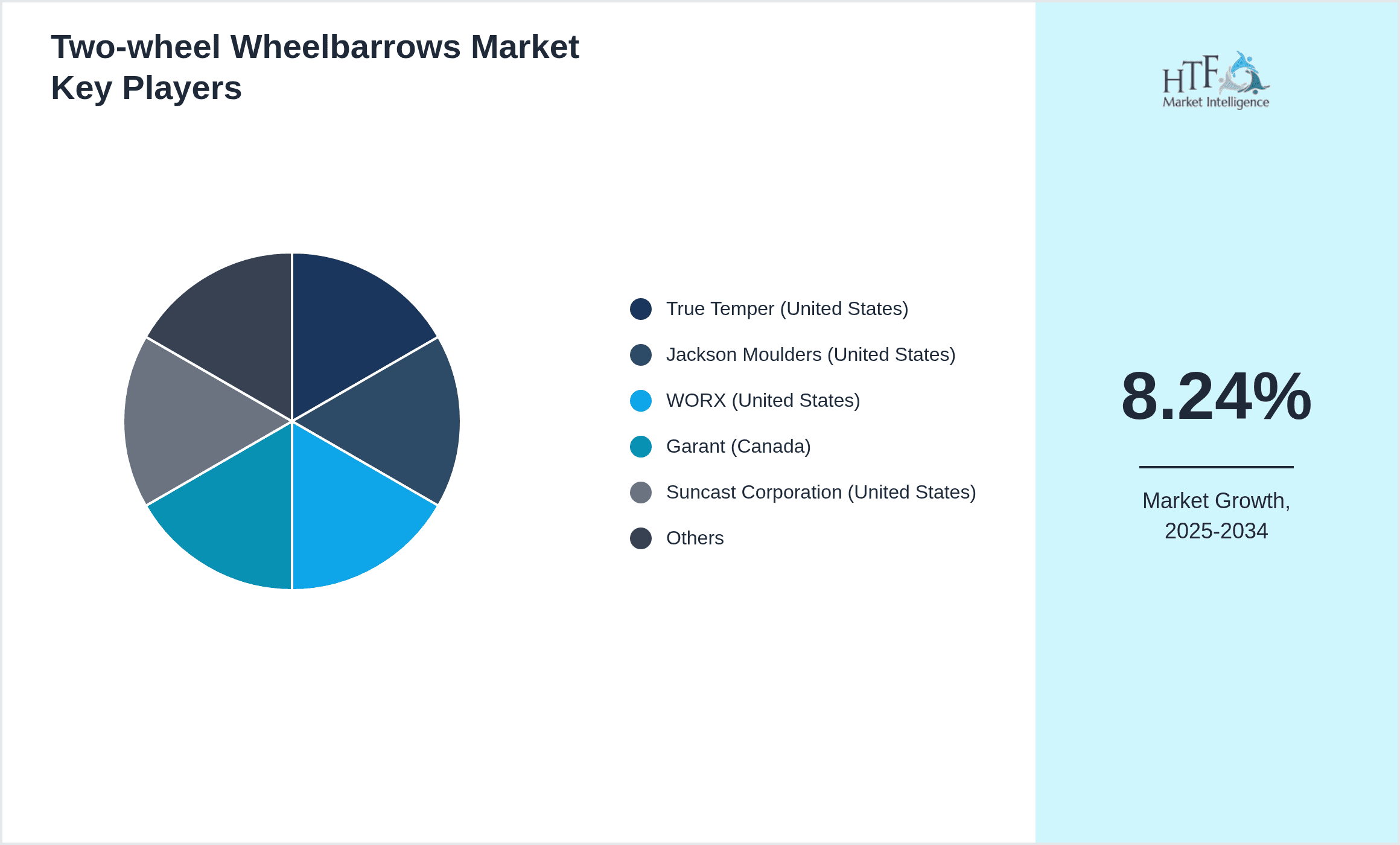
- •True Temper (United States)
- •Jackson Moulders (United States)
- •WORX (United States)
- •Garant (Canada)
- •Suncast Corporation (United States)
- •Altrad Group (France)
- •Haemmerlin (France)
- •Fiskars Group (Finland)
- •Stanley Black & Decker (United States)
- •Keter Group (Israel)
- •Fiskars Oyj (Finland)
- •DeWalt (United States)
- •Bosch Power Tools (Germany)
- •Makita Corporation (Japan)
- •Stanley Works (United States)
- •Truper Herramientas (Mexico)
- •Louisville Ladder (United States)
- •Qingdao Kingbird Garden Tools (China)
- •Fiskars Brands Inc. (United States)
- •Razorback Tools (United States)
- •Bauer Tools (United States)
- •True Value Company (United States)
- •WOLF-Garten (Germany)
- •WESCO International (United States)
- •Harper Brush Works (United States)
Market Breakdown
- •By Product Type
- ◦Steel Frame Two-wheel Wheelbarrows
- ◦Aluminum Frame Two-wheel Wheelbarrows
- ◦Plastic Frame Two-wheel Wheelbarrows
- ◦Wooden Frame Two-wheel Wheelbarrows
- ◦Composite Frame Two-wheel Wheelbarrows
- •By Application
- ◦Construction
- ◦Agriculture
- ◦Landscaping
- ◦Gardening
- ◦Industrial
- •By End-Use Industry
- ◦Construction Industry
- ◦Agricultural Sector
- ◦Landscaping Services
- ◦Industrial Manufacturing
- •By Distribution Channel
- ◦Retail Stores
- ◦Online Retail
- ◦Wholesale Distributors
Growth Dynamics
The global Two-wheel Wheelbarrows market is propelled by rising infrastructure development and urbanization worldwide, especially in emerging economies. Increased construction activities demand robust and efficient material handling tools, positioning two-wheel wheelbarrows as essential for transporting heavy loads safely. Agricultural mechanization further drives demand by facilitating enhanced productivity and reducing manual labor. Moreover, landscaping and gardening trends in both residential and commercial sectors fuel market expansion, as these applications require reliable and ergonomic equipment. Technological advancements introducing lightweight composite materials and corrosion-resistant coatings improve product durability and user comfort, attracting a broader customer base. Government initiatives promoting sustainable agriculture and construction safety standards also contribute positively by encouraging adoption of quality wheelbarrows. Investment in R&D by manufacturers to develop customizable and multifunctional designs enhances market appeal. Collectively, these growth drivers underpin a robust market trajectory with expansive opportunities across multiple industries and regions.
Market Trends
The Two-wheel Wheelbarrows market is witnessing a trend towards the adoption of eco-friendly and lightweight composite materials, which combine durability with ease of handling. Manufacturers are increasingly integrating ergonomic handles and adjustable features to reduce operator fatigue and improve safety, aligning with rising workplace health standards. Digital marketing and e-commerce platforms have broadened product reach, enabling consumers to compare features and prices conveniently. Regional customization, such as corrosion-resistant coatings for humid climates, is becoming prevalent to cater to specific market needs. Additionally, there is a gradual shift towards multi-functional wheelbarrows capable of adapting to diverse terrains and load types, enhancing versatility. Sustainability considerations are influencing product development, with recyclable and biodegradable components gaining traction. Overall, these trends reflect a market moving towards innovation, consumer-centric design, and environmental responsibility.
Market Opportunities
Significant opportunities exist in expanding the use of two-wheel wheelbarrows in emerging economies where infrastructure and agricultural modernization are accelerating. The rising demand for ergonomic and lightweight models presents avenues for innovation and premium product offerings. Digital transformation enables companies to tap into online sales channels and reach a wider customer base globally. Collaborations with construction and landscaping firms can lead to customized solutions that enhance operational efficiency. Furthermore, integrating smart technologies such as load sensors and GPS tracking could open new market segments. The growing trend of urban gardening and sustainable agriculture also creates niche markets for specialized wheelbarrows. Expanding distribution networks and after-sales services in underpenetrated regions can further boost market presence and customer loyalty.
Market Challenges
The Two-wheel Wheelbarrows market faces challenges including raw material price volatility, particularly steel and composite materials, which can impact production costs and pricing strategies. Competition from low-cost manufacturers, especially in Asia, pressures established players to maintain quality while managing expenses. Regulatory compliance across diverse regions adds complexity to manufacturing and distribution, requiring adaptations to safety and environmental standards. Additionally, the manual nature of wheelbarrow use limits scalability in highly mechanized industries, potentially capping market growth. Supply chain disruptions, exacerbated by global events, can delay deliveries and affect inventory management. Lastly, consumer preference shifts towards automated material handling solutions may reduce demand for traditional wheelbarrows over time, necessitating continuous innovation to sustain relevance.
Regulatory Framework
Between 2019 and 2024, regulatory frameworks affecting the global Two-wheel Wheelbarrows market have focused primarily on occupational safety, material standards, and environmental compliance. Key regulations mandate ergonomic design standards to minimize workplace injuries and promote operator safety, influencing product development globally. Material quality standards ensure durability and resistance to environmental factors, enhancing product lifespan and user confidence. Environmental regulations encourage the use of recyclable and non-toxic materials, aligning with sustainability goals. Regional mandates in North America and Europe require compliance with safety certifications such as OSHA and CE marking, respectively, impacting market entry and product acceptance. Additionally, import-export regulations and tariffs influence supply chain operations and pricing strategies. Governments have introduced incentive programs supporting sustainable agriculture and construction practices, indirectly benefiting manufacturers producing eco-friendly wheelbarrows.
Market Intelligence
- •15th January 2024, True Temper announced the launch of its latest composite frame two-wheel wheelbarrow featuring enhanced corrosion resistance and ergonomic handles designed to reduce operator fatigue during prolonged use. Targeting both professional contractors and DIY consumers, this product integrates lightweight materials to improve maneuverability without compromising load capacity. The launch aligns with rising demand for durable yet user-friendly wheelbarrows, particularly in construction and landscaping sectors. Strategic marketing campaigns across North America and Europe emphasize the product's sustainable material composition and compliance with latest safety standards, positioning True Temper to capture increased market share in these regions. The company also plans expanded distribution through e-commerce platforms to enhance accessibility globally.
- •7th July 2023, Altrad Group introduced an innovative modular two-wheel wheelbarrow system allowing users to customize wheel and tray components based on specific application requirements. This innovation addresses diverse market needs across agriculture, construction, and gardening by offering interchangeable parts that facilitate maintenance and adaptability. The modular design significantly reduces long-term ownership costs and aligns with circular economy principles by minimizing waste. Altrad's initiative strengthens its competitive positioning in Europe and Asia-Pacific, responding to growing customer demand for versatile and sustainable equipment. The company has also partnered with regional distributors to enhance market penetration and after-sales support.
- •Market Intelligence: Recent developments and industry insights are being monitored. For latest updates, consult official company announcements and industry publications.
- •Market Intelligence: Recent developments and industry insights are being monitored. For latest updates, consult official company announcements and industry publications.
Regional Outlook
The North America currently holds a significant share of the market, primarily due to several key factors: increasing consumption rates, a burgeoning population, and robust economic momentum. These elements collectively drive demand, positioning this region as a leader in the market. On the other hand, Asia-Pacific is rapidly emerging as the fastest-growing area within the industry. This remarkable growth can be attributed to swift infrastructure development, the expansion of various industrial sectors, and a marked increase in consumer demand. These dynamics make this region a crucial player in shaping future market growth.
In our report, we cover a comprehensive analysis of the following regions and countries:
- North America
- LATAM
- West Europe
- Central & Eastern Europe
- Northern Europe
- Southern Europe
- East Asia
- Southeast Asia
- South Asia
- Central Asia
- Oceania
- MEA
| Feature | Details |
|---|---|
| Base Year Market Size | USD 3.8 Billion |
| Forecast Year Market Size | USD 8.5 Billion |
| CAGR | 8.24% |
| Forecast Period | 2026 to 2033 |
| YoY Growth | 8% |
| Scope of Report | Market is segmented by Product Type (Steel Frame Two-wheel Wheelbarrows, Aluminum Frame Two-wheel Wheelbarrows, Plastic Frame Two-wheel Wheelbarrows, Wooden Frame Two-wheel Wheelbarrows, Composite Frame Two-wheel Wheelbarrows), Application (Construction, Agriculture, Landscaping, Gardening, Industrial), End-Use Industry (Construction Industry, Agricultural Sector, Landscaping Services, Industrial Manufacturing), Distribution Channel (Retail Stores, Online Retail, Wholesale Distributors) |
| Regions Covered | North America, LATAM, West Europe, Central & Eastern Europe, Northern Europe, Southern Europe, East Asia, Southeast Asia, South Asia, Central Asia, Oceania, MEA |
| Key Companies | True Temper (United States), Jackson Moulders (United States), WORX (United States), Garant (Canada), Suncast Corporation (United States), Altrad Group (France), Haemmerlin (France), Fiskars Group (Finland), Stanley Black & Decker (United States), Keter Group (Israel), Fiskars Oyj (Finland), DeWalt (United States), Bosch Power Tools (Germany), Makita Corporation (Japan), Stanley Works (United States), Truper Herramientas (Mexico), Louisville Ladder (United States), Qingdao Kingbird Garden Tools (China), Fiskars Brands Inc. (United States), Razorback Tools (United States), Bauer Tools (United States), True Value Company (United States), WOLF-Garten (Germany), WESCO International (United States), Harper Brush Works (United States) |
Global Two-wheel Wheelbarrows Market Size, Growth & Revenue 2024-2034 - Table of Contents
Frequently Asked Questions (FAQ):
The Compact Track Loaders market is projected to grow at a CAGR of 6.8% from 2025 to 2030, driven by increasing demand in construction and agricultural sectors.
North America currently leads the market with approximately 45% market share, followed by Europe at 28% and Asia-Pacific at 22%. The remaining regions account for 5% of the global market.
Key growth drivers include increasing construction activities, rising demand for versatile equipment in agriculture, technological advancements in track loader design, and growing preference for compact equipment in urban construction projects.